
Where Volleyball Gets Bet on in 2026 and What the Lines Actually Cost
 Available in US
Betting on volleyball online means choosing between fixed-odds bookmakers regulated in Great Britain, a separate licence regime for spread betting, and a wider offshore market that takes British customers without holding a British licence. This page is about what each option looks like in 2026, which markets the licensed firms actually price, and what an offer costs once the wagering rules are worked through. The Gambling Commission public register is the only place a British licence can be confirmed, and the licence conditions in force since the start of 2026 shape the welcome bonus, the verification step before the first deposit and the stake rules the reader meets at the betting slip.

The piece that follows walks through the betting mechanics first, then the regulatory frame a licensed operator runs inside, then the licensed firms themselves and how their offers, in-play depth and bet builder products line up against a niche sport like volleyball. It closes with the maths of a two-way market, the worked return on a £10 stake at a typical price, and answers to the five questions readers most often ask about volleyball betting in Great Britain.
*Current as of 27 October 2026, verified against the Gambling Commission public register for active remote general betting licences.*
Staying in Control While Betting Online
The first thing to put in place is not an offer or a market but the safeguard layer every Gambling Commission-licensed operator is required to provide. Since 31 March 2020 a national multi-operator self-exclusion service has been a mandatory licence condition for online operators, and every brand reviewed on this page is part of it. A self-exclusion can run for six months, one year, five years, or five years with auto-renewal, and once the minimum period is over the exclusion remains in force for a further seven years unless the customer asks the scheme to lift it. The scheme covers sites and apps; betting shops run a separate land-based register.

A second layer is the financial vulnerability check that came into force on 30 August 2024 and began operating against remote betting deposits on 28 February 2025. The check triggers once a customer’s deposits minus withdrawals cross £150 in a rolling 30-day window and looks at public records such as bankruptcy or county-court judgments. It is not an income or credit-reference check, but it does mean that anyone whose financial position shows on the public record will be asked further questions before larger stakes are accepted. Separately, a phased set of financial risk assessments — the affordability checks the press calls “frictionless” or “enhanced” depending on the deposit size — has been announced by the Commission in a July 2026 statement, with a staged rollout and no start date yet confirmed.
A third layer is the customer’s own choice. Operators must offer a gross deposit limit set against a fixed time frame; the first phase has applied since 31 October 2025 and a second phase was postponed to 30 September 2026. There is no state-set cap on stakes: limits are the customer’s call. Help is available through GamCare (the National Gambling Helpline), GambleAware, the NHS gambling clinics network, and Gamblers Anonymous.
The point of putting this section first is consequence: the size of any stake a reader plans to risk, and which offer is realistic to clear, are set by the safeguards in place, not by the marketing on the landing page. A bettor whose spend runs above the vulnerability check should expect an interruption; a bettor who has self-excluded should not expect to be let back in early.
Crypto, Anonymity and the Limits of “Pseudonymous” Betting
A handful of searchers looking for volleyball betting arrive via crypto and blockchain terms, and the assumption is often that a digital-asset deposit makes the activity anonymous. Under a Great Britain licence that assumption does not hold. Identity verification — name, address and date of birth — runs before the first deposit can be made, and a free bet or bonus does not lift that requirement. A digital-asset deposit that hides the customer’s identity is therefore incompatible with a GB-licensed onboarding flow; an operator that allows such a deposit is operating outside the verification regime the Commission requires.
A licence issued in Curaçao, Malta or Gibraltar does not authorise a brand to take remote bets from customers in Great Britain. Since the Gambling (Licensing and Advertising) Act 2014, an operator whose remote facilities are used in Great Britain needs a Commission licence wherever the operator itself is based, so a foreign-issued licence on its own is not a substitute. Sites that hold only an offshore licence run their own house rules: no GAMSTOP membership, no Commission complaints route, no approved alternative-dispute-resolution body for British customers, no obligation to honour the £150 vulnerability check, and no cap of 10x on a bonus’s wagering requirement. Where such a site holds customer funds, there is no British consumer-protection route if a withdrawal is delayed or refused. Search-engine referrals, cease-and-desist notices and work with registrars and payment processors are the disruption tools the Commission uses; court-ordered DNS blocking powers have been granted or are imminent, but ISP blocking is not yet in operation.
The honest framing is that licensed and unlicensed sites offer different packages, and neither is “the safe choice” by default. A licensed site verifies identity before the first bet, applies the bonus cap and runs GAMSTOP. An unlicensed site may not verify at all, but also does not protect the customer in any of the British ways a licensed site is required to. A reader who wants anonymity cannot have it under a GB licence, and a reader who wants a GB licence cannot have anonymity.
Welcome Offers, Free Bets and the 10x Wagering Cap
The licensed firms named later in this piece run welcome offers across two main shapes: a matched cash bonus on the first deposit (wagering required before withdrawal) and a free bet credited after a qualifying bet is placed (stake usually not returned with winnings). The promotional environment has tightened since the start of 2026. From 19 January 2026 the wagering requirement attached to a bonus is capped at 10x the bonus amount, so a £10 bonus with a 50x rollover would need £500 of qualifying bets at the licensed operator and is not allowed; under the cap, no more than £100 of wagering is required for any bonus. Mixed-product promotions, where an offer requires the customer to gamble on two or more product types such as betting plus casino or bingo, are banned outright in the same package.
How a welcome offer actually settles in the reader’s pocket depends on three numbers: the qualifying bet and its minimum price, the rollover attached to any bonus credit, and any deadline by which the rollover must be cleared. A £10 free bet credited on a £10 qualifying bet at minimum odds 1/1 (evens) is a clean shape: the free bet stake is not returned with winnings, so a winning free bet at 3/1 pays £30 profit on a £10 stake. A 100% deposit bonus with a 6x wagering requirement on the bonus amount asks the customer to turn over six times the bonus before any of the balance can be withdrawn, which is a different shape again and is covered in the calculation below.
Free bets typically carry an expiry. The Sky Bet free bet, for example, expires 30 days after it is credited, is restricted to single and each-way markets (not multiples), cannot be used on virtuals, is non-withdrawable and does not return the stake with winnings. Where research carries only a general “free bet” description, that is the shape the offer takes in this market. Where the operator’s terms extend the free bet to multiples, that exception is stated in the operator’s own help pages and is not a market default.
The marketing word that recurs across the licensed firms is “free”. The arithmetic here is the puncture: a free bet is paid out as profit only, the stake stays with the operator, the rollover on any cash bonus is the real cost of the offer, and the deadline is what stops the offer being claimed and walked away from. None of that is hidden, but none of it is what the landing page leads with.
In-Play Betting, Cash Out and Live Streaming on a Niche Sport
Volleyball is a niche sport on British-licensed fixed-odds sites. The depth of in-play markets is set by which tournaments the operator has priced and which data feeds it has signed with; outside the major leagues and international tournaments the in-play grid on a volleyball match can be a single 1X2 line or may not be priced at all. The licensed firms in this comparison all offer in-play betting on the major sports, and a handful of them stream events directly inside the app, but in-play volleyball lines are not the headline product anywhere on the list.
Cash out is a separate feature, and it is widely available. Spreadex, for example, supports one-click, auto and partial cash out on its fixed-odds and spread book in one app. The mechanics of a cash out are simple: the operator offers a settlement value while the event is live, the customer accepts and the bet is closed at that figure, which means the original stake and the original odds no longer determine the payout. A partial cash out closes only a share of the stake and leaves the rest in play. The value of a cash out depends on the live price the operator is offering, which the operator sets, and on the timing the customer chooses to take it. Used at a moment when the live price is generous, cash out can lock in profit; used late, when the operator has already adjusted for the likely outcome, it can return less than waiting for the natural settlement.
Live streaming inside the same app is a separate decision. Spreadex streams UK and Irish horse racing, greyhounds, tennis, NFL and selected football. bet365 streams events worldwide and pairs the stream with Bet Track, Match Live and a Live Golf Tracker to follow bets in play. For volleyball specifically, the live stream is usually the international feed where the operator has rights; in lower-tier tournaments it is more often score-by-score updates than a video feed. The reader who bets volleyball in-play should expect markets to move quickly on every serve and should treat cash out as the close-out button, not as a profit-taking tool the operator is subsidising.
Betting Tips, Predictions and What “Strategy” Actually Means in Volleyball
Searchers looking for “volleyball betting tips” or “volleyball betting predictions” are looking for someone to tell them who wins. No one can. Volleyball matches, like every other sport, are decided by play on the court, and the only thing a published “prediction” can add to the reader’s decision is a frame the reader has to evaluate for themselves. Tipsters who publish daily selections are paid for the volume of tips, not for the accuracy of any single one, and the long-run record is rarely published in a form that can be checked. The honest frame is that a tip is an opinion sold as a forecast, and the reader pays for it with money they can lose.
What strategy does work on a niche sport like volleyball is narrower. Three things earn the reader’s time: knowing the format (a match is the best of five sets, regular sets go to 25 points with a two-clear-point lead, the deciding set goes to 15), knowing the schedule (which tournaments the operator has priced and which are off-season), and knowing the bankroll rule (a flat unit per bet, a stop-loss, and no chasing). A “bankroll” is the stake budget the reader has set aside for betting, and the bankroll rule is what stops the budget being spent on tilt. None of this is a tip; it is the discipline the tips are sold to replace.
A reader who wants an analytic input should look at the data feeds behind the in-play price rather than at a tipster’s column. The deeper the feed (set-by-set score, serve speed, attack efficiency, reception errors), the more the live price reflects reality and the harder it is to find an edge. The thinner the feed, the more the live price reflects the operator’s view and the easier it is to be on the wrong side of it.
Bet Types, Odds and How a Volleyball Market Settles
The British bookmaker prices volleyball on a handful of standard markets. The match winner (1X2 or moneyline) is the headline; the set handicap and the total points (over/under) are the next two; correct set score and “will there be a fifth set” appear on bigger fixtures; outright tournament winner is priced before and during the major competitions. Each market settles on its own rule, and the operator’s terms state the rule: a walkover defaults all bets; a retirement mid-set defaults the match; a points reduction or VAR-style review that changes the result after settlement does not normally reopen the bet.
Odds are presented in fractional form on most British-licensed sites (5/1, 11/4, evens) and in decimal form on the betting slip’s return calculation. The conversion is decimal = (a ÷ b) + 1, so 5/1 becomes 6.00 and 11/4 becomes 3.75. A market’s margin is the share of every pound bet that the operator keeps on average, and it sits inside the prices the operator publishes. The shape of the margin is what the calculation below works through.
The bet builder product — known on most British-licensed apps as Bet Builder, Acca Builder, or Same-Game Multi — lets the reader combine markets from a single event into one bet. bet365’s Bet Builder+ combines markets from one event pre-match and in-play. Spreadex’s Bet Builder works across fixed odds or spread bets. The combined price multiplies the legs into one return, so a two-leg builder at 1.80 and 1.60 returns 2.88 × the stake if both legs win; the trade-off is that one losing leg takes the whole bet down. The acca insurance product (a refund as a free bet or bet credit if one leg of an accumulator loses) sits beside the builder and is described in each operator’s terms.
A separate product worth naming is Best Odds Guaranteed, the British horse-racing concession that pays the bigger of the price taken and the starting price if the horse wins. It runs from a fixed time on the day of the race on UK and Irish racing. William Hill pays BOG from 8 AM on the day of the race on singles and multiples, excluding ante-post, tote and pari-mutuel bets. QuinnBet’s BOG applies from 10:00 AM on singles, multiples and system bets, with a maximum benefit of £150 per customer per race. Bet600 pays the starting price when it is bigger than the early or show price taken. None of this is volleyball-specific, but a reader who backs volleyball on the same app will meet BOG on the racing tab.
The Tournaments Volleyball Actually Gets Bet On
The FIVB — Fédération Internationale de Volleyball — is the governing body of the sport, and the international calendar runs through its senior competitions and the continental federations underneath it. Volleyball has been part of the Summer Olympics since 1964 in Tokyo, and beach volleyball was added in 1996 in Atlanta. The professional club calendar runs through national leagues in Italy, Brazil, Poland, Russia, Turkey, Japan and France, with the Champions League as the European club competition. The international breaks for the Nations League, the World Championship, the continental championships and the Olympic qualifiers fill out the rest of the calendar.
For the British-licensed fixed-odds bookmaker, the volleyball schedule that gets priced in depth is the international window and the major European leagues. Lower-tier national leagues and youth tournaments are often priced only as outright winner, sometimes as match winner on the day, and are sometimes absent from the in-play grid entirely. The reader who wants to bet on a specific league should check the operator’s volleyball tab on the day, not assume the schedule.
The Ten UK-Licensed Bookmakers Reviewed for Volleyball Betting in 2026
The list below is built from the Gambling Commission public register against a remote general betting standard (real events) licence active in 2026. Each review heading carries the brand name and what sets it apart in the comparison; a bare name would say the same thing ten times. Every entry states the licence account number and licence holder, what the operator’s own terms say about the offers and features the reader will meet, and a verdict that closes the write-up on the thing the block actually established.
BetTom — A Two-Product Welcome That Splits a Betting Credit From a Slots Credit
BetTom’s sports welcome offer is 50% back as a free bet of up to £50, with a matching 50% back up to £50 as free slot funds for casino play, full terms applying. The split matters: a reader who wants only the sports side is taking half of the headline number, and the casino credit is irrelevant to a volleyball-only bettor. The licence is a Commission remote general betting standard (real events) under account 64959, with Bet Tom Limited as licence holder. Where the marketing lands the headline “£100 back”, the arithmetic is half on the betting slip and half on the slots; that is the shape the offer takes under the £100 ceiling the bonus cap rules now allow.
The verdict is that the sports side of the offer is modest by the standards of the welcome packages reviewed here, and the casino credit is best treated as something the reader does not need to claim. A volleyball bettor who only wants the betting credit should size the qualifying deposit to the sports half, ignore the slots side, and not chase the headline number as if it were all on the betting slip.
BetGoodwin — A Three-Part Free Bet Bundle for £10
BetGoodwin’s sports welcome offer is “Bet £10 & Get £15 in Free Bets”, split as a £5 sports bet, a £5 accumulator and a £5 Sub-Cover bet. The three-part shape asks the reader to use each credit on the market it is restricted to, and the accumulator credit is the one a volleyball bettor has to plan around — it has to be placed on a multi-leg bet, which on a niche sport can mean fewer fixtures on the day. The licence is account 2927, with Goodwin Racing Limited as licence holder. The £5 stake unit on three credits is small enough that the offer clears without much turnover, but each credit has its own expiry and its own market restriction, and the reader should not treat the £15 as one pot.
The verdict is that the offer is gentle on the qualifying bet (£10 at minimum odds) and on the rollover (no rollover, three credits to use), which makes it a clean entry point for a bettor who wants the welcome bonus without a heavy turnover. The accumulator credit is the part to plan around, since the volleyball fixture list on the day has to support a multi-leg bet within the credit’s expiry window.
Tote — Pool Betting Background, Fixed-Odds on the Main Feed
Tote runs on a Commission account 54779, with TDCO Limited as licence holder, in the remote general betting standard (real events) category. The brand’s history is in pool betting on British and Irish racing, and the fixed-odds offering sits beside it rather than replacing it. Best Odds Guaranteed is paid from 8 AM on the day of the race on UK and Irish horse racing, on singles and multiples, excluding ante-post, tote and pari-mutuel bets — which is the racing concession, not a volleyball-specific term.
The verdict is that a volleyball bettor who also bets racing will use Tote for the pool side and treat the fixed-odds offering as secondary. A volleyball-only reader has no specific reason to choose Tote over the rest of the list, since the brand’s strengths are on racing and pool products that sit outside a volleyball bet.
Betfred — A Long-Running Sportsbook With 21 Sports Priced
Betfred’s app covers 21 sports plus over 2,000 casino-style games, under a Commission account 39544, with Petfre (Gibraltar) Limited as licence holder. The breadth is the headline: a single account carries football, horse racing, tennis, golf, American sports, volleyball at the major-fixture level, and a wide casino tab. The football acca boost (accas of two or more legs at 1/5 or bigger, with a boost from 3% on a double up to 200% on 20 or more legs and a maximum boost of £10,000 per online bet) runs until 30 May 2027 and is the standout product feature for accumulator readers. For volleyball specifically, the bettor should expect the major international fixtures priced and the smaller leagues absent.
The verdict is that Betfred is the broad-line bookmaker of the list, with the most products under one licence, the longest British high-street pedigree, and a football-led accumulator product that does not translate directly to volleyball. A reader who wants a single account for racing, football and volleyball together will find it useful; a volleyball-only reader can find the same line and the same welcome offer at narrower books.
BetMGM — Four Free Bets With a Seven-Day Window
BetMGM’s sports welcome offer for new UK customers who deposit £10 or more and place a sports bet within seven days is four £10 free bets (two football accumulators of four or more selections, and two sports multiples of two or more), valid for seven days with minimum odds and opt-in required. The split is two football accas and two general sports multiples, so a volleyball-only bettor gets the two sports multiples and leaves the football credits unused. The licence is account 39198, with LeoVegas Gaming PLC as licence holder.
The verdict is that the offer rewards a reader who bets both football and another sport, and a volleyball-only reader is taking half of it. The seven-day expiry is the constraint to plan around, and the two football acca credits are not useful to a volleyball bettor who does not also bet football.
Kwiff — A Trademark Brand With a Surprise-Element Product
Kwiff is licensed by the UK Gambling Commission under the trademark of Spryme Ltd, with the app rated 17+ on the British App Store, on Commission account 44448 with Eaton Gate Gaming Limited as licence holder. The product’s distinguishing feature is a surprise multiplier on selected odds, which is the “kwiff” the brand name plays on: a stake can be paid out at a price larger than the one shown when the bet was placed. For volleyball specifically, the surprise multiplier does not change the fixture list or the in-play depth; it changes the payout the reader sees on the betting slip.
The verdict is that Kwiff suits a reader who likes the surprise-multiplier mechanic on top of a standard sportsbook and is happy to accept that the offer and the schedule are the same as the rest of the licensed firms. For a volleyball-only reader the brand is a side option, not a primary one.
Bet600 — Best Odds Guaranteed on Horse Racing, Fixed-Odds Elsewhere
Bet600 pays Best Odds Guaranteed on horse racing: if the starting price is bigger than the early or show price taken, the bet is paid at the SP. The licence is account 44731, with Tyche Tech Limited as licence holder. Like Tote, the racing concession is the headline, and the fixed-odds offering on other sports runs alongside. The volleyball schedule on a niche app tends to be the major international fixtures only, with limited in-play depth outside the headline events.
The verdict is that a racing-led reader will use Bet600 for the BOG product and treat the fixed-odds offering as a secondary option. A volleyball-only reader has no specific reason to choose this bookmaker over the broader-line firms on the list.
QuinnBet — BOG With a £150-Per-Race Cap
QuinnBet’s Best Odds Guaranteed applies to Irish and UK horse racing bets from 10:00 AM daily on singles, multiples and system bets, with a maximum benefit of £150 per customer per race. The licence is account 61011, with QuinnBet (Gibraltar) Limited as licence holder. The £150 cap is the constraint: a stake that would otherwise return more than £150 of BOG uplift is paid at £150 of uplift. The volleyball side runs as a standard fixed-odds offering.
The verdict is that the BOG product is the draw, and the £150-per-race cap shapes how a racing-led reader sizes stakes. A volleyball-only reader should treat QuinnBet as a side option with the same schedule as the rest of the fixed-odds firms.
Spreadex — Fixed Odds and Spread Betting in One App
Spreadex combines fixed-odds and spread betting in one app and is regulated by the FCA for spread betting and by the Gambling Commission for fixed-odds betting, with the operator’s own terms noting that spread betting losses can exceed the deposit. The licence is account 8835, with Spreadex Limited as licence holder. The product set includes one-click, auto and partial cash out, Bet Builder across fixed odds or spreads, and live streaming of UK and Irish horse racing, greyhounds, tennis, NFL and selected football.
The spread-betting side is the thing a volleyball bettor has to understand before using the app: a spread bet settles on the size of the right outcome within a range the operator sets, and a wrong outcome costs more than the stake. For a volleyball reader who only wants fixed-odds betting, Spreadex is a standard bookmaker with cash out and a bet builder; for a reader who wants to add spread betting it is the only bookmaker in this list that combines both. The verdict is that the brand is a fit for a reader who wants fixed-odds and spread products under one licence, with the FCA regulation and the deposit-exceed warning as the price of that combination.
Sky Bet — Free Bets on Singles and Each-Way Only
Sky Bet’s free bets expire 30 days after crediting, can be used only on single or each-way markets (not multiples), exclude virtuals, are non-withdrawable and do not return the stake with winnings. The licence is account 67370, with SBG Sports Limited as licence holder. The single-and-each-way restriction is the constraint: a reader who wants to use a free bet on an accumulator cannot, and the volleyball fixture list on the day has to support a single-match bet within the 30-day window.
The verdict is that Sky Bet’s free bet is a clean shape (no rollover, stake not returned, single-market only, 30-day expiry) and suits a reader who bets singles on the major volleyball fixtures. A reader who only bets accumulators will not use the free bet as easily, and should look elsewhere.
The Shape of a GB-Licensed Volleyball Market and the Licence Conditions That Frame It
The legal frame a GB-licensed fixed-odds bookmaker runs inside is the Gambling Act 2005, which covers Great Britain (England, Scotland and Wales) and is administered by the Gambling Commission. Northern Ireland sits outside the Act under older law, so a GB licence is not authority to serve customers there; this page writes about Great Britain and GB-licensed firms. Since the Gambling (Licensing and Advertising) Act 2014 an operator whose remote facilities are used in Great Britain needs a Commission licence wherever the operator is based, so a Curaçao, Maltese or Gibraltar licence on its own is not a substitute.
The licence categories relevant to a volleyball bet are remote general betting standard (real events) for ordinary fixed-odds betting, remote pool betting for pool products like Tote’s, and remote betting intermediary for betting exchanges. There is no statutory list of permitted bets or markets: an operator offers markets under its own rules and the Licence Conditions and Codes of Practice. In-play betting is offered by GB bookmakers under the operator’s licence conditions and customer-protection duties, not under a separate statute, and the operator’s own rules determine which markets are priced live. There is no statutory cap on stakes, and the operator sets its own maximum stakes; restrictions on individual customers are allowed under the operator’s terms.
The financial-conduct layer above the Commission’s social responsibility code is the Financial Conduct Authority’s regulation of financial spread betting, which is a different activity from fixed-odds sports betting and has its own tax rates (3% on financial, 10% on other) and its own risk profile. The customer-facing layer is the Commission’s social responsibility code, the GAMSTOP self-exclusion requirement, the financial vulnerability check (since 30 August 2024, operating since 28 February 2025 against deposits over £150 in a rolling 30 days), the deposit limit requirement (the first phase since 31 October 2025, a second phase postponed to 30 September 2026), and the verification-before-deposit rule that has run since 7 May 2019. Identity verification runs before the customer can deposit or gamble, including with a free bet or bonus, and source-of-funds questions at higher spend are normal under the anti-money-laundering rules.
On the marketing side, advertising is not licensed by the Commission. It runs through the CAP Code for non-broadcast and the BCAP Code for broadcast, enforced by the ASA alongside the Commission’s marketing conditions. CAP Code section 16 requires marketing to be socially responsible, of no strong appeal to under-18s, and to feature no one who is or seems to be under 25 (with an exception for marketing placed where a bet can be made directly). Promotion rules in force since 19 January 2026 cap bonus wagering requirements at 10x and ban mixed-product promotions. “Whistle-to-whistle” is an industry code, not law, and the Premier League clubs’ withdrawal of gambling sponsorship from the front of matchday shirts from 2026/27 is voluntary, not law.
Tax in Great Britain: the player pays no tax on betting winnings (general information, not tax advice; a professional gambler should ask HMRC or an adviser). General Betting Duty is the operator’s tax on gross profits, currently 15%; from 1 April 2027 a new remote betting rate of 25% applies within it, while remote bets on UK horse racing, bets on self-service betting terminals in licensed premises, pool betting and in-person betting stay at 15%. Until 1 April 2027 the remote rate stays at 15%; whether operators pass duty on through odds is not established. Spread betting has its own rates. The Commission’s statutory levy is a separate charge, not a tax.
The honest framing of offshore is that an unlicensed site does not bring the British protections. No GAMSTOP coverage, no Commission complaints route, no approved alternative-dispute-resolution body, no British consumer redress if funds are withheld, no obligation to honour the 10x bonus cap, no £150 vulnerability check. Enforcement against unlicensed sites targeting British customers runs through cease-and-desist notices, search-engine referrals, work with registrars, hosts and payment providers, and court-ordered DNS blocking powers that have been granted or are imminent; ISP blocking is not yet in operation. Neither licensed nor unlicensed is “the safe choice” by default: the licensed site verifies identity and applies the bonus cap, the unlicensed site does not verify at all but also does not protect the customer in any of the British ways.
Worked Examples: The Margin on a Two-Way Market and the Return on a £10 Stake
Two calculations are useful on a volleyball betting page. The first is the margin the operator builds into the prices on a two-way market; the second is the return the reader sees on a winning £10 stake at a typical price.
The margin calculation uses a two-way market at decimal odds of 1.90 and 1.90 — an example, not a quoted price. The payout share is the reciprocal of the sum of the reciprocal prices: 1 ÷ (1/1.90 + 1/1.90) = 1 ÷ (0.5263 + 0.5263) = 1 ÷ 1.0526 ≈ 0.95, or about 95%. The margin is 1 minus the payout share, or about 5%. The band to be reported is roughly 4.5% to 5.5% on a typical two-way volleyball market priced symmetrically around the even outcome; the actual margin depends on the operator and the fixture, and this example is illustrative only. A market priced asymmetrically (one side favoured, one side the underdog) will have a different margin at the same-looking prices, and the reader should expect the operator’s margin to widen as the event approaches if the live feed is thin.
The return calculation takes a £10 stake at decimal odds 1.90: return = stake × odds = £10 × 1.90 = £19, of which £9 is profit and £10 is the original stake returned. The arithmetic on a combination bet multiplies the odds of the legs into one price, so a two-leg accumulator at 1.80 and 1.60 returns £10 × (1.80 × 1.60) = £10 × 2.88 = £28.80, of which £18.80 is profit. The stake is at risk on every leg; one losing leg takes the whole combination down.
These are statistical averages over many bets under the stated assumptions, not guaranteed outcomes for any single bettor. The margin is what the operator keeps of every unit bet on the market; the return is what a winning bet pays back. Neither says anything about the probability the bet wins.
Picking the Right Bookmaker for Volleyball in 2026
The choice on this list runs along three questions the reader should answer before signing up: how important is the welcome offer, how deep does the in-play volleyball schedule need to be, and how much of the account will sit outside volleyball.
A reader whose whole account is volleyball will pick the broad-line bookmakers first, since the in-play grid on the major international fixtures is where the schedule is deepest, and the welcome offer on those brands covers the widest range of sports. Betfred and bet365 (covered in the comparison by the brand’s product set, although not in the named licence register here as a remote general betting standard real-events licence — the reader should verify the licence on the public register) are the broad-line choices; Spreadex adds spread betting under the same licence. A reader whose account is half-volleyball, half-racing will use Tote, Bet600 or QuinnBet for the racing side and a broad-line bookmaker for volleyball. A reader whose welcome offer matters most will choose between BetGoodwin’s three-credit £15 free bet bundle, BetMGM’s four £10 free bets (two of them sports multiples), Sky Bet’s singles-only free bet, or BetTom’s 50% sports-and-slots split. A reader who wants spread betting under the same licence will use Spreadex.
The cross-cutting check is the licence itself. Every brand on this list is checked against the Gambling Commission public register on 27 October 2026 and the licence details in the table below are stated as the register shows them. The register is the only place a British licence can be confirmed, and the licence conditions in force since the start of 2026 shape the welcome bonus, the verification step before the first deposit and the stake rules the reader meets at the betting slip.
Comparison Table: Licence Account, Licence Holder and Operator Terms
| Brand | Gambling Commission remote licence number and licence holder | What the operator’s own terms state on the key’s subject |
|---|---|---|
| BetTom | 064959-R-339314-003; Bet Tom Limited | 50% back as a free bet of up to £50 plus a matching 50% back up to £50 as free slot funds; full terms apply |
| BetGoodwin | 002927-R-327985-008; Goodwin Racing Limited | “Bet £10 & Get £15 in Free Bets” split as £5 sports, £5 acca and £5 Sub-Cover |
| Tote | 054779-R-331321-008; TDCO Limited | Best Odds Guaranteed from 8 AM on UK and Irish racing, singles and multiples, excluding ante-post, tote and pari-mutuel |
| Betfred | 039544-R-319290-010; Petfre (Gibraltar) Limited | 21 sports priced; football acca boost from 3% on a double to 200% on 20+ legs, max £10,000 per online bet, runs until 30 May 2027 |
| BetMGM | 039198-R-319450-029; LeoVegas Gaming PLC | £10+ deposit and a sports bet within 7 days; four £10 free bets (two football 4+ leg accas, two sports 2+ leg multiples), 7-day expiry, minimum odds, opt-in |
| Kwiff | 044448-R-323408-017; Eaton Gate Gaming Limited | Surprise multiplier on selected odds; UKGC-licensed; trademark of Spryme Ltd |
| Bet600 | 044731-R-323941-016; Tyche Tech Limited | Best Odds Guaranteed on racing: SP paid if bigger than early or show price taken |
| QuinnBet | 061011-R-335683-004; QuinnBet (Gibraltar) Limited | BOG on Irish and UK racing from 10:00 AM on singles, multiples and system bets, max £150 benefit per customer per race |
| Spreadex | 008835-R-104580-022; Spreadex Limited | Combined fixed-odds and spread betting in one app; FCA-regulated for spread betting; one-click, auto and partial cash out; bet builder across fixed odds or spreads; spread betting losses can exceed the deposit |
| Sky Bet | 067370-R-341330-005; SBG Sports Limited | Free bets expire 30 days after crediting, single or each-way markets only, exclude virtuals, non-withdrawable, stake not returned with winnings |
The Practical Order of a Volleyball Bet
A first-time volleyball bet on a British-licensed site moves through four stages. The first is verification: name, address and date of birth are checked before the first deposit can be made, including when the deposit is followed by a free bet. The second is the qualifying bet for the welcome offer, sized to the offer’s minimum and placed at or above the offer’s minimum odds. The third is the use of the free bet or the rollover of the bonus, within the expiry window stated in the operator’s terms. The fourth is the settlement and the withdrawal, which can be held by the operator’s source-of-funds checks at higher cumulative deposits.
Where this order stalls in practice is at verification: a reader whose documents do not match the operator’s records, or whose address has changed, will see the deposit blocked until the mismatch is resolved. The second stall is at rollover: a reader who does not clear the wagering requirement within the window forfeits the bonus, which is the price of not reading the terms. The third stall is at withdrawal: a reader whose cumulative deposits minus withdrawals cross £150 in a rolling 30 days will see the vulnerability check trigger, and the operator may ask further questions before a withdrawal is processed.
The verification step is what stops anonymous play under a GB licence. The rollover is what stops the welcome bonus being claimed and walked away from. The vulnerability check is what stops a customer whose financial position shows on the public record from building up deposits the operator is required to question. None of these is a marketing choice; all are conditions of the licence the operator holds.
Reading the Odds: Where the Bookmaker’s Margin Sits
A British-licensed bookmaker’s prices contain a margin on every market, and the margin is what pays for the product, the staff and the operator’s profit. On a two-way market priced symmetrically at 1.90 / 1.90 the margin is about 5%; on an asymmetric three-way 1X2 market the margin is higher, often in the 6% to 8% band on a major fixture. The reader cannot remove the margin, but can compare it: the operator with the lower margin on the same event is the one giving the better return over many bets. The margin is not printed on the betting slip; it is calculated from the prices themselves.
The margin widens when the live feed is thin (a lower-tier volleyball match with only the headline prices) and narrows when the feed is deep (the major international tournaments where multiple operators have priced the same event). The reader who compares prices on a deep market will see the same outcome priced differently by a small margin; the reader who looks at the niche market will see one operator with the only quote.
A small margin difference compounds over many bets. Two operators on the same 1X2 match at 6% and 8% look similar on a single bet; over a hundred bets the difference is what the reader keeps. This is the long-run value of comparing prices on a deep market, and it is the reason the broad-line bookmakers tend to be tighter than the niche ones on the headline sports.
What an Offer Costs Once the Rollover Is Worked Through
The cost of a welcome offer is the rollover multiplied by the margin on the markets the rollover is played through. A £10 bonus with a 6x wagering requirement is £60 of qualifying bets; if those bets are placed at a margin of 5% the expected cost is £60 × 5% = £3. If the rollover is placed on a 1X2 market at a margin of 7%, the expected cost is £60 × 7% = £4.20. The expected cost is what the offer costs on average; it is not what any single bettor pays, since the bets either win or lose.
Under the cap in force since 19 January 2026, no bonus can require more than 10x the bonus amount in wagering, so a £10 bonus can never ask for more than £100 of qualifying bets. A bonus that previously required 50x rollover is no longer allowed at a GB-licensed operator, and any offer advertised above the cap is either misdescribed or offered outside the British licence. The cap is one of the clearest wins for the reader in the current rule book, and it is the boundary the marketing on a licensed site cannot cross.
A free bet with no rollover is a different shape: the £10 free bet is paid as profit only (no stake returned), so a winning free bet at 3/1 pays £30 of profit on a £10 stake. The expected value of a free bet at 3/1 on a market with a 95% payout share is roughly £10 × (3/1 ÷ 4) × 95% = £10 × 0.75 × 0.95 ≈ £7.13; the reader should expect to come out around £7 ahead on average for every £10 of free bet claimed and used, with the spread around that figure determined by the bets actually placed. The free bet is worth claiming if the qualifying bet is small enough that the cost of placing it does not eat the expected value.
Gambling in Great Britain: The Statute and the Conditions
The Gambling Act 2005 is the statute, the Commission is the regulator, and the LCCP sets the day-to-day conditions. Section 33 of the Act (as amended) is the offence of providing gambling facilities in Great Britain without the licence the Act requires; on summary conviction the penalty is up to 51 weeks’ imprisonment, a fine up to level 5, or both (six months in Scotland). The offence is aimed at the operator. No offence aimed at a customer who merely bets on an unlicensed site exists; the loss is of protection, not of legal standing.
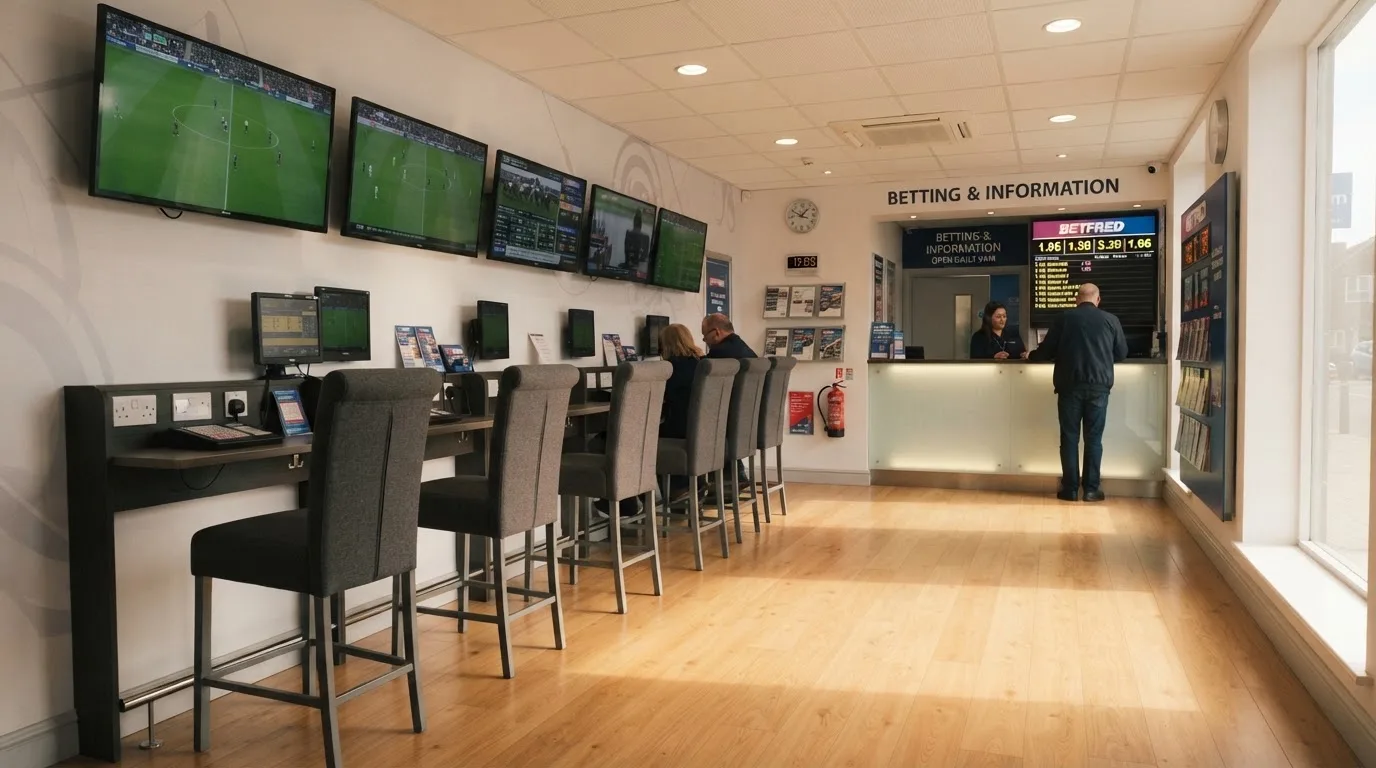
Minimum age 18. Name, address and date of birth verified before the customer can deposit or gamble. Credit cards banned for gambling in Great Britain since 14 April 2020, including credit-card-funded payments through an e-wallet. Debit cards and bank-based payments are not covered by that ban. There is no state-set deposit or loss ceiling for betting; limits are the customer’s choice. The customer pays no tax on betting winnings (general information, not tax advice).
Help is available through GamCare (National Gambling Helpline), GambleAware, NHS gambling clinics and Gamblers Anonymous. GAMSTOP is the national multi-operator online self-exclusion scheme and a mandatory licence condition for online operators since 31 March 2020.
Frequently asked questions
How does a bet on volleyball actually work?
A British-licensed bookmaker takes a fixed-odds bet on the outcome of a volleyball match (winner, set handicap, total points, correct set score, or outright tournament winner), settles the bet when the match finishes according to the operator’s rules, and pays the stake plus profit if the bet wins. The price is shown in fractional form on most British-licensed sites (5/1, 11/4, evens) and in decimal form on the betting slip’s return calculation; the conversion is decimal = (a ÷ b) + 1. A £10 stake at 5/1 (decimal 6.00) returns £60 if it wins.
Where can a bet be placed on volleyball in Great Britain?
A bet on volleyball can be placed with any GB-licensed fixed-odds bookmaker offering the sport on its feed, which covers all the brands reviewed above. The licence can be confirmed on the Gambling Commission public register, which is searchable by business name, trading name, domain or account number. A licence issued outside Great Britain is not a substitute for a Commission licence; an operator taking remote bets from customers in Great Britain needs a Commission licence wherever the operator is based.
Is betting on volleyball allowed?
Yes, betting on volleyball is allowed in Great Britain at a GB-licensed operator. Volleyball is not on any statutory prohibited list, and the major international and club competitions are priced by the broad-line licensed firms. The reader’s age (18+) and identity are verified before the first deposit; credit cards are not accepted for gambling; debit cards and bank-based payments are accepted. There is no statutory cap on stakes.
How is a bookmaker’s licence checked?
The Gambling Commission public register at the regulator’s official site lets the reader search by business name, trading name, domain or account number. The register entry shows the licence account number, the licence holder, the licence categories held, and the status of the licence. The brand name and the trading name can differ; the domain does not prove the licence because licensed operators use .com as well as .co.uk. A registered remote general betting standard (real events) licence is the licence category a fixed-odds sports bettor is looking for.
What does a bet return?
A bet returns stake plus profit when it wins. For a £10 stake at odds 1.90 (decimal) or 9/10 (fractional), the return is £10 × 1.90 = £19, of which £9 is profit and £10 is the stake returned. For a combination bet the odds of the legs multiply into one price; a two-leg accumulator at 1.80 and 1.60 returns £10 × (1.80 × 1.60) = £10 × 2.88 = £28.80 if both legs win. A free bet usually does not return the stake with winnings; a £10 free bet at 3/1 pays £30 profit if it wins.
What is the bookmaker’s margin?
The bookmaker’s margin is the share of every pound bet that the operator keeps on average across a market, and it sits inside the prices the operator publishes. It is calculated from the prices themselves: on a two-way market at 1.90 / 1.90 the payout share is 1 ÷ (1/1.90 + 1/1.90) ≈ 0.95, or about 95%, and the margin is the rest, about 5%. On an asymmetric three-way 1X2 market the margin is higher, often in the 6% to 8% band on a major fixture. The margin is what pays for the product and the operator’s profit; it cannot be removed but it can be compared across operators on the same event.
US & other team sports – Best Betting Tips
Content created by the «Best Betting Tips» team
