
Ante post betting in 2026: what it costs the punter who takes an early price
 Available in US
Last updated: 27 October 2026 · Licence data verified against the Gambling Commission’s public register
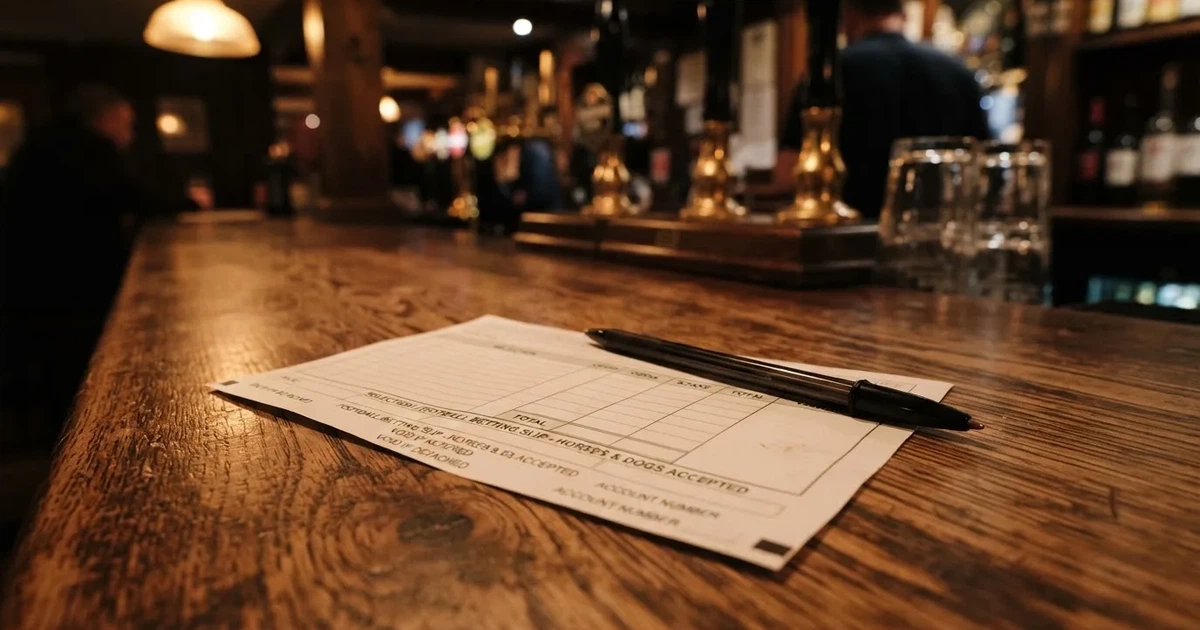
Ante post betting is the form of wagering that closes before a horse race, a major sporting championship or any other scheduled event is run. The name is bookmaker shorthand — “ante-post” on the betting slip — and the bet is placed days, weeks or sometimes months in advance, at a price the bookmaker set when the market opened. That early price is the point of it, and it is also the source of most of the rules a bettor needs to know. The headline price on the slip is not the price the bet is settled at; the price the bet is settled at is the one available at the off, and the difference between the two is where the bookmaker earns its margin over the whole market. This guide is built around that cost: what an early price really pays back, what the bookmaker’s terms take out of it, and how the rules differ between licensed UK bookmakers and the offshore sites that sit outside the British regulatory frame.
The legal frame around an early price in 2026
A bet placed at least a day before a horse race is treated as ante-post, and the price recorded on the slip is the one the bet will be settled at unless the operator’s terms state otherwise. That much is consistent across the licensed bookmakers; the rest of the law sits one level up, and it decides who may take the bet and what may be asked of the bettor before it is accepted.

In Great Britain the whole commercial market runs on a licence issued by the Gambling Commission under the Gambling Act 2005. Since the Gambling (Licensing and Advertising) Act 2014, an operator whose remote facilities are used in Great Britain needs a Commission licence wherever it is based — a Curaçao, Maltese or Gibraltar licence is not a substitute, because the test is the point of consumption, not where the company is registered. There is no statutory list of permitted markets: a bookmaker holds a licence for a category (remote general betting standard for real events, the relevant one here) and offers markets under its own rules and the Licence Conditions and Codes of Practice. The Commission’s public register is the whole test of who holds a licence, and the register can be searched by business name, trading name, domain or account number.
The minimum age to bet is 18, and the operator verifies name, address and date of birth before the first deposit or wager — that has been the case since 7 May 2019, and the verification covers free bets and bonuses as well as paid play. Credit cards are banned for gambling in Great Britain since 14 April 2020, including credit-card-funded payments through an e-wallet; debit cards and bank-based payments are not covered by that ban. Financial spread betting sits outside this regime: Spreadex, for instance, is regulated by the Financial Conduct Authority for spread betting and by the Gambling Commission for fixed-odds betting, and its own terms state that spread betting losses can exceed the deposit.
Northern Ireland is outside the Gambling Act 2005 and has its own older law, so a “GB licence” or “Great Britain licence” is the right frame; it does not regulate Northern Ireland. There is no state monopoly, no cap on the number of licences, and no statutory cap on stakes — operators set their own maximums and may restrict a single customer. The only test of whether a brand is licensed for Great Britain is the Commission’s public register, and a licensed brand may run on a .com as well as a .co.uk, so the domain proves nothing.
What “licensed” actually buys the bettor
A Gambling Commission licence is not a quality mark. It is a set of obligations the operator accepts in exchange for the right to take bets from people in Great Britain, and most of those obligations sit on the bettor’s side of the counter. Three of them matter before a bet is placed at all:

- GAMSTOP, the national multi-operator online self-exclusion scheme, has been a mandatory licence condition for online operators since 31 March 2020. Self-exclusion periods are six months, one year, five years, or five years with auto-renewal; after the minimum period the exclusion stays in place for a further seven years unless the customer asks GAMSTOP to remove it. GAMSTOP covers sites and apps, and not the betting shop, which runs a separate service.
- A financial vulnerability check applies when a customer’s deposits minus withdrawals exceed £150 in a rolling 30 days, and it has been in force for remote betting since 28 February 2025. The check is a public-record one — bankruptcy or county court judgments, for example — not an income check and not a credit reference check. The “affordability checks” the press writes about are financial risk assessments, which the Commission announced in a staged plan (article of 7 July 2026) with no start date: the right words at this point are “announced, staged, no start date”, not “in force”.
- Wagering requirements on bonuses are capped at 10x since 19 January 2026, so a £10 bonus at 50x needed £500 of qualifying bets; under the cap no more than £100. Mixed-product promotions — offers that require gambling on two or more product types such as betting, casino, bingo and lottery — are banned.
The package is checks, limits, GAMSTOP, a bonus cap and a regulator to complain to. The cost is verification before the first bet, and the possibility of being asked for source-of-funds documents at higher spend. None of that changes the price on the slip; it changes the conditions under which the price is offered.
What the offshore alternative looks like from the bettor’s side
A brand licensed elsewhere — Curaçao, Malta, Gibraltar, the Isle of Man, Anjouan — is not licensed for Great Britain unless it also appears on the Commission’s register. Providing gambling facilities in Great Britain without the licence the Act requires is an offence under section 33 of the Gambling Act 2005, aimed at the operator. No offence aimed at a customer who merely bets on an unlicensed site was found in the framework: the loss is one of protection, not one of legality.
The honest framing: a licensed bettor gets the checks, the limits, GAMSTOP, the 10x bonus cap and a regulator to complain to, paid for in verification at the door; an offshore bettor gets none of those protections and a real risk that funds are withheld if the operator refuses to pay, with no British consumer redress. Neither is “the safe choice” by default. The Commission’s enforcement is disruption rather than blocking — cease-and-desist notices, search-engine referrals, work with registrars, hosts and payment providers, and court-order DNS blocking powers that are either granted or about to be granted. ISP blocking is not in operation as a settled matter at the point of writing. A brand that does not appear on the register should be treated as an unregulated one for the purposes of any ante-post wager.
Staying in control of the bet, and of the bettor
The phrase “responsible gambling” is the operator’s phrase, and it covers a real set of mechanics. GamCare runs the National Gambling Helpline; GambleAware funds treatment and education; the NHS runs gambling clinics across Great Britain; Gamblers Anonymous runs peer support. GAMSTOP, the operator-side tool, is the one most directly tied to the bet: it stops a self-excluded customer from opening accounts, depositing and using bonuses across every GB-licensed online operator for as long as the exclusion runs, and once it runs its course the further seven-year tail applies unless the customer removes it. A licensed operator is required to offer a gross deposit limit on a fixed time frame under Remote Technical Standard 12; whether the second phase of that framework is live is not established, and the limits the customer sets are the customer’s choice — there is no state-set deposit or loss ceiling for betting in Great Britain.
Two practical points sit underneath all of this. First, the financial vulnerability check is automatic: it triggers on the deposits-minus-withdrawals total over a rolling 30 days, not on a single deposit, and it is a public-record check rather than a request for payslips. Second, the deposit limit is the customer’s own; the operator’s framework asks that one is set, but does not pick the number. Both mechanics protect the bettor who wants to be protected, and neither does anything for the bettor who wants the opposite — which is one reason the same operators run a separate GAMSTOP service, and why a brand that does not appear on the register offers none of it.
Strategy and the early price: what “tips” actually mean here
Ante post betting tips and predictions are part of the search traffic around the term, and they need to be read for what they are. A tip is a forecast of which horse, which jockey, which side or which player will win; a strategy is the way a stake is sized and a market is chosen. The two are different jobs, and they cost different things.
A forecast has no price. It states who the tipster thinks will win, and the bettor is the one who turns the forecast into a bet, at the price the bookmaker is offering at the moment of placement. The price is the bet. Two bettors who read the same tip and place the same selection on the same race get different bets if the prices move between them, and the price the slip records is the one the bet is settled at, not the price on the morning of the race. That is the whole mechanism the bookmaker sells: an early price, taken when the market is least certain, settled at the price the slip carries.
A strategy works the other side of the same mechanism. Bankroll management — the stake as a fraction of a defined bank, never chasing losses, walking away from a session that has gone wrong — is the part of ante-post play that actually protects the bettor, because the rules on non-runners and void bets treat the stake harshly. A bet on a horse that does not run in an ante-post market is a losing bet, the stake is not returned, and the only exception is the accumulator leg, where a balloted-out or eliminated selection leaves the bet running on the remaining legs at the original prices — a treble becomes a double. A single ante-post bet on a horse that is later withdrawn is a void under the non-runner rule, but ante-post non-runners are treated as losers, not as voids. The strategy sits inside that: ante-post is a market for bets a bettor wants to keep to the off, not for bets a bettor wants hedged at every declaration stage.
The third strand, the “today” tips pages, are mostly news-feed copy tied to the day’s racing cards and the Cheltenham Festival, the Grand National and the Royal Ascot meetings, which dominate the search traffic in the spring and early summer. They are useful as a record of what the price was when the tip was written; they are not useful as a forecast, because the price the slip will record is the one available when the bettor clicks, not the one in the article. A bettor who treats the tip as a price lock will be disappointed.
A note on systems. “Ante-post systems” that promise a return are tipster marketing with a bankroll gloss; the search traffic includes phrases like “ante post betting system” and “antepost betting system” alongside the strategy searches, and they all settle on the same arithmetic. There is no combination of selections and stakes that turns a negative expected margin into a positive one across many bets, and the bookmaker’s margin sits inside every price the bookmaker offers. The arithmetic that justifies an ante-post bet is the same one that justifies any other price-sensitive bet: the price is fair when it sits above the bettor’s own estimate of the true probability, and the bettor’s estimate of the true probability is the one piece of the calculation nobody can verify for the reader.
Bet types, prices and the mechanics of an early wager
Ante post betting is its own market on the betting slip, distinct from the day-of-race market the bookmaker also runs. The price on the ante-post slip is the price the bet is settled at, and the bet is settled at the price available when it is placed — not the starting price on the day of the race, not the Best Odds Guaranteed top-up the same operator may offer on the day. The mechanics are the same across the licensed UK bookmakers, and the exceptions are written into each operator’s own terms.
What may and may not be staked on an ante-post market
Place-only, conditional and forecast bets are not accepted on ante-post (future racing) markets, and bets are settled at the price available when placed. That is the first narrowing: the ante-post market is a single-price market on the win side, with the rest of the bet types — place, forecast, combination — switched off until the day of the race. The bettor’s choice at the ante-post stage is the selection, the stake and the decision to go each-way, where each-way doubles the stake and pays a fraction of the win price on the place side, with the place terms set by the race and the operator.
A bet on a horse that does not run is treated as a losing bet unless it sits inside an accumulator leg. A single ante-post bet on a withdrawn horse loses; an accumulator leg on a withdrawn horse voids that leg and leaves the bet running on the remaining selections at the original prices, so a fourfold becomes a treble. The same rule applies to a horse balloted out or eliminated from a race: on a single bet the stake is lost, on an accumulator the leg drops out. The non-runner rule on the day of the race, by contrast, usually voids the bet and returns the stake — ante-post is the harsher side of the same rule, and the harshness is the cost of the early price.
An ante-post bet is void if the race is abandoned or moved to a different track. That is the second narrowing: an ante-post bet is a bet on the race as it was framed when the bet was placed, and a change of venue is a different race. Void in this case means the stake returns, not that the bet settles on the moved race; the bettor’s only way back into the new venue is to place a new bet at the new price.
The price on the slip versus the price on the day
Best Odds Guaranteed is the marketing term for the offer that pays the higher of the price taken and the starting price on the day. It is a day-of-race offer. William Hill’s terms make that explicit: Best Odds Guaranteed on UK and Irish horse racing applies from 8 AM on the day of the race, on both single and multiple bets, and it does not apply to ante-post, tote or pari-mutuel bets. Copybet runs a different shape — Best Odds Guaranteed all day, every day on all UK and Irish racing, and first past the post on horse racing even if the winner is later disqualified — but the ante-post carve-out is the same. The price the ante-post slip records is the one the bet settles at; the top-up the day may bring is a separate bet, on a different market, at a different price.
This is the practical reason to take an ante-post price rather than wait for the day. Two prices exist on the same selection: the ante-post price, fixed at placement, and the day-of-race price, which may be higher or lower. BOG converts the day-of-race market into “at least the price you took”, and the ante-post market into “exactly the price you took, no more and no less”. A bettor who wants the upside of a drift on the day waits and takes the day market; a bettor who wants the certainty of the early price takes the ante-post market and accepts the non-runner rule.
Accumulators, each-way and the rest
Accumulators are the most common ante-post bet, because the early price compounds across legs and the long odds are where the marketing language lives. The same non-runner rule applies: a void leg drops out, the remaining legs run at the original prices, and the bet settles as a smaller accumulator at the original price. A treble becomes a double; a fourfold becomes a treble; an each-way accumulator doubles the stake and pays the place fraction on the place side, with the same leg-by-leg settlement.
The bet builder — combining markets from one event into a single bet — is a separate product. bet365 runs it as Bet Builder+, available pre-match and in-play, with the same single-event combination as the day-of-race market and no ante-post framing; ante-post markets on a single event are usually the win market and the place market, not a bet builder. The two products sit on different sides of the same bookmaker’s site, and the bettor who wants an ante-post combination needs to build the accumulator leg by leg rather than through the bet builder’s interface.
What the operator adds: cash out, boosts, and the rest
Cash out, acca insurance, price boosts and the rest of the modern betting slip are day-of-race products. Fitzdares’s app, for instance, offers cash out, accumulators, Lucky 15s, specials and ante-post markets on horse racing, football, tennis, rugby, cricket, golf and American football, with in-play live odds — the ante-post product and the in-play product sit on the same app and use the same wallet. bet365 runs Super Boosts, Winnings Boosts on Bet Builders and selected singles, and daily Bet Boosts. None of those mechanics applies to the ante-post slip; the slip settles at the price it records and pays out (or does not) on the day.
How an ante-post bet actually settles: a walkthrough
An ante-post bet is placed at the price shown on the slip at the moment of placement. The slip records the price, the selection, the stake and the market. From that point the bet runs on the operator’s terms, and the terms dictate what happens at each stage of the race’s life.
Stage one: declaration. When the race is first framed — days or weeks out, depending on the meeting — the ante-post market opens. The price on the slip is the price the bookmaker has set on the selection at that moment, against a field the bookmaker may not have fully framed. The bettor takes the price or walks.
Stage two: declarations and withdrawals. As runners are declared and withdrawn, the field firms up and the prices move. The bet on the slip does not move with the market: it sits at the price recorded at placement. If the selection is withdrawn, the bet loses on a single and the leg drops out on an accumulator. The stake is not returned on a single.
Stage three: the day of the race. The race is run under the ante-post market if it goes ahead at the original venue, and the bet settles at the price on the slip. The Best Odds Guaranteed top-up, if offered on the day, applies to the day-of-race market, not to the ante-post market; the two markets are separate bets on the same selection.
Stage four: settlement. The bet wins if the selection wins, at the recorded price, and the return is the stake multiplied by the recorded decimal price. The bet loses if the selection does not win; the bet voids if the race is abandoned or moved. There is no partial settlement at the ante-post stage: the bet is open until the race is run, and the bookmaker pays out (or does not) on the day.
The whole sequence — open, declarations, day, settlement — runs on the same bookmaker’s terms at every licensed UK operator. The differences between bookmakers sit in the markets they frame, the prices they set, and the products they layer on top (cash out, acca insurance, boosts). The settlement of the ante-post bet itself is the same across the licensed field.
The ten ante-post bookmakers on this list, and what each one offers
The ten operators that follow are listed on the Gambling Commission’s public register against a remote general betting standard (real events) licence, which is the relevant category for ante-post betting on horse racing and other scheduled events. Several of the brands on the register are run by the same licensee — Ladbrokes and Coral under Entain, Paddy Power and Betfair under Flutter — and the table below shows the licence holder rather than the trading brand, so two brands can appear against one licence holder where the underlying business is the same.
| Brand | Licence holder and Commission account | What the operator’s own terms say about ante-post |
|---|---|---|
| Fitzdares | Fitzdares Limited · Commission account 400 | App offers cash out, accumulators, Lucky 15s, specials and ante-post markets on horse racing, football, tennis, rugby, cricket, golf and American football, with in-play live odds |
| Tote | TDCO Limited · Commission account 54779 | Operator of the pool-betting Tote; runs alongside fixed-odds racing on its own sites |
| Geoff Banks | GB Sports Advisors Limited · Commission account 54095 | App offers live in-play prices and ante-post prices on future events |
| Lottoland | EU Lotto Limited · Commission account 38991 | App combines casino, lottery betting, sports betting and scratchcards; states it is licensed by the Gambling Commission for customers in Great Britain |
| Betmaster | BM Solutions GB Ltd (registered in Malta) · Commission account 65699 | Sportsbook and casino operator; the GB domain is the licence site |
| 10bet | Blue Star Planet Limited · Commission account 43173 | Sportsbook covers football, tennis and horse racing, with Cash out, Bet Builder and Live Streaming |
| bet365 | Hillside (UK Sports) ENC · Commission account 55148 | Bet Builder+ (markets from one event into a single bet, pre-match and in-play), Super Boosts, Winnings Boosts on Bet Builders and selected singles, daily Bet Boosts |
| Copybet | Copybet UK Limited · Commission account 53774 | Best Odds Guaranteed all day every day on UK and Irish racing; first past the post on horse racing even if the winner is later disqualified |
| London Bet | Thistle Bet Limited · Commission account 66162 | App published with a 17+ App Store age rating; states it is licensed and regulated in the UK |
| BetMGM | LeoVegas Gaming PLC · Commission account 39198 | Sports welcome offer for new UK customers who deposit £10 or more and place a sports bet within 7 days is four £10 free bets (two football accas of 4+ selections and two sports multiples of 2+), valid for 7 days with minimum odds and opt-in required |
The table is the legal record, not a ranking. Two things it does not show, and which matter for the choice. First, the licence holder is the legal entity the Commission regulates; the brand on the app store is the trading name. Several of these licence holders run more than one brand on the register, and a bettor’s existing self-exclusion with one brand extends to the others under the same GAMSTOP coverage. Second, the “antepost” cell is what the operator’s own published materials state; a brand that does not mention ante-post on its app store page may still run the market on the sportsbook, and the only place to confirm the market exists at a given moment is the operator’s own betting slip.
Fitzdares
Fitzdares runs its ante-post product through its iOS app, alongside cash out, accumulators, Lucky 15s and specials across horse racing, football, tennis, rugby, cricket, golf and American football. In-play live odds sit on the same app, which means the bettor who wants both an early price and a same-day in-play product does not have to switch wallets. The licence is held by Fitzdares Limited under Commission account 400, and the same account carries the remote general betting standard (real events) category the ante-post market sits under. For the bettor who reads the field as a sportsbook first and a horse-racing book second, the ante-post product is a useful extra rather than the centre of the offer.
Tote
Tote is the pool-betting operator: bets are pooled with other punters, the dividend is declared after the race, and the take is the operator’s cut of the pool rather than the margin inside a price. The pool-betting licence is separate from the fixed-odds licence, and TDCO Limited holds the remote general betting standard (real events) licence under Commission account 54779. Tote’s ante-post product, where it exists, sits inside the fixed-odds book rather than the pool; pool bets are placed on the day of the race and settle on the dividend. For the bettor who understands pool betting and prefers the dividend to a fixed price, Tote is the natural home; for the bettor who wants the early price on a single selection, the fixed-odds bookmakers above are the more obvious fit.
Geoff Banks
Geoff Banks’ app is published by GB Sports Advisors Limited and offers live in-play prices and ante-post prices on future events. The licence is held under Commission account 54095. The product description is short and the app’s ante-post product is framed as one of two pricing modes rather than as a separate vertical, which is the smaller-bookmaker shape: a sportsbook that runs both modes without splitting them into two marketing funnels. The bettor who is happy with a smaller brand and a single app for both day-of and ante-post pricing will find the framing familiar; the bettor who wants the layered product of a larger operator — boosts, acca insurance, bet builder — will not find it here.
Lottoland
Lottoland’s UK app combines casino, lottery betting, sports betting and scratchcards, and states it is licensed by the Gambling Commission for customers in Great Britain under the licence held by EU Lotto Limited, Commission account 38991. The ante-post product sits inside the sportsbook alongside the lottery and the casino, and the bettor who uses Lottoland for lottery will find the sportsbook a familiar wallet rather than a separate product. Mixed-product promotions — an offer that requires gambling on two or more product types such as betting, casino, bingo and lottery, for example “bet on football to get free spins” — are banned under the Commission’s promotion rules in force since 19 January 2026, so any welcome offer at Lottoland runs inside the sportsbook alone.
Betmaster
Betmaster is operated by BM Solutions GB Ltd, a Maltese-registered company, and states it holds Gambling Commission account 65699. The GB domain is the licensed site, and the licence sits under the remote general betting standard (real events) category. The brand’s marketing leans on the sportsbook and the casino together, and the ante-post product sits inside the sportsbook. For the bettor who wants a sportsbook licensed for Great Britain and run by an operator with a Maltese parent, this is the shape; the bettor who is uneasy with a non-UK parent should note that the regulatory test is the GB licence, not the parent’s jurisdiction, and that the Commission’s register is the whole test of who holds one.
10bet
10bet’s sportsbook covers football, tennis and horse racing, with Cash out, Bet Builder and Live Streaming, and the licence is held by Blue Star Planet Limited under Commission account 43173. The horse-racing book is one of three vertical sports products rather than the centre of the offer, and the ante-post product sits inside the racing book. The bettor whose primary interest is horse racing will find a competent racing book without the depth of a horse-racing specialist; the bettor whose primary interest is football and who wants ante-post on the racing as an extra will find the layout familiar.
bet365
bet365 is the largest of the licensed UK operators on this list, with Bet Builder+, Super Boosts, Winnings Boosts on Bet Builders and selected singles, and daily Bet Boosts, and the licence is held by Hillside (UK Sports) ENC under Commission account 55148. The ante-post product sits inside a sportsbook that frames the early price as one of several pricing modes rather than as a separate vertical. For the bettor who reads the field as a sportsbook first, the ante-post product is well-priced and well-framed; for the bettor who reads the field as a horse-racing book first, the depth of the racing product is the question, and the only place to answer it is the operator’s own betting slip.
Copybet
Copybet runs Best Odds Guaranteed all day every day on UK and Irish racing, and pays first past the post on horse racing even if the winner is later disqualified, under the licence held by Copybet UK Limited, Commission account 53774. The Best Odds Guaranteed offer covers the day-of-race market, not the ante-post market — the ante-post carve-out is the same as it is at every licensed operator — but the all-day framing of the day-of-race offer makes Copybet a strong fit for the bettor who plans to take some bets ante-post and others on the day. The ante-post product sits inside the same sportsbook.
London Bet
London Bet is published by Thistle Bet Limited, states it is licensed and regulated in the UK, and its app carries a 17+ App Store age rating, under the licence held by Thistle Bet Limited, Commission account 66162. The app is a casino-and-slots product first, with a sportsbook that runs alongside it; the ante-post product sits inside the sportsbook. For the bettor whose primary interest is the casino and who wants the ante-post product as a familiar extension, this is the shape; for the bettor whose primary interest is the sportsbook, the depth of the racing book is the question.
BetMGM
BetMGM’s UK app is published by LeoVegas Gaming PLC and lists Gambling Commission account 39198, and the sports welcome offer for new UK customers who deposit £10 or more and place a sports bet within 7 days is four £10 free bets (two football accumulators of 4+ selections and two sports multiples of 2+), valid for 7 days with minimum odds and opt-in required. The offer is a free-bet package rather than a cash bonus; the stake is not paid back with a win on a free bet, and the four free bets sit on different products (football accas and sports multiples) rather than on the racing book alone. The ante-post product sits inside the sportsbook, and the welcome offer sits on top of it.
How the bookmaker’s margin sits inside every price
Every price a bookmaker offers carries the bookmaker’s margin — the cut the bookmaker keeps of every unit bet on the market, before any individual bet is settled. The margin is the difference between the true probability of the outcomes and the implied probability the prices add up to, and it is the single number that decides whether a market is generous or thin.
Take an illustrative two-way market at decimal odds 1.90 / 1.90 — fractional 9/10 on each side, the kind of line a bookmaker might offer on a tennis match or a football match where the two sides are priced close. The implied probability on each side is 1 ÷ 1.90, or about 52.63%. The two sides sum to about 105.26%, and the excess over 100% — 5.26 percentage points — is the bookmaker’s margin. Of every £100 bet on the market across both sides, the bookmaker expects to keep about £5.26 on average; the rest is returned to bettors as winnings. A two-way market at 1.85 / 1.85 sums to about 108.1%, a margin of 8.1%; the same market at 1.95 / 1.95 sums to about 102.6%, a margin of 2.6%. The thinner the margin, the better the prices for the bettor.
The margin sits inside the price, not on top of it, and the bettor cannot see it without doing the arithmetic. The implied probability of a decimal price is 1 ÷ price; the implied probability of a fractional price a/b is b ÷ (a + b). On a fractional 5/1 shot the implied probability is 1 ÷ 6 = 16.67%; on a fractional evens shot (1/1) the implied probability is 1 ÷ 2 = 50%. Adding the implied probabilities across the outcomes of one market gives the overround, and the overround minus 100% is the margin. The same arithmetic works on decimal odds directly.
The margin compounds across a market. A football 1X2 market (home / draw / away) at 2.50 / 3.40 / 2.80 sums to about 105.6%, a margin of 5.6%; the same market at 2.80 / 3.60 / 3.00 sums to about 102.1%, a margin of 2.1%. The bookmaker’s margin on a horse-race ante-post market varies by race and by bookmaker, and the bettor’s reading of the price is the bettor’s reading of the margin at the same time. The lower the margin, the more of every unit bet returns to the bettor in the long run.
How a return is worked out from a stake and the price
The arithmetic of a settled bet is straightforward: return is stake multiplied by the decimal price, net profit is stake multiplied by (decimal price minus 1). On a £10 bet at decimal odds 6.00, the return is £60 and the net profit is £50; on a £10 bet at fractional odds 5/1 (decimal 6.00), the same arithmetic returns £60. On a £10 each-way bet at fractional 5/1, the stake doubles to £20 (£10 on the win, £10 on the place) and the place terms decide the place payout.
An accumulator is the same arithmetic across the legs. The decimal prices multiply into one price, and the stake is multiplied by that combined price. A fourfold with legs at 2.00, 3.00, 4.00 and 5.00 has a combined price of 120.00; a £10 stake returns £1,200 if all four legs win. The ante-post twist is the leg that drops out under the non-runner rule: the dropped leg’s price is removed and the bet settles on the remaining legs at their original prices. A fourfold at 120.00 with a 2.00 leg dropped becomes a treble at 60.00, and the £10 stake returns £600 on the remaining legs.
The Best Odds Guaranteed top-up, where it applies on the day, is paid on the difference between the price taken and the starting price on the day, on the win part of the bet. The arithmetic is the same: stake multiplied by (SP minus price taken), where the prices are decimal. The place part of an each-way bet is paid at the place terms, which are set by the race and the operator; the top-up does not apply to the place part.
What this guide is, and is not
This page is built around the cost of an ante-post bet to the bettor who takes it: the legal frame that decides who may take the bet, the rules that decide what happens when a horse is withdrawn, the products the licensed UK bookmakers offer on top of the early price, and the arithmetic that turns a stake and a price into a return. It is not a tipster and it does not name a winner. A forecast is a forecast, the price is the price, and the two are different jobs; the bet is the moment they meet, and the arithmetic of the bet is the page’s job. A reader who acts on a forecast on this page’s word is acting on the page’s word, and the page’s word on this book is what the rules and the arithmetic say.
The field above is the licensed UK field as it appears on the Gambling Commission’s public register, and the licence data was verified against that register at the snapshot date above. The bookmakers are not ranked; the table is the legal record, and the prose is the comparison. A reader who wants the early price, the non-runner rule spelled out, and the Best Odds Guaranteed carve-out explained has the answer on the page; a reader who wants a tip for the 3.15 at Cheltenham has come to the wrong page.
The cost, named in one line
An ante-post bet is a stake and a price, fixed at the moment of placement, settled on the day of the race at the price the slip carries, and lost outright if the runner should fail to line up. The non-runner rule is the cost; the early price is the reason a bettor accepts the cost; the bookmaker’s margin is the cut inside the price that no operator’s terms remove. The licensed bookmakers above run the same market under the same rule, and the difference between them is the price they set, the products they layer on top, and the conditions they attach to a welcome offer — not the rule on a non-runner or the carve-out for Best Odds Guaranteed. The choice is which price, which product and which condition; the rule is the same across the field.
Frequently asked questions about ante post betting
What is an ante post bet?
An ante-post bet is a wager placed before a horse race, a major sporting championship or any other scheduled event, at a price the bookmaker set when the market opened. The price on the slip is the price the bet settles at; the Best Odds Guaranteed top-up on the day of the race applies to the day-of-race market, not to the ante-post market. The bet is placed through the bookmaker’s ante-post (or “future racing”) market and sits on the slip until the race is run.
Does Rule 4 apply to ante-post bets?
Rule 4 is a bookmaker rule that deducts from winning bets when a horse is withdrawn from a race after the betting has started. It applies to the day-of-race market. Ante-post bets sit on a different market — the early-price market — and the non-runner rule on ante-post is harsher: a withdrawn runner loses the bet on a single, and voids the leg on an accumulator. The stake is not returned on an ante-post single, which is the cost of the early price.
How can it be checked that a bookmaker holds a Gambling Commission licence?
The Gambling Commission’s public register can be searched by business name, trading name, domain or Commission account number, and it is the whole test of whether a brand holds a licence for Great Britain. A licensed brand may run on a .com as well as a .co.uk, so the domain proves nothing. The register lists the licence holder, the trading names the licence covers, the licence categories (for ante-post on horse racing, the relevant one is remote general betting standard for real events) and the licence status.
How is the return on a bet worked out from the stake and the odds?
The arithmetic is the same for fractional and decimal odds: return is stake multiplied by the decimal price, net profit is stake multiplied by (decimal price minus 1). On a £10 bet at decimal odds 6.00 the return is £60 and the net profit is £50. On an accumulator, the decimal prices multiply into one price and the stake is multiplied by that combined price; on an each-way bet the stake doubles and the place part pays at the place terms. The non-runner rule applies to ante-post single bets and to accumulator legs as set out above.
What is the bookmaker’s margin and how can it be seen in the odds?
The bookmaker’s margin is the cut the bookmaker keeps of every unit bet on a market, and it sits inside the prices the bookmaker offers. To see it, take the implied probability of each outcome — 1 ÷ decimal price, or b ÷ (a + b) on fractional a/b — and add the implied probabilities across all the outcomes of the market. The excess over 100% is the margin. A two-way market at 1.90 / 1.90 sums to about 105.3%, a margin of 5.3%; the same market at 1.95 / 1.95 sums to about 102.6%, a margin of 2.6%. The lower the margin, the more of every unit bet returns to the bettor.
Bet types & in-play – Best Betting Tips
Content created by the «Best Betting Tips» team
