
Online rugby league betting in Great Britain — what the bookmaker really offers
 Available in US
A rugby league match is a small game with a fixed shape — thirteen players a side, eighty minutes of clock, six tackles to hand the ball back — and that fixed shape is exactly why a bookmaker can name a price on it. The question this page answers is not whether rugby league is bet on in Great Britain. It is. The question is what sits where: which competitions a British sportsbook covers, how a price is built from the margin that lives inside every line, which markets settle on the eighty minutes and which carry over into extra time, and how the operator a reader picks handles the part of betting the marketing never names — verification before the first deposit, the bonus cap that landed in January 2026, the GAMSTOP self-exclusion that sits behind every licensed site.

All data is current as of 27 October 2026 and was checked against the Gambling Commission’s public register and each operator’s own published terms.
In-play rugby league and when cash out pays
The sport moves in bursts. A Super League half ends with a converted try in the seventy-eighth minute and the price of the next half’s first score is taken by whoever watched the warm-up. In-play betting is the section of a sportsbook built for that minute, and for rugby league it carries the same shape it carries for football: prices update by the event, markets reopen after each restart, and a few markets are settled by what happens in the next passage of play rather than at full time.
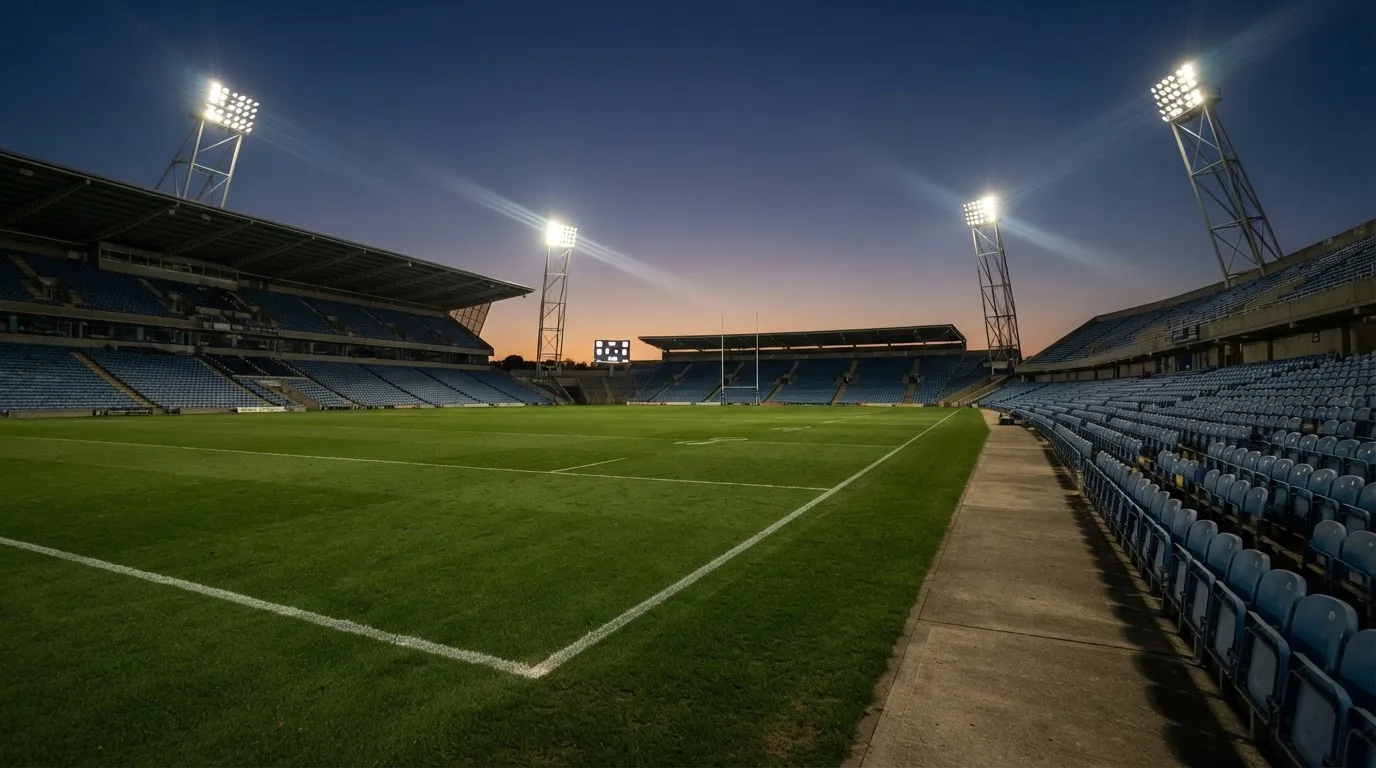
A licensed GB bookmaker will show in-play prices for major competitions — Super League, the NRL, the Rugby League World Cup — and the size of the in-play menu tracks the size of the live event calendar. For a Friday-night Super League fixture a serious bookmaker will run moneyline, total points, next scoring play, handicap, race to twenty and a small set of player markets. For a midweek Championship match the menu is smaller: moneyline, handicap, total points, sometimes a next-tryscorer market. The shape is set by what the bookmaker expects to settle, not by the sport.
Cash out is the second lever. The cash-out button buys a bet back before the match settles, at a price the bookmaker sets from the current state of play. For a winning moneyline at seventy-eight minutes the cash-out price is close to full return; for a losing handicap at half time the cash-out price is close to nothing. The bookmaker sets the price. There is no obligation to offer one, and a cash-out request can be refused mid-fixture. The button is useful when a multi-leg acca has six still standing and the early prices are looking shaky; it is less useful for a single moneyline on a Super League match the reader is happy to hold.
The detail that matters most for in-play rugby league is what settles when. Match Betting and Handicap Betting, on one GB bookmaker’s published rules, settle on eighty minutes of play. Most other markets settle on the official result including extra time. A handicap bet on a Super League regular-season fixture is therefore settled on the eighty-minute score, which is also the result on the league table. A “team to score first” bet on the same fixture settles on the first score in the eighty minutes. A “team to lift the trophy” bet on a Challenge Cup final settles on the official result, including extra time. The same operator’s rules refund bets on a postponed match for forty-eight hours from the original kick-off and void them after; whole-number handicap lines hit exactly refunds all wagers on that line.
The live picture, then, is small but real: prices update, a cash-out button sits on the bet slip when the bookmaker offers one, and markets split cleanly between eighty-minute bets and official-result bets. What it does not include is any guarantee of a price. The bookmaker can suspend a market mid-play, hold it for a video review, and reopen it lower. A reader who treats cash out as insurance has read the rules the wrong way round; cash out is the bookmaker’s price for buying the bet back, not a refund.
Predictions, tips and what a forecast is actually worth
The web is full of rugby league tips. They live on tipster sites, in YouTube previews, in app notifications the morning of a match. The honest framing is short: a tip is somebody’s opinion about who will win, dressed as a forecast. It does not change the odds. It does not change the margin. It does not move the line. What it does is give a reader a reason to back one side rather than another, and that reason is worth what the reader pays for it — usually nothing, sometimes a subscription, occasionally a percentage of profit on a tipster’s staking plan.

What a reader can do, and what no tipster can do for them, is read the price. Two numbers describe the price the bookmaker is offering: the decimal odds, which is the multiple the stake is multiplied by to give the return, and the implied payout share, which is what falls out of those odds when every outcome is inverted and summed. The sum of those inversions is below one, and the gap between the sum and one is the bookmaker’s margin. The bigger the gap, the more the bookmaker keeps of every unit bet on the market. A reader can compare prices across bookmakers without knowing who will win and pick the smaller margin; that choice has a measurable expected value over a season. A tip is a single event. Comparing bookmakers’ margins is a season’s work.
Bankroll is the second lever a tip cannot pull. The bet sizes that ruin a bankroll are the bet sizes that double down to recover a loss; the bet sizes that survive are the flat stakes of one to three per cent of the bank, sized before the match and held whatever happens. The mathematics of long-run survival is not complicated. Sticking to it after three losses is. No tip fixes that.
The multi-bet trap is the third lever. A Trixie is four bets from three selections; a Patent is seven; a Yankee is eleven; a Lucky 15 is fifteen; a Heinz is fifty-seven. The unit stake multiplies through every line, so a Lucky 15 at a pound a line costs fifteen pounds, and the bookmaker’s margin multiplies through every line with it. A four-leg Lucky 15 at four prices each with a five per cent margin has a compounded edge of roughly nineteen per cent, and the compounded edge is what the bookmaker keeps on average. The bet does not need a single leg to lose. The bet pays back when the legs win, and the bookmaker takes its cut from every leg the reader thinks is winning.
What a reader is left with, after all of that, is a smaller thing than the marketing suggests. There is no system that wins at rugby league betting. There is a smaller margin on a moneyline with Betfred than on a same-game multi at Swifty Sports, and that is worth something. There is a flat stake of two per cent of the bank, and that is worth something. There is a refusal to chase a loss with a bigger bet, and that is worth more than either of the others. None of that is a tip. All of it is the work.
Rugby league bet types and how odds are built
The core markets on a Super League fixture are moneyline, handicap, total points, race to twenty, first tryscorer and the small set of in-play markets named in the section above. The match-result bet is the simplest: a back on Wigan, a back on Hull, no draw on the regular two-way line because Super League fixtures go to extra time and a draw settles as a push or is settled as a draw at the bookmaker’s election. A handicap bet gives one side a head start: Wigan minus four, Hull plus four, the handicap added to or subtracted from the final score to settle the bet. A whole-number handicap line is push or refund if the line is hit exactly. A total-points bet is over or under a line the bookmaker sets, usually in the thirties for a Super League fixture and lower for a Championship one.
The handicap line carries a property the line on the moneyline does not: it makes a contest asymmetric. A 4/11 favourite on the moneyline pays less than even money, and a reader who wants to back the favourite has to stake more than they stand to win. A handicap bet on the same favourite at minus four brings the odds closer to evens and brings the favourite’s margin of safety into the bet. The cost is the favourites winning by more than four. The other side is the underdog at plus four: a smaller price, a four-point cushion, and the bet settles as a winner if the underdog loses by three or fewer and as a push if the underdog loses by four exactly.
The same-game multi or bet builder is the modern extension of the handicap. The reader picks two or more markets from one fixture and the bookmaker multiplies the prices into one line: Wigan to win, Tom Davies to score, over thirty-six total points, all in one ticket. The compounded price looks generous. The compounded margin is the part the marketing does not show. Three selections at five per cent margin each compound to a fifteen per cent edge, and a same-game multi at one bookmaker is rarely cheaper than two single bets on the same selections at another.
The odds are quoted in two forms in Great Britain: fractional, the older British convention (five-to-one, eleven-to-four, evens), and decimal, the European convention (6.00, 3.75, 2.00). The conversion is a+b/ab: a five-to-one shot at a pound returns six pounds, written as 6.00 in decimal form. An evens shot returns two pounds, written as 2.00. The decimal form is the easier one for the margin calculation, because the implied probability of a decimal price is its inverse: 2.00 implies a fifty per cent chance, 4.00 implies a twenty-five per cent chance. The sum of those inverses across every outcome of a market is the payout share, and one minus the payout share is the bookmaker’s margin.
A worked example for the margin this page is built around. A two-way market at 1.90 and 1.90 — evens the book, with a one-ninth vigourish on each side — gives an implied probability of one divided by one and nine-tenths on each outcome, fifty-two point six three per cent. The sum of the two is one hundred and five point two six per cent; the gap to one hundred is the bookmaker’s margin, five point two six per cent of every pound matched on that market. The same two-way market at 1.95 and 1.95 — closer to evens, a thinner margin — gives an implied probability of fifty-one point two eight per cent on each side, summing to one hundred and two point five six per cent, a margin of two point five six per cent. The difference between the two prices is the difference between a market where the bookmaker keeps five pence in the pound and a market where it keeps two and a half.
This is the lever a price-conscious reader pulls. Same sport, same fixture, two bookmakers with the same view of the result: the cheaper one keeps less of the stake. Over a season the difference compounds. It is the only part of betting the mathematics rewards reliably.
Rugby league tournaments and the British fixture list
Rugby league is governed internationally by the International Rugby League, and at club level the two main competitions are the Super League in Europe and the National Rugby League in Australia and New Zealand. Super League runs from February to October, with the Grand Final at Old Trafford at the end of the season; the NRL runs from March to October, with its own Grand Final in Sydney. The Rugby League World Cup runs every four years — the men’s tournament staged in 2022 in England, with the next edition planned for 2026 — and sits alongside the Rugby League Ashes, the mid-season test between Great Britain and Australia.
The British club pyramid sits beneath the Super League. The Championship is the second tier, with promotion and relegation between it and Super League. League One is the third tier, mostly semi-professional. The Challenge Cup is the knockout competition open to clubs from every tier of the rugby league pyramid and runs alongside the league season; the final is at Wembley. The AB Sundecks 1895 Cup is a smaller knockout for the lower leagues, late in the calendar.
A GB bookmaker’s rugby league menu tracks that calendar. From February to May the menu is heavy on Super League and the early rounds of the Challenge Cup; from June to September the menu adds NRL fixtures for the British audience and the middle rounds of the Challenge Cup; October brings the Super League and NRL Grand Finals, the Challenge Cup final and the Ashes tests; November and December are quieter and the menu drops back to whatever friendlies and lower-tier fixtures are scheduled. A reader who bets through the close season is betting on what the bookmaker offers, not on a full fixture list.
The match-betting and handicap markets on Super League and NRL fixtures settle on eighty minutes’ play, which is also the league-table score. Markets like “to lift the trophy”, “to qualify”, “to win the regular season” settle on the official result including extra time. The two settlement rules are the two timelines of the sport: the eighty-minute score and the official result, and the bet picks the timeline it lives in.
The non-runner and Rule 4 rules apply in the same way as they do on horse racing, though the trigger is a late withdrawal rather than a scratched runner. The bookmaker’s terms name the rule; a reader who bets ante-post on the Super League winner in November and a club changes coach in February has bet on a market whose price will move.
How to choose a rugby league bookmaker
A bookmaker a reader is choosing among in Great Britain has to clear a low regulatory bar before anything else is judged. The bar is a Gambling Commission remote licence, on the public register, under the operator’s own name. The Commission’s public register lists every operator licensed for remote general betting standard, real events, and a brand not on the register is a brand that does not have the bar cleared. That is the first cut and it is a hard one: a brand outside the register offers no GAMSTOP coverage, no Commission complaints route, no approved dispute-resolution route, no £150 financial vulnerability check, no bonus cap, and no British consumer redress if funds are withheld. The choice between licensed and unlicensed is not a judgement call. It is the test the Gambling Act 2005 writes.
Inside the licensed set, the questions that matter for rugby league are smaller. How early does the bookmaker price the Super League and NRL fixtures? Does it offer the match markets, the handicap markets, the player markets and the in-play menu a rugby league reader wants? Does it settle match betting on eighty minutes and to-lift-the-trophy on the official result, and is the rule published in plain English on the betting rules page? Is the cash-out button available on the markets the reader uses? Are the deposit and withdrawal rails the reader uses (debit card, bank transfer, the e-wallets that pay out fastest) on the bookmaker’s terms?
The smaller questions are where one bookmaker earns its place over another. A bookmaker that prices Super League on Monday for a Friday fixture, with full handicap and totals menus, in-play markets and a cash-out button, is a different proposition from a bookmaker that prices the same fixture on Thursday with moneyline and a handicap and no in-play. The first bookmaker gives a reader the time and the tools to compare prices and place the bet before kick-off. The second bookmaker gives a reader a Friday-night bet at last-minute prices.
The table below is a landscape view of the licensed British bookmakers research has confirmed as offering rugby league markets, or as holding a Commission licence for the categories of betting a rugby league reader uses, and what each operator’s own terms say about the sport. The licence numbers are the public-register identifiers against each brand; each is verified against the Gambling Commission’s public register.
| Bookmaker | Licence | Rugby league terms |
|---|---|---|
| Swifty Sports | Remote general betting standard (real events), Commission account 58957 | Lists Best Odds Guaranteed, Cash Out, daily price boosts, live streaming and in-play betting; Bet Builder listed as coming soon |
| Ladbrokes | Remote general betting standard (real events), remote betting intermediary, Commission account 54743 | Lists rugby league markets across Super League, NRL and international fixtures; full match, handicap, total points and player markets |
| Smarkets | Remote betting intermediary, Commission account 39173 | Exchange pricing on rugby league fixtures; bank transfer deposits instant from £10 to £10,000; withdrawals processed within 6 hours from £10 to £100,000 |
| Midnite | Remote general betting standard (real events), Commission account 101839 | Lists in-play events, an acca builder, popular accas and price boosts with maximum-stake limits |
| Copybet | Remote general betting standard (real events), Commission account 53774 | Best Odds Guaranteed all day on all UK and Irish racing; pays first past the post on horse racing |
| Betfred | Remote general betting standard (real events), Commission account 39544 | Lists 21 sports; rugby league covered with match, handicap and total points markets; long-established British operator |
| Fafabet | Remote general betting standard (real events), Commission account 57385 | Best Odds Guaranteed on UK and Irish horse racing from 9am on race days |
| Fitzwilliam Sports | Remote general betting standard (real events), Commission account 48760 | Dublin bookmaker with capped membership; instant deposits, fast withdrawals, timeouts and deposit limits |
| Bar One Racing | Remote general betting standard (real events), Commission account 56556 | Irish independent with shops across Ireland; horse racing focus with growing sportsbook offering |
| BetTom | Remote general betting standard (real events), Commission account 64959 | Lists a sports welcome offer; sports markets across football, horse racing and selected other sports |
A reader using the table starts with the licence column, confirms the brand sits on the Commission’s public register, and reads the third column for what the operator’s own terms say about rugby league specifically. Where the third column says nothing about rugby league, the brand may still price the sport — the table is what the operator’s own published material says, not a complete catalogue — and a reader who plans to bet on rugby league weekly will check the operator’s betting rules page and the in-play menu before staking.
The shape of rugby league betting in Great Britain
The British rugby league calendar is unusual for a major sport in that the professional men’s game is concentrated in the north of England, with the Super League clubs in Wigan, Warrington, Hull, Leeds, St Helens, Castleford, Huddersfield, Wakefield, Salford and Catalans. The fan base is regional rather than national and the bookmaker’s coverage of rugby league reflects that: every licensed GB bookmaker prices Super League, most price the NRL for the British audience, fewer price the Championship, and very few price League One. The Championship market is a smaller, sharper market, with fewer bookmakers quoting prices and the lines thinner. A reader looking for the best price on a Championship fixture is more likely to find it on a betting exchange than on a traditional bookmaker.
The sport’s format gives the bookmaker a stable scoring schedule: roughly forty to fifty points per Super League fixture, with tries worth four points and conversions worth two. Total-points lines on a Super League fixture sit in the high thirties or low forties, and the totals markets on NRL fixtures are higher, in the forties and fifties. The shape of those totals markets is a property of the sport, not of the bookmaker: the scoring is high, the lines are high, and the over/under markets reflect that.
The pace of the sport is a property of the format. Six tackles per possession gives a clear rhythm: the attacking team advances through the tackles, hands the ball over on the sixth, and the defensive team takes its turn. The end-of-set decision — kick on the fourth, fifth or sixth tackle — is the unit of tactics the bookmaker prices in play. The next-score markets on a Super League fixture track that decision: a try on the fourth tackle versus a kick on the fifth is the rhythm the in-play market reads.
The international game is smaller. The Rugby League World Cup sits at the top of the international calendar, with England, Australia, New Zealand and Samoa the consistent contenders. The Ashes is the longer-running international fixture, between Great Britain and Australia, with a series every few years. The mid-season test gives a smaller international fixture each year. A reader betting on the international game is betting on fewer fixtures than a reader betting on Super League, with the lines thinner and the markets narrower.
The legal frame a rugby league bet sits inside
The Gambling Commission is the regulator for the commercial gambling market in Great Britain, a non-departmental public body sponsored by the Department for Culture, Media and Sport. The framework is the Gambling Act 2005, which covers Great Britain — England, Scotland and Wales. Northern Ireland runs on its own older law, so a bookmaker licensed by the Commission for remote betting serves Great Britain and Northern Ireland under separate arrangements. Since the Gambling (Licensing and Advertising) Act 2014 an operator whose remote facilities are used in Great Britain needs a Commission licence wherever it is based: a Curaçao, Maltese or Gibraltar licence is not a substitute.
The Commission’s public register is the test. The register lists every licensee by business name, trading name, domain and account number, and a brand not on the register has no Commission licence. A reader who checks the register before depositing is checking the only thing that determines whether the protections of the British system apply: GAMSTOP coverage, the £150 financial vulnerability check, the ten-times bonus wagering cap, the social responsibility code, the approved dispute-resolution route. A reader who skips the check takes the protection off.
Minimum age is eighteen. Since 7 May 2019 the Commission has required licensed operators to verify name, address and date of birth before a customer can deposit or gamble, including with a free bet or a bonus. The credit-card ban has applied since 14 April 2020 and covers any credit-card-funded payment through an e-wallet, not just the credit card itself. Debit cards and bank-based payments are not covered by the credit-card ban.
What may be bet on has no statutory list. An operator holds a licence for a category — remote general betting standard (real events) is the category a rugby league reader uses — and offers markets under its own rules and the Commission’s Licence Conditions and Codes of Practice. In-play rugby league is offered by GB bookmakers and is governed by the operator’s licence conditions and customer-protection duties; the marketing line of “unrestricted” in-play is not a legal conclusion.
Betting exchanges run under a betting intermediary licence, which is a different category. The exchange sets its own commission rate on net winnings, which is not the same as a sportsbook’s margin, and the markets are priced by the exchange’s customers back and laying outcomes rather than by the exchange setting the line.
Financial spread betting is regulated by the Financial Conduct Authority, not the Commission, and the rules of FCA-regulated spread betting apply: losses can exceed deposits. A reader betting on rugby league through a spread-betting firm on a sports spread is in a different regime from a reader betting through a Commission-licensed sportsbook, and the protection of the Commission’s customer-protection rules does not apply.
Responsible gambling and the controls a licensed operator has to offer
Every online bookmaker licensed by the Gambling Commission is a member of GAMSTOP, the national multi-operator online self-exclusion scheme. GAMSTOP exclusion is a mandatory licence condition for online operators since 31 March 2020, with periods of six months, one year, five years, or five years with auto-renewal. After the minimum period the exclusion stays in place for a further seven years unless the customer asks GAMSTOP to remove it. The scheme covers online sites and apps; the betting shops use a separate service.
The financial vulnerability check, on LCCP condition 3.4.4, has applied since 30 August 2024 and it applies when a customer’s deposits minus withdrawals exceed £150 in a rolling 30 days (since 28 February 2025). The check is a public-record check — bankruptcy, county court judgments — and is not an income check or a credit reference check. Financial risk assessments, the affordability checks of the press coverage, were announced in a staged plan in a Commission article of 7 July 2026, with no start date. A reader who sees a bookmaker advertising “no affordability checks” is reading a marketing line; the Commission’s staged plan governs when the checks apply.
Deposit limits are the customer’s tool. Operators must offer a gross deposit limit on a fixed time frame, with the first changes applying since 31 October 2025 and a second phase postponed to 30 September 2026. The customer sets the limit and the operator enforces it. Timeouts and self-exclusion at the operator level run alongside GAMSTOP: the operator’s own timeout closes the account for a chosen period, and the operator’s own self-exclusion runs for a minimum of six months.
Help is the national set: GamCare runs the National Gambling Helpline, GambleAware funds treatment and research, the NHS runs gambling clinics, and Gamblers Anonymous runs peer support. The links are on every licensed operator’s safer-gambling page and on GAMSTOP.
Bonuses, free bets and what the cap costs the marketing
The marketing of every licensed British sportsbook has a bonus attached. The bonus cap that landed on 19 January 2026 is the part the marketing does not name. The Commission’s promotion rules, in force since that date, cap wagering requirements on bonuses at ten times the bonus amount: a £10 bonus at fifty-times wagering needed £500 of qualifying bets, and under the cap no more than £100 of qualifying bets is required. Mixed-product promotions — an offer that requires gambling on two or more product types such as betting, casino, bingo and lottery, for example “bet on football to get free spins” — are banned.
The cap does not address every question. Whether it applies to free bets with no wagering condition, and any cap on the money value of a bonus, are not established in the rules themselves. A free bet whose stake is not returned with a win is worth its face value times the odds minus one, divided by the odds, times the market’s payout share. A £10 free bet at 4.00 (implied probability twenty-five per cent, payout share on a thin two-way market of around ninety-eight per cent) is worth roughly £7.30 in expected return. That is the upper bound of what the free bet pays, on average, before the wagering rule eats into it.
The terms that cost a reader the most are the smallest ones on the page. The minimum odds for a qualifying bet, often evens (2.00) or higher, exclude the short prices on heavy favourites. The deadline, often seven or fourteen days, is short enough that an unluckily timed injury list can void the bonus before the wagering is complete. The market restrictions, often excluding same-game multis, in-play markets or specific sports, narrow where the qualifying bets can go. The maximum stake per qualifying bet, often a small percentage of the bonus, drags the wagering requirement out over more bets. None of those terms is hidden. All of them are in the small print, and the small print is the document the bonus is written in.
The welcome offer at one licensed operator is fifty per cent back as a free bet of up to £50, with a matching fifty per cent back up to £50 as free slot funds for casino play. The headline number is the marketing; the terms are the wagering requirement, the minimum odds for the qualifying bet, the deadline for using the free bet, the market exclusions and the cap on free-bet winnings. A £25 free bet at minimum odds of 2.00, settled within seven days, with winnings capped at the face value of the free bet, is the offer the headline becomes once the small print is read. The cap on free-bet winnings is the term the marketing does not show, and it is the term that determines what the free bet is worth.
The expected cost of clearing the bonus is the wagering requirement times the margin of the qualifying market. A £10 bonus with a ten-times wagering requirement needs £100 of qualifying bets; at a market margin of five per cent the expected cost is £5. A £50 bonus at the same wagering requirement needs £500 of qualifying bets, with an expected cost of £25. The marketing reads “free £50”. The arithmetic reads “expected cost £25 to clear”. The arithmetic is closer to the truth.
Betfred
Betfred is one of the longer-established British bookmakers, with a sportsbook that covers twenty-one sports and a casino vertical of more than two thousand games. The Commission licence is held by Petfre (Gibraltar) Limited under account 39544, on the public register as remote general betting standard, real events. The Betfred Sports, Casino & Games app is published by Done Brothers (Cash Betting) Ltd, the UK-facing operating arm of the group.
Betfred provides comprehensive rugby league coverage, including Super League, NRL, and international contests. These markets feature moneyline, handicap, and points total options. The match-betting rule at Betfred settles on eighty minutes for Super League and NRL fixtures, in line with the convention; the rest of the markets settle on the official result including extra time. In-play markets run on the bigger Super League and NRL fixtures, with prices suspended for video review and on the tackle count.
The welcome offer features a sportsbook bonus. Detailed terms apply, including specified wagering, odds levels, validity periods, and caps on potential bonus payouts. Grasping these conditions clarifies the promotional offer’s true value versus its headline claims.
For a rugby league reader with a long season’s staking plan, Betfred is the longer-priced end of the British licensed set: full coverage of the Super League and NRL fixtures, an in-play menu on the bigger matches, and a sportsbook that has priced rugby league in Britain for decades. The price-conscious reader will compare Betfred’s moneyline with a same-fixture line at Ladbrokes, Copybet or a betting exchange before staking, because the difference between two operators’ prices on the same fixture is the difference that compounds over a season.
Ladbrokes
Ladbrokes runs on Commission account 54743 under LC International Limited, the same parent that runs Coral, with the licence categories covering remote general betting standard (real events) and remote betting intermediary. The Ladbrokes Sports Betting App is published by Entain Operations Limited and is one of the higher-rated British sportsbook apps.
The rugby league offering is full: Super League, NRL, the international fixtures and the Challenge Cup, with match betting, handicap, total points, first tryscorer, race to twenty and the player markets. In-play coverage on Super League and NRL fixtures is consistent through the season, with prices updated on the tackle count and on the end-of-set decision. The cash-out button is available on most pre-match markets and on the in-play markets on bigger fixtures.
The welcome offer includes a sportsbook bonus, subject to standard promotional terms encompassing wagering obligations, minimum odds thresholds, duration limits, and maximum winning caps. Ladbrokes’ stake-limit and after-the-fact pricing rules run from the group’s own risk framework; the bookmaker can restrict a customer whose betting pattern the trading team reads as sharp, which is a property of every serious sportsbook.
For a rugby league reader who wants a full menu across the season and a sportsbook that has priced British rugby league for decades, Ladbrokes is the choice the marketing already names. The price-conscious reader will compare Ladbrokes’ moneyline with Betfred’s, with Copybet’s and with the exchange prices on Smarkets before staking.
Smarkets
Smarkets is a betting exchange, not a traditional sportsbook. The Commission licence is on account 39173 under Smarkets (Malta) Limited, in the remote betting intermediary category. An exchange lets readers back and lay outcomes, with the exchange taking a commission on net winnings rather than setting the line. The price on a Super League moneyline at Smarkets is set by the exchange’s customers; the exchange takes a small commission on the winner’s profit.
The rugby league offering tracks the calendar, with prices on Super League, the NRL and the international fixtures where the exchange’s customers have priced the market. The match-betting and handicap markets settle on the operator’s own rules, and the in-play markets run on the bigger fixtures where liquidity allows. The exchange is thinner than a sportsbook on smaller fixtures: a Championship moneyline at Smarkets may have no customers backing or laying it, while the same fixture at Betfred or Ladbrokes will be priced.
The settlement rails are quick: deposits by open bank transfer are instant from £10 to £10,000 and withdrawals are processed within six hours from £10 to £100,000. UK debit card deposits are instant from £10 to £15,000. A reader who values speed of withdrawal and the absence of a stake restriction has a real reason to use an exchange alongside a sportsbook.
For a rugby league reader who bets on the bigger Super League and NRL fixtures, Smarkets is the second bookmaker in a two-bookmaker staking plan: a back bet at Smarkets against a lay bet at a sportsbook, or a sportsbook price checked against the exchange price for the same outcome. The commission is the exchange’s cut of net winnings, the prices are set by the exchange’s customers, and the protection is the Commission’s licence and the standard GAMSTOP coverage.
Midnite
Midnite runs on Commission account 101839 under Midnite Limited. The site is newer than Betfred or Ladbrokes, with a sportsbook offering built around the in-play menu, an acca builder, popular accas and price boosts with maximum-stake limits.
The rugby league menu includes bigger Super League and NRL clashes, providing main markets like moneyline, handicap, and total points, in addition to an acca builder for combining selections. In-play coverage on the bigger matches is consistent through the season. The price-boost mechanic has a maximum-stake limit, which is the small print the marketing does not show; a price-boosted bet at a higher stake reverts to the un-boosted price, or the stake is capped at the maximum the boost allows.
The welcome offer is a sportsbook bonus: new customers who bet £5 or more on pre-match odds of EVS (2.0) or greater within fourteen days of sign-up receive £25 in free bets and fifty free spins, valid for seven days. The free bets settle on the standard free-bet rule (stake not returned), the free spins settle on the casino subject, and the deadline is the seven-day clock from the moment the free bet is credited. The marketing reads “£25 free bet”; the small print is the wagering rule on the bonus element, the minimum odds on the qualifying bet, the seven-day expiry and the cap on free-bet winnings.
For a rugby league reader who wants an acca builder and price boosts, Midnite is a credible licensed operator. The price-conscious reader compares its moneyline against competitors’ offerings and reviews the maximum-stake limit on price boosts before using them.
Copybet
Copybet runs on Commission account 53774 under Copybet UK Limited. The site combines a sportsbook with a copy-betting feature, where readers can copy the bets of named tipsters and pay a percentage of profit on the staking plan.
This bookmaker offers wagering on major rugby league competitions, such as Super League and NRL matches, including common markets like moneyline, handicap, and total points. The best-odds-guaranteed mechanic runs on UK and Irish racing all day: where the starting price is bigger than the original price, the bigger odds are paid. The first-past-the-post rule on UK and Irish horse racing pays the winner as finishing first even where the winner is later disqualified, which is the racing side of the offer rather than the rugby league side.
The welcome offer features a sportsbook bonus, governed by essential rules concerning wagering obligations, odds minimums, time constraints, and payout caps. The copy-betting feature sits alongside the sportsbook and charges a percentage of profit on the staking plan a reader follows, which is a separate cost from the bookmaker’s margin on the markets the tipster bets on.
Copybet includes a copy-betting feature where readers duplicate tipsters’ bets, paying a performance fee on profits, in addition to standard sportsbook markets. The price-conscious reader compares its moneyline against competitors’ offerings and understands the commission structure before engaging.
Fafabet
Fafabet runs on Commission account 57385 under Taichi Tech Limited. The site is a sportsbook with a casino vertical and a focus on UK and Irish racing.
The operator prices rugby league for premier Super League and NRL fixtures, with typical markets like moneyline, handicap, and totals. The best-odds-guaranteed mechanic on UK and Irish horse racing win and each-way bets runs from 9am on race days; rugby league does not have a starting-price equivalent, so the BOG rule does not apply to rugby league. The in-play menu on rugby league is smaller than on a sportsbook-led brand.
The welcome offer includes a sportsbook bonus, with governing stipulations on wagering volume, minimum odds, offer validity, and payout ceilings. The casino vertical runs alongside the sportsbook with the mixed-product promotion banned by the Commission rules since 19 January 2026.
Fafabet caters primarily to racing enthusiasts, providing a focused sportsbook experience. The price-conscious reader benchmarks its rugby league moneyline against industry leaders like Betfred and Ladbrokes and consults betting exchanges like Smarkets, noting that in-play coverage for minor fixtures may be limited.
Fitzwilliam Sports
Fitzwilliam Sports is a Dublin bookmaker with capped membership. The Commission licence is on account 48760 under SBKI Limited. The site describes itself as a high-stakes bookmaker with a members-only welcome subject to compliance criteria.
This site lists rugby league markets for top-tier Super League and NRL events, offering classic moneyline, handicap, and points-total bets. The platform offers instant deposits, fast withdrawals, timeouts and deposit limits, with safer-gambling coverage linking to GambleAware, GAMSTOP and Gamblers Anonymous. The members-only welcome is the high-stakes bookmaker model: the customer passes the operator’s compliance criteria before depositing, and the operator can refuse a membership application.
For a rugby league reader who wants a high-stakes bookmaker with a Dublin operation and a members-only model, Fitzwilliam Sports is in the licensed set. The membership application is the first step, and the operator’s compliance criteria are the small print a reader reads before applying. Price-conscious readers bench-mark these odds against those found at major UK bookmakers and Smarkets.
Bar One Racing
Bar One Racing has rebranded as BAR 1 Betting, an Irish independent bookmaker with shops across Ireland and horse racing sponsorships at Dundalk, Fairyhouse, Navan, The Curragh, Curraheen Park and Cork. The Commission licence is on account 56516 under Bar-One Racing Limited.
The sportsbook offering is racing-led, with rugby league covered on the bigger Super League and NRL fixtures at the British end of the calendar. The match betting, handicap and total points markets are present but smaller than at a sportsbook-led brand. The in-play menu on rugby league is smaller than at Betfred, Ladbrokes or Midnite.
The welcome offer includes a sportsbook bonus, with specific rules detailing wagering amounts, qualifying odds, deadline dates, and potential payout limits. The Irish shop network is the part of the brand a reader in Great Britain does not see directly, but the racing sponsorships and the Irish-facing identity shape the marketing.
For a rugby league reader with a primarily racing-focused staking plan, BAR 1 Betting is in the licensed set. Price-conscious bettors cross-check these costs against alternative platforms like Betfred, Ladbrokes, and Smarkets.
BetTom
BetTom runs on Commission account 64959 under Bet Tom Limited. The site combines a sportsbook with a casino vertical and a focus on football, horse racing and selected other sports.
The sports welcome offer features fifty per cent back as a free bet of up to £50, with a matching fifty per cent back up to £50 as free slot funds for casino play. These offers come with standard bonus terms including wagering, qualifying odds, and market restrictions. The mixed-product promotion rule applies: a single welcome offer combining a sportsbook free bet with casino free slot funds is the kind of offer the rules address.
For a rugby league reader who wants a sportsbook with a smaller-scale welcome offer and a casino vertical, BetTom is in the licensed set. Astute readers check its pricing against major operators and Smarkets before placing their bets.
Swifty Sports
Swifty Sports runs on Commission account 58957 under Swifty Global (UK) Ltd. The app offers Best Odds Guaranteed, Cash Out on markets including horse racing and football, daily price boosts, live streaming and in-play betting, with Bet Builder listed as coming soon.
The rugby league selection features major Super League and NRL matches, including popular moneyline, handicap, and total-points wagers. The in-play menu on rugby league is consistent through the calendar. The price-boost mechanic has maximum-stake limits; the cash-out button is available on the bigger markets.
The welcome offer includes a sportsbook bonus, subject to rules regarding wagering volume, minimum odds, time limits, and payout caps. The smaller-scale operator has a smaller welcome offer than Betfred or Ladbrokes, and the small print is the document the offer is written in.
For a rugby league reader who wants a newer sportsbook with Best Odds Guaranteed and Cash Out, Swifty Sports is in the licensed set. Savvy bettors benchmark these odds against leading UK operators and Smarkets before engaging.
The arithmetic behind the prices
The bookmaker’s margin is the gap between what the odds imply and the full unit of stake on every outcome of a market. A two-way market at 1.90 and 1.90 gives an implied probability of fifty-two point six three per cent on each side, summing to one hundred and five point two six per cent; the margin is five point two six per cent of every pound matched. A two-way market at 1.95 and 1.95 gives an implied probability of fifty-one point two eight per cent on each side, summing to one hundred and two point five six per cent; the margin is two point five six per cent. The same sport, the same fixture, two bookmakers: the cheaper one keeps less.
Over a season the difference compounds. A reader who places a hundred Super League moneyline bets at average odds of 1.90 loses five point two six pounds per hundred pounds staked to the margin; a reader who places the same hundred bets at average odds of 1.95 loses two point five six pounds per hundred pounds staked. The compounding edge is roughly two point seven per cent of stake across the season, and that is the price difference the marketing does not show. A reader who reads only the headline reads the multiple the stake returns; a reader who reads the margin reads the cut the bookmaker keeps.
The same calculation applies to a handicap or total-points market, with three or more outcomes adding up to over one hundred per cent. A Super League handicap line at Wigan minus four / Hull plus four quoted at 1.91 / 1.91 gives the same five point two four per cent margin; the same line quoted at 1.95 / 1.95 gives two point five six per cent. A three-way total-points line at under 36.5 / 37 / over 36.5 quoted at 1.91 / 13.0 / 1.91 sums to one hundred and nine point two per cent, a margin of nine point two per cent; the same line quoted tighter brings the margin down. The wider the margin, the more the bookmaker keeps; the tighter the margin, the more the reader keeps.
The conclusion this calculation earns is the band the formula produces, not a single figure. The margin on a rugby league two-way market at thin prices sits between roughly two and a half and five per cent, with a typical Super League moneyline in the three-to-four per cent band and a typical NRL moneyline in the four-to-five per cent band. A wider three-way or handicap market sits higher, in the five-to-eight per cent band, with same-game multis higher still. The reader who picks the bookmaker with the thinnest margin keeps the most of every stake; the reader who picks the bookmaker with the widest margin gives the most away. The arithmetic is the same on every fixture. The choice is the reader’s.
The offshore alternative and what a reader gives up
A bookmaker licensed by the Gambling Commission is the only bookmaker that offers the British protections: GAMSTOP coverage, the £150 financial vulnerability check, the ten-times bonus cap, the social responsibility code, the approved dispute-resolution route, and the Commission’s complaints route if a customer cannot resolve a dispute with the operator. An offshore bookmaker — a brand licensed in Curaçao, Malta, Gibraltar or Anjouan — offers none of those.
The Gambling (Licensing and Advertising) Act 2014 makes a Commission licence compulsory at the point of consumption. Providing gambling facilities in Great Britain without the licence the Act requires is an offence under section 33 of the Gambling Act 2005, aimed at the operator. No offence aimed at a customer who merely bets on an unlicensed site has been written into the Act; the loss is the loss of protection. The customer does not get the £150 financial vulnerability check, the GAMSTOP coverage, the bonus cap, the approved dispute-resolution route, the Commission’s complaints route, or the British consumer redress if funds are withheld. The bookmaker’s terms apply, and the bookmaker’s terms are written in a jurisdiction the British system cannot enforce.
Enforcement is disruption, not blocking. The Commission issues cease-and-desist notices, refers unlicensed brands to search engines, and works with registrars, hosts and payment providers to remove the routes to British consumers. Court-order DNS blocking powers are in the process of being extended; ISP blocking is not yet in operation. A reader who bets on an unlicensed site is betting on a site that the regulator is trying to take down; the reader who bets on a licensed site is betting on a site the regulator is supervising.
The honest framing, then, is short. A licensed bookmaker offers verification before the first deposit, GAMSTOP coverage, the bonus cap and the social responsibility code. An unlicensed bookmaker offers none of those, and the reader has no British route if funds are withheld. Neither is “the safe choice” by default; the licensed set is the only set on which the British protections apply.
Working the offer the marketing writes
The welcome offer at a licensed British sportsbook is a marketing document before it is a betting document. The headline reads “£50 free bet” or “100% bonus”. The small print reads “10x wagering”, “minimum odds 2.00”, “7-day expiry”, “free-bet winnings capped at £50”.
The wagering requirement is the qualifying-bet total the reader has to place before the bonus converts to withdrawable cash. Ten times the bonus amount is the Commission’s cap; a £10 bonus needs £100 of qualifying bets, a £50 bonus needs £500. The expected cost of clearing the wagering is the wagering requirement times the margin of the qualifying market. A £10 bonus at ten-times wagering on a market with a five per cent margin has an expected cost of £5; a £50 bonus at the same wagering on the same market has an expected cost of £25. The marketing reads “free £50”; the arithmetic reads “expected cost £25”.
The minimum qualifying odds rule excludes short prices on heavy favourites. A wagering requirement that requires bets at minimum odds of 2.00 excludes the 1.20 shots on Grand Final favourites, and a reader who wants to clear the wagering on favourites alone has to find favourites at 2.00 or bigger. The deadline rule is a hard wall: seven or fourteen days from the moment the bonus is credited, after which the bonus and any winnings from the bonus are forfeit. The market restrictions exclude same-game multis, in-play markets or specific sports, narrowing where the qualifying bets can go.
The cap on free-bet winnings is the term the marketing does not show. A £25 free bet at minimum odds of 2.00, settled within seven days, with winnings capped at the face value of the free bet, pays back the stake plus the capped winnings, and the capped winnings are the rule the headline does not name. A £25 free bet with winnings capped at £25 and settled at odds of 4.00 would have paid out to £100 without the cap; with the cap it pays out to £50. The cap is the price of the headline.
A reader who reads the small print before claiming the offer knows what the offer costs. A reader who claims the offer first and reads the small print after pays the cost the small print wrote.
Frequently asked questions
How is a rugby league bet placed online?
Place a moneyline, handicap, total points, first tryscorer or in-play bet at a bookmaker licensed by the Gambling Commission for remote general betting standard (real events), verify name, address and date of birth before the first deposit, and confirm the bookmaker settles match betting and handicap on eighty minutes and the rest on the official result including extra time. The bet is the standard back bet on a selection, settled when the fixture settles.
How is a Gambling Commission licence verified?
Search the Commission’s public register by business name, trading name, domain or account number, and confirm the brand sits on the register under the categories of remote betting the customer uses (remote general betting standard, real events, for a sportsbook; remote betting intermediary for an exchange). A brand not on the register is a brand that does not have a Commission licence.
How is the return on a bet worked out from the stake and the odds?
Return = stake × decimal odds. For a £10 stake at 3.00 the return is £30, and the net profit is £20 (the return less the stake). For a combination bet the legs multiply into one price; a Lucky 15 at fifteen lines of £1 each costs £15 and pays back the legs’ product on the winning lines.
What is the bookmaker’s margin and how does it appear in the odds?
The margin is the gap between the sum of the inverses of every outcome’s decimal odds and one. A two-way market at 1.90 / 1.90 sums to one hundred and five point two six per cent and gives a margin of five point two six per cent; the same market at 1.95 / 1.95 sums to one hundred and two point five six per cent and gives a margin of two point five six per cent. The bigger the gap, the more the bookmaker keeps.
How do fractional odds such as 5/1 convert to decimal odds such as 6.00?
Decimal odds = a/b + 1. Five-to-one is 5/1 + 1 = 6.00. Eleven-to-four is 11/4 + 1 = 3.75. Evens is 1/1 + 1 = 2.00. The decimal form is the easier one for the margin calculation: the implied probability is the inverse of the decimal price.
Which responsible-gambling tools does a licensed bookmaker have to offer?
Every licensed online bookmaker is a GAMSTOP member, offers deposit limits, timeouts and operator-level self-exclusion, runs the £150 financial vulnerability check on a rolling 30-day basis, links to GamCare, GambleAware, the NHS gambling clinics and Gamblers Anonymous, and verifies name, address and date of birth before the first deposit. The licensed set is the only set on which these protections apply.
Rugby, cricket & Gaelic – Best Betting Tips
Content created by the «Best Betting Tips» team
