
Field Hockey Betting Tips: How to Build a Tip That Holds Up
 Available in US
Field hockey sits in an odd corner of the sportsbook. Major bookmakers carry the headline tournaments and the international fixtures; club and lower-division matches appear and vanish by the day, and the markets on any single game are thinner than the same firm offers on football. That is precisely why the question of what a “tip” actually is becomes worth answering before anyone places a bet. A tip is a probability estimate expressed in plain words; the bookmaker’s price is another probability estimate expressed as a number; the difference between the two, once the margin is removed, is the only thing that pays. Everything else is the language bettors wrap around that arithmetic.
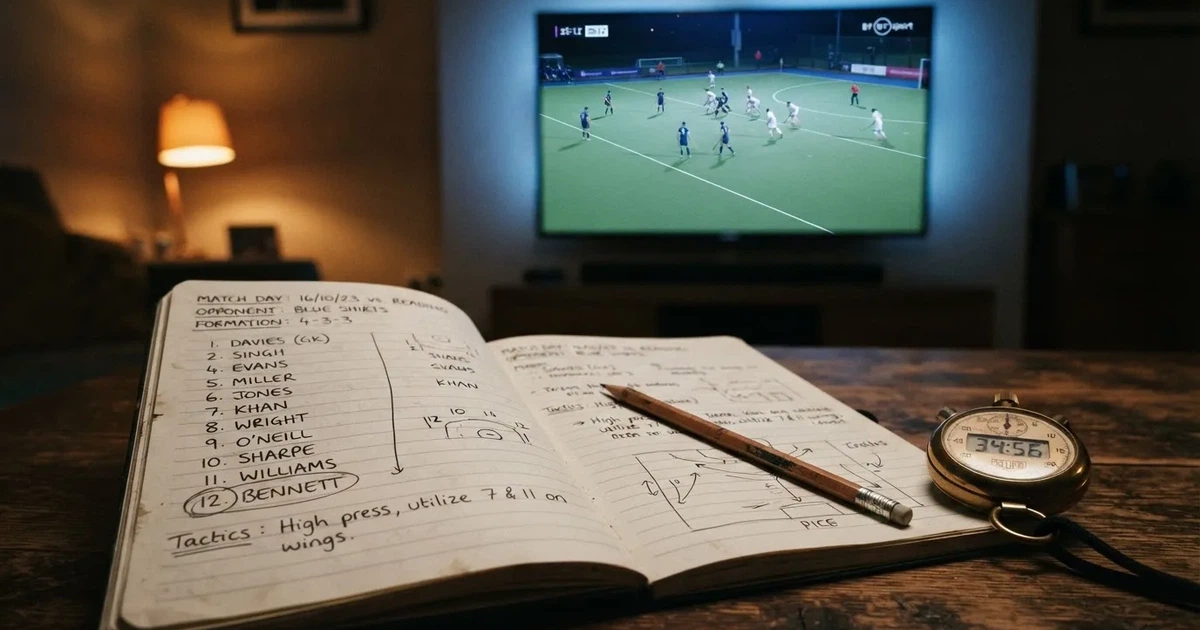
This guide is written for the punter who wants to think in those terms. It explains how a field hockey price is built, what a value bet really is, how live betting and cash out change the calculation mid-match, which markets a UK bookmaker actually offers, and what the safer-gambling duties of a licensed operator look like in 2026. No picks, no predicted scorelines, no promised wins. The page is a framework, not a tip sheet; the conclusions you draw from it are your own.
Snapshot current as of 27 October 2026, checked against the Gambling Commission’s public register.
What a “Field Hockey Betting Tip” Actually Is
The word “tip” suggests a private edge — a phone call from a contact, a model with more data than the market. In practice, a tip is a number: the chance you assign to an outcome. If you think the Netherlands beats India 55% of the time at this tournament, the fair decimal price is about 1.82. If a bookmaker offers 1.90, the difference is what a value bet looks like, in three words and zero ambiguity. The job the punter is doing is estimation, and the bookmaker’s job is to make the estimation hard.

Field hockey is harder than football to estimate, for a reason that rarely gets named. A football match might run to 1,000+ events per side in a season; a field hockey international can have a long gap between fixtures, a small squad, and weather that matters more than form. With less public data, prices are less efficient — but they are also less reliable on both sides. The edge, when it exists, is small and short-lived. Most weeks, no tip survives contact with the market for long.
This is the frame the rest of the page sits inside.
The Building Blocks of a Tip
Four inputs go into any honest field hockey prediction.

Form is the simplest, and the most misleading. Recent results carry signal, but they conflate opposition strength with own performance. A team that has beaten three mid-table sides is in better form than the W/D/L column suggests; a team that has lost to the top three is in worse form than that column shows. The fix is strength-of-schedule: weight the form reading by who the opponent was.
Line-ups and availability. International hockey uses a small squad, and the loss of a goalkeeper, a drag-flicker, or a first-choice defender changes the expected goals by more than a casual reader expects. Tournament fixtures cluster, and a side that played the night before has rotated players. The bookmaker adjusts for this on the day; the tip built three days earlier has not.
Tactics and surface. Some sides press high and concede short corners; some sit deep and concede long corners. A pitch surface (water-based or sand-based) and weather (wet, hot, windy) change goal expectation. The market captures some of this in the totals price; the punter who watches the sport notices the rest.
Market context. A bookmaker’s price has a margin baked in; a price movement tells you which way the firm’s risk has shifted. If the favourite drifts from 1.80 to 1.95 without a line-up change, somebody has backed the other side for a reason. That signal is not always right, but it is information.
Why No Tip Is Ever Certain
The honest answer to “is this tip certain?” is no, in three different ways at once.
The model is incomplete. Field hockey has fewer public data feeds than football; the inputs above are the best a private bettor can get, but they are a subset of what an informed bookmaker’s traders have. On any single match, the bookmaker knows more, on average, than the tipster.
The price is the prediction, not the truth. A bookmaker offers 1.90 not because it believes 1.90 is fair but because the two-way margin allows it. The 1.90 may imply 53% probability when the true probability is 60% — that is the value bet — or it may imply 53% when the truth is 47%, and the value is in laying the favourite. Either way, the price is one estimate; the outcome is a separate event.
Variance eats small edges. A 5% edge on a 1.90 shot, struck 200 times at a flat £10, has a positive expected return. A 5% edge on one bet, struck once, often loses. The reader who treats a tip as a single transaction is gambling on the result; the reader who treats a tip as one bet in a long series is investing in a method. The first is what most people do, which is why most people lose.
How to Read Field Hockey Betting Odds
Odds are the language of the market, and the market speaks two dialects in Great Britain: fractional (5/1, 11/4, evens) on the high street and in racing journalism, decimal (6.00, 3.75, 2.00) on most online sportsbooks. Both express the same thing. The conversion is straightforward: decimal = fractional + 1, so 5/1 becomes 6.00, evens becomes 2.00, and 11/4 becomes 3.75. The two systems are interchanged freely in practice; a punter who only knows one pays a small price in slow comparison.
What the odds actually say is a probability. Decimal odds of 2.00 imply 50%, 1.50 imply about 67%, and 5.00 imply 20%. The implied probability is 1 divided by the decimal odds. A market on a match is the sum of those implied probabilities, one per outcome, and the sum is always more than 100%. The excess is the bookmaker’s margin, sometimes called the overround.
Seeing the Margin in the Numbers
A two-way market at 1.90 / 1.90 is symmetric. The implied probabilities are 1 ÷ 1.90 = 52.63% on each side, totalling 105.26%. The 5.26 percentage points above 100% is the bookmaker’s margin on this market, and a punter backing either side pays that margin in expected value over a long run. The same 1.90 / 1.90 expressed fractionally is 9/10 against on each side.
For a three-way market such as the standard 1X2 — home win / draw / away win, where the draw is allowed in some hockey competitions — the symmetric price is 2.60 / 2.60 / 2.60, which implies roughly 38.5% on each outcome, summing to 115.4% and giving a 15.4% margin. Three-way markets are inherently more expensive for the bettor than two-way markets; the extra outcome widens the bookmaker’s edge.
A worked example. Take an illustrative two-way market priced at 1.90 / 1.90. The bookmaker’s payout share is 1 ÷ (1 ÷ 1.90 + 1 ÷ 1.90) = 1 ÷ 1.0526 = 95.0%. The bookmaker keeps 5.0% of every unit staked. A punter backing one side at random loses, on average, 5% of stake per bet over a long run. A punter who finds a real edge above 5% breaks even; an edge above 5% is profit. A punter who has no edge and a 5% margin built in is paying for the privilege of having a bookmaker accept the bet.
This is the band that matters: the margin of the market is the floor below which no tip, model or hunch produces a profit.
When the Margin Bites Hardest
The margin is not the same in every market. Match result (1X2) tends to be the cleanest, because liquidity is highest and prices are sharp. Totals (over/under goals), handicaps and player props carry higher margins because fewer people bet them and the bookmaker’s risk is wider. Same-game accumulators and bet builders compound margins: a bet builder stacks four selections, each with its own margin, and the multiplied price carries a margin larger than any of the parts. A 5% margin per leg becomes an 18.6% margin at four legs. That is the price of convenience, and it is not a small one.
The market margin is also a moving target. A Premier League football match on a Saturday afternoon carries a 2–4% margin; a Tuesday-night hockey friendly between two mid-table nations can carry 8% or more. The thinner the market, the more the bookmaker keeps. A punter who prices everything as if the margin were 5% is overpaying on the quiet fixtures and underpaying on the headline ones.
What Fractional and Decimal Odds Share
Both systems answer the same question: what does a winning £10 stake return? At 5/1 fractional, the bookmaker pays £50 in profit plus the £10 stake, total £60. At 6.00 decimal, the £10 stake returns £60, of which £50 is profit. The stake is included in the decimal return; the profit is shown alongside. Fractional shows profit only; decimal shows total return. Neither system tells you whether the bet is value — that is your calculation, not the price’s.
Live Betting and Cash Out on Field Hockey
Live, in-play betting is the natural habitat of a sport that scores in bursts. A field hockey quarter lasts 15 minutes, and a side can score twice in two minutes or not at all in a quarter. The pre-match price assumed a steady-state; the live price redraws the picture after every circle entry, every short corner, every card. The bettor who understands the structure of the game can read those moments faster than the model, and that asymmetry is the entire reason in-play exists.
How In-Play Pricing Moves
A bookmaker’s in-play algorithm follows the ball. After a goal, the favourite’s price lengthens and the underdog’s shortens. After a green card (a two-minute suspension), the side with the extra player is shortened slightly. After a red-card ejection or a penalty stroke, the favourite is shortened heavily and the underdog lengthens. The faster the algorithm reacts, the smaller the window for a value bet on the next event.
The bettor’s counter-move is to model the moment before the algorithm catches up. A short corner to the favourite is worth a small price shortening; an algorithm that has not yet registered the circle entry is offering a price that does not reflect the chance. That edge closes in seconds, on a fast sport, and the punter who hesitates is too late.
Cash Out Mechanics
Cash out is the bookmaker’s offer to buy back an open bet at a price of its choosing. The price the bookmaker offers reflects the current state of the match and the bet’s original stake; the punter’s choice is whether to lock in a smaller known return or to wait for the full payout. The trade is risk management dressed as a button.
The cost of cash out is the bookmaker’s margin, again, but applied to the new price. A pre-match bet at 2.50 with the favourite now 1.20 in-play has a fair cash-out value of (stake × 2.50) ÷ 2.20, since the bet would win £2.50 per £1 staked and the current price implies 83.3% on a yes/no basis. The bookmaker offers less than that — typically a few per cent below the fair value — and the difference is its fee for giving the bettor the option. Cash out is not free; it is a price the punter pays for control.
The case for using cash out is asymmetric. A punter on a five-leg accumulator, three legs in, has a large book on a small expected value. Cash out converts that into a smaller certain return and removes the variance. A punter on a single pre-match bet, one goal up with a quarter to play, has a strong position already and may not need the cash-out price. The right call depends on the bettor’s risk tolerance, not on the button.
Where Live Betting Adds Value
Three situations reward a field hockey punter who watches the match.
A short-corner specialist. Some sides convert short corners at 30%+, others at 10%. A team with a specialist drag-flicker, awarded a short corner, has a probability spike the pre-match price did not capture. Watching the corners stack up is the bet.
A red card or a green card. A two-minute suspension with the score tight is a meaningful swing. The pre-match price assumed even personnel; the live price adjusts, and the bettor who has read the line-ups can move faster.
A goalkeeper change or an injury. A side that loses its starting goalkeeper has a different expected goals against for the rest of the match. The algorithm typically catches up within a minute; the punter who saw the substitution first has a short window.
In all three, the window is small. The bettor who logs in mid-shift, two minutes after the goal, is reading the algorithm’s price, not a misprice.
Field Hockey Bet Types and Markets
The market list for a top-tier field hockey match on a major bookmaker is shorter than for football but longer than the casual reader assumes. Knowing which markets exist and which ones the bookmaker prices sharply is half the work of finding value.
Match Result
The 1X2 market — home win, draw, away win — is the headline price. Some hockey competitions (most knockout formats, the FIH Pro League) use extra time and shoot-outs to settle ties; the 1X2 price may apply to regulation time, the full-time result, or the “to qualify” market. A bettor who does not read the rule has bought a different bet from the one they meant to.
The 1X2 on a hockey match carries a margin in the 5–8% range for major fixtures, higher for friendlies. A two-way line (no draw) reduces the margin but costs flexibility; the punter trades one for the other.
Totals (Over/Under)
Totals on goals are the second-most-popular market. The line is usually 2.5 goals for international hockey, sometimes 1.5 for women’s fixtures or defensive match-ups. The margin on totals is typically higher than the 1X2 — 6–8% is common — because the bookmaker has less liquidity to balance its book.
A “total goals by team” market and a “total goals per quarter” market appear on some bookmakers for high-profile fixtures. Both carry higher margins, since the sample size for either team scoring more than 1.5 goals is small.
Handicaps
Asian and European handicaps exist for hockey but are thinner than in football. A -1.5 handicap on a strong favourite prices shorter than the match-result price; the punter is paying the bookmaker for the insurance of a one-goal loss. The margin is similar to totals, in the 6–8% band.
Player and Team Props
First goalscorer, any-time goalscorer, player to score a hat-trick — these markets exist on major hockey fixtures, and on the very top internationals (Olympics, World Cup) the market is deep enough to support them. Below the top tier, the markets vanish; the bettor is left with the 1X2 and totals.
Outright (Tournament Winner)
Outright markets on the Olympics, World Cup, FIH Pro League and continental championships run for weeks or months before the tournament. The margin on outrights is high — often 20–30% — because the bookmaker is pricing 12 or 16 teams, each with low liquidity, and the risk it carries on any one selection is large. The market is also slow to incorporate news; an injury to a key player three months before a tournament moves the price, but the punter who reads the squad announcement first has an edge.
Bet Builders and Same-Game Accumulators
Bet builders let a punter stack multiple selections from one match into one bet: home win and over 2.5 goals, both teams to score, and a player to find the net. Each leg has a margin; the combined price carries a compounded margin. A punter who treats a bet builder as a single bet and reads the price as “one number” is paying several margins stacked. The price looks generous because the stake is small, but the expected return is the same as taking each leg separately at a worse overall price. The convenience costs a real per cent.
Field Hockey Competitions and Where the Markets Are
The competition calendar drives the betting calendar. Most of the year, hockey betting is a thin market of league games and qualifiers. Twice a year — once for the men, once for the women — a major tournament concentrates the action, and the bookmakers expand their markets for a few weeks.
The Major Tournaments
The men’s and women’s FIH Hockey World Cup is the headline event every four years; the 2026 calendar carries the lead-up qualifiers and the 2026–27 FIH Pro League, with the next World Cup staged in 2026 in India and Belgium. A home World Cup for the men shifts outright prices heavily on the host; the betting market and the tournament market disagree on host-nation advantage for years, and the punter who has watched recent tournaments can spot which way the bias runs.
The Olympic hockey tournament runs in parallel with the Summer Games. The next Summer Olympics is Los Angeles 2028, with hockey qualifiers through 2026 and 2027. Olympic outrights carry a margin of 25%+ early in the cycle, narrowing as the field narrows. The punter with a view on a hockey nation with a strong junior pipeline has a real long-run market for that view.
The FIH Pro League is the annual round-robin competition among the top men’s and women’s national teams. Matches are played throughout the year in host cities, and the bookmakers price most of them. The Pro League is a tougher market than a friendly or a qualifier because both sides are full-strength and the data is dense.
The continental championships — EuroHockey, the Asia Cup, the Pan American Games, the Africa Cup of Nations — are the second tier. A continental championship may have only one or two bookmakers offering a deep market; the price the punter sees is the price they take, and the price is usually wide.
Club Hockey and the Domestic Leagues
Domestic leagues exist in the Netherlands, Germany, England (the Premier League and the lower divisions), India (the Hockey India League), Australia, Belgium, Spain, Argentina, and a handful of other countries. Coverage on UK bookmakers is patchy. The Indian Hockey India League has, on occasion, appeared on major firms during the season; the Dutch and German leagues appear on the firms that have a continental sportsbook; the English league’s top flight gets weekend coverage. The lower the league, the more the market contracts.
A punter with a strong view on a domestic league is, in many cases, betting against a bookmaker’s model that has not seen the league. That is either an edge or a trap, depending on the punter’s actual knowledge.
How a Value Bet Is Built — and What It Costs
A value bet is a price that is higher than the true probability justifies. The arithmetic is simple. The work is estimating the true probability. The cost is the bookmaker’s margin, which sits inside every price and which the punter pays in expected value over a long run.
The Margin Is the Floor
For a two-way market at 1.90 / 1.90, the bookmaker’s margin is 5.0%. A punter who backs randomly loses 5% of stake over time. A punter whose model is 3% worse than the bookmaker’s loses 8% over time. A punter whose model is 3% better than the bookmaker’s breaks even before bet costs, and profits after if staking is efficient.
The margin is paid on every bet. The punter who bets 200 times a year at a 5% margin loses 5% of turnover to the bookmaker, plus a small handling loss for variance, before their own skill is counted. A punter with a 6% edge on a 5% market makes 1% of turnover. A punter with a 3% edge on a 5% market loses 2% of turnover. The 3% is not free.
Stake Sizing
A flat stake is the simplest method and the one most readers use. A unit-stake system — 1 unit on a strong value bet, 0.5 units on a marginal one, 0 on a non-value — is a refinement. Kelly staking — a fraction of the bank proportional to the edge — maximises long-run growth but is volatile; a half-Kelly or quarter-Kelly stake is the practical compromise for a bettor with a small bank. The right fraction depends on the punter’s confidence in their own edge; overstating the edge turns Kelly into a faster route to zero.
Bankroll discipline is the rule that decides whether the punter is still in the game a year later. A 5% bankroll cap per bet is conservative; a 2% cap is the rule most serious bettors use. Anything looser is gambling, not investing.
Top UK Bookmakers for Field Hockey Betting
The list below is a comparison, not a recommendation. Each bookmaker holds a Gambling Commission remote licence and offers field hockey in some form. The list is ordered as research presents it; the order is not a quality ranking. A licensed operator is not, by virtue of the licence, the best one for any given bettor; the licence is the entry ticket, the rest is a judgement the bettor makes on price, market depth, and product.
| Operator | Licence | What the operator’s own terms state |
|---|---|---|
| BetGoodwin | Gambling Commission account 2927, held by Goodwin Racing Limited | Pays Best Odds Guaranteed on all UK and Irish horse and greyhound racing, capped at £1,000 |
| Sky Bet | Gambling Commission account 67370, held by SBG Sports Limited | New customers receive £30 in free bets after a deposit of at least £5 and a qualifying bet of at least 5p at 1/1 or greater |
| 10bet | Gambling Commission account 43173, held by Blue Star Planet Limited | Sportsbook covers football, tennis and horse racing, with cash out, a bet builder and live streaming |
| bet365 | Gambling Commission account 55148, held by Hillside (UK Sports) ENC | Offers in-play betting, live streaming of events worldwide, plus Bet Track, Match Live and a Live Golf Tracker for following bets in play |
| Copybet | Gambling Commission account 53774, held by Copybet UK Limited | Best Odds Guaranteed all day every day on all UK and Irish racing, with first-past-the-post payout on horse racing even if the winner is later disqualified |
| BoyleSports | Gambling Commission account 39469, held by Boylesports Enterprise | Acca Insurance requires opt-in, a £5 minimum stake, 1/2 minimum odds and a maximum refund of £20 as a free bet expiring in 7 days; bets must be placed and settled on the same day |
| Betmaster | Gambling Commission account 65699, held by BM Solutions GB Ltd | States it holds a Gambling Commission licence for customers in Great Britain |
| VBet | Gambling Commission account 44662, held by SCGO Limited | Bet Builder, pre-match and in-play betting, live streaming and a live calendar with results and statistics |
| BetVictor | Gambling Commission account 39576, held by BV Gaming Limited | Best Odds Guaranteed on UK and Irish horse racing, enhanced live race streaming and a BetFinder feature, alongside Smart Stats |
| Spreadex | Gambling Commission account 8835, held by Spreadex Limited | New customer offer of £60 in free bets for a £10 fixed-odds bet, usable across fixed odds and spread betting; qualifying bet must be placed within 28 days of account opening |
The field-hockey-specific product varies. Some firms list the FIH Pro League and the World Cup, with a 1X2 and a totals market on most matches. Others have the internationals only. The reader who wants a deep hockey menu bets with the firm that has it; the reader who wants the Best Odds Guaranteed on the racing they bet alongside it makes a different call.
What the Licence Does and Does Not Mean
A Gambling Commission licence means the operator is subject to the LCCP, the social-responsibility code, the anti-money-laundering rules, the GAMSTOP scheme and the Commission’s complaints procedure. It does not mean the operator has a deep field-hockey product, that its prices are sharper than a rival’s, or that the welcome offer is worth the qualifying bet. The licence is a floor, not a ceiling. The punter who treats the licence as a recommendation has not read the table above.
The 10 firms listed are the comparison set. Several of them — Ladbrokes and Coral, Paddy Power and Betfair — run under common licensees, so they are not ten independent brands; the list above is one licensee per business. A name absent from the list is not unlicensed, and a name on the list is not endorsed.
Legal and Regulatory Framework for UK Bettors
The legal frame for online betting in Great Britain is the Gambling Act 2005, which covers England, Scotland and Wales; Northern Ireland has its own older law and falls outside the 2005 Act’s main reach. The Commission is the regulator for commercial gambling in Great Britain, and the point of consumption rule — in force since the Gambling (Licensing and Advertising) Act 2014 — requires any operator whose remote facilities are used in Great Britain to hold a Commission licence, wherever the operator is based. A Curaçao, Maltese or Gibraltar licence is not a substitute for a Commission licence for GB-facing customers.
What May Be Bet On
There is no statutory list of permitted bets or markets. An operator holds a licence for a category — remote general betting standard (real events) is the common one for sportsbooks — and offers markets under its own rules and the LCCP. In-play betting is offered; the controls are the operator’s licence conditions and the customer-protection duties, not a blanket statutory permission. Esports, virtual events, politics, TV shows and novelty markets are all within the licence category and offered by GB bookmakers. No statutory cap on stakes exists: operators set their own maximum stakes and may restrict individual customers.
Age and Identity
Minimum age is 18. Name, address and date of birth are verified before a customer can deposit or gamble — including with a free bet or a bonus — under rules in force since 7 May 2019. The verification is automated where possible and manual where needed; the bookmaker that waves a customer through is the bookmaker that has read the rules less carefully than its rivals.
Bonuses and Marketing
The Commission does not license advertising; that runs through the CAP Code (non-broadcast) and BCAP Code (broadcast), enforced by the ASA, alongside the LCCP marketing conditions. The CAP Code section 16 says marketing must be socially responsible, must not be of strong appeal to under-18s, and no one who is or seems to be under 25 may be featured gambling or play a significant role in an advertisement (with an exception for marketing placed where a bet can be made directly). That rule concerns who appears in the ad, not who may bet.
Promotion rules in force since 19 January 2026 cap wagering requirements on bonuses at 10x — a £10 bonus at 50x would have needed £500 of bets; under the cap, no more than £100. Mixed-product promotions, where a customer has to bet on two or more product types such as betting and casino to claim an offer, are banned. Whether the cap applies to free bets with no wagering condition and any cap on the money value of a bonus are not settled in the rules the public can read; a punter who sees an unusually generous offer should read the small print before claiming.
The “whistle-to-whistle” rule — no betting ads on TV from five minutes before a live sporting event to five minutes after, before the 9pm watershed (horse and greyhound racing excepted) — is an industry code, not law. The Premier League clubs’ voluntary withdrawal of gambling sponsorship from matchday-shirt fronts (from 2026/27; sleeves and hoardings remain) is voluntary, not law. None of this changes the bookmaker’s licence.
Tax
The bettor in Great Britain pays no tax on betting winnings. (A professional gambler should ask HMRC or an adviser; this is general information, not tax advice.) General Betting Duty is the operator’s tax, currently 15% on gross profits, and a new remote rate of 25% applies within it from 1 April 2027, while remote bets on UK horse racing, self-service betting terminals in licensed premises, pool betting and in-person betting stay at 15%. Until 1 April 2027 the remote rate is 15%, and whether operators pass duty on through odds is not settled. The Commission’s statutory levy is a separate charge, not a tax.
Credit Cards and Payments
Credit cards have been banned for gambling in Great Britain since 14 April 2020 (LCCP condition 6.1.2), and the ban extends to credit-card-funded payments through an e-wallet. Debit cards and bank-based payments are not covered. A British named-account rule, a state list of permitted payment methods and any rule for or against cryptocurrency deposits at licensed operators are not established; the reader describes payments from each operator’s own terms.
What an Unlicensed Site Costs the Bettor
A site without a Commission licence is, in the strict legal sense, providing gambling facilities in Great Britain without the licence the Act requires, which is an offence aimed at the operator (section 33 of the 2005 Act). The reader who uses such a site loses the consumer protections of a licensed site: no GAMSTOP coverage, no Commission complaints route, no approved dispute-resolution body, no British consumer redress if funds are withheld, and no obligation on the operator to honour the 10x bonus cap or to run the £150 vulnerability check. The reader who thinks “unlicensed just means I don’t pay the duty” is not reading the same page. The bookmaker that is licensed tomorrow may not be licensed next year, and the funds the reader has on account are governed by the operator’s terms, not by the Act.
Enforcement against unlicensed operators is disruption, not blocking: cease-and-desist notices, search-engine referrals, work with registrars, hosts and payment providers. The Commission has, or is about to receive, court-order DNS blocking powers; do not write that ISP blocking is in operation. A licensed site is a protected bet; an unlicensed site is an unprotected one.
Responsible Gambling and Player Protection
The safer-gambling duties of a licensed UK bookmaker are not optional. The LCCP sets the floor; the operator’s own terms sit above it.
The Tools a Licensed Operator Has to Offer
A GB-licensed bookmaker has to make safer-gambling tools available; whether the bettor uses them is a different question. The common set, across the firms in the comparison above, includes:
Deposit limits. A gross deposit limit on a fixed time frame — daily, weekly or monthly — is a setting the customer chooses. The first changes have applied since 31 October 2025; a second phase is scheduled for 30 September 2026, and whether it is live at the time of reading is not settled. The deposit limit is the customer’s; no state-set ceiling exists. A punter who sets a weekly deposit limit at £100 and finds themselves hitting it before the weekend has set the limit too high.
Time-out. A short break from the platform — 24 hours, a week, a month — is a standard feature. The account stays open, but the customer cannot deposit or bet during the period. Time-out is the right tool for a bad run; self-exclusion is the right tool for a longer one.
Self-exclusion via GAMSTOP. GAMSTOP is the national multi-operator online self-exclusion scheme and a mandatory licence condition for online operators since 31 March 2020. Periods are six months, one year, five years, or five years with auto-renewal. After the minimum period, the exclusion stays in place for a further seven years unless the customer asks GAMSTOP to remove it. GAMSTOP covers online sites and apps; betting shops use a separate service. A bettor who has self-excluded and tries to open a new account at a licensed site will be blocked.
Financial vulnerability checks. From 30 August 2024, a financial vulnerability check (LCCP condition 3.4.4) applies to licensed remote betting when a customer’s deposits minus withdrawals exceed £150 in a rolling 30 days (the £150 trigger is in force since 28 February 2025). The check is a public-record check — bankruptcy or county court judgments, for example — not an income check and not a credit reference check. The financial risk assessments, sometimes called “affordability checks” in the press, are announced in a staged plan (Commission article of 7 July 2026), with no start date. A bettor who hits the £150 trigger will be asked to confirm a public-record detail; the check is a regulatory requirement, not the operator’s choice.
Product restrictions. Some operators offer a setting that limits access to specific product types — for example, casino only, no sportsbook. The setting is a tool for the bettor who wants one product but not another.
Self-assessment. Unibet and several of the other firms in the comparison set offer a Player Profile test, a short questionnaire that maps behaviour to risk categories. The test is not a diagnosis; it is a screen. A bettor who answers honestly and scores in the higher-risk band is being told something useful.
Live support and signposting. The licensed operators in the comparison link to BeGambleAware, GamCare (the National Gambling Helpline), GAMSTOP, Gambling Therapy and the Betting and Gaming Council. The links are a regulatory requirement, and the firms that bury them are the firms to avoid.
When to Ask for Help
Gambling harm is a clinical condition, not a moral failure. The organisations listed below are staffed by people who have heard the question before.
GamCare runs the National Gambling Helpline and offers one-to-one support, online forums and structured treatment. The helpline is open 24 hours. NHS gambling clinics offer cognitive-behavioural therapy for gambling harm, with self-referral. Gamblers Anonymous runs peer-support meetings across the UK. The Betting and Gaming Council’s code of conduct is the industry’s own self-regulation, and a complaint about a licensed operator can be raised with the Commission if the operator’s own process is exhausted.
A bettor who has tried to chase losses, who has hidden gambling from family, who has borrowed to fund bets, or who has lost sleep over a losing run should treat those as warnings and use the tools above. The £150 vulnerability check is the regulator’s screen; the bettor’s own screen is the same question, asked of themselves.
Field Hockey Betting Bonuses and Free Bets
The marketing of a sportsbook’s welcome offer is the loudest part of the page and the least important part of the bet. A £30 free-bet bundle looks like £30 of value; the qualifying bet, the minimum odds, the expiry, the markets on which the free bet is usable, and the cap on free-bet winnings are where the real arithmetic lives. The welcome offer is a marketing cost the bookmaker pays to acquire a customer, and the terms are written to recover that cost.
The Anatomy of a Field Hockey Welcome Offer
Three things make a welcome offer worth claiming or skipping.
The qualifying bet. The bookmaker asks for a first bet of a certain size at minimum odds; in the comparison set, Sky Bet’s qualifying bet is a single or each-way bet of at least 5p at 1/1 or greater. A bettor who places the qualifying bet on a 1.20 shot does not qualify. A bettor who places it on a market the bookmaker excludes — sometimes a system bet, sometimes a market the bookmaker prices for liquidity reasons — does not qualify. The qualifying bet is a fee the bettor pays to enter the offer; the fee is the stake of the first bet if it loses, which it usually will not on a strong favourite at 1/1.
The free bet’s value. A £30 free-bet bundle is not £30 of stake. Free bets are usually paid back as winnings only; the stake is not returned. The expected value of a free bet at odds of 3.00 is 3.00 − 1 = 2.00 divided by 3.00, multiplied by the payout share of the market — typically 90–95% — and multiplied by the free-bet amount. A £10 free bet at 3.00, on a market with a 95% payout share, is worth about £6.33 in expected return, not £10. Three £10 free-bet tokens are worth about £19 in expected return, not £30. The marketing number is the stake; the value is the payout.
The expiry and the markets. A free bet that expires in 7 days is a free bet the bettor must use in a week; BoyleSports’ acca-insurance refund expires in 7 days, and the bettor who does not use it loses the refund. Spreadex’s new-customer free bets are usable across fixed odds and spread betting; the qualifying bet must be placed within 28 days of opening the account. A free bet on a market the bettor does not follow is a free bet that ties up the bettor’s staking plan.
What the 10x Wagering Cap Means
The promotion rules in force since 19 January 2026 cap wagering requirements on bonuses at 10x. A £10 bonus at 50x wagering would have required £500 of qualifying bets; under the cap, no more than £100. A £20 bonus at 10x requires £200 of qualifying bets; the bettor who places them at a 5% market margin is paying £10 in expected cost, before any other limit. The cap protects the bettor against the worst terms; it does not turn bonuses into value.
The cap is not settled for free bets with no wagering condition. A free bet that pays out as winnings, with no turnover requirement, is a different product from a deposit bonus with a wagering condition. The promotion rules in force from January 2026 are written around bonuses; free bets are addressed elsewhere. The punter who claims a free bet with a turnover requirement is reading a different rule from the one who claims a free bet that pays winnings only.
Field Hockey-Specific Offers
A “field hockey bet offer” is rarer than a football one. Major bookmakers price a deep football product and a thinner hockey product; the welcome offer is almost always a football, racing or all-sports package. The punter who wants to bet on hockey can claim an all-sports welcome offer and use the free bets on hockey markets, as long as the markets are listed in the offer’s terms. A field hockey-specific promo — a price boost on the next international, a refund if the favourite loses in extra time — appears occasionally during the major tournaments; the punter who sees one should read the small print on minimum odds, expiry and eligible markets before claiming.
A free bet is not the same as a price boost. A price boost is a one-off enhanced price on a market; the stake is paid back as part of a normal win, the boost is the difference between the boosted price and the market price. A price boost has no wagering requirement and no expiry other than the match itself; a free bet has both.
A bet builder is a different product again, with its own margin built into the price. The “bet £10 on a bet builder, get £30 in free bets” offer is a marketing wrapper; the value is the free bet’s expected return, not the bet builder’s price.
Strategy and the Long Run
A field hockey tip is one observation in a series. The punter who treats the series as the bet and the single tip as a sample of the series is the punter who makes money over the long run. The punter who treats the tip as the bet is the punter who loses on the result and never knows why.
Bankroll Discipline
A bankroll is the cash the punter has set aside for betting, separate from rent, food and savings. The rule of thumb is 1–2% of the bank per bet, with a hard cap of 5% on the highest-conviction plays. A punter who bets 10% of the bank on a “sure thing” is not running a strategy; they are running a one-way ticket to zero. Variance eats small edges, and a single bad week at 10% stake sizes ends a bank that would have survived at 2%.
The bank is reset at the end of each year, or after a 30% drawdown, whichever comes first. A punter who is up 20% on the year and decides to “let it ride” is increasing the bet size from a position of strength, which is fine, and increasing the bet size from a position of weakness, which is not. The rule is the same on both sides of a drawdown.
Record-Keeping
A spreadsheet — date, match, market, odds, stake, result, closing price, closing line — is the punter’s lab notebook. The closing line is the price at the off: the price the market settled on, the price that incorporates all the information the bookmakers and the sharp bettors had by kick-off. A punter who beats the closing line over a large sample is, by definition, sharper than the market; a punter who does not is paying the margin for entertainment.
A minimum sample of 500 bets is the right scale for an honest read on a punter’s edge. A sample of 50 bets is a story; a sample of 500 is a dataset. The punter who has not yet reached 500 bets has not yet earned the right to a verdict on their own skill.
When to Stop
A bad week is a sample. A bad month is a warning. A bad quarter is a strategy review. The punter who finds themselves betting at lower confidence, on markets they do not follow, with stakes higher than the rulebook allows, has crossed from investing in a method into chasing a loss. The line is easier to see in the rear-view mirror than in the moment.
The tools in the safer-gambling section exist for the bettor at the edge. A 24-hour time-out, a deposit limit reduced to a level the bettor can afford, a self-exclusion via GAMSTOP: the punter who reaches for these tools early uses them once; the punter who reaches for them late uses them for years. The cost of asking for help is a phone call. The cost of not asking is the bank, the relationship, or both.
Frequently Asked Questions
The questions below are the ones a field hockey bettor most often meets, and the answers are the framework this page has been building.
What is a value bet and why is no tip ever certain?
A value bet is a price that is higher than the true probability justifies. The bettor’s job is to estimate the true probability; the bookmaker’s price is another estimate, with a margin built in. A bet is value if the bettor’s probability estimate, converted to a fair price, is greater than the bookmaker’s price. No tip is certain for three reasons: the bettor’s model is incomplete, the price is a separate estimate from the outcome, and variance eats small edges over a small sample. A 5% edge on 200 bets is profit; a 5% edge on one bet is often a loss.
What is the bookmaker’s margin and how can it be seen in the odds?
The margin is the cut the bookmaker takes from every market, baked into the prices. A two-way market at 1.90 / 1.90 implies 52.63% on each side, totalling 105.26%; the 5.26% above 100% is the margin. The margin is paid on every bet, on average, by every bettor. The lower the margin, the more of every unit the bettor keeps on a winning bet; the higher the margin, the more the bettor gives up. A symmetric 1.90 / 1.90 carries a 5% margin; a symmetric 2.60 / 2.60 / 2.60 on a three-way market carries about a 15% margin.
How is the return on a bet worked out from the stake and the odds?
In decimal odds, the return is the stake multiplied by the odds; the profit is the stake multiplied by the odds minus one. A £10 stake at 3.50 returns £35, of which £25 is profit. In fractional odds, the profit is the stake multiplied by the fraction, and the return adds the stake back. A £10 stake at 5/2 returns £35 in total — £25 profit plus the £10 stake. The stake is included in the decimal return; the profit is shown alongside. Both systems answer the same question.
How can it be checked that a bookmaker holds a Gambling Commission licence?
The Commission’s public register is searchable by business name, trading name, domain or account number. The account numbers in the operator table above are the registered account numbers for each firm; the register confirms the licence category, the licence holder (which can be a different company from the trading brand), the registered business address and the licence status. A bookmaker that cannot be found on the register is not licensed; a bookmaker that is on the register is licensed to the category listed, and the punter can read the rest from there.
Which tools for controlling play does a licensed bookmaker have to offer?
Deposit limits, time-out, GAMSTOP self-exclusion, product restrictions and self-assessment are the standard set. The £150 financial vulnerability check is the regulator’s screen; it is not an affordability check, and it is not a credit check. Live support, signposting to GamCare and the National Gambling Helpline, and a complaints procedure that escalates to the Commission are the rest. A licensed operator is required to make the tools available; a licensed operator is not required to make the bettor use them.
How do fractional odds such as 5/1 convert to decimal odds such as 6.00?
The conversion is to add one to the fractional price. 5/1 becomes 6.00, 5/2 becomes 3.50, 11/4 becomes 3.75, and evens becomes 2.00. The decimal price is the total return per unit stake; the fractional price is the profit per unit stake. The two systems are interchanged freely in British betting; the punter who only knows one pays a small price in slow comparison. A bookmaker’s app will display both side by side, and the punter who cannot decide between a 5/2 in fractional and a 3.50 in decimal is reading the same price.
US & other team sports – Best Betting Tips
Content created by the «Best Betting Tips» team
