
Hurling betting tips in 2026 — what a price hides and what a licence buys
 Available in US
27 October 2026 · verified against the Gambling Commission’s public register

The promise behind a hurling tip is simple: someone saw something the rest of the market missed, and the price hasn’t caught up. The reality is quieter. A price carries the bookmaker’s margin inside it, the form book is the same one everyone reads, and the line-up that the punter saw at breakfast changes by the time the throw-in lands. A guide, not a tip sheet, works from what the price already contains and from what a licensed bookmaker is bound to do once a customer is on the book. The rest of this page sits inside those two ideas.
How hurling sits on a betting slip
Hurling is one of two Gaelic games run by the Gaelic Athletic Association, the other being Gaelic football. A team fields fifteen players, a senior inter-county match runs for seventy minutes in two halves of thirty-five, and a goal — the ball driven into the net under the crossbar — counts for three while a point struck over the crossbar counts for one. The score that reads “2-14” means two goals and fourteen points, totalling twenty. The Championship season runs from the provincial competitions of late spring through the All-Ireland series in July.
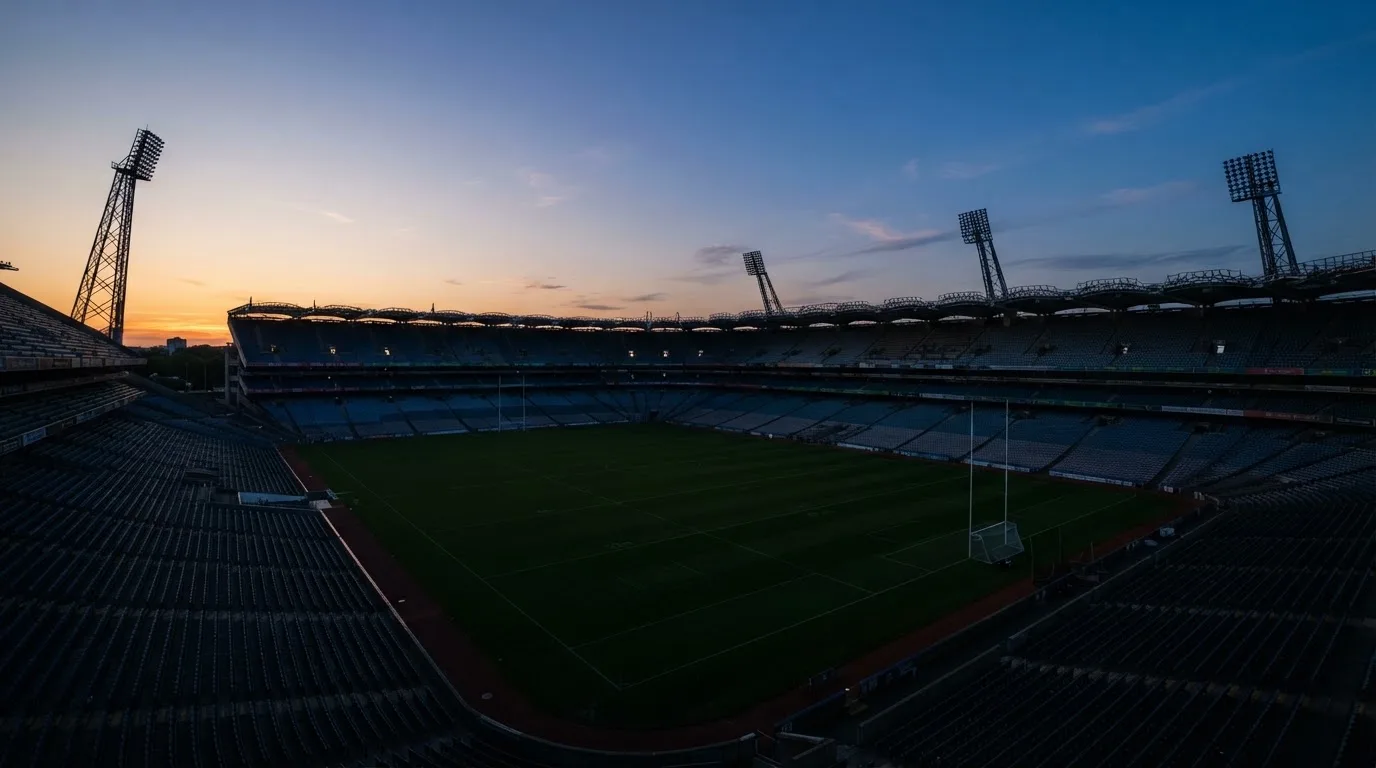
The championship that decides the Liam MacCarthy Cup is the All-Ireland Senior Hurling Championship, organised by the GAA. In the 2026 championship Limerick met Galway in the All-Ireland final at Croke Park on 19 July 2026, with Limerick winning. The previous season’s holders, Tipperary, had taken the 2025 title. Those two names shape the head of the next market — the early prices on a new championship always name the recent winners first.
The competitions that bookmakers price
Three tournaments do most of the work for an account that follows hurling. The Allianz Hurling League runs through the winter and early spring as a round-robin competition with knockout stages. The provincial championships — Munster and Leinster — settle inter-county rivalries in May and June; Munster has five teams in the round-robin and Leinster six in 2026, with the top two meeting in the provincial final and the third-placed team going to the All-Ireland quarter-finals. The All-Ireland Senior Hurling Championship runs from those quarter-finals through the semi-finals to the final in July.

County championships and the All-Ireland Club Hurling Championship fill the gaps. Club hurling has its own betting market, smaller than the inter-county one but real enough that several British bookmakers carry it through the winter. The bookmaker’s own rules — never the GAA’s — decide whether a market settles at full-time or goes into extra time. One large operator’s Gaelic games rule settles on the official result at the end of normal time including injury time, with extra time not counting unless the market names it.
The ten bookmakers on this list
No single brand is “the only” licensed one, and a place on this list is not a licence. The set is the operators routed into this comparison, ordered as research carries them, and each one is checked against the Gambling Commission’s published list of remote betting licence holders for Great Britain. A licence is the floor: without one, none of the protections below apply.
| Brand | Licence number and holder | What the operator’s own terms state on hurling |
|---|---|---|
| Kalooki Sportsbook | 57730 — Kalooki Sportsbook Limited | A sportsbook licensed in Great Britain with a small, niche product range rather than a full racing and in-play suite |
| William Hill | 39225 — WHG (International) Limited | A long-established bookmaker carrying Gaelic games markets and an acca boost on football multiples, with Best Odds Guaranteed on UK and Irish horse racing |
| Fafabet | 57385 — Taichi Tech Limited | A bookmaker with Best Odds Guaranteed on UK and Irish racing win and each-way bets from 9am on race days |
| Bet600 | 44731 — Tyche Tech Limited | A newer brand offering Best Odds Guaranteed on horse racing on the starting price when it is bigger than the early or show price taken |
| Swifty Sports | 58957 — Swifty Global (UK) Ltd | A sportsbook with Cash Out, daily price boosts, live streaming, in-play betting, and Bet Builder listed as coming soon |
| bet365 | 55148 — Hillside (UK Sports) ENC | A full-service bookmaker with Bet Builder+ for single-event multiples, Super Boosts, acca and single bet winnings boosts, in-play and live streaming across many events |
| Paddy Power | 39439 — PPB Counterparty Services Limited | A long-established bookmaker covering football, racing, rugby, tennis, golf and other sports in a single app |
| BoyleSports | 39469 — Boylesports Enterprise | A bookmaker running a sports welcome offer in pounds for UK players and in euros for Irish players, with racing markets alongside Gaelic games |
| 888sport | 39028 — 888 UK Limited | A full-feature bookmaker with pre-match and in-play betting, Cash Out, Bet Builder, racing streams, form tools and daily boosted odds |
| QuinnBet | 61011 — QuinnBet (Gibraltar) Limited | A bookmaker with Best Odds Guaranteed on Irish and UK horse racing from 10am, with a £150-per-race cap on the benefit |
Where the licences actually live
Every brand on this list holds a remote general betting standard (real events) licence issued by the Gambling Commission for use in Great Britain. The licence covers online sports betting; it is separate from any casino, lottery or pool betting licence the same operator may also hold. Several consumer brands sit under one licensee: Paddy Power and Betfair, for instance, share the parent group, so they are not independent operators even when their apps look different.
The Commission publishes the register, and a search by company name, trading name, domain or account number is the whole test of who is licensed. The licence categories on the register matter: a “general betting standard” licence covers real-world sports; a “general betting standard (virtual events)” licence is for computer-simulated events; and a “betting intermediary” licence covers betting exchanges. None of these licences covers Northern Ireland, which runs under older legislation. A brand licensed in Great Britain may still take customers from Northern Ireland under its own terms, but it does so without a Commission licence for that jurisdiction.
What “remote” means in practice
A remote licence lets the operator take bets through a website or an app from a customer whose connection lands in Great Britain. The licence does not say where the company is based: a Gibraltar- or Malta-based operator can hold a Commission licence, and several on this list do. The rule is at the point of consumption, not the point of incorporation. The Gambling (Licensing and Advertising) Act 2014 closed the earlier loophole where an offshore company could serve British customers from a licence issued abroad, and since then a Curaçao, Maltese or Gibraltar licence alone is not enough to take bets from a customer in England, Scotland or Wales.
The licence in plain English
A Gambling Commission licence is not a kitemark for value or fairness of price. It is a set of operating rules the operator must follow, with the power to fine or revoke if the operator does not. The rules cover the customer protection regime that sits behind every licensed site.
The minimum age and the identity check
The minimum age for any gambling product in Great Britain is eighteen. Since 7 May 2019 the operator has to verify name, address and date of birth before the first deposit or first bet, including when the customer claims a free bet or bonus. The verification uses a credit-reference-style database and public records. There is no anonymous play at a licensed site: the customer-facing part of opening an account looks like a sign-up form, the back-end part looks like a credit check. Credit cards are also out: since 14 April 2020 no credit card, including a credit-card-funded e-wallet top-up, may be used for gambling at a GB-licensed operator. Debit cards and bank transfers are not covered by that ban.
The two protection regimes
GAMSTOP is the national multi-operator online self-exclusion scheme. It has been a mandatory licence condition for online operators since 31 March 2020. A customer registers once, and the registration stops them opening new accounts or continuing to use existing ones at every licensed site for the chosen period. The periods are six months, one year, five years, or five years with auto-renewal, and after the minimum period the exclusion stays in place for a further seven years unless the customer asks GAMSTOP to remove it. GAMSTOP covers online sites and apps; high-street betting shops run a separate scheme.
A financial vulnerability check applies to licensed remote betting once a customer’s net deposits (deposits minus withdrawals) exceed £150 in a rolling thirty-day window. The check came into force on 28 February 2025. It is a public-record check — bankruptcy, county court judgments and similar — and not an income check or a credit-reference check. The fuller financial risk assessments the press calls “affordability checks” are a different, staged plan: announced on 7 July 2026, with no start date set.
Deposit limits are an operator duty under the Commission’s Remote Technical Standards. The first changes have applied since 31 October 2025; a second phase was postponed to 30 September 2026. There is no state-set ceiling on deposits or losses for sports betting — the limit is whatever the customer sets, with the operator required to make setting one easy.
Help, and where it is free
The four names worth keeping are GamCare, which runs the National Gambling Helpline; GambleAware, which funds treatment and education; the NHS gambling clinics, which provide face-to-face treatment in several cities; and Gamblers Anonymous, which runs peer-support meetings. A licensed operator has to point customers at these services, and most do so on a “responsible gambling” page and at the foot of the deposit screen. A bookmaker that does not link to any of them is one to ask why.
Bonuses and free bets, read with the small print open
A bonus is the cleanest way to lose money in slow motion, because the marketing line is on the sticker and the wagering requirement is in the small print. Two numbers decide whether the offer is worth the time it takes to claim it: the wagering multiple, and the minimum price the qualifying bets must take.
The 10x cap that landed on 19 January 2026
Since 19 January 2026, wagering requirements on bonuses at GB-licensed operators are capped at ten times the bonus amount. A £10 bonus can no longer ask the customer to turn over £500 at 50x; the maximum is £100 of qualifying bets. The cap covers bonuses; whether it covers a free bet with no wagering rule is not established. Mixed-product promotions — an offer that asks for action across two or more product types, like “bet on football to get free spins” — are banned outright.
The cap has bitten in particular on the casino side, where 35x and 50x requirements were standard. The sports side was lighter to start with, and most welcome offers in this market already asked for a single qualifying bet. The change matters less for a £20 free-bet-for-£10 welcome offer than for any product that asked the customer to grind a bonus through twenty rounds of wagering.
What the offers on this list actually give
BoyleSports runs a sports welcome offer for UK players framed as £20 in free bets when a £10 bet is placed. The £10 is the stake; the £20 is the free-bet bundle that lands once the qualifying bet settles. For Irish players the same offer is framed in euros: €30 in free bets for a €10 bet. The structure is the standard “stake back plus a free-bet sweetener” pattern; whether the £20 is paid as one free bet or several, and the minimum price on the qualifying bet, are set out in BoyleSports’ own terms.
bet365 runs Super Boosts, Winnings Boosts on Bet Builders and selected singles, and daily Bet Boosts. William Hill runs a Football Acca Boost on multiples of two legs or more, with each selection at 1/5 (1.20 in decimals) or bigger, scaling from three per cent on a double to two hundred per cent on a twenty-leg accumulator, capped at £10,000 per online bet and running until 30 May 2027. 888sport runs daily boosted odds and price boosts alongside racing streams. None of these is a bonus in the wagering sense: a boost is a one-off enhanced price on a named selection, not a free balance that needs turning over. The distinction matters, and it is the distinction that the marketing tends to blur.
Free bets and what they actually pay
A free bet is paid as a free-bet token rather than as withdrawable cash. The stake is usually not returned with a win: a £10 free bet at 4/1 (5.00 in decimals) returns £40 in winnings, not £50. A few operators do refund the free-bet stake as cash on certain products, and the rule is in the terms. The shape of the offer matters for how its value is judged, and the margin of the market the free bet is used on matters even more.
“Best Odds Guaranteed” and what it actually guarantees
Best Odds Guaranteed is the racing-side offer that pays the customer the bigger of the price they took and the starting price, on win and each-way singles and multiples. William Hill runs it from 8am on race days, on UK and Irish horse racing, on singles and multiples but not ante-post, tote or pari-mutuel bets. Fafabet runs it from 9am on UK and Irish racing on win and each-way bets. Bet600 runs it on horse racing where the starting price is bigger than the early or show price taken. QuinnBet runs it from 10am on Irish and UK horse racing on singles, multiples and system bets, with a maximum benefit of £150 per customer per race.
The cap on QuinnBet is the part that bites. A customer who has had a winning day at bigger prices finds the offer is worth less than the marketing suggested once the cap kicks in. Anyone pricing up a racing multiple should check whether the bookmaker applies one, and whether the cap is per race, per day or per customer across the promotion. Swifty Sports also advertises Best Odds Guaranteed alongside Cash Out, daily price boosts, live streaming and in-play betting; the rule is in the operator’s own terms.
The combination bet and its quiet cost
Combination bets — doubles, trebles, accumulators — multiply the legs into one price. A four-fold at 2.00, 2.00, 2.00 and 2.00 reads as 16.00, and a £5 stake returns £80 if all four win. The market’s margin compounds at the same rate: each leg carries its own overround, and the multiplication leaves the bookmaker a wider cut on the combination than on any of the legs taken singly. Acca boosts and acca insurance — a stake refund if one leg lets the customer down — sit on top of the multiple, and they do not change the underlying arithmetic.
Live betting and the cash-out button
In-play betting on Gaelic games is offered by every full-service bookmaker on this list. The market is smaller than the in-play market on football or tennis, but for the All-Ireland quarter-finals, semi-finals and final it is real enough that several operators run a price throughout.
How in-play prices move
A bookmaker’s in-play price on a hurling match tracks score, time and, where the model uses it, possession. A goal swings the price harder than three points in a row, because the scoring weight is three to one and a goal usually means a break against the defence. The market pauses for a goal and reopens at a fresh price; the punter who clicked at the place before the goal lands has the old price, and the punter who waited is at the new price. The bookmaker’s margin inside the in-play price is wider than the margin pre-match, partly because the model has less time and partly because the customer is more likely to back a team that has just scored.
Cash out
Cash Out settles a bet before the event ends, at a price the bookmaker sets in real time. The price reflects the current state of the market and the bookmaker’s own margin on closing the bet early. A cash-out value that is bigger than the original stake is not a profit guarantee: the bet has to win for the cash-out price to be paid, and the bookmaker’s closing price sits inside the same margin structure as the opening one. Swifty Sports lists Cash Out on markets including horse racing and football; 888sport lists Cash Out alongside pre-match and in-play betting and Bet Builder; bet365 runs Cash Out on its in-play markets. The button’s presence does not say when it is worth pressing, and the operator’s terms state when it is available.
Live streaming and the data behind it
bet365 lists in-play betting and live streaming of events worldwide, with a follow bet tracker for following bets in play and a Live Golf Tracker alongside. Swifty Sports lists live streaming alongside its in-play product. A live stream is a price feed in picture form, and the picture is what a serious in-play punter watches; the audio, the stadium and the warm-up all matter, and the bookmaker’s model does not always price them in. The stream is also a retention tool: a customer watching a stream is a customer not shopping a price.
Bet types and how a price settles
The bet types a customer meets at a hurling match are mostly the same bet types they meet at any other sport, with two Gaelic-specific wrinkles.
The outright winner market
An outright market on the All-Ireland Senior Hurling Championship asks the customer to name the winner before or during the tournament. The price on Limerick at the start of 2026 was short, because Limerick had been winning the tournament for several years; the price on a county like Westmeath or Carlow, neither of which reaches the latter stages, was in the hundreds. The outright market is where the bookmaker’s margin is widest, because the field is long and the model has to price thirty or more teams across a tournament that runs for months.
The match winner, the handicap and the total
The match winner is the 1X2 of hurling: home win, draw, away win. A draw is possible, and bookmakers carry a price on it. The handicap gives one team a head start of a stated number of points, so the customer is betting on the margin of victory rather than the result. The total is the combined score, set at a line the bookmaker chooses; the customer backs over or under.
Each-way bets in hurling
Each-way betting is a racing term, but several bookmakers carry an each-way option on championship outrights: half the stake on the outright win at the price taken, half on the place terms the bookmaker sets. The place terms on a thirty-runner field are not the same as the place terms on a horse race with eight runners; the customer has to read the market’s each-way table before staking.
Score markets
A correct-score market names the final scoreline: 2-14 to 0-12, for instance. A scorecast market pairs a first goalscorer with the match result. Both are high-variance markets with low hit rates, and the margin inside them is wider than the margin on the match winner. A winning correct-score bet pays well because it is hard to land; the same fact makes it hard to land.
Bet builders and same-game multiples
Bet Builder, Bet Builder+, the same-game multi — these are different brands for the same product, a bet built from several markets on one event. bet365’s Bet Builder+ combines markets from one event into a single bet, available pre-match and in-play; Swifty Sports lists Bet Builder as coming soon; 888sport lists Bet Builder alongside its other features. The price is calculated by the bookmaker, and the margin inside it is built up from each leg’s own margin. The customer receives a single price and a single stake.
The bookmaker’s margin, made visible
The price a bookmaker offers on a market is built from the true probability of that outcome and a margin the bookmaker keeps. The margin is the difference between one hundred per cent and what the prices on all outcomes of a market add up to when converted to implied probability. The cleaner way to see it is the payout share.
Take an illustrative two-way market at decimal odds 1.90 against 1.90 — the kind of even-money line a bookmaker might offer on a hurling match winner or a handicap once the favourite and outsider have been balanced. The implied probability of each side at 1.90 is one divided by 1.90, which is roughly 52.6 per cent. Two sides add to about 105.3 per cent. The excess over one hundred is the margin. The payout share — the proportion of every pound staked that the bookmaker pays back across all outcomes, ignoring the favourites-to-longshots bias of who actually bets — is one divided by the sum of the inverse odds, which on this line works out to roughly 95.0 per cent. The margin is the remaining 5.0 per cent.
Five per cent of stake is a useful rule of thumb for a balanced pre-match hurling market. It moves: a one-sided market with a hot favourite and a long outsider carries more margin, because the bookmaker has to protect the long side; a market with two equally priced sides carries less margin; an in-play market during a tight finish carries more margin than the same market pre-match. The margin is the reason a price that “looks right” to a customer still loses over the long run: it has been priced to lose.
A £10 stake at decimal odds 2.50 returns £25 if the bet wins, made up of the £10 stake and £15 profit. A £10 free bet at the same odds returns £15 in winnings, because the stake is not paid back on most free bets; the customer who expects £25 from the free-bet slip is reading the offer wrong. The arithmetic is the same shape, the return is not.
The operator reviews
Each review below ends on a verdict that names what the brand is actually for. A review that stops at the licence line has described an offer without judging it.
Kalooki Sportsbook
Kalooki Sportsbook is operated by Kalooki Sports Book Limited, company number 12938274, and is licensed by the Gambling Commission under account 57730. The brand is a GAMSTOP member. Its product range is small and focused rather than full-service: a customer looking for the depth of bet365 or the racing-heavy book of William Hill will not find it here. The trade-off is a niche product and a simpler interface, and the customer who wants a small, hurling-friendly book rather than a racing and in-play superstore may find the size an advantage. For a casual punter with a small budget who wants a GB-licensed account and is happy with a thinner market, this brand is worth a look.
William Hill
William Hill is one of the long-established British high-street names, and its online arm is run by WHG (International) Limited under Commission account 39225. The book carries Gaelic games markets alongside its racing and football offering. The Best Odds Guaranteed offer runs from 8am on race days on UK and Irish racing, on singles and multiples but not ante-post, tote or pari-mutuel bets. The Football Acca Boost covers accas of two legs or more with each selection at 1/5 (1.20 in decimals) or bigger, scaling from three per cent on a double to two hundred per cent on a twenty-leg accumulator, capped at £10,000 per online bet and running until 30 May 2027. The verdict is that the brand is for the punter who wants the full-service book — racing, acca boosts, a long-established name — and is happy to trade the occasional smaller market for the depth of the major ones.
Fafabet
Fafabet is licensed under Commission account 57385 with Taichi Tech Limited as the licence holder. Best Odds Guaranteed runs from 9am on UK and Irish racing win and each-way bets on race days: if the starting price is bigger than the price the customer took, the bet is paid at the bigger price. The product set is focused on the racing customer and the football multiples customer, with Gaelic games available but not the centrepiece. For the punter whose betting day starts at the racing and ends at the football multiples, this brand offers a solid choice, provided the BOG terms are read first to understand market coverage.
Bet600
Bet600 is licensed under Commission account 44731 with Tyche Tech Limited as the licence holder. Best Odds Guaranteed applies on horse racing where the starting price is bigger than the early or show price taken; the bet is paid at the SP. The brand is newer than the long-established names on this list, and its product is focused on racing and the in-play sportsbook rather than the racing-plus-footbook-plus-Gaelic-games range of the larger books. Racing-led punters who prefer SP-based settlement and a leaner, faster menu will find this bookmaker fits their needs.
Swifty Sports
Swifty Sports is licensed under Commission account 58957 with Swifty Global (UK) Ltd as the licence holder. The product set includes Best Odds Guaranteed, Cash Out on markets including horse racing and football, daily price boosts, live streaming and in-play betting; Bet Builder is listed as coming soon. A brand listing a feature as “coming soon” is one to check on the day, because “coming soon” can mean a quarter or two in this market. This is a bookmaker for the user who wants a modern, all-in-one feature set — boosts, streaming, and cash-out — provided they accept that ‘coming soon’ features may take some time.
bet365
bet365 is licensed under Commission account 55148 with Hillside (UK Sports) ENC as the licence holder. The app is the most-downloaded sports betting app in the UK, and the brand is the official global betting partner of the UEFA Champions League. The product set runs deep: Bet Builder+ for single-event multiples pre-match and in-play, Super Boosts, Winnings Boosts on Bet Builders and selected singles, daily Bet Boosts, in-play betting, live streaming across many events worldwide, plus follow-bet trackers and a Live Golf Tracker. The verdict is that the brand is the full-service book for the punter who wants everything on one platform and is happy to trade a busier interface for the depth.
Paddy Power
Paddy Power is licensed under Commission account 39439 with PPB Counterparty Services Limited as the licence holder. The Paddy Power Sports Betting app covers football, horse racing, boxing, rugby, tennis, golf, darts, snooker and Formula 1. Paddy Power and Betfair sit under the same parent group, so they are not independent operators even when the apps look different. This bookmaker appeals to punters wanting a long-established name on the high street and online, accompanied by a price-boost-led welcome offer rather than a long wagering grind.
BoyleSports
BoyleSports is licensed under Commission account 39469 with Boylesports Enterprise as the licence holder. The sports welcome offer for UK players is £20 in free bets when a £10 bet is placed; the same offer for Irish players is framed in euros, at €30 in free bets for a €10 bet. The brand carries Gaelic games alongside racing and football. Punters who appreciate a simple stake-back-plus-free-bet welcome will likely find this platform a good match, especially for those with an Irish or UK racing-led betting style.
888sport
888sport is licensed under Commission account 39028 with 888 UK Limited as the licence holder. The product set includes pre-match and in-play betting, Cash Out, Bet Builder, racing streams, BetFinder form tools, a live bet feed and daily boosted odds. The form tools and the live feed are the parts that mark the brand out from the racing-led books on this list. For those looking for modern features paired with analytical form tools, this brand is a strong contender, though checking the boosted-odds terms is a necessary first step.
QuinnBet
QuinnBet is licensed under Commission account 61011 with QuinnBet (Gibraltar) Limited as the licence holder. Best Odds Guaranteed runs from 10am daily on Irish and UK horse racing bets on singles, multiples and system bets, with a maximum benefit of £150 per customer per race. The cap is the rule that matters: a customer who has had a winning day at bigger prices finds the offer is worth less than the marketing line. Anyone hunting for Best Odds Guaranteed with a transparent, clear benefit cap will find this brand appealing, provided they check the small print before staking.
How to read this market without losing the run of it
The bookmaker’s margin is the headline number behind every price. A price of 1.90 against 1.90 on a balanced market carries about a five per cent margin; a price of 1.50 against 2.75 on a one-sided market carries more. The wider the margin, the harder the punter has to work to beat the book, because every pound staked returns less than a pound on average across all outcomes.
A value bet is a price the customer judges to be bigger than the true probability of the outcome. The judgment is the hard part: the form book is the same one the bookmaker’s model has read, the team news is the same news, and the price has been set in the light of both. A punter who finds value on a hurling match is finding it because the model has mispriced the defender, the weather, the venue or the referee — and the punter is usually wrong, because the model is usually right. The phrase “value bet” describes the bet that the punter believes has positive expected value; it does not promise a win, and a value bet loses as often as the price says it does.
Bankroll discipline is the rule that decides whether a punter is still betting in three years. A stake of one to two per cent of the bank on any single bet is a common starting point; the stake is fixed as a fraction of the bank, not as a fixed pound amount, so the stake rises and falls with the bank. The rule protects the punter from a run of bad luck and from the temptation to chase a losing streak with bigger stakes. No system of staking changes the underlying margin of the market, and no staking plan can convert a negative-expectation bet into a positive one.
Frequently asked questions
What is a value bet and why is no tip ever certain?
A value bet is a price that the customer judges to be bigger than the true probability of the outcome, after taking the bookmaker’s margin out. The judgment is what makes it a value bet, and the judgment is usually wrong: the bookmaker’s model has read the same form book and the same team news. No tip is ever certain because the price has been set by a model that already knows what the public knows and a little more, and the margin inside the price is the bookmaker’s insurance against being out-priced.
What is the bookmaker’s margin and how can it be seen in the odds?
The bookmaker’s margin is the share of every pound staked that the bookmaker keeps across all outcomes of a market. It shows up as the excess over one hundred per cent when the implied probabilities of all outcomes are added together. On a balanced two-way market priced at 1.90 against 1.90, each side implies roughly 52.6 per cent, the two sides sum to roughly 105.3 per cent, and the margin is the excess — roughly five per cent of stake, on average, kept by the bookmaker.
How is the return on a bet worked out from the stake and the odds?
Return equals stake multiplied by the decimal odds. Net profit equals stake multiplied by (odds minus one). A £10 stake at decimal odds 2.50 returns £25 if the bet wins — the £10 stake plus £15 profit. A £10 free bet at the same odds returns £15 in winnings on most free bets, because the free-bet stake is not paid back with a win.
How can it be checked that a bookmaker holds a Gambling Commission licence?
The Gambling Commission’s public register is searchable by business name, trading name, domain or account number, and is the whole test of whether a brand holds a licence. The register lists the licence categories, the licence holder and the operating domains. A brand that holds a Commission remote betting licence for Great Britain is bound by the Commission’s Licence Conditions and Codes of Practice, including the GAMSTOP membership, the customer verification rules and the 10x bonus cap.
Which tools for controlling play does a licensed bookmaker have to offer?
A licensed remote bookmaker has to be a member of GAMSTOP, has to verify name, address and date of birth before the first deposit, has to apply a financial vulnerability check once net deposits exceed £150 in a rolling thirty days, and has to make deposit limits easy to set. The bookmaker has to link to GamCare, GambleAware and the NHS gambling clinics on its responsible-gambling pages. Timeouts and product-level blocks are an operator choice rather than a Commission rule, and several of the brands on this list carry them.
How do fractional odds such as 5/1 convert to decimal odds such as 6.00?
Decimal odds equal the fractional numerator divided by the fractional denominator plus one. Five divided by one is five, plus one is six, so 5/1 in fractions is 6.00 in decimals. Eleven divided by four is 2.75, plus one is 3.75, so 11/4 is 3.75. Evens, where the return equals the stake, is 1/1 in fractions and 2.00 in decimals. Odds-on, shorter than evens, sits below 2.00 in decimals and is written with the smaller number first in fractions, like 4/6 or 1/2.
Rugby, cricket & Gaelic – Best Betting Tips
Content created by the «Best Betting Tips» team
