
Both Teams to Score Betting in Great Britain: What the Price Costs and Where to Place It
 Available in US
*Current as of 27 October 2026 · checked against the Gambling Commission’s public register.*
Both teams to score (BTTS) is a yes/no football market on whether each side finds the net inside 90 minutes. The bet itself is a two-way selection, the price is set by the operator and the cost to the bettor is hidden in the margin baked into both sides of that price. The market is mainstream, settled by every licensed firm under rules that vary slightly from one to the next, and the only legal way to place it in Great Britain is through a Gambling Commission-licensed operator. This page walks through how BTTS works, what a price actually pays, what the margin takes off the top, who offers it under what rules, and where a punter can place it with the protections British law provides.
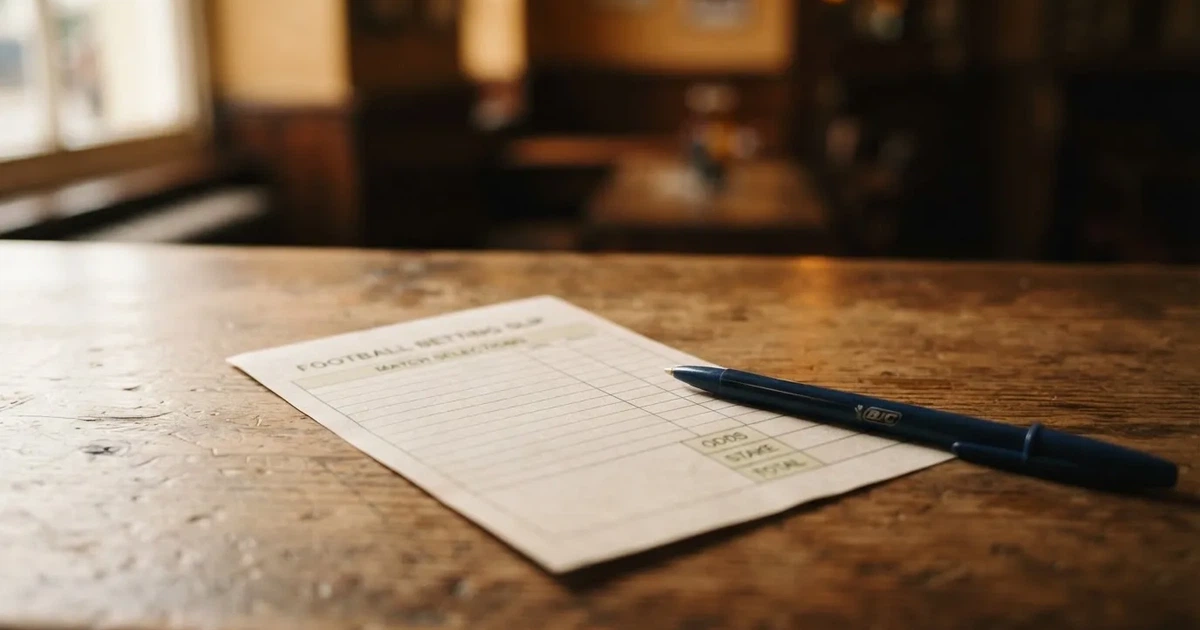
What Both Teams to Score Actually Is
BTTS is one of the simplest football markets to read and one of the easiest to misunderstand. A punter backs the “yes” outcome when both teams find the net during normal time; the “no” outcome wins when one side keeps a clean sheet or the game finishes goalless. It is a two-way market: there are no draws, no handicaps and no extra-time safety net. The price on each side carries the bookmaker’s margin, so the two prices do not add up to an even-money reflection of true probability — they add up to slightly less than that, with the gap going to the firm.
A few terms shape the rest of the page. The stake is the cash risked. Odds set the return per pound staked. The return is the stake plus the winnings; profit is the winnings alone. Single means one selection; an accumulator (shortened, the word every punter uses is “acca”) strings several selections together, multiplying the odds leg by leg so the combined price carries more margin at each step. A bet builder ties several markets from the same fixture into one combined price. The starting price (SP) is the price settled at by a bookmaker when no fixed price was taken; best odds guaranteed (BOG) pays the bigger of the price taken and the SP on horse racing, not normally on BTTS.

Where BTTS sits inside the wider match-result market matters. The 1X2 (home/draw/away) is a three-way market with bigger margins because the bookmaker carries draw risk. BTTS cuts that down to two outcomes but still prices in goals frequency, league scoring profile and recent form, and the margin remains visible to anyone who does the arithmetic.
The two-way selection
A “yes” on BTTS wins whenever both teams score at least once during the 90 minutes. A “no” wins whenever the match finishes 0-0 or one side keeps a clean sheet. The bet is independent of who wins: a 2-2 draw settles “yes”; a 2-1 home win settles “yes”; a 1-0 home win settles “no”. The market does not ask who wins, only whether each side scores.
Why BTTS has its own market at all
Bookmakers split the 1X2 into side-markets so the customer can back a thesis without taking on the full match result. BTTS belongs to a family of goal-based markets — over/under 2.5, both teams to score, scorecast, first goalscorer — that let a punter back a specific feature of the match instead of the outcome. Each one carries its own margin, and that margin is set by the operator’s trading team, not by statute.
How BTTS Is Priced and What the Margin Costs
A BTTS price is a decimal figure that says how much a £1 stake returns if the bet wins. The arithmetic is the same as for a win bet or an acca leg:
- Return = stake × odds
- Profit = stake × (odds − 1)
A £10 stake at 1.90 returns £19, profit £9. The odds are quoted in decimal form; British bookmakers display fractional prices alongside (1.90 is 9/10, also called “evens minus a tenth”), and conversion runs fraction → decimal as a ÷ b + 1. Both formats carry the same information.
The margin is the cut the bookmaker keeps out of every pound staked on the market. Across both outcomes of a two-way BTTS book the implied probabilities add up to more than 100%, and the overshoot is the margin. Take an illustrative example — and this is an example, not a quoted price — at 1.90 / 1.90 (9/10 each side), the implied probability on each side is 1 ÷ 1.90 = 52.63%. The two sides add to 105.26%, so the payout share is 1 ÷ 105.26% ≈ 95.00% and the margin is roughly 5.00%. A backer who could place £100 on each side at these prices and have both bets settle would receive £190 from a £200 stake, with the £10 missing from the round trip landing in the bookmaker’s column.
The same arithmetic is the only honest way to read any BTTS price, and it generalises. Markets with shorter prices carry smaller margins; markets with longer prices carry bigger ones because longshots come up rarely and the firm prices more risk into the quote. A 1.20 / 4.50 book looks cheaper on the favourite side but the overshoot on the longshot side is what funds it. Across a Saturday afternoon of BTTS books, the margin varies from roughly 4% to 9%, and that gap is where the bookmaker’s edge lives.
The calculation is a statistical estimate: an average over many bets under the stated assumptions, not a guaranteed outcome for any single punter. A weekend of 2-1 home wins turns the calculation on its head, and that is the point — no single bet settles the cost of a market, only the volume placed through it does.
Margin in plain words
The bookmaker’s margin is what it keeps of every pound bet on the market. The lower the margin, the more of each pound returns to backers in aggregate. BTTS is a market where the book is usually tighter than 1X2 because the operator carries no draw risk, but every margin still belongs to the firm.
How BTTS Is Settled in Practice
Settlement rules decide what counts as a goal and what does not, and they vary slightly between firms. The shape is consistent across the British market and Sky Bet’s published football rules illustrate it cleanly: Sky Bet settles football bets on 90 minutes of play unless a market says otherwise, and 90 minutes includes time added by the referee for stoppages.
That sentence is doing more work than it looks. Extra time and penalty shootouts do not count unless a market specifically offers extra-time betting. A 1-1 match that goes to extra time and finishes 2-1 after 120 minutes is settled at 1-1 for BTTS purposes, and the “yes” settles as a winner. First-goalscorer bets follow the same line at Sky Bet, settled on the result after 90 minutes including injury time; extra time and penalty shootouts do not count unless extra-time betting is specifically offered.
A match abandoned after kick-off is its own case. At Sky Bet, already-decided bets stand and all others are void, unless the restart is announced within 3 hours of kick-off and occurs within three days of abandonment. That is a standard published rule; firms write their own versions and the customer reads them before staking on a fixture that has weather, scheduling or crowd trouble in its recent past.
Own-goals are counted as goals for settlement purposes — the scoring team is the team that benefited from the goal — but the scorer is not credited with a goal in goalscorer markets. That distinction matters in first-goalscorer and scorecast markets, less so in BTTS, where the question is only whether each side found the net.
The 90-minute rule
Football is a 90-minute game plus stoppage time. Every market that does not say “extra time” or “to lift the trophy” is settled by this, and BTTS is one of them. The Premier League’s typical six minutes of added time at the end of each half does not change the settlement; only an abandonment followed by a restart that satisfies the rule does.
Matched Betting and the BTTS Market
Matched betting is a technique that uses the free bets and promotions from bookmakers alongside a betting exchange to lock in a small profit regardless of the outcome. BTTS is a usable market for it because the prices move in line with team news and the books are usually liquid enough on Premier League and Champions League fixtures to lay a bet on an exchange at a similar price.
A matched bettor backs BTTS yes at a bookmaker with a free bet and lays BTTS yes at an exchange, calculating the backer’s qualifying loss against the layer’s liability. The size of the edge is small, the work is mechanical, and the risk is in getting the qualifying bet wrong — laying at a price that moves before kick-off, or using a free bet on a market that voids on a postponement. The technique is legal in Great Britain and licensed bookmakers do not ban it; what they do ban is bonus abuse through multi-accounting, and a matched bettor using one identity across one bookmaker and one exchange is on the right side of the rules.
The matched-betting use case is not a free lunch. The exchange takes its commission on winning lay bets, the bookmaker’s free bet usually settles without returning the stake, and the qualifying bet before the free bet is unlocked still loses on average because the margin is in the price. The point of the technique is to grind through the requirements of a promotion in a way that converts expected loss into expected small profit, and BTTS is one of the markets where the arithmetic works because the prices are short and the volumes are large.
BTTS in Combination Bets and Accumulators
A BTTS leg will sit comfortably inside an acca alongside a 1X2 selection, an over/under goals line, a first goalscorer and a same-game multi on the same fixture. The odds multiply leg by leg, and so does the margin — a four-leg acca at 1.90 per leg has a combined price of 1.90⁴ = 13.03 and a combined margin larger than any single leg. That is the mechanical reason accas pay better than singles and lose more often than they look.
A bet builder on a single fixture works the same way, with the added twist that the legs come from the same match and the bookmaker’s trading team has to hedge correlation. A BTTS yes + over 2.5 goals builder is not two independent prices; the outcomes are correlated because a 2-1 win satisfies both legs. The firm prices that correlation in, and the builder’s combined margin reflects it. A bettor who compares the builder price to laying the same combination on an exchange will see a gap, and the gap is the builder’s edge on top of the standard margin.
Each-way bets do not apply to BTTS — each-way is a horse-racing concept where the bet splits into a win and a place. BTTS is settled as one bet on one outcome.
GB-Licensed Bookmakers Offering BTTS
The page’s review set is ten operators licensed by the Gambling Commission for remote general betting on real events. The set is not a ranking and not a recommendation: a place in the comparison is not a licence, and the licence itself is the entry condition, not the differentiator. Every brand below holds a current remote licence; the differences are in trading depth, in-play availability, bet builder coverage, cash-out availability, the welcome package each one offers as its own terms describe it and the operator’s own stated position on BTTS settlement. Specific prices and margins on today’s fixtures are not carried on this page — they age inside an hour and the only honest place to read them is the operator’s own site on the day.
| Brand | Gambling Commission licence and holder | Operator’s own position on BTTS and football settlement |
|---|---|---|
| BetUK | Commission account 39198, held by LeoVegas Gaming PLC | Free bets exclude virtual sports, esports and non-UK/IE horse racing; minimum odds apply |
| Betway | Commission account 39372, held by Betway Limited | Welcome offer terms require a first bet of at least £10 at minimum odds of 2.0, debit card deposits only, 7-day expiry |
| Midnite | Commission account 101839, held by Midnite Limited | Free bet package credited after a £5+ pre-match qualifying bet at EVS (2.0) or greater within 14 days; in-play, acca builder and price boosts available, with maximum-stake limits |
| DAZN Bet | Commission account 48756, held by DZBT Limited | Cash Out, Bet Builder, daily bet boosts and in-play offered; cash-out availability is not guaranteed and bets stand if it is unavailable |
| Betboro | Commission account 44181, held by Webmedia Development N.V. | In-play markets and cash-out on football, racing and tennis; boosted odds on selected singles from £10 stakes; responsible-gambling tools in place |
| DragonBet | Commission account 64908, held by DragonBet Ltd | Welsh football and rugby markets prominent; racing, American football, in-play and bet builder markets |
| Bet600 | Commission account 44731, held by Tyche Tech Limited | Best Odds Guaranteed on horse racing pays the bigger of the SP and the price taken |
| Geoff Banks | Commission account 54095, held by GB Sports Advisors Limited | Live in-play prices and ante-post prices on future events |
| Sky Bet | Commission account 67370, held by SBG Sports Limited | Settles football bets on 90 minutes including stoppage time; abandoned matches void unless restarted within the rule’s timeframe |
| Copybet | Commission account 53774, held by Copybet UK Limited | Best Odds Guaranteed on all UK and Irish racing; pays first past the post on horse racing even if the winner is later disqualified |
The headline takeaway is licence depth, not offer quality: each of the ten holds a current Commission licence for remote general betting standard (real events), which is the licence category under which BTTS falls. The market itself is settled inside that licence’s terms, with the operator’s own rules deciding edge cases like the abandoned match and the own-goal.
Sky Bet — settlement reference and football depth
Sky Bet’s published football rules are the cleanest written statement of the 90-minute settlement convention used across the British market. Settlement on 90 minutes including injury time, voids on abandonment unless the restart fits the rule, first-goalscorer settled on the 90-minute result: these are not Sky Bet inventions but the standard shape that most GB bookmakers apply, with small variations in how they handle abandonment and own-goals.
The welcome package the firm advertises — £30 in free bets, three £10 tokens, credited after a £5 deposit and a qualifying bet of at least 5p at odds of 1/1 or greater — is described here only as the firm’s own terms state it. Free bets settle without the stake, which the qualifying bet is structured to absorb: a small qualifying bet at a short price is the price of admission to the token bundle, and the bundle is what carries any upside from the promotion. The arithmetic is standard for a British welcome package and the cost of admission is a small expected loss at the qualifying price.
Betway — short-price floor on the welcome
Betway’s welcome package sets a higher minimum odds for the qualifying bet than some of its rivals: £10 at minimum odds of 2.0 (evens), debit card deposits only, 7-day expiry. The minimum odds requirement is the lever that decides what kind of qualifying bet the customer makes; a £10 bet at 2.0 loses £5 on average over a long run, and that expected loss is the cost of unlocking £40 in free bet tokens. Whether that is good value depends on how the tokens are deployed: a £10 free bet at 5.0 has a fair value of £10 × (5 − 1) ÷ 5 × 95% = £7.60 if the market’s margin is 5%, and four such tokens on four independent markets add up to a meaningful amount only if the bettor has the discipline to use each at a price short enough to make the value real.
Midnite — pre-match focus with a young licence
Midnite’s licence is newer than most — Commission account 101839, granted more recently than the long-standing majors — and the site shows it in the structure of its sportsbook: in-play, acca builder, popular accas, price boosts with maximum-stake limits, and a welcome package keyed to a pre-match qualifying bet at EVS or greater within 14 days of sign-up. The 14-day window is longer than the standard 7 days at most rivals, and the qualifying threshold is the same: a short-price single unlocks the bundle.
DAZN Bet — feature breadth with cash-out caveats
DAZN Bet offers Cash Out, Bet Builder, daily bet boosts and in-play betting, which covers the feature set a modern punter expects. The cash-out caveat is the one that matters: cash-out availability is not guaranteed and bets stand if it is unavailable. That clause converts a bettor’s expectation of an early exit into a hard lesson when the cash-out button disappears inside a goalmouth scramble. Treat cash-out as a feature the operator may revoke at any moment rather than a contractual right.
Betboro — in-play depth and a boosted singles product
Betboro’s in-play coverage runs across football, racing and tennis, and the boosted-odds product targets singles from £10 stakes. A boosted-odds single is a one-off price enhancement on a chosen match; the £10 stake is the threshold below which the boost does not apply. The firm’s responsible-gambling tools sit in the standard shape — deposit limits, reality checks, self-exclusion — and are not a differentiator on this page.
DragonBet — regional depth
DragonBet is published by DragonBet Ltd and the app’s stock in trade is Welsh football and rugby, alongside racing, American football, in-play and bet builder markets. The regional focus is the brand’s edge on fixtures Welsh customers care about and a less-strong brand in markets where the firm does not trade as deep as the majors.
Bet600 and Copybet — racing-led shops with BOG
Both firms pay Best Odds Guaranteed on UK and Irish racing, which is irrelevant to BTTS but is the headline feature of each. Copybet’s first-past-the-post payout — paying the horse that crossed the line first, even if later disqualified — is a racing-specific rule, and it sets the firm apart on horse racing settlement. Neither feature touches BTTS directly.
Geoff Banks — ante-post and in-play
Geoff Banks’ app is published by GB Sports Advisors Ltd and offers live in-play prices and ante-post prices on future events. The ante-post book is a different product from BTTS — futures markets settled on outcomes weeks or months ahead — but the in-play book is where BTTS bettors spend their time once a match is live.
BetUK — LeoVegas-led shop
BetUK sits under the LeoVegas Gaming PLC licence (Commission account 39198), the same parent that publishes BetMGM UK. The welcome offer’s exclusions — virtual sports, esports and non-UK/IE horse racing — describe a sportsbook that does not let the welcome bundle convert into bets on markets the firm considers higher-risk.
The licence is the entry condition
Every brand in the table holds a current remote licence for general betting on real events. That is the only uniform statement that holds across the set; everything else varies by trading depth, by marketing position, by the welcome package each one offers and by the in-play product. Choosing between them is a matter of which football book carries the best price on the fixture the bettor wants — and that question is taken outside this page on purpose, because the price on a single fixture at a single moment is not the kind of fact that survives the journey from research to reader.
BTTS Betting Strategy Without the Hype
The marketing around BTTS talks about finding “locks”, “bankers” and “value picks”. The honest version is simpler: BTTS is a market with a margin, and the only way to make it pay over a long run is to find prices that sit above the true probability of both teams scoring. That is the same problem every bettor faces on every market, and no tipster service has solved it.
Reading form for BTTS
Form that matters for BTTS is goalscoring form: how often each side scores, how often each side concedes, how the two form lines interact. A side that scores freely and a side that concedes freely points to a BTTS yes. Two sides that score and concede rarely point the other way. The Premier League’s match-by-match scoring averages and the Championship’s, La Liga’s, the Bundesliga’s and Serie A’s are published by every serious stats outlet and they are the raw material the punter builds a thesis on.
Avoiding the trap of longshots
A BTTS yes at 3.50 looks tempting because the payout is bigger. The bookmaker’s margin on a longshot is bigger too, and the implied probability is closer to 25% than the 30% the price suggests by eye. A punter who loads up on longshots is loading up on margin, not on edge. The firms price longshots to attract recreational money, and the price they quote is the trap.
Bankroll discipline
A punter who stakes a fixed unit on every BTTS selection and keeps the stake at 1% to 2% of the bankroll will survive the losing runs that BTTS produces, because every market has losing runs and BTTS produces them when a run of 1-0 and 2-0 results lands. A punter who doubles the stake after a loss — a “martingale” — turns a normal variance into a bankroll-ending event. Staking plans are not a strategy; they are a tool for managing variance, and the variance on BTTS is real.
Where the value is, when it appears
Value on BTTS appears when a bookmaker’s price has lagged a piece of team news — a key striker out, a defensive change, a wet pitch — and the exchange has not lagged. That window is short and the firms with sharper trading teams close it faster. The punter who watches team news an hour before kickoff and compares the bookmaker’s price to the exchange’s is more likely to find value than the punter who places the bet the moment the team sheet is published.
Where BTTS Fits Inside British Gambling Law
BTTS is a market offered under the Gambling Act 2005, which governs commercial gambling in Great Britain (England, Scotland and Wales). The Act does not list permitted markets; an operator holds a licence for a category and offers markets under its own rules and the Commission’s Licence Conditions and Codes of Practice (LCCP). The relevant licence here is remote general betting standard (real events), the category under which every football market — including BTTS — falls.
Since the Gambling (Licensing and Advertising) Act 2014, an operator whose remote facilities are used in Great Britain needs a Commission licence wherever it is based. A Curaçao, Maltese or Gibraltar licence is not a substitute for a GB licence at the point of consumption. The Commission’s public register, searchable by business name, trading name, domain or account number, is the test of whether a brand holds one. The licence number on the operator’s site or app is the first check; the register entry under that number is the second.
There is no statutory cap on stakes in sports betting and no statutory list of permitted markets. Operators set their own maximum stakes and may restrict customers. Player protection runs through GAMSTOP, the national multi-operator online self-exclusion scheme that is a mandatory licence condition for online operators. Since 31 March 2020 every online operator licensed in Great Britain must take part. Exclusion periods run six months, one year, five years, or five years with auto-renewal, and after the minimum period the exclusion stays in place for a further seven years unless the customer asks GAMSTOP to remove it.
A financial vulnerability check has applied since 30 August 2024 and been active since 28 February 2025: it is a public-record check (bankruptcy, county court judgments) that runs when a customer’s deposits minus withdrawals exceed £150 in a rolling 30 days. It is not an income check and not a credit reference check. Financial risk assessments — the affordability checks of the press coverage — are announced in a staged plan, with no start date as of writing; describe them as announced, staged, with no start date. Deposit limits are a customer-set tool and a licence condition under Remote Technical Standards 12: operators must offer a gross deposit limit on a fixed time frame, with changes phased in from 31 October 2025 and a second phase postponed to 30 September 2026.
Identity verification runs before the first deposit at every licensed remote operator (since 7 May 2019), including when a free bet or bonus is being claimed. A punter cannot bet anonymously at a licensed site; the name, address and date of birth are verified before a stake is placed. Credit cards are banned for gambling in Great Britain since 14 April 2020, including credit-card-funded payments through an e-wallet; debit cards and bank-based payments are not covered by the ban.
The player pays no tax on betting winnings in Great Britain. That is general information and not tax advice; a professional gambler should ask HMRC or an adviser. General Betting Duty is the operator’s tax on gross profits and sits at 15%; from 1 April 2027 a new remote betting rate of 25% applies within it, with UK horse racing, self-service betting terminals, pool betting and in-person betting staying at 15%. The duty is the operator’s cost, not the customer’s, and whether operators pass it through into odds is not established.
Advertising rules that touch BTTS bonuses
Bonus advertising in Great Britain runs under the CAP Code (non-broadcast) and the BCAP Code (broadcast), enforced by the ASA alongside the Commission’s marketing conditions. CAP Code section 16 requires marketing to be socially responsible, not of strong appeal to under-18s and not to feature anyone who is or seems to be under 25 in a significant role, with an exception for marketing placed where a bet can be made directly. That rule is about who appears in the advertisement, not about who may bet.
Wagering requirements on bonuses are capped at 10x since 19 January 2026: a £10 bonus at 50x needed £500 of bets before the rule took effect; under the cap no more than £100 of bets unlocks a £10 bonus. The cap covers wagering requirements and is the headline of the new promotion regime. Mixed-product promotions — offers that require gambling on two or more product types such as betting, casino, bingo and lottery — are banned. Whether the cap applies to free bets with no wagering condition, and any cap on the money value of a bonus, are not established; the rule’s exact reach on free bets is a question the operator’s terms answer.
“Whistle-to-whistle” is an industry code, not law: since 1 August 2019 betting advertisements are not shown on TV from five minutes before a live sporting event to five minutes after it, before the 9pm watershed, with horse and greyhound racing excluded.
What an unlicensed brand costs the customer
A bookmaker serving customers in Great Britain without a Commission licence is committing an offence under section 33 of the Gambling Act 2005. The offence targets the operator, not the customer, and a punter who places a bet on an unlicensed site has not broken the law. What the punter has lost is the British protection regime: no GAMSTOP, no Commission complaints route, no approved dispute-resolution body, no British consumer redress if funds are withheld, no 10x bonus cap and no £150 vulnerability check on the operator’s side. The honest summary is that licensed = checks, limits, GAMSTOP and the bonus cap, with verification before the first bet; unlicensed = none of those protections and the risk of losing the bankroll if the firm walks away.
Enforcement against unlicensed brands is disruption rather than blocking: cease-and-desist notices, search-engine referrals, work with registrars, hosts and payment providers. The Commission has been given, or is about to receive, court-order DNS blocking powers; the regulator has not yet begun ISP-scale blocking. A punter who sees a brand on a search-engine result page has not yet seen a check on whether the brand is licensed; the check is on the Commission’s register, and the register is the first thing to read before depositing.
Responsible Gambling Around BTTS
BTTS is a high-frequency market. Premier League fixtures produce ten BTTS markets on a Saturday afternoon, plus a comparable set in the Championship, La Liga, the Bundesliga and Serie A. The cadence invites volume and volume invites loss. The licensed-bookmaker protection regime exists for that reason.
A punter who is placing enough bets for the concern to be live should consider what the licensed regime actually offers. GAMSTOP is the multi-operator self-exclusion scheme: register once and every licensed online operator is required to refuse to take the customer’s bets for the chosen period. Deposit limits sit under Remote Technical Standards 12 and let the customer set a gross deposit ceiling; the first changes applied from 31 October 2025, a second phase was postponed to 30 September 2026 and the operator’s own deposit-limit tools have been in place longer. Reality checks are pop-ups the operator displays during a session to remind the customer how long they have been playing. Time-out is a short self-exclusion of days or weeks. Self-exclusion at the operator level is a longer exclusion from that operator’s product. The financial vulnerability check at £150 of net deposits in 30 days is a public-record check, not an income check; the customer may be asked to confirm details the operator already holds.
Help outside the operator’s own tools is at GamCare, which runs the National Gambling Helpline; GambleAware, the charity funded by a voluntary levy on operators; the NHS gambling clinics, which provide treatment for problem gambling; and Gamblers Anonymous, the peer-support fellowship. The Commission’s public register lists safer-gambling tools by operator; the absence of those tools is itself a check on whether a brand is what it claims to be.
The framework does not protect the customer from losing. It protects the customer from a firm that does not check identity, that does not enforce self-exclusion and that does not enter dispute resolution under a British scheme. A licensed firm can still take the customer’s money on a 1-0 result; the framework does not change that. What it changes is the customer’s recourse when the firm does not pay out.
BTTS Betting Tips, Today and Otherwise
A search for “both teams to score betting tips today” returns a wall of tipsters, prediction sites and influencer channels, most of which sell picks and few of which publish their long-run results in a verifiable form. The honest version of the tipster market is that tipsters publish the picks they got right and bury the ones they got wrong; a punter who follows a tipster without seeing audited results is following a highlight reel.
The free version of the tipster market is the form book and the stats. A punter who reads the Premier League’s match-by-match scoring averages and lays them against the BTTS price on a fixture is doing the same work a tipster does, without paying for the privilege. The data is published by every serious stats outlet; the price is on the operator’s site; the comparison is the bet.
Paid tipster services exist. Some are honest and publish audited profit-and-loss records; most are not. A punter who subscribes to a paid service should ask to see audited long-run results before paying, and should treat any service that cannot produce them as a marketing product rather than an information product.
The promise of a “lock” or a “sure thing” on BTTS is the promise of someone selling picks. No outcome in football is locked. A 1.10 shot loses roughly one in ten times, and a 1.50 shot loses roughly 40% of the time. The arithmetic is unforgiving and the marketing is not.
Reading BTTS Settlement in the Long Run
The settlement rules decide what wins and what loses, and the long-run cost of betting on BTTS is set by the margin in the prices. A punter who has been placing BTTS bets at 1.90 / 1.90 across a season has been paying roughly 5% of stake in margin; if the punter’s actual hit rate matches the implied probability on each side, the bankroll will be down roughly 5% of stake across the volume placed.
The arithmetic is mechanical and the mechanical part of the page is the part the marketing material skips. Every BTTS price carries a margin; every margin is a cost; every cost comes out of the bankroll over a long run. The way to make the long run profitable is to find prices that sit above the true probability of both teams scoring, which is the same problem every punter faces on every market.
The data on whether any one punter solves that problem over a long run is not available on this page and would not be available even if it existed: each punter’s results are private, the tipster operator is unreliable and the bookmaker’s data on its own customers is not published. What is available is the price on each fixture at each moment, the form book on each side, and the rule book on each operator. That is enough to make a decision; it is not enough to promise one.
Closing on the Cost
BTTS is a simple market with a simple cost. The bet is a yes/no on whether both sides find the net inside 90 minutes; the price is set by the operator and carries the operator’s margin; the settlement follows 90 minutes plus stoppage time. The only legal way to place it in Great Britain is through a Gambling Commission-licensed operator, and the licence is the first check before a deposit. The marketing around BTTS talks about locks and bankers and value picks; the arithmetic around BTTS talks about margin and volume. A punter who reads the marketing and ignores the arithmetic pays the margin on every bet and wonders why the bankroll shrinks. A punter who reads the arithmetic and ignores the marketing takes the long view, finds prices that beat the implied probability, and accepts that most weekends end on the side of the bookmaker rather than the punter.
The choice between the ten firms reviewed above is a secondary choice. Every one of them holds the right licence, every one of them settles BTTS inside 90 minutes, and every one of them charges a margin in the price. The differences are in feature depth, in trading breadth, in the welcome package each one offers and in the in-play product. A punter comparing two of them should compare the prices on the fixture the punter wants to back, not the welcome bundle the firm advertises, because the bundle is a marketing product and the price is the bet.
Frequently Asked Questions
Where can I bet on both teams to score?
BTTS is offered by every Gambling Commission-licensed remote bookmaker in Great Britain. The Commission’s public register lists the brands that hold a remote general betting standard (real events) licence, and every brand on that register offers BTTS on Premier League, Championship and major European football fixtures. Betting on an unlicensed site is not an offence for the customer, but the customer loses the British protection regime — GAMSTOP, dispute resolution, the bonus cap, the financial vulnerability check — and has no British recourse if the firm walks away with the bankroll.
What does “to score in both halves” mean?
“To score in both halves” is a different market from BTTS. It asks whether one named team scores at least once in each half of the 90 minutes, including stoppage time. The bet settles as a winner if the named team finds the net before half-time and again after the interval; it settles as a loser if the team scores only in one half, or not at all. Extra time and penalty shootouts do not count, and the same 90-minute convention applies.
What is a both teams to score bet?
A both teams to score bet is a yes/no wager on whether each side scores at least once during the 90 minutes plus stoppage time. The “yes” outcome wins when both teams score; the “no” outcome wins when the match finishes 0-0 or one side keeps a clean sheet. The bet is independent of the match result: a 2-2 draw and a 2-1 away win both pay out on the “yes” outcome. Extra time and penalty shootouts do not count unless the market specifically offers extra-time betting.
How can a bookmaker’s Gambling Commission licence be checked?
The Commission’s public register is searchable by business name, trading name, domain or account number at the regulator’s own site. The licence number on the operator’s app or website is the starting point; the register entry under that number confirms whether the licence is current, what categories it covers and which legal entity holds it. Several brands can run under one licence holder — for example Paddy Power and Betfair share a parent — so the register entry is the test of which legal entity is behind the brand. A licence number that does not appear on the register, or appears under a different entity than the one on the operator’s site, is the signal to walk away.
How is a return worked out from stake and odds?
Return = stake × odds, profit = stake × (odds − 1). A £10 stake at 1.90 returns £19, profit £9. A £10 stake at 3.50 returns £35, profit £25. The odds are quoted in decimal form, the same way every British bookmaker shows them, with the fractional form (1.90 = 9/10, 3.50 = 5/2) alongside for readers who prefer it. The calculation assumes the bet wins; a losing bet returns the stake to zero.
What is a bookmaker’s margin and how does it show in the odds?
The margin is the cut the bookmaker keeps out of every pound staked on the market. Across both outcomes of a two-way BTTS book the implied probabilities add up to more than 100%, and the overshoot is the margin. At an illustrative 1.90 / 1.90 (9/10 each side) the implied probability on each side is 52.63%, the two sides add to 105.26%, the payout share is roughly 95.00% and the margin is roughly 5.00%. A real book on a real fixture will show a different overshoot — anywhere between roughly 4% and 9% on BTTS — and the arithmetic is the only honest way to read it. The lower the margin, the more of each pound returns to backers in aggregate; the higher the margin, the more stays with the firm.
Bet types & in-play – Best Betting Tips
Content created by the «Best Betting Tips» team
