
Where football betting actually sits in Great Britain this year
 Available in US
Online soccer betting is the largest single corner of the British online betting market, and it sits inside one of the world’s more rule-heavy books than most other jurisdictions. The game itself is straightforward — pick a result, name a stake, take a price — but the price carries a margin, the welcome offer carries a turnover, and the licence that lets the bookmaker take your stake also brings identity checks, deposit ceilings you set yourself and a national self-exclusion register you cannot opt out of as an operator. This page is a working map of that territory: how a bet pays, which markets the licensed books offer, what the welcome words actually cost in turnover, what “in-play” gets you in real time, and where the responsible-gambling machinery sits. Every operator named below holds a Gambling Commission remote licence; nothing here is a tip, and nothing here tells you who wins a match.

A line on what the data is current as of: figures and operator terms were checked on 27 October 2026 against the Gambling Commission’s public register and each bookmaker’s own published terms.
Soccer betting in Great Britain: the lay of the land
Football sits at the centre of the British online betting market because the season never really stops. The Premier League runs from August to May, the Champions League group stage starts in September, the Europa and Conference competitions run alongside, and the domestic cups — FA Cup, League Cup — layer fixtures through the autumn and spring. Below that, the EFL runs three divisions, the Scottish Premiership, the National League and the women’s Super League carry their own markets, and international windows open up friendlies, qualifiers and finals. A single match-day weekend can carry several hundred fixtures across these competitions, and the licensed books price every one of them.
The market that runs alongside it is unusually well-developed because it has had thirty years to settle. The 2005 Gambling Act and its 2014 update made a Gambling Commission licence compulsory for any operator whose remote facilities are used in Great Britain, regardless of where the operator is based. That single rule is the reason a Curaçao or Malta licence is not enough: the point of consumption is what counts, and the Commission is the regulator at that point. Every operator named below is on that register, and that register is what makes a brand legal to use in Great Britain. Brands running offshore on their own licence, by contrast, offer none of the protections the Act attaches to a GB licence — no GAMSTOP coverage, no Commission complaints route, no British dispute-resolution body if a withdrawal is held — which is why this page does not feature them.
Three things define the British bettor’s experience today. First, identity. Since 7 May 2019 a bookmaker has to verify name, address and date of birth before a customer can deposit or place a bet, including with a free bet or bonus; no anonymous play is on the table at a licensed site. Second, payment. Credit cards have been banned for gambling in Great Britain since 14 April 2020, including credit-card-funded e-wallet top-ups; debit cards, bank transfer and most e-wallets still work. Third, the responsible-gambling machinery: GAMSTOP for self-exclusion across every online operator, deposit limits you set on your own account, a financial vulnerability check that kicks in once your net deposits cross £150 in a rolling 30 days, and a £/time ceiling you choose when you open the account. None of this is optional for the licensed books.
The price sits inside every line you take. A bookmaker’s margin is the slice of every pound staked that the book keeps on average across a market; it lives in the gap between the odds offered and the “true” odds, and on a soccer match-result market it typically runs somewhere between 2 % and 8 % depending on the book and the fixture. A lower margin means more of every pound comes back to punters over time, but it says nothing about which side wins a given match. That gap is the topic of its own section below, and the comparison between one book and another is largely a comparison of margins on the markets you actually bet on.
The fundamentals the market assumes
The game the market prices is the one codified by the International Football Association Board, which has maintained the Laws of the Game since 1886. An adult match is two halves of 45 minutes each, plus stoppage time the referee adds at his discretion. Each side fields a maximum of eleven players, including the goalkeeper, and the goal is 7.32 m wide and 2.44 m high. A tied game can go to extra time — two further 15-minute periods — and some competitions then settle the outcome with a penalty shoot-out. None of this is decorative: stoppage time, extra time and shoot-outs are the reason a market labelled “match result” sometimes has three possible outcomes (home, draw, away) and sometimes has only two (when the competition has no draws), and the reason a goal scored in the 93rd minute settles the bet rather than the 90th.
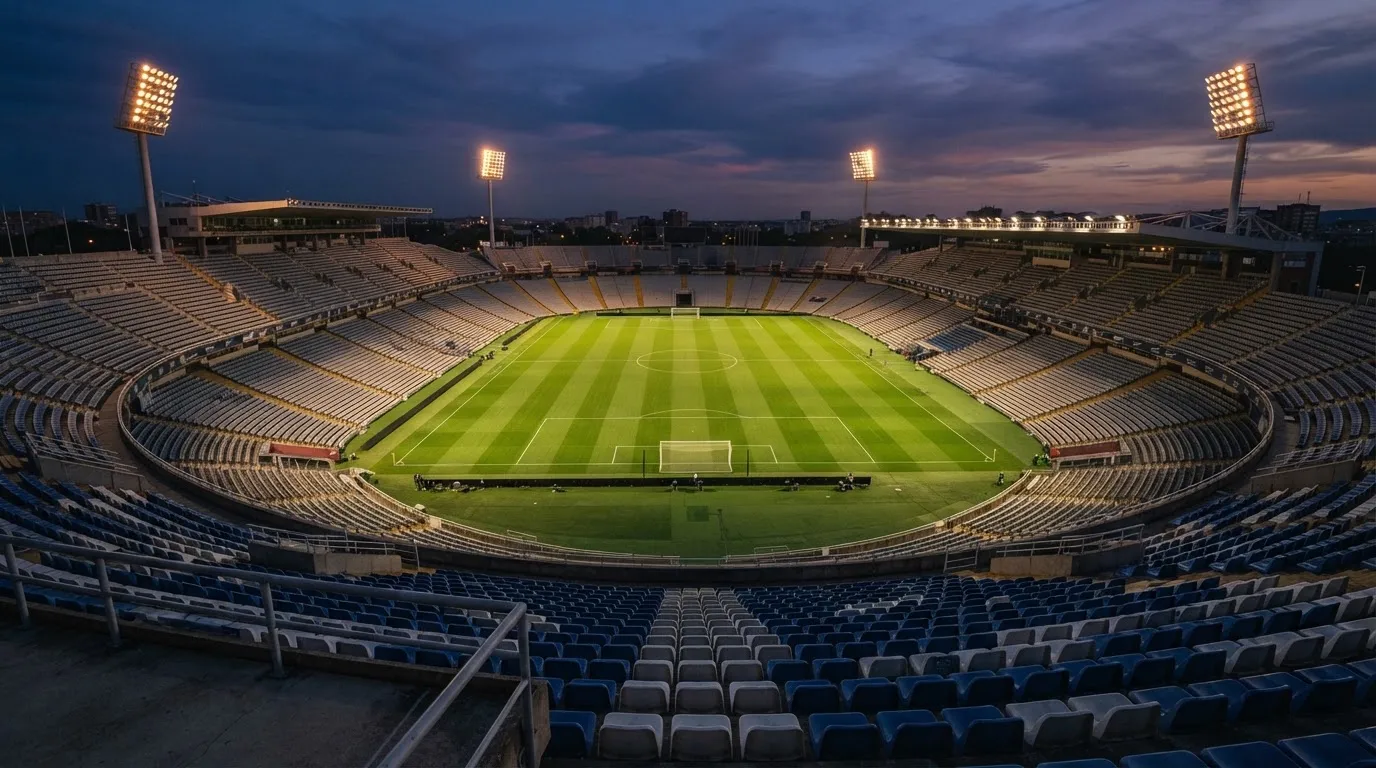
The fixtures themselves run in seasons that are pinned to a single year-pair, not to a calendar year. The 2026–27 Premier League runs from 21 August 2026 to 30 May 2027, with twenty teams, three promoted clubs (Coventry City, Ipswich Town and Hull City), and Arsenal as defending champions. Below the Premier, the EFL Championship, League One and League Two run their own 46-game seasons, and the Scottish Premiership splits into a 33-game first phase followed by a split into top-six and bottom-six mini-leagues. International football runs to its own calendar — World Cup qualifiers, the Nations League, friendlies — and the most recent men’s World Cup final, played on 19 July 2026, saw Spain beat Argentina 1–0 after extra time.
A bettor looking at a “match result” market in October is seeing one fixture; the same bettor looking in April is seeing the run-in, where titles, relegation and European places concentrate the meaning of every result. The market prices fixtures; the calendar decides when they matter.
The statute and the regulator behind every bet
The framework that makes online soccer betting possible in Great Britain is the Gambling Act 2005, as amended by the Gambling (Licensing and Advertising) Act 2014. The Act covers Great Britain — England, Scotland and Wales — and the Commission is a non-departmental public body sponsored by the Department for Culture, Media and Sport. Northern Ireland sits outside the Act under its own older law, so a brand licensed by the Commission for Great Britain is not licensed for Northern Ireland; the page uses “GB-licensed” or “Great Britain licence” rather than “UK” to keep the geography honest.

The 2014 amendment changed the basis of the regime. Before 2014, an operator based in Gibraltar, Malta or the Channel Islands could serve British customers on its home licence alone. Since 2014, any operator whose remote facilities are used in Great Britain needs a Commission licence wherever it is based. Sections 33 and 36 of the 2005 Act (as amended) are the offence provisions, aimed at the operator: providing gambling facilities in Great Britain without the licence the Act requires carries up to 51 weeks’ imprisonment on summary conviction in England and Wales (six months in Scotland), a fine up to level 5, or both. No offence aimed at a customer who simply bets on an unlicensed site was found in the statute — the consequence for the punter is the loss of every protection a GB licence brings, not a criminal charge.
The licences themselves come in categories. The five that matter for online soccer betting are remote general betting standard (real events) — the standard sports-betting licence — remote general betting standard (virtual events), remote general betting limited, remote pool betting, and remote betting intermediary, which is the licence a betting exchange holds. Each operator named in the comparison below is on the register under one of those categories; the standard sports book holds the first, while Smarkets, the exchange on this list, holds the intermediary licence.
There is no statutory list of permitted sports or markets. An operator holds a licence for a category and offers markets under its own house rules and the Commission’s Licence Conditions and Codes of Practice (LCCP). Soccer is not on a permitted list because there is no such list; what an operator offers is what its licence covers and what its commercial team decides to price. In-play betting is offered by every GB bookmaker of any size and is governed by the operator’s licence conditions and customer-protection duties, not by a separate statute. Esports sit under the same real-events umbrella; virtual events are a separate licence category; politics, TV and novelty markets are offered by the GB books and no statutory ban was found.
The Commission runs a public register at which anyone can search by business name, trading name, domain or account number. That register is the whole test of whether a brand holds a licence. Licensed operators use .com as well as .co.uk, which means the domain alone proves nothing. No single brand is “the only” licensed bookmaker; the register lists more brands than any article can feature.
What verification looks like in practice
Since 7 May 2019 the licensed books have to verify a customer’s name, address and date of birth before the first deposit or the first bet, including with a free bet or bonus. The check is electronic in most cases and runs against credit-reference and public-record databases; a manual upload of documents is the fallback when the electronic check does not pass. There is no way around it at a licensed site. Where the check turns up a problem, the account is restricted until the operator is satisfied; where it does not, the customer deposits and bets.
A second layer of check sits on top. Since 30 August 2024, LCCP condition 3.4.4 has required licensed remote operators to run a financial vulnerability check on any customer whose deposits minus withdrawals exceed £150 in a rolling 30 days (the threshold was set in February 2025). The check looks at public records — bankruptcy, county court judgments, individual voluntary arrangements — and is not an income check, not a credit-reference check and not an affordability check in the colloquial sense. Affordability checks, in the press sense of the phrase, are a separate financial risk assessment; the Commission announced a staged plan in July 2026 but has set no start date, so this page treats them as announced rather than in force. The punter’s experience of the vulnerability check is, in most cases, a soft prompt asking for context on spending — operators set their own triggers and tone.
Deposit limits are the punter’s own. Operators must offer a gross deposit limit on a fixed time frame, and the first changes have applied since 31 October 2025, with a second phase postponed to 30 September 2026; whether the second phase is live is not established from the public record. Limits are a customer choice at the licensed books: there is no state-set deposit ceiling or loss ceiling, only what the customer sets. A state-set cap was announced in staged form but is not in force.
Offshore, and what you give up
A GB licence is compulsory at the point of consumption. Offshore brands can serve customers elsewhere on their own home licence; in Great Britain they run without the rule book that makes a GB book accountable. The honest framing is that licensed equals identity checks, GAMSTOP coverage, the 10x bonus-cap rate, the £150 vulnerability check and a Commission complaints route — and unlicensed equals none of those. Funds held by an unlicensed operator sit outside any British dispute-resolution body, and the consumer-protection route that exists at IBAS, the UK’s approved ADR for the licensed books, is not available. Enforcement against the unlicensed operator is disruption, not blocking: cease-and-desist notices, search-engine referrals, work with registrars and payment providers, and DNS-blocking court powers the Commission has been given or is about to receive. No ISP-level blocking regime is in operation.
Responsible gambling: the machinery that runs alongside the bet
The responsible-gambling layer is not an extra a punter can decline; at a GB-licensed site it is part of the licence conditions. GAMSTOP is the national multi-operator online self-exclusion scheme and a mandatory licence condition for every online operator since 31 March 2020. The exclusion periods a customer can choose are six months, one year, five years, or five years with auto-renewal; after the minimum period has run, the exclusion stays in place for a further seven years unless the customer asks GAMSTOP to remove it. GAMSTOP covers online sites and apps; the separate multi-operator self-exclusion that covers betting shops is a different service. A customer who has registered with GAMSTOP cannot deposit or open an account at any GB-licensed online bookmaker for the chosen period.
Deposit limits run on a per-operator basis. Each licensed operator must offer a gross deposit limit on a fixed time frame, and the first phase of the rule has applied since 31 October 2025. The limit is the customer’s own; the operator’s job is to make the limit easy to set and to enforce it. A state-set ceiling was announced in staged form, with the second phase postponed to 30 September 2026, but no state-set ceiling has come into force at the time of writing, and the rules as they apply today are customer-chosen limits on each operator’s site.
Reality checks — pop-ups that tell a customer how long they have been playing and what they have net won or lost — are a feature of every GB bookmaker of any size; the operator sets the cadence. Time-outs are short breaks (24 hours to several weeks) that suspend the account without registering with GAMSTOP, and self-exclusion from a single operator is also available. None of these replace GAMSTOP for the punter who feels the issue is structural.
Where to get help if the gambling stops being fun. GamCare runs the National Gambling Helpline; GambleAware funds treatment and has a self-assessment tool; the NHS runs gambling clinics across the regions; Gamblers Anonymous runs peer-support meetings. Fitzwilliam Sports, one of the operators reviewed below, links to all three from its responsible-gambling page. None of these services are a substitute for medical advice, but they are the practical first call.
The Commission publishes participation data and survey findings periodically; the headline figures — what share of British adults gamble, what share of those are at risk — move slowly and are not the point of this page. The point is the machinery: identity at sign-up, GAMSTOP for self-exclusion, deposit limits you set, a vulnerability check at moderate spend, and a list of help lines that the operator is required to make easy to find.
Crypto and anonymity at the licensed soccer books
The short version: at a GB-licensed bookmaker, neither. The Commission’s regime assumes a verified customer paying from a named account, and the identity check that runs before the first deposit is the same check that runs at the betting shop’s counter. A licensed bookmaker cannot, on its own licence, take anonymous deposits or run on cryptocurrency alone, because the anti-money-laundering rules that apply to it require named funding and source-of-funds questions at higher spend.
What the licensed books do accept is mostly fiat, on rails the operator can verify. Debit cards, open banking transfers, bank cards on the major schemes, and e-wallets — PayPal, Skrill, Trustly, Neteller, Paysafecard, Apple Pay — are the standard set, with the minimum and maximum per transaction set by each operator. Spreadex, one of the names below, also runs spread betting under a separate Financial Conduct Authority authorisation; that product is FCA-regulated, not Commission-regulated, and carries the FCA’s own disclosure rules on losses. The two regulatory regimes are separate: a stake at a sportsbook is a Commission matter, a point of spread on a financial market is an FCA matter.
What sits outside the licensed set is the harder question. Offshore operators licensed in Curaçao, Anjouan or similar regimes do take cryptocurrency deposits, and the pages that market soccer betting with bitcoin tend to point at those brands. The cost of using one is the cost of using any unlicensed operator: no GAMSTOP coverage, no British dispute-resolution route, no Commission complaints channel, no guarantee that funds held in a customer account can be withdrawn on demand. The “anonymous” pitch that draws a customer in is the same pitch that makes a complaint unanswerable when funds are held. A reader weighing that trade-off has the trade-off laid out in the section above.
The Commission has not banned cryptocurrency deposits at licensed operators in primary legislation, and there is no statutory list of permitted payment methods; what an operator accepts is what its terms and its bank allow. The licensed books named below run on the standard fiat set, with the occasional e-wallet and open-banking transfer, and that is the practical shape of the market in Great Britain today.
Bonuses and free bets: what the welcome words actually cost
A welcome offer is the most expensive sentence on a bookmaker’s home page, and reading it well is the difference between a free £10 and £500 of mandatory turnover. The shape of the offer matters as much as the headline number: a free bet whose stake is not returned is worth less than a free bet whose stake is, a cash bonus carries a wagering requirement, an enhanced-odds welcome usually pays the winnings at the boosted price and the stake at the normal price, and a “risk-free” first bet that refunds a loser as a free bet is a refund in marketing only, not in money.
The headline rule that bounds all of it sits in the LCCP. Since 19 January 2026, wagering requirements on bonuses at GB-licensed operators are capped at 10x the bonus, and mixed-product promotions — an offer that requires gambling on two or more product types (betting plus casino, for instance) — are banned. A £10 bonus at 50x wagering used to mean £500 of mandatory turnover before withdrawal; under the cap it means at most £100. The cap does not erase wagering; it floors it at a level the customer can actually clear, and it removes the worst cases. Whether the cap applies to free bets with no wagering condition, and any cap on the money value of a bonus, are not established; the rule as written targets bonus cash with a playthrough.
What the licensed books actually publish. The two welcome offers in this comparison that the public record states in pounds are Dabble’s “Bet £10, Get £10 in Free Bets” on a first deposit, with minimum odds applying, a 7-day free bet expiry and the stake not returned, and Unibet’s “Get £40 in Free Bets when you bet £20” — a £20 sports bet at minimum odds of 2.0 (1/1) returning £40 in free bets that expire within 7 days, for new GB customers using a debit card or instant bank transfer. Both sit under the 10x cap. The other operators in the comparison either run their welcome on a different mechanic (price boosts, acca insurance, enhanced-odds tokens) or do not publish the headline in the same form; the operator write-ups state what each one’s own terms say, and the comparison table carries the headline field where research has it.
The arithmetic of “free”
A free bet whose stake is not returned is worth less than its face value, and the gap depends on the price taken. At decimal odds of 3.00, a £10 free bet pays £30 back (winnings of £20 on a stake that did not cost the customer); at odds of 5.00 it pays £50; at odds of 10.00 it pays £100. The bookmaker does not pay the £10 back with a win, so the free bet is, in plain accounting, the winnings without the stake. The licensed books’ free-bet terms mostly state this in the small print, and the 7-day expiry on most free bets is the second bite: a free bet that expires un-used is worth zero, and a customer who does not place it inside the window has had the offer and lost it.
A cash bonus is different. A £10 cash bonus with a 10x wagering requirement means £100 of qualifying bets at the operator’s minimum price before the bonus is withdrawable, and the £100 of bets carries its own margin. The bonus cash itself is real money once the turnover is done, and it pays back at face value with a win. The 10x ceiling is the line that makes the cash bonus viable for the customer; the £500-of-turnover offer that used to exist under a 50x cap does not.
What the customer should read. Three things, in this order. The minimum odds a qualifying bet must carry (commonly 1.50, 1.80 or 2.00 in decimal), the expiry on the free bet or the window to clear the wagering, and the stake-returned question — is the free bet stake paid back with a win, or only the winnings. A “risk-free” first bet that refunds a loser as a free bet is a free bet, not a refund in money, and the words “risk-free” should be read as “free bet if your first bet loses”. A “deposit match” is a cash bonus, with the wagering requirement, the minimum odds and the expiry the operator publishes. None of these are tips; they are the specifications a customer checks before claiming.
Mobile and the app
Most bets in Great Britain are now placed on a phone, and the licensed books have invested heavily in the app for that reason. The App Store listings for the comparison operators describe what each app covers: bet365’s app carries the most-downloaded sports-betting app in the UK billing and the official global betting partner credit for the UEFA Champions League, alongside Bet Builder+ (a same-game multi available pre-match and in-play), Super Boosts, Winnings Boosts on Bet Builders and selected singles, and daily Bet Boosts. The Betfred Sports, Casino & Games app, published by Done Brothers (Cash Betting) Ltd, covers 21 sports plus over 2,000 casino-style games. BetVictor’s app carries Best Odds Guaranteed on UK and Irish horse racing, enhanced live race streaming, a BetFinder feature for racing bets, and Smart Stats. Bet600’s app runs Best Odds Guaranteed on horse racing on the same logic — the starting price (SP) wins over the price taken if SP is bigger. Lottoland UK’s app is a combined casino, lottery betting, sports betting and scratchcards product. Kwiff’s app carries a 17+ age rating and is described as a trademark operated by Spryme Ltd.
The browser site still matters, and the difference between a phone browser and the app is mostly the friction at deposit and the persistence of login. The licensed books offer the same markets in both, with the same margin and the same prices; what changes is the speed of navigation and the integration with Face ID or fingerprint login. Live streaming, where the operator holds the rights, is more reliable inside the app than in the browser on most networks, because the apps buffer ahead.
The age-rating band on the App Store is 17+ for the licensed sports-betting apps, which reflects the 18+ gambling age and the App Store’s category rules. An Android equivalent exists on Google Play, with its own age-rating discipline; both stores require the operator to publish the licence number on the listing.
The practical question for the punter is which app to keep on the home screen. Most punters keep two: the operator with the best price on the markets they bet, and a second that offers something the first does not — a betting exchange for lay bets, an operator with deeper in-play markets, a brand that streams the football the first does not hold rights to. The operator write-ups below state what each brand is best at, and the table carries the headline field.
Live betting and cash out at the soccer books
In-play soccer betting is the second-largest slice of the British online betting market after pre-match, and the licensed books run it heavily. The mechanics are the same as pre-match — pick a market, name a stake, take a price — but the price moves with the game, and a market that closed at 2.10 for the home win before kick-off can be 1.40 at half-time with the home side a goal up. The odds are built by an in-play trading team, often using feeds from data partners, and the latency between the event on the pitch and the suspension of the market is what defines the in-play product at the sharp end.
Cash out is the licensed books’ answer to the in-play price. A cash-out offer is the operator’s price to settle the bet before the event has run to its natural end, and the price reflects the current state of the market and the operator’s own margin. A punter who backed the home side at 2.10 and the home side is a goal up at 60 minutes may see a cash-out price that returns more or less than the original stake, depending on how likely the trader now thinks a home win is. The cash-out price is the operator’s, not the exchange’s; on a betting exchange the punter can lay the bet themselves at a chosen price, and on a sportsbook with cash out they take what the book offers.
What the punter should know about cash out. The price the operator offers is the operator’s, and it embeds a margin that is often wider than the pre-match or in-play margin on the same market. A punter who uses cash out as a habit is paying a premium for the convenience. A punter who uses it once, to lock in a profit on a multi-leg accumulator when the last leg is in-play, is paying that premium knowingly. Both are choices; the cost is the same shape.
Live streaming is the second leg of the in-play product at the licensed books. bet365 streams a wide range of football through its embedded service; the broadcast is in-app and on the mobile site, with the audio and picture quality dependent on the network. Other operators stream football to varying depths — the rights market is fragmented, and the bigger books tend to hold more. Where a stream is not available, the operator runs an animated pitch with the ball position updated from data; the animation is not a broadcast, but it shows the location of play and the current state of the match.
The risk-management layer underneath in-play is the operator’s. The licensed books reserve the right to suspend a market at any moment — a goal, a penalty, a red card, a VAR review — and they will reject or void bets placed during the suspension window if the rules say so. The punter’s recourse against a market-suspension decision is the operator’s complaints procedure and, ultimately, IBAS or the Commission; the rule that voids a bet placed during suspension is the operator’s rule, and it is in the operator’s terms.
Predictions and strategy: what the bettor can actually do
No system predicts football. A reader who acts on a “sure” prediction is acting on a claim no one can back up, and the page does not run tips for that reason. What the page does cover is what a bettor can do with their own information: read a team-sheet, watch the lineups, price a market the book has priced, and decide whether the price is worth taking at the size of stake the bankroll allows.
The bankroll question is the one that matters. A bankroll is the amount a punter has set aside for betting, separated from the household budget, and the staking plan is the rule that decides how much of the bankroll goes on any one bet. The licensed books offer deposit limits and time-outs to enforce a bankroll from the outside; the punter’s staking plan enforces it from inside. A common staking rule is 1 % to 3 % of the bankroll on any one bet, which means a £500 bankroll runs £5 to £15 per bet. A punter who stakes more than the staking plan allows is punting on tilt, and tilt is the most expensive word in the betting vocabulary.
Reading a price. A price the licensed books publish carries a margin, and the margin lives in the gap between the published price and the fair price the punter would construct from the probabilities. A 2.10 home win / 3.40 draw / 3.60 away win market gives a payout share of about 92.6 % and a margin of about 7.4 %; the math is in the section below. A punter who reads a market at a margin of 2 % to 3 % is reading a sharp book or a heavily traded market; a punter who reads a market at 8 % to 10 % is reading a softer market or a smaller book. The margin is not a tip, and it does not tell the punter who wins; it tells the punter what they pay to be in the market.
Where the value is. Value, in betting language, is the gap between the punter’s estimate of a probability and the price implied by the book. A punter who thinks the home side is a 50 % chance at 2.10 is finding value, because 50 % is a fair price of 2.00; a punter who thinks the home side is a 40 % chance at 2.10 is finding the book overpriced and a price worth taking. Value is silent on whether the punter is right; it is the discipline of only taking prices the punter thinks are wrong in their favour. A punter who bets every game is paying margin on every game and finding nothing; a punter who bets selectively is paying margin selectively and keeping the gap.
What a tipster site actually sells. A tipster site sells predictions, and the predictions are usually framed as a record: a strike rate, a return on investment, a yield. The numbers are usually calculated by the tipster and not independently audited, and the strike rate the tipster quotes in their own marketing is rarely the strike rate the punter sees after following the tips. The punter’s relationship with a tipster is a relationship with a vendor; the punter should treat it as such. A licensed bookmaker does not sell tips, and a tipster site is not a licensed bookmaker; the difference matters when the punter wants to complain.
Bet types and odds: how the market pays
The basic bet types at a soccer match are the match result (home, draw, away), the double chance (home or draw, away or draw, home or away — two outcomes covered in one bet), the draw no bet (stake returned on a draw, settled as a win if the backed side wins), the Asian handicap (a goal-line advantage or disadvantage settled in halves and quarters), both teams to score, over/under on total goals, correct score, first goalscorer, and the bet builder (a same-game multi combining markets from one fixture). Each carries its own mechanics, its own margin and its own place in the squad.
Match result and the margin that sits inside it
The match result market on a soccer fixture is a three-outcome bookmaker (home, draw, away) or a two-outcome bookmaker in a competition with no draws (a knockout tie that goes to extra time and penalties). The licensed books price it on a three-outcome basis on league fixtures, where a draw is a possible result, and on a two-outcome basis in knockout ties after the 90 minutes, where the draw is removed. The price carries a margin, and the margin is what the punter pays to be in the market. Worked example on an illustrative 2.10 / 3.40 / 3.60 match-result book: the payout share — the slice of every pound staked that comes back to punters on a balanced book — is 1 ÷ (1/2.10 + 1/3.40 + 1/3.60), which is roughly 0.926 or 92.6 %; the margin is 1 minus that, which is roughly 7.4 %. So for every £100 staked across the three outcomes in proportion to their implied probabilities, about £92.6 comes back to punters and £7.4 is the bookmaker’s take. The arithmetic is the same shape for every market the book prices, and the margin is the number that varies between books, between markets and between fixtures.
Asian handicap and the line that moves in quarters
The Asian handicap is a goal-line market that prices the stronger side at a disadvantage and the weaker side at an advantage. The line moves in halves (0.5, 1.5) and quarters (0.25, 0.75), and the stake splits across the two adjacent lines on a quarter-line. A line of -0.75 on the favourite splits the stake half on -0.5 and half on -1: the punter wins both halves if the favourite wins by two or more, wins the -0.5 half and loses the -1 half if the favourite wins by one, and loses both halves if the favourite draws or loses. The line is the bookmaker’s, and the margin sits inside it; an Asian handicap market at a sharp book carries a margin of about 2 % to 4 %, lower than the match-result market on the same fixture.
Double chance and draw no bet
Double chance is the two-outcome cousin of match result — home or draw, away or draw, home or away — at a lower price because two outcomes are covered. The margin on a double chance is usually similar to the match-result margin on the same fixture. Draw no bet is the two-outcome market that voids the stake on a draw: the punter backs a side, the side wins and the bet pays at the price taken, the side loses and the stake is lost, the match draws and the stake is returned. The mechanic is similar to a +0 Asian handicap on the backed side; the price and the margin reflect that.
Bet builder and the same-game multi
Bet builder is a same-game multi that combines markets from one fixture into one bet. The price is the multiplication of the legs, and the margin sits inside each leg. A bet builder on a Premier League fixture that combines match result, both teams to score, and total goals over 2.5 is three markets priced into one bet, and the margin compounds. Bet Builder+ at bet365 is the same mechanic with the brand name on it; the operator write-ups state what each book offers. The price the punter sees is the price the book has built; the punter’s underlying experience is that a bet builder usually pays less than the same selections placed as singles would, because the book has built the margin into each leg.
Odds in Britain: fractional and decimal
British books publish fractional odds by default and decimal odds alongside. Five-to-one (5/1) means a £1 stake returns £6 (£5 profit + £1 stake), and evens (1/1) means a £1 stake returns £2 (£1 profit + £1 stake). Decimal odds express the total return per £1 staked: 2.00 is evens, 3.00 is 2/1, 1.50 is 1/2. The conversion from fractional a/b to decimal is a/b + 1, so 5/1 is 6.00 decimal, 11/10 is 2.10 decimal, 12/5 is 3.40 decimal, 13/5 is 3.60 decimal. The starting price (SP) is the price the horse or, in some books’ framing, the price the market settles at in the last seconds before the event; Best Odds Guaranteed (BOG) is the guarantee that the punter is paid at the higher of the price taken or the SP. BOG is a horse-racing feature at William Hill, BetVictor and Bet600 — none of the operators below publishes BOG on football.
A worked note on what a winning bet returns
A £10 stake at decimal odds of 3.40 returns £34 (£24 profit + £10 stake); a £10 stake at 2.10 returns £21 (£11 profit + £10 stake). A four-fold accumulator at decimal odds of 2.10, 1.80, 3.00 and 2.50 has combined odds of 28.35, so a £10 stake returns £283.50 (£273.50 profit + £10 stake). The combined odds are the multiplication of the legs, and the margin sits inside each; a four-fold accumulator at a 7 % margin per leg compounds to a margin of roughly 25 % on the combined price. A punter who backs accumulators is paying a premium for the multiplied upside, and the premium is the margin compounded across the legs.
Soccer tournaments and where the markets book
The Premier League is the deepest soccer betting market in Great Britain, with hundreds of markets per fixture at the licensed books and prices that move sharply with team news. The Championship, League One and League Two carry fewer markets per fixture but the same shape of offer. The Scottish Premiership, the National League and the women’s Super League sit one tier down on most books’ depth, and the Irish Premier Division is offered but lighter still. Below the domestic, the Champions League, Europa League and Conference League carry markets through the autumn and spring; the Champions League final in particular is priced weeks in advance, with ante-post markets available from the autumn. The domestic cups — FA Cup, League Cup in England; the Scottish equivalents — carry markets from the early rounds.
International football runs to a separate calendar. The men’s World Cup sits in a four-year cycle; the most recent final was on 19 July 2026 and Spain beat Argentina 1–0 after extra time. The European Championship, the Copa América, the Africa Cup of Nations and the Asian Cup sit on their own cycles, and the international windows for qualifiers and friendlies run through the season. The licensed books price the international fixtures from the moment the draw is made; ante-post markets on the next World Cup and the next Euros open within weeks of the previous tournament ending. The women’s international calendar — the Women’s World Cup, the Women’s Euros — is priced in similar shape at the bigger books and with thinner depth at the smaller ones.
Player markets. First goalscorer, last goalscorer, anytime goalscorer, player to be booked, player shots, player shots on target — the player markets have grown in depth over the last few seasons. The bigger books price them on every Premier League fixture; the smaller books price them on the televised games. The price carries a margin in line with the match-result margin on the same fixture, with some drift on the less popular player markets. The licensed books run the player markets under their own data feeds, and the in-play player markets — next goalscorer, next player booked — are offered by the bigger books.
Club vs country, and what the book does. The licensed books do not run a market on whether a player plays for club or country; they run markets on the next match. A player who withdraws from international duty through injury does not void every bet the punter has placed on his next club match, because the bets the punter placed were on the club match, not on the international. A non-runner rule applies in horse racing (and to a lesser extent in some ante-post markets), not in football. Where a player is listed in the market and does not start, the market is settled on the actual players who did start, with the exception of first goalscorer markets, where a non-starting selection typically voids.
How the licensed books compare
The comparison below covers the ten GB-licensed operators in the featured set: each holds a remote licence from the Gambling Commission and each is named on the Commission’s public register against the licence holder shown. The table carries what each operator’s own terms state on the key the page is built around; the write-ups beneath it carry the operator-specific detail. The angle is consequence: what each operator’s profile means for the punter who chooses it.
| Brand | Licence holder and account number | What the operator’s own terms state |
|---|---|---|
| Fitzwilliam Sports | SBKI Limited, account 48760 | Self-described Dublin bookmaker with capped membership; the welcome is a “High Stakes Welcome” subject to compliance criteria; instant deposits, fast withdrawals, timeouts and deposit limits are offered; responsible-gambling links to GambleAware, GamStop and Gamblers Anonymous |
| Betfred | Petfre (Gibraltar) Limited, account 39544 | App covers 21 sports plus over 2,000 casino-style games; the Betfred Sports, Casino & Games app is published by Done Brothers (Cash Betting) Ltd |
| Dabble | bet financial group (operations) limited, account 65677 | Welcome is “Bet £10, Get £10 in Free Bets” on first deposit; minimum odds apply; free bets expire in 7 days; stake not returned on free-bet win |
| William Hill | WHG (International) Limited, account 39225 | Best Odds Guaranteed on UK and Irish horse racing from 8 AM on the day of the race, on single and multiple bets; does not apply to ante-post, tote or pari-mutuel bets |
| Unibet | Platinum Gaming Limited, account 45322 | Has operated since 1999; welcome is “Get £40 in Free Bets when you bet £20” at minimum odds of 2.0 (1/1); free bets expire within 7 days of issue; new GB customers with a debit card or instant bank transfer |
| BetVictor | BV Gaming Limited, account 39576 | Best Odds Guaranteed on UK and Irish horse racing; enhanced live race streaming; BetFinder feature for racing bets; Smart Stats |
| Bet600 | Tyche Tech Limited, account 44731 | Best Odds Guaranteed on horse racing: if the SP is bigger than the early or show price taken, the bet is paid at the SP |
| Kwiff | Eaton Gate Gaming Limited, account 44448 | Trademark operated by Spryme Ltd; app carries a 17+ App Store age rating |
| DAZN Bet | DZBT Limited, account 48756 | Deposits start at £5 by debit card, Apple Pay, Paysafecard, Trustly and Skrill; deposits start at £20 by PayPal; no processing fees on any method |
| Smarkets | Smarkets (Malta) Limited, account 39173 | Open bank transfer deposits instant from £10 up to £10,000; withdrawals processed within 6 hours from £10 up to £100,000; UK debit card deposits instant from £10 up to £15,000 |
The table reads across the matters research supports; cells the public record does not state for an operator are left blank rather than filled in. The write-ups carry the operator-specific detail the table cannot.
Fitzwilliam Sports
Fitzwilliam Sports describes itself as a Dublin bookmaker with capped membership, and the welcome is a “High Stakes Welcome” subject to compliance criteria — the “high stakes” framing is the operator’s own, and the criteria sit behind the headline. The site offers instant deposits, fast withdrawals, timeouts and deposit limits, and links to GambleAware, GamStop and Gamblers Anonymous from the responsible-gambling page. The licence sits with SBKI Limited against Commission account 48760. The capped membership is the operative word: a book that caps its membership is a book that decides who it takes, and the punters it does not take do not get an account. For a punter who fits the profile Fitzwilliam wants, the offer is a clean Dublin bookmaker with the British licence underneath it; for a punter who does not, the welcome page is the end of the conversation. The licence is the same as every other entry on the list; the difference is the customer base the operator has decided to build.
Betfred
Betfred is the high-street name that sits behind Petfre (Gibraltar) Limited on the Commission’s register, with the Betfred Sports, Casino & Games app published by Done Brothers (Cash Betting) Ltd. The app covers 21 sports plus over 2,000 casino-style games, which is the broadest product mix of any operator on the list. The trade-off is breadth: a punter who wants the deepest soccer in-play markets will find sharper books; a punter who wants the bookmaker to also run the casino, the lotto and the games in one app will find Betfred. Best Odds Guaranteed on horse racing is part of the racing product, while the soccer section adheres to the standard market structure. The verdict: a strong choice for a punter who wants a single account for sport, casino and games, and a less sharp choice for a punter whose betting is soccer-only and wants the in-play depth.
Dabble
Dabble’s welcome is the cleanest headline on the list: “Bet £10, Get £10 in Free Bets” on the first deposit, with minimum odds applying, a 7-day free bet expiry and the stake not returned. The maths is the maths of a free bet: a £10 free bet at 3.00 returns £30, and the £10 stake stays with the book. The minimum-odds floor is what decides whether the offer is claimable on the bet the punter wanted to place; a punter whose first bet was below the floor has not triggered the offer. Dabble Sports UK Ltd holds the licence on the Commission’s register under account 65677. The verdict: this welcome offer provides a simple, direct entry point for new customers, with the 7-day expiry requiring prompt attention to the qualifying bet.
William Hill
William Hill is the high-street name with the deepest horse-racing product on the list, and Best Odds Guaranteed on UK and Irish horse racing from 8 AM on the day of the race, on single and multiple bets, is the headline. BOG does not apply to ante-post, tote or pari-mutuel bets. The soccer product adheres to the industry-standard market structure, and the WHG (International) Limited licence sits on the Commission’s register under account 39225. The verdict: the natural choice for a punter whose betting is split between horse racing and football, with the BOG terms checked on the day; a less natural choice for a soccer-only punter who can find sharper in-play elsewhere.
Unibet
Unibet has operated since 1999, and the UK site is run by Platinum Gaming Limited under Commission account 45322. The welcome is “Get £40 in Free Bets when you bet £20” — a £20 sports bet at minimum odds of 2.0 (1/1) returning £40 in free bets that expire within 7 days of issue, for new GB customers using a debit card or instant bank transfer. The 2/1 minimum is the floor that decides whether the qualifying bet counts; a £20 bet at 1.80 does not trigger the offer. The free-bet expiry is the second bite, and the stake-not-returned mechanic is the third. The verdict: the strongest free-bet welcome on the list in nominal terms, requiring a £20 wager at 2/1 or greater and managing the resulting free bets within the one-week expiry period.
BetVictor
BetVictor carries Best Odds Guaranteed on UK and Irish horse racing, enhanced live race streaming, a BetFinder feature for racing bets, and Smart Stats, all on the BV Gaming Limited licence at Commission account 39576. The product mix is racing-led, while the soccer markets align with the standard licensed-bookmaker model. The verdict: a racing-led book with a strong soccer product behind it, suited to a punter whose betting crosses racing and football.
Bet600
Bet600 runs Best Odds Guaranteed on horse racing on the same mechanic as the bigger books: if the SP is bigger than the early or show price taken, the bet is paid at the SP. Tyche Tech Limited holds the licence at Commission account 44731. The soccer product follows the standard model for a licensed bookmaker, and the horse-racing product carries the BOG. The verdict: a smaller book on the racing side that offers a functional soccer product for customers who prioritise their racing account.
Kwiff
Kwiff is licensed by the UK Gambling Commission under the trademark operated by Spryme Ltd, with Eaton Gate Gaming Limited as the licence holder at Commission account 44448, and the app carries a 17+ App Store age rating. The product positioning is its own: a “supercharged” odds product on selected markets, with the price the punter receives sometimes boosted at placement. The trade-off is consistency: a punter who values a stable price line on the same market will find the standard books more predictable. The verdict: a choice for a punter who likes the Kwiff product and is happy to accept a price that may be boosted randomly at the point of placement.
DAZN Bet
DAZN Bet’s deposit floor is the most granular on the list: £5 by debit card, Apple Pay, Paysafecard, Trustly and Skrill, and £20 by PayPal, with no processing fees on any method. The DZBT Limited licence sits on the Commission’s register at account 48756. The product is a sports-led bookmaker with a streaming tie-in to DAZN’s broadcast product, and the deposit floor is the practical headline for a punter whose bankroll is small. The verdict: the natural book for a punter whose stake size is at the £5-to-£20 end and who wants a no-fee deposit on the standard rails.
Smarkets
Smarkets is the betting exchange on the list, sitting on the Commission’s register as a remote betting intermediary under Smarkets (Malta) Limited at account 39173. The payments shape is the most generous on the list: open bank transfer deposits instant from £10 up to £10,000, withdrawals processed within 6 hours from £10 up to £100,000, and UK debit card deposits instant from £10 up to £15,000. The exchange mechanic is different from a sportsbook: the punter backs or lays at a price set by other punters, and the exchange takes a commission on net winnings. The trade-off is depth: a market with less liquidity on the exchange can move sharply on small stakes, and the price the punter sees is the price the market is making, not the price the operator is offering. The verdict: the natural choice for a punter who wants to lay bets, trade in-play, or take prices the sportsbooks are not offering; less suited to a punter who wants the sportsbook’s bet builder, acca insurance, or cash-out product on every market.
How the arithmetic actually works
For the illustrative match-result market with decimal odds of 2.10, 3.40, and 3.60, the margin is approximately 4.6%. This figure reflects the built-in advantage across the market; the following operator reviews detail each betting product.
An illustrative match-result market at decimal odds of 2.10 / 3.40 / 3.60 (fractional 11/10, 12/5, 13/5) gives a payout share — the slice of every pound staked across the three outcomes in proportion to their implied probabilities that comes back to punters — of 1 ÷ (1/2.10 + 1/3.40 + 1/3.60), which is roughly 92.6 %. The margin — the slice the book keeps on average — is 1 minus that, which is roughly 7.4 %. The result is a band, not a single number: the licensed books on the featured set typically price a Premier League match-result market somewhere in the 5 % to 8 % margin range, with the sharper end (around 3 % to 4 %) on the bigger books on selected fixtures and the softer end (around 8 % to 10 %) on smaller books or less-traded fixtures. The 7.4 % that falls out of the 2.10 / 3.40 / 3.60 illustration sits comfortably inside that band.
The implication for the punter. A punter who places £100 on the home side at 2.10 returns £210 with a win, and the book keeps roughly £7.40 of every £100 staked across a balanced book on the same fixture. The £7.40 is not a fee on the punter’s bet; it is the book’s expected take from the market as a whole. A punter who backs one side only is paying margin on the side they did not back, in the sense that the price they took carries its share of the margin. The arithmetic is silent on whether the punter wins the bet; it is a statement about the cost of being in the market.
Closing the loop on the licensed soccer market
A page that opened by saying football betting is the centre of the British online market closes by saying what it costs to be in it. The cost is the margin on every market, plus the identity check at the door, plus the deposit limit the punter sets on their own account, plus the £150 vulnerability check that runs in the background once a month. None of this is the punted-on outcome and none of it tells the reader who wins a match; it is the cost of being a customer of a GB-licensed bookmaker, and the cost is the same shape for every operator on the list.
The trade-off the licensed books offer in return is the regulatory floor underneath them: a Commission complaints route, IBAS dispute resolution, GAMSTOP coverage, the 10x bonus cap, source-of-funds questions at higher spend, and the protection of funds rules that govern how customer balances are held. The trade-off the unlicensed books offer is the absence of all of it, plus the convenience pitch that draws the customer in. A reader who has read the page knows the shape of both; the choice is theirs.
Frequently asked questions
What is draw no bet in soccer?
Draw no bet is a two-outcome market that voids the stake on a draw: the punter backs a side, the side wins and the bet pays at the price taken, the side loses and the stake is lost, the match draws and the stake is returned. The mechanic is similar to a +0 Asian handicap on the backed side, and the price the book offers reflects that. The market is most useful on a fixture the punter thinks is unlikely to end in a draw but does not want to back at the full match-result price.
What is Asian handicap in soccer betting?
Asian handicap is a goal-line market that prices the stronger side at a disadvantage and the weaker side at an advantage. The line moves in halves and quarters (0.5, 1.5, 0.25, 0.75), and a quarter-line splits the stake across the two adjacent lines. A line of -0.75 on the favourite wins both halves if the side wins by two or more, splits the stake on a one-goal win, and loses both halves on a draw or loss. The market typically carries a tighter margin than the match-result market on the same fixture.
What is double chance in soccer betting?
Double chance is the two-outcome cousin of match result — home or draw, away or draw, home or away — at a lower price because two outcomes are covered in one bet. The margin on a double chance is usually similar to the match-result margin on the same fixture. The market suits the punter who wants the cover of two outcomes and is happy to take the lower price for the cover.
How can it be checked that a bookmaker holds a Gambling Commission licence?
The Commission’s public register is the whole test, and it can be searched by business name, trading name, domain or account number at the Commission’s own site. The register is the only authoritative source; no other source has authority. A licence listed on the register against a business name and account number is the licence the operator holds, and the licence categories listed against it (remote general betting standard real events, betting intermediary, and so on) are the categories it operates under.
How is the return on a bet worked out from the stake and the odds?
A £10 stake at decimal odds of 3.40 returns £34 (£24 profit plus £10 stake); a £10 stake at 2.10 returns £21 (£11 profit plus £10 stake). Decimal odds express the total return per £1 staked, so the return is the stake multiplied by the decimal odds. A combination bet multiplies the odds of the legs into one combined price; a £10 stake on a four-fold at combined odds of 28.35 returns £283.50.
What is the bookmaker’s margin and how can it be seen in the odds?
The margin is the slice of every pound staked that the book keeps on average across a market. On a three-outcome match-result market at decimal odds of 2.10, 3.40 and 3.60, the payout share — 1 divided by the sum of the reciprocals of the three prices — is roughly 92.6 %, and the margin is 1 minus that, roughly 7.4 %. The margin is the gap between the prices offered and the prices that would balance the book exactly, and a lower margin is the shape of a sharper market.
Football – Best Betting Tips
Content created by the «Best Betting Tips» team
