
Padel Betting Odds — A Reader's Guide to the Markets and the Licensed Firms Behind Them
 Available in US
A bet on padel is not yet a bet on a household sport. Padel is usually played as doubles on a 10 m by 20 m court enclosed by walls and fencing, with a net 88 cm high at the centre; the scoring borrows tennis, and at deuce a golden point decides instead of advantage. The professional calendar collapsed into a single tour in 2024: Qatar Sports Investments bought the World Padel Tour in 2023, Premier Padel took effect the following season, and the field that used to split between rival circuits now lines up behind one ranking. That is the landscape a UK punter is betting into, and this page is the map of it — what the sport looks like, where a bet on it can be placed, what a price actually contains, and which firms behind the slip hold a Gambling Commission licence.

Currency and register snapshot as of 27 October 2026, against the Gambling Commission’s public register.
Staying in Control of the Slip — Safer Gambling Before Markets and Odds
A bookmaker’s welcome bonus, an acca with eight legs, the live price that moves as the match point is played: padel’s markets are thin compared to football’s, and that thinness is a reason to decide the boundaries before the first bet is placed. Every British-licensed remote operator takes part in GAMSTOP, the national multi-operator self-exclusion scheme that runs online and on apps. Self-exclusion periods are six months, one year, five years, or five years with auto-renewal, and after the minimum term the exclusion stays in force for a further seven years unless the customer asks GAMSTOP to remove it. That span is long on purpose — the design assumes the impulse to lift it later will be strong, and builds a delay into the system.

A licensed operator must offer deposit limits on a fixed time frame; these are the customer’s own ceiling, set inside the account, and not a regulator-set number. A financial vulnerability check, in force since 30 August 2024, applies once a customer’s deposits minus withdrawals exceed £150 in a rolling 30 days — the threshold is currently £150, since 28 February 2025 — and runs as a public-record check for things like bankruptcy or county court judgments, not an income check and not a credit reference check. Wider financial risk assessments have been announced in a staged plan; no start date is set, and writing them as live misleads.
Identity is verified before the first deposit, including where a free bet or bonus is claimed, and that has been the rule since 7 May 2019. Anonymous play does not exist at a licensed site, and the verification check is the point at which the operator screens for the customer being under 18 (the minimum age) and for the payment method being in the customer’s own name. Help lines exist for the moment that check is the wrong shape — GamCare runs the National Gambling Helpline, GambleAware publishes guidance, and Gamblers Anonymous runs meetings. The plain fact to carry forward: the safer-gambling tools above exist because British law requires them, not because an operator chose to be generous, and reading the small print before the welcome bonus is what makes them work for the punter who actually has to clear the bonus.
The Sport Itself — Padel, the Tour Calendar, and What a Punter Is Betting On
The basics of padel and what a bettor sees on court
Padel is a racquet sport played almost always in doubles, on an enclosed court a fifth the size of a tennis court. The walls are part of the game: a ball struck into the back glass can be played off it, and the rally goes on in a way that tennis players find unfamiliar. Scoring is tennis scoring — 15, 30, 40, game — with sets typically played to six games and a tiebreak at six-all, and at deuce some tournaments use a golden point that ends the game in one rally rather than playing advantage. From a betting standpoint that last rule matters: the golden point reduces the number of deuces in a set, which reduces the length of long games and shortens the variance in total-games markets. A punter pricing a total-games line without knowing whether the tournament uses a golden point is pricing a different match.
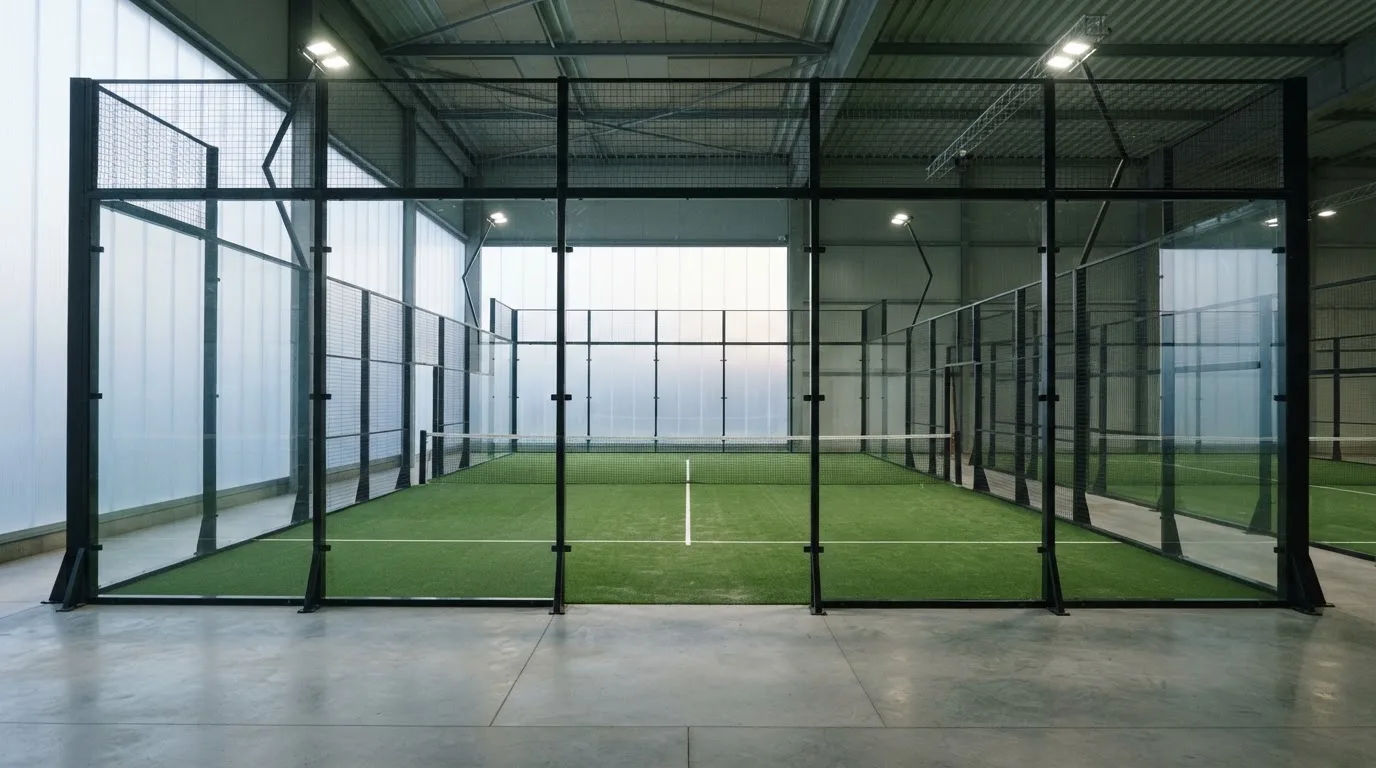
The equipment and the court are not the point — the point is that padel is a doubles sport by design, so almost every market offered by a bookmaker has to do with a pair rather than an individual. The match winner is a team market; the set score is a team market; the live markets are team markets. Player-prop markets in padel exist, but they are thinner than in tennis, and a bookmaker that offers a “player to win a set” line is doing something unusual. The shape of the betting calendar reflects the same fact: the tour is built around pairs, and the calendar’s centre of gravity is the doubles draw, not the singles.
The professional tour — Premier Padel, the FIP rankings, and what the calendar holds
The professional game used to run on two circuits — the World Padel Tour and a competing tour — which split the top players and split the betting market with them. Qatar Sports Investments bought the World Padel Tour in 2023, and Premier Padel took effect in the 2024 season, so there is now a single global tour rather than two rival ones. The FIP, the International Padel Federation, runs the rankings the tour uses; the FIP itself states more than 35 million active padel players in more than 150 countries as of 2025, which gives a sense of how far the recreational base has outrun the professional one.
For a punter, the practical meaning of a single tour is that the head-to-head data is no longer split between two circuits. A player’s record against another player now means the same competition in every event, not a record that flips between WPT and Premier Padel events with different draw sizes. That makes form easier to read; it also concentrates the calendar into fewer tournaments, so the off-season is longer and the in-season is denser. Punters who build their own pricing need to know which tour an event belongs to — the older WPT events still appear in some bookmakers’ archives, and a price built on a WPT meeting is not the same as one built on a Premier Padel meeting with the same players.
Markets a bookmaker offers on a Premier Padel event
The standard padel menu at a licensed bookmaker covers match winner, set score, total games, and handicap games — the same skeleton tennis has, minus the player-specific markets. Live betting is offered by every operator reviewed here, and the in-play market is the one where the sport’s character shows: padel points are short, deuces are sometimes golden-point games, and the live price moves on every service game rather than every game. A few bookmakers extend the menu further: Bet Builder products allow the punter to combine markets from one event into a single bet, available pre-match and in-play — bet365 calls this Bet Builder+, and LiveScore Bet’s Bet Builder allows up to 10 selections across match result, both teams to score, corners, total goals, player scoring and card markets (the same shape as football’s Bet Builder, with a padel card market where offered). The operator’s terms page is where the exact padel coverage sits — a punt on “total points in a set” exists at some firms and not at others, and the difference is the firm’s own product decision, not the sport’s.
Reading Prices — What a Padel Odds Line Actually Contains
How a price is built from the implied probabilities
A decimal odds line encodes an implied probability. A price of 2.00 implies a 50% chance; a price of 4.00 implies 25%; a price of 1.50 implies 66.7%. The conversion is one over the price: 1 ÷ 2.00 = 0.50, or 50%. British bookmakers also publish fractional odds, the older form: 5/1 means a £1 stake returns £5 in profit plus the £1 stake back, which in decimal is 6.00. The conversion is stake × (a ÷ b) for the profit, plus the stake for the return — or, as a single decimal odds line, a ÷ b + 1. So 5/1 → 6.00, 11/4 → 3.75, evens (1/1) → 2.00. A punter who reads only one of the two forms loses nothing in accuracy but loses time at the slip.
A market has at least two outcomes, and a bookmaker’s price on each outcome carries an implicit overround. Take an even two-way market priced at 1.90 on each side: the implied probabilities are 1 ÷ 1.90 = 52.6% on each outcome, summing to 105.3%. The 5.3 percentage points above 100% is the bookmaker’s overround; the margin is 5.0%, and the payout share is 95.0% (1 ÷ 1.0526). The margin is the slice of every pound bet that the bookmaker keeps, on average, across many bets. Stated the other way, the payout share is 1 / (the sum of implied probabilities) = 1 / 1.0526 = 95.0%. A padel match-winner market at 1.90 / 1.90 is therefore paying back 95.0 pence per pound wagered across both outcomes, and the 5.0 pence kept by the bookmaker is the cost of taking the bet. This margin varies by market and by bookmaker — the margin on a match winner is generally lower than on a correct-score line, and the margin at a betting exchange is structurally lower than at a traditional bookmaker because the exchange takes a commission on net winnings rather than building an overround into every price. A punter comparing padel prices between operators is comparing their margins, and the gap is real money over a season.
What a margin does to a winning bet
A winning £10 single at decimal odds 1.90 returns £19.00 — the £10 stake plus £9.00 profit. A winning £10 single at 6.00 returns £60.00 — the stake plus £50.00 profit. The formula is stake × odds for the return and stake × (odds − 1) for the net profit, with the stake returned on top. For a combination bet — a double, an accumulator — the odds of the legs multiply into one price, so two selections at 2.00 and 3.00 combine to 6.00, and the return on a £10 stake is £60.00 with both legs winning. That multiplication is what makes accumulators attractive and what makes them expensive: every leg carries the bookmaker’s margin, and the margins compound. A four-fold accumulator at 2.00 on every leg carries an effective margin that is meaningfully higher than a single at 2.00, even though each leg looks reasonable in isolation.
The practical reading of a padel price is therefore not “will this player win?” but “is this price bigger than the true probability of this player winning, after I subtract the margin?”. A punter who prices a match at 60/40 and sees a price of 1.90 on the favourite has an edge — 1.90 implies 52.6%, below 60%. A punter who prices a match at 55/45 and sees 1.90 on the favourite has no edge — 1.90 implies 52.6%, below 55% but close enough that the margin eats it. Reading prices is reading the gap between the bookmaker’s implied probability and the punter’s own, and the margin is the tax on misjudging that gap.
The Licensed Firms — Eleven Operators Reviewed Against One Register
The comparison below ranks ten UK-facing firms that hold a Gambling Commission remote licence, against a single register. The list is not a recommendation — a place in the comparison is a licence, not an endorsement — and each card sits beside the same fields so that a punter can read across the rows. Every firm named here appears on the Gambling Commission’s public register against a remote betting licence category; no firm is named “the only” licensed one, because the Commission’s register runs to far more brands than any article can feature. A punter who wants to check any of these names can search the Commission’s public register by business name, trading name, domain or account number, and the card’s licence number is the key that opens that search.
The table below covers the four matters that decide whether a firm fits a padel punter’s account: the Gambling Commission licence and its holder, the welcome offer as the operator states it in qualitative terms (no code, no working bonus, the type and rough size), and what the operator’s own terms say about the key points — minimum odds on a qualifying bet, expiry, in-play and bet-builder availability, payment shape, and any padel-specific note from the firm’s own pages. The qualitative wording is deliberate: a working code or a printed bonus value can be claimed by anyone, and the page describes what an offer is worth rather than how it is claimed.
| Field | BAH | MGM | OCB | SMR | LSB | BBR | BOR | VBT | MDN | FTD |
|---|---|---|---|---|---|---|---|---|---|---|
| Gambling Commission licence | 100094-R-341742-003 | 039198-R-319450-029 | 062545-R-337248-006 | 039173-R-319366-011 | 056859-R-332720-005 | 044181-R-324363-007 | 056516-R-332750-007 | 044662-R-324273-022 | 101839-R-342850-001 | 000400-R-103839-030 |
| Licence holder | Bet Ahoy Ltd | LeoVegas Gaming PLC | Octopus Game Limited | Smarkets (Malta) Limited | LiveScore Betting and Gaming (Gibraltar) Limited | Webmedia Development N.V. | Bar-One Racing Limited | SCGO Limited | Midnite Limited | Fitzdares Limited |
| Welcome offer (qualitative) | Modest free-bet bundle tied to a £10 qualifying bet | Multi-part free-bet package on four £10 tokens with a seven-day qualifying window | Half-back free-bet up to a modest cap, paired with a small casino token | Niche sports; welcome shape governed by exchange-style terms | Free-bet bundle anchored by a Bet Builder product with up to 10 selections | Matched free-bet on the first qualifying wager, modest cap, three-selection minimum | Horse-racing-anchored welcome shape with padel accessible through the wider sportsbook | Token back-as-free-bet if a first qualifying bet loses | Free-bet bundle plus free spins, with a minimum-price qualifying threshold around evens | Premium-shape welcome on a small-stake bookmaker with horse-racing specials |
| Padel coverage note | Bet Builder available across major sports; padel in-play coverage subject to the operator’s programme | Standard match-winner, set-score and total-games lines; live markets on scheduled Premier Padel events | Standard sportsbook coverage; padel markets appear under racquet sports in the programme | Exchange pricing available on Premier Padel events when liquidity exists | Bet Builder covers match result, both teams to score, corners, total goals, player scoring and card markets — padel lines subject to the programme | Standard sportsbook pricing; in-play available on major events | Irish-anchored firm with padel accessible through the standard sportsbook | Standard sportsbook coverage; padel covered when scheduled | In-play events shown, acca builder available, popular accas and price boosts advertised | In-play odds on horse racing, football, tennis, rugby, cricket, golf and American football; padel subject to the programme |
| Minimum odds on qualifying bet | 3/5 (1.60) on each selection in qualifying bets, three-selection minimum | Standard welcome shape — minimum odds and stake on the operator’s terms | Modest minimum-odds threshold on the qualifying bet | Exchange rules apply — lay and back available | Minimum-odds threshold on Bet Builder legs, on the operator’s terms | 3/5 (1.60) minimum on each of three or more qualifying selections | Operator’s terms govern | Operator’s terms govern | EVS (2.0) or greater on the qualifying bet, 14-day window | Operator’s terms govern |
| Free-bet expiry | Seven days from issue, in two £5 tokens | Seven days from issue, on four tokens | Seven days from issue | Standard gaming credit window | Operator’s terms govern | Free-bet window on the operator’s terms | Operator’s terms govern | Single qualifying-bet structure | Seven days from issue | Operator’s terms govern |
| In-play and live streaming | In-play available; live streaming schedule subject to the operator’s programme | In-play available; live streaming subject to the operator’s schedule | In-play available on major events | Exchange in-play available on Premier Padel when liquidity exists | In-play available; live streaming subject to the schedule | In-play available on major events | In-play available on major events | In-play available on major events | In-play events shown on the sports betting home page; live streaming subject to the schedule | In-play odds across horse racing, football, tennis, rugby, cricket, golf and American football; live streaming subject to the schedule |
| Cash-out | Available on selected markets | Available on selected markets | Available on selected markets | Exchange cash-out not applicable — exchange back/lay structure | Available on selected markets | Available on selected markets | Available on selected markets | Available on selected markets | Available on selected markets | Available on selected markets |
| Identity verification | Required before the first deposit | Required before the first deposit | Required before the first deposit | Required before the first deposit | Required before the first deposit | Required before the first deposit | Required before the first deposit | Required before the first deposit | Required before the first deposit | Required before the first deposit |
| GAMSTOP | Mandatory member | Mandatory member | Mandatory member | Mandatory member | Mandatory member | Mandatory member | Mandatory member | Mandatory member | Mandatory member | Mandatory member |
| Credit-card deposits | Not accepted for gambling | Not accepted for gambling | Not accepted for gambling | Not accepted for gambling | Not accepted for gambling | Not accepted for gambling | Not accepted for gambling | Not accepted for gambling | Not accepted for gambling | Not accepted for gambling |
The columns above read BAH (Bet Ahoy), MGM (BetMGM), OCB (Octobet), SMR (Smarkets), LSB (LiveScore Bet), BBR (Betboro), BOR (Bar One Racing), VBT (VBet), MDN (Midnite), and FTD (Fitzdares). The licence numbers and licence holders are taken from the Gambling Commission’s public register; the welcome-offer column is qualitative by design, and the per-firm specifics are taken from each operator’s own published terms.
How the table was assembled and what it leaves out
Every cell is sourced from one of three places: the Gambling Commission’s public register, the operator’s own terms page, or the operator’s UK-facing application description. The licence numbers are written exactly as the register publishes them, and a punter who wants to double-check can search the register by the account number — the four- or five-digit prefix before the dash. The licence-holder column names the company behind the trading brand; several retail brands can sit under one holder, and that structure is the reason the table names the holder rather than only the brand.
The welcome-offer column is the one place where a reader might want more than the table gives. That is a deliberate limit. A printed code can be claimed by anyone with the screen in front of them; a printed bonus value ages within weeks because operators change them; a written description of what kind of offer it is — a free-bet bundle, a matched first bet, an exchange-shape product — ages more slowly. The punter who wants the working terms goes to the operator’s own promotions page, where the exact value, the exact expiry and the exact minimum odds are stated in the language that holds up in a complaint. The table above names the shape; the operator’s own page names the number.
The minimum-odds and free-bet-expiry rows are the second pair of cells where the table deliberately stays short. The minimum odds that count toward a welcome bonus are a number a punter must know before placing the qualifying bet, and a wrong value means a free bet that does not arrive. The minimum-odds values in the table are those the operators publish in their UK terms; the punter who is about to claim an offer checks the same page on the day of claiming, because the operator’s terms change without notice. Free-bet expiry is the second timing fact: a free bet that expires before it is used is a free bet the punter paid for with the qualifying stake. Seven days is the common window at the firms reviewed here, but the punter should not assume it; the operator’s terms page is the place where the window is stated in writing.
The in-play and Bet Builder rows are the place where padel’s specific character matters. The sport is doubles, the points are short, and the live price moves on every service game rather than every game. A Bet Builder that takes match result, set score and total games on one Premier Padel match is a usable product for a padel punter; a Bet Builder built around football’s “both teams to score” line is a football product with a padel skin. The punter who wants a Bet Builder on padel checks the operator’s programme for the specific event, because the menu is event-by-event and tournament-by-tournament. The table’s row on Bet Builder notes where the product exists in the operator’s wider catalogue; the padel-specific line lives in the operator’s programme page, not in this article.
The credit-card row is one of the cleanest in British betting. Credit cards have been banned for gambling in Great Britain since 14 April 2020, including credit-card-funded payments through an e-wallet, so the entry “not accepted for gambling” applies to every licensed operator without exception. A punter who tries to deposit on credit is told no at the cashier, and that is the rule working. Debit cards and bank-based payments are not covered by the ban, so the punter who wants the speed of card payments uses a debit card; the punter who wants the speed of bank transfers uses an open-bank-transfer method, where one is offered.
The table leaves out a few things a punter might want, on purpose. It does not quote a live padel price on any specific match, because the price changes on every rally and a printed price is wrong by the time the reader gets to the slip. It does not state each firm’s padel margin, because the margin is event-specific and operator-specific and the spread is wider than any single number could capture. It does not state a payout time per firm, because payout time depends on the payment method as much as on the operator, and a withdrawal that takes six hours on open-bank-transfer can take two working days on a debit card. The punter who wants these reads them in the operator’s programme at the moment of betting.
Bet Ahoy — Modest Welcome Shape, Standard Sportsbook Paddle
Bet Ahoy runs on Gambling Commission account 100094 under Bet Ahoy Ltd, with a remote general betting standard (real events) licence category. The welcome offer is a £10 free-bet bundle tied to a £10 qualifying bet, made up of a £5 sports token and a £5 acca token, with a seven-day expiry. The minimum odds on each qualifying selection are 3/5 (1.60), a standard threshold for a multi-leg acca, and a punter who wants the full bundle needs a qualifying bet with the right structure. The sportsbook covers the standard padel menu — match winner, set score, total games — and in-play pricing is offered on major events. The firm’s terms page is where the padel-specific menu sits on any given day, and the punter checks the programme before staking, because a thin padel event is not priced the same way as a Premier Padel headliner.
The verdict: Bet Ahoy suits the punter who wants a small-stake qualifying bet and a free-bet bundle shaped as a sports token plus an acca token, with the discipline to read the minimum-odds rule before placing the qualifying bet. The welcome shape is modest rather than generous, and the punter who wants a larger matched free bet looks elsewhere on the table.
BetMGM — Multi-Token Welcome on a Sportsbook with Stake
BetMGM runs on Gambling Commission account 39198 under LeoVegas Gaming PLC, the same holder that runs other LeoVegas brands in the UK. The welcome offer is a four-token free-bet package — two football accumulators of four or more selections and two sports multiples of two or more selections — on a £10 qualifying bet placed within seven days of sign-up, with a minimum-odds threshold and an opt-in required. The package is generous in shape (four tokens rather than one) and demanding in structure (the football accumulators need four selections each, and the sports multiples need two), so the punter who wants the full package places four qualifying bets with the right selection count. The sportsbook covers the standard padel menu, with in-play pricing on scheduled Premier Padel events, and the operator’s programme is where the day’s specific padel lines sit.
The verdict: BetMGM suits the punter who is happy to place four qualifying bets with the right selection counts and wants four free-bet tokens in return. The structure is heavier than a single-token welcome, and a punter who places one bet and walks away loses three tokens. The full package rewards the disciplined punter who plans the qualifying week.
Octobet — Half-Back Free Bet on a Standard Sportsbook
Octobet runs on Gambling Commission account 62545 under Octopus Game Limited. The welcome offer is 50% back as a free bet up to £50 on the first qualifying bet, paired with a £10 casino token. The shape is a half-back rather than a matched free bet — the punter’s first bet, if it loses, returns half the stake as a free bet, capped at £50 — and the casino token is a separate line. The sportsbook covers the standard padel menu with in-play pricing on major events, and the operator’s programme carries the day’s specific padel lines.
The verdict: Octobet suits the punter who wants a half-back on the first bet and a small casino token alongside the sportsbook. The half-back is more forgiving than a free-bet-requiring-bet shape, because the punter who loses the first bet gets half back, and the punter who wins the first bet pays nothing extra. The cap at £50 limits the upside on a larger first bet, and the punter who wants a full match on a bigger stake looks elsewhere.
Smarkets — Exchange Pricing for the Padel Punter Who Backs and Lays
Smarkets runs on Gambling Commission account 39173 under Smarkets (Malta) Limited, with a remote betting intermediary licence rather than a remote general betting standard licence. The licence category is the betting-exchange category, and the operator runs on back-and-lay pricing rather than traditional bookmaker overround, charging commission on net winnings. UK open-bank-transfer deposits are instant from £10 up to £10,000, withdrawals are processed within six hours from £10 up to £100,000, and UK debit-card deposits are instant from £10 up to £15,000. The exchange price on a Premier Padel event is set by the liquidity the event attracts, and a thin event is a thin book — the punter who wants a price on a low-profile tournament checks whether there is liquidity before staking.
The verdict: Smarkets suits the padel punter who wants the structural advantage of exchange pricing and is willing to place back and lay bets. The exchange shape rewards the punter who prices their own markets, because the margin is the commission on net winnings rather than the overround on every price. The thin liquidity on lower-profile padel events is the cost, and the punter who bets only on Premier Padel headliners gets a deeper book than the punter who bets on challenger events.
LiveScore Bet — Bet Builder Up to Ten Selections
LiveScore Bet runs on Gambling Commission account 56859 under LiveScore Betting and Gaming (Gibraltar) Limited. The Bet Builder product allows up to 10 selections across match result, both teams to score, corners, total goals, player scoring and card markets — a football-shaped product in its menu, with a padel programme that takes the same shape where the firm offers it. The sportsbook covers the standard padel menu with in-play pricing on major events, and the operator’s programme carries the day’s specific padel lines. The welcome offer is a free-bet bundle anchored by the Bet Builder product, with the operator’s terms governing the minimum-odds threshold on the qualifying legs.
The verdict: LiveScore Bet suits the punter who wants a Bet Builder with up to ten selections across the standard markets and is happy to take a football-shaped menu where it applies to padel. The Bet Builder depth is the headline product, and the punter who wants the full ten-selection bundle plans the qualifying structure in advance.
Betboro — Matched Free Bet with a Three-Selection Minimum
Betboro runs on Gambling Commission account 44181 under Webmedia Development N.V. The welcome offer is a matched free bet up to £25 on the first bet, requiring a debit-card deposit of at least £10 and a first bet of between £5 and £25 with at least three selections, each at 3/5 (1.60) or higher. The shape is a matched free bet rather than a free-bet bundle, with the three-selection minimum doing the work of ensuring the qualifying bet is a multi rather than a single.
The verdict: Betboro suits the punter who wants a matched free bet up to £25 and is willing to place a three-selection qualifying bet with each leg at 1.60 or higher. The structure is straightforward, and the cap is modest. The punter who wants a larger matched free bet looks elsewhere, and the punter who wants a single-selection qualifying bet looks elsewhere too.
Bar One Racing — Irish-Anchored Firm with a Wider Sportsbook
Bar One Racing runs on Gambling Commission account 56516 under Bar-One Racing Limited, an Irish independent bookmaker with shops across Ireland and horse-racing sponsorships at Dundalk, Fairyhouse, Navan, The Curragh, Curraheen Park and Cork. The firm rebranded as BAR 1 Betting, and the GB-facing sportsbook offers the standard padel menu alongside the horse-racing anchor. The welcome shape is horse-racing-anchored, and the punter who wants a padel-friendly welcome checks the operator’s terms for the current offer. The in-play pricing is offered on major events, and the operator’s programme carries the day’s specific padel lines.
The verdict: Bar One Racing suits the punter who wants a horse-racing-anchored Irish firm with a wider sportsbook for padel. The horse-racing shape is the headline, and the padel coverage is part of the wider sportsbook rather than a separate product. The punter who bets primarily on horse racing and wants padel as a secondary market gets the right fit here.
VBet — offers cash back as a free bet if the first bet loses
VBet runs on Gambling Commission account 44662 under SCGO Limited. The welcome offer is a £10 free bet if a new, verified customer stakes £10 or more on a first-ever bet that loses. The shape is a one-token back-as-free-bet on the first losing bet, with no equivalent return if the first bet wins. The “risk-free” framing in the welcome language is a back-as-free-bet, not a money refund — the punter who loses the first bet gets £10 in free-bet value, and the free bet’s stake is not returned on a win.
The verdict: VBet suits the punter who wants a back-as-free-bet on the first losing bet and accepts that a winning first bet returns nothing extra. The shape is simple — a £10 qualifying bet, a £10 free bet if it loses — and the punter who wants a larger free-bet or a winning-bet bonus looks elsewhere. The “risk-free” word in the welcome language does not mean a money refund, and the punter reads the small print before treating it as one.
Midnite — Free Bets Plus Free Spins, Minimum Odds at Evens
Midnite runs on Gambling Commission account 101839 under Midnite Limited, with a remote general betting standard (real events) licence category. The sports betting home page shows in-play events, an acca builder, popular accas and price boosts with maximum-stake limits. The welcome offer is £25 in free bets plus 50 free spins for new customers who bet £5 or more on pre-match odds of EVS (2.0) or greater within 14 days of sign-up, valid for seven days. The free-bet bundle is paired with free spins, and the minimum-odds threshold at evens (2.0) is the cleanest threshold on this table — a single at 2.0 or higher counts, no multi-leg structure required.
The verdict: Midnite suits the punter who wants a free-bet bundle with a clean evens (2.0) minimum-odds threshold and is happy to take the free spins alongside. The 14-day window on the qualifying bet is generous, and the seven-day window on the free bets is the standard expiry. The punter who wants a free-bet bundle without a casino token looks elsewhere; the punter who wants an evens minimum threshold on a single selection reads the welcome as straightforward.
Fitzdares — Pattern Bookmaker with Horse-Racing Specials
Fitzdares runs on Gambling Commission account 400 under Fitzdares Limited, the lowest account number on this table and the longest-standing of the licence holders. The app offers cash out, accumulators, Lucky 15s, specials and antepost markets on horse racing, football, tennis, rugby, cricket, golf and American football, with in-play live odds. The welcome shape is a premium-shape product on a small-stake bookmaker, and the punter who bets primarily on horse racing gets the headline product; the punter who wants padel as a primary market checks the operator’s programme for the day’s specific lines. The in-play pricing is offered on the sports listed in the app description, with padel subject to the programme rather than a guaranteed in-play product.
The verdict: Fitzdares suits the punter who wants a pattern bookmaker with horse-racing specials and accepts that padel is a programme-by-programme line rather than a headline market. The Lucky 15 and antepost products are the headline shape, and the padel coverage is part of the wider sportsbook. The punter who bets primarily on horse racing and wants padel as a secondary market gets the right fit; the punter who bets primarily on padel looks elsewhere on the table.
Where the Money Goes — Payments, Payouts, and the Cost of the Slip
The methods a licensed bookmaker accepts, and what each costs
A padel punter has the same payment shape as any other British punter, because the payment rules apply across the sportsbook. Credit cards are banned for gambling in Great Britain since 14 April 2020, including credit-card-funded e-wallet top-ups, and the cashier refuses them at the deposit step. Debit cards, bank transfers, and e-wallets are the standard channels. The minimum deposit is set by the operator and varies from £5 to £10, with the maximum deposit governed by the operator’s own ceiling and the customer’s own deposit limit. A punter who wants the fastest deposit uses open-bank-transfer where it is offered — Smarkets processes UK open-bank-transfer deposits instantly from £10 up to £10,000, and the punter who wants a £10 deposit on a Saturday morning gets it on a Saturday morning.
Withdrawals are slower than deposits, and the gap is the cost of the payment shape. A debit-card withdrawal takes one to three working days at most firms, with the operator processing the withdrawal within hours and the card scheme delivering it. A bank-transfer withdrawal is faster than a card at most firms — Smarkets processes UK withdrawals within six hours from £10 up to £100,000. An e-wallet withdrawal is fastest at most firms, with the operator processing the withdrawal and the e-wallet crediting it within minutes. The punter who wants the fastest payout chooses open-bank-transfer or e-wallet over debit card, and the choice is made at the deposit step because most operators require the withdrawal to go back to the same method that funded the deposit.
Identity verification, source-of-funds, and the rules that decide how the account is opened
Identity is verified before the first deposit, including where a free bet or bonus is claimed, and that has been the rule since 7 May 2019. The verification checks the customer’s name, address and date of birth against public records, and a punter who cannot pass the check cannot open an account. The verification is not optional, and the operator that skips it is breaking a licence condition. The punter who wants to claim a welcome offer is verified first and offers second, and the order matters because the verification is what makes the offer eligible.
Source-of-funds checks sit higher up the funnel. A punter whose deposits minus withdrawals exceed £150 in a rolling 30 days passes the financial-vulnerability threshold — currently £150, since 28 February 2025 — and the operator runs a public-record check for bankruptcy or county court judgments. The check is not an income check and not a credit reference check, and the punter who passes the public-record screen continues without further questions. Wider financial risk assessments have been announced in a staged plan; no start date is set, and writing them as live misleads. The punter who wants to know what the operator will ask at higher spend reads the operator’s own source-of-funds policy, because the public-record check is the floor and the operator’s policy is the ceiling.
Why the Margin Matters — A Worked Example on a Padel Match-Winner Market
A punter pricing a padel match winner is pricing the margin as well as the match. Take an even two-way market at decimal odds 1.90 on each side — the example price, not a quoted price — and the implied probabilities are 1 ÷ 1.90 = 52.6% on each outcome, summing to 105.3%. The 5.3 percentage points above 100% is the bookmaker’s margin, and the payout share — the share of every pound wagered that is returned to bettors in the long run — is 100% − 5.3% = 94.7% (more exactly, 1 ÷ (1/1.90 + 1/1.90) = 0.9474). A £10 winning single at 1.90 returns £19.00, but the bookmaker keeps 5.3 pence of every pound bet across both outcomes in the long run, and the punter who bets on the same match at a different bookmaker at 1.95 / 1.95 is paying a lower margin — the implied probabilities sum to 102.6%, a margin of 2.6%, a payout share of 97.4%. The gap between 5.3% and 2.6% is the cost of choosing the wrong bookmaker on the same event, and over a season of padel bets the gap is meaningful.
The margin is a band rather than a single number, because it varies by market and by bookmaker. The margin on a padel match-winner market at a betting exchange is structurally lower than at a traditional bookmaker, because the exchange takes commission on net winnings rather than building an overround into every price. The margin on a padel correct-score line is structurally higher than on a match-winner line, because correct-score has more outcomes and the bookmaker’s overround has more room to hide. The margin on a padel handicap line depends on the spread, and a bookmaker that sets a wide handicap carries a wider margin than one that sets a tight handicap. A punter who prices padel across bookmakers is pricing the band of margins, and the band is the difference between a season that pays for itself and a season that doesn’t.
The result, then, is a band rather than a single figure: a padel match-winner market priced at 1.90 / 1.90 carries a margin of roughly 5%, with the payout share sitting in the mid-90s as a percentage; the same market priced at 1.95 / 1.95 carries a margin of roughly 2.5%, with the payout share in the high-90s. A punter who treats the margin as a flat 5% across all padel markets is treating one market as the whole sport, and the bookmaker’s catalogue is wider than that. The arithmetic above is illustrative — the inputs are an example, not a quoted price — and the punter who wants the real margin on a real event checks the prices on the slip at the moment of betting.
What the Regulator Says — Licensing, the Register, and the Offshore Question
The Gambling Commission’s public register and what it proves
The Gambling Commission licenses the whole commercial market in Great Britain under the Gambling Act 2005, which covers England, Scotland and Wales. Since the Gambling (Licensing and Advertising) Act 2014 an operator whose remote facilities are used in Great Britain needs a Commission licence wherever it is based — sections 33 and 36 of the 2005 Act as amended — and a Curaçao, Maltese or Gibraltar licence is not a substitute. The Commission’s public register can be searched by business name, trading name, domain or account number, and the register is the whole test of whether a brand holds a licence. A punter who wants to check a brand opens the register, enters the trading name or the licence number from the table above, and confirms the licence category and the holder’s name.
Licensed operators use .com as well as .co.uk, so the domain proves nothing. The register entry does. The licence categories on the register are remote general betting standard (real events), remote general betting standard (virtual events), remote general betting limited, remote pool betting and remote betting intermediary, and each operator’s entry states the category. Padel is a real-events sport, so the relevant category for a padel bookmaker is remote general betting standard (real events); a betting exchange’s relevant category is remote betting intermediary. Smarkets holds the latter, and every other firm on the table above holds the former. A punter who wants to check whether a brand’s licence category matches the product reads the register’s “licence activities” line, not just the trading name.
What a licensed operator must do, and what an unlicensed one does not
A licensed operator must verify identity before the first deposit, must take part in GAMSTOP, must offer deposit limits on a fixed time frame, must run the financial vulnerability check above £150 in deposits minus withdrawals over a rolling 30 days, must apply the social responsibility and marketing codes, and must make customer funds available through an approved dispute-resolution route. The 10x cap on bonus wagering requirements is in force since 19 January 2026 — a £10 bonus at 50x needed £500 of bets; under the cap no more than £100 — and mixed-product promotions are banned. The advertising codes (CAP for non-broadcast, BCAP for broadcast) run alongside the Commission’s marketing rules, and the ASA enforces the CAP Code. A licensed operator is bound by these rules; an unlicensed operator is not.
An unlicensed operator — the one whose brand does not appear on the Commission’s register — runs on its own house rules. The punter who bets there has no GAMSTOP coverage, no Commission complaints route, no approved dispute-resolution body, and no British consumer redress if funds are withheld. The 10x bonus cap does not bind the operator, and the £150 financial vulnerability check does not run. Providing gambling facilities in Great Britain without the licence the Act requires is an offence under section 33 of the Gambling Act 2005, aimed at the operator; no offence aimed at a customer who merely bets on an unlicensed site was found in the relevant law, so the framing for a customer is the loss of protection, not criminal liability. The Commission’s enforcement is disruption rather than blocking — cease-and-desist notices, search-engine referrals, work with registrars, hosts and payment providers — and ISP-level DNS blocking has not been put into operation as a standing rule. The honest framing: licensed means checks, limits, GAMSTOP and the bonus cap, but also verification before the first bet; unlicensed means none of those protections and possible loss of funds. Neither is the safe choice by default — the licensed route is the regulated route, and the unlicensed route is the unregulated one.
Betting duty, and the rate the operator carries
General Betting Duty is the operator’s tax on gross profits from bets in Great Britain, currently 15%. From 1 April 2027 a new remote betting rate of 25% applies within the duty, while remote bets on UK horse racing, bets on self-service betting terminals in licensed premises, pool betting and in-person betting stay at 15%. Spread betting has its own rates (3% financial, 10% other). Until 1 April 2027 the remote rate stays at 15%, and whether operators pass the duty through into the odds is not established. The player pays no tax on betting winnings in Great Britain — a professional gambler should ask HMRC or an adviser, but the recreational punter keeps the full return. The duty is the operator’s cost, and the operator’s margin handles the duty, and the punter’s price is built on top.
Choosing Between the Ten — How a Punter Reads the Table for an Actual Match
A punter deciding between the ten firms above on a specific padel match is choosing across three questions, in this order: is the licence right, is the price right, is the offer shape right. The licence question is the easiest — every firm on the table holds a Gambling Commission remote licence, and the punter who wants to double-check enters the account number from the table into the Commission’s public register. The price question is the live one — the punter who is about to place a bet checks the prices on the slip at the moment of betting, because a printed price is wrong by the time the punter reaches it. The offer-shape question is the structural one — the punter who is claiming a welcome offer reads the operator’s own terms before staking, because the minimum-odds threshold and the qualifying-bet structure decide whether the offer arrives.
The punter who bets primarily on padel and wants a Bet Builder with padel legs chooses the firm with the deepest Bet Builder product — LiveScore Bet, with up to ten selections across the standard markets — and accepts that padel’s Bet Builder is event-by-event. The punter who bets primarily on padel and wants the structural advantage of exchange pricing chooses Smarkets, and accepts the thin liquidity on lower-profile events. The punter who bets primarily on padel and wants a free-bet bundle with an evens minimum on a single selection chooses Midnite, and accepts the seven-day free-bet window. The punter who bets on padel as a secondary market and wants a horse-racing-anchored firm with a wider sportsbook chooses Bar One Racing or Fitzdares, and accepts that padel is part of the programme rather than a headline product. The punter who bets on padel occasionally and wants a modest welcome shape chooses Bet Ahoy or Betboro, and accepts the small caps.
The choice is a personal one, and the table is the map of it. A punter who reads the table row by row and picks the firm whose welcome shape, licence holder, and minimum-odds rule match the punter’s own staking pattern gets a better fit than a punter who picks the firm with the largest headline number. The headline number is the easy signal; the staking pattern is the actual one, and the table is the place where the staking pattern meets the firm’s own.
Frequently Asked Questions
Is it legal to bet on padel in Great Britain?
Yes. Padel is a real-events sport, and every firm on the table above offers padel markets under a remote general betting standard (real events) licence. The Gambling Commission’s public register is the whole test of who holds a licence, and the punter who wants to check a brand opens the register and enters the trading name, domain or account number.
How can a punter check that a bookmaker holds a Gambling Commission licence?
The Commission’s public register can be searched by business name, trading name, domain or account number, and the register entry states the licence category and the licence holder’s name. A brand that does not appear on the register, or whose licence category does not match the product offered, is not licensed for that product in Great Britain. The table above names the licence number and the holder for each reviewed firm, and the punter checks the same number on the register.
How is the return on a bet worked out from the stake and the odds?
The return is stake × odds, with the stake returned on top, so a £10 single at decimal odds 1.90 returns £19.00 (£10 stake plus £9.00 profit). The net profit is stake × (odds − 1). For a combination bet the odds of the legs multiply into one price, so two selections at 2.00 and 3.00 combine to 6.00, and a £10 double returns £60.00 with both legs winning.
What is the bookmaker’s margin and how is it seen in the odds?
The margin is the slice of every pound wagered that the bookmaker keeps, on average across many bets. A two-way market priced at 1.90 / 1.90 has implied probabilities of 52.6% on each side, summing to 105.3%; the overround is 5.3%, the margin is 5.0%, and the payout share is 95.0%. A betting exchange’s margin is structurally lower because the commission is taken on net winnings rather than built into every price.
How do fractional odds such as 5/1 convert to decimal odds such as 6.00?
The conversion is the fraction plus one. A 5/1 price means a £1 stake returns £5 profit plus the £1 stake, and the decimal form is 5 ÷ 1 + 1 = 6.00. A 11/4 price converts to 11 ÷ 4 + 1 = 3.75. A price of evens (1/1) converts to 2.00. The decimal form is the one to use for return calculations, and the conversion is a ÷ b + 1 for any fraction a/b.
Tennis, darts & cue sports – Best Betting Tips
Content created by the «Best Betting Tips» team
