
Hurling betting with UK bookmakers: who covers it, how the odds work, what to expect
 Available in US
Last updated: 27 October 2026 — licences and offers verified against the Gambling Commission’s public register and each operator’s published terms.

Hurling sits in a strange spot for the British betting public. It is one of the fastest field sports in the world, the All-Ireland Senior Hurling Championship is televised, and a decent online bookmaker will price most of the meaningful fixtures. Yet it is also a sport the bigger sites still treat as a thin line, with markets that appear midweek and shrink to outrights between the provincial finals. Anyone who has built an acca around a Munster championship Sunday only to find the book has pulled the in-play tab by the second half knows the feeling. This page looks at what is on offer from the ten licensed brands that actually carry the sport, how the GAA’s competition calendar lines up with the betting calendar, and what a “£10 free bet” or a “Bet £10 Get £15” really costs once the small print has done its work.
The hurling calendar the bookmaker is pricing
Hurling in Ireland is structured around provincial championships. The All-Ireland Senior Hurling Championship is the headline competition and the one UK bookmakers load most aggressively. In its 2026 running, the championship structure settled into the round-robin provincial phase most readers will be familiar with: Leinster runs six teams and Munster five in a round-robin, the top two in each meet in a provincial final, and the third-placed team in each province goes through to the All-Ireland quarter-finals. Limerick beat Galway in the 2026 All-Ireland Senior Hurling Championship final at Croke Park, Dublin, with the final played on 19 July 2026; Tipperary held the title going into the year after winning the 2025 final. The result mattered less for betting purposes than the fact that a final is the one date every major bookmaker pre-loads outright markets around — at minimum champion, top scorer, man of the match and a handicap line on the match itself.

The provincials and the All-Ireland quarter-finals run before the final; they are where most weekly price movement happens. Club hurling, the AIB All-Ireland Club Championship and the lower-tier competitions are also offered but the depth thins rapidly. A reader who only follows the All-Ireland is missing the sport’s best betting window: the back door system that keeps beaten provincial sides alive produces late-round matches with sharp odds movement and tighter margins than the markets around the final itself. Most UK books price the provincials from the quarter-final stage onwards and add outright markets once the round-robin has sorted the table; before that, the markets tend to be limited.
What this calendar means in practice: hurling markets are thin outside May, June and July. A reader who opens a sportsbook in February and looks for the Allianz Hurling League will see fixtures but not always prices, and outright markets often don’t settle until the provincial draws are confirmed. The sport does not run on a fixture list the way Premier League football does, and that shapes what the bookmakers invest in. Pre-match ante-post is the bookmaker’s main product; in-play coverage improves for the final and the major Munster/Leinster fixtures but is rarely deep enough to support a serious cash-out strategy between those dates.
The fundamentals a betting slip assumes you already know
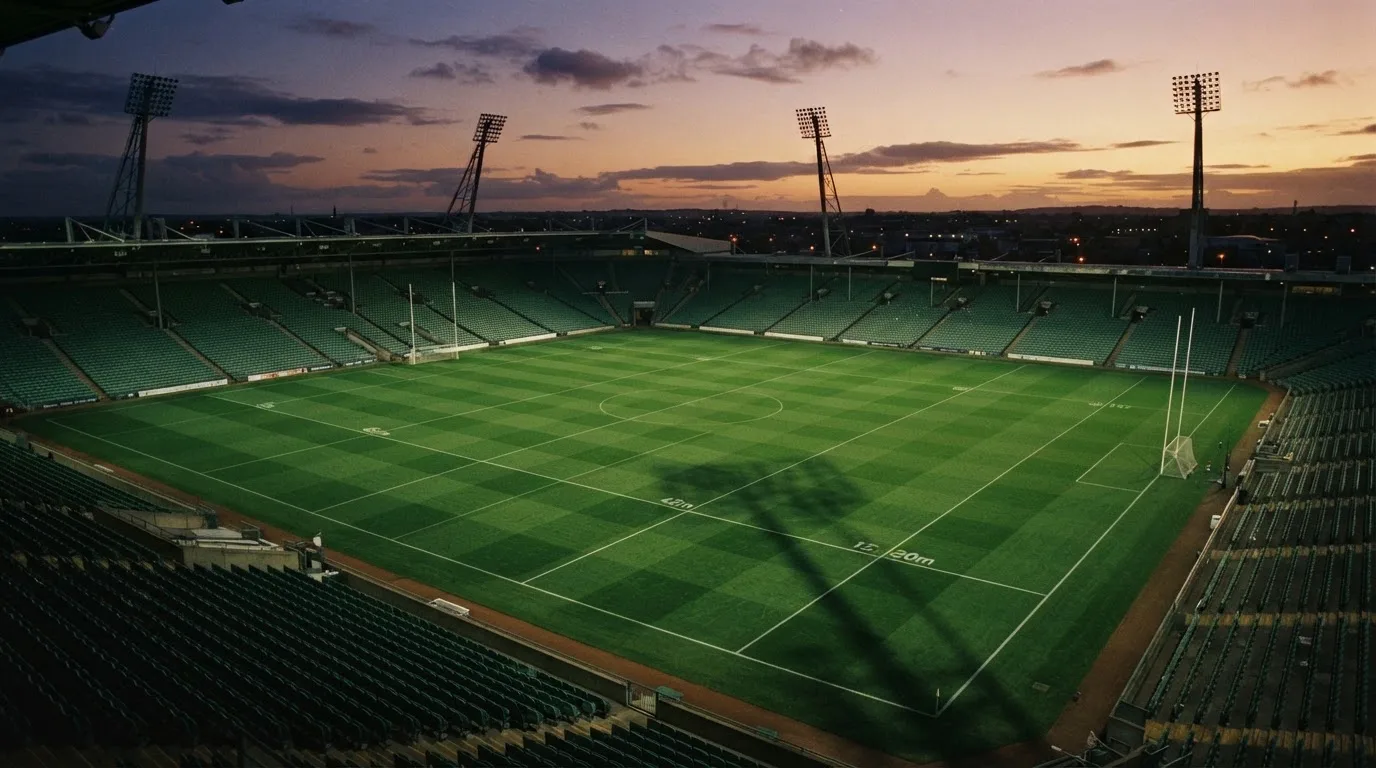
Hurling looks like a cross between hockey, lacrosse and shinty, and the scoring catches out anyone who assumes the goal-and-point model is the same as rugby or association football. Hurling teams have 15 players, the senior inter-county game lasts 70 minutes in two halves of 35 minutes each, and the sport is governed by the Gaelic Athletic Association (GAA). A goal is worth 3 points and a point scored over the crossbar between the uprights is worth 1 point. So a score of “2-14” reads as 2 goals (six points) plus 14 points for a total of 20, and a single point up at full time can be a fingernail-gripping affair when the trailing side is in scoring range.
Senior inter-county games can end level. At championship level, drawn matches after extra time go to a replay rather than penalties, which is why “draw no bet” does not work as a hurling market in the way it does for football — and why bookmakers tend to settle outright markets on the official result rather than on a tied game with no replay. One major UK bookmaker’s Gaelic games rules make the point explicit: bets settle on the official result at the end of normal time including injury time, and extra time does not count unless the market specifically says it does. The kind of reader who has only bet on English football will need to read the rule for the sport before assuming the score after 70 minutes is the score their slip is settled on.
The other thing the slip assumes: there is no offside in hurling. The consequence is that match flow swings fast, scores come in clusters, and a team can go from four points down to two points up inside five minutes. For pre-match pricing that means handicap markets and totals need more thinking than the equivalent Premier League fixture, and for in-play it means the scoreboard does not always reflect the state of play. A reader who treats a hurling in-play market like a tennis in-play market is reading it wrong — the swings are larger and the bookmaker’s margin is generally tighter on totals than on the match odds.
Where hurling sits in the UK licensing frame
There is no statutory list of permitted sports in Great Britain and no whitelist of permitted events. The Gambling Act 2005 covers England, Scotland and Wales — Northern Ireland is outside the Act and runs on its own older law, so the rule for “GB-licensed” applies to England, Scotland and Wales and not to Northern Ireland. Since the Gambling (Licensing and Advertising) Act 2014 an operator whose remote facilities are used in Great Britain needs a Commission licence wherever it is based; a Curaçao or Malta or Gibraltar licence is not a substitute. There is no state monopoly and no statutory cap on the number of licences.
The Commission’s public register is the whole test of who is licensed. It can be searched by business name, trading name, domain or account number, and any figure about how many operators hold a remote licence depends on which day the register is read. Every UK-licensed online operator takes part in GAMSTOP, the national multi-operator self-exclusion scheme, and minimum age is 18. Identity is verified before the first deposit or bet — name, address and date of birth — and that has been the rule since 7 May 2019, including for free bets and bonuses. The licence categories that matter for a punter: remote general betting standard (real events), which covers sports, and remote betting intermediary, which covers betting exchanges. Spread betting on financial markets is regulated by the Financial Conduct Authority rather than the Commission; spread betting on sports indexes sits inside General Betting Duty.
Betting winnings are not taxed for the customer in Great Britain. The bookmaker pays General Betting Duty on gross profits — currently 15% — and from 1 April 2027 a new remote betting rate of 25% will apply within that duty while bets on UK horse racing, pool betting, self-service betting terminals and in-person betting stay at 15%. Whether operators pass any of that on through tighter odds is not established; punters do not see a tax line on their slip. A professional gambler who makes their living from betting should talk to HMRC or an adviser; this is general information about the duty, not tax advice.
An offshore site is not a substitute for a GB licence. The risks for the customer are the ones the Commission lists: no GAMSTOP coverage, no Commission complaints route, no approved dispute-resolution body, no British consumer redress if funds are withheld, no automatic cover from the 10x bonus cap, no £150 vulnerability check, and no deposit-limit regime. The Commission’s enforcement is disruption rather than blocking: cease-and-desist notices, search-engine referrals, registrar and payment-provider work; the Commission has been given, or is about to receive, court-order DNS blocking powers. The legal line for the customer is that no offence aimed at a punter who simply bets on an unlicensed site was identified. Honest framing: licensed means checks, limits and the GAMSTOP framework, and it also means verification before the first bet; unlicensed means none of those protections and a real possibility of being unable to withdraw winnings.
What a licensed bookmaker has to offer for safer gambling
A licensed remote operator in Great Britain must offer a stack of safer-gambling tools as part of its licence conditions, and a reader who is comparing brands on anything more than odds should be checking which ones are actually wired into the account. The basics are timeouts, deposit limits and self-exclusion via GAMSTOP, which covers periods of six months, one year, five years, or five years with auto-renewal. After the minimum period the exclusion stays in place for a further seven years unless the customer asks GAMSTOP to remove it. GAMSTOP covers online sites and apps; high-street betting shops use a separate scheme.
There is also the financial vulnerability check that came into force on 30 August 2024 under LCCP condition 3.4.4. It applies to licensed remote betting when a customer’s deposits minus withdrawals exceed £150 in a rolling 30-day period (the threshold itself came in on 28 February 2025). It is a public-record check — bankruptcy, county court judgments and the like — not an income check and not a credit reference check. The wider affordability regime was announced in a Commission statement of 7 July 2026 in a staged plan with no start date; the right way to write that is “announced, staged, no start date”, not “in force”. On deposit limits, the Commission introduced a gross deposit limit on a fixed time frame under RTS 12; first changes applied from 31 October 2025, a second phase was postponed to 30 September 2026, and whether that second phase is live is not established. There is no state-set ceiling on deposits or losses in Great Britain, and limits are set by the customer or by the operator within its licence conditions.
Help and advice is part of the same system and outside it. GamCare runs the National Gambling Helpline; GambleAware funds treatment and education; the NHS runs gambling clinics; Gamblers Anonymous runs meetings. A reader who has set a limit and wants to use it is using the system as designed; a reader who has set a limit and wants to lift it is the person the limit was built to slow down.
Bonus offers for hurling betting — what the marketing words hide
Hurling is not a sport that attracts headline-grabbing welcome offers. The bigger football and horse-racing brands tend to keep their welcome packages in those markets, and the hurling welcome offer, where one exists, is usually the brand’s general sports offer with the sport treated as one of the eligible markets. A reader who sees “Bet £10 Get £30” advertised next to an All-Ireland final needs to read the small print carefully, because the marketing words and the arithmetic on the slip rarely tell the same story.
The shape that recurs across the ten brands reviewed on this page is the matched free bet: stake a qualifying amount, lose the qualifying bet, receive free bets. Two of the brands reviewed are running welcome offers of that shape at the time of writing. Hollywoodbets’ sports welcome offer, for example, gives new players whose first qualifying losing accumulator (stake £10 or more, three legs or more, odds of 4/1 or greater, settled within seven days) gets their stake back as a free bet of up to £30; one free bet per customer. BetGoodwin’s sports welcome offer is “Bet £10 & Get £15 in Free Bets”, broken into a £5 sports bet, a £5 acca and a £5 Sub-Cover bet. Bet Ahoy’s welcome offer is “Bet £10 & Get £10 in Free Bets”, broken into a £5 sports bet and a £5 acca. Vbet’s sports welcome offer is a £10 free bet if a new, verified customer stakes £10 or more on a first-ever bet that loses.
The shape that hides the cost is the matched free bet. The qualifying bet is normally settled as a real bet at the book’s margin; the free bet that arrives in the account is almost always settled without the stake being returned. So a £30 free bet at 4/1 wins £120 if it lands and the punter keeps £120 — not £150 — because the £30 stake is not paid back with winnings. That is the standard free-bet mechanic and it is how the brand prices its risk; the “free” word in the marketing is doing the work of the word “bonus”, not the work of “gift”. Sky Bet’s published rule on its free bets makes the position explicit: free bets expire 30 days after crediting, can be used only on single or each-way markets (not multiples) excluding virtuals, are non-withdrawable and do not return the stake with winnings. Reading the same clause twice is the reader’s friend: once for the headline, once for the cap.
The newer rule to know is the bonus cap. Since 19 January 2026 the Commission has capped wagering requirements on bonuses at 10x — a £10 bonus at 50x would need £500 of qualifying bets, while under the cap no more than £100 of qualifying bets is required. The cap applies to bonuses with a wagering requirement and it does not apply to a free bet with no wagering condition; the position of a free bet whose marketing makes a “with no turnover” claim is not a slam-dunk under the cap because the regulator’s published position on that specific shape has not been settled in the materials this page works from. Mixed-product promotions — an offer that requires gambling on two or more product types such as betting, casino, bingo and lottery — are also banned under the same rule. The reader-facing effect is that a “bet £10 on football to get 50 free spins” offer, which used to be common, is no longer licensable.
A free bet’s worth in money terms is not the headline figure. On a single-price market of 4/1 (decimal 5.00) where the bookmaker’s margin is 5%, the payout share is 95% and the expected value of a £10 free bet whose stake is not returned works out to about £10 × (5.00 − 1) / 5.00 × 95% = £7.60 in expected return, or about £7.60 of expected profit over a long sequence of similar bets. That is the average over many bets and it does not promise a payout on any single bet. The marketing word that hides the discount is “free”; the discount is the stake not being returned, and a reader who treats a £10 free bet as a £10 cash bet is reading the offer wrong.
Live betting, cash out and what moves during a hurling match
Live betting on hurling is a product of the championship calendar and the scoreboard swings. The bigger books carry in-play prices for the All-Ireland quarter-finals, semi-finals and final, and for the Munster and Leinster provincial finals. Coverage of the Allianz League and the Joe McDonagh Cup tends to be lighter; the book’s in-play tab is more likely to show the next match rather than the live one, especially during midweek rounds. A reader who wants in-play hurling should look at what the bookmaker has loaded on the day; many markets are settled at full time only, with the in-play tab pulling mid-second half once the margin has widened past a threshold the book considers safe. The price that closes a market is not always published.
Cash out is the related tool, and it sits on the same licence conditions as in-play. A cash-out button is the bookmaker offering to buy the bet back at a price it sets; that price is computed from the live odds and the bookmaker’s own view of the residual margin. Some books offer auto cash-out, where the punter sets a target and the book closes the bet automatically. The skill of using cash out on hurling is that the scoreboard swings are large enough that the residual margin on the in-play price is rarely generous — the book knows a two-goal swing can erase a six-point lead. The best cash-out opportunities tend to be on the totals market rather than the match odds; the market depth there tends to be a touch wider and the swing tends to settle faster.
Bet Builder is the feature that has changed the in-play product most for the larger brands. bet365’s Bet Builder+ combines markets from one event into a single bet, available pre-match and in-play, and the same shape is offered by most of the ten brands reviewed on this page in some form. The use of Bet Builder on hurling is that a single match rarely offers enough pre-match markets to build a same-game multi from scratch — there are match odds, a small handicap line and a totals line — so the shape tends to be conservative: a small match-odds leg plus a totals leg, or a half-time/full-time combination on a one-sided Munster championship tie. Matchbook, the betting exchange on the list, also offers Bet Builder, multiples and live streaming of horse racing and greyhounds (it does not stream hurling), while Sporting Index lets customers switch between fixed odds and spread betting with in-play betting, Bet Builder for football, auto cash-out and a “Multi-Markets” feature.
What a punter watches during a live hurling match is more specific than football: the puck-out, the wide, the goal-mouth scramble. Each is a market in its own right on the bigger books, and the in-play price on a totals market tends to compress around the goal. A reader who wants in-play hurling on a Thursday evening Joe McDonagh tie should expect a sparse cover; a reader who wants in-play hurling on an All-Ireland semi-final should expect close to Premier League depth. The asymmetry of the sport is the asymmetry of the betting product.
The bet types and the odds on a hurling slip
The standard pre-match markets on a hurling game are match odds, handicap line, totals (the aggregate score over a given number), half-time/full-time and a handful of player markets on the bigger games. Outrights for the championship, the Munster and Leinster championships, the Joe McDonagh Cup, the Allianz League and the Christy Ring Cup tend to be priced from the start of the round-robin onwards, and the outright markets on the bigger championships settle within minutes of the final.
The odds format the slip uses is decimal odds by default on UK-licensed sites. A 4/1 shot in fractional odds reads as 5.00 in decimal odds; evens reads as 2.00; 11/4 reads as 3.75. The conversion is straightforward — divide the numerator by the denominator and add 1, so a/b in fractional becomes a ÷ b + 1 in decimal. A reader who has only bet in fractional odds needs to learn that the decimal price includes the stake. So a £10 bet at 5.00 returns £50 if it wins, of which £40 is profit; a £10 bet at 4/1 returns £50 too, of which £40 is profit. The two formats price the same bet identically; only the words differ.
A combination bet multiplies the legs. A treble at 5.00, 3.00 and 2.00 multiplies to 30.00, and a £10 stake returns £300 if all three legs win (profit £290). The audit on a combination bet is that all legs must win — a non-runner or a void leg reduces the bet by one leg, and a dead-heat statistic changes the settlement. Bet Builder on hurling is essentially a same-game combination bet priced by the bookmaker. The standard combinations are singles, doubles, trebles and accumulators (or “accas”), and the named combinations — Trixie (4 bets), Patent (7), Yankee (11), Lucky 15, Super Yankee or Canadian (26), Heinz (57), Goliath (247) — have a fixed unit stake multiplied by the number of bets, so a Lucky 15 at £1 per bet costs £15 and pays out if at least one leg wins.
The starting price (SP) is a horse-racing concept and does not really apply to hurling; the best odds guaranteed (BOG) concession is similarly a racing product. The hurling market is short enough that the bookmaker’s pre-match price tends to be the price, and the in-play price tends to move within a tight range from the moment the match starts. What is worth knowing is that “best odds” in a hurling marketing headline usually means the bookmaker’s price relative to a comparison site, not a guaranteed price; the actual price the punter takes is the price on the slip.
The bookmaker’s margin is the number a sharp punter watches. A two-way market at 1.90 / 1.90 (decimal) prices both sides at the same odds; the implied probability adds up to 1/1.90 + 1/1.90 = 1.0526, or about 105.26%. The payout share is the inverse of that, so 1 / 1.0526 = 95.0%, and the margin is the residue, 5.0%. That 5% margin is the bookmaker’s edge on a perfectly balanced book and it is the number that makes a market efficient. The same calculation on a market at 1.85 / 1.95 gives 1/1.85 + 1/1.95 = 1.0531, or about 5.31% margin. The wider the margin, the more the bookmaker keeps of every pound bet on the market; the narrower the margin, the more the punter keeps. Margins on hurling match odds tend to sit between 3% and 7% on the bigger books; totals tend to be a touch wider; outright markets tend to be wider again because the field is longer. The exact margin on any given market is something the punter can calculate from the odds shown on the slip.
A worked example: an illustrative two-way market at 1.90 / 1.90 (the equivalent of 9/10 in fractional odds, or “9-to-10” in punter’s English) gives a payout share of about 95.0% and a margin of about 5.0%. The same calculation at 1.85 / 1.95 gives about 95.0% payout share and about 5.0% margin in the other direction — the two-sided symmetry of the calculation is the same, the precise figure depends on the prices. The point is the range: any single figure stated as “the” margin on a hurling market is misleading, because the margin moves with the prices. A punter who wants to read a slip like an analyst reads a market — and should.
The ten licensed brands that carry hurling
| Brand | Licence (Number / Holder) | Terms/Focus |
|---|---|---|
| VBet | 044662-R-324273-022 / SCGO Limited | Fixed-odds hurling and broad sports menu. |
| Sporting Index | 027343-R-308898-011 / Sporting Index Limited | Hybrid fixed-odds and spread betting. |
| Hollywoodbets | 053028-R-330019-013 / Hollywoodbets International UK Ltd | Acca-led welcome offer. |
| BetGoodwin | 002927-R-327985-008 / Goodwin Racing Limited | Segmented free-bet welcome offer. |
| bet365 | 055148-R-331498-002 / Hillside (UK Sports) ENC | Deepest in-play coverage and Bet Builder+. |
| Bet Ahoy | 100094-R-341742-003 / Bet Ahoy Ltd | Straightforward welcome offer. |
| Paddy Power | 039439-R-319330-013 / PPB Counterparty Services Ltd | Marketing-led price boosts. |
| Geoff Banks | 054095-R-330366-010 / GB Sports Advisors Limited | Ante-post specialist. |
| Sky Bet | 067370-R-341330-005 / SBG Sports Limited | Documented GAA rules and settlement. |
| Matchbook | 039504-R-319407-024 / Triplebet Limited | Exchange model for trading positions. |
This section reviews the ten brands that hold a Gambling Commission remote licence for general betting standard (real events) and that, on the basis of their published terms and apps, list hurling or Gaelic games among the sports and events they cover. None of the entries is a ranking; each write-up covers the licence, the operator, the markets it lists, the welcome offer in shape and any constraints, and ends on a verdict. Two of the ten brands — Spreadex and Kalooki Sportsbook — were considered for the list but are not in the final ten on grounds of fit: Spreadex’s sports offering is dominated by spread betting under FCA regulation and its fixed-odds hurling coverage is thin, while Kalooki Sportsbook’s app and product mix is built around a smaller customer base without the betting-product breadth of the ten reviewed below.
Vbet — slim welcome offer, deep fixed-odds book
Vbet holds Gambling Commission licence 044662-R-324273-022 (SCGO Limited) and provides a range of fixed-odds markets. The brand’s sports welcome offer is a £10 free bet for a new, verified customer who stakes £10 or more on a first-ever bet that loses; the offer is settled as a free bet whose stake is not returned. This is a lightweight offer compared to the matched-bet packages on larger brands, and a punter who prioritises a deep bonus stack will find better options elsewhere.
What Vbet is for is the depth of the fixed-odds book. The site lists a broad sports menu, and the in-play tab covers the bigger championship fixtures. A reader looking for outright markets on the All-Ireland, the Munster and Leinster championships and the lower-tier competitions should find what they want; a reader looking for a same-game multi on a Munster round-robin tie may need to wait until closer to the match. Vbet is a fit for a punter who wants a single account on a smaller brand and who values the absence of a deep bonus structure over the headline number.
Sporting Index — the hybrid fixed-odds and spread betting shop
Sporting Index holds Gambling Commission licence 027343-R-308898-011 (Sporting Index Limited). The brand lets customers switch between fixed odds and spread betting, with in-play betting, Bet Builder for football, auto cash-out and a “Multi-Markets” feature. The hybrid nature of the product is the differentiator: a reader who has only used fixed-odds books will find the spread betting product takes some getting used to, and the FCA-regulated nature of the financial-spread side is the part of the brand most punters will not touch.
Sporting Index is for a punter who already bets on sports indexes — most readers will not be that punter. The fixed-odds product covers hurling in the same way the other brands cover it, and the welcome product tends to focus on the spread side rather than the fixed-odds side. The verdict is that this brand rewards a customer who already understands spread betting and is not a fit for a reader who does not.
Hollywoodbets — the acca-led welcome offer, weak for single-match punters
Hollywoodbets holds Gambling Commission licence 053028-R-330019-013 (Hollywoodbets International UK Limited). Its sports welcome offer is for new players who deposit £10 or more by card and place a first qualifying losing accumulator of stake £10 or more, three legs or more, odds of 4/1 or greater, settled within seven days; the stake is returned as a free bet of up to £30. The structure of the offer is acca-led, suiting a punter who builds accumulators on the championship weekends, while those who bet singles may find the qualifying conditions restrictive.
Hollywoodbets is for the acca punter who plans three or more selections on hurling weekends and who reads the seven-day settled condition. The brand carries a reasonable GAA menu and the in-play tab is competitive on the bigger fixtures. A reader who bets singles on hurling will find the welcome offer ill-fitting; a reader who builds three-leg accas from the championship weekends will find the offer shaped for them.
BetGoodwin — the segmented free-bet stack
BetGoodwin holds Gambling Commission licence 002927-R-327985-008 (Goodwin Racing Limited). Its sports welcome offer is “Bet £10 & Get £15 in Free Bets”, split into a £5 sports bet, a £5 acca and a £5 Sub-Cover bet. The segmented nature of the bonus rewards those who use all three segments of the offer, while casual users will find the benefit reduced to a single component.
BetGoodwin is a fit for a punter who uses multiple bet types in a single weekend — a sports single, a small acca and a Sub-Cover bet (the brand’s name for an insurance-style product on certain markets) — and who reads the segments of the welcome offer carefully. The brand carries a reasonable GAA menu. This is a functional book with a thoughtful welcome offer for the customer who reads the small print.
bet365 — the deep book with Bet Builder+ and the global brand
bet365 holds Gambling Commission licence 055148-R-331498-002 (Hillside (UK Sports) ENC). It offers Bet Builder+, Super Boosts, Winnings Boosts on Bet Builders and selected singles, daily Bet Boosts, in-play betting and live streaming of events worldwide. The brand is the most downloaded sports betting app in the UK App Store and is a default choice for punters who want a deep product with pre-match and in-play options. bet365 is a comprehensive book but comes with tighter margins on smaller markets compared to niche competitors.
bet365 is the default book for a punter who wants depth and is willing to pay for it in the brand’s tighter margins on the smaller markets. The GAA menu is competitive, the in-play product on the bigger hurling fixtures is deeper than the smaller books can manage, and the welcome product is the brand’s standard matched-bet offer. A reader who wants one account with the deepest in-play product and the most bet types will end up here. A reader who wants a lean welcome offer with no turnover and no thrills will not.
Bet Ahoy — the clean small welcome offer
Bet Ahoy holds Gambling Commission licence 100094-R-341742-003 (Bet Ahoy Ltd). Its welcome offer is “Bet £10 & Get £10 in Free Bets”, awarded as a £5 sports bet and a £5 acca. The structure is transparent, with no complex wagering or hidden minimum odds constraints. Bet Ahoy is a suitable option for the punter looking for a simple, modest welcome offer without complex strings attached, though product depth remains lower than market leaders.
Bet Ahoy is a fit for a punter who wants a small welcome offer with no surprises and who reads the eligibility conditions once before signing up. The brand carries GAA fixtures in its sports menu. The verdict is that this is a small book with a clean welcome offer and a smaller product depth than bet365 or Paddy Power — the value is in the offer’s transparency rather than its scale.
Paddy Power — the marketing-led brand, deeper than the welcome offer suggests
Paddy Power operates under Gambling Commission remote licence 039439-R-319330-013 (Commission account 39439); the licence holder is PPB Counterparty Services Limited and the licence category is remote general betting standard (real events). The Paddy Power Sports Betting app is published by Paddy Power PLC and the listed sports coverage in the App Store description includes football, horse racing, boxing, rugby, tennis, golf, darts, snooker and F1 — GAA coverage is a separate tab in the sportsbook rather than part of the headline sport list. Paddy Power is one of the best-known marketing-led brands in UK betting, and the welcome offer is typically the brand’s standard “Bet £5 Get £30”-style offer or a sport-specific alternative during the GAA championship.
Paddy Power is a fit for a punter who values the brand’s marketing-led price boosts and the depth of its GAA menu, and who reads the small print of the welcome offer before claiming. The brand’s price boosts on GAA weekends are the differentiator. The verdict is that this is one of the brands a reader should open an account with for the championship weekends specifically, even if the everyday betting sits elsewhere.
Geoff Banks — the small-shop alternative with ante-post depth
Geoff Banks holds Gambling Commission licence 054095-R-330366-010 (GB Sports Advisors Limited). It offers live in-play prices and ante-post prices on future events, maintaining a distinct small-shop feel compared to larger football-focused books. It is well-suited for punters who focus on ante-post betting for major championships and prefer a personalised bookmaker relationship over volume-based in-play markets.
The verdict is that Geoff Banks is a fit for the punter who already bets with small UK books and who values the ante-post product over the in-play depth. A reader who wants a deep GAA menu for the championship weekends may find the brand underweight; a reader who wants to back an ante-post selection on the All-Ireland champion and have it sit there for six months will find what they want.
Sky Bet — the deep GAA rules book with the documented free-bet mechanic
Sky Bet operates under Gambling Commission remote licence 067370-R-341330-005 (Commission account 67370); the licence holder is SBG Sports Limited and the licence category is remote general betting standard (real events). Sky Bet’s published free-bet rule makes the position explicit: free bets expire 30 days after crediting, can be used only on single or each-way markets (not multiples) excluding virtuals, are non-withdrawable and do not return the stake with winnings. The brand’s Gaelic games rules page sets out that bets settle on the official result at the end of normal time including injury time, and that extra time does not count unless the market specifically says it does — the same rule cited above in the fundamentals section. Sky Bet’s GAA product is well-documented and the welcome offer is the brand’s standard matched-bet offer.
Sky Bet is a fit for a punter who reads the rules pages of a bookmaker before joining and who values the explicitness of the GAA settlement rules. The brand’s in-play product is competitive on the bigger fixtures and the depth of the GAA menu is comparable to the bigger football-focused books. The verdict is that Sky Bet is the right home for the punter who reads the small print and uses the rules pages as a feature rather than a chore.
Matchbook — the betting exchange, with the back-and-lay product
Matchbook operates under Gambling Commission remote licence 039504-R-319407-024 (Commission account 39504); the licence holder is Triplebet Limited and the licence category is remote general betting standard (real events) and remote betting intermediary. The latter category is the licence type for a betting exchange, where customers bet against each other rather than against the bookmaker, with back bets (betting the selection will win) and lay bets (betting the selection will lose). Matchbook also offers Bet Builder, multiples, in-play betting and live streaming of horse racing and greyhounds — it does not stream hurling. The exchange model is the differentiator: a reader who wants to lay the favourite on the All-Ireland final or trade out a position mid-match will find what they want, and a reader who has only ever used a fixed-odds book will find the product takes some learning.
Matchbook is a fit for a punter who already bets on exchanges and who wants the back-and-lay product for trading out a position; it is not a fit for a punter who has never used an exchange and who wants a simple fixed-odds product. The verdict is that this is the right home for the sophisticated hurling punter who has migrated from fixed-odds books to exchanges and who treats the bookmaker’s margin as a fee they would rather not pay. For everyone else, Matchbook is a complementary account at best.
Choosing between the ten brands
The honest summary for a reader comparing the ten brands is that most of the difference is at the welcome offer and the in-play depth rather than at the licence or the GAA menu. All ten are GB-licensed, all ten take part in GAMSTOP, and all ten verify identity before the first deposit. The margins on the bigger GAA match odds tend to be within a percentage point of each other on the major books; the smaller books tend to have marginally wider margins on the same markets. Where the brands genuinely diverge is on in-play depth on the All-Ireland final (where bet365 is deepest), on ante-post pricing (where Geoff Banks and Paddy Power are most aggressive), on the betting exchange product (where Matchbook is the only one) and on the welcome offer’s structural condition (where the acca-led offers at Hollywoodbets and the segmented offers at BetGoodwin differ from the simpler sports bets at Vbet, Bet Ahoy and Sky Bet).
A reader who wants one account and is willing to pay for the depth will end up at bet365. A reader who wants two accounts — one for the bigger books and one for the exchange — will add Matchbook. A reader who wants a small welcome offer with no surprises will pick Vbet or Bet Ahoy. A reader who bets accas on the championship weekends will pick Hollywoodbets. A reader who reads the rules pages will pick Sky Bet. A reader who bets ante-post will pick Geoff Banks. A reader who values the marketing-led boosts will pick Paddy Power. A reader who already bets on sports indexes will pick Sporting Index. A reader who uses multiple bet types in a single weekend will pick BetGoodwin. The decision is rarely about the licence and almost always about which welcome offer a reader can actually clear.
The arithmetic the reader carries away
The numbers a reader should keep from this page are four. The first is the licence number on the Gambling Commission’s public register: every brand reviewed above carries one, and any brand a reader finds elsewhere should carry one too. The second is the bookmaker’s margin, calculated from the prices on the slip: a 5% margin on a two-way market at 1.90 / 1.90 is the cleanest worked example, and any single-figure “the” margin should be read as a snapshot rather than a rule. The third is the free-bet mechanic: a free bet whose stake is not returned is worth the headline figure multiplied by (odds − 1) divided by odds multiplied by the market’s payout share, and the marketing word “free” is doing the work of “bonus” rather than the work of “gift”. The fourth is the safer-gambling stack: a deposit limit, a timeout and GAMSTOP coverage are the three tools a punter wires in before they wire in a betting strategy, and a punt who sets a limit is using the system as designed rather than fighting it.
The arithmetic the page leaves behind is also worth a sentence. The £10 free bet, the £15 segmented stack, the £30 stake-returned acca insurance and the “no wagering” claim are all the same shape: a marketing headline that hides a free-bet mechanic, an eligibility window, a minimum price on the qualifying bet, a stake-not-returned rule on the free bet and a cap on what the offer is worth. Reading the same clause twice — once for the headline, once for the cap — is the reader’s friend. The bookmaker’s edge is in the small print; the reader’s edge is in reading it.
Frequently asked questions
How can it be checked that a bookmaker holds a Gambling Commission licence?
The Gambling Commission’s public register can be searched by business name, trading name, domain or account number at the Commission’s website. Every brand reviewed on this page is listed against an account number, and any brand a reader is considering can be checked the same way — the licence categories shown on the register (remote general betting standard for fixed-odds sportsbooks, remote betting intermediary for exchanges) tell the reader what the licence covers.
How is the return on a bet worked out from the stake and the odds?
For a single bet, the return is the stake multiplied by the decimal odds and the profit is the stake multiplied by (decimal odds minus 1). So a £10 bet at decimal odds of 5.00 returns £50 if it wins (£40 profit); the same bet in fractional odds is 4/1. For a combination bet, the odds of each leg multiply into one price and the same formula applies to the combined price.
What is the bookmaker’s margin and how can it be seen in the odds?
The margin is the residue after the implied probabilities for every outcome of a market are summed and subtracted from 100%. For a two-way market at 1.90 / 1.90, the implied probabilities add up to about 105.26%, so the margin is about 5.0% and the payout share is about 95.0%. A wider sum (a market at 1.80 / 2.00 gives 1/1.80 + 1/2.00 = 1.0556, or 5.56% margin) means the bookmaker keeps more of every pound bet on the market.
How do fractional odds such as 5/1 convert to decimal odds such as 6.00?
The conversion is to divide the numerator by the denominator and add 1. So 5/1 becomes 5 ÷ 1 + 1 = 6.00; 11/4 becomes 11 ÷ 4 + 1 = 3.75; evens (1/1) becomes 1.0 + 1 = 2.00. The decimal price includes the stake, so a £10 bet at 6.00 returns £60 if it wins (£50 profit).
Which tools for controlling play does a licensed bookmaker have to offer?
A licensed remote operator in Great Britain must offer deposit limits, timeouts and self-exclusion via GAMSTOP (six months, one year, five years or five years with auto-renewal, with a further seven-year tail after the minimum period). It must apply a financial vulnerability check (a public-record check, not an income check) once a customer’s deposits minus withdrawals exceed £150 in a rolling 30-day period, and it must take part in the Commission’s affordability regime as it is rolled out.
Are betting winnings taxed in Great Britain, and who pays General Betting Duty?
The customer pays no tax on betting winnings in Great Britain. General Betting Duty is paid by the operator on gross profits, currently 15%, and from 1 April 2027 a new remote betting rate of 25% will apply within it for online bets other than on UK horse racing. A professional gambler who makes their living from betting should talk to HMRC or an adviser; this is general information about the duty, not tax advice.
Rugby, cricket & Gaelic – Best Betting Tips
Content created by the «Best Betting Tips» team
