
Online cycling betting in 2026: bookmakers, Grand Tours and how the odds are built
 Available in US
Cycling sits in an odd place among betting sports. A Premier League match lists a hundred pre-match markets; a Grand Tour stage lists a handful that change with the road. The bookmakers that take cycling seriously run a thin, sharp menu rather than a thick, generous one, and the bettor who learns to read it is better placed than the one who assumes the menu will explain itself. This page is a working guide to that landscape: the operators, the races that fill the calendar, the markets each stage generates and the arithmetic that turns a price into a return. The angle here is choice — which paths exist and who each one suits.
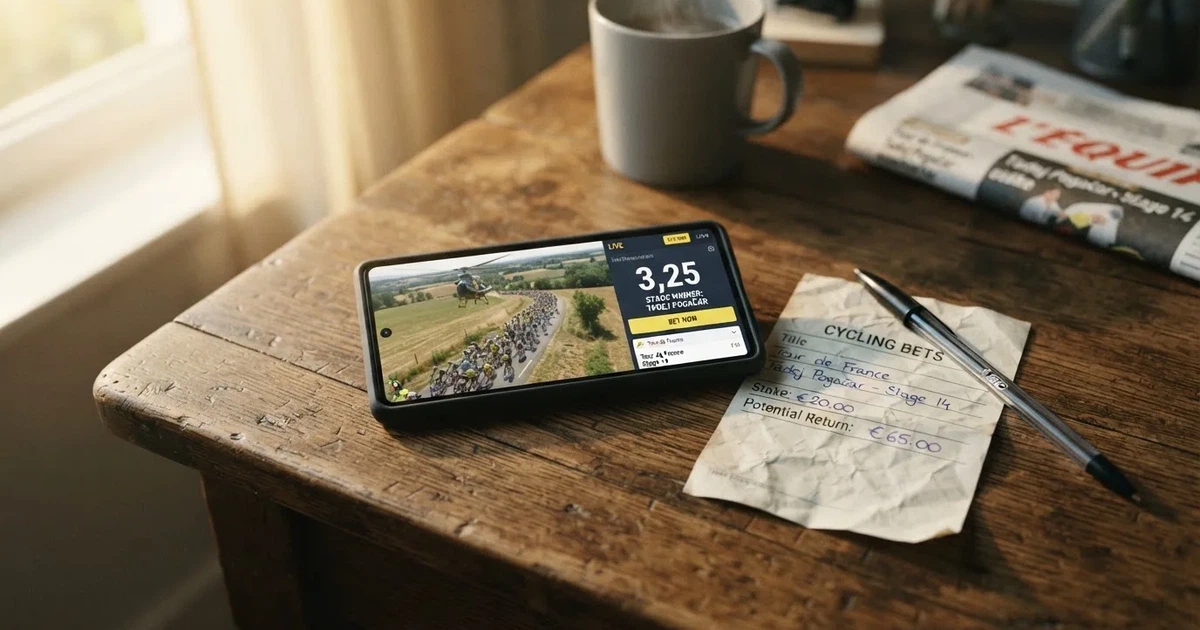
Last updated 27 October 2026. Operator and licence details verified against the Gambling Commission’s public register.
Why a responsible-gambling frame comes first
Cycling’s calendar never stops. From January’s Tour Down Under to October’s Il Lombardia, the racing week is built on long stage races that last three weeks, one-day monuments that resolve in an afternoon, and track, BMX and cyclocross events running in parallel. There is always a start list to read, a price to size and a transfer window to chase. That continuity is part of the sport’s appeal, and it is also the reason the responsible-gambling frame belongs at the front of a betting guide rather than at the end. A punter who follows the sport for ten months of the year is making many small decisions, and the discipline of those decisions is what the licence regime is built to protect.

The Gambling Commission’s player-protection rules apply to every operator licensed for Great Britain and make several of the choices a betting account normally allows impossible by default. A licensed operator verifies name, address and date of birth before a customer can deposit or place a bet — that check has applied since 7 May 2019, including where the first product is a free bet or a bonus. There is no anonymous play at a GB-licensed site; the choice is not between anonymity and verification but between a licensed site that asks and an unlicensed one that does not.
A national self-exclusion scheme, GAMSTOP, has been a mandatory licence condition for online operators since 31 March 2020. Self-exclusion can run for six months, one year, five years, or five years with auto-renewal. After the chosen minimum period, the exclusion remains active for a further seven years unless the customer asks GAMSTOP to remove it. GAMSTOP covers online sites and apps; the separate in-shop service covers betting shops.
A financial vulnerability check has applied since 30 August 2024 to licensed remote betting, and from 28 February 2025 it triggers when a customer’s deposits minus withdrawals exceed £150 in a rolling 30 days. The check is a public-record search (bankruptcy or county court judgments, for instance), not an income check and not a credit reference check. Financial risk assessments — the affordability checks the press discusses — were announced in a Commission article of 7 July 2026 in a staged plan with no start date. Whether that staged plan is now in force is not established; the rule to describe is the one already running, not the one being staged.
Deposit limits sit with the operator. The Commission has set out a fixed time-frame requirement and a two-phase rollout — first changes applied from 31 October 2025, a second phase was postponed to 30 September 2026 — but there is no state-set deposit or loss ceiling. Limits are the customer’s choice. Help is available through GamCare and the National Gambling Helpline, through GambleAware, through NHS gambling clinics, and through Gamblers Anonymous. The Fitzwilliam Sports home page, for instance, links to three of those services directly.
A licensed account carries all of that structure with it. An unlicensed one carries none of it. The detail of what an unlicensed site withholds is laid out in the regulation section further down; the choice between licensed and unlicensed is a choice between those two sets of protections, not between “safe” and “unsafe” as marketing would have it.
The races that fill a cycling calendar
The UCI (Union Cycliste Internationale), based in Switzerland, has governed road cycling since 1900 and runs the men’s and women’s Road World Championships annually. The modern top of the road pyramid is the UCI WorldTour, created in 2005 as the ProTour and renamed the WorldTour in 2011; it includes the Grand Tours and other major stage races. Below it sits the UCI ProSeries, then continental and national calendars.
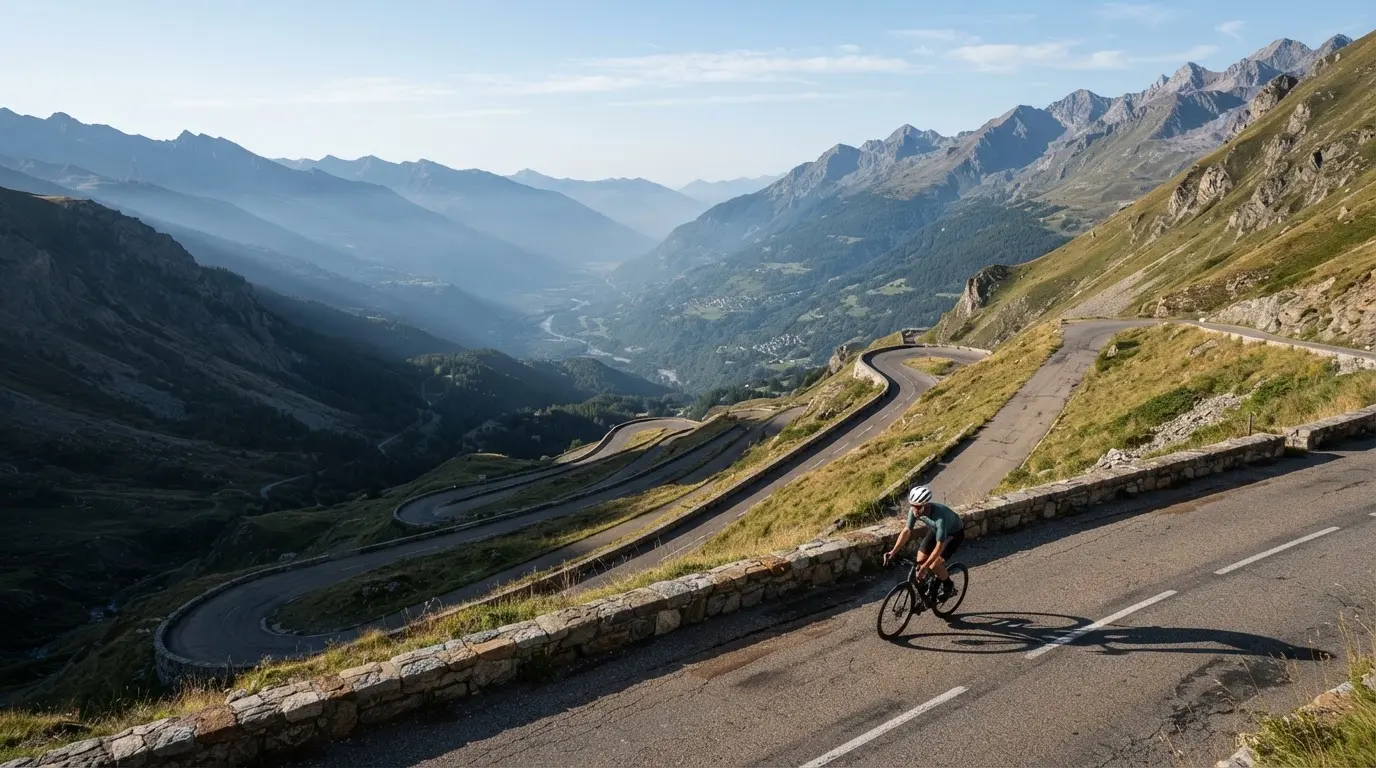
The three Grand Tours are the Giro d’Italia (first held 1909), the Tour de France (1903) and the Vuelta a España (1935). UCI rules allow Grand Tours to last 15 to 23 days. Their leaders wear a pink jersey in the Giro, a yellow jersey in the Tour and a red jersey in the Vuelta, and the races usually include two rest days. The 2026 Tour de France ran from 4 to 26 July 2026, starting in Barcelona with a team time trial and finishing on the Champs-Élysées in Paris, over 21 stages and 3,245 km with 23 teams. Tadej Pogačar, riding for UAE Team Emirates, won that edition, his fifth Tour victory. Beyond the Grand Tours sit the one-day Monuments — Milan–San Remo, the Tour of Flanders, Paris–Roubaix, Liège–Bastogne–Liège and Il Lombardia — and the major stage races such as the Critérium du Dauphiné, the Tour de Romandie, Paris–Nice and Tirreno–Adriatico. The women’s calendar has grown around the Giro d’Italia Women, the Tour de France Femmes (running since 2022), and the one-day Monuments on the women’s side.
That calendar generates the menus a bookmaker offers. Three broad shapes of cycling event sit behind most betting lines: stage races with a General Classification (GC), General Classification (GC) outright markets, King of the Mountains, points classification, young rider and team classification; one-day races with a win market, a podium market and sometimes a head-to-head between two named riders; and individual stages with an outright winner, a top-three finish, a match-up between two riders, group favourites vs. field, time-trial specials and “winning margin” lines where the bookmaker offers one. Track, BMX and cyclocross carry smaller menus built around heat winners, podium finishes and outright championships.
A Grand Tour produces a working week for the betting account in a way a one-day race does not. The GC outright market closes before the race begins and is paid out on the final stage; the daily stage winner market is a separate contest that opens stage by stage; and live markets appear as the day’s breakaway forms, the favourites chase and the weather changes. The bookmakers that cover the Grand Tours well tend to do so because they build their in-play product around the three-week race, and the bookmakers that cover one-day Classics well do so because they price a field of 150 riders in a single market. Neither skill transfers cleanly, and the menu depth tells the reader which kind of account they are looking at.
Ranking the top 10 bookmakers for cycling
The set below is a working shortlist of ten GB-licensed operators, ordered for cycling coverage rather than for general sportsbook appeal. Several of the brands have stronger cycling menus than others; some are generalist sportsbooks whose cycling menu is a smaller part of their product. The notes beneath each entry carry what the operator’s own terms state; the comparison table that follows puts the licences side by side.
1. bet365
bet365 is the official global betting partner of the UEFA Champions League, and its app is described as the most downloaded sports betting app in the UK. The cycling menu sits inside a sportsbook whose general features do most of the work for in-race trading: Bet Builder+ combines markets from one event into a single bet, available pre-match and in-play; Super Boosts, Winnings Boosts on Bet Builders and selected singles, and daily Bet Boosts run across the book. In-play betting and live streaming of events worldwide are offered, alongside Bet Track, Match Live and a Live Golf Tracker for following bets in play. The cycling menu at a Grand Tour is the deepest in the comparison: stage winner, GC outright, top three, top five, top ten, head-to-head match-ups, King of the Mountains, points classification, young rider, team classification and a full in-play card on each stage. Where the operator earns its place is in-play execution and price stability through a three-week race rather than headline margin.
2. Unibet
Unibet states it has operated since 1999, and its UK site is run by Platinum Gaming Limited, Gibraltar, under Gambling Commission account 45322. The cycling product follows a similar shape to bet365 but with a sharper focus on Scandinavian road racing and a longer track and cyclocross calendar; the in-play product on road stages is competitive but lighter than bet365’s. Unibet’s strength on cycling is breadth across the calendar rather than depth on any one race, and its live coverage of minor stage races is a differentiator.
3. 888sport
888sport offers pre-match and in-play betting, Cash Out, Bet Builder, racing streams, BetFinder form tools, a live bet feed and daily boosted odds. The cycling menu covers the Grand Tours, the major one-day Classics and the World Championships, and the boosted-odds product runs across cycling at the bigger races. 888sport earns its place on the strength of its generalist product — Cash Out, Bet Builder, form tools — rather than on cycling-specific depth.
4. Midnite
Midnite’s site cites Gambling Commission licence 101839 and shows in-play events, an acca builder, popular accas and price boosts with maximum-stake limits. The sports welcome offer for new customers is a £5-or-more qualifying bet at EVS (2.0) or greater within 14 days of sign-up, returning £25 in free bets and 50 free spins valid for 7 days. Midnite is a newer brand and the cycling menu is narrower than the leaders, but the in-play product and the acca builder are competently built.
5. Bet Ahoy
Bet Ahoy’s welcome offer is structured as a £5 sports bet and a £5 acca on a £10 qualifying wager. The cycling product is a smaller part of the book, and the menu is built around outright markets rather than stage-by-stage in-play.
6. DAZN Bet
DAZN Bet deposits start at £5 by debit card, Apple Pay, Paysafecard, Trustly and Skrill, and at £20 by PayPal, with no processing fees. The sportsbook carries a cycling menu built around the bigger races and a market structure that leans on outright and podium betting rather than in-play cards.
7. Matchbook
Matchbook is a betting exchange where customers bet against other users, with Bet Builder, multiples, in-play betting and live streaming of horse racing and greyhounds. On cycling the exchange structure produces a different pricing dynamic: prices move with the back-and-lay of the market rather than from a single bookmaker’s margin, and the menu is thinner than a sportsbook’s at the smaller races. The exchange is the right product for a bettor who wants to lay a favourite rather than back one.
8. Sporting Index
Sporting Index lets customers switch between fixed odds and spread betting, with in-play betting, Bet Builder for football, auto cash-out and Multi-Markets. Sporting Index is FCA-regulated for the spread-betting side and Gambling Commission-regulated for the fixed-odds side, and its spread-betting losses can exceed deposits. The fixed-odds cycling menu is a smaller part of the book and is built around the bigger races.
9. BoyleSports
BoyleSports’ sports welcome offer for UK players is £20 in free bets when a £10 bet is placed. The cycling menu is broader than the smaller brands on this list and includes the major Irish and UK-facing road races as well as the Grand Tours. BoyleSports is an Irish bookmaker with a strong horse racing and football base, and cycling sits in the middle of its menu rather than at the edge.
10. Swifty Sports
Swifty Sports offers Best Odds Guaranteed, Cash Out on markets including horse racing and football, daily price boosts, live streaming and in-play betting; Bet Builder is listed as coming soon. The cycling menu is lighter and built around outright markets at the bigger races. Swifty earns its place through the breadth of its features across other sports rather than through cycling-specific depth.
A further operator, Kalooki Sportsbook, operates under Gambling Commission account 57730 (Kalooki Sports Book Ltd, company number 12938274) and is a GAMSTOP member; the cycling product is a smaller part of its book.
A few licensed operators are worth a paragraph of their own for what they tell the reader about cycling betting. Lottoland UK combines casino, lottery betting, sports betting and scratchcards, and states it is licensed by the Gambling Commission for customers in Great Britain. Fitzwilliam Sports offers instant deposits, fast withdrawals, timeouts and deposit limits, and links to GambleAware, GamStop and Gamblers Anonymous. Bar One Racing, now rebranded as BAR 1 Betting, is an Irish independent bookmaker with shops across Ireland and horse racing sponsorships at Dundalk, Fairyhouse, Navan, The Curragh, Curraheen Park and Cork; the cycling product is a thin one and the brand is included for completeness rather than for cycling depth.
| Brand | Gambling Commission remote licence and holder | What the operator’s terms say on cycling |
|---|---|---|
| bet365 | 056694-R-331321-007 — Hillside (UK Sports) ENC, bet365 | Bet Builder+, Super Boosts, in-play and live streaming; deepest cycling menu and in-play product in the comparison |
| Unibet | 45322 — Platinum Gaming Limited (Gibraltar), unibet.co.uk | Broad calendar coverage, sharper on Scandinavian road racing and a longer track and cyclocross card |
| 888sport | 39028 — 888 UK Limited, 888sport | Cash Out, Bet Builder, racing streams, BetFinder form tools, live bet feed and daily boosted odds |
| Midnite | 101839 — Midnite Limited, Midnite | In-play, acca builder, price boosts with maximum-stake limits; narrower cycling menu than the leaders |
| Bet Ahoy | 100094 — Bet Ahoy Ltd, betahoy.co.uk | Outright-led cycling menu at the bigger races; smaller sportsbook product |
| DAZN Bet | 48756 — DZBT Limited, DAZN Bet | Outright and podium betting at the bigger races; payment menu starting at £5 by debit card, Apple Pay, Paysafecard, Trustly and Skrill |
| Matchbook | 39504 — Triplebet Limited, Matchbook | Betting exchange — back and lay; live streaming of horse racing and greyhounds; Bet Builder, multiples and in-play |
| Sporting Index | 27343 — Sporting Index Limited, Sporting Index | Fixed odds and spread betting with auto cash-out; cycling menu smaller than the book |
| BoyleSports | 39469 — Boylesports Enterprise, BoyleSports | £20 in free bets on a £10 qualifying bet for UK players; cycling in the middle of the menu |
| Swifty Sports | 58957 — Swifty Global (UK) Ltd, swiftysports.co.uk | Best Odds Guaranteed, Cash Out, daily price boosts, live streaming and in-play; Bet Builder listed as coming soon |
The licence numbers above are the Commission’s account numbers; the full remote-licence numbers are in the form the register uses and can be verified by searching the account number at the Commission’s public register. The cycling column summarises the operator’s own terms where the page above already cites them.
What “online cycling betting” actually means in Great Britain
Cycling has no special status under British gambling law. The Gambling Act 2005 covers Great Britain (England, Scotland and Wales); Northern Ireland is outside the Act and has its own older framework. There is no statutory list of permitted sports or markets — an operator holds a licence for a category and offers markets under its own rules and the Licence Conditions and Codes of Practice. The relevant licence category for cycling betting is *remote general betting standard (real events)*, and every operator on this page holds one. The *remote betting intermediary* licence, held by Matchbook, is the category that allows an exchange to match customer against customer.
A bookmaker serving customers in Great Britain needs a Commission licence wherever it is based, and the Commission’s public register is the whole test of who holds one. There is no state monopoly and no cap on the number of licences. Betting licence types include remote general betting standard (real events), remote general betting standard (virtual events), remote general betting limited, remote pool betting and remote betting intermediary. Cycling sits in the first of those; esports are treated like any other event; bets on politics, TV shows and novelty markets are offered by GB bookmakers and no statutory prohibition was found. In-play betting is offered by GB bookmakers and the controls are the operator’s licence conditions and customer-protection duties rather than a statute.
Identity verification before the first deposit means a licensed account does not exist in a fully anonymous form, and source-of-funds questions at higher spend are normal under the money-laundering rules. A British named-account rule, a state list of permitted payment methods, and any rule for or against cryptocurrency deposits at licensed operators are not established — describe payments qualitatively and from each operator’s terms.
The financial side of betting is regulated separately. Financial spread betting is regulated by the Financial Conduct Authority, not the Commission — a point Spreadex’s homepage carries explicitly: spread-betting losses can exceed deposits. Credit cards are banned for gambling in Great Britain since 14 April 2020, including credit-card-funded payments through an e-wallet; debit cards and bank-based payments are not covered by the ban. Operators take their own maximum stakes and may restrict customers; there is no statutory cap on stakes in sports betting.
The player pays no tax on betting winnings in Great Britain — general information, not tax advice; a professional gambler should ask HMRC or an adviser. General Betting Duty is the operator’s tax on gross profits, currently 15%; from 1 April 2027 a new remote betting rate of 25% applies within it, while remote bets on UK horse racing, bets on self-self-service betting terminals in licensed premises, pool betting and in-person betting stay at 15%. Until 1 April 2027 the remote rate stays at 15%; whether operators pass duty on through odds is not established, and the player is never charged duty directly. The Commission’s statutory levy is a separate charge, not a tax.
Advertising is not licensed by the Commission. Marketing runs through the CAP Code (non-broadcast) and the BCAP Code (broadcast), enforced by the ASA, alongside the LCCP marketing conditions. CAP Code section 16 requires marketing to be socially responsible, not of strong appeal to under-18s, and no one who is or seems to be under 25 may be featured gambling or play a significant role, with an exception for marketing placed where a bet can be made directly. Promotion rules in force since 19 January 2026 cap wagering requirements on bonuses at 10x (a £10 bonus at 50x needs £500 of bets; under the cap no more than £100), and ban mixed-product promotions — an offer that requires gambling on two or more product types such as betting, casino, bingo and lottery. Whether the cap applies to free bets with no wagering condition, and any cap on the money value of a bonus, are not established. “Whistle-to-whistle” is an industry code, not law: since 1 August 2019 betting advertisements are not shown on TV from five minutes before a live sporting event to five minutes after it, before the 9pm watershed, with horse and greyhound racing excluded. The Premier League clubs’ withdrawal of gambling sponsorship from the front of matchday shirts from 2026/27 is voluntary, not law; sleeves and hoardings remain.
Offshore is the right way to read the choice. A GB licence is compulsory at the point of consumption. Providing gambling facilities in Great Britain without the licence the Act requires is an offence under section 33 of the Gambling Act 2005, aimed at the operator, with penalties of up to 51 weeks’ imprisonment, a fine up to level 5, or both (six months in Scotland). No offence aimed at a customer who merely bets on an unlicensed site was found — but the loss of protection is real: no GAMSTOP coverage, no Commission complaints route, no approved dispute-resolution body, no British consumer redress if funds are withheld, and not bound by the 10x bonus cap or the £150 vulnerability check. Enforcement is disruption, not blocking: cease-and-desist notices, search-engine referrals, work with registrars, hosts and payment providers; the Commission has been given, or is about to receive, court-order DNS blocking powers. The honest framing is that licensed sites carry the protection regime with their checks, and unlicensed ones carry none of it.
How the odds are built and what a margin looks like
A betting market has two sides — for the favourites and against them — and a bookmaker’s job is to make a price on each side that a backer will accept and that leaves a margin for the book. The margin is what sits inside every price; it is what the bookmaker keeps of every unit bet on that market, and it is the one number a reader can compute from a price without seeing the book.
Take an illustrative two-way market priced at 1.90 on each side (fractional 9/10). The arithmetic is plain. The payout share on either side at those prices is 1 ÷ 1.90 ≈ 0.5263, or 52.63%. Both sides add up to 1.0526, so the margin embedded in the book is 1 − 1.0526 ÷ 2 in single-market terms — more usefully, the two payout shares sum to 105.26%, and the margin over a “fair” 100% book is 5.26%. A market at 1.91 / 1.91 would yield 1 ÷ 1.91 = 52.36% per side, summing to 104.71%, a margin of 4.71%. A market at 1.80 / 1.80 would yield 1 ÷ 1.80 = 55.56% per side, summing to 111.11%, a margin of 11.11%.
The pattern is the rule: the closer the decimal prices sit to 2.00 on a two-way market, the smaller the margin. A perfectly fair book at 2.00 / 2.00 has no margin at all and would cost the bookmaker the house edge on every bet. That book never appears. A Grand Tour stage winner priced at 4.00 (the favourite), 9.00 (second favourite) and a long tail through to 67.00 (the field) carries a margin that the reader can compute by summing 1/odds across the whole field; the closer the sum sits to 100%, the sharper the book.
In British usage, prices are written in fractional form (5/1, 11/4, evens) and decimal form (6.00, 3.75, 2.00). Fractional odds of a/b convert to decimal as a ÷ b + 1, so 5/1 becomes 6.00 and 11/4 becomes 3.75. EVS (evens) is 1/1 and decimal 2.00; odds-on prices are shorter than evens. A return on a winning bet is stake × (decimal odds); the net profit is stake × (decimal odds − 1). A combination bet, where several selections are combined into one, multiplies the decimal odds of the legs into one price — a treble at 2.00, 3.00 and 4.00 returns the stake at 2 × 3 × 4 = 24.00.
These numbers describe the arithmetic on a single bet. They do not describe the probability of any outcome, and the calculation is a statistical estimate — an average over many bets, not a guaranteed result for any single punter. A 1.90 price is not a 52.63% chance of winning any more than a 5.26% margin is what a particular bettor will pay; the price is what the bookmaker offers, and the margin is what the bookmaker keeps across the book.
What a betting account actually pays back
A punter puts a stake down at a price; on a win the bookmaker pays back stake × (decimal odds). At 1.90, a £10 stake returns £19 — the £10 stake plus £9 of profit. At 6.00, a £10 stake returns £60. At 24.00 (a treble of 2.00, 3.00 and 4.00), a £10 stake returns £240. A combination bet pays the multiplied price on the single stake; the stake is not multiplied.
Each-way betting is two bets of equal stake: one on the win, one on the place. A £10 each-way wager is in fact £20 — £10 to win, £10 to place — and the place terms (a quarter or a fifth of the win price, typically) vary by race and operator. A £10 each-way wager at 6.00 (1/4 the odds for a place) returns £10 × 6.00 = £60 on the win and £10 × (6.00 − 1) × 1/4 + £10 = £22.50 on the place if the selection places but does not win.
Cash Out is the bookmaker’s offer to settle a bet before the event concludes — at a price the book sets, often lower than the full win value, and the offer is the bookmaker’s, not the customer’s. Bet Builder and same-game multi combine markets from one event into one bet; the price is the multiplied decimal odds of the legs, and a Bet Builder+ at 1.80, 2.10 and 2.40 returns the stake at 1.80 × 2.10 × 2.40 = 9.072. Acca insurance refunds the stake as a free bet or bonus if one leg of an accumulator loses; the refund is in product, not in cash.
A free bet is what its name says — a bet paid by the bookmaker, with the stake usually not returned on a win. A £10 free bet at 6.00 returns £50 of profit, not £60. The headline “£30 in free bets” is £30 of bookmaker-funded stakes, not £30 of winnings; the value of a free bet on average is the free-bet amount multiplied by (odds − 1) divided by odds and by the market’s payout share, and a free bet at 6.00 on a market with a 95% payout share has an expected value of £10 × (6 − 1) / 6 × 0.95 ≈ £7.92. That is what the offer is worth on average; it is not what it wins.
What to read on the terms page before claiming
Three lines on a bookmaker’s terms page do most of the work for a bettor’s wallet: the wagering requirement, the minimum odds for a qualifying bet, and the expiry. The 19 January 2026 rules cap wagering requirements on bonuses at 10x. A £10 bonus at 50x needed £500 of bets; under the cap, no more than £100. Mixed-product promotions are banned. Whether the cap applies to free bets with no wagering condition, and any cap on the money value of a bonus, are not established, so read the terms.
A qualifying bet at “minimum odds EVS” means a decimal price of 2.00 or greater; at “minimum odds 1/2” it means 1.50 or greater; the rule is the bookmaker’s, not the law’s. Midnite’s welcome offer is a £5-or-more qualifying bet at EVS (2.0) or greater within 14 days of sign-up. A 14-day window is the rule on most welcome offers, and missing the window is the commonest reason a bonus is forfeit.
Expiry on free bets and free spins is short. Midnite’s free bets and free spins are valid for 7 days; other operators carry 7-day, 14-day and 30-day windows. Cash-out use of bonus funds is restricted at most operators — settling a bonus bet with Cash Out voids the bonus. Payment-method exclusions apply to some offers (a PayPal or Skrill deposit may not qualify), and the commonest of these is written in the small print.
The reader who reads three lines — the wagering requirement, the minimum odds, the expiry — avoids most of the avoidable cost of a betting offer. The reader who reads none of them accepts the cost without seeing it.
What to look for at the Grand Tours specifically
A Grand Tour is the right place to learn the cycling market because the menu is widest there. Three weeks of racing produce three weeks of decisions, and the working week has a shape. The General Classification (GC) outright market closes before stage 1 and pays out on the final stage; the daily stage winner market is a separate contest and opens stage by stage; the King of the Mountains, points classification, young rider and team classification are season-long markets. Live markets appear as the day’s breakaway forms, the favourites chase, and the weather changes — and the in-play product is where the better bookmakers separate themselves from the rest.
The GC market is hardest to price. A three-week race accumulates time gaps slowly, and a crash on stage 12 can end a contender’s race. A bookmaker who opens the GC market at 5.00 on the favourite before the race and keeps the price stable through three weeks is offering a sharper book than one whose price swings with the news. The stage winner market is easier to price but harder to call — a breakaway, a domestique riding for a team leader, a crash in the final 5 km — and a bookmaker’s flat 12% margin on a stage winner market is consistent with a sharp book; a 25% margin is consistent with an ordinary one.
The one-day Classics generate a different menu. Milan–San Remo, the Tour of Flanders, Paris–Roubaix, Liège–Bastogne–Liège and Il Lombardia are 250 km races resolved in an afternoon, with a winner market, a podium market, a head-to-head market between two named riders, and a “winning margin” line. The favourites win rarely, and the place terms pay out through a long tail. The bookmakers that price Milan–San Remo well are the same ones that price the Grand Tour GC well — the skill is the same.
The Monuments and the World Championships generate the outright championship markets that pay out across the season, and the bookmaker who runs a season-long outright championship market is offering the kind of long-odds position that suits a small-stake, season-long approach.
Frequently asked questions
How do you bet on cycling online?
Open an account with a Gambling Commission-licensed bookmaker, complete the verification check (name, address, date of birth), deposit by a non-credit-card method (debit card, bank transfer or e-wallet), and place a bet on a race from the cycling menu. The menu covers outright winners of races and championships, stage winners, podium finishes, head-to-head match-ups and live in-play markets on each stage. Start with the outright winner market on a one-day Classic before working up to Grand Tour GC and stage markets.
Can you bet on cycling online in Great Britain?
Yes — at any operator licensed by the Gambling Commission for remote general betting (real events). Cycling has no special status under British gambling law; it sits inside the standard remote betting licence. There is no statutory list of permitted sports, so any licensed operator may offer cycling markets under its own terms. Betting with an unlicensed operator is not a criminal offence for the customer, but it forfeits the protections the licence regime provides.
How is a bookmaker’s licence verified?
Search the Gambling Commission’s public register by business name, trading name, domain or account number. The register is the whole test of who holds a licence, and the page above lists the account numbers for the ten operators on the comparison. The licence number on the operator’s site should match the register entry; if it does not, the operator is not licensed as it claims.
How is a betting return worked out from the stake and the odds?
Multiply the stake by the decimal odds. A £10 stake at decimal odds of 6.00 returns £60 — the £10 stake plus £50 of profit. A combination bet multiplies the decimal odds of the legs into one price: a treble at 2.00, 3.00 and 4.00 returns a £10 stake at 2 × 3 × 4 = 24.00, or £240. The net profit on a single is stake × (decimal odds − 1); the stake is included in the return but not in the profit.
What is the bookmaker’s margin and how can it be seen in the odds?
The margin is what the bookmaker keeps of every unit bet on a market. Compute it by adding the reciprocal of every price on the market (1 ÷ odds for each outcome) and subtracting 100%. A two-way market at 1.90 / 1.90 has 1/1.90 + 1/1.90 = 105.26%, a margin of 5.26%; a two-way market at 1.91 / 1.91 has 1/1.91 + 1/1.91 = 104.71%, a margin of 4.71%. The lower the sum above 100%, the sharper the book.
How do fractional odds such as 5/1 convert to decimal odds such as 6.00?
Add 1 to the fraction: 5/1 becomes 5 + 1 = 6.00; 11/4 becomes 11 ÷ 4 + 1 = 3.75; 1/1 (evens) becomes 1 + 1 = 2.00. The decimal form is what a betting account displays by default at most GB-licensed operators, and the fractional form is what a betting shop window displays. The two forms describe the same price; the conversion is mechanical.
Combat & motorsport – Best Betting Tips
Content created by the «Best Betting Tips» team
