
The Cost of an Acca: Ten UK-Licensed Bookmakers Compared
 Available in US
The accumulator is the bet that pays like a lottery ticket. It also loses like one. A £10 stake on four selections at decimal odds of 2.00, 2.00, 2.00 and 2.00 returns £160 when every leg wins — £150 in profit on top of the stake — and returns nothing the moment one of them fails. The math is plain; the cost sits in the other numbers, the ones the marketing does not put on the front of an advert: the margin folded into every leg, the wagering attached to a free bet, the deadline by which a price boost must be used, the cap on what a winning free-bet acca will pay out. Those numbers are what this page is for.
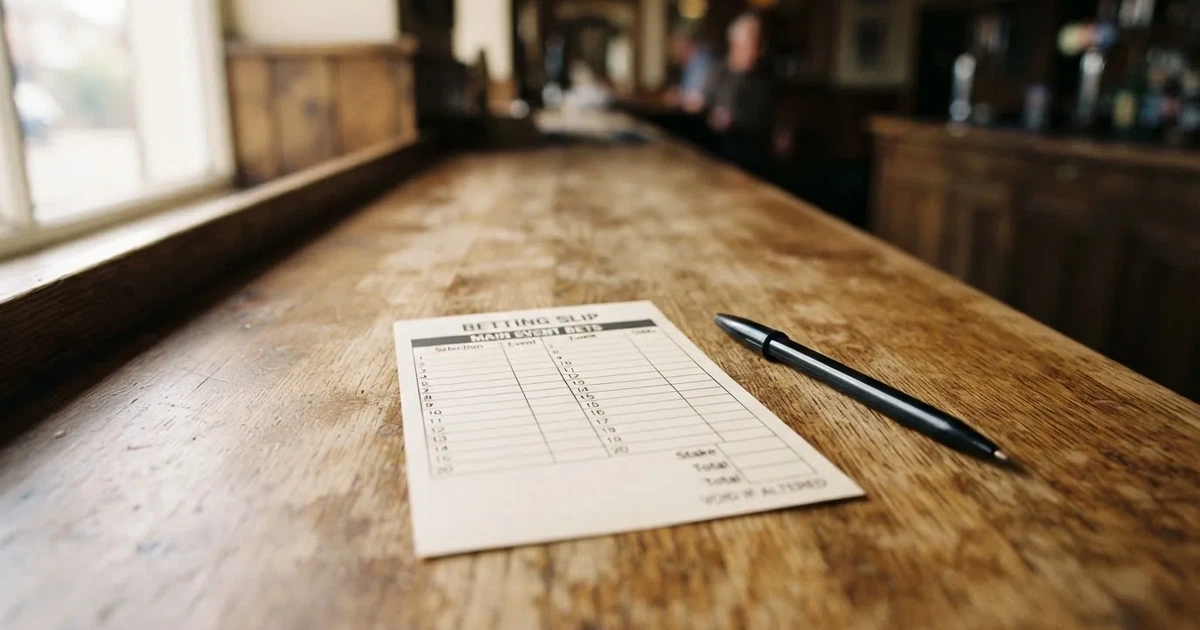
The bookmakers below all hold a Gambling Commission remote licence. Every figure, licence number and term comes from each operator’s own pages, the Commission’s public register, or the cited reference. Prices are not quoted beyond the worked examples because acca prices move with every fixture; what an acca costs the reader is a different question, and a stable one.
*Current as of 27 October 2026. Licence claims checked against the Gambling Commission’s public register.*
What an Acca Actually Is and How It Pays
An accumulator — an “acca”, in the British shorthand — is one bet that links two or more selections. The decimal odds of every leg are multiplied, not added, which is the source of the big-looking prices on a five-fold. A treble on three legs at 3.00, 3.00 and 3.00 prices out at 27.00; a stake of £5 returns £135. The bet wins only when every leg wins. One losing selection and the whole bet loses, including the stake.

That all-or-nothing structure is what an acca sells, and it is also the lever the bookmaker pulls. The odds on each leg already contain a margin — the slice of every pound staked the bookmaker expects to keep across the long run. Stacking margins over the legs of an acca compounds the take. A £10 accumulator at decimal odds of 2.00 on each of four legs is not the same gamble as four separate £10 singles at 2.00; the singles expose the operator to four independent margins while the accumulator exposes it to one, and the operator’s pricing knows it.
Pushes handle differently from losses. A leg that ties — in American terms, a “push” — is taken off the acca and the price is recalculated across the remaining selections. A four-fold at 2.00, 2.00, 2.00 and a leg that pushes becomes a treble at 8.00. A losing leg is final; the bet is over.
Decimal odds are the natural fit for accas because the maths is one multiplication rather than the awkward fraction-on-fraction arithmetic that fractional odds ask for. Most UK sites let the punter toggle between them. The conversion rule is the standard one — divide the numerator by the denominator and add one — so 5/1 becomes 6.00, 11/4 becomes 3.75, and evens is 2.00.
The mechanics also have a fuller cousin: the full-cover bet. A Trixie covers three selections in four bets (three doubles and a treble); a Yankee covers four selections in eleven bets; a Lucky 15 covers four selections in fifteen bets with singles added; a Heinz covers six in fifty-seven; a Super Heinz covers seven in one hundred and twenty; a Goliath covers eight in two hundred and forty-seven. Each line is its own stake, so the total outlay is the unit stake multiplied by the number of bets. A £2 Trixie costs £8 across four lines; a £2 Goliath costs £494 across two hundred and forty-seven. The full-cover packages trade the simple acca’s single-line simplicity for many smaller chances to win, and pay out across more combinations than an acca ever would.
How the Cost Hides: Margins, Boosts and the Free-Bet Catch
A price looks like a number. It is also a margin in a thin disguise.

Take a market with three outcomes priced at decimal odds of 2.10, 3.40 and 3.40. The fair share — what a market with no margin would pay back to bettors in aggregate — is one divided by the sum of the reciprocals of the odds: 1 ÷ (0.476 + 0.294 + 0.294), which equals about 0.94. The remaining 0.06 — six per cent of every pound wagered on this market — is the bookmaker’s margin. A 94% payout share and a 6% margin are the same market seen from two sides. The price the punter sees is the number that conceals the split.
The same arithmetic applies, more leg by leg, to an acca. If each leg carries a 6% margin, an eight-leg acca does not carry a 6% margin. The expected cost grows with the legs, which is why a long-priced accumulator is the most expensive bet the bookmaker sells, in expectation per pound staked. A “boosted” acca at best odds does not move that arithmetic; it moves the headline number on the slip.
Then comes the free bet. A free bet is paid out as winnings only — the stake is usually not returned. A £10 free bet on a winner at 5.00 pays £40 in profit, not £50. The £10 stays the bookmaker’s. That detail is the free-bet catch, and it is the single biggest gap between what a free-bet acca sounds like and what it pays.
Wagering requirements push the gap wider. Where a welcome offer attaches a turnover condition — stake the bonus ten times, settle the wagering at minimum odds of 1.50 or higher, clear it within seven days — the punter who stops at the headline misses the price. A £10 bonus with a 10x turnover means £100 of qualifying bets at minimum odds, and the qualifying bets carry the operator’s margin on the legs of each. The CB piece — the Commission cap of 10x on bonus turnover since 19 January 2026 — sets a ceiling, not a floor. Operators may set lower.
Price boosts are a third mechanism. “Super odds”, “enhanced odds”, “winnings boosts on bet builders” — the marketing varies, the structure narrows to two: a one-off boost on a single price, or a boost on the winnings from a settled bet (the stake is left alone, the boost adds to the profit). Both are short-window: a Super Boost tied to one kick-off is not there at full-time. A punter who uses a boost on one leg of an acca is using a thin slice of the long-shot it looked like.
Acca insurance, acca freeze, edit-my-acca — these are the marketing terms for slightly different things. Insurance refunds a stake as a free bet (not cash) when one selection lets the acca down. Freeze lets the punter lock in the current state of the acca mid-event, settle part of it, and let the rest run. Edit lets one leg be swapped before kick-off. None of them undo the margin hidden inside the odds, and none of them turn a losing bet into a winning one.
UK Regulation: What a Gambling Commission Licence Means
A Gambling Commission remote licence is the test of whether an operator is allowed to take bets from customers in Great Britain. It is compulsory at the point of consumption: an operator whose remote facilities are used by a customer in Great Britain needs the licence wherever it is based, since the Gambling (Licensing and Advertising) Act 2014 amended the Gambling Act 2005. A Curaçao, Maltese or Gibraltar licence is not a substitute. A GB-licensed operator may trade under a .com or .co.uk domain — the domain proves nothing either way.
The Commission’s public register can be searched by business name, trading name, domain or account number. It carries the licence number, the categories under that licence (remote general betting standard for real events, virtual events, pool betting, betting intermediary for exchanges), and the name of the licence holder. The remote general betting standard (real events) category is what a bookmaker taking sports accas from a customer in England, Scotland or Wales holds. Northern Ireland sits outside the Gambling Act 2005 and runs under different law — a “GB-licensed” bookmaker is licensed for the GB market, not for Northern Ireland.
Identity verification before the first deposit has been a licence condition since 7 May 2019. A customer at a GB-licensed site shows name, address and date of birth before placing a bet, including on a free bet or bonus. Anonymous play is not on offer. Source-of-funds questions follow at higher spend under the money-laundering rules. The Commission’s financial vulnerability check — a public-record check for items like bankruptcies and county court judgments, not an income or credit reference check — applies to remote betting customers whose net deposits (deposits minus withdrawals) exceed £150 across a rolling thirty days, in force from 28 February 2025.
GAMSTOP is the multi-operator self-exclusion scheme and a mandatory licence condition for online operators since 31 March 2020. Periods run six months, one year, five years, or five years with auto-renewal. After the minimum period the exclusion stays in place for a further seven years unless the customer asks GAMSTOP to remove it. Credit cards have been banned for gambling in Great Britain since 14 April 2020, including credit-card-funded payments through an e-wallet; debit cards and bank-based payments are not part of that ban.
Bonuses at GB-licensed operators carry the Commission cap on wagering requirements — 10x since 19 January 2026. A £10 bonus at 50x would need £500 of qualifying bets; under the cap no more than £100. Mixed-product promotions — an offer that requires gambling on two or more product types such as betting plus casino, or betting plus bingo — are banned. Whether the cap applies to free bets with no wagering condition, and any cap on the money value of a bonus, are not established. The advertising rules sit with the ASA and the CAP Code (non-broadcast) and BCAP Code (broadcast), not with the Commission.
The player pays no tax on betting winnings in Great Britain. General Betting Duty is the operator’s tax on gross profits at 15%, with a new remote rate of 25% from 1 April 2027 for online bets outside UK horse racing, pool betting, SSBTs in licensed premises and in-person betting. Until then the remote rate stays at 15%; whether operators pass duty through to the odds is not established.
Offshore operators serving customers in Great Britain without a GB licence are committing an offence under section 33 of the Gambling Act 2005. The bookmaker faces the fine and the imprisonment; the customer does not face a charge. What the customer loses is the protection layer — no GAMSTOP, no Commission complaints route, no approved dispute-resolution service, no British consumer redress if funds are withheld, no 10x bonus cap, no £150 vulnerability check. Honest framing: licensed means the checks and the limits and the self-exclusion, but also the verification at the first deposit; unlicensed means none of those protections and a real possibility of funds lost. Neither is “the safe choice” by default.
Staying in Control: Safer Gambling Tools and Where to Get Help
GAMSTOP is the route for self-exclusion from every GB-licensed online operator at once, which is the point of it — a punt on one site can be stopped at all of them. Setting it up is a single registration; the cooling-off then runs to the end of the chosen period. A punter who wants to set a stake ceiling rather than exclude himself uses the deposit-limit tool every licensed remote operator must offer under the Commission’s Remote Technical Standards. The first changes to those standards have applied since 31 October 2025; a second phase was postponed to 30 September 2026. Limits are the customer’s choice; there is no state-set ceiling for betting, only the customer’s own.
The financial vulnerability check is a Commission-driven prompt at £150 of net deposits across thirty days. It is a public-record check, not an income or credit check. The wider affordability regime — the financial risk assessments of the press — was announced in a staged plan (Commission article of 7 July 2026) with no start date. The plan exists; the live regime does not yet.
Help lines and treatment sit outside the regulator. GamCare runs the National Gambling Helpline. GambleAware funds treatment and the public-facing information on gambling harm. The NHS operates gambling clinics in several regions. A bettor who feels the betting is no longer a choice uses GAMSTOP, the deposit limit and GamCare; a bettor whose spending is past the point of self-management uses a clinic. The operator’s own safer-gambling page is the route into both.
The marketing of gambling carries its own consumer rules. The CAP Code section 16 keeps gambling advertising socially responsible and out of strong appeal to under-18s; no one who is or appears to be under 25 may be featured gambling or play a significant role in the advertisement. Since 1 August 2019 betting advertisements have not been shown on TV from five minutes before a live sporting event to five minutes after it, before the 9pm watershed, with horse and greyhound racing excluded. The Premier League clubs’ voluntary withdrawal of gambling sponsorship from the front of matchday shirts, from the 2026/27 season, sits with the clubs, not the regulator. None of this replaces the personal tools above.
Reading a Welcome Offer: Free Bets, Boosts and Acca Perks
A welcome offer is a marketing line. It is also a contract, and the contract is what the offer is worth.
The headline phrases the UK market uses — “Bet £10, Get £10 in Free Bets”, “Bet £10 & Get £15 in Free Bets” — describe the trigger and the headline return, not the value. The value lives in three clauses the punter reads next: the minimum odds the qualifying bet must carry, the expiry on the free bet, and whether the free bet stake returns with a win. “Stake not returned” is the standard line at the free-bet stage, and it is the single biggest cut to the headline value. A £10 free bet at decimal odds of 5.00 with stake not returned pays £40 in profit, not £50. A £10 free bet at 5.00 with stake returned pays £50.
A welcome package made up of separate tokens — a £5 sports bet, a £5 acca token, a £5 each-way sub-cover bet — is the same arithmetic applied three times. Each token carries its own minimum-odds line, its own expiry, its own stake-returned-or-not clause. A “£15 in free bets” headline is the sum of three smaller tokens rather than a single £15 token. Each is read on its own.
Price boosts are the second marketing line. “Super odds”, “enhanced odds”, “best odds guaranteed”, “winnings boost” — the names vary; the structures narrow to two. The first raises the headline price on a single bet, often for one fixture, often with a stake ceiling and a maximum extra payout. The second raises the winnings on a settled bet, with the stake untouched. The first changes the price; the second changes the return on a settled bet. The punter reads which one is on the slip.
Acca-specific perks sit under their own names. Acca insurance refunds the stake as a free bet, not as cash, when one leg of a named acca loses by one outcome. Acca boost adds a percentage to the winnings on a winning acca — often tiered by the number of legs, sometimes with a cap on the boost and a minimum-odds line on the legs. Edit-my-acca swaps one leg before kick-off; acca freeze locks the current state and lets the rest run. Each perk is read against the acca it sits on: a 10% winnings boost on a 1.20-shot accumulator is not value at all.
The Commission cap on wagering requirements since 19 January 2026 sets a 10x ceiling. A bonus with no wagering condition is not subject to the cap. A bonus with a turnover of less than 10x is cheaper to clear than the cap; a bonus that requires staking the bonus plus the deposit — bonus base = bonus plus deposit — costs more to clear than a bonus-only base at the same multiple. A punter who reads the wagering factor and the base reads the offer; a punter who reads only the headline reads the marketing.
The worked example below takes a four-leg acca at illustrative decimal odds of 1.50, 2.00 and 2.50, with a £10 stake, and gives the return band rather than one figure. Where the free-bet stake is not returned, the profit on a winning free bet is the stake times (odds minus one). Where the stake is returned, the return is the stake times the odds. Both shapes are below.
Worked Example: What an Acca Pays on Illustrative Selections
A £10 accumulator on three selections at decimal odds of 1.50, 2.00 and 2.50 returns £10 × 1.50 × 2.00 × 2.50 = £75 with the stake returned — £65 in profit on top of £10. With the stake not returned, the same bet pays £65 in winnings, for a £10 outlay and a £65 profit. Two-leg and four-leg accas scale by multiplication: the four-leg version on 1.50, 2.00, 2.00, 2.50 returns £10 × 15.00 = £150 with the stake, £140 without.
The full-cover packages run on the same principle. A £2 Trixie on three selections at 2.00, 3.00 and 4.00 carries three doubles and a treble across four lines, costing £8 in stake. The doubles price out at 6.00, 8.00 and 12.00; the treble at 24.00. A winning treble alone returns £48 on the treble line. A £2 Lucky 15 on four selections costs £30 across fifteen lines (four singles, six doubles, four trebles, one four-fold), and the four-fold carries the heaviest single return.
The point of the band is that the price is an input. A real accumulator prices from the live market at the moment the bet is placed; the worked illustration sets the legs at round figures to make the multiplication visible. A punter who knows the multiplication reads the slip; a punter who reads only the headline reads the marketing.
The cost sits in the margin. A market priced at 2.10, 3.40, 3.40 carries the payout share and the margin described above. The same margin, applied leg by leg, compounds across an acca; an eight-leg acca at the same per-leg margin is more expensive in expectation per pound staked than a single at the same headline price. The punter who reads the headline reads the marketing. The punter who reads the margin reads the cost.
The Ten: A Comparison of GB-Licensed Acca Bookmakers
The brands below all hold a Gambling Commission remote licence for general betting standard (real events) and have been checked against the Commission’s public register. Each is named as a reviewed bookmaker; each has a slot in the comparison because it offers accumulators under that licence. The table that follows lists the licence number, the licence holder on the register and what each operator’s own terms say on acca bets.
The licence number is the test the Commission’s register runs against a business name, trading name or domain. The licence holder is the company named on the register, which is the legal entity that holds the licence — a brand and its licence-holder company can differ. The acca column carries what the operator’s own terms say about accumulator bets at the time of the register check; where the operator’s own material is silent on a specific point, the row does not name one.
| Brand | Licence number and holder | Acca terms as stated by the operator |
|---|---|---|
| bet365 | 055148-R-331498-002 · Hillside (UK Sports) ENC | Bet Builder+ links markets from one event into a single bet pre-match and in-play; Super Boosts, Winnings Boosts on Bet Builders and selected singles, and daily Bet Boosts run alongside the standard acca slip |
| Geoff Banks | 054095-R-330366-010 · GB Sports Advisors Limited | Live in-play and ante-post pricing on future events |
| Kwiff | 044448-R-323408-017 · Eaton Gate Gaming Limited | Supercharge boosts the odds on a bet from one price to a higher price in a single tap and applies to single or multi bets on any sport |
| Fitzwilliam Sports | 048760-R-335434-009 · SBKI Limited | Prices set to Oddschecker’s average price for each selection; iOS and Android apps |
| Dabble | 065677-R-340363-005 · Dabble Sports UK Ltd | Welcome offer on first deposit, minimum odds on the qualifying bet, seven-day free-bet expiry, free-bet stake not returned |
| Swifty Sports | 058957-R-334734-006 · Swifty Global (UK) Ltd | Best Odds Guaranteed, Cash Out on horse racing and football, daily price boosts, live streaming and in-play; Bet Builder listed as coming soon |
| Octobet | 062545-R-337248-006 · Octopus Game Limited | Best Odds Guaranteed on UK and Irish horse racing, up to £150 per customer per race |
| BetGoodwin | 002927-R-327985-008 · Goodwin Racing Limited | Welcome package split into three tokens — a £5 sports bet, a £5 acca and a £5 Sub-Cover bet |
| Betfred | 039544-R-319290-010 · Petfre (Gibraltar) Limited | Bet Builder, Sub Switch, Racing Post data, Extra Places, plus live casino and bingo on the app |
| BetUK | 039198-R-319450-029 · LeoVegas Gaming PLC | Free bets exclude virtual sports, esports and non-UK/IE horse racing, with minimum odds applying |
bet365
bet365 runs the deepest in-play product of the ten and a bet-builder that links markets from one event into a single bet pre-match and in-play. The acca slip sits alongside the standard singles and the Bet Builder+ slip, and the same wallet funds all three. Super Boosts run as one-off price lifts on selected fixtures, with stake ceilings and a maximum extra payout; Winnings Boosts on Bet Builders and selected singles add a percentage to the winnings on the settled bet without touching the stake. Daily Bet Boosts sit in the same line. The licence is held by Hillside (UK Sports) ENC under account 55148; bet365 is the trading name. The verification at first deposit is the GB standard, and the credit-card ban of April 2020 applies.
For a punter who builds in-play or likes a one-market slip, bet365 is the slot. The Boosts are the differentiator, and the Boosts sit on top of a margin that is the operator’s own to set.
Geoff Banks
Geoff Banks is a smaller name on a GB licence, run by GB Sports Advisors Limited under account 54095. The product is ante-post on future events and live in-play pricing, with the slip kept thin compared to the major-brand bookmakers. The acca offering is the standard accumulator across football and racing markets without the wider bet-builder and acca-insurance perks of the larger operators.
For a punter who wants the ante-post menu and a quieter slip, Geoff Banks fits. The thinness cuts both ways — fewer Boosts, fewer perk mechanics, but a cleaner view of the prices.
Kwiff
Kwiff’s product is the Supercharge: a price that boosts from one number to a higher number in a single tap, applicable to singles or multi bets on any sport. The example given by the operator is a price moving from 2/1 to 20/1 on a single tap, which is a wider jump than the standard one-off Super Boost on the larger books. The licence is held by Eaton Gate Gaming Limited under account 44448; the App Store listing carries a 17+ age rating.
For a punter who likes the random-feel of a Supercharged price, Kwiff is the slot. The wider book around it is thinner than the major brands; the Supercharge is the point of the brand and is the reason to be there.
Fitzwilliam Sports
Fitzwilliam prices each selection against Oddschecker’s average price, which is a transparent pricing rule rather than a margin-led book. The product is the standard acca slip, iOS and Android apps, and a quieter marketing line than the bigger brands. The licence is held by SBKI Limited under account 48760.
For a punter who wants the price set to an external benchmark, Fitzwilliam is the slot. Choosing this site means passing on the wide perk layers found elsewhere; Fitzwilliam focuses on the pricing transparency of the Oddschecker model.
Dabble
Dabble’s welcome offer is the standard “Bet £10, Get £10 in Free Bets” on a first deposit, with a minimum-odds line on the qualifying bet, a seven-day free-bet expiry and the free-bet stake not returned. The licence is held by Dabble Sports UK Ltd under account 65677. The product line is the standard acca slip alongside singles and bet-builder markets.
For a punter who wants a flat welcome offer with the standard GB terms, Dabble fits. As with all ‘Bet X, Get X’ offers, the actual value depends on the qualifying odds and the expiry terms, rather than the face-value amount.
Swifty Sports
Swifty Sports runs Best Odds Guaranteed, Cash Out on horse racing and football, daily price boosts, live streaming and in-play; Bet Builder is listed as coming soon on the operator’s own material. The licence is held by Swifty Global (UK) Ltd under account 58957. The acca offering is the standard accumulator slip with the wider feature set wrapped around it.
For a punter who wants the racing side of the product, Swifty Sports fits — Best Odds Guaranteed and Cash Out on racing are the differentiators. The acca slip is standard; the wider feature set is the reason.
Octobet
Octobet’s headline feature is Best Odds Guaranteed on UK and Irish horse racing, with the boost capped at £150 per customer per race. The licence is held by Octopus Game Limited under account 62545. The acca offering is the standard accumulator slip with the racing feature set in front.
For a punter whose betting is horse-racing-heavy, Octobet is the slot. The £150 cap is the test of the boost at a higher-stake race; below the cap it pays back, beyond it does not.
BetGoodwin
BetGoodwin’s welcome package is split into three tokens — a £5 sports bet, a £5 acca and a £5 Sub-Cover bet — for a £15 headline. Each token carries its own minimum-odds line, expiry and stake-returned-or-not clause. The licence is held by Goodwin Racing Limited under account 2927. The product is the standard acca slip with the three-token welcome in front.
For a punter who wants the welcome package split into acca-friendly tokens, BetGoodwin fits. The split is the differentiator — three small tokens, each read on its own, rather than one flat free bet.
Betfred
Betfred runs Bet Builder, Sub Switch, Racing Post data, Extra Places, live casino and bingo on the app. The Sub Switch perk is the racing-side differentiator; the Bet Builder is the football-side one. The licence is held by Petfre (Gibraltar) Limited under account 39544. The acca offering sits alongside the standard singles and the Bet Builder slip, with the racing and football feature sets wrapped around it.
For a punter who wants the racing-and-football feature set on a GB-licensed major-brand bookmaker, Betfred fits. Every such feature is priced into the margin; Betfred simply wraps these tools into the main product for the frequent user.
BetUK
BetUK’s free-bet terms exclude virtual sports, esports and non-UK/IE horse racing from the menu, and minimum odds apply at the qualifying stage. The licence is held by LeoVegas Gaming PLC under account 39198. The product is the standard acca slip with the exclusion list and minimum-odds line sitting in front of the welcome.
For a punter whose betting stays on the football and UK/IE racing side, BetUK fits. The exclusion list is the trade-off — the punter who wants to use the free bet on virtuals or non-UK racing cannot.
How the Ten Settle, Stake and Stake by Site
A few points the table does not carry and the operator terms do carry.
Minimum odds on qualifying bets
A welcome offer’s qualifying bet usually carries a minimum-odds line — decimal 1.50 or higher is the common floor — and a free bet settled below that line does not trigger. The minimum-odds line is read on the operator’s terms page rather than guessed at the slip.
Free-bet expiry
Free bets carry an expiry, often seven days from issue. The expiry is what catches the punter who delays — the token does not sit in the wallet indefinitely. A punter who plans the use of the token by the deadline is the read of the term the term is asking for.
Stake returned on free bets
The free-bet stake is usually not returned with a win. A £10 free bet at decimal odds of 5.00 pays £40 in profit, not £50. The £10 stays the operator’s. This is the largest single cut to the headline value of any free-bet welcome offer.
Maximum extra payout on Boosts
A Super Boost carries a ceiling — a maximum stake and a maximum extra payout. The punter who reads the ceiling at the slip reads the offer; the punter who reads the headline alone reads the marketing.
Push and void rules on accas
A leg that pushes is taken off the acca and the price is recalculated. A leg that voids — a player withdraws, a fixture is abandoned — is handled per operator: some treat the void as a push, others treat the leg as settled at the SP. The terms page is the read.
Cash Out on accas
Cash Out closes an open acca before the last leg runs, at a price set by the operator. The price is not the full expected value of the settled acca — the operator’s margin sits inside the Cash Out price, and the Cash Out button is offered when it is in the operator’s interest as well as the punter’s. A punter who uses Cash Out trades certainty for less than the headline; a punter who lets the acca run carries the bet to the last leg.
How a Punter Checks a Licence
A punter who wants to verify a licence goes to the Commission’s public register. The search takes a business name, a trading name, a domain or an account number, and returns the licence number, the categories under that licence, the licence holder’s name, and the trading names attached. The register is the test of whether a brand holds a licence; the register is not a recommendation and not a ranking, and the absence of a brand from a comparison page is not the absence of a licence.
The Commission’s register also names the licence holder. Several brands can run under one holder — Ladbrokes and Coral under Entain, Paddy Power and Betfair under Flutter — and the brand and the licence-holder company can read differently. The punter who reads the licence-holder company reads the legal entity on the register; the punter who reads the brand reads the trading name.
A brand that does not appear on the register is not licensed for Great Britain. The punter who bets with such a brand loses the protection layer — no GAMSTOP, no Commission complaints route, no approved dispute-resolution service, no British consumer redress if funds are withheld, no 10x bonus cap, no £150 vulnerability check. Honest framing: licensed means checks, limits, GAMSTOP, bonus cap, and also verification at the first deposit. Unlicensed means none of those protections and possible loss of funds. Neither is “the safe choice” by default.
Picking a Bookmaker From the Ten
The question that picks a bookmaker is the punter’s own betting menu.
The punter whose betting is football-led and likes the bet-builder mechanic finds bet365 the natural slot — the Bet Builder+ product is the differentiator, the Boosts run alongside. The punter whose betting is racing-led and wants Best Odds Guaranteed finds Octobet or Swifty Sports the natural slot — the racing feature set sits in front, and the cap or the wider product is the differentiator. The punter whose betting is acca-heavy and likes the welcome split finds BetGoodwin the natural slot — the three-token welcome is the reason. The punter whose betting is ante-post-led finds Geoff Banks the slot. The punter who likes a Supercharge-style price jump finds Kwiff the slot. The punter who wants the price set to an external benchmark finds Fitzwilliam the slot. The punter who wants the racing-and-football feature set on a major-brand bookmaker finds Betfred the slot. The punter who wants a flat welcome offer on the standard GB terms finds Dabble the slot. The punter who wants the welcome tied to UK/IE racing and football finds BetUK the slot.
The trade-off is the same on every slot. The wider feature set — Boosts, insurance, bet-builder — is the marketing line and is also the margin the operator holds over the long run. The punter who reads the feature set reads the marketing; the punter who reads the margin reads the cost.
Frequently Asked Questions
What are acca bets?
An accumulator, or “acca”, is a single bet that links two or more individual wagers into one. The decimal odds of each leg are multiplied, not added, which is the source of the long prices on a multi-leg acca. The bet wins only if every leg wins; one losing leg loses the bet, stake included. A leg that ties — a “push” — is removed and the price recalculated across the remaining selections.
How do accumulator bets work?
A punter picks two or more selections and adds them to a single slip. The slip multiplies the decimal odds of every leg into one combined price, the punter sets the stake, and the bet is placed as one wager. The bet is settled when every leg has run: a winning acca pays the stake multiplied by the combined price; a losing acca pays nothing. Free-bet accas usually pay winnings only, with the free-bet stake not returned.
Can acca freeze be used on free bets?
Acca freeze is an operator-specific feature that locks the current state of an open acca and lets the remaining legs run. Whether it applies to free bets is read on the operator’s own terms page, since the rule varies: some operators allow freeze on free-bet accas, others exclude them. The Commission’s cap on bonus wagering applies to bonuses with a turnover condition; a free bet with no wagering condition is not subject to the cap.
How is a Gambling Commission licence checked?
The Commission’s public register can be searched by business name, trading name, domain or account number. The register returns the licence number, the categories under that licence (remote general betting standard for real events, virtual events, pool betting, betting intermediary), the licence holder’s name and the trading names attached. The register is the test of whether a brand holds a licence; it is not a recommendation and not a ranking.
How is a bet’s return worked out from the stake and the odds?
The return on a winning bet is the stake multiplied by the decimal odds. For a £10 single at decimal odds of 3.00 the return is £30, with £20 in profit on top of the £10 stake. For an accumulator the combined price is the product of the decimal odds of every leg, and the return is the stake multiplied by that combined price. A free bet with stake not returned pays the stake multiplied by (odds minus one) — the stake stays the operator’s.
What is the bookmaker’s margin and how does it show in the odds?
The bookmaker’s margin is the slice of every pound staked the operator expects to keep over the long run. It shows in the odds because every price the operator offers carries a margin. For a market with three outcomes priced at decimal odds of 2.10, 3.40 and 3.40 the payout share is about 94% and the margin is about 6% — the same market seen from two sides. On an acca the margins compound leg by leg, which is why a long-priced accumulator is the most expensive bet the bookmaker sells, in expectation per pound staked.
Bet types & in-play – Best Betting Tips
Content created by the «Best Betting Tips» team
