
NASCAR betting tips: a guide, not a tip sheet
 Available in US
A search for “NASCAR betting tips” usually wants a name. Who wins the next race, which driver to back at Daytona, what to take at Phoenix this weekend. This page doesn’t supply that, because no one can. What it does supply is the frame around the tip: how a price is built, what the bookmaker takes from every market, why an offer that looks like a gift often costs more than the gift is worth, and what “value” actually means when the bookmaker’s margin is sitting inside every number on the slip. The point is not that tips are useless — form, qualifying speed, loop data, practice splits, race trim and pit-road speed matter, and an informed bettor uses them. The point is that a tip, even a sharp one, is only the starting price of a bet. What happens after the bet is the bookmaker’s margin, the promotion’s small print and your own bankroll discipline.
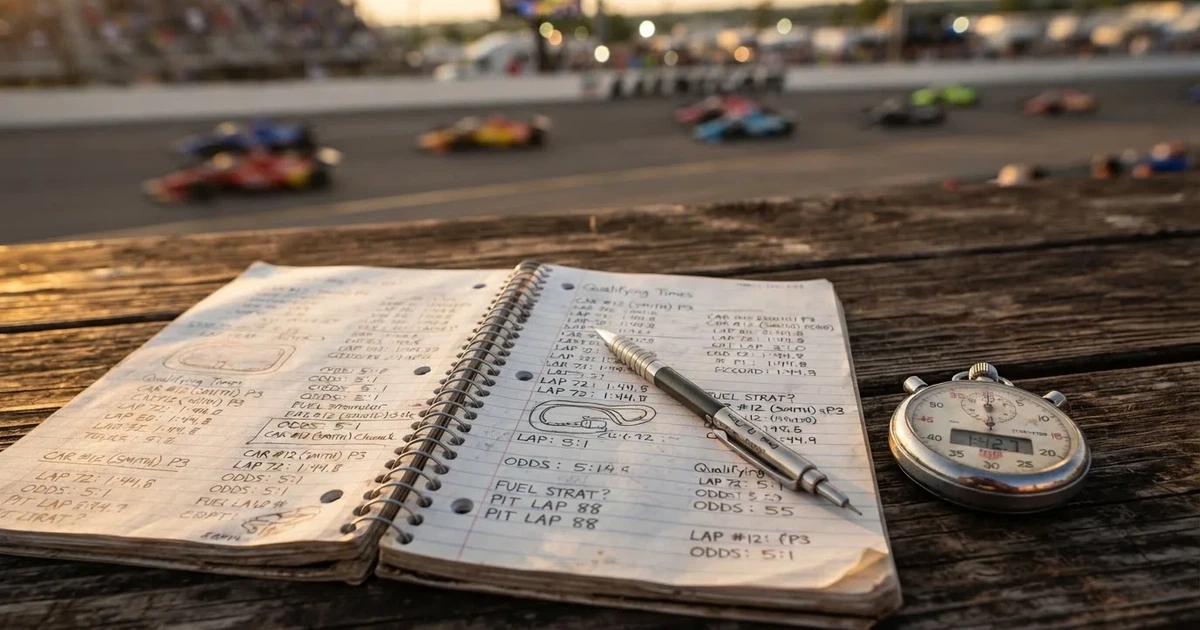
The 2026 NASCAR Cup Series schedule runs 36 points-paying races plus 3 non-championship events: the Cook Out Clash, the Duel at Daytona and the All-Star Race. The Daytona 500 was held on 15 February 2026, the 68th running, won by Tyler Reddick. The playoffs take the top 16 drivers in points after 26 races, with starting positions staggered by regular-season standings. The finale, the Straight Talk Wireless 400, lands at Homestead–Miami Speedway on 8 November 2026. That calendar is the shape of the season, and every tip worth the name is built against the part of it the bettor is watching.
Data current as of 27 October 2026 and checked against the Gambling Commission’s public register.
The shape of NASCAR betting in Great Britain
NASCAR sits in an odd corner of the British market. The Cup Series is a US series, broadcast in the small hours for a UK audience, and the bookmakers that price it deeply are the ones that carry an American racing section rather than a corner. The sport is not a fringe product the way darts or table tennis is, but it is not mainstream either. That has two consequences. First, the menu of markets at the average bookmaker is shorter than for Premier League football, and the prices carry a wider margin because the liquidity is thinner. Second, the bookmakers that do carry it seriously tend to be the larger, more established names, which is also where the regulatory and safer-gambling infrastructure is densest.
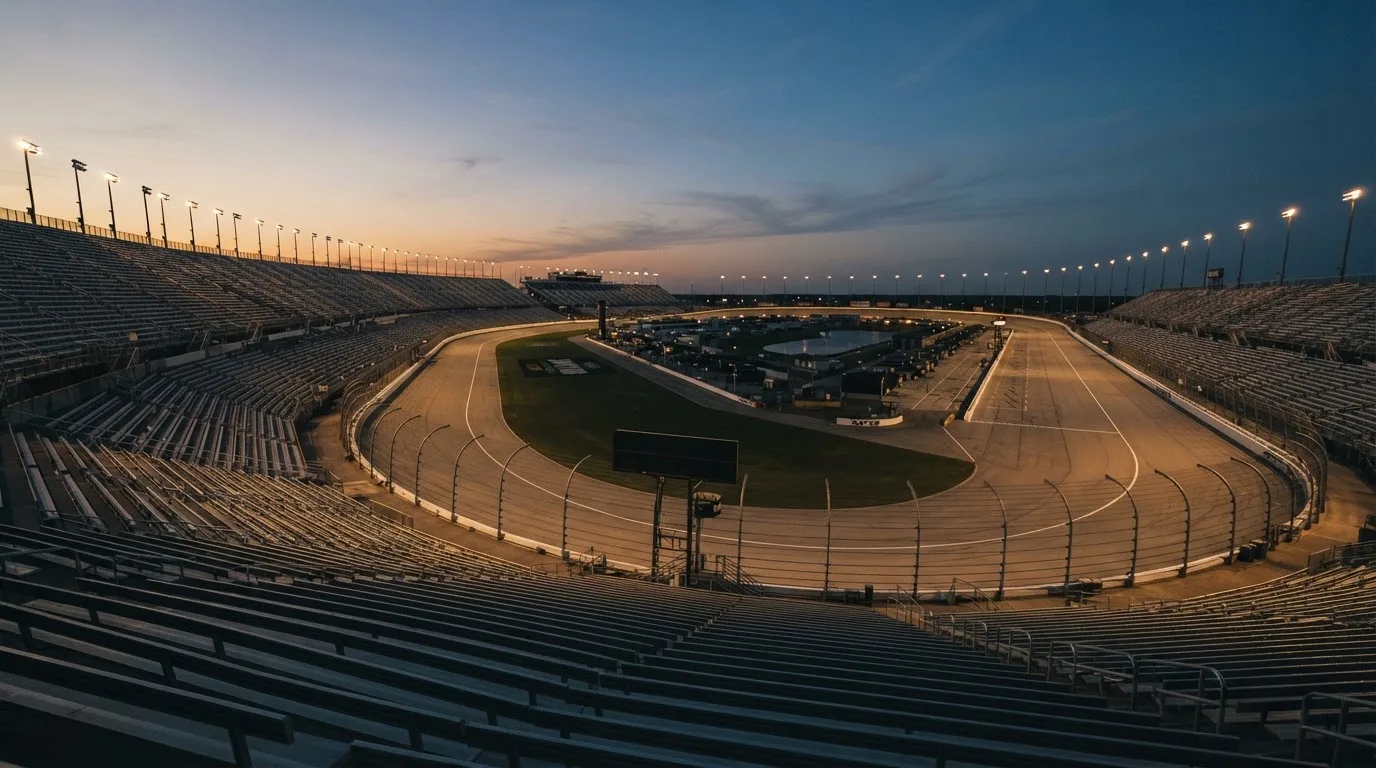
A bettor looking at the Cup Series this season will meet three types of operator. The large generalist bookmakers with a motorsport section — BetVictor, Bet600, NetBet, Kwiff, QuinnBet, DAZN Bet, Midnite — price race winner, podium, top make, head-to-head and various match-up markets. The exchanges — Smarkets sits in the featured set as one of the few that prices NASCAR regularly — let punters back and lay, which is where sharp money usually finds a home. And there are the smaller, motorsport-leaning brands like Fitzdares, where NASCAR sits next to the horse racing, golf and American football the operator built its name on. The way these are stacked against each other, and what each is best at, is the rest of this page.
The base is simple but worth saying plainly. A bet is a contract: you stake money on an outcome at a price, and if the outcome happens you are paid stake times that price. A £10 bet at 4.00 returns £40. A £10 bet at 1.50 returns £15. The price is the bet — there is no other number on the slip that changes what a winning bet pays. Everything else on the page, the form, the tip, the value calculation, the offer, exists to influence which price you take.
Why a tip is not a tip without a price
A prediction is only as good as the price it is taken at. Back a driver at 3.00 when he is a 25% shot, and the bet has positive expected value; back the same driver at 1.80, and the bet is a long-term loser even if he wins. The bookmaker’s margin sits inside the price. Two prices that look similar — 1.90 and 1.91 — can carry different margins, and the difference compounds across a season. The work of a tip is not to name a winner; it is to name a price at which the implied probability is shorter than the bettor’s own estimate of the true probability. That gap is what value is, and it is why a tip with no price attached is not really a tip.

What the law requires of a NASCAR bookmaker in Great Britain
NASCAR is not a British sport, but the customer is. Any operator that takes bets from someone in Great Britain needs a Gambling Commission licence, regardless of where the operator itself is based. The relevant law is the Gambling Act 2005, with the Gambling (Licensing and Advertising) Act 2014 closing the “point of supply” loophole — before 2014 a Curaçao or Maltese licence was enough for an overseas operator serving British customers; since 2014 it is not. The Commission’s public register is searchable by business name, trading name, domain or account number, and it is the only test that matters. A brand without a Commission account number is, in the strict sense, providing gambling facilities in Great Britain without the licence the Act requires, and the offence is the operator’s, not the customer’s. There is no statutory offence against the punter who simply places the bet.
The Commission’s licence categories for what NASCAR bets sit under are remote general betting standard (real events) for fixed-odds bookmakers and remote betting intermediary for exchanges. Pool betting on motorsport is rare, and no spread-betting licence for a NASCAR-specific product is in the featured set. Operators with a real-events remote licence may take bets on any event they choose to price, subject to their own house rules and the Licence Conditions and Codes of Practice; the regulator does not publish a list of permitted events. Spreadex, one of the wider market’s better-known names, illustrates the split cleanly: it is regulated by the Financial Conduct Authority for spread betting and by the Gambling Commission for fixed-odds betting, and it states that spread betting losses can exceed deposits. That is the FCA boundary at work, and the same boundary is why a sportsbook offering spread markets carries a different risk profile from a fixed-odds book.
A few practical consequences follow. A bettor under 18 cannot open an account, and the operator must verify name, address and date of birth before a customer can deposit or gamble — even with a free bet or bonus, since 7 May 2019. Credit cards are banned for gambling in Great Britain since 14 April 2020, including credit-card-funded e-wallet top-ups. Identity verification is therefore the first thing that happens, and the era of anonymous online play at a licensed bookmaker is over. Offshore brands run on their own house rules: no GAMSTOP, no Commission complaints route, no approved dispute-resolution body, no £150 financial vulnerability check, no 10x bonus cap. The honest framing is that a licensed book costs the customer a little friction at sign-up and gives them a great deal of consumer protection back; an unlicensed book removes the friction and removes the protection with it.
What the bonus cap and the vulnerability check actually change
Two Commission rules in 2025 and 2026 reshape the small print in ways a NASCAR bettor will meet. The first is the wagering cap: from 19 January 2026, wagering requirements on bonuses are capped at 10x the bonus. A £10 bonus at 50x wagering, which used to be routine, would now need £500 of qualifying bets; under the cap, no bonus requires more than £100 of qualifying bets. Mixed-product promotions, such as “bet on the Daytona 500 to get free spins”, are also banned — the offer has to be on one product, not stitched together across a sportsbook and a casino. Whether the cap reaches free bets with no wagering condition, and any cap on the value of a bonus, is not established; describe each offer’s terms from the operator that runs it.
The second is the financial vulnerability check, a Commission rule in force since 30 August 2024 and triggered when a customer’s net deposits exceed £150 in a rolling 30-day window, with the threshold live since 28 February 2025. The check is a public-record check (bankruptcy, county court judgments) rather than an income or credit-reference check, and a financial risk assessment, the “affordability check” the press writes about, has been announced in stages with no start date. Neither of these is a NASCAR-specific rule, but both shape what a high-volume bettor experiences during a 36-race season.
Safer gambling during a 36-race season
A NASCAR season is long. Thirty-six points races plus the three exhibition events runs from February at Daytona to November at Homestead, which is ten months of weekly markets. That is a long time for a customer to keep their betting within the limits they meant to set on day one. The tools the licensed market puts in place are the safety net for that stretch.
GAMSTOP is the multi-operator online self-exclusion scheme and a mandatory licence condition for every online operator in Great Britain since 31 March 2020. A self-exclusion period is six months, one year, five years, or five years with auto-renewal; after the minimum period, the exclusion stays in place for a further seven years unless the customer contacts GAMSTOP to lift it. Online sites and apps are covered; the high-street bookmaker’s betting shop runs a separate self-exclusion register. For someone who has signed up and changed their mind, the lift is by request, not automatic.
Deposit limits are a customer’s tool, not the regulator’s. Every licensed operator must offer a gross deposit limit on a fixed time frame; the first changes have applied since 31 October 2025, with a second phase postponed to 30 September 2026. The state does not set a default ceiling; the customer picks their own. A punter going into the Daytona 500 with a budget for the season is the one who sets the limit on day one, not the one who asks the bookmaker to do it for them on day 200.
Help exists outside the operator. GamCare runs the National Gambling Helpline. GambleAware funds treatment and education. The NHS runs gambling clinics. Gamblers Anonymous runs meetings. Unibet’s safer-gambling section links to BeGambleAware, GamCare, GAMSTOP, Gambling Therapy and the Betting and Gaming Council — a useful model for what a mature operator’s page should look like, and a benchmark a customer can use to judge whether a brand they are considering takes the duty seriously.
The sobering fact is that a 36-race season is more like a slow tide than a single event, and the small bets, the live bets, the qualifying-day markets and the prop markets each carry the same margin as the race-winner bet. The volume is the risk. A punter with a £100 weekly budget who lays a £5 each-way double on the Cup race is in a different position from a punter laying a £5 single on the same race; the structure compounds the spend across a season more than the size of any single stake does. Knowing that is the point of the safer-gambling section existing at all.
Crypto and the NASCAR betting question
NASCAR has had a crypto relationship on the track — the car sponsorship deals, the branded hoods — and a question a bettor reasonably asks is whether the same applies off the track. The honest answer is that crypto at a licensed British bookmaker is the exception rather than the rule. The Commission’s published framework does not single out cryptocurrency for the sports-betting licence: a remote general betting standard licence covers any payment method the operator accepts, and the operator’s house rules and the source-of-funds checks under the money-laundering rules apply in the same way as for any deposit. No British named-account rule was found, no state list of permitted payment methods, and no rule for or against cryptocurrency deposits at licensed operators is established — the topic is governed by each operator’s own terms, not by a Commission order.
A bettor who wants to deposit in Bitcoin, Ethereum or Litecoin at a licensed bookmaker will find the option in some places and not in others. The trade-off is plain. Crypto deposits settle fast and carry no card-issuer block, but they sit outside the credit-card ban’s scope, the source-of-funds check at higher spend still applies, and an exchange-rate move between deposit and withdrawal can either pad or eat into the bankroll. Offshore brands that pivot on crypto are running on their own licence, with the protections that follow: no GAMSTOP, no Commission complaints route, no British consumer redress, no 10x bonus cap, no £150 vulnerability check. The line is the same one as anywhere else in the unlicensed market — the friction is removed, the protection is removed with it, and the bettor takes both into their own hands.
For a NASCAR bettor, the practical question is whether the speed and reach of crypto are worth that trade. For most people, the answer is no. The Cup Series markets do not move so fast that a 30-minute card deposit costs an edge, and the British banking rails are wide enough to cover every operator in the featured set. Where crypto genuinely fits is in cross-border play from a jurisdiction that is not Great Britain, and that is not what this page is about.
Bonuses, free bets and the price of “free”
The bonus section of any sportsbook is the loudest, most colourful part of the page, and it is also where the bookmaker’s margin and the offer’s small print do the most work. A NASCAR bettor who treats an offer as a tip in its own right is the customer the marketing is built for. A punter who reads the small print is the one the offer is built against.
The clearest shape of an offer in 2026 is the qualifying-bet-plus-free-bet package. Midnite’s sports welcome offer is the worked example here: a new customer who bets £5 or more on pre-match odds of EVS (2.0) or greater within 14 days of sign-up receives £25 in free bets and 50 free spins, valid for 7 days. The qualifying bet is a real bet at a real price. The free bet is not — its stake is not returned with a win, and the seven-day clock is a hard one. A punter who reads the offer as “£25 in cash for a £5 bet” has read the headline and skipped the substance; the substance is that the £25 pays only the winnings on the free bet, not the stake, and that the qualifying bet itself has to clear at EVS or longer to count.
A second shape is the price boost. Kwiff’s Supercharge feature, for instance, can boost the odds on a bet from 2/1 to 20/1 on a single selection. The headline is the boost, the substance is the underlying market margin that the boost sits on top of, and the £5 boost on a market carrying 7% overround is a smaller gift than it looks once the price is decomposed. A third shape is the acca insurance, where a stake is refunded as a free bet if one leg of a multi lets the bet down — the refund is in free-bet money, with the stake-not-returned rule of any other free bet, and the insurance is the offer’s hook.
The arithmetic of “free” is what turns the offer from a tip into a calculation. A free bet of £25 at minimum qualifying odds of 1/2 (1.5) on any market, with stake not returned, has a fair value of £25 times (1.5 minus 1) divided by 1.5, which is £8.33, less the margin of the market it is used on. That is what the free bet is worth on average. QuinnBet’s free bet terms — valid for 7 days from credit, usable on any market at odds of 1/2 (1.5) or greater, with maximum odds of 50/1, straight accumulators allowed but Trixies, Patents and Yankees excluded — frame the offer exactly: a free bet of modest value, with a narrow menu of bet types that exclude the higher-multiple combinations a customer might otherwise prefer. The menu is the offer’s real cost.
The bonus cap from 19 January 2026 changes the picture. Wagering requirements on bonuses are capped at 10x, and a £10 bonus cannot require more than £100 of qualifying bets. That removes a long-standing engine of bonus erosion, where a £10 bonus with a 50x requirement needed £500 of turnover to clear and most of the bonus was returned to the bookmaker through the margin. The new ceiling does not turn a bonus into a gift, but it forces the offer to be a more honest one. Mixed-product promotions are also banned — a NASCAR bet cannot be sold as a route into a free-spins offer on a casino product. Each offer has to stand on its own product.
The point of the section is not that bonuses are worthless. They are a way of getting a small extra edge on a market the bettor would have bet on anyway, and a fair welcome offer is worth claiming. The point is that “free” is the marketing word and “wagered” is the small-print word, and the two are different currencies. Reading the small print is the difference between a bonus that costs the customer a few pounds of expected value and one that costs the customer the bonus and a chunk of bankroll with it.
Mobile, app and in-play on a motorsport that runs overnight
NASCAR is a US series, and the UK market meets it on a phone, late at night, in a half-awake weeknight. The mobile experience is the product, not a convenience on top of it. A bettor comparing the featured operators is comparing apps first and sites second, and the difference between a usable in-play screen and a clunky one is the difference between a market the bettor can actually use and a market the bettor skips.
The range of the in-play offering varies. The larger generalist bookmakers — BetVictor, Bet600, NetBet, Kwiff, QuinnBet, DAZN Bet, Midnite — carry live markets through the race, with race-winner, podium and match-up bets available to update as the laps tick down. Midnite’s site shows in-play events, an acca builder, popular accas and price boosts with maximum-stake limits, which is the shape of a mature in-play product. NetBet’s app combines Daily Boosts, Profit Boosts and free bet offers with a Bet Builder that updates its odds instantly, plus sports stats for the major leagues. BetVictor’s app adds Best Odds Guaranteed on UK and Irish horse racing, enhanced live race streaming and a Smart Stats panel that surfaces the form data the bettor is going to want during a race anyway.
The exchange is a different shape of product. Smarkets’ app combines two-factor authentication, live charts and an order-book view, a quick trade-out option and 24/7 live chat support. The order book is the feature: a backer’s price is matched against a layer’s, and the bettor can see the depth of liquidity before laying a bet. For a NASCAR race, where the market thins out between qualifying and the green flag, the order-book view tells the bettor whether the price they are about to take is one the book will hold or one the book will pull as soon as the size goes in.
A few of the smaller brands occupy a particular corner. Bet600 pays Best Odds Guaranteed on horse racing: if the starting price is bigger than the early or show price taken, the bet is paid at the SP. NASCAR is not horse racing, and the rule does not transfer — but the operator’s deeper motorsport section is a useful indicator of how the book handles an American series. Fitzdares’ app offers cash out, accumulators, Lucky 15s, specials and antepost markets on horse racing, football, tennis, rugby, cricket, golf and American football, with in-play live odds — the American football list is a marker for which sports the book takes seriously, and NASCAR sits next to it on the same shelf.
The question a bettor should ask of any motorsport app is whether the in-play screen is built for the sport or borrowed from a football template. A race that lasts three and a half hours and updates in five-lap chunks needs a different screen from a football match that lasts 90 minutes and updates in seconds. The bookmakers that have built the screen for the sport are the ones the bettor is going to use; the ones that have re-skinned a football app are the ones the bettor is going to leave.
Live betting, cash out and the discipline of in-play
Live betting is a NASCAR bettor’s sharpest tool, used carefully, and the easiest way to throw a bankroll away, used carelessly. The Cup Series is a long race, the field runs in traffic, the pit sequence is part of the strategy, and the price on a pre-race favourite drifts as the early laps play out. A bettor who watches the race and reads the price moves has information the closing odds will only catch up to at the chequered flag. A bettor who watches the race and bets every yellow-flag caution is the one the bookmaker’s margin is built for.
Cash out is the bookmaker’s answer to a bettor who wants the option to close a position mid-race. The price the book offers is the price of the bet at that moment in the race, less a margin the book does not publish and the bettor cannot see. The shape of the offer is a hedge against the original bet losing, and the cost of the hedge is the gap between the bookmaker’s live price and the bet’s true live value. A bettor who uses cash out as a discipline tool — to lock a small profit when the price moves their way early in the race — is using it well. A bettor who uses it to claw back a stake on a bet that is going wrong is paying a premium for the privilege, and the premium is the bookmaker’s margin compounded.
In-play at a British bookmaker is licensed, regulated, and covered by the Commission’s customer-protection duties. There is no statutory ban, no quota on the number of in-play bets a customer can place, and no minimum price for an in-play bet the regulator sets. The control is the bookmaker’s own. A bettor at an offshore brand does not have the Commission’s safer-gambling architecture behind their in-play play, and the safer-gambling tools — deposit limits, time-outs, product restrictions, self-exclusion — sit at the licensed bookmaker rather than the customer.
The discipline of in-play is bankroll, not skill. A bettor who has set a weekly NASCAR budget and a per-race stop-loss is the one who will end the season with a bankroll. A bettor who has not is the one who, after a Kyle Busch crash at Talladega, will be chasing the loss with an in-play bet on the next caution that the price was built to take. The bookmaker’s margin does not get smaller in a live market; if anything, it widens, because the in-play book is a faster book with fewer liquidity providers. The skill is knowing when to take the price, and the discipline is knowing when to leave it.
Predictions, strategy and the limits of a tip
A strategy is a system for choosing which bets to place and which to skip. A tip is one decision in that system. A bettor without a strategy is a bettor who follows tips, and a bettor with a strategy is a bettor who uses tips as one input among several — form, qualifying, practice splits, race trim, pit-road speed, the loop data, the price. The strategy is the frame. The tip is the content.
The shape of a useful NASCAR strategy has three pieces. The first is the price: a bet is only placed when the bettor’s estimate of the true probability is shorter than the price’s implied probability, once the margin is taken out. The second is the market: race winner, podium, top make, head-to-head, qualifying position, stage winner, prop markets. The third is the bankroll: a fixed unit stake (1% to 3% of the season bankroll is a sensible default), a per-race stop-loss, and a stop for the day once either is hit. None of this requires a tip, and none of this is improved by a tip that does not include a price.
The hard limit of any strategy is the bookmaker’s margin. The bookmaker takes a cut of every market, and the cut is the reason a strategy has to beat the price rather than the outcome. A bettor who picks winners at a 30% clip but takes prices that imply a 40% chance of winning is a long-term loser, because the margin eats the edge. A bettor who picks winners at a 20% clip but takes prices that imply a 15% chance of winning is a long-term winner, because the edge survives the margin. The arithmetic of value is what turns a tip from a guess into a bet.
The hard limit of any tip is uncertainty. No one knows the future. The 2026 Daytona 500 had a 68th running on 15 February 2026 and was won by Tyler Reddick — a settled result, not a predictable one. Practice speeds, qualifying trim, race trim, the starting grid, the tyre wear pattern, the pit sequence and the late-race restarts are all visible to the bettor who watches, and none of them predict the outcome with enough certainty to make a tip reliable on its own. The bettor’s job is to read the race; the book’s job is to price it. The bet sits in the gap, and the gap is wider in NASCAR than in almost any other sport the British market prices.
A useful working approach is to pick one or two markets a bettor is going to focus on — race winner and top-three are the two most common — and learn them well. The market for a top-ten finish is shaped differently from the market for a race win; the price on a back-marker to finish top twenty is shaped differently again. Specialising in a market is the difference between a bettor who reads form for every race and a bettor who reads form for one type of bet on every race. The latter is sharper, and sharper is what value requires.
A second working approach is to keep a written record. The bet, the price, the stake, the market, the reasoning, the outcome. The record is the bettor’s own loop data, and the loop data is what tells a bettor, after a season, which markets they read well and which they do not. A punter who bets blind is a punter who improves slowly; a punter who bets and writes it down is a punter who improves at the pace of their own record.
Staking plans and bankroll discipline
A flat-stake approach — a fixed amount, usually 1% to 3% of the bankroll, on every bet — is the staking plan most long-term bettors settle on. A variable plan (Kelly criterion, fractional Kelly, modified Kelly) is mathematically defensible and emotionally harder to run. The bettor’s job is to pick a plan they can run through a 36-race season with the discipline intact, and that is usually the simpler plan. The bookmaker’s edge is a long-run edge, and a staking plan that crumbles in a 5-race losing streak is not a plan that beats the book.
A weekly stop-loss, a per-race stake cap, and a season bankroll that the bettor can afford to lose are the three points of discipline. The season bankroll is the one that matters most, because the season is long and the temptation to chase is constant. A bettor with a £1,000 season bankroll and a 2% unit stake is betting £20 per race; a bettor with the same bankroll and a 5% unit stake is betting £50, and the difference compounds across 36 races in a way that is hard to walk back once the bankroll is half-spent.
Bet types, odds and the language of the slip
A NASCAR bet is a contract. The bettor chooses an outcome, takes a price, and the price is the only number that determines what a winning bet pays. Everything else is a structure on top of that bet.
A single is one bet on one outcome. A double is two bets on two outcomes, where both have to win. A treble is three. An accumulator, often called an acca, is any number of legs from four up. The legs multiply into one price, and a winning accumulator pays the stake times the multiplied price. A bet on three drivers at 3.00, 2.50 and 4.00 is a treble at 30.00; a £10 stake returns £300 if all three win, and the bet loses if any one of them does not. Each-way is two bets of equal stake — one on the win, one on the place — and the place terms vary by race and operator.
The bet builder, sometimes called a same-game multi, lets a bettor stitch several outcomes from the same race into one price. A bettor who wants race winner, top-three and lead-lap finish on the same driver is building a same-race multi, and the price is the multiplied price of the legs. The bookmaker’s margin compounds across the legs, and the bet builder’s price is usually wider in margin than a single. The feature is useful for the bettor who has a strong read on one driver; the bet builder is a penalty for the bettor who treats it as a free way to multiply a price.
The book’s specials are the longer-tail markets: leading at lap 50, winning a stage, top rookie, manufacturer match-ups, finishing position groups. The specials are where the bookmaker’s margin is widest, and the specials are also where a bettor with a sharp read can find a price the book has mispriced. The specials are not where a beginner starts.
The exchanges work the other way around. A backer bets on a driver to win; a layer bets against a driver to win, at a price the backer takes. The exchange takes a commission on net winnings rather than a margin in the price, and the backer’s price is usually sharper than the bookmaker’s on a liquid race. The exchange is also thinner on NASCAR than on Premier League football, and the bettor is the one who takes the liquidity risk.
How to read a price
A decimal price of 4.00 means a £10 stake returns £40. A decimal price of 1.50 means a £10 stake returns £15. The price carries the stake. A fractional price of 5/1 means a £10 stake returns £60 — the £50 profit plus the £10 stake. A fractional price of 1/2 means a £10 stake returns £15 — the £5 profit plus the £10 stake. The conversion is decimal = a/b + 1, where a/b is the fraction. 5/1 becomes 6.00, 1/2 becomes 1.50, 9/10 becomes 1.90.
Odds-on (shorter than evens) means the price is below 2.00 decimal. Odds-against (longer than evens) means the price is above 2.00. A starting price, or SP, is the price the book settles the bet at when the race begins, used for BOG (best odds guaranteed) bets. A Rule 4 deduction is a bookmaker’s rule applied when a selection withdraws after the bet is placed.
The two prices a bettor looks at first are the decimal price and the implied probability. A decimal price of 2.00 implies a 50% chance; a decimal price of 4.00 implies a 25% chance; a decimal price of 1.50 implies a 66.7% chance. The implied probability is 1 divided by the decimal price. A 4.00 price is a 25% chance; the bettor’s estimate of the true probability is the number that turns a price into a bet. If the bettor’s estimate is higher than the implied probability, the bet is a value bet. If lower, it is not.
The book’s margin, in one market
The margin is what the bookmaker keeps of every unit bet on a market. The way to see it is to add the implied probabilities of all the outcomes in a market. In a perfectly fair market, the implied probabilities add to exactly 100%. In a bookmaker’s market, they add to more than 100%, and the excess is the margin. The higher the excess, the wider the margin, and the wider the bettor’s required edge.
Take a two-way market at decimal odds of 1.90 and 1.90. The implied probability of each side is 1 divided by 1.90, which is 52.63%. Add the two sides, and the implied probability is 105.26%. The bookmaker’s margin is 5.26%. The payout share — the share of every unit bet the book returns to customers across the market as winnings — is 100% minus 5.26%, which is 94.74%. A bettor at this market needs a 52.63% edge on the side they are taking, and the edge has to come from somewhere the book is not pricing. The edge is the bet; the price is the line the bet has to clear.
A wider market — three or more drivers in a race-winner market — carries a wider margin in implied-probability terms, and the bookmaker’s edge is larger. A two-way match-up market is sharper than a race-winner market, and a futures market (championship winner) is wider again. The bettor’s job is to know which market they are in, what the margin of that market is, and how much edge their read on the race is worth in the price. The margin is the reason no tip is free.
The same calculation is what turns a price boost into a real number. A book offers 20/1 on a driver whose true price is 10/1. The boost is the difference between 20/1 and 10/1 in headline terms, which is the marketing word. The substance is the underlying market margin, which the boost does not remove, and the substance is whether the driver is a 10/1 shot on form, which the boost also does not change. A boost on a market carrying 7% overround is a smaller gift than the headline suggests, and a boost on a market carrying 12% overround is smaller still. The arithmetic is the bettor’s defence.
The Cup Series and the wider motorsport calendar
The 2026 NASCAR Cup Series is the centre of the British bookmaker’s NASCAR offering. Thirty-six points-paying races run from February to November, with the 3 non-championship events (the Cook Out Clash at Bowman Gray, the Duel at Daytona, the All-Star Race) priced by the larger bookmakers as specials rather than as full race cards. The Daytona 500 opens the season — 15 February 2026, the 68th running, won by Tyler Reddick. The Straight Talk Wireless 400 at Homestead–Miami Speedway closes it on 8 November 2026. The playoffs take the top 16 drivers in points after 26 races, with starting points staggered by regular-season standings. The win-and-you’re-in rule is gone, and the playoff picture is built on accumulated points rather than on race-by-race qualification. The structure of the playoff is the structure of the back end of the season, and a bettor with a futures position needs to know it.
The wider NASCAR ladder sits around the Cup Series. The NASCAR Xfinity Series runs on most weekends alongside the Cup, and a Cup race weekend is often a two-series weekend. The NASCAR Craftsman Truck Series runs a shorter calendar. British bookmakers do not always price the lower series, and the markets that do exist are thinner. A bettor with an interest in the wider NASCAR ladder is the one to check each operator’s motorsport page rather than to assume the Cup is the whole product.
The Cup Series races are run on a mix of ovals, road courses and the Daytona and Talladega superspeedways, and the bookmakers’ market depth varies by track type. The superspeedways carry the largest fields and the widest race-winner markets. The road courses carry smaller fields and sharper prices. The intermediate ovals carry the standard Cup field. A bettor with a read on a particular track type is the one to shop the market at the track, and the bookmakers that price the superspeedways deepest are not always the same bookmakers that price the road courses sharpest.
The British broadcast of the Cup Series is overnight for most races, and the qualifying sessions are run during the UK working day. A bettor with a daytime job is the one who places the bets before the race and watches the result the next morning, and the in-play section of this page is less of a live product and more of a phone-app product for that bettor. The shape of the UK broadcast shapes the shape of the bet.
The bookmakers worth a look for NASCAR
The ten operators below all hold a Gambling Commission remote licence for general betting on real events, and they are the operators the rest of the page talks about. The licences are listed in the Commission’s public register against each licensee; the licence numbers below are the figures the register shows against each trading name. None of the write-ups is a recommendation, and the order is not a ranking — each is reviewed on what it offers, with the verdict answering a different question in each block.
| Brand | Gambling Commission licence and licence holder | What the operator’s own terms state on NASCAR and motorsport |
|---|---|---|
| NetBet | Netbet Enterprises Limited, Commission account 39170 | Daily Boosts, Profit Boosts and free bet offers alongside a Bet Builder with instant dynamic odds and sports stats for the major leagues |
| Fitzdares | Fitzdares Limited, Commission account 400 | Cash out, accumulators, Lucky 15s, specials and antepost markets on horse racing, football, tennis, rugby, cricket, golf and American football, with in-play live odds |
| Bet600 | Tyche Tech Limited, Commission account 44731 | Best Odds Guaranteed on horse racing (bigger SP than early or show price paid at SP); motorsport menu varies by week |
| Midnite | Midnite Limited, Commission account 101839 | In-play events, an acca builder, popular accas and price boosts with maximum-stake limits; sports welcome offer: £5+ on EVS (2.0)+ pre-match within 14 days → £25 free bets + 50 free spins, valid 7 days |
| Betmaster | BM Solutions GB Limited, Commission account 65699 | Malta-registered parent; full sportsbook, NASCAR menu varies by week |
| Smarkets | Smarkets (Malta) Limited, Commission account 39173 | Exchange with two-factor authentication, live charts and order book view, quick trade-out, 24/7 live chat; liquidity on NASCAR varies |
| DAZN Bet | DZBT Limited, Commission account 48756 | Deposits from £5 (debit, Apple Pay, Paysafecard, Trustly, Skrill) and £20 (PayPal), no processing fees; motorsport menu varies by week |
| QuinnBet | QuinnBet (Gibraltar) Limited, Commission account 61011 | Free bets valid 7 days from credit, usable on any market at 1/2 (1.5)+, max odds 50/1, straights allowed, Trixies/Patents/Yankees excluded |
| Kwiff | Eaton Gate Gaming Limited, Commission account 44448 | Supercharge feature can boost a bet (e.g. 2/1 to 20/1) on single or multi bets on any sport |
| BetVictor | BV Gaming Limited, Commission account 39576 | Best Odds Guaranteed on UK and Irish horse racing, enhanced live race streaming, BetFinder racing tool, Smart Stats panel |
NetBet — the Bet Builder and the dynamic price
NetBet’s product is built around the bet builder, and the dynamic odds — the price updates as each leg is added, rather than only at the end of the build — are the feature a NASCAR bettor feels most directly. A bettor building a same-race multi from race winner, podium and lead-lap finish on the same driver gets a price that updates as each leg is added, and the cost of the bookmaker’s margin is visible at each step. The Daily Boosts and Profit Boosts sit on top of the regular markets, and the free bet offers are a regular part of the calendar. The Commission licence sits with Netbet Enterprises Limited, account 39170, and the NetBet Sport product carries the daily price-boost mechanic the brand has made its name on.
For a bettor who treats the same-race multi as the working bet, NetBet’s product is the closest fit in the featured set. The Bet Builder’s compounding margin is the trade-off, and the bettor is the one who prices it. NetBet is a strong choice for the same-race multi specialist, provided they are comfortable with the compounding margin of the builder.
Fitzdares — American football, golf and NASCAR on the same shelf
Fitzdares’ app is built around horse racing, and the NASCAR offering sits next to the American football, golf, rugby, cricket, tennis and football on the same shelf. The app carries cash out, accumulators, Lucky 15s, specials and antepost markets, with in-play live odds across the list. The Commission licence sits with Fitzdares Limited, account 400 — one of the older accounts on the register, which is a marker of a long-standing operator. The Fitzdares approach is the American-style premium bookmaker translated into British terms: a tighter market, fewer headline promotions, a sharper in-play screen.
For a NASCAR bettor who wants the operator to take motorsport seriously alongside horse racing and the other US sports, Fitzdares is the closest fit. The market depth is the trade-off — fewer NASCAR specials than the larger generalist books — and the bettor is the one who checks the market each week. Fitzdares suits the bettor who wants a tighter book and prioritises quality over market volume.
Bet600 — Best Odds Guaranteed and a smaller motorsport menu
Bet600’s headline is Best Odds Guaranteed on horse racing — the bigger of the starting price or the early or show price taken is the price paid. NASCAR is not horse racing, and the BOG rule does not transfer across sports. The motorsport menu is on the smaller side in the featured set, and the NASCAR market depth varies by week. The Commission licence sits with Tyche Tech Limited, account 44731, and the operator is a smaller-than-average book in the featured set.
For a NASCAR bettor, Bet600 is a workable book to keep alongside a primary book, and not the primary book. The BOG mechanism on horse racing is a useful benchmark for how the operator handles a price-and-SP mismatch, and a NASCAR bettor who also bets horse racing is the one who gets the most out of the account. The verdict: best as a secondary book for a bettor whose primary interest is horse racing, with NASCAR as a side bet.
Midnite — the in-play and acca builder product
Midnite’s product is built around in-play events, an acca builder, popular accas and price boosts with maximum-stake limits. The sports welcome offer — £5 or more on pre-match odds of EVS (2.0) or greater within 14 days of sign-up, returning £25 in free bets and 50 free spins, valid for 7 days — is the current shape of the brand’s customer-acquisition offer. The Commission licence sits with Midnite Limited, account 101839, and the operator is a focused sportsbook with a strong in-play product.
For a NASCAR bettor who wants the in-play screen to be the centre of the bet, Midnite is one of the closer fits in the featured set. The 7-day validity on the free bets is a constraint, and the bettor who claims the welcome offer is the one who places the qualifying bet and the free bet in the same week. The verdict: best for the in-play NASCAR bettor who wants a focused sportsbook and is comfortable with the short window on the welcome offer.
Betmaster — Malta-registered parent, full sportsbook
Betmaster is operated by BM Solutions GB Limited, registered in Malta, and holds a Commission licence under account 65699. The full sportsbook carries the standard menu of markets, with the NASCAR offering varying by week. The operator sits in the middle of the featured set in product terms — neither the tightest book nor the longest-tail book.
For a NASCAR bettor, Betmaster is a workable generalist book without a particular differentiator. The Malta-registered parent is a marker of the international sportsbook group the operator is part of, and the Commission’s licence is the licence that matters in Great Britain. The verdict: best as a secondary book for a bettor who wants a wider menu than the primary book offers, and is happy to shop the price.
Smarkets — the exchange and the order book
Smarkets is an exchange, and the product is shaped differently from a fixed-odds book. The bettor backs or lays at a price, the exchange matches against the other side, and the commission is on net winnings rather than in the price. The two-factor authentication, the live charts, the order-book view and the quick trade-out option are the tools the bettor uses to manage a position, and the 24/7 live chat is the support layer. The Commission licence is a remote betting intermediary licence, account 39173, with Smarkets (Malta) Limited as the licence holder.
For a NASCAR bettor who wants to lay a driver as well as back one, the exchange is the only shape of product that lets them do it. The trade-off is liquidity — NASCAR is thinner than Premier League football on the exchange, and the bettor is the one who takes the liquidity risk. Smarkets is the correct option for those who prefer to lay a driver rather than just back one, given the exchange’s liquidity profile.
DAZN Bet — the deposit menu and the no-fee stance
DAZN Bet’s deposit menu is the headline: deposits start at £5 by debit card, Apple Pay, Paysafecard, Trustly and Skrill, and at £20 by PayPal, with no processing fees from the operator. The motorsport menu varies by week, and the operator sits in the larger generalist book category. The Commission licence sits with DZBT Limited, account 48756, and the brand sits in the sportsbook-as-part-of-a-wider-entertainment-bundle category.
For a NASCAR bettor, DAZN Bet is a workable generalist book, and the deposit menu is useful for a bettor who wants a low minimum or who has a preferred payment method that other books do not take. The £20 PayPal minimum is the one figure that sits above the rest of the menu, and the bettor is the one who picks the deposit route. The verdict: best for a bettor who values the low minimum deposits and the no-fee stance, and is happy to use a generalist book for NASCAR.
QuinnBet — the free bet terms and the bet-type menu
QuinnBet’s free bet terms are the most clearly defined in the featured set. Free bets are valid for 7 days from credit, can be used on any market at odds of 1/2 (1.5) or greater, with a maximum odds of 50/1, straight accumulators are allowed but Trixies, Patents and Yankees are not. The terms are the terms, and the bettor is the one who reads them. The Commission licence sits with QuinnBet (Gibraltar) Limited, account 61011.
For a NASCAR bettor, QuinnBet’s free bet terms frame the offer exactly. The exclusion of Trixies, Patents and Yankees is a constraint on a bettor who wanted to use the free bet on a multiple, and the 7-day window is the other constraint. The terms tell the bettor what the offer is worth, and the offer is worth what the terms say. QuinnBet represents a viable option for those who carefully read the terms.
Kwiff — the Supercharge boost
Kwiff’s Supercharge feature is the headline. The feature can boost the odds on a bet, for example from 2/1 to 20/1, on single or multi bets on any sport. The boost is random, applied at the bookmaker’s discretion, and the underlying market margin is what the bet pays on top of. The Commission licence sits with Eaton Gate Gaming Limited, account 44448, and Kwiff is a focused sportsbook product with the random boost as the differentiator.
For a NASCAR bettor, Kwiff’s Supercharge is a feature that adds a small extra edge on a bet the bettor was going to place anyway, and the bettor is the one who takes the boost when it lands. The randomness of the boost is the trade-off — the bettor cannot plan around it — and the underlying market is the underlying market. Kwiff’s approach is designed for the bettor who values the surprise boost without relying on it as a primary tool.
BetVictor — the Smart Stats and Best Odds Guaranteed
BetVictor’s product combines Best Odds Guaranteed on UK and Irish horse racing, enhanced live race streaming, a BetFinder feature for finding racing bets, and a Smart Stats panel. The Smart Stats panel is the feature a NASCAR bettor feels most directly — the form data and the racing analytics the bettor would otherwise have to pull from a third-party site. The Commission licence sits with BV Gaming Limited, account 39576, and BetVictor is one of the longer-standing British bookmakers on the register.
For a NASCAR bettor, BetVictor’s Smart Stats panel is the centre of the product, and the Best Odds Guaranteed rule on horse racing is the side benefit for a bettor who also bets horses. The NASCAR market depth sits in the larger generalist category, and the in-play screen is built for motorsport as well as football. The verdict: best for the bettor who values the in-app form data, and who reads the NASCAR market alongside the horse racing market on the same book.
Putting it together — a Cup Series weekend, walked through
A Cup Series race weekend starts on Friday with practice and qualifying, opens the betting menu for the race itself on Saturday, and runs the race on Sunday. The UK time zone puts the race in the small hours of Monday morning for most of the season. A bettor working through the weekend with a plan is the one who has a different weekend from a bettor working through it without one.
Friday is the form day. Practice splits, qualifying speed, race-trim runs, the loop data — the bettor’s working tools are the things the bookmaker’s price has not yet absorbed. The bettor who has a model and a bankroll is the one who can spot a price the book has not yet moved. A bettor without a model is a bettor reading the same screen the book is reading, and the book is faster.
Saturday is the price day. The race-winner market opens with the early price, and the price tightens as the qualifying result lands and the field settles. The bettor with a read is the one who takes the early price when the bettor’s read is sharper than the book’s. The bettor without a read is the one who waits for the closer-to-post price, and the closer-to-post price is the one the book has already moved.
Sunday night, Monday morning is the race. The in-play screen is the working tool, and the cash-out option is the hedge. A bettor who has set a per-race stop-loss is the one who leaves the in-play screen alone once the stop is hit. A bettor who has not is the one who chases.
The week after is the record. The bet, the price, the stake, the market, the reasoning, the outcome. The record is the bettor’s loop data for the next weekend. The season is 36 of these weeks, and the bettor who has a record is the one who finishes the season sharper than they started.
Frequently asked questions
How do I bet on NASCAR from Great Britain?
Open an account with a bookmaker that holds a Gambling Commission remote licence for general betting on real events — the Commission’s public register is the test. Verify your name, address and date of birth before the first deposit, fund the account with a debit card or bank-based method (credit cards are banned for gambling in Great Britain), and choose a market from the operator’s motorsport section. The bet is a stake at a decimal price, and a winning bet returns the stake multiplied by the price.
Where can I bet on NASCAR in the UK?
Anywhere the operator holds a Commission licence for remote general betting on real events. The featured operators in this guide all hold one. The Commission’s public register is searchable by brand, trading name, domain or account number, and the register is the test of who is licensed. Offshore brands do not hold a Commission licence and run on their own house rules, with the protections that follow.
How do NASCAR race bets work?
A bet on a race is a contract at a price. The most common markets are race winner, podium, top make, head-to-head, and finishing position groups. The price is the only number that determines the return, and the bookmaker’s margin is built into the price on every market. Each-way bets are two bets of equal stake — one on the win, one on the place — and the place terms vary by race and operator. The bet settles at the chequered flag.
What is a value bet, and why is no tip certain?
A value bet is a bet where the bettor’s estimate of the true probability is higher than the price’s implied probability, once the bookmaker’s margin is taken out. A tip is a prediction of an outcome, and a value bet is a prediction plus a price. The tip is uncertain because the future is uncertain — practice speeds and qualifying results are visible, but race-day tyre wear, pit strategy and the late-race restart are not. The price is uncertain because the bookmaker’s margin is sitting inside it. Value is the gap between the two uncertainties, and the gap is what the bettor is paid to find.
What is the bookmaker’s margin and how is it visible in the odds?
The margin is what the bookmaker keeps of every unit bet on a market. It is visible by adding the implied probabilities of every outcome in a market. In a fair market, the implied probabilities add to 100%. In a bookmaker’s market, they add to more than 100%, and the excess is the margin. For an illustrative two-way market at decimal odds of 1.90 and 1.90, the implied probability on each side is 1 ÷ 1.90, or about 52.6%, and the two sides together imply 105.3%. The bookmaker’s margin is 5.3%, and the payout share — the share of every unit bet returned to customers — is 94.7%. A bettor at this market needs a real edge on the side they are taking.
How is a bet’s return calculated from stake and odds?
For decimal odds, a winning bet returns stake × odds. A £10 stake at decimal odds of 4.00 returns £40. The net profit is stake × (odds − 1), so a £10 stake at 4.00 returns a £30 profit on top of the £10 stake. For a combination bet (a double, a treble, an accumulator), the legs multiply into one price — three legs at 3.00, 2.50 and 4.00 become a treble at 30.00, and a £10 stake returns £300 if all three win.
Combat & motorsport – Best Betting Tips
Content created by the «Best Betting Tips» team
