
Where accumulators win, settle and quietly cost
 Available in US
An accumulator links several selections into one bet. Every leg must win or the whole bet loses — one defeat at any point and the stake is gone, regardless of how the other legs performed. The appeal is the multiplication: decimal odds compound across the legs, so two short-priced favourites at 1.50 each already return 2.25, and a fifth leg at modest odds pushes the price into territory no single bet reaches. That is also the cost. A five-fold at 2.00, 2.00, 2.00, 2.00 and 2.00 returns roughly 31.00 for a £1 stake, which looks generous until the frequency of all five winning is set against it.
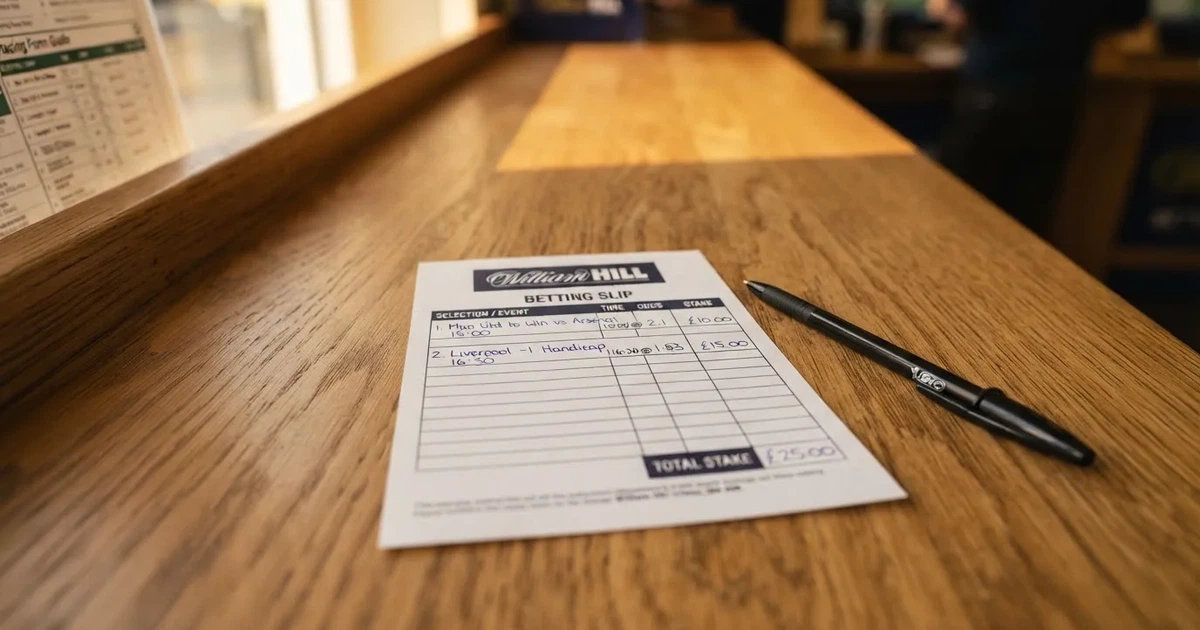
The bookmaker’s margin sits inside every leg and compounds alongside the odds. A market priced at 1.91/1.91 keeps about 5% of every pound staked on the basic match outcome; stack five such legs and the built-in margin approaches the same figure multiplied, while the probability of all five hitting shrinks roughly fivefold. The accumulator is not a route around the margin. It is the margin with extra steps and a long tail of losing slips. Readers who treat an acca as a small lottery ticket rather than a forecast are closer to how the product actually behaves.
This page works through that product as it stands in the licensed British market, what it costs in concrete terms, and which bookmakers build, settle and insure it better than the rest.
*Current as of 27 October 2026 · verified against the Gambling Commission’s public register (UKGC) for each operator listed.*
How a Betting Accumulator Works, and What It Pays
The structure of a multi-leg bet
An accumulator is a single bet whose outcome depends on two or more selections, called legs, all being correct at settlement. If one leg loses, the bet loses. If a leg is voided (for example a match abandoned, a player withdrawing under a Rule 4 ruling, a horse declared a non-runner), most operators reduce the accumulator to the next level down — a five-fold with one void becomes a four-fold. The bookmaker’s site will show this on the bet slip at the moment of placement, which is the right time to read it rather than after a near-miss has been settled against you. Two or three legs are the everyday acca; six or more is the territory of speculative tickets where every additional leg compounds the difficulty faster than it compounds the price.

Decimal odds suit accumulators because the price of the whole bet is the product of its legs. Three legs at 1.80, 2.10 and 3.50 price into 13.23. Fractional odds do the same math in a less transparent form: 13.23 in decimals means a £1 stake returns £13.23 (£12.23 profit). Multiply the stakes by hand on a scrap pad when you cannot tell what the bet slip is asking of you, because a slip that compounds silently is the same slip in pounds as it is in mathematics.
Settled early, or carried past the whistle
Cash Out has reshaped how multi-leg bets feel. It lets the bookmaker offer to buy the bet back before every leg has been settled, at a price determined by what remains to be won versus the probability of the remaining legs winning. A £10 stake on a five-fold at a combined price of 20.00 becomes a £200 return if all five win. With four legs already home, the Cash Out offer might be £120 — a profit locked in rather than a fifth-leg punt riding back into the ground.

The trade is that Cash Out almost always prices the remaining leg tighter than its pre-match odds would suggest. The bookmaker knows it has the right to offer this in real time and the punter has only the seconds in which to decide. A disciplined bettor sets a Cash Out trigger before the bet is placed (close half at +£60, hold the rest) rather than reacting to a number that flashes up. A bettor who always accepts Cash Out pays the bookmaker for the convenience of being told what the bet is worth.
Same-game and cross-event variations
Bet Builder products let a punter construct an accumulator within a single match: result, both teams to score, total goals, first scorer. The legs are correlated in a way cross-event accas are not — a 3-0 home win lifts both the result and the total goals leg simultaneously, which is why the same-game multi’s combined price looks much shorter than the equivalent cross-event acca. The bookmaker has priced those correlations and built them into the offer. A punter who reads the Bet Builder’s combined price and the price of the legs laid out separately discovers the cost of that modelling: the legs on their own would have multiplied higher.
Cross-event accas are where the big prices live. A small stake across a Premier League result, a Champions League goal-line, a golf each-way and a tennis set betting offers a return out of proportion to the stake but in proportion to the rarity. The trade-off is correlation across a Saturday morning: if five Premier League sides all win, the operator’s liability is concentrated, which is why Cash Out offers often weaken into the late games as the bookmaker trims its exposure.
Full-cover bets and why they multiply the lines
A Trixie wraps three selections into four bets — three doubles and a treble. A Yankee does the same for four selections across eleven bets. These full-cover combinations are the same accumulator logic with most-of-the-legs payout paths included: get two out of three right on a Trixie and one of the doubles still pays, softening the all-or-nothing cost of a straight three-fold. The price looks high because the operator has effectively sold you four bets under one label.
The premium for that insurance is real. A straight treble at the same three legs costs less than a Trixie because the Trixie added three doubles to your slip that you may not need. The choice between them is a choice between paying for a chance to be partly right and not paying for it. Where readers see the “Lucky 15” name in marketing, the same logic applies — fifteen bets across four selections, with an each-way-style consolation if only one wins — alongside the higher cost of stake multiplied by fifteen.
A worked payout, with the assumption stated
A £10 accumulator on three legs at 1.50 (1/2), 2.00 (evens) and 2.50 (6/4) carries a combined price of 7.50. Every leg wins and the return is £10 × 7.50 = £75, of which £65 is profit and £10 is the stake returned. With the same three legs in a Trixie format at £2 per line — the conventional unit stake for a four-bet combination — the four bets cost £8 in total. Two of the three doubles win (1.50 × 2.00 and 1.50 × 2.50) and the third double loses, so the payout is two £4 returns of £3 and £7.50, around £21.50 across those two lines, while the treble is lost. The two doubles rescue part of what the straight treble would have lost outright.
A fuller picture shows how the same stake structure holds across longer combinations. Across six selections in a Heinz (57 bets) and seven selections in a Super Heinz (120 bets), the cost rises proportionally — a 50p unit stake on a Super Heinz is £60 going out — and the payout from any complete set of legs compounds through the same multiplication rule. The arithmetic is not mysterious; it is just long. The headline on a Super Heinz payout says something the small print could not if it tried.
What an Accumulator Costs in Margin, and Why That Matters
The margin is in every leg
Punters who have never seen the inside of a price are betting at a margin they have not measured. A two-outcome market where both sides price at 1.91 keeps 1 ÷ (1/1.91 + 1/1.91) = 0.954 of stakes in payouts, so about 4.6% is retained as the bookmaker’s take — the overround, also called the margin. Lengthen one side to 2.20 and shorten the other to 1.71 and the margin moves further from 100% as the asymmetry grows. Three-outcome 1X2 markets on football typically price at margins between 5% and 8%, with majors and derbies tighter and minor leagues wider.
Each leg of an accumulator carries that margin. Across five legs, even at a clean 5% per market, the chance of the whole bet landing is the product of five chances roughly 19% tighter than the “true” event probability for each leg — which already compounds downward because underdogs win less often than the price suggests. The accumulator’s pull is the price, not the edge; understanding the price means seeing what the margin has already quietly taken.
Compare the prices, not the headlines
Bookmakers vary by margin and by how aggressively they post enhanced prices. A bookmaker quoting 2.20 on the draw where others show 2.10 is not giving 10% of value away for nothing; it is reflecting either thinner liquidity on the market or a deliberate shop-window price on a marquee event. Comparing prices leg-by-leg against a marker like an odds comparison site is the only way to spot the difference, and the comparison fades fast: a few minutes and the price has moved.
Enhanced odds, boosts and what they actually change
Price boosts lift the price of an accumulator or one of its legs for a short window. An enhanced acca from 10.00 to 15.00 keeps the same maths of compounding and adds a marketing layer on top. The trade is that the boost applies to a specific combination chosen by the operator, almost always its most popular legs, and the original price was already inside a margin. The headline 50% price improvement is set against a starting margin somewhere between 5% and 10% of which the boost recovered perhaps a third. It is a useful offer for casual punters; it is not a route to an edge.
Acca insurance — a free bet returned if one leg lets down the bet — is the operator’s hedge against the most common payout lottery: a four-fold with one short-priced favourite losing in the 90th minute. The free bet is returned in the operator’s own credit, with its own terms, often excluding the most popular leagues and never refunding the original stake. Read the small print at the moment of the bet, not at the moment of the disappointment.
The Licensed Field: Ten Bookmakers With Their Own Terms
Every brand below holds a Gambling Commission remote licence and accepts customers in Great Britain. Each has its own operator, its own Commission account number, and its own stated treatment of accumulators. Several licensing relationships carry more than one brand; they appear once below under their licensee and on the register under whichever business name holds the account. No brand here is “the only” licensed bookmaker — the Commission’s public register lists hundreds of GB-licensed operators, and the ten below are the set this page works with, nothing broader.
The table below sets out the licence position for each operator. The third column carries what the operator’s own terms state about accumulators and acca-linked offers — those points where each brand’s betting rules say something specific on the subject, not a general position every bookmaker already holds.
| Brand | Gambling Commission licence and holder | Operator’s stated position on accumulators |
|---|---|---|
| BetUK | Remote licence 039198-R-319450-029 (Commission account 39198); LeoVegas Gaming PLC | Free bets exclude virtual sports, esports and non-UK/IE horse racing; minimum odds apply |
| Midnite | Remote licence 101839-R-342850-001 (Commission account 101839); Midnite Limited | Acca builder, popular accas and price boosts on the home page; maximum-stake limits on boosts |
| Bet Ahoy | Remote licence 100094-R-341742-003 (Commission account 100094); Bet Ahoy Ltd | Welcome offer splits into a sports single and a £5 acca token, both subject to standard wagering terms |
| Smarkets | Remote licence 039173-R-319366-011 (Commission account 39173); Smarkets (Malta) Limited | Exchange lay and back on the same event pricing; standard 2% commission on winning exchange bets |
| BetGoodwin | Remote licence 002927-R-327985-008 (Commission account 2927); Goodwin Racing Limited | Welcome offer layered into a single, an acca and a Sub-Cover token, each with its own stake and minimum-odds terms |
| Kalooki Sportsbook | Remote licence 057730-R-333396-005 (Commission account 57730); Kalooki Sportsbook Limited | Standard fixed-odds acca rules under the licensee; lists itself as a GAMSTOP-registered operator |
| 888sport | Remote licence 039028-R-319297-014 (Commission account 39028); 888 UK Limited | Cash Out, Bet Builder and daily boosted accas on the home feed; racing streams and BetFinder form tools |
| Swifty Sports | Remote licence 058957-R-334734-006 (Commission account 58957); Swifty Global (UK) Ltd | Best Odds Guaranteed, daily price boosts, in-play and live streaming; Bet Builder flagged as coming soon |
| Spreadex | Remote licence 008835-R-104580-022 (Commission account 8835); Spreadex Limited | Fixed-odds acca alongside FCA-regulated spread betting; new-customer free bets apply to fixed odds and spread |
| Betfair Sportsbook | Remote licence 039439-R-319330-013 (Commission account 39439); PPB Counterparty Services Limited | In-play, Bet Builder, free live streams and 90-Minute Payout market on football selections |
The licence column is what the public register shows at the access date. The third column is what each operator’s own terms state and is not a general endorsement of the brand — every licensed operator offers accumulators, and where the column is silent on a specific feature it is because the operator’s own terms were not specific on it. Check the operator’s full terms before staking on any combination, because the small print sits behind the slip rather than next to it.
Reading the Ten Brands Against Each Other
BetUK — the wide menu with a constrained free bet
BetUK runs the broadest of the three promotional structures tied to a single bookmaker: free bets across virtual sports, esports and non-UK/IE racing are excluded, and minimum odds gates them further. The constraint is a feature, not a slip-up — the operator has set the bookmaker to handle a specific accumulator portfolio rather than every combination imaginable. Settled against the standard acca offering, it sits closer to the conventional high-street brand than to a sharp exchange; £10 accas fit the model more naturally than the casual dabble does, because the terms were written against a frequent bettor in mind. The conditional free bet is the kind of cap that has to be factored in before staking, since accepting it on a horse racing bet returns the stake only on certain pools.
The judgement depends on whether the exclusion list lines up with what you actually bet on. A punter whose multi-leg cards lean on Premier League, Champions League and the World Cup finds BetUK a workable option. A punter who mixes virtual racing into weekend accumulators finds the free-bet token less useful than its headline suggests, and that is precisely the kind of gap between headline and small print that this page flags.
Midnite — the builder built into the platform
Midnite’s home page runs acca builder, popular accas and price boosts alongside the more ordinary pre-match and in-play markets. The product is the bet, not the offer — the welcome package ties a £5 qualifying bet to a £25 free-bet payout, with a 14-day window and minimum EVS (2.00) pre-match odds. The maximum-stake limits on boosted accas sit at the high end of the licensing norm, which is the price of the largest payouts on a single slip. Compared with the standard brand, Midnite treats multi-leg cards as the headline product rather than the supporting cast.
A punter who likes a constructed combo (both teams to score, over 2.5 goals, half-time draw) finds Midnite’s acca builder a useful piece of tooling without leaving the page. A punter looking for the deepest horse racing pool finds a sportsbook that is light on racing but heavy on the football and US sports combinations that dominate the boosted-price list. The bettor’s interest dictates the value of either focus.
Bet Ahoy — a small welcome for acca-specific use
Bet Ahoy’s opening offer sits at £10 for £10 across a sports single and a £5 acca. The acca token is smaller than the headline £10 figure suggests — half of it is a sports single, the other half is acca-specific — and the wagering behind it is the standard multi-leg arrangement. Inside that smaller frame, the brand is a workable accumulator bookmaker for a punter who already bets in that register and just wants the extra half-cover to start with. A punter chasing a one-off ticket at long odds looks elsewhere; a punter who wants to build multi-legs at a £5 stake finds Bet Ahoy’s structure has been written with that scale in mind.
The vendor’s terms do not run further than the welcome package, so the page-level verdict stops at the new-customer side. The right reader is one whose betting pattern matches the £5 acca stake and is not troubled by the welcome structure setting the floor on a single account.
Smarkets — the betting exchange, not the sportsbook
Smarkets is structurally different. The remote betting intermediary licence is the Commission’s category for exchanges, and the model is back-and-lay pricing rather than bookmaker-side margins. The standard 2% commission on winning bets is the operator’s revenue; the prices themselves sit tighter than sportsbook margins because that commission is the only fee in play. A punter who backs a five-leg accumulator at the exchange does so with the same multiplication logic but with the prices set by other backers and layers, not by the operator’s trading desk.
The 60-day zero-commission window for new customers is a useful offset during a learning period; it is not a value judgement on the brand. The right reader is one already comfortable with the back-and-lay mechanic, where the role of the bookmaker has effectively been delegated to the wider market. Smarkets does not sell the bookmaker’s marketing of “boosted accas” or “acca insurance”; it sells the thinner-margin pricing that the rest of this page warns readers away from undermining.
BetGoodwin — racing-focused with a layered welcome
BetGoodwin’s welcome is a £10-for-£15 offer built from a sports single, an acca and a Sub-Cover bet — three tokens across three lines. The Sub-Cover naming signals the racing heritage; the racing product and the acca mechanics together explain why the spread is wider than the headline suggests. The right reader is a horse racing bettor who also wants the multi-leg sports product on the side. The wrong reader is the weekend-only sports punter who never races and will leave two of the three tokens on the table.
The brand sits closer to the high-street end of the market than to the online-only challenger, and its tiered welcome package is consistent with that positioning. A £15 headline for £10 stake looks generous against a £25 headline for £5 stake at Midnite until the relevant betting pattern at each operator is taken into account, because almost no welcome offer pays out at face value across every punter. The headline is the way in, the terms are the cost.
Kalooki Sportsbook — a smaller bookmaker with the regulated base
Kalooki Sportsbook runs a fixed-odds bookmaker under the licensee Kalooki Sportsbook Limited and lists itself as a GAMSTOP member. The offering sits within the standard set of accumulator rules: any multi-leg bet follows the wider Commission’s licence conditions and the operator’s house rules. The brand is quieter than the larger operators on this list, and the absence of headline marketing material reflects that scale rather than any read on its product. A punter choosing a smaller operator for any reason — a longer-running loyalty arrangement, sharper personal limits, or simply an alternative brand under the GAMSTOP umbrella — has a competent accumulator bookmaker in Kalooki and a clear licence path under the same register.
For most readers, the page notes it as part of the licensed set without recommending it over the others. The distinguishing value of a smaller GB bookmaker is its position on the register and the protection that licence brings.
888sport — the broad bookmaker with built-in tooling
888sport’s offering assembles the conventional accumulator’s whole ecosystem: Cash Out, Bet Builder, racing streams, daily boosted accas, BetFinder form tools and a live bet feed. The breadth is the brand’s distinguishing point. A punter who likes building multi-leg football cards on a Saturday morning has the tools pre-installed; a punter who only ever places a single has more book than they need. The brand’s positioning is the high-traffic sportsbook with a feature list that solves every conventional accumulator use case.
The standard welcome offer sits within the regulated promotional structure, and the bonus turnover cap of 10x (introduced in January 2026) means a £20 bonus cannot require more than £200 of qualifying turnover. The risk of a heavy rollover, which used to be routine, is now ruled out at the regulatory level for any GB-licensed operator. Within that regulatory frame, 888sport focuses its featured space on the home page to highlight its daily boosted offers and popular pre-match markets for regular punters.
Swifty Sports — the racing-led newcomer
Swifty Sports carries Best Odds Guaranteed, Cash Out, price boosts, live streaming and in-play betting across horse racing and football. The Bet Builder is the notable gap — flagged as coming soon rather than absent — and the rest of the racing-grade infrastructure is in place. The positioning is that of a racing-led bookmaker with a serious sportsbook alongside. A punter whose accumulators include a horse or two across a busy weekend finds Swifty’s racing tools sharper than the headline sportsbook challengers; a punter who wants a same-game multi across a 3pm Premier League kick-off has to wait for the Bet Builder before that bet type is fully available.
The 2025 home page gives a slightly earlier snapshot than the rest of this list. The judgement is the same shape as for any bookmaker at this stage: where the brand has staked its offer on racing infrastructure, the racing products are sharper and the multi-sport build tools are thinner.
Spreadex — the spread betting overlay
Spreadex runs a fixed-odds bookmaker alongside FCA-regulated financial spread betting, which makes it the only brand on this page with two regulators carrying parallel oversight. A £60 free-bet package on a £10 qualifying fixed-odds bet is unusually generous by the licensed-bookmaker standard, and the 28-day qualification window gives it longer than most offers to be cleared. The wider offering crosses spread betting and fixed odds; a punter who only wants the fixed-odds acca is paying for the spread betting infrastructure that does not run with their bets.
The headline caveat is on the spread betting side: losses on spread positions can exceed the original deposit. The page notes that because the operator itself states it, and the position of the fixed-odds product does not soften it. The right reader is one whose accumulator interest is on the fixed-odds side, where the licensed bookmaker’s £10-for-£60 free-bet offer represents one of the more generous deals in the licensed market once the qualification term is read.
Betfair Sportsbook — the exchange legacy and the sportsbook overlay
Betfair Sportsbook sits behind PPB Counterparty Services Limited, the same licensee that runs the Betfair Exchange — a structural point that means the multi-leg sportsbook price sits alongside an exchange price on the same event. The sportsbook product ships in-play, Bet Builder, free streaming of UK and Irish racing and a 90-Minute Payout market on football selections. The exchange heritage shows up in pricing and tool depth, and the 90-Minute Payout is a useful hedge for single-game accas where a goal in added time has historically been the ruin of the bet.
A punter who already uses Betfair Exchange for low-margin pricing has a sportsbook product that shares the register, the wallet and the live data feed; a punter who has never used the exchange gets a sportsbook product that competes on its own merits against the wider licensed field. The right reader of the Betfair Sportsbook is one whose betting pattern benefits from the exchange-shaped pricing underneath the sportsbook surface.
Where the Regulator Sits in the Picture
The Gambling Commission’s licensing frame
The Gambling Commission regulates commercial gambling in Great Britain under the Gambling Act 2005, with the Gambling (Licensing and Advertising) Act 2014 extending the licence requirement to any operator whose remote facilities are used by GB customers, wherever the operator is based. A Curaçao or Maltese licence is not a substitute: the test is the Commission’s public register, searchable by business name, trading name, domain or account number. The brands listed on this page are on that register; brands not on the register are not regulated by the Commission whatever their other credentials, and the absence has practical consequences for the punter rather than legal ones — the section on offshore operations below works through those.
The Commission’s licence categories matter for what each operator may offer. Remote general betting standard (real events) covers mainstream sports betting and is held by every bookmaker on this page except Smarkets. Smarkets holds a remote betting intermediary licence, the exchange category. Pool betting, virtual events and spread betting each have their own framing; an acca punter who knows which category the operator is licensed under knows whether the menu item they are looking at is regulated under the same licence as everything else.
What may and may not be bet on
There is no statutory list of permitted bets in Great Britain. Operators offer markets under their own house rules, the Licence Conditions and Codes of Practice (LCCP), and the social responsibility code. In-play betting is regulated by the operator’s licence conditions and customer-protection duties; the legal frame is what the licence requires of the operator rather than a definition of what counts as in-play. Esports, virtual events and novelty markets are each permitted under the appropriate licence category; horse and dog racing carries its own pool-betting arrangements on top of the standard sportsbook offering.
What sits outside that offering is largely a function of what the operator chooses to price. There is no statutory cap on stakes in sports betting; operators set their own maximum stakes and may restrict customers individually. A punter whose stake is restricted by an operator is dealing with that operator’s trading decision, not with a regulatory ceiling. Knowing which side of that line a stake limit sits on is the difference between disputing it through a regulator and accepting it as the operator’s call.
Bonuses, marketing and the 10x cap
The 2026 promotional rules cap wagering requirements on bonuses at 10x, ban mixed-product promotions (the football-bet-for-free-spins structure), and put all bonus marketing under the social responsibility code at the LCCP level. A £10 bonus at the old 50x turnover would have required £500 of qualifying bets; at 10x it requires £100. The cap is not optional — the rule applies to every GB-licensed operator, and the absence of that cap in any specific offer is the offer being outside the regulatory frame.
What is not established at the regulatory level is whether the cap applies to free bets with no wagering condition, and whether a value ceiling applies on the bonus money itself. Some free-bet packages cap the maximum winnings on the free-bet stake at a multiple of the bonus (sometimes 5x, sometimes flat at the bonus amount); the details belong on each operator’s terms page at the moment of the bet.
What is established is that advertising is not licensed by the Commission. It runs through the Committee of Advertising Practice (CAP Code, non-broadcast) and the Broadcast Committee of Advertising Practice (BCAP Code, broadcast), both enforced by the Advertising Standards Authority (ASA). The CAP Code section 16 marketing rule, the 9pm watershed for betting ads in broadcast, and the “whistle-to-whistle” sports-ad ban between live-event windows are all ASA rulings rather than Commission ones — a regulator with a wider consumer-protection remit. The Commission sets the licence conditions; the ASA sets the marketing conditions. Together they shape what the headline price on a betting site looks like.
Tax, duty and what the punter pays
Players in Great Britain pay no tax on betting winnings. The General Betting Duty is the operator’s tax on gross profits, currently 15%, with a new 25% remote betting rate applying from 1 April 2027. Spread betting has its own rates — 3% on financial spread bets, 10% on other spread bets. None of this is paid by the punter; whether the operator passes any of it on through the prices is not established, and the regulator has not been explicit on this point. The page does not assert that prices are reduced by the duty; it says only that the duty applies to the operator.
There is a separate question for the professional gambler, who may be liable to income tax on a sustained pattern of winnings. This page provides general information rather than tax advice, and the relevant advice for a self-employed or professional punter sits with HMRC or a tax adviser.
Safeguards That Come With the Licence
GAMSTOP and self-exclusion
GAMSTOP is the multi-operator online self-exclusion scheme and is a mandatory licence condition for online operators since 31 March 2020. A punter who registers with GAMSTOP is barred from every GB-licensed online operator for the chosen period — six months, one year, five years, or five years with auto-renewal — and the exclusion stays in place for a further seven years after the minimum period ends unless the customer asks GAMSTOP to remove it. The cover is online: betting shops use a separate service. Every GB-licensed bookmaker on this page is a GAMSTOP member by virtue of the licence.
What GAMSTOP does not do is restrict a customer’s betting on a brand that does not hold a GB licence — offshore brands are outside the scheme. That is the practical limit of the protection.
Affordability, vulnerability and the deposit limit
Two checks sit at different stages of the customer journey. The financial vulnerability check (LCCP condition 3.4.4, in force since 30 August 2024) applies when a customer’s deposits minus withdrawals exceed £150 in any rolling 30 days, starting from 28 February 2025; it is a public-record check (bankruptcy orders, county court judgments, insolvency notices) rather than an income or credit check. The financial risk assessment — the affordability check in press language — was announced in stages in July 2026 with no start date, and the page writes it as “announced, staged, no start date” rather than “in force”. The framing matters because a punter has not been through an affordability check unless one has actually applied.
A separate change is the deposit limit requirement (RTS 12). Operators must offer a gross deposit limit on a fixed time frame, and the changes have applied since 31 October 2025; a second phase was postponed to 30 September 2026, and whether that second phase is now in operation is not established in the regulatory frame. What is established is that there is no state-set deposit or loss ceiling — limits are the customer’s choice, and the operator’s obligation is to give the customer the choice. A punter who has not set a personal limit has not been required to do so by the licence; a punter who has set one and wants to raise it can usually do so after a cooling-off period.
Help services
GamCare runs the National Gambling Helpline, the principal support service for problem gambling in Britain. GambleAware funds research, education and treatment. NHS gambling clinics operate in several regions, primarily for severe cases. Gamblers Anonymous runs peer-led meetings. None of these is a regulator; all are listed as available pathways to anyone whose betting has moved past what they intended, and the licence frame across the page sits behind their operation.
Advertising rules around the bettor
The “strong appeal to under-18s” rule in CAP Code section 16 governs who may appear in advertising rather than who may bet. Operators do not get to say under-25s cannot gamble — anyone 18 or over is a legal customer — and the rule about who appears in marketing is precisely about marketing, not customer age verification. The minimum age for gambling in Great Britain is 18. Identity, address and date of birth are verified before a customer can deposit or place a bet, including with a free bet, since 7 May 2019, which means anonymous play is no longer available at any GB-licensed brand.
The Operators Compared by Their Acca Shape
The ten brands above differ by more than name. The comparison that matters most for the punter is the structure of the accumulator offer: how the bookmaker prices multi-leg cards, how it settles them, and what it does at the point of a near-miss.
The first axis is pricing depth. Betfair Sportsbook and Smarkets have exchange-style pricing underneath the sportsbook surface at Betfair and as the product at Smarkets, which means tighter margins on the legs of any multi-leg card. Most of the other brands run standard sportsbook margins, generally between 5% and 8% on mainstream 1X2 markets. The difference compounds across an accumulator’s legs and is visible in the long run for any punter placing enough cards.
The second axis is the bet builder. 888sport, Midnite and Betfair Sportsbook ship a fully integrated bet builder. Swifty Sports flags it as coming soon. BetUK, Bet Ahoy, BetGoodwin, Kalooki Sportsbook and Spreadex run pre-match and in-play markets without a flagged same-game multi product at headline level. Smarkets does not run a builder at all — exchange pricing replaces the function for advanced users. The right bettor for a heavy same-game-multi dependency is not the right bettor for a brand without one.
The third axis is the cash-out depth. Most of the licensed bookmakers on this page run Cash Out; the partial cash-out feature (close half the stake at the offered price, hold the rest) is more variable. Midnite and 888sport run partial Cash Out as a standard part of the home page tooling. Spreadex, Kalooki Sportsbook and BetGoodwin are quieter on this. The cash-out trade-off — the bookmaker’s offer is always tighter than the implied fair price of the remaining leg — applies to all of them.
The fourth axis is the acca insurance and acca boost offer. Most of these brands run some form of acca boost or insurance on major football fixtures, particularly over the weekend. The boosts are usually fixed combinations chosen by the operator and have maximum-stake limits; the insurance is usually a free-bet return on a one-leg-loss accumulator, capped, and excluding the free-bet’s stake from the original wager. Reading each operator’s promotional page at the time of staking is the right move, because the policy changes weekly.
Where Accumulators Live in the App
The mobile app is now the primary betting surface for most GB punters. Every operator on this page runs an iOS and an Android build, and the App Store age rating (17+ for the gambling-real-money category) sits alongside the licence. The notable part of the mobile offering is how the accumulator and the bet builder are touched rather than tapped.
A typical accumulator flow on a modern licensed app looks like this. A punter taps a price on a football match, taps another on a horse race, taps another on a tennis outright, and a slip at the bottom of the screen shows the combined price updating in real time. The slip carries a Cash Out toggle, a stake box, and the option to apply a free-bet token. The placement confirms in two taps. Withdrawals and deposits live behind a separate wallet section, with debit card, bank transfer and e-wallet as standard methods and credit cards banned for gambling at any GB-licensed brand.
The notable differences across operators sit in the bet builder. 888sport and Midnite run the builder inside the home feed; Betfair Sportsbook sits closer to the exchange design. Smarkets treats the multi-leg bet as a series of independent back or lay decisions rather than a single slip, with the multiplication left to the punter to verify on the confirmation screen. Spreadex mixes fixed-odds and spread positions on the same slip, which can confuse a punter expecting one or the other.
Live streaming, where it is offered, lives inside the app rather than redirecting to a separate web property. 888sport, Betfair Sportsbook and Swifty Sports run racing streams where the underlying licence allows (UK and Irish racing being the standard offering on the free stream). BetUK runs racing streams through the same plumbing. Midnite runs streams on football and US sports under similar terms. None of this is novel; it is the basic shape of the licensed mobile product across the ten operators.
What Predictions and Tipsters Cannot Do
Every bookmaker on this page publishes a form guide, a daily acca suggestion, a tipster pick or some combination of the three. None of it is forecasting. The product the operator sells on these pages is content that keeps the bettor in front of the screen between bets, and the bookmaker is paid whether the tip wins or loses.
A punter who treats a tipster’s Saturday card as a forecast is paying for someone else’s marketing. A punter who treats the same card as a starting framework — which combinations the operator has flagged as a headline product, which leagues are being pushed — has read the page for what it actually says. The difference between those two readings is the difference between gambling and studying.
The algorithm of an accumulator’s compounding difficulty is not a secret: every leg halves the probability if the price is fair, and every additional leg stretches the long tail further without doing the same for the price. A punter who arrives at a five-fold because every leg is the shortest price on the board has misread the long tail. A punter who arrives at a three-fold with three legs in form and at sensible prices has read it correctly. Tipsters do not change the long tail.
The Settlement Picture: What Happens After the Last Leg
The mechanics of a winning accumulator
A winning accumulator settles leg-by-leg in the operator’s system as each match is settled. The combined return is calculated and credited to the betting balance shortly after the last leg is settled — within seconds on a routine settlement, within a longer window on a suspension or referee review. The punter sees the balance update rather than any item-by-item payout. Withdrawals then run through the operator’s wallet: debit cards typically within a few hours to a day, bank transfers a working day or two, e-wallets in minutes.
A Cash-Outted accumulator settles at the moment of the Cash Out, with the bookmaker paying the offered price into the balance and the bet removed from the slip. The original stake is included in the offered price rather than paid separately; a Cash Out at £120 of a £10 stake that was heading for a £200 return pays £120 to the balance with no separate stake return. Reading the Cash Out dialog as the offer is presented clarifies this, since the stake is otherwise implicit in the calculation.
Where accumulators fail
A losing accumulator settles at the moment of the first defeat. The bookmaker takes the stake immediately on settlement of the losing leg, and the system clears the bet from the slip. Where a leg is voided, the accumulator reduces to the next level down — the punter sees the slip change shape in real time rather than at settlement. The distinction between a voided leg and a losing leg is worth understanding, because a five-fold with one void settles as a four-fold if the four remaining legs win, whereas a five-fold with one loss settles as a loss regardless of how the other four ran.
What is not always made plain on the slip is the operator’s treatment of a Rule 4 deduction on horse racing legs. Where a Rule 4 deduction applies (typically because of a non-runner reducing the field), the operator reduces the affected leg’s odds by a stated percentage, and the multiplication runs on the reduced odds rather than the original. The deduction is the operator’s call under industry standard rules, and reading it is part of reading the slip rather than trusting the headline.
The Calculation, in Concrete Terms
Working the multiplication directly is the cleanest way to see what the page is describing. Three illustrative legs at 1.50 (1/2 in fractional form), 2.00 (evens) and 2.50 (6/4) combine into a single price: 1.50 × 2.00 × 2.50 = 7.50. A £10 stake on the accumulator returns £10 × 7.50 = £75 if all three legs win, which is £65 of profit and the £10 stake returned.
With the same three legs placed in a Trixie format, the unit stake is conventionally £2 per line and the total cost is £8 across the four bets (three doubles and the treble). If two of the three doubles win and the third loses, the payout is two £4 returns of £3 (1.50 × 2.00 = 3.00) and £7.50 (1.50 × 2.50 = 3.75), for £21.50 across the two winning lines, while the treble does not run. The straight treble would have lost the whole £10; the Trixie’s doubles rescued part of it. The right format depends on which side of the trade-off the punter prefers: cheaper entry with all-or-nothing or higher cost with one-leg-grace.
A Super Heinz on seven selections at 50p per line costs £60 (120 lines × 50p) and pays out if any combination of legs wins. The total stake rises faster than the number of legs, which is why the format name is shorthand for the upfront cost. A full payout across a Super Heinz on seven legs that all win runs in the thousands at typical prices; a single losing leg reduces that to whatever the smaller combinations pay — still significant against the £60 stake but with the insurance of partial payout paths built in.
The arithmetic is mechanical and gives no forecast. The probability of every leg winning is not stated here because the page is not making that forecast — it is the product of each leg’s probability under the bookmaker’s price, with the bookmaker’s margin already inside each leg. What the calculation gives is the return on a winning bet, not the chance of one.
The Geographic Frame
Great Britain
Every operator and offer above applies to customers in Great Britain under a Gambling Commission licence. Northern Ireland sits outside the Gambling Act 2005 and has its own legal frame; the page does not extend its coverage there. A GB customer betting through a GB-licensed operator with the operator on the public register has the protections above applied, and those protections are the regulator’s gift rather than the operator’s promise.
Offshore operations
An offshore operator — one licensed in Curaçao, Malta, Gibraltar or elsewhere but not on the GB public register — sits outside the GB regulatory frame. Its customers do not have the Commission’s complaints route, do not have GAMSTOP coverage, do not have the approved dispute-resolution body, and do not have British consumer redress in the event of withheld funds. The 10x bonus cap and the £150 financial vulnerability check do not apply. The customer’s account sits under the offshore operator’s house rules.
The legal frame around the customer is not the same as the frame around the operator. Section 33 of the Gambling Act 2005 makes providing unlicensed gambling facilities to GB customers an offence aimed at the operator, with enforcement through cease-and-desist notices, search-engine referrals, registrar and payment-provider work, and the court-order DNS blocking powers the Commission has been given or is about to receive. The punter is not committing an offence. The punter is foregoing the protection of the GB regime, and that distinction is the one the page notes — neither “safe” by default, nor “the legal choice” as a frame.
A common sense interpretation of the choice: a GB-licensed operator carries the regulator’s full kit. An unlicensed one carries its own terms and whatever those terms promise. Where the unlicensed operator fails to honour its promises, the route to a remedy is not a regulator.
Practical Conclusions for the Punter
The accumulator is a useful product when used deliberately. Three legs in form at sensible prices is a constructive bet. Five legs with one long-priced outsider is a lottery with a margin in it. Six or more legs without strong form across every selection is a tax on the idea of betting rather than a bet on anything. A Trixie or Yankee is the same logic with insurance built in, at the cost of more stake money on the slip.
The price comparison is the practical route to value. Comparing each leg against the wider market tells the punter whether the operator has priced the leg tighter than the field. Where the operator has, the multi-leg price is tighter proportionally across every leg. Where the operator has a thinner margin, the difference compounds across the legs and is meaningful at scale. The bettor who reads prices has the only advantage the product offers.
The licence frame is not a marketing layer. The 10x bonus cap, the GAMSTOP register, the financial vulnerability check, the ASA marketing code, the absence of credit cards, the identity verification before the first deposit — these are the regulator’s tools, and they apply whether or not the bettor reads about them. What the licence means in practice is that a regulated bookmaker in Great Britain offers the full set of these tools whether the customer reaches for them or not.
Frequently Asked Questions about Accumulators
What is an accumulator bet?
An accumulator is a single wager linking two or more independent selections into one ticket. The total return is the product of the odds for each leg, meaning a successful bet compounds the price rapidly. However, if any single selection loses, the entire ticket settles as a loss.
Can I cash out an accumulator?
Most licensed operators offer Cash Out on accumulators, allowing punters to settle the bet early for a value determined by the operator based on the remaining legs. This feature is often available in real-time, letting the bettor lock in a profit or mitigate a loss before the final event settles.
What is the difference between an accumulator and a full-cover bet?
A standard accumulator is an all-or-nothing bet where every leg must win for a payout. A full-cover bet, such as a Trixie or Yankee, combines multiple selections into several different bet combinations like doubles and trebles. This provides a consolation return even if some selections fail, though the stake is higher.
Are accumulator bets licensed in Great Britain?
Yes, accumulator bets are standard products offered by GB-licensed bookmakers. Licensed operators are regulated by the Gambling Commission, which mandates that all betting markets are offered under clear house rules and are compliant with the Licence Conditions and Codes of Practice (LCCP), ensuring player protection and fair market transparency.
What happens if one leg of my accumulator is voided?
When a leg is voided—for example, due to a match postponement or a player withdrawal—the accumulator is usually adjusted. The voided leg is typically removed from the calculation, and the bet effectively becomes the next level down, with the payout odds recalculated accordingly based on the remaining winning legs.
Bet types & in-play – Best Betting Tips
Content created by the «Best Betting Tips» team
