
Online MMA Betting in Great Britain: What Licensed Bookmakers Actually Offer
 Available in US
Mixed martial arts moved from pay-per-view curiosity to a weekly betting fixture over the last decade, and the British market followed the same path. Every UFC Fight Night, every PFL card, every Bellator event running under its later names now sits on a licensed bookmaker’s app within seconds of the bout being announced. What follows is a working map of that market in Great Britain as it operates right now, from the first deposit to a settled slip and the bonus terms in between.

The figures and operator details below were verified against each operator’s own terms and the Gambling Commission’s public register on 27 October 2026.
What “Online MMA Betting” Actually Means on a Licensed Site
A bet on MMA is a wager on the outcome of a bout, expressed as a price. The price tells the reader two things at once: which fighter the bookmaker favours, and by how much. Decimal odds of 2.13 mean a £10 stake returns £21.30 if that fighter wins (£10 profit plus the £10 stake back); decimal odds of 1.45 mean the same £10 returns £14.50. The gap between those two prices on the same fight is the bookmaker’s read on who is likely to win, and the cost the bookmaker attaches to taking the other side.
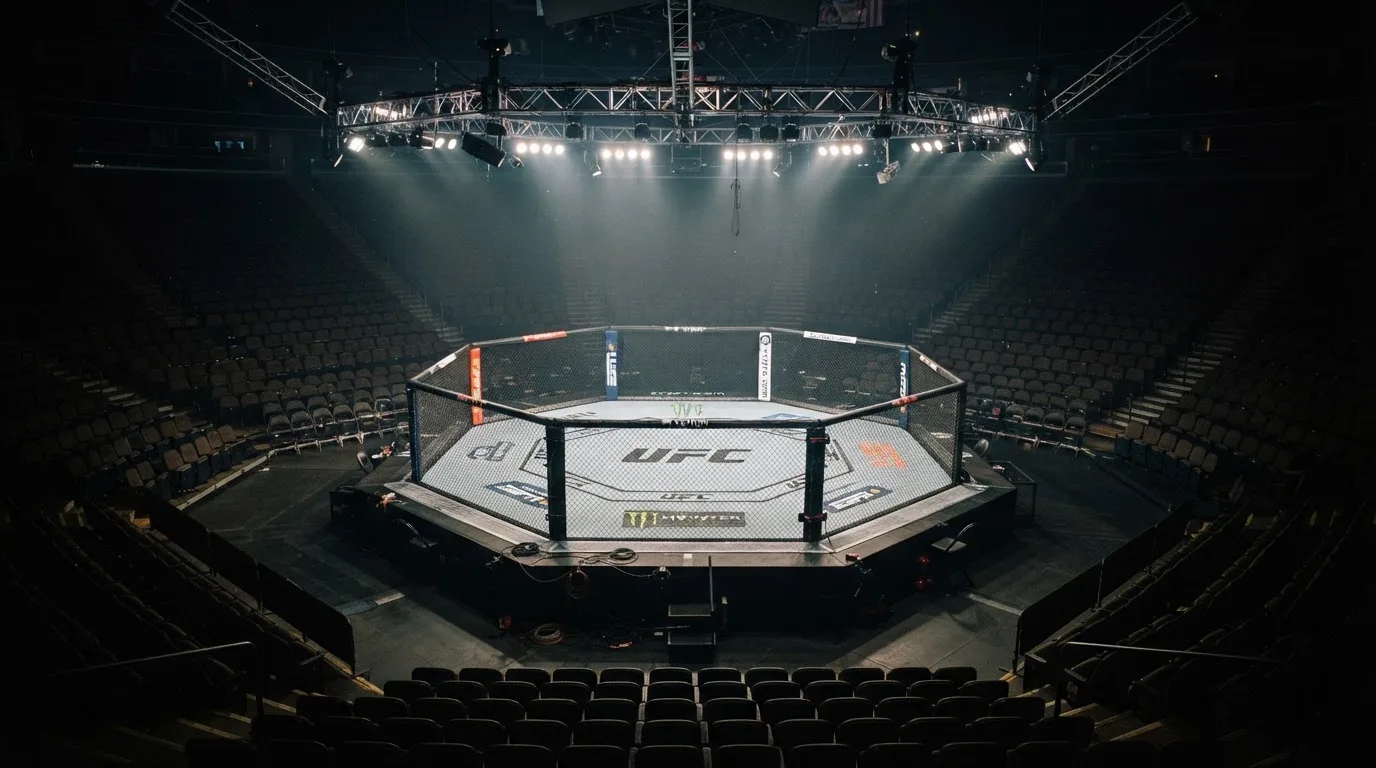
Every bout on a GB-licensed site runs through the same kind of market. The “moneyline” — picking the winner — is the bread and butter. From there a licensed bookmaker builds the rest: method of victory (decision, knockout, submission), round of stoppage, over/under on the total rounds, and a small set of player props for headliners. The depth varies sharply. Some operators carry only winner markets on the undercard; others price method of victory on every bout from the curtain-jerker to the main event.
The point that matters to the reader: an MMA betting line is not a single number. It is a small cluster of related markets, each with its own margin, and the bookmaker who offers the deepest menu does not necessarily offer the sharpest price on the winner market. The two questions are different, and a serious bettor checks both.
The Bout Structure That Decides the Markets
A standard UFC bout runs three five-minute rounds with a one-minute rest between them; a title fight can be sanctioned for five rounds under the Unified Rules of MMA. Three judges score each round on the ten-point must system: the round winner gets 10, the loser 9 or fewer, and an even round scores 10–10. A decision goes to the judges’ scorecards after the scheduled distance and can be unanimous, majority or split; a draw can be unanimous, majority or split under the same scheme. A bout ends early by knockout, technical knockout, submission, disqualification (when an intentional foul leaves a fighter unable to continue), or no contest (when an unintentional foul does the same).

That structure dictates the markets. “Fight to go the distance” only makes sense for a three- or five-round bout. “Method of victory” splits into decision, knockout or technical knockout, and submission, and the price on each reflects how often fighters in that division actually finish one another. Heavyweights carry different method prices from lightweights because knockouts happen more often at the top of the scale. A reader who treats both as the same market is paying for the assumption.
How Great Britain Regulates MMA Betting
The Gambling Commission is the regulator. It is a non-departmental public body sponsored by the Department for Culture, Media and Sport, and it works under the Gambling Act 2005, which covers England, Scotland and Wales. Northern Ireland sits outside the Act under older law, so the proper framing is “Great Britain licence” or “GB-licensed”, never that a GB licence regulates Northern Ireland.
Since the Gambling (Licensing and Advertising) Act 2014 an operator whose remote facilities are used in Great Britain needs a Commission licence wherever it is based — sections 33 and 36 of the 2005 Act as amended. A Curaçao, Maltese or Gibraltar licence is not a substitute for the point of consumption. The Commission’s public register is the whole test of who holds one. It can be searched by business name, trading name, domain or account number, and the licence number on the register is what proves the brand is licensed. Every operator detail on a GB-licensed site comes from that brand’s own terms; the register does not list markets, bonuses or stake limits.
There is no state monopoly and no statutory cap on the number of licences. The relevant licence type for a typical MMA bookmaker is the remote general betting standard (real events) category. Pool betting, betting exchanges and virtual events are separate categories; an MMA bookmaker offering markets on simulated fights needs the virtual category as well.
What the Licence Does and Does Not Cover
A GB licence does not list permitted sports or markets. The bookmaker decides which fights to offer and how to price them, and the controls are the operator’s licence conditions and the Licence Conditions and Codes of Practice (LCCP). In-play MMA betting is offered by GB bookmakers and the controls sit at the licence-condition level, not in primary legislation. Esports are treated like any other event; virtual events are a separate licence category; bets on politics, TV shows and novelty markets are offered by GB bookmakers and no statutory prohibition was found.
The minimum age is 18. Since 7 May 2019 every licensed remote operator has to verify name, address and date of birth before a customer can deposit or gamble, including with a free bet or bonus. There is no anonymous play at a licensed site, and there is no licensed route around identity checks.
Player Protection and the Reality of Self-Exclusion
GAMSTOP is the national multi-operator online self-exclusion scheme. It is a mandatory licence condition for online operators since 31 March 2020, which means every GB-licensed online bookmaker is a GAMSTOP member. Self-exclusion periods are six months, one year, five years, or five years with auto-renewal. After the minimum period the exclusion stays in place for a further seven years unless the customer asks GAMSTOP to remove it. GAMSTOP covers online sites and apps; betting shops run a separate service.
A financial vulnerability check sits in LCCP condition 3.4.4 and has been in force since 30 August 2024. It applies to licensed remote betting when a customer’s deposits minus withdrawals exceed £150 in a rolling 30 days — that threshold applies since 28 February 2025. The check is a public-record check (bankruptcy, county court judgments and the like), not an income check and not a credit reference check. Financial risk assessments, the “affordability checks” of the press coverage, are announced in a staged plan in a Commission article of 7 July 2026 with no start date; the honest framing is “announced, staged, no start date”, not “in force”.
Deposit limits sit under RTS 12. Operators must offer a gross deposit limit on a fixed time frame; the first changes have applied since 31 October 2025, a second phase was postponed to 30 September 2026, and whether that second phase is live is not established. There is no state-set deposit or loss ceiling for betting. Limits are the customer’s choice within whatever the operator offers.
Help is widely advertised but uneven in depth. GamCare runs the National Gambling Helpline; GambleAware funds treatment and research; NHS gambling clinics sit in several regions; Gamblers Anonymous runs peer support. A licensed operator links to all of them; an unlicensed one links to none of them, because none of them apply to it.
Cryptocurrency, E-Wallets and What “Anonymous” Actually Means in Britain
The marketing line on crypto-friendly sportsbooks suggests that paying in Bitcoin or Ethereum buys a layer of privacy. On a GB-licensed site it does not. Identity verification runs before the first deposit and runs again at higher spend under money-laundering rules, regardless of which payment method funded the account. A £10 deposit from a hardware wallet is matched to a verified name, address and date of birth at the operator’s end.
Credit cards are banned for gambling in Great Britain since 14 April 2020 under LCCP condition 6.1.2, and the ban extends to credit-card-funded payments through an e-wallet. Debit cards and bank-based payments are not covered by that ban. A British named-account rule, a state list of permitted payment methods and any rule for or against cryptocurrency deposits at licensed operators are not established — describe payments qualitatively and only from each operator’s terms.
What crypto does change at a licensed site is the deposit route and the speed of settlement, not the verification regime. A bookmaker that accepts Bitcoin still runs the same KYC and the same source-of-funds questions above the threshold. A bookmaker outside the GB regime runs on its own house rules and accepts crypto without the GB checks; that is the actual trade the bettor is making, and it is a trade, not a free option.
Why the Loss-of-Protection Framing Is the Honest One
A bettor who moves to an offshore crypto bookmaker trades away GAMSTOP coverage, the Commission’s complaints route, an approved dispute-resolution body, British consumer redress if funds are withheld, the 10x bonus cap and the £150 vulnerability check. None of those protections exist at the unlicensed end. Whether the operator is honest, pays out promptly and prices fairly is a question the bettor has to answer with their own funds at risk. That is the cost of the privacy the marketing material promises, stated honestly.
Bonuses, Free Bets and What an MMA Welcome Offer Actually Costs
The headline numbers on a welcome offer — “£40 in free bets”, “bet £10 get £30”, “50% back up to £50” — describe the credit the operator posts to a new account, not the value the bettor keeps. The cost lives in the terms that sit underneath: the wagering requirement, the minimum price on the qualifying bet, the expiry, and the markets on which the free bet can be used. A free bet whose stake is not paid back with a win is worth less than its face value by construction, because the bettor is risking the operator’s money on a price that pays back only the profit.
Wagering requirements on bonuses are capped at 10x under the promotion rules in force since 19 January 2026. A £10 bonus at 50x would have demanded £500 of bets; under the cap no more than £100 of qualifying bets clears it. Mixed-product promotions — an offer that requires gambling on two or more product types such as betting, casino, bingo and lottery, for example “bet on football to get free spins” — are banned under the same rules. Whether the cap applies to free bets with no wagering condition, and any cap on the money value of a bonus, are not established.
The Three Mechanics That Decide the Real Cost
The wagering multiple is the headline. A 1x wagering requirement on a free bet means the bettor stakes it once and keeps the winnings; a 10x requirement means ten times the bonus value in qualifying bets before any winnings become withdrawable.
The minimum price on a qualifying bet is the silent tax. A free bet that only counts at minimum odds of 2.0 (1/1) excludes the favourite-heavy markets where a low-margin bettor would otherwise play. Free bets credited on accumulator markets — two football accumulators of four-plus selections, for instance — are restricted by construction.
The expiry is the third lever. Free bets that expire within 7 days of issue push the bettor toward a smaller, faster decision rather than waiting for the right price. A free bet on a UFC card with two weeks of shelf life is a different product from a free bet credited the morning of the weigh-in.
A Worked Margin: What the Bookmaker’s Cut Looks Like in the Odds
A market’s margin sits inside every price the bookmaker offers. For a two-way market at decimal odds 1.90 and 1.90 — a coin-toss price — the payout share is 1 ÷ (1/1.90 + 1/1.90) = 0.95, and the margin is 5%. That is the cut the bookmaker keeps of every unit bet on this market. Move one price to 2.10 and leave the other at 1.90, and the margin rises; move one to 1.80 and the margin falls. The margin sits between roughly 3% on well-priced pre-match markets and 8–10% on specialty props.
The illustration above is an example at 1.90/1.90, not a quoted price. A real two-way method-of-victory market sits closer to the higher end of that band because the outcomes are harder to balance; a real two-way “fight to go the distance” market on a heavyweight sits closer to the lower end because the prices are tightly correlated. The point the margin illustrates is structural: every market the bookmaker prices carries a cost the bettor pays, and the cost varies by market, not by brand alone.
MMA on Mobile: What the Apps Actually Do
The British betting app has become the betting shop. A bettor who wants to back a fighter on a UFC Fight Night opens the app on fight night, lays a stake, watches the in-play price move, and either lets the bet ride or trades out. The mechanics matter: how fast the app settles, how clean the bet builder is, whether live streaming works in the app or only on desktop, and how the cash out behaves when the price moves against the bettor.
The depth of an MMA section varies more than any other sport. Some apps carry winner markets only on the undercard; others price method of victory on every bout from the curtain-jerker to the main event. A bettor who cares about props — round of stoppage, method of victory, fight to go the distance — should check the undercard before assuming the app carries it.
The two practical points. First, in-play pricing on MMA is harder to read than football in-play pricing because the data feed is thinner; fewer markets update every second, and the price moves in steps rather than continuously. Second, the bettor should check whether the app offers a Bet Builder or same-game multi on MMA — not all operators do, and the ones that do price the legs together rather than as separate singles.
Live Streaming and In-Play: What Carries and What Does Not
UFC pay-per-view events stream through ESPN+ in the United States; in Great Britain they sit on BT Sport historically, with broadcast rights moving to discovery+ and TNT Sports in recent cycles. The implication for the bookmaker app is that live streaming of the fight itself is not what the app is for — the app carries live odds and live markets, and the bettor watches the broadcast separately. A bookmaker that offers live streaming on MMA typically streams a small set of undercard fights or offers live audio, not the headline broadcast.
In-play markets on MMA run on the major apps. Winner markets update between rounds, method-of-victory markets often lock at the opening bell, and over/under on the total rounds settles live. Cash out on MMA is offered by the major apps and behaves like cash out on boxing or tennis — the bookmaker offers a real-time price on the open position and the bettor either takes it or rides the bout out.
Cash Out and When It Pays
Cash out is the bettor’s option to settle a bet before the fight ends. The bookmaker offers a price on the open position based on the live state of the fight; the bettor either takes it (and locks in a smaller win or a partial refund) or rides the bet out to the final bell. One-click, auto and partial cash out are the standard variants — one-click settles the full position, auto sets a trigger price, partial settles a fraction. The price the bookmaker offers on a cash out always carries a margin over the true live price, and a bettor who cashes out often pays more in bookmaker margin than the bettor who lets the bet ride.
The honest framing on cash out: it is a tool for managing a position the bettor no longer wants to hold, not a route to extra profit. The bookmaker is pricing the option and the option price sits inside the cash out quote.
Predictions, Tips and What a “Top Value” Bet Actually Is
A tip is a forecast. A value bet is a price the bettor judges to be longer than the true probability of the outcome. The two are different. A tip can be wrong on a value bet because the price was wrong, and a value bet can lose because the outcome did not happen. The distinction matters because most of what is sold as MMA “tips” is forecasting dressed as value, and the bettor pays for the forecast in subscription fees before knowing whether any of it is value at all.
The honest framing on tips. Nobody can know an outcome, and a reader who acts on a forecast loses real money on the forecaster’s word. A tip that names a winner without naming the price at which the bet should be placed is incomplete; a tip that names the price without saying what the tipster thinks the true probability is even more so. The single question worth asking of any tip is the price, because the price is what decides whether the bet is worth making.
Bankroll, Staking and What Survives a Losing Run
Bankroll management is the discipline that survives a bad run. A bettor who stakes 5% of bank on every bet will see the bank drop to zero inside twenty consecutive losses; a bettor who stakes 1% flat will see the bank drop to 82% over the same run. The point is not that flat staking wins — it does not — but that flat staking keeps the bettor in the game long enough for the value bets to come in. Kelly staking, proportional staking and unit staking each have their place; what none of them do is turn a bad tip into a good bet.
The practical limit. A bettor with a £500 bank staking 2% per bet risks £10 per bet and survives a fifteen-bet losing run with roughly 74% of bank intact. The same bettor staking 10% per bet is broke inside ten losers. The market does not care which stake the bettor picks; the bankroll is the bettor’s own problem.
Bet Types and How an MMA Card Is Priced
A typical MMA card carries four families of market. Winner markets on every bout; method of victory on most bouts from the main card down; over/under on total rounds, usually 1.5 or 2.5; and props on the headliner. The winner market is the lowest-margin family; method of victory sits higher because the outcomes split three ways; props sit highest because the data is thinner and the limits are tighter.
Each market settles under the Unified Rules. A bet on the winner settles on the judges’ scorecard if the bout goes the distance, on the referee’s call if the bout ends early, and on the official result if the bout is later overturned. A bet on method of victory settles on the official result, with a KO and a TKO typically grouped together and a submission settling separately.
Each-Way, Accumulator and Same-Game Multi
Each-way betting is a horse racing convention that has migrated into MMA on a few operators. It splits the stake into two equal bets: one on the fighter to win, one on the fighter to “place” (typically inside the top three or top half of the field). The stake doubles and the place terms depend on the field size. On a two-fighter bout the place and win are the same bet; on a tournament bracket the place pays a fraction of the win price. Each-way on a UFC main event is a niche product and the bettor should check whether the operator offers it before assuming.
Accumulator bets — “accas” — multiply the odds of the legs into one price. A treble on three favourites at 1.40 each returns 1.40 × 1.40 × 1.40 = 2.744, so a £10 stake returns £27.44. The margin compounds across the legs, which is why accumulator margin is structurally higher than single-bet margin. Acca insurance — a refund as a free bet if one leg loses — sits on the major apps and carries its own terms: minimum number of legs, minimum odds per leg, and a cap on the free bet refund. The marketing line is “your acca is insured”; the honest line is “one leg can lose and you still get a free bet, not a cash refund, and the cap on that refund is fixed”.
Bet Builder or same-game multi is the same idea on a single fight. The bettor combines markets from one bout into one price. A Bet Builder on a main event combining winner, method of victory and over/under rounds pays the multiplied odds of the three legs. The margin is higher than on each leg separately because the bookmaker is pricing the correlation between the legs.
MMA in Britain: What the Calendar Looks Like
The UFC runs the largest MMA schedule in the world, with weekly Fight Night cards on ESPN+ and monthly pay-per-view events on the same platform. Bellator ran a smaller schedule under its later ownership before its absorption into the PFL structure. PFL runs a season format with playoffs and a $1 million prize per weight class. ONE Championship runs out of Singapore. Cage Warriors runs out of the UK and Europe. Each carries a different betting menu on a GB-licensed bookmaker: the UFC card carries the deepest menu, the regional cards carry less.
A reader who wants to bet on MMA in Great Britain in 2026 has a year-round calendar to work with. The UFC runs roughly forty-plus events a year; PFL runs a shorter season; Cage Warriors runs events across the UK and Ireland. The depth of markets on each card varies by operator and by bout — a UFC main event typically carries winner, method, round of stoppage, fight to go the distance, and a small set of player props. An undercard bout on the same card typically carries winner only.
UFC and PFL: The Two Schedules a Bettor Follows
The UFC is the most heavily bet MMA promotion in the world. Founded on 12 November 1993 at McNichols Sports Arena in Denver, Colorado for UFC 1, it now runs eleven weight divisions — eight men’s, three women’s — and books bouts roughly every weekend. The PFL runs a season format with a regular season, playoffs and a championship, and a $1 million prize per weight class. Both promotions stream on broadcast partners that vary by territory; in Great Britain the broadcast sits on TNT Sports and discovery+ in the current cycle.
The betting calendar follows the broadcast calendar. The bigger the card, the more markets the bookmaker prices, and the more liquidity the price carries. A UFC pay-per-view main card sits on the bookmaker app at least two weeks out from the event; a regional card might appear on the morning of the weigh-in.
Comparing the Top MMA Betting Sites
What follows is the working ranking of ten UK-licensed bookmakers for MMA betting, ordered by the comparison the licensed set actually allows: a Gambling Commission remote licence number on the public register, and a section of the operator’s own terms that addresses the markets a bettor on MMA actually uses. A bookmaker held the same way on the register is not held identically in the betting app — that is the comparison the column on the operator’s terms is built to surface.
The headings carry the name of the platform AND what sets it apart in this comparison, so each entry says what the alternative was on the dimension that distinguishes it. The licence details are on the Commission register; the market, app and bonus details are on each operator’s own terms. Where research carries a fact about an operator, the operator’s terms state it; where the register lists only a domain, that is all the register carries.
| Brand | Gambling Commission remote licence number and licence holder | What the operator’s own terms state on the key’s subject |
|---|---|---|
| Betfred | 039544-R-319290-010 (Petfre (Gibraltar) Limited) | Sports, casino and games app covers twenty-one sports plus over 2,000 casino-style games; full sports book carries winner markets across major MMA promotions |
| Fitzdares | 000400-R-103839-030 (Fitzdares Limited) | Cash out, accumulators, Lucky 15s, specials and antepost markets on horse racing, football, tennis, rugby, cricket, golf and American football, with in-play live odds |
| DragonBet | 064908-R-339041-003 (DragonBet Ltd) | Welsh football and rugby markets, racing, American football, in-play betting and bet builder markets; app published by dragonbet ltd |
| BetUK | 039198-R-319450-029 (LeoVegas Gaming PLC) | Welcome offer credits four £10 free bets to new customers depositing £10 and placing a sports bet within 7 days, valid 7 days from issue, with opt-in required |
| Spreadex | 008835-R-104580-022 (Spreadex Limited) | One app combining fixed-odds and spread betting, with one-click, auto and partial cash out, Bet Builder across fixed odds or spreads, and live streaming on UK and Irish racing, greyhounds, tennis, NFL and selected football |
| BetTom | 064959-R-339314-003 (Bet Tom Limited) | Welcome offer is 50% back as a free bet of up to £50 with a matching 50% back up to £50 as free slot funds for casino play; full terms apply |
| BetVictor | 039576-R-319370-028 (BV Gaming Limited) | Best Odds Guaranteed on UK and Irish horse racing, enhanced live race streaming, BetFinder for racing bets, and Smart Stats |
| Unibet | 045322-R-324275-019 (Platinum Gaming Limited) | Operating since 1999 under Platinum Gaming Limited, Gibraltar; welcome offer is “Get £40 in Free Bets when you bet £20” at minimum odds of 2.0 (1/1), free bets expiring within 7 days of issue |
| Fitzwilliam Sports | 048760-R-335434-009 (SBKI Limited) | Dublin bookmaker with capped membership, instant deposits, fast withdrawals, timeouts and deposit limits, and links to GambleAware, GamStop and Gamblers Anonymous; welcome is a “High Stakes Welcome” subject to compliance criteria |
| Geoff Banks | 054095-R-330366-010 (GB Sports Advisors Limited) | App published by GB Sports Advisors Limited, offering live in-play prices and ante-post prices on future events |
A licence number proves the operator is licensed to take remote bets in Great Britain; it does not prove that any one offer is sharp on MMA. The point of a licensed comparison is that every operator in it carries the same regulatory floor, and the differentiation sits in the columns beside the licence — depth of markets, sharpness of price, generosity of bonus terms, and the practicality of the app.
Betfred
Betfred runs a sports, casino and games app covering twenty-one sports plus over 2,000 casino-style games, and carries the standard menu on the major MMA promotions. The licence sits with Petfre (Gibraltar) Limited under Commission account 39544; the licence categories on the register include remote general betting standard (real events), which is the category that covers MMA betting. The platform’s sports book typically runs winner markets on the full card and method-of-victory markets on the main card, with in-play pricing between rounds. The depth of props on the undercard is narrower than the major apps and a bettor who cares about round-of-stoppage props on a UFC Fight Night should check the card before staking.
The verdict: a mainstream bookmaker for the MMA bettor who wants the standard menu on a familiar app. The differentiation sits in the breadth of the casino-style games and the in-shop heritage rather than in the depth of the MMA props, and a bettor chasing method-of-victory prices on the undercard may find thinner menus here than on a specialist.
Fitzdares
Fitzdares positions itself as a premium bookmaker and the app carries cash out, accumulators, Lucky 15s, specials and antepost markets on horse racing, football, tennis, rugby, cricket, golf and American football, with in-play live odds. The licence sits with Fitzdares Limited under Commission account 400, with the same remote general betting standard (real events) category as the rest of the licensed set. MMA sits inside the in-play offering rather than as a dedicated vertical, and the depth of markets on a UFC card is narrower than a mainstream sportsbook.
The verdict: a premium-styled bookmaker where MMA is one sport among several rather than a focus. It suits those seeking the cachet of a smaller operator and a clean interface, regardless of the scale of their MMA betting strategy.
DragonBet
DragonBet runs a sportsbook built around Welsh football and rugby, with racing, American football, in-play betting and bet builder markets. The licence sits with DragonBet Ltd under Commission account 64908, in the standard remote betting category. MMA is one sport inside a bookmaker whose identity sits in Welsh sport, and the menu on a UFC card is the standard mainstream offering rather than a deep specialist menu.
The verdict: a regional bookmaker with a wider sports menu than the regional identity suggests. The bettor who wants Welsh sport plus a mainstream MMA menu has the right operator here; the bettor chasing props on the undercard has a thinner menu than a specialist sportsbook would carry.
BetUK
BetUK runs a sports betting and casino app, and the welcome offer credits four £10 free bets to new customers who deposit £10 and place a sports bet within 7 days, with opt-in required. Two of the four free bets are football accumulators of 4+ selections and two are multiples of 2+. The licence sits with LeoVegas Gaming PLC under Commission account 39198, in the standard remote betting category. The free bet construction is football-heavy; a bettor on UFC cards of a different shape has to read the terms to see which of the four free bets the MMA bet qualifies for.
The verdict: a mainstream sportsbook with a football-shaped welcome offer. The bettor who plans to use the free bet on football accumulators has the right shape of product; the bettor planning to bet MMA with the free bet should read which of the four credits applies to the sport.
Spreadex
Spreadex is the operator that sits across two regulatory regimes. It is regulated by the FCA for spread betting and by the Gambling Commission for fixed-odds betting, and the company states that spread betting losses can exceed the deposit. The licence sits with Spreadex Limited under Commission account 8835, with the standard remote betting category. The app combines fixed-odds and spread betting in one product, with one-click, auto and partial cash out, a Bet Builder across fixed odds or spreads, and live streaming on UK and Irish horse racing, greyhounds, tennis, NFL and selected football.
The verdict: the bookmaker for the bettor who wants a single app covering fixed odds and spread betting, and is willing to read the spread betting risk disclosure before trading. The differentiator is the dual product; the cost is the spread betting risk on the spread side.
BetTom
BetTom’s welcome offer is 50% back as a free bet of up to £50 with a matching 50% back up to £50 as free slot funds for casino play; full terms apply. The licence sits with Bet Tom Limited under Commission account 64959. The matched pair — a free bet on the sports side and free slot funds on the casino side — sits inside the mixed-product promotion ban in principle; the operator’s framing is “full terms apply” and the bettor should read which side the bonus posts to before staking.
The verdict: a bookmaker whose welcome splits across sports and casino. Customers who appreciate the matched offer and read the terms will find a functional bonus; those solely focused on sports-only incentives may find the combined promotion less intuitive.
BetVictor
BetVictor offers Best Odds Guaranteed on UK and Irish horse racing, enhanced live race streaming and a BetFinder feature for finding racing bets, alongside Smart Stats. The licence sits with BV Gaming Limited under Commission account 39576. The racing focus is the brand identity and the differentiator; MMA is one sport inside a sportsbook that has its heritage in racing. Smart Stats is the brand’s data overlay and applies across the sportsbook, with that feature available on the major sports.
The verdict: a racing-led bookmaker with a full sports menu and a Smart Stats data overlay. It is a solid choice for those who value extensive racing features alongside sports betting; dedicated MMA specialists may find the platform’s heavy racing focus influences the overall experience.
Unibet
Unibet has operated since 1999 and its UK site is run by Platinum Gaming Limited, Gibraltar, under Gambling Commission account 45322. The welcome offer is “Get £40 in Free Bets when you bet £20”: a deposit and sports bet of £20 or more at minimum odds of 2.0 (1/1), with free bets expiring within 7 days of issue, for new GB customers using a debit card or instant bank transfer. The minimum price on the qualifying bet is the operative term — a bet at shorter odds than 2.0 does not qualify, and a bettor laying a stake on a heavy favourite misses the credit.
The verdict: a major European sportsbook with a clear welcome shape. The bettor who plans to place the qualifying bet at minimum odds of 2.0 has the right product; the bettor staking only on heavy favourites should plan the qualifying bet before claiming.
Fitzwilliam Sports
Fitzwilliam Sports describes itself as a Dublin bookmaker with capped membership, and the welcome is a “High Stakes Welcome” subject to compliance criteria. The licence sits with SBKI Limited under Commission account 48760. The brand offers instant deposits, fast withdrawals, timeouts and deposit limits, and links to GambleAware, GamStop and Gamblers Anonymous. The “capped membership” framing means the operator limits its active customer base; the “High Stakes Welcome” means the welcome shape is built around larger stakes rather than small-stake free bets.
The verdict: a Dublin bookmaker with a high-stakes welcome shape and capped membership. The bettor who wants a Dublin operator and stakes at the higher end of personal bankroll has the right product; the bettor staking small amounts may not be in the membership profile the brand targets.
Geoff Banks
Geoff Banks’ app is published by GB Sports Advisors Limited and offers live in-play prices and ante-post prices on future events. The licence sits with GB Sports Advisors Limited under Commission account 54095. The brand’s identity sits in the founder’s name; the offering is the standard sportsbook menu rather than a specialist MMA product, and ante-post prices on future events cover major fights well in advance.
The verdict: a smaller licensed sportsbook with a focus on in-play and ante-post pricing. The bettor who wants a smaller brand and prices on future events well in advance has the right operator; the bettor building a deep MMA portfolio may find a thinner menu than the major sportsbooks.
Reading the Comparison Honestly
A licensed comparison sets a floor — every operator on the list holds a Gambling Commission remote licence and is a GAMSTOP member. The differentiation sits in what sits beside the floor: the welcome shape, the menu depth on MMA, the bet builder, the cash out, the data overlay. A bettor comparing two operators on the list is comparing those dimensions, not the licence, because the licence is the same.
The honest framing on a “best” bookmaker: the best bookmaker for MMA betting is the one whose terms suit the bettor’s staking plan, sport menu and bankroll. A bettor who wants depth on the UFC undercard has a different answer from a bettor who wants a football-shaped welcome offer. The licence is the precondition; the menu is the comparison.
Frequently Asked Questions
How does MMA betting work?
A bet on MMA is a wager on the outcome of a bout, priced in decimal odds (or fractional odds in British convention). The winner market is the core; method of victory, over/under rounds, and a small set of player props sit on the main card. The bookmaker pays the stake plus the profit at the price the bettor took, and the bet settles on the official result under the Unified Rules. No outcome can be known in advance, and the bettor pays the bookmaker’s margin inside every price.
Where to bet on MMA fights with high odds?
The honest framing on “high odds” is that long prices reflect low probability, not value. A bet at 6.00 on an underdog pays six times the stake only if the underdog wins, and the operator’s margin on a longer price is wider than on a shorter price on the same card. A bettor looking for value bets at long prices should compare the same fighter across several licensed bookmakers, because the price varies more at the long end than at the short end. The bookmaker with the deepest MMA menu is not necessarily the one offering the best price on a particular bout.
Is it top value MMA bets for this weekend?
A “value” bet is a price the bettor judges to be longer than the true probability of the outcome. The judgment is the bettor’s, not a tipster’s, and the price is the test of whether the bet is value. A tip that names a fighter without naming the price is incomplete. A tip that names a price without saying what the tipster thinks the true probability is even more so. Nobody can know the outcome in advance, and a bettor who acts on a tip pays a stake in subscription fees before knowing whether any of it is value at all.
How can it be checked that a bookmaker holds a Gambling Commission licence?
The Commission’s public register is the whole test. It can be searched by business name, trading name, domain or account number. The licence number on the register is what proves the brand is licensed; a brand that holds a Curaçao, Maltese or Anjouan licence only is not licensed in Great Britain. The register lists the licence categories and the licence holder; it does not list markets, bonuses or stake limits, and those details sit on the operator’s own terms.
How is the return on a bet worked out from the stake and the odds?
Return = stake × decimal odds; net profit = stake × (odds − 1). A £10 stake at decimal odds of 2.50 returns £25 (£10 stake plus £15 profit); a £10 stake at 1.50 returns £15 (£10 stake plus £5 profit). For a combination bet the odds of the legs multiply into one price, so a treble on three legs at 2.00, 2.00 and 2.00 carries combined odds of 8.00. The margin compounds across the legs, which is why combination bets carry a higher margin than singles.
What is the bookmaker’s margin and how can it be seen in the odds?
The bookmaker’s margin is the cut the operator keeps of every unit bet on a market, and it sits inside every price. For a two-way market at decimal odds 1.90 and 1.90 the payout share is 1 ÷ (1/1.90 + 1/1.90) = 0.95 and the margin is 5%. Move one price and the margin moves with it. Margins on pre-match MMA winner markets sit roughly in the 5–7% band; margins on method-of-victory markets sit higher because the outcomes split three ways; margins on player props sit higher still. The bettor who compares margins across operators is comparing the cost of betting, not the headline price.
Combat & motorsport – Best Betting Tips
Content created by the «Best Betting Tips» team
