
Online NASCAR Betting in Great Britain: Licensed Bookmakers, Race Markets and How the Odds Work
 Available in US
NASCAR in 2026 is not a sidebar sport on the British betting calendar. The Cup Series alone runs thirty-six points-paying races, plus three non-championship events before and between them, and a season that opens at Daytona in February and closes at Homestead–Miami in November is long enough to be a fixture list of its own. The 68th Daytona 500 fell on 15 February 2026 and was won by Tyler Reddick; the playoff picture now takes the top sixteen drivers in points after twenty-six races and runs them off at Homestead–Miami on 8 November 2026. British punters who have never watched a stock car leave a forty-degree bank ask a harder one: who takes the bet, what does the ticket actually offer, and what is it worth after the margin has done its work?
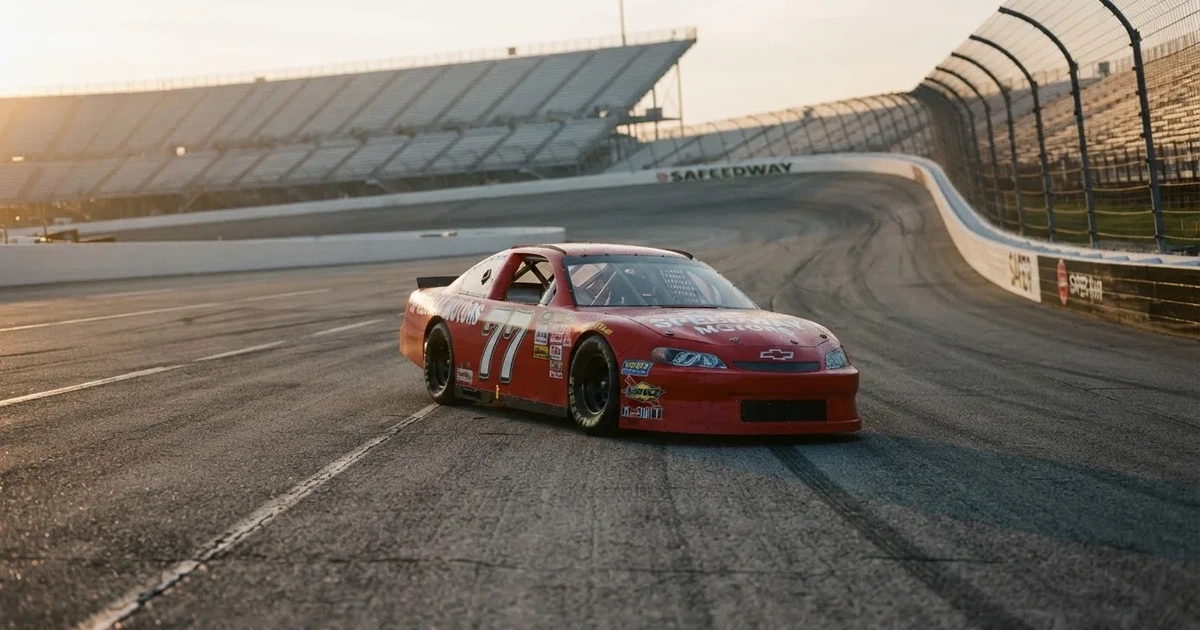
Licensed bookmakers take it. The Gambling Commission publishes the register of who holds a remote licence, and a brand named on that register is the only kind of operator that can lawfully take a bet from a customer in Great Britain. The ten brands reviewed here all sit on it. The rest of the page walks through how the market works — how a NASCAR bet is priced, where the in-running market lives, what an each-way stake looks like on oval racing, and what a “boosted odds” headline really means once the small print is read. It closes with the comparison table, the calculation that shows the cost hidden inside a 1.90 / 1.90 line, and answers to the questions the search results turn up most often.
Data current as of 27 October 2026, cross-checked against the Gambling Commission’s public register and each operator’s own published terms.
How NASCAR betting fits the British market
British betting shops have priced American motor sport for decades, but the modern shape of it is the mobile app and the race-day pre-match board. A Cup Series weekend opens with practice and qualifying on Saturday and finishes with the points race on Sunday; the Xfinity Series and the Craftsman Truck Series fill the undercard, and a bettor who wants full-weekend coverage needs a sportsbook that prices all three tiers rather than just the headline event.

The series is unusually friendly to outright betting. A Cup field is roughly thirty-six cars on most weekends, and outright markets list them all. A driver-each-way bet — an each-way wager is two equal stakes, one on the win and one on the place terms — at a third of the odds on most race cards means a long-priced runner that finishes top eight still pays out something. Outrights suit patient bankrolls more than weekend punters: a sportsbook will suspend a driver market the moment practice starts and may keep it suspended through qualifying, so the price a punter saw at breakfast is rarely the price at lights-out.
Race markets are where most of the volume sits. The menu reads much like Formula 1 or IndyCar betting: race winner, podium finish, top-six finish, head-to-head between two named drivers, group betting (a shortlist of cars priced as one runner), fastest lap, and the stage markets that NASCAR introduced in 2017 — each race is split into three stages with a winner paid out at the end of each. Some operators offer a “lead a lap” market, which pays if the backed driver is leading the race at any point; a few offer “win the race from pole” as a separate line. The deeper the menu, the more useful the price comparison is, because NASCAR stages can be priced with margins that move twenty points between operators on the same morning.
What a Gambling Commission licence actually means
A Gambling Commission licence is the only legal way to take a bet from a customer in Great Britain, online or in a shop. The licence is granted under the Gambling Act 2005; the cross-border rule was tightened by the Gambling (Licensing and Advertising) Act 2014 so that any operator whose remote facilities are used in Britain needs a Commission licence wherever it is based. A Gibraltar, Curaçao, or Maltese licence is not a substitute, no matter how prominently it appears in the footer.

The Commission’s public register lists every licence holder with the trading name, the licence-holder company, the licence number and the categories the licence covers. The right category for NASCAR is “remote general betting standard (real events)” — the standard sportsbook licence. A separate “remote general betting standard (virtual events)” category covers simulated events; a “remote betting intermediary” category covers betting exchanges; spread betting on financial products is the Financial Conduct Authority, not the Commission.
Identity verification is the first thing a punter meets at a GB-licensed site. Name, address and date of birth are checked before the first deposit can be made or a first bet placed, including with a free bet or bonus — the rule has applied since 7 May 2019. Anonymous play is not available at a licensed operator, and that is part of the protection, not a quirk of the process: it is what makes GAMSTOP, the national self-exclusion scheme, possible. GAMSTOP is a condition of every remote licence since 31 March 2020, and a self-excluded customer cannot open a new account at any GB-licensed operator for the chosen period (six months, one year, five years, or five years with auto-renewal).
The protection that sits alongside identity checks is the financial vulnerability check, in force since 30 August 2024 and operating against a £150 net-deposit threshold in a rolling thirty days since 28 February 2025. Above that level the punter is checked against public records — bankruptcy, county court judgments — for signs that gambling is no longer affordable. It is not a credit check and it is not an income check. Wider “financial risk assessments” — the affordability checks of the press coverage — have been announced in a staged plan, with no start date set.
A punt lost at an unlicensed site is unprotected. No GAMSTOP coverage, no Commission complaints route, no approved dispute-resolution body, no British consumer redress if funds are withheld, and the operator is not bound by the 10x bonus cap or the £150 vulnerability check. The Commission does not maintain a list of named “legal to use” offshore sites, because no such category exists; a brand without a GB licence is not the same as a legal alternative, and the right framing is the loss of protection, not the loss of legality. Punishment under section 33 of the 2005 Act is aimed at the operator.
Safer gambling on a NASCAR weekend
A Cup race lasts three to four hours. Stage breaks give a punter a natural stop point; in-running markets make a stop point easier to take than at a static pre-match event, because cash out is offered while the race is live and a stake can be locked in without waiting for the chequered flag. None of those features is a substitute for the basics.
Deposit limits are the first setting a new account should adjust. The Commission’s Remote Technical Standards (RTS 12) require operators to offer a gross deposit limit on a fixed time frame, and licensed operators have shipped the first phase of the requirement since 31 October 2025. A second phase, covering how the limit changes after a check, was due for 30 September 2026; whether that phase is now live depends on the operator. The point for a punter is straightforward: a deposit limit set when the account is opened is harder to talk yourself out of at hour three of a race than one set in the moment.
Time-out and self-exclusion are the next layer. A time-out is a short break — twenty-four hours, a week, a month — set inside the account. Self-exclusion is GAMSTOP and runs through the central scheme rather than the account, so the exclusion holds even if the punter opens a new account at a different brand. The minimum GAMSTOP period is six months; the longest is five years with auto-renewal, and after the minimum period the exclusion stays in place for a further seven years unless the punter asks GAMSTOP to remove it.
Help lines sit behind those tools. GamCare runs the National Gambling Helpline, GambleAware funds treatment and the National Health Service runs gambling clinics across Britain. Gamblers Anonymous runs meetings in most British cities. A punter who feels the betting has stopped being entertainment should reach for one of those rather than a self-imposed rule.
The advertising rules are worth knowing because they shape what a punter sees on screen. Since 19 January 2026, wagering requirements on bonuses are capped at 10x — a £10 bonus at 50x wagering would mean £500 of qualifying bets; under the cap, no more than £100. Mixed-product promotions, the “bet on football to get free spins” shape of offer that mixes betting and casino, are banned outright. The cap on bonus wagering is the rule that makes headline-grabbing “100% up to £100” offers cost what they appear to cost; without it, the small print would do the work.
Crypto, anonymity and the British banking system
The four search phrases that come up under “crypto and anonymity” — place bet on NASCAR using ethereum, with bitcoin, using bitcoin, with litecoin — describe something the British licensed market does not offer. The reason is not a single rule against cryptocurrency; it is the same identity-verification rule that applies to every other payment method. A GB-licensed operator verifies name, address and date of birth before the first deposit and runs source-of-funds questions at higher spend; an ethereum deposit routed through a non-custodial wallet cannot clear those checks without a regulated on-ramp, and no major GB sportsbook accepts one as a primary funding method.
The bonus cap, the £150 vulnerability check, and GAMSTOP all rest on a verified real-world identity; a genuinely pseudonymous bettor, by definition, cannot pass through them. The Commission’s register has no rule that names cryptocurrency as prohibited, and the operator-set rules are the place the rule actually lives: each bookmaker publishes its own payment-method list, and that list is what binds. A punter who holds crypto and wants to bet on NASCAR at a GB-licensed site will, in practice, convert to pounds through a regulated exchange and deposit by debit card or bank transfer.
An offshore brand that markets itself as “crypto-friendly” sits outside this frame. No GB licence means no GAMSTOP coverage, no Commission complaints route, no British redress, no bonus cap, no vulnerability check, and no guarantee that funds are returned when the punter asks. A brand that takes ethereum from a British customer without a Commission licence is providing gambling facilities in Great Britain without the licence the Act requires; the offence under section 33 is aimed at the operator, not the punter, but the loss of protection is on the punter’s side. The honest framing is the one that names what is missing, not what is allowed.
Bonuses, free bets and what they cost
The headline numbers in a NASCAR welcome offer are not the offer. A “100% up to £100” bonus is a marketing line; the wagering requirement, the minimum odds on a qualifying bet, the deadline, the cap on winnings from a free bet, and any restriction on which markets count are the offer. The 10x bonus wagering cap that came into force on 19 January 2026 puts a ceiling on the multiplier — no operator can demand more than ten times the bonus in qualifying bets — but a 10x bonus on a £100 deposit is still £1,000 of qualifying bets at minimum odds, and the price those bets are placed at determines whether the bonus is turned into withdrawable money or spent on a market the bookmaker has priced to keep.
Free bets are the commonest NASCAR promo. A free bet is a stake the operator credits to the punter; on a win, the stake is usually not paid back, only the profit. The cap on winnings from a free bet varies — Coral’s £40-in-free-bets offer expires seven days after issue; Hollywoodbets’ stake-back offer caps the free bet at £30; some operators cap free-bet winnings at a multiple of the free bet itself rather than at a money figure. A punter who sees only the headline (“bet £20, get £40”) and not the expiry, the minimum odds, or the cap is reading the wrong end of the contract.
Price boosts and enhanced odds sit in the same frame. A boosted price on Tyler Reddick to win the Daytona 500 looks like a gift; the small print usually limits the stake to a low figure (a tenner, a fiver, sometimes less) and sometimes limits the boost to new customers. Winnings boosts on accumulators work the same way — the percentage added depends on the number of legs and the boost has its own ceiling (William Hill’s Football Acca Boost, which covers other sports, caps at £10,000 per online bet and runs to 30 May 2027).
The clearest way to read a NASCAR bonus is to ask four questions: what is the wagering multiplier, what is the minimum price on a qualifying bet, what is the deadline, and is the offer paid as cash or as a free bet. The first three are the mechanics; the fourth is the type, and the type changes everything. A cash bonus withdraws after the wagering is cleared; a free bet keeps the stake on the punter’s side and returns only profit. The two are not the same offer with a different name.
The mobile app and what it actually does
A NASCAR weekend is a phone-shaped experience for most British punters. The practice sessions are on Saturday morning UK time, qualifying is on Saturday evening, and the race is live in the small hours of Monday morning — a punter watching from a sofa in Manchester is on a sportsbook app at three in the morning, not at a desktop on a Tuesday. The app has to do the work.
The first test is whether the operator prices the undercard. A Cup-only sportsbook is not enough for a season-ticket punter; the Xfinity and Craftsman Truck Series run in parallel most weekends, and a brand that prices only the Cup leaves a chunk of the calendar uncovered. The second test is whether the in-play screen is usable in landscape on a handset — NASCAR has thirty-six cars on track and the order changes constantly, so a market list that scrolls in portrait without a leaderboard is hard to read. The third is cash out: one-click, partial, and auto cash out are all standard at the bigger brands, but the depth varies, and a punter who plans to use cash out as a tool rather than a panic button needs the kind of granularity that lets them lock in a partial stake at a partial price.
Live streaming is the fourth test. bet365, William Hill, Spreadex and a handful of others stream races live; the rest do not, or stream only the headline race and not the practice and qualifying sessions. The viewer requirements vary — William Hill’s WHTV, for example, needs a funded account or a bet in the last twenty-four hours for racing — so a punter who plans to watch from inside the app needs to know the gate before the race weekend rather than during it.
Push notifications are a fifth, smaller test. A NASCAR weekend has long gaps between practice, qualifying and the race, and a notification that fires at the right moment — qualifying starts, the race is green, the stage break has ended — is more useful than a marketing message about a Premier League accumulator. The brands that take motor sport seriously tend to take notification settings seriously; the brands that do not tend to send push notifications for everything else.
In-running markets and cash out
NASCAR is a good live-betting sport because the picture changes constantly. Pit stops bunch the field, restarts bunch it again, and a driver who is twenty-eighth at the end of stage one can be eighth at the end of stage two. The in-running market at a serious sportsbook offers race winner, podium finish, top-six finish, head-to-head between two named drivers, and the lead-lap market; some operators add fastest lap, the next caution, and the next stage winner. The price moves with the track, and a price that was 12.0 at lights-out can be 3.0 by the time the second stage starts.
Cash out is the tool that lets a punter close a position before the race ends. One-click cash out settles the bet at the current price; partial cash out lets the punter lock in a portion of the stake and leave the rest running; auto cash out sets a price at which the book closes the bet automatically. The catch is that cash out is priced by the bookmaker, and the cash-out price is lower than the true price of the position at the bookmaker’s own margin. A punter who uses cash out to take profit on a winner is paying the bookmaker for the convenience; a punter who uses it to cut a loss is doing the same thing on the other side of the trade. It is a useful tool, not a free one.
In-running markets are suspended during cautions, pit stops and the stage breaks. A punter who tries to place a bet during a suspension sees the bet refused and the price greyed out; the suspension is short but it breaks any auto-cash-out rule that fires during it. The deeper operators resume the markets quickly; the thinner ones leave them suspended for longer, and that gap is worth noticing if the plan is to trade the race rather than back a driver.
Predictions, picks and the limits of a forecast
NASCAR has fewer public form lines than Formula 1 or IndyCar, but it has more than it used to. Loop Data, the NASCAR-issued advanced statistics package, splits driver performance by track type (intermediate, short track, superspeedway, road course) and by run type (long run, short run, restarts). A driver who wins at short tracks and middles out at intermediates is not the same proposition across a thirty-six-race season, and the loop data shows it. Some sportsbooks build driver form pages on top of it; some just list a number and a price.
Picking winners is not the work of a forecast. A punter who picks Tyler Reddick to win the Daytona 500 and gets it right at 12.0 has made a smart bet; a punter who picks Tyler Reddick to win every race because he won Daytona has made a different kind of mistake. The Cup Series is long enough that a hot streak at Daytona is rarely a hot streak at Martinsville, and a flat stake across the season rewards the punter who reads track types more than the punter who backs the most recent winner.
The “best bets for NASCAR today” pages that turn up in search results are a different animal. They are picks pages, written for the day’s card, and they may carry a tipster’s stake sizes, a bookmaker’s price and a one-line reason for each pick. A picks page is a record of what someone thought at a moment, and a reader who treats it as a forecast is reading forecast, not record. The way to read a picks page is the same way a punter reads a tipster in any other sport: it is one opinion, the stake sizes are not the reader’s, and the prices were the prices at the moment the page was written.
The closest thing to a real forecast on a Cup race is the qualifying speed sheet, the practice speeds and the loop data. Qualifying sets the grid and a front-row starter has a measurable advantage at certain tracks; practice speeds show the long-run pace and the tyre fall-off; loop data shows what each driver has done at this track type before. None of those is a prediction; each is an input. A punter who uses them as inputs rather than as a single answer is doing the work the search phrases are asking about.
Bet types, prices and how the margin sits inside them
A NASCAR bet works the way any sports bet works. The punter backs an outcome at a price; the bookmaker keeps a margin inside the price; the rest is paid out as winnings. The mechanics are the same whether the bet is on a Cup race, a Premier League fixture or a Champion Hurdle.
A single is one bet on one outcome. A £10 single at 6.0 returns £60 if it wins (£50 profit plus the £10 stake). A double is two selections that both have to win; the price is the product of the two prices (3.0 and 4.0 become 12.0), and a £10 double returns £120. An accumulator — an “acca” — extends the same logic to three or more legs; each leg multiplies into the next, and the price on a five-leg acca at 2.0 a leg is 32.0. A each-way bet is two equal stakes — the win and the place — so a £10 each-way is £20 total; the place terms depend on the race and the operator (a third of the odds on most NASCAR race cards covers the top three, with longer terms for bigger fields).
The price on a NASCAR outright market is set the way any market is set. The bookmaker has a view of the true probability of each outcome, builds in a margin, and publishes the prices. The margin is the difference between the sum of the implied probabilities and 100%; on a perfect market with no margin the implied probabilities would sum to exactly 100%. A £10 bet on Tyler Reddick at 6.0 implies a 16.7% chance of winning; if the sum of all the implied probabilities across the field is 112%, the bookmaker is keeping 12% of every unit bet on the market, which is the margin.
Decimal odds are the standard at GB-licensed operators. A price of 6.00 means £6 returned for every £1 staked, including the stake. Fractional odds (5/1, 11/4, evens) appear in some places and on some racing pages, and the conversion is straightforward: a/b in fractional terms becomes (a÷b)+1 in decimal, so 5/1 becomes 6.00 and 11/4 becomes 3.75. Odds shorter than evens (4/6, 1/2) are called “odds-on” and they are the prices on heavy favourites.
The margin calculation sits at the centre of how the bookmaker earns. A market priced at 1.90 / 1.90 — the kind of price a bookmaker offers on a head-to-head between two roughly equal drivers — implies a 52.6% chance on each side. Two such prices sum to 105.3%, which is a margin of 5.3%. For every £100 bet on that market across both outcomes, the bookmaker keeps £5.30 on average. That is the working of a margin, and the cost is hidden inside every price the punter sees.
The 2026 NASCAR season in front of the punter
The Cup Series schedule in 2026 runs thirty-six points-paying races, plus three non-championship events: the Cook Out Clash at Bowman Gray Stadium in February, the Duel at Daytona, which sets the Daytona 500 grid, and the NASCAR All-Star Race at North Wilkesboro in May. The points-paying season opens at Daytona in mid-February and closes at Homestead–Miami in early November, with the playoff picture decided after twenty-six races. The win-and-you’re-in rule that used to guarantee a playoff spot for any race winner is gone; the playoff starting points are staggered by regular-season standings, and the top sixteen in points at the end of the regular season advance to the bracket.
The 2026 Daytona 500 was the 68th running of the race, held on 15 February 2026 and won by Tyler Reddick. The finale, the Straight Talk Wireless 400, is at Homestead–Miami Speedway on 8 November 2026. The Xfinity Series and the Craftsman Truck Series run in parallel through most of the season, and the brands reviewed here price all three tiers to varying depths; a punter who plans to follow the trucks as well as the Cup needs a sportsbook that lists both.
Tracks matter more than form for NASCAR. A driver who wins at Martinsville (short track) and Bristol (short track) will not necessarily contend at Daytona (superspeedway) or Talladega (superspeedway). Intermediate tracks — the 1.5-milers that dominate the calendar — suit different drivers again. Road course races (Sonoma, the Roval at Charlotte) split the field further, and the Cup Series has run more road course events since 2020 than at any point in its history. A market priced by recent form alone misses the track-type split, and a punter who reads the loop data on each driver at each track type has a structural edge over one who reads the season standings.
The cost of a price: working out the margin
The headline price on a NASCAR market hides a margin. A bookmaker that prices a head-to-head between two equal drivers at 1.90 / 1.90 is offering implied probabilities of 52.6% on each side, which sum to 105.3%; the extra 5.3% is the margin. For every £100 bet on that market across both outcomes, the bookmaker keeps £5.30 on average. That is what a price costs the punter in the long run.
The arithmetic works the same way on a fuller market. A twelve-driver race winner market priced across the field will have implied probabilities that sum to perhaps 108% to 115%, which is a margin of 8% to 15%. The Cup Series market is more compressed than the head-to-head because the bookmaker has a longer list of drivers to price and a thinner view of the tail of the field; the deeper the market, the more the margin can vary.
The 5.3% margin on a 1.90 / 1.90 line is the cleanest illustration of how a margin sits inside a price. A punter betting £10 on each side of that market across many such markets will, on average, lose £1.06 per £20 staked — which is £5.30 per £100. The bookmaker earns the same £5.30 regardless of which side wins. The market itself is fair in the sense that each price reflects a probability; the punter loses because the sum of those probabilities is greater than 100%.
State the result as a band: a margin of 5% to 15% is the typical range for a NASCAR race market at a GB-licensed sportsbook, with the head-to-head at the bottom of the band and the deep-field race winner market at the top. The 5.3% on a 1.90 / 1.90 line is the floor for a market the bookmaker has priced tightly; anything above it costs the punter more per unit bet.
Comparing the ten bookmakers
The table below covers the ten brands reviewed in this guide. The licence number is the Gambling Commission’s remote licence number; the licence holder is the company that holds the licence on the register; the third column is what each operator’s own terms state on the subject of bonuses, free bets and welcome offers. The order is the order the brands appear in the operator reviews that follow the table, not a ranking of any kind. A place in the comparison is not a licence and a licence is not a ranking; it is the list of brands the Commission’s public register confirms as holding a remote general betting standard (real events) licence for Great Britain.
| Brand | Gambling Commission remote licence number and licence holder | What the operator’s own terms state |
|---|---|---|
| BetVictor | 039576-R-319370-028 — BV Gaming Limited | Best Odds Guaranteed on UK and Irish horse racing, enhanced live race streaming, BetFinder and Smart Stats form tools |
| Hollywoodbets | 053028-R-330019-013 — Hollywoodbets International UK Limited | Sports welcome offer: stake back as a free bet of up to £30 on a first qualifying losing accumulator (3+ legs, odds of 4/1 or greater, settled within 7 days) |
| LiveScore Bet | 056859-R-332720-005 — LiveScore Betting and Gaming (Gibraltar) Limited | Bet Builder with up to 10 selections across match result, both teams to score, corners, total goals, player scoring and card markets |
| Spreadex | 008835-R-104580-022 — Spreadex Limited | Fixed-odds and spread betting in one app, one-click/auto/partial cash out, Bet Builder across fixed odds or spreads, live streaming of UK and Irish horse racing, greyhounds, tennis, NFL and selected football; spread betting losses can exceed the deposit |
| bet365 | 055148-R-331498-002 — Hillside (UK Sports) ENC | Bet Builder+ on markets from one event pre-match and in-play, Super Boosts, Winnings Boosts on Bet Builders and selected singles, daily Bet Boosts, in-play betting, live streaming worldwide, Bet Track and Match Live, the most downloaded sports betting app in the UK, official global betting partner of the UEFA Champions League |
| NetBet | 039170-R-319343-032 — Netbet Enterprises Limited | Daily Boosts, Profit Boosts and free bet offers, Bet Builder with instant dynamic odds, sports stats for major leagues |
| QuinnBet | 061011-R-335683-004 — QuinnBet (Gibraltar) Limited | Best Odds Guaranteed on UK and Irish horse racing from 10:00am daily on singles, multiples and system bets, capped at £150 per customer per race |
| Kalooki Sportsbook | 057730-R-333396-005 — Kalooki Sportsbook Limited | Operated by Kalooki Sports Book Ltd (company number 12938274), GAMSTOP member, identity verified before first deposit |
| Coral | 054743-R-330863-014 — LC International Limited | Sports welcome offer of £40 in free bets when betting £20 (minimum odds 2.0 / 1/1), free bets issued within 7 days and expiring 7 days after issue, new GB customers only |
| 888sport | 039028-R-319297-014 — 888 UK Limited | Pre-match and in-play betting, Cash Out, Bet Builder, racing streams, BetFinder form tools, live bet feed, daily boosted odds |
A column that repeats one figure across most rows would tell the punter nothing; the licence number is the one fact that has to be on the table for every brand because the Commission’s register is the test of whether the brand is licensed at all, and the licence holder is the company behind the trading name. The third column is what each operator’s own terms say about the welcome offer or the main product feature, drawn from the operator’s own published pages.
The bookmakers, one by one
BetVictor — Best Odds Guaranteed, racing form and Smart Stats
BetVictor’s identity at the betting counter is racing. Best Odds Guaranteed on UK and Irish horse racing is the headline, and behind it sits a stack of racing-specific tools — enhanced live race streaming, BetFinder for finding racing bets, and Smart Stats as a form aid. The racing focus bleeds into the NASCAR offering: a brand that prices every meeting at every track and lists the Xfinity and Craftsman Truck Series alongside the Cup has the deeper menu a season-ticket punter wants, and the form aids that work for horse racing have a NASCAR equivalent in the loop data pages.
The licence is the standard remote general betting standard (real events) under BV Gaming Limited; the licence number is the one in the table. The sportsbook is one of the longer-established brands on the British market, and the racing depth is the reason a NASCAR punter who also bets on horse racing tends to keep the account open.
For a NASCAR punter who values racing-style form tools, BetVictor is the closer fit. Those seeking a single app that covers racing, football and the full NASCAR season without switching brands will find it competitive alongside the major platforms.
Hollywoodbets — South African roots, a stake-back welcome
Hollywoodbets is a South African sportsbook that built a UK presence, and the welcome offer carries the shape of its home market. New players who deposit £10 or more by card get their stake back as a free bet of up to £30 on their first qualifying losing accumulator — three legs or more, odds of 4/1 or greater, settled within seven days, one free bet per customer. The structure rewards an acca that loses narrowly and is built around the sports menu a British punter already uses.
The licence is held by Hollywoodbets International UK Limited, and the operator covers the main US sports, football and racing alongside a NASCAR offering that lists the Cup, Xfinity and Trucks. The brand has less name recognition in Britain than the bigger names but holds the same GB licence and offers the same verification and safer-gambling tools.
The welcome offer is the headline; the question is whether the rest of the sportsbook supports the kind of weekly NASCAR betting the offer is designed to introduce. For a first-time customer who plans to bet on NASCAR with an acca, the offer is well matched. For a season-ticket punter who needs in-running markets and live streaming on every race, the rest of the menu needs a closer look.
LiveScore Bet — Bet Builder across the main markets
LiveScore Bet grew out of the LiveScore scores-and-results app, and the betting product sits on top of that base. The Bet Builder allows up to ten selections and covers match result, both teams to score, corners, total goals, player scoring and card markets. The NASCAR offering builds on the same single-app structure, and a punter who already uses LiveScore for live scores has a shorter path to a bet.
The licence is held by LiveScore Betting and Gaming (Gibraltar) Limited under the standard remote general betting standard (real events) category. The brand is one of the more recent entrants to the British market and has grown quickly behind the LiveScore brand recognition.
For a punter who wants a Bet Builder that covers the main markets at depth, LiveScore Bet is the closer fit. For a NASCAR punter who needs the racing-specific form tools, the racing-specific welcome offer or the racing-specific live stream, the brand’s strengths are on the football side rather than the motor sport side.
Spreadex — fixed odds and spread betting in one app
Spreadex is the only brand in the comparison that combines fixed-odds sports betting with spread betting in a single app. One-click, auto and partial cash out, Bet Builder across fixed odds or spreads, and live streaming of UK and Irish horse racing, greyhounds, tennis, NFL and selected football sit on top of that base. The NASCAR offering is part of the fixed-odds menu and the in-running markets work the same way.
The licence is held by Spreadex Limited and is split between the Gambling Commission for fixed-odds betting and the Financial Conduct Authority for spread betting on financial products. The FCA side is the regulator on the spread-betting product, and the brand’s own terms state that spread-betting losses can exceed the deposit — a risk that does not exist on the fixed-odds side.
For a punter who wants spread betting alongside fixed odds in one app, Spreadex is the only option on this list. For a NASCAR punter who wants the racing-form product side of things and is not interested in spread betting, the racing depth at other brands is more of the focus.
bet365 — the in-play product, the live stream and the Bet Builder
bet365 is the biggest name on the list by app downloads and the brand most punters meet first. Bet Builder+ combines markets from one event into a single bet and works pre-match and in-play; Super Boosts, Winnings Boosts on Bet Builders and selected singles, and daily Bet Boosts sit on top of that. In-play betting, live streaming worldwide, Bet Track and Match Live make the in-running product the deepest of any GB-licensed operator, and a NASCAR punter who plans to bet in-running has the live stream and the markets in one app.
The brand is the official global betting partner of the UEFA Champions League, and the marketing follows that — football leads the product, with racing, tennis and US sports alongside. The NASCAR offering lists the full Cup Series calendar with the Xfinity and Trucks underneath, and the in-running product carries the same depth as the football side.
bet365 is the closer fit for those prioritizing the deepest in-running product, live streams and a versatile Bet Builder. If you prefer a smaller brand, a niche racing offer, or a site that avoids football-heavy layouts, there are plenty of specialist alternatives.
NetBet — boosts, free bet offers and a Bet Builder
NetBet is the brand that leads with its promotional product. Daily Boosts, Profit Boosts and free bet offers sit at the top of the sportsbook, and the Bet Builder comes with instant dynamic odds that update as selections are added. Sports stats for major leagues sit behind the markets. The NASCAR offering is part of the wider US sports menu and prices the Cup and the Xfinity series.
The licence is held by Netbet Enterprises Limited, and the brand is a longer-established European operator with a UK-licensed arm. The promotional density is the reason the brand has a regular customer base; the brand does not have the racing depth of some of the bigger names.
NetBet is the closer fit for players who prefer regular boosts and free bet offers over a one-off welcome bonus. Players needing a racing-specific form tool or a unified app for the full NASCAR calendar with deep in-running markets may find the larger sites have a broader selection.
QuinnBet — Best Odds Guaranteed with a £150 cap
QuinnBet is an Irish-rooted sportsbook with a UK-licensed product. Best Odds Guaranteed applies to UK and Irish horse racing from 10:00am daily on singles, multiples and system bets, with a maximum benefit of £150 per customer per race. The cap is the headline number a punter needs to know: BOG pays out at the starting price if the starting price is higher than the price taken, and the £150 cap limits how much the punter can extract from a long-priced winner.
The licence is held by QuinnBet (Gibraltar) Limited and the racing focus is the brand’s identity. The NASCAR offering sits within the wider sports menu and lists the Cup Series alongside the Xfinity and Trucks.
For a racing punter who wants BOG with a published cap, QuinnBet is the closer fit — the cap is what makes the offer honest. Those requiring a Bet Builder with deep markets or the most comprehensive in-running product should note the racing-specific focus here.
Kalooki Sportsbook — a smaller brand with the full licence
Kalooki Sportsbook is a smaller brand on the list. The operator is Kalooki Sports Book Ltd (company number 12938274), licensed by the Gambling Commission under account number 57730 and a GAMSTOP member. The site is built around the standard sportsbook menu with NASCAR as part of the wider offering.
A smaller brand has trade-offs. The welcome offer may be less aggressive than the bigger names, the in-running product may be thinner, and the live stream coverage is unlikely to match bet365 or William Hill. What the licence gives the punter is the same set of protections — GAMSTOP, identity verification, the 10x bonus cap, the safer-gambling tools — at a smaller brand.
Kalooki Sportsbook is a fit for those who want to bet with a smaller, UK-rooted sportsbook and are happy with a thinner menu. If you need the most advanced live markets or the racing-specific tools, the bigger players remain the primary recommendation.
Coral — £40 in free bets when betting £20
Coral is one of the longest-established British bookmakers. The sports welcome offer is “Get £40 in free bets when you bet £20” — a deposit and sports bet of £20 or more at minimum odds of 2.0 (1/1), with the free bets issued within seven days and expiring seven days after issue, for new GB customers who opt in. The licence is held by LC International Limited, which also runs Ladbrokes; the two brands share a licence-holder and run as sister sites, not as independent operators.
Coral covers NASCAR within a broader sports menu that leads with football and racing. The in-running product is solid, the live stream covers racing and selected other sports, and the welcome offer is one of the most straightforward in the comparison.
Coral is a closer fit for a punter who wants a well-established British brand with a clean welcome offer. If you require racing-specific form tools or industry-leading live market depth, the platform may feel lighter compared to a giant.
888sport — Bet Builder, racing streams and boosted odds
888sport rounds out the list. Pre-match and in-play betting, Cash Out, Bet Builder, racing streams, BetFinder form tools, a live bet feed and daily boosted odds make up the product, and the licence is held by 888 UK Limited under the standard remote general betting standard (real events) category. The brand is one of the longer-established online sportsbooks and has a broad product across football, racing, tennis and US sports.
The NASCAR offering sits within the wider US sports menu and lists the Cup and Xfinity series alongside other US motorsport. The racing streams are horse racing and greyhound racing rather than NASCAR, and a NASCAR punter looking for live race coverage needs to check what is on the streaming page at the time of the race.
For a punter who wants a broad online sportsbook with a Bet Builder, Cash Out and boosted odds as a regular feature, 888sport is a fit. For a NASCAR punter who needs live stream coverage of every race, the bigger names offer more.
What the comparison shows
The ten brands split into three rough groups. The first is the racing-led brands — BetVictor, QuinnBet, Coral — where the racing identity carries across to NASCAR, and the welcome offers and form aids are built around horse racing as the main product. The second is the in-play-led brands — bet365, Spreadex, 888sport — where the in-running product, the live stream and the cash-out features carry the bulk of the depth. The third is the promo-led brands — Hollywoodbets, NetBet, LiveScore Bet, Kalooki Sportsbook — where the welcome offer or the daily boosts are the headline and the rest of the menu is built to a working rather than a best-in-class standard.
A punter who bets on NASCAR once a season has the easiest job. Any GB-licensed brand on the register will price the Daytona 500 and the championship finale, and the welcome bonus is the main difference between them. A punter who bets every weekend needs the in-running product at one of the bigger names and a sportsbook that prices the Xfinity and Trucks underneath the Cup. A punter who wants a Bet Builder with up to ten selections has a shortlist of brands where the feature is deepest.
The single biggest variable between brands is what each operator’s own terms state on the subject of NASCAR specifically. The Commission’s register is uniform — every brand on the list holds the same licence category — and the safer-gambling tools are uniform — GAMSTOP, deposit limits, time-out, identity verification. The welcome offer, the in-running depth, the live stream and the Bet Builder granularity are where brands differ, and the difference is what a punter compares.
How to read a NASCAR price
A price on a NASCAR race is the same shape as a price on any other sport. The bookmaker has a view of the probability of each outcome, builds in a margin, and publishes the price. The punter backs an outcome at the price; the bookmaker keeps a margin inside the price; the rest is paid out as winnings.
A £10 single on Tyler Reddick at 6.00 returns £60 if he wins (£50 profit plus the £10 stake). The 6.00 implies a 16.7% chance of winning. Across the whole field, the sum of the implied probabilities is greater than 100% — that is the margin. On a tight Cup race winner market the sum is somewhere between 108% and 115%; on a head-to-head between two roughly equal drivers the sum is closer to 105%.
A £10 each-way bet on a Cup driver at 6.00 is a £20 total stake (£10 on the win and £10 on the place). The win pays at 6.00; the place pays at a third of the odds on most race cards (so 6.00 becomes 3.00) if the driver finishes in the place positions (top three on most cards, longer on bigger fields). A punter who backs a long-priced runner each-way is paying for two chances to win, and the place terms are the part of the bet that rewards the long shot.
The margin is what the punter pays to bet. A punter who places £100 in single bets on a market with a 10% margin will, on average, lose £10 across all outcomes. That is the cost of the bet, and it is the same regardless of which side wins. The price a punter sees is not the price they pay; the price they pay is the price minus the margin.
A few practical notes for the season
Practice sessions and qualifying move the outright market. A driver who tops practice is usually shortened; a driver who crashes in qualifying is lengthened or suspended. Outright markets are commonly suspended from the moment qualifying starts until the grid is set, and the price a punter saw at breakfast is rarely the price at lights-out. A punter who plans to back an outright should plan to back before qualifying rather than after.
The Xfinity and Craftsman Truck Series sit underneath the Cup on most sportsbooks, and the menus vary. A punter who wants to bet the trucks every weekend needs a sportsbook that lists them on the menu rather than as a sub-section of the Cup page; the brands that price the trucks as their own line tend to have the deeper menus across all three tiers.
In-running markets are most useful at the superspeedways. Daytona and Talladega produce pack racing at the end of each run, and a multi-car crash can move the race winner market from 50.0 to 8.0 in a single lap. The in-running market at a serious sportsbook reflects the change quickly; the in-running market at a thinner sportsbook suspends through the crash and resumes at a worse price.
Frequently asked questions
How does a bet on a NASCAR race actually work?
A punter backs a driver or an outcome at a price; the bookmaker keeps a margin inside the price; the rest is paid out as winnings if the bet wins. A single is one bet on one outcome; an each-way bet is two equal stakes, one on the win and one on the place terms; an accumulator is several selections that all have to win, with the prices multiplied into one. The decimal odds at a GB-licensed sportsbook show the total return per £1 staked, so 6.00 pays £60 on a £10 single.
Where can a British punter bet on NASCAR?
At any operator whose name appears on the Gambling Commission’s public register under the remote general betting standard (real events) category. The register can be searched by business name, trading name, domain or licence number and is the whole test of who holds a licence. None of the brands in the comparison above are “the only” licensed option; the register lists far more, and a brand that holds the right licence is the only kind that lawfully takes a bet from a customer in Great Britain.
What are the typical NASCAR race markets at a GB sportsbook?
Race winner, podium finish, top-six finish, head-to-head between two named drivers, group betting, fastest lap, the three stage winners, and sometimes “lead a lap” or “win from pole” as separate lines. The depth varies by operator: a brand that lists the Xfinity and Craftsman Truck Series as well as the Cup has the deeper menu, and a brand that prices all three tiers has more to compare across.
How can a punter check that a bookmaker holds a Gambling Commission licence?
Search the Commission’s public register by business name, trading name, domain or licence number. The register entry lists the licence-holder company, the licence number and the categories the licence covers. The right category for NASCAR is remote general betting standard (real events). A brand without an entry on the register is not licensed to take bets from customers in Great Britain, and a brand that holds a different category (for example virtual events only) is not licensed for real-event betting.
How is the return on a bet worked out from the stake and the odds?
The return is the stake multiplied by the decimal odds. A £10 stake at 6.00 returns £60, which is £50 of profit plus the £10 stake back. A combination bet multiplies the leg prices into one, so a double at 3.00 and 4.00 becomes 12.00, and a £10 double returns £120. The net profit is the return minus the stake, and it is the figure a punter sees in the betting slip.
What is the bookmaker’s margin and how does it sit inside the odds?
The margin is the difference between the sum of the implied probabilities across all outcomes and 100%. A two-way market priced at 1.90 / 1.90 implies 52.6% on each side, which sums to 105.3%; the extra 5.3% is the margin. For every £100 bet on that market across both outcomes, the bookmaker keeps £5.30 on average. The margin is what the bookmaker earns on the market, and the punter pays it on every bet placed.
Combat & motorsport – Best Betting Tips
Content created by the «Best Betting Tips» team
