
Online Horse Racing Betting in Great Britain for 2026
 Available in US
Ten licensed bookmakers, four kinds of odds, one market that rewards a steady hand more than a clever one. This page walks a UK punter through the choices that actually matter before a £10 stake goes on a horse: who holds a Gambling Commission licence, what Best Odds Guaranteed really pays for, how an each-way bet doubles the stake, and where the margin sits in any price you see.
Currency stamp. Current as of 27 October 2026; operator licence claims verified against the Gambling Commission’s public register for Great Britain.
Horse Racing and the Online Bookmaker — How the Market Fits Together
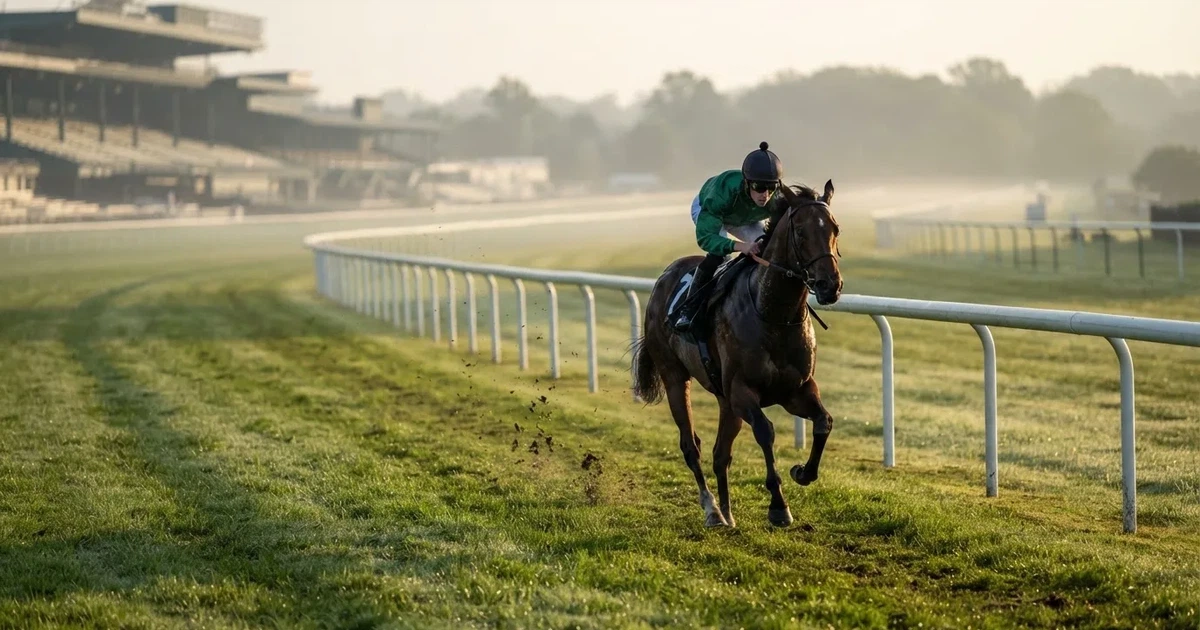
Horse racing sits at the centre of British betting partly out of habit and partly out of structure. The sport offers more market variety than almost any other — win and each-way, forecasts and tricasts, accumulators that combine four races or fourteen — and the volume of meetings on any given afternoon gives a bookmaker enough events to keep a margin-building machine running. Flat racing runs between two points on a straight or oval track; jump racing in Britain and Ireland is what is called National Hunt racing, comprising hurdling and steeplechasing. Flat distances range from about 440 yards (400 m) past four miles (6.4 km), with five to twelve furlongs (1.0 to 2.4 km) the most common race lengths on the domestic calendar.
A handicap gives each horse a different weight to carry based on its assessed ability, which is meant to equalise the contest; a conditions race asks horses to carry similar weights with allowances for younger horses and fillies. The British classics that shape a flat season — the 2000 Guineas, the Derby and the St Leger — make up the domestic Triple Crown. The way British racing structures its races is part of why the betting menu looks the way it does: more runners per race means more place-paying positions, which means each-way bets are worth more.
The structure of online betting on it follows from three things. First, every bookmaker offering odds on British racing publishes prices on the same core set of markets — win, each-way, forecast — and the differences are in the menu beyond those (ante-post markets weeks ahead, enhanced place terms on big fields, live in-running) rather than in the spine. Second, liquidity is split between fixed-odds bookmakers and betting exchanges, where punters bet against each other rather than against a house margin; that split changes what “best odds” means in a market where one side carries no built-in edge. Third, customer protection sits on top of all of it: in Great Britain a bookmaker serving customers here needs a Gambling Commission licence no matter where it is based, and the Commission’s public register is the whole test of who holds one.
How Great Britain Regulates a Horse Racing Bet
The Gambling Commission licenses the whole commercial market under the Gambling Act 2005, which covers England, Scotland and Wales; Northern Ireland runs under older law and a GB licence does not extend to it. Since the Gambling (Licensing and Advertising) Act 2014, an operator whose remote facilities are used in Great Britain needs a Commission licence wherever it is incorporated — sections 33 and 36 of the 2005 Act as amended — so a Curaçao, Maltese or Gibraltar licence is not a substitute when punters sit in Manchester or Glasgow. The Commission is sponsored by the Department for Culture, Media and Sport; the licensing categories that matter for an online racing bookmaker are remote general betting standard (real events) for fixed-odds racing, remote pool betting for tote-style products, and remote betting intermediary for exchanges.

Identity verification under the Commission’s rules (LCCP and Remote Technical Standards) means a bookmaker checks name, address and date of birth before the first deposit or bet, including when a free bet or bonus is involved. The minimum age is 18. Credit cards are banned for any gambling transaction in Great Britain since 14 April 2020 — the ban covers credit-card-funded payments through an e-wallet, not debit cards. A financial vulnerability check (LCCP 3.4.4, in force since 30 August 2024) runs when a customer’s net deposits cross £150 in a rolling 30 days (live since 28 February 2025); it is a public-record check such as bankruptcy or county court judgments, not an income or credit-reference check. Heavier “affordability” financial risk assessments were announced on 7 July 2026 in a staged plan with no start date set, and should be written as announced rather than in force.
What may be bet on is not on a statutory list: an operator licensed for a category offers markets under its own rules, the LCCP and its licence conditions. There is no statutory cap on stakes — maximums and any stake restrictions are set by the bookmaker itself. The Commission does not license advertising; that runs through the CAP Code (non-broadcast) and BCAP Code (broadcast), enforced by the ASA, alongside the LCCP’s marketing conditions.
Bonuses are governed by promotion rules in force since 19 January 2026: wagering requirements on bonuses are capped at 10x — a £10 bonus with a 50x requirement would need £500 of qualifying bets, well over the cap — and mixed-product promotions that demand play across two or more product types (bet on football to unlock free spins, for instance) are banned. Whether the cap applies to free bets with no wagering condition and any ceiling on the money value of a bonus are not established.
What a Great Britain licence buys the bettor — and what it does not
A Commission-licensed bookmaker is bound by customer-protection duties a brand sitting outside the regime is not: identity and age checks before play, GAMSTOP coverage for self-exclusion, the £150 financial vulnerability check, the 10x bonus cap, dispute resolution routes, and requirements to keep customer funds separate. A bookmaker outside that regime offers none of those protections and adds a real risk that funds are withheld without a British route to complain — the framing that fits is loss of protection, not “legal to use”.
The Commission’s enforcement against unlicensed operators targeting Britain is disruption, not blocking: cease-and-desist notices, search-engine referrals, work with registrars, hosts and payment providers, and court-order DNS blocking powers that have been granted or are about to be granted. Whichever shape that takes, the bettor sitting in Britain faces a different set of choices depending on which side of the licence line the brand sits.
Looking After the Punter — Safeguards Inside a Licensed Bookmaker
GAMSTOP is the national multi-operator online self-exclusion scheme. For an online operator it has been a mandatory licence condition since 31 March 2020, so every brand in the set covered below takes part. The exclusion periods are six months, one year, five years, or five years with auto-renewal; after the minimum period the exclusion stays in place for a further seven years unless the customer asks GAMSTOP to remove it. GAMSTOP covers online sites and apps — betting shops run a separate retail scheme.
Deposit limits are a customer’s tool and a regulator’s framework. The LCCP requires operators to offer a gross deposit limit on a fixed time frame; the first changes have applied since 31 October 2025, a second phase was postponed to 30 September 2026, and whether that phase is live is not established here. There is no state-set ceiling on deposits or losses — limits are the customer’s own choice, supported by the operator’s tooling.
Help is available whether a customer uses the licensed market or not. GamCare runs the National Gambling Helpline, GambleAware funds treatment and information, the NHS runs gambling clinics across the regions, and Gamblers Anonymous runs mutual-support meetings. These are not commercial products and they are not part of a bookmaker’s offer — they sit alongside it.
Crypto, Anonymous Play and the Reality of British Identity Checks
British identity rules cut hard across the “bet with crypto, no questions” pitch. Before a first deposit or bet a Commission-licensed bookmaker checks name, address and date of birth; a free bet or bonus is not exempt. There is no anonymous play on a licensed site, and source-of-funds questions at higher spend are normal under the money-laundering rules. A British rule that named accounts must use a UK payment method, any state list of permitted payment methods, and any rule for or against cryptocurrency at licensed operators are not established — payments are described qualitatively and from each operator’s own terms.
Crypto is not banned across the regulated market, but neither is it common at the cashier of a Commission-licensed bookmaker in Great Britain. Most licensed brands stick to debit cards and bank-based payments. Cryptocurrency deposits at an unlicensed site, by contrast, give the customer no British route to dispute a withheld payout and no GAMSTOP coverage. The way the choice should be framed: licensed = checks, limits, GAMSTOP, the 10x bonus cap — and identity before the first bet; unlicensed = none of those, and the loss of funds is a real outcome nobody downplays.
Bonuses, Free Bets and What an Offer Is Actually Worth
A bonus is not a gift; it is a turnover contract dressed up as one. The headline number hides the conditions that decide what the bettor actually walks away with, and the audit on those conditions is the bettor’s real edge. Three construction types cover most of what British racing customers see at the cashier.
A deposit-matched bonus gives back a percentage of the first deposit as bonus funds, which then need to be turned over a number of times at a minimum price before any of it becomes withdrawable cash. The 10x cap on wagering requirements that took effect on 19 January 2026 is the headline rule — a £10 bonus that used to demand £500 of qualifying bets at 50x would not be legal in that form now — and the cap puts a ceiling on how punishing a bonus can be.
A free bet works differently. The stake is usually not returned with a win: a £10 free bet at decimal odds 6.00 (5/1 fractional) returns £50 of profit, not £60 — the £10 stake is forfeit. The offer’s real value is the expected profit before any rollover, multiplied by the chance the bet wins, and reduced again by the market’s margin, which the next section takes apart. Free bets tied to a minimum-price requirement, an expiry date, or a payment-method restriction add friction that often matters more than the headline.
An each-way free bet is rarer and worth a second look. A bookmaker that offers an each-way free bet is offering two bets that the stake price has to cover, so the headline £10 each-way free bet is really a £20 stake in two bets. The place part pays at a fraction of the win odds — a fraction set by the place terms, which themselves vary by the number of runners in the race — and the win part pays in full only if the horse wins. The arithmetic often comes out close to a straight win free bet, but the headline figure is doubled, which is why it reads as a bigger offer than it is.
Price boosts are a third shape, and they sit closer to a margin concession than to a bonus. Super Boosts on singles, Winnings Boosts on bet builders, and Best Odds Guaranteed on UK and Irish horse racing are how a bookmaker lifts its headline price in a specific market. BOG pays out at the higher of the price taken and the starting price from 8 AM on the day of the race in Britain, on single and multiple bets, and does not apply to ante-post, tote or pari-mutuel bets. The boost only matters if the price taken would otherwise have been beaten; in low-liquidity markets the price taken often is the highest, which limits how often the boost pays.
A workable mental model for any of these is to multiply the headline by a fraction that reflects the conditions. A heavy bonus with a steep requirement and a short expiry might be worth a fifth of its face. A free bet with no rollover on a competitive market is worth most of its face. The point is not to compute the offer to the penny — it is to read the terms and notice the cost before claiming.
App, Site and Touchscreen — How the Racing Menu Sits in a Phone
The British racing market has shifted decisively to mobile. The horse racing menu on a phone is the menu — the desktop page is the secondary surface — and what the app does well matters more than what the site once did well. A bookmaker with a thin app loses racing customers to one with form, results, prices and cash out in two taps.
The racing-specific load is heavier than for most sports. Form, going, trainer and jockey records, draw bias, pace maps and live prices on every runner all sit on a small screen, and they have to fit alongside the bet slip. Best odds guaranteed prompts, each-way place terms and non-runner updates (the Rule 4 deduction when a horse pulls out) all need to be visible without a customer going hunting. The apps that win on racing usually win on these surfaces: form alongside prices, live streaming of the meeting in the same window, and a fast cash out before the race goes off.
Live streaming is the obvious value-add at the racing menu. Several licensed bookmakers stream UK and Irish racing to customers with a funded account or a recent bet — it is a perk that comes with the bookmaker’s product, not a paid subscription. Cash out on a racing bet closes the position before the result: the price offered is the bookmaker’s own quote, so it carries margin, but it removes the wait and turns a multi-leg position into a single decision. A racing customer who lays a horse early and watches the price shorten into the race uses cash out as a tool for cutting losses, not for catching up.
Push notifications and odds alerts matter more on racing than in most sports because the prices change quickly once a race goes in-play. Apps that fire alerts on price moves, non-runner updates and BOG triggers earn the screen space they get. The same notification infrastructure that wakes a phone at 13:55 for a 14:00 race is also where marketing lives, which is the other side of the same picture.
Live Betting, In-Play and Cash Out on a Race
In-play betting on a horse race is a different product from pre-race betting. The race is short — two or three minutes for a flat sprint, longer for a staying race — and the market does not pause. A bookmaker that offers in-play on a race takes bets throughout the running, prices shorten on the leader and lengthen on the rest, and the margin in those prices is wider than in the pre-race book because the bookmaker is pricing a moving picture, not a static one.
Cash out turns a live position into a closed one. The bookmaker quotes a price to settle the bet before the result, carries its own margin in that price, and the customer either takes it or waits for the result. On racing the cash-out price is most useful when the horse has run well but is not winning, and when the leader is pulling clear so a back-to-lay swing can be made. Bookmakers that make cash out fast and without frequent suspensions earn the racing customer’s trust in a way that slowly-applied suspensions does not.
Live streaming pairs with in-play the way it pairs with BOG. Watching a race while the screen shows the price moving and lets the customer place or cash out from the same view is the racing product’s centre of gravity on a phone. A bookmaker that does all three — fast in-play prices, live streaming of the meeting, working cash out — earns its place on a racing shortlist in a way that a bigger welcome bonus does not.
Tips, Tipsters and the Strategy Pages — What They Sell and What They Don’t
Tipsters sell narrative. A tip sheet offers a horse, a price, a confidence word (“nap”, “next best”), and a running tally of winners and losers that frames the product as a track record. The framing is the product: the running tally is cherry-picked, the sample size is usually too small to mean anything, and the price on offer when a tipster’s selection goes to market is rarely the price the tipster took. A tipster whose nap wins at 5/1 after the tip sheet was published at 10/1 has not produced a 5/1 winner; the bettor who took the published price has produced a 10/1 winner.
What a tipster model can show, honestly, is a comparison between tipsters on raw numbers: strike rate, average winning price, longest losing run, return on stakes at level stakes. Those numbers tell a story the tipster’s own column does not — most tipsters lose at level stakes, the survivors are statistical outliers whose edge does not persist, and the price in a tipster sheet is the price that has already gone. Predicting a winner is a vanity; making a market is the work.
Bankroll management is the strategy worth taking seriously. Staking a flat percentage of a defined bank on each bet, rather than varying the stake with confidence, smooths variance in a way that varying stakes does not. Setting a daily, weekly or monthly loss limit and stopping when the limit is hit is the practical version of what every responsible-gambling tool exists to support. A racing customer who wants a strategy that lasts treats the bank like an investment, not a stake.
Systems do not beat a bookmaker’s margin. A staking plan that increases the stake after a loss (a martingale) runs out of money when the losing run extends. A staking plan that increases the stake after a win compounds gains but does nothing about the underlying edge, which is the bookmaker’s. The arithmetic that beats a flat-stake punters’ strike rate only beats it in a sample; over time the margin takes its share, and the system ends where it began.
Bet Types, Odds and What a Price Actually Means
A horse racing bet comes in a menu of shapes. The win bet is the simplest: pick the horse, take the price, win if it finishes first. The each-way bet is two bets of equal stake, one on the win and one on the place, so the stake is doubled — a £5 each-way bet costs £10. The place part pays out at a fraction of the win odds set by the place terms, which vary by race and operator. UK each-way place terms make the common cases:
- handicaps with 16 or more runners: 1/4 odds for 4 places
- 12 to 15 runners: 1/4 odds for 3 places
- 8 to 11 runners in other races: 1/5 odds for 3 places
- 5 to 7 runners: 1/4 odds for 2 places
- fewer than 5 runners: win only, no place part
The place terms decide what an each-way bet is worth. A £10 each-way bet on a 10/1 horse at 1/4 place terms with 3 places costs £20, returns £110 on the win part and £35 on the place part — £145 in total if the horse wins, and £35 if it only places. The arithmetic is the same on any race once the place terms are known, which is why the place terms deserve the same attention as the price itself.
Forecasts and tricasts name the first two or three in order, and they pay from a pool of stakes rather than at a fixed price. Returns are calculated after the race and settled into accounts shortly after, and a stake that names two of the first three in the right order in a tricast pays more than a stake that names them in a different order. An each-way bet on a forecast is the same doubling trick: two forecasts, one in order and one in any order, with the stake doubled.
Multi-leg bets chain selections into one bet whose odds multiply. A double of two 5/1 shots is a 25/1 double, a treble of three is 125/1, and the odds stack so a 14-fold accumulator on longshots pays at the kind of price that turns £1 into a small fortune. The bookmaker’s margin compounds across the legs: a 5% margin per leg and four legs leaves 19% margin in the overall price, which is why most accumulators settle at a price less generous than the same selections placed individually. The acca insurance an operator offers — a stake returned if one leg lets the bet down — is a marketing line that has a price of its own.
A bet builder combines markets from one event into a single bet, pre-match or in-play on some bookmakers. The odds are combined and a margin is taken across the whole leg combination. A bet builder on a horse race can chain the winner, the winning distance, the winning margin and the order of the first two; the resulting market is the bookmaker’s own construction, not an exchange-style combination, and the margin in it is the bookmaker’s to set.
How the margin sits in a decimal price
The bookmaker’s margin is the cut a book keeps from every unit bet on a market — what is sometimes called the overround. In a two-way market with decimal odds 1.90 (9/10) and 1.90 (9/10) on either side, the implied probabilities from the prices are 1/1.90 on each side, which comes to about 0.5263 + 0.5263 = 1.0526. The total of 1.0526 means the bookmaker’s margin is the difference from 1.0000, or about 5.3% — a typical margin for a well-priced horse race. Margin sits inside the price the bettor sees, on every market, and the higher the margin the lower the long-run return. A 2% margin on a market is exceptional; 5% is competitive; 8% on a major market is high. Most racing margins sit somewhere between, with the more exotic markets (forecast pools, match bets, in-running) running wider.
Horse Racing’s British Calendar and the Tournaments That Shape It
The British flat season runs roughly from March to November, with the all-weather calendar filling in through the winter. Jump racing runs year-round but peaks in the colder months, when the Cheltenham Festival in March, the Grand National meeting in April and the Champion Chase season in late autumn dominate the menu. Classic trials run through April and May, the classics themselves run in May and June, and Royal Ascot in late June marks the start of the summer pattern. The Goodwood Festival, the Ebor Festival at York, and the St Leger meeting close the flat summer, with the Champion Stakes at Newmarket and the British Champions Day in October bringing the season to a head.
The British Triple Crown is the 2000 Guineas, the Derby and the St Leger, and no horse has won all three since Nijinsky in 1970. Fillies have their own version — the 1000 Guineas, the Oaks and the Fillies’ St Leger — and the two classics overlap at Epsom. National Hunt racing has its own festivals: Cheltenham, Aintree, Punchestown, and the seasonal championship meetings that book a racing customer’s calendar year.
Ante-post markets on the classics open months before the race and stay open until declarations close. The price taken is the price paid, but with a non-runner money-back rule that makes an ante-post bet a long-dated position rather than a futures contract. A bookmaker that opens a market on the Derby in October and pulls out of it in March does not owe the bettor a refund; this is one rule worth reading before placing one.
The bookmakers in the set below vary in how they sit on the racing calendar. Star Sports, Fitzdares and Tote sit close to the sport — Tote by structure as a pool-betting brand, Star Sports on the trader desk and Fitzdares as a premium racing-led product — and their ante-post menus and place terms tend to be deeper than the broader sportsbooks. The high-street brands in the set (Paddy Power, BoyleSports) cover the calendar at full depth across win, each-way and forecasts. Matchbook, as an exchange, prices only what its users price, so the depth varies. The breadth of coverage follows from the kind of bookmaker in question, not from a ranking.
The Ten Licensed Horse Racing Bookmakers — Reviewed
Every brand in the set holds a Gambling Commission remote licence and is named on the public register for Great Britain. The columns in the table show the licence number and account on the register, the licence-holder company, and a one-line summary of what the operator’s own terms state on the subject that matters most for horse racing customers. The list is descriptive — a brand’s place in the ranking is not a recommendation, and a place in a comparison is not a licence.
| Operator | Licence-holder company | Commission licence / account | What the operator’s own terms state on horse racing |
|---|---|---|---|
| Tote | TDCO Limited | 054779-R-331321-008 / 54779 | Pool-betting product on UK and Irish racing, separate licence type from a fixed-odds bookmaker |
| Star Sports | Star Racing Limited | 009177-R-104555-019 / 9177 | Trader-led phone service on 08000 521 321 for opening an account, placing bets and customer queries, alongside [email protected] |
| Fitzdares | Fitzdares Limited | 000400-R-103839-030 / 400 | Cash out, accumulators, Lucky 15s, ante-post specials and in-play live odds on horse racing |
| London Bet | Thistle Bet Limited | 066162-R-340278-004 / 66162 | Horse racing on the sports menu alongside Pragmatic Play casino slots and live in-play |
| Betboro | Webmedia Development N.V. | 044181-R-324363-007 / 44181 | Welcome offer is a 100% matched free bet of up to £25 on the first qualifying wager |
| Kalooki Sportsbook | Kalooki Sportsbook Limited | 057730-R-333396-005 / 57730 | GAMSTOP member, identity checks before first deposit, gambling under account 57730 |
| Paddy Power | PPB Counterparty Services Limited | 039439-R-319330-013 / 39439 | Horse racing as a flagship sport alongside football, boxing, rugby, tennis, golf and F1 |
| BoyleSports | Boylesports Enterprise | 039469-R-319383-025 / 39469 | £20 in free bets when a £10 bet is placed for UK customers |
| Octobet | Octopus Game Limited | 062545-R-337248-006 / 62545 | Welcome offer is 50% back as a free bet up to £50, plus a £10 casino bonus |
| Matchbook | Triplebet Limited | 039504-R-319407-024 / 39504 | Betting exchange — customer bets against other users, with a bet builder, multiples and live streaming on racing |
Tote
Tote sits in the set because it is the licensed UK pool-betting brand, run by TDCO Limited on a remote pool betting licence. The product is pool betting rather than fixed-odds — returns are calculated after the race from a stake pool rather than paid at a fixed price — which makes it the natural way to back a horse for the place dividend rather than at a fixed place price. Tote’s licence is a separate category from a fixed-odds remote betting licence, and that is the structural reason the brand sits alongside a traditional bookmaker rather than competing on the same market. Tote offers a unique proposition as the licensed pool-betting brand for UK racing, distinct from fixed-odds operators.
Star Sports
Star Racing Limited runs the brand from a 9177 account on the register. Star Sports’ distinctive feature is a phone-based desk on 08000 521 321 for opening an account, placing bets and asking customer queries, with email support through [email protected] as well — a channel designed for higher-stake racing customers who want to talk to a trader before placing a bet. The bookmaker’s racing-led focus runs through the brand: ante-post markets are usually wider than those of the high-street sportsbooks. For a customer who values trading conversation and a racing-led service over a slick phone app, Star Sports is the brand the desk is built for.
Fitzdares
Fitzdares Limited runs the brand on a 400 account on the register. The app combines cash out, accumulators, Lucky 15s, specials and ante-post markets on horse racing, football, tennis, rugby, cricket, golf and American football — racing sits among the better-covered sports rather than the only one. The in-play product is live across the sports, with live streaming on the racing in particular. Fitzdares provides a comprehensive app experience, making it a strong choice for those who value racing-led sports coverage.
London Bet
Thistle Bet Limited runs London Bet on a 66162 account. The product combines sports betting — football, tennis, horse racing, greyhounds, darts, golf, cricket, NFL, NBA, MLB, snooker — with Pragmatic Play casino slots and a live in-play product. Horse racing is on the menu alongside everything else, with a structure designed for a customer who wants a single wallet for sport and casino play. London Bet offers a multi-faceted platform that combines sports betting with casino slots, suitable for those who prefer an all-in-one site.
Betboro
Webmedia Development N.V. runs Betboro on a 44181 account. The brand’s welcome offer is a 100% matched free bet of up to £25 on the first qualifying wager, requiring a debit card deposit of at least £10 and a first bet of £5 to £25 with at least three selections each at 3/5 (1.60) or higher. The free bet is the marketing headline; the qualifying-bet requirement and the minimum-price rule are the working terms. For a customer running a small welcome-bonus portfolio, the offer is competitive within the bundle but not large in absolute terms.
Kalooki Sportsbook
Kalooki Sportsbook Limited runs the brand under account 57730 on the register and is a GAMSTOP member. The bookmaker’s distinguishing structural feature is its compliance posture: company registration 12938274 with Companies House, Commission licence checked on the register, GAMSTOP membership surfaced on the homepage. For a customer who weights compliance and identity checks above a mobile-app polish, Kalooki is the named option. The racing menu is part of a smaller product than the larger brands; for a customer who prizes the licensing facts above the menu depth, this is the trade that fits.
Paddy Power
PPB Counterparty Services Limited runs Paddy Power on a 39439 account — same licence-holder family as Betfair, but the brands are run separately on product and pricing. Horse racing sits on the same menu as football, boxing, rugby, tennis, golf, darts, snooker and F1 — a full multi-sport sportsbook — and the racing coverage is broad across win, each-way and forecast. The high-street reach and the price-boost cadence give the brand a wide racing customer base. Paddy Power maintains a competitive position in the market, particularly for racing bettors who benefit from consistent price boosts.
BoyleSports
Boylesports Enterprise runs BoyleSports on a 39469 account. The UK welcome offer is £20 in free bets when a £10 bet is placed (€30 in free bets for a €10 bet for Irish customers). BoyleSports’ racing menu runs deep on UK and Irish racing, with ante-post and place-term markets alongside the standard win book. For a customer who weighs a welcome offer with a deep racing menu, BoyleSports fits the trade — the offer is moderate in size, the racing product is wider than the headline.
Octobet
Octopus Game Limited runs Octobet on a 62545 account. The welcome package is 50% back as a free bet up to £50, plus a £10 casino bonus for new customers, mixing the racing product with a casino component. The race-day menu runs on a standard layout. The Octobet welcome bonus is substantial for new players, though users focused purely on racing might look for a more dedicated sports-led platform.
Matchbook
Triplebet Limited runs Matchbook on a 39504 account, the licence category that covers a betting intermediary (the betting exchange). On an exchange the customer bets against other users rather than against a house margin, with a bet builder, multiples, in-play betting and live streaming of horse racing and greyhounds. The depth of liquidity varies by market — major meetings are well-priced, smaller meetings thinner — and the commission structure on winning bets is part of the price. For a customer who wants exchange pricing on racing rather than a bookmaker’s margin, Matchbook is the licensed option. For a customer who prefers a fixed-odds layout, the exchange interface is a different product rather than an alternative one.
How the margin sits across this set
A two-way example market — the kind of two-runner book a customer might see on a match bet or a head-to-head — illustrates the way margin sits in any price. Take an example where the same outcome is priced at decimal odds 1.90 (9/10 fractional) on each side. The implied probability is 1/1.90 on each side, or about 52.63% per side. The sum is 105.26%, and the bookmaker’s margin is the difference from 100%, so about 5.26%. That is the cut the book keeps from every unit bet on this market. Where the binary is 1.80 and 2.20 instead, the implied probabilities are 55.56% and 45.45%, summing to 101.01% and yielding a 1.01% margin. Lower margins favour the backer; higher margins favour the bookmaker. On a betting exchange the picture is different — the prices available are the customer-to-customer clearing price, and the operator’s commission on net winnings is the cost rather than the margin.
The figure varies within a band by market and operator. Competitive racing margins on win markets sit closer to 5% than to 8%; place-only and exotic markets run wider; in-play margins run wider still because the bookmaker is pricing a moving picture. The 5–8% band on a major win market, with the lower end the competitive end, is a sensible working assumption to carry through a comparison rather than a hard number to hold against any single operator.
Betting Tax, Crypto and What the Punter Actually Pays
British racing customers pay no tax on betting winnings. General Betting Duty is the operator’s tax on gross profits at a rate of 15% under current law; from 1 April 2027 a new remote betting rate of 25% applies within it, while remote bets on UK horse racing, bets on self-self-service betting terminals, pool betting and in-person betting stay at 15% (HM Government policy paper of 26 November 2025). Until 1 April 2027 the remote rate stays at 15%; whether operators pass duty on through odds is not established, and never write that the player is charged duty. Spread betting has its own rates: 3% on financial spread betting and 10% on other spread betting. The Commission’s statutory levy is a separate charge, not a tax, and it falls on operators.
The point worth carrying forward: the bettor’s gross winnings are theirs in full, and the operator’s tax is the operator’s. The bettor’s real cost is the bookmaker’s margin and the conditions on any offer — those are the figures that decide what a £10 stake becomes in steady returns.
Frequently Asked Questions
How is a horse racing bet placed?
Pick a race, choose a market (win, each-way, forecast), tap the horse’s price, set the stake, confirm. The bet is matched at the price shown — taking 5/1 means a £10 stake returns £60 if the horse wins. Each-way bets double the stake and pay a fraction of the win odds on the place.
How is a horse racing bet worked out?
The win part multiplies the stake by the decimal odds and adds the stake back. The each-way part pays the win in full plus a place dividend at the place-term fraction. Forecasts and tricasts settle after the race from a pool of stakes rather than at a fixed price.
How do betting odds work in horse racing?
Decimal odds (6.00, 3.75) give the total return including the stake; fractional odds (5/1, 11/4) give the profit on the stake. A 5/1 shot returns £6 for every £1 staked — the £5 profit plus the £1 stake back. Odds-on (shorter than evens) means a price below 1/1 in fractional form and below 2.00 in decimal.
How can it be checked that a bookmaker holds a Gambling Commission licence?
Open the Commission’s public register and search by business name, trading name, domain or account number. The account number, the licence-holder company and the categories on the licence are all public. A GB-licensed bookmaker appears on the register; an unlicensed one does not.
How is the return on a bet worked out from the stake and the odds?
Multiply the stake by the decimal odds to get the total return. The profit is the same figure minus the stake. A £10 stake at decimal odds 6.00 returns £60 — the £50 profit plus the £10 stake. Multiple bets multiply odds across legs, so a double of two 3.00 prices returns the stake multiplied by 9.00.
What is the bookmaker’s margin and how can it be seen in the odds?
The margin is the cut the book keeps from every unit bet on a market. It shows up as the sum of the implied probabilities (1 / decimal odds on each outcome) exceeding 100%. In a two-way market at decimal odds 1.90 and 1.90, the sum is about 105.3% and the margin is 5.0%. Lower margins favour the backer.
Horse racing & greyhounds – Best Betting Tips
Content created by the «Best Betting Tips» team
