
Online handball betting, the GB shortlist, the markets and the price
 Available in US
Handball is not a headline sport in Britain, but every GB-licensed bookmaker that runs an in-play lobby prices a tier of it through the winter: the Champions League group stage, the Bundesliga and Ligue 1 club calendar, the IHF World Championship in odd-numbered years, and the EHF European Championship every two years. What differs between the brands on the Commission register is not whether handball appears but how deep the market goes, how early the prices come out, what an offer asks back, and how the cash-out and live-tracker tools behave when the scoreboard runs the way handball does — fast, technical, and unforgiving of a tired read. The page is a working description of that landscape, written for someone who already understands the difference between a single and an accumulator and wants to know what the offer costs, where the margin sits and which of the ten licensed brands is worth opening an account with for this sport.

Data current as of 27 October 2026, with licence details verified against the Gambling Commission’s public register and operator terms checked on each brand’s own site.
The fixtur: where the handball betting calendar actually fills up
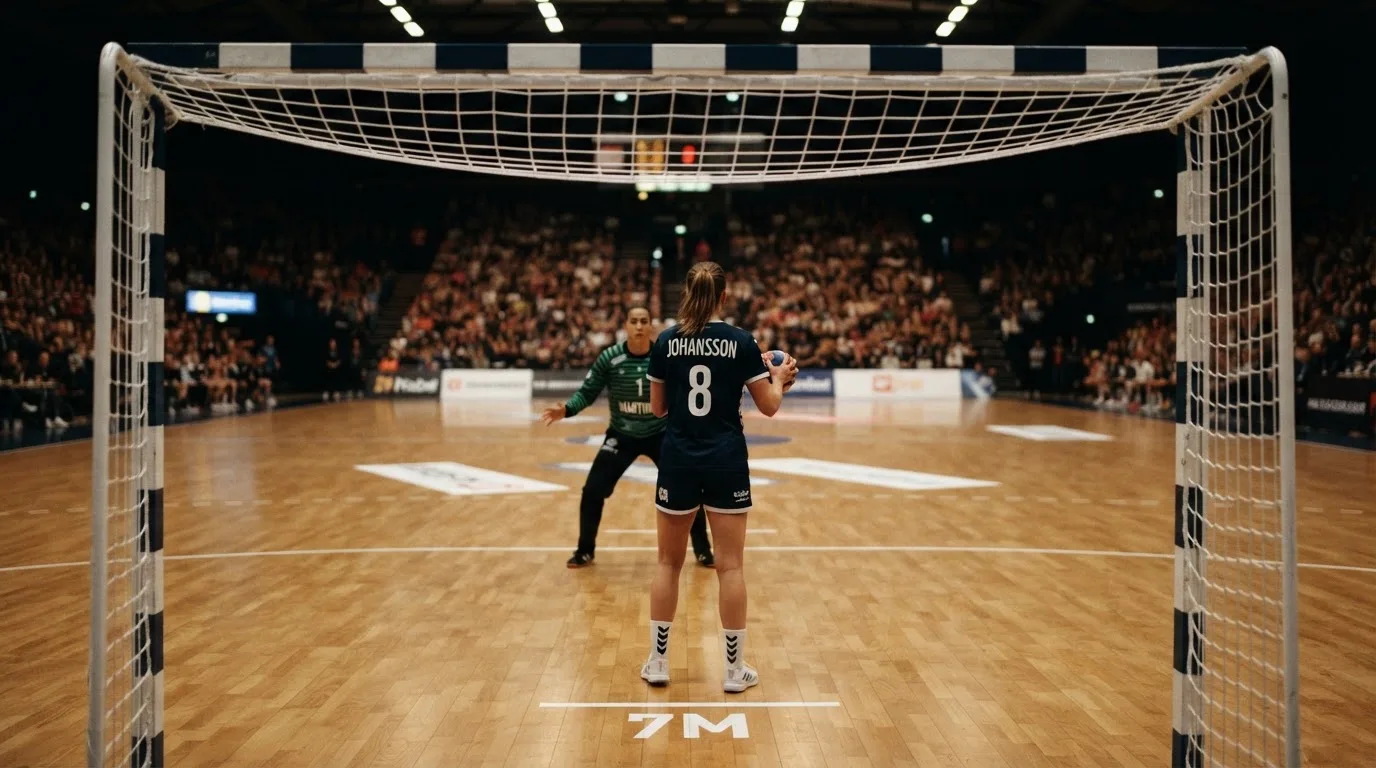
A handball team puts seven players on the court, six outfield players plus a goalkeeper, and a match is two 30-minute halves. The court is forty metres by twenty, with goals three metres wide and two metres high, and professional sides score twenty to thirty-five each. Decisive fixtures that end level after sixty minutes go to two five-minute periods of extra time, then a penalty shootout — relevant to anyone pricing the draw or trading in-play, because the book does not end when the clock reads sixty.
The IHF World Championship runs in odd-numbered years for both men and women. Denmark hold the 2025 men’s title; France won the 2023 women’s event. The IHF has run the men’s championship every two years since 1995, and the IHF World Handball Championship is the most-covered national-team event on the licensed GB sites. The next one is the 2027 edition, with the qualifier window already visible on most bookmakers’ outrights boards.
The EHF Champions League is the most active club competition for prices all season. Group play runs from September through to the spring knockouts, with eight teams per group and a top-eight route straight to the quarter-finals. The EHF European League and the EHF European Cup fill the rest of the club calendar. Domestic leagues on the major licensed sites are the German Bundesliga, the French Starligue, the Spanish Liga ASOBAL, the Hungarian K&H liga, the Polish ORLEN Superliga and the Danish Håndbold Ligaen — six leagues a bettor can usually price individually rather than just a match winner.
The Olympic handball tournament is rarer. Men’s handball was first played at the 1936 Berlin Games (outdoors) and returned indoors at the 1972 Munich Games, with women’s handball added in 1976. Olympic handball appears on the licensed sites when the Games run, and disappears again until the next cycle. Olympic women’s handball is priced by at least one bookmaker on the register for outrights, group winners and tournament top scorer.
The IHF World Championship structure is also worth knowing. Group play has 32 teams in eight groups of four, the top three from each group into the main round, and the top four from the main round into a straight knockout from the quarter-finals on. The seeded groups matter for outrights pricing because the early odds on a strong group favourite compress quickly. That movement is most visible on the apps with the deepest outrights board, where prices are pulled from a clear liability model rather than the headline-grabbing match winner on the main page.
For someone new to the sport, the practical calendar is: EHF Champions League group stage September to February, the domestic leagues October to May with midweek fixtures during the EHF run, the IHF World Championship in January every two years (the next one in 2027), the EHF European Championship every two years in the slot between (2026 for men, 2028 for women), and the Olympic handball tournament every four summers.
The fundamenta: how a handball betting market is built
The licensed GB bookmakers price the same five core markets on almost every fixture. The match winner (1X2 where the draw is offered) is the headline price. The handicap line is the main alternative: a 2.5- or 3.5-goal Asian handicap on the favourite, or a 1.5-goal European handicap when a side is a clear underdog. The totals market runs over/under on the combined score — a line around 53.5 for a Bundesliga match, around 55.5 for a high-tempo Champions League fixture. Each-way winnings are not used in team handball because there is no finishing position; that is a racing term and it does not apply here.

The licensed bookmakers also run a market on each half. First-half winner, first-half handicap and first-half totals all settle on the 30-minute score, not the 60-minute result. Half-time/full-time is the classic double-result market: home/home, draw/draw, away/draw and so on, settling twice. The price on home/home is the shortest of the four combinations and the price on draw/away the longest, with a 1X2 in each half compounded. Most licensed apps carry this market on Champions League and Bundesliga matches but not on every domestic league.
The player markets are thinner. Most-valuable-player markets are priced on the IHF World Championship and the Olympic handball tournament, with shorter outrights boards for those events than for football. Top scorer for the tournament is a pre-tournament outright that prices strongly when a clear world-class pivot is in form, and is offered on most apps. Match-specific player markets — number of goals, number of saves — appear on a small number of the bigger GB brands for Champions League matches and the Olympics, and are absent from most domestic league fixtures.
The bet builder and same-game multi is the newer addition. Several licensed apps now let the bettor combine two or more markets from a single handball match into one bet, settling on the 60-minute result. The typical bet builder on a handball match will combine match result, handicap, totals and a player prop. The licence register makes no separate check on bet builders, so whether a brand offers one is a matter of the operator’s own product roadmap — a structural feature of a sportsbook, not a regulated feature of a market.
The exchange, where a customer bets against another customer rather than against the book, is a different product. Matchbook is the betting exchange on this list, and an exchange prices the same 1X2, handicap and totals lines as a bookmaker, but with the commission rate the exchange charges on net winnings. On an exchange, the back price is what a customer pays to take a selection and the lay price is what a customer offers to other customers backing the opposite. The bookmaker-overround is replaced by the exchange commission, and the margin lives in the spread between back and lay rather than the overround on one side.
Spread betting is the third structure. Spreadex runs both fixed-odds and financial spread betting from the same app. A financial spread bet is settled against an index or a market price — not against a binary outcome — and the return is a multiple of how far the spread was over- or under-stated. The Financial Conduct Authority, not the Gambling Commission, regulates financial spread betting. Spreadex is licensed by both regulators, and a customer reading Spreadex’s own terms will see the FCA rule stated in the same place as the UKGC account.
Handball betting promotions: what the offer really takes
A “free bet” is a credit that pays only the winnings, not the stake. A £10 free bet on a winning selection at 3.0 returns £30, the £10 stake is not returned with the win, and the effective cost of the bet is the £10 you did not stake. A “matched” offer is one where the book matches the stake in free bets when the qualifying bet loses — the VBet structure, which gives a £10 free bet if the first £10 bet loses, is exactly that. A “stake-back” offer refunds the stake in free bets when the qualifying bet loses, not in cash — Hollywoodbets’ accumulator stake-back structure works the same way. None of these are the same as a refund in money. The word “free” in the marketing name refers to the credit being optional, not to anything being paid back on a loss.
A “100% bonus” is a deposit match. The headline is the size of the match, the detail is the wagering requirement. The 10x cap on wagering requirements on bonuses is the new ceiling that came in on 19 January 2026 under the Commission’s promotion rules: a £10 bonus at 50x wagering used to mean £500 of qualifying bets; under the cap, no more than £100 of qualifying bets is required for that £10 bonus. The cap is on the multiplier applied to the bonus base, and it does not cap the bonus’s money value. A bookmaker offering a £100 matched deposit at the 10x cap is asking for £1,000 of qualifying bets before the bonus and any winnings from it are withdrawable.
The minimum price is the second condition. A free bet is usually valid only at minimum odds — typically evens (2.0) or 1.5 (1/2) — and that minimum is set by the operator’s own terms. A qualifying bet at 1.05 (1/20) is a bet the operator’s terms do not count, even if the customer thinks the offer is being honoured. The minimum price is on the qualifying bet, on the free bet, and on any roll-over of the bonus; each is a separate term and the operator’s own site states the number for each market.
A deadline is the third condition. A free bet or bonus credit usually has a window of seven days, fourteen days or thirty days from issue, and an unused credit expires at the deadline. A bonus whose wagering requirement is not met by the deadline is removed, and any winnings the customer has accrued on bonus funds during the window may be forfeit under the operator’s terms. The clock starts on the day the credit is issued, not on the day the customer reads the offer.
A “boost” is an enhanced price on a specific selection, and is not a free bet. A 3.0 boosted to 5.0 is the same market, priced better. The boost pays the new price on a win, and the stake returns normally. The boost usually has a maximum stake, which the operator’s own terms state — the Midnite site carries a maximum stake for its price boosts, and the brand is not alone in that. A boost with a £20 stake cap and a 4/1 minimum leg count is a very different offer from one with a £2 stake cap and a 3/1 minimum leg count, and the figure on the operator’s site is the figure that matters.
An “acca insurance” offer refunds a free bet if one leg of an accumulator of five or more legs loses. The structure is the same as a stake-back offer and the same warning applies: the refund is a free bet whose stake is not returned on a win, not a refund in money. A £10 free bet on a winning selection at 3.0 returns £20, not £30 — the £10 is not paid back. The “insurance” word is the marketing label for a credit, not for a refund.
The licensed GB bookmakers run a welcome offer and a recurring free-bet club. The welcome offer is the headline on a new-customer landing page, and the recurring offer is a weekly or monthly bet club on a registered account. Betway’s Free Bet Club gives up to £10 in free bets every week after opt-in; spending £25 or more on sports earns 2 x £5 free bets, and the offer is on the same brand’s own terms page. The market is full of these structures, and the arithmetic is the same: a small recurring credit against a small recurring spend, with minimum odds and a deadline attached to each.
The wagering cap does not apply to a free bet with no wagering requirement, where the credit is the offer and the offer has no roll-over. Several brands on the register now run a stake-back-as-free-bet welcome with no further wagering on the free bet. The customer takes the free bet once, keeps the winnings (less the not-returned stake), and that is the offer. There is no wagering to clear on the free bet itself, and the 10x cap is irrelevant. The customer’s only exposure is the qualifying bet, which pays back in money if it wins.
The promotion rules also ban mixed-product promotions: an offer that requires the customer to gamble on two or more product types — a free bet on sports tied to free spins in the casino, for example — is not allowed under the 19 January 2026 rules. The licensed bookmakers that ran these structures have unpicked them, and the betting welcome offer now stands on its own. A casino welcome tied to a sports bet, or vice versa, is no longer the offer a licensed brand can run in Great Britain.
Handball live betting and the cash-out question
In-play handball is fast, and the licensed bookmakers that run a deep in-play lobby tend to price it as one of the structured live sports rather than a niche. A 60-minute match with the score moving in two-goal increments is one of the easier sports to track live on a phone, and the cash-out calculation on a single bet is more stable than it is on a sport with a wider scoreband.
Cash out is the bookmaker closing a bet before the result is settled, at a price the operator sets. The price is the operator’s view of the current probability of the bet winning, with the operator’s own margin. A cash-out price of £45 on a bet that would return £100 at full-time is a £55 loss in the operator’s view of the probability. Spreadex runs one-click, auto and partial cash-out, and the same operator offers Bet Builder across fixed odds and spreads. bet365, Ladbrokes and several others run a full cash-out suite with the same three modes.
The auto cash-out closes the bet at a price or profit the customer has set, with no customer action. The partial cash-out closes a fraction of the stake at the current price and leaves the rest running. The one-click cash-out closes the full stake at the current price with a single tap. All three are features of the operator’s product, not features of the bet, and the licence register makes no separate check on any of them.
Live streaming is a separate question. Spreadex streams UK and Irish horse racing, greyhounds, tennis, NFL and selected football — the operator’s own terms page states the list, and handball is not on it. bet365 streams events worldwide through the app, and the schedule for a handball match on the platform is set by the rights the operator has acquired. The rights issue is a property of the platform, not of the licence, and a brand that does not show the match in-app will let the bettor follow the score with a tracker rather than a video.
The bet tracker is the substitute. bet365 runs Bet Track, Match Live and a Live Golf Tracker. The handball equivalent is the in-app match view, with a live scoreboard, the time remaining, the score progress, the running shot count and the live market prices updating from a server. The licence register makes no separate check on the tracker, and whether a brand runs one is a feature of the operator’s product.
In-play markets on a handball match settle at the end of the 60 minutes, with the 1X2 settling on the 60-minute score, the handicap settling on the 60-minute score with the line, and the totals settling on the combined 60-minute score. Overtime does not count. A two-way market on who wins the match including extra time is a different product with a different price, and most licensed apps carry it as a separate line. The customer reading the live tab in-app sees “Match Result” for the 60-minute result and “To Qualify” or “Including Extra Time” for the variant.
The licence register does not restrict in-play betting. The Commission does not ban in-play, and the licensed bookmakers price in-play under their own licence conditions and customer-protection duties. The restrictions on stake size, on suspended markets and on the in-play margin are operator choices rather than statutory ones. The marketing restrictions on in-play, including the whistle-to-whistle rule for television, are about the broadcast, not the bet.
The licensed bookmakers also suspend in-play markets. A team timeout, a red card or a video review triggers a suspension, with the price hidden until the market reopens. The reason is to manage the operator’s own exposure to a fast-moving line, not a regulatory requirement, and the customer reading the live tab in-app sees the price disappear at the moment the suspension begins. The market reopens when the operator’s system re-prices it, and the reopening is automated rather than human.
Handball betting strategy: bankroll, value and the live read
A bankroll is the money a customer has set aside for betting, and the bankroll management question is how much to stake on any one bet. The standard fractional approach — one to two per cent of bankroll per bet — is a habit the licensed GB bookmakers do not enforce, and the customer who stakes twenty per cent of bankroll on a single fixture is not breaking a rule. The reason for the one-to-two per cent approach is that no strategy wins every bet, and a stake that wipes out a third of the bankroll on a single loss is the kind of stake the bettor cannot afford.
The value question is whether the price is too high. A bet at 3.0 is a value bet if the true probability of the selection is greater than 1/3, since 1/3 × 3.0 is greater than 1 and the bet returns more on average than it costs. The licensed bookmakers price to a margin, and the bettor’s edge is the gap between the true probability of the outcome and the implied probability in the price. The implied probability of a price of 3.0 is 1/3, and the bet is value if the bettor’s read of the probability is more than 1/3.
The bookmaker’s margin sits inside every price, and a bettor who can read it can see which bookmaker is more generous on which market. The arithmetic is in the section on the margin below. The standard form of the calculation is also why a bookmaker’s “best odds guaranteed” offer is not always the best odds: the BOG pays the starting price if the starting price is higher than the price taken, and the SP is the price the betting ring sets at the off, not the bookmaker’s own price. BOG is a horse-racing offer and does not apply to handball.
The strategy most useful on handball is the live read. The pace of a 60-minute match — two 30-minute halves, with a ten-minute half-time interval — gives the bettor an opportunity to back a side that has come out of half-time sharper. The 1X2 price at 1.5 on the favourite to win a match they are winning 17-15 at half-time is not the same as the 1.5 the favourite was at the start, because the live price reflects a half-time score the start-of-match price did not. The bettor who can read the change of pace and read the price the bookmaker is offering at half-time has a real edge on the second-half market.
The in-play handicap is the more subtle live read. A 2.5-goal handicap on a side that has gone 10-7 up at half-time has effectively become a 0.5-goal handicap, and the price on the 2.5 line at half-time is the bookmaker’s view of the second-half margin, not the match margin. The bettor who reads the second-half pace — whether the favourite is in a pressing cycle, whether the goalkeeper is on form, whether the rotation has the same players on the court — has a working edge on the second-half handicap.
The acca insurance offer is a separate product and the strategy is different. An acca of seven or eight legs of short-priced favourites is a structure that rarely loses, and the free-bet refund on one losing leg is the marketing for a product that would otherwise be near-guaranteed to win. The bettor who reads the offer as a free bet on the rare losing acca is reading the offer right; the bettor who reads it as a refund in money is not.
The free bet has its own value arithmetic. A £10 free bet on a selection at 5.0 returns £40 if the bet wins, the £10 stake is not returned, and the value of the free bet is the expected value of the bet times the probability the the selection wins. A bet at 5.0 is a 1/5 implied probability (before the bookmaker’s margin), and the expected return of the £10 free bet at true probability 1/5 is £10 × 4.0/5.0 × 1/5 = £8 — so the bet is worth roughly £8 to the customer on average, and is worth more or less depending on whether the customer’s read of the probability is better or worse than the implied. The £10 free bet is not a £10 credit; it is a credit worth less than £10 because the stake is not returned.
A deposit limit is the customer’s main safety net. The licensed GB bookmakers offer a gross deposit limit on a fixed time frame as a standard account feature, and the customer can set a daily, weekly or monthly limit from the account page. The limit is a customer choice rather than a Commission-set ceiling, and the bettor who sets a limit that is too high for the bankroll is choosing to over-stake. The Commission’s announcement of a phased deposit-limit framework, with a first phase applied since 31 October 2025 and a second phase postponed to 30 September 2026, is a Commission announcement, not a customer-side product.
A staking plan does not beat the margin. A customer who stakes more when the bet has lost and less when it has won is using a martingale structure, and the structure breaks the first time the customer’s bankroll cannot cover the next stake. The licensed bookmakers do not run a betting system, and the customer who thinks one exists is overestimating the structure’s mathematical basis.
The bettor who has read the section this far has a working framework: a bankroll managed at one to two per cent per bet, a value read of the price against the true probability, a live read of the pace of the match, and a clear view of what the offer really costs. The licensed bookmakers do not have a marketing problem with the framework; they have a marketing problem with the customer who has it.
The statute: legality, the licence register and the off-shore question
The Gambling Commission is the regulator. It is a non-departmental public body sponsored by the Department for Culture, Media and Sport, and it licenses the whole commercial market under the Gambling Act 2005. The Act covers Great Britain — England, Scotland and Wales. Northern Ireland has its own older law and is outside the Act, so a GB-licensed operator is not licensed in Northern Ireland and the marketing is careful to say “GB-licensed” or “licensed for Great Britain”. The 2014 Gambling (Licensing and Advertising) Act amended the 2005 Act to require a Commission licence wherever the operator is based if its remote facilities are used in Great Britain, and a Curaçao, Maltese or Gibraltar licence is not a substitute.
A bookmaker serving customers in Great Britain without a Commission licence is committing an offence under section 33 of the Gambling Act 2005 — a summary conviction up to 51 weeks’ imprisonment, a fine up to level 5, or both; six months in Scotland. The offence is aimed at the operator, not the customer. The customer of an unlicensed site does not commit a criminal offence by placing a bet, but loses the protection a GB licence provides: no GAMSTOP coverage, no Commission complaints route, no approved dispute-resolution body, no British consumer redress if funds are withheld, not bound by the 10x bonus cap, not bound by the financial vulnerability check.
The Commission’s public register is the whole test of who holds a licence. A search by business name, trading name, domain or account number returns the licence type, the account number, the licence holder’s name and the registered domain. The register is searchable on the Commission’s own site, and a brand that holds a remote general betting standard (real events) licence is licensed for sports betting on real events. The list of brands on this page is the brands on the register for the relevant licence type as of 27 October 2026.
A licence is a single line on the register. A bookmaker running under LC International Limited runs Ladbrokes and Coral under the same account. A bookmaker running under PPB Counterparty Services Limited runs Paddy Power and Betfair under the same account. A bookmaker running under Hillside (UK Sports) ENC runs bet365 under that account. A place in a comparison is not a licence, and no single brand is “the only” licensed one.
Identity verification is the first step. Since 7 May 2019 a licensed remote operator verifies name, address and date of birth before a customer can deposit or gamble — including with a free bet or a bonus. The verification uses a database check (for example a credit-reference check or a public-records check) and a photographic ID upload, and the customer cannot deposit until the check has cleared. The licensed bookmakers also ask for source-of-funds documentation at higher spend, and a customer who does not provide the documentation cannot continue to deposit.
The 18-and-over rule is a hard rule. The minimum age for gambling in Great Britain is 18, and the licensed bookmakers verify age during the identity check. A customer who is under 18 cannot open an account, cannot deposit, cannot use a free bet or a bonus and cannot withdraw funds. The marketing rules reinforce the point: the CAP Code says no one who is or seems to be under 25 may be featured gambling or play a significant role in an advertisement, with an exception for marketing placed where a bet can be made directly. The 25 rule is about who may appear in the advertisement, not about who may bet.
The bonus cap and the 10x wagering ceiling came in on 19 January 2026. The Commission’s promotion rules cap the wagering requirement on a bonus at 10x the bonus base, and the operator cannot run a bonus whose roll-over is higher. The cap is on the multiplier and not on the money value: a £100 bonus at 10x is asking for £1,000 of qualifying bets, which is the same structure as a £10 bonus at 10x asking for £100. The cap does not apply to a free bet with no wagering requirement. The same rules ban mixed-product promotions — an offer that requires the customer to gamble on two or more product types.
The financial vulnerability check is the new affordability framework. The Commission’s LCCP condition 3.4.4, in force since 30 August 2024, requires a check when a customer’s deposits minus withdrawals exceed £150 in a rolling 30-day period (since 28 February 2025). The check is a public-record check (for example a bankruptcy or a county court judgment) and is not an income check and not a credit-reference check. A financial risk assessment — the “affordability check” the press writes about — is announced in a staged plan, with the Commission’s article of 7 July 2026 setting the framework and no start date. The licensed bookmakers have begun the soft-launch, and the reader sees the same structure: a deposit, a withdrawal and a soft launch on a public-record check rather than a pay-slip upload.
GAMSTOP is the national self-exclusion scheme. A customer who self-excludes with GAMSTOP is locked out of every online operator for the period they choose — six months, one year, five years, or five years with auto-renewal. The minimum period stays in place for a further seven years after the customer asks GAMSTOP to remove the exclusion, and a customer who self-excludes cannot open a new account at any licensed operator during the period. GAMSTOP is a mandatory licence condition for online operators since 31 March 2020. It is also a brand-level rule, and the licensed GB bookmakers run the GAMSTOP check on the customer when an account is opened.
The credit card ban is the one payment rule. Credit cards are banned for gambling in Great Britain since 14 April 2020, and the ban includes credit-card-funded payments through an e-wallet. A customer who funds a betting account with a credit card or with an e-wallet that was funded by a credit card is breaking the rule, and a licensed operator that allows it is breaking the rule. Debit cards and bank-based payments are not covered by the ban, and a customer who funds with a debit card is on a regular payment.
The licensed bookmakers do not list a state list of permitted payment methods. The terms say a debit card, a bank transfer, a PayPal deposit, an Apple Pay deposit and several e-wallets are accepted, and the specific list is on each brand’s own terms page. A named-account rule and a state list of permitted payment methods have not been established, and the licensed bookmakers run their own payment rules. Cryptocurrency deposits at licensed operators are not established either, and the licensed brands do not run a Bitcoin deposit option.
The tax position is the cleanest part of the page. A customer of a licensed GB bookmaker pays no tax on betting winnings in Great Britain. The operator pays General Betting Duty on its gross profits, currently 15%, and from 1 April 2027 a new remote betting rate of 25% applies within the duty, with remote bets on UK horse racing, bets on self-self-service betting terminals, pool betting and in-person betting staying at 15%. The customer is not charged duty. A professional gambler is taxed differently and should ask HMRC or an adviser. The page is not tax advice and the tax rules are general information.
The off-shore question is a hard question. A licensed bookmaker is the only kind whose customers are protected by the British regulatory framework. A customer on an unlicensed site has no GAMSTOP coverage, no Commission complaints route, no approved dispute-resolution body and no British consumer redress. The customer who has funds on the unlicensed site and cannot withdraw them has no British route to a refund, and the Commission’s enforcement is disruption of the operator’s access rather than a refund to the customer. The honest framing is: licensed = checks, limits, GAMSTOP, the 10x bonus cap and the £150 vulnerability check, with the cost that the customer is verified before the first bet; unlicensed = none of those protections and a real risk of loss of funds.
The Commission’s enforcement has been given, or is about to receive, court-order DNS blocking powers. The powers are not in full operation yet, and the customer reading the Commission’s own site sees the enforcement team using cease-and-desist notices, search-engine referrals and work with registrars, hosts and payment providers. The customer writing the page is not in a position to know when the DNS powers will be in full operation, and the page writes around that. The customer who wants the most up-to-date position checks the Commission’s own enforcement page.
Responsible gambling on a handball betting site
The licensed GB bookmakers are built around safer gambling tools that are now licence conditions, not customer optional. GAMSTOP is a hard self-exclusion across every online operator. The financial vulnerability check, with its £150 in 30 days threshold, is a Commission-mandated check that the customer is real, solvent and not bankrupt. The deposit limit, the reality check, the time-out and the self-exclusion on the account itself are all available on the licensed brand’s own responsible-gambling page.
The set of tools on each brand is the same set, in the same place, and the customer is taken to the safer gambling page from the account page. The licensed bookmakers also link to GamCare (the National Gambling Helpline), to GambleAware, to the NHS gambling clinics and to Gamblers Anonymous. The link is on the safer-gambling page rather than in the footer of the marketing site, and the customer who wants help does not have to hunt.
A customer who has a self-exclusion set up with one licensed brand is set up with all of them, because GAMSTOP is the central register. A customer who has a time-out on a single brand is taking a one-brand time-out and a GAMSTOP time-out is the stronger structure. A time-out on a single brand is a 24-hour to six-week break from one operator, and a customer who is using one brand’s time-out to break the habit is welcome to set up the GAMSTOP exclusion to make the break stick.
A self-excluded customer cannot open a new account at any licensed operator, and a customer who opens a new account with a different name or address is in breach of the GAMSTOP terms. A customer who has self-excluded and wants to gamble is asked to wait for the minimum period and then to ask GAMSTOP to remove the exclusion, with a seven-year further period of the exclusion remaining. The licensed bookmakers do not run an “early removal” process.
A customer with a gambling harm concern is not alone. The National Gambling Helpline is run by GamCare and is free and confidential. The NHS gambling clinics are run by the National Health Service and are clinical services. The Gamblers Anonymous meetings are run by the fellowship and are run on a peer-support model. The three structures run on different remits, and the customer who calls the National Gambling Helpline can be referred to the NHS clinics if a clinical need is identified.
The licensed bookmakers’ own pages also carry the safer-gambling tools. Fitzwilliam Sports links to GambleAware, GamStop and Gamblers Anonymous from the home page. The Midnite site, the Unibet site and the bet365 site all carry the safer-gambling page and the same set of links. The structure is the same on every licensed brand, and the marketing site does not hide the page.
The customer reading the page is being asked to read the safer-gambling page on the brand’s own site, to set a deposit limit that is honest about the bankroll, and to use a time-out rather than chasing a loss. The customer who has set the limit and is reading this page is reading the right page. The customer who has not set the limit is being asked to set it before opening the next offer.
Betting and playing for cash without verification: the licensed reality
A licensed GB bookmaker verifies name, address and date of birth before the first deposit. The verification is a database check and a photographic ID upload, and the customer cannot deposit until the check has cleared. A licensed site that lets a customer deposit without verification is in breach of its licence, and the Commission’s enforcement action against a site that fails the verification standard is one of the licence conditions the Commission enforces.
The licensed bookmakers also run source-of-funds checks at higher spend. A customer whose deposits minus withdrawals cross the £150 in 30 days threshold is asked for source-of-funds documentation — a payslip, a bank statement, a tax return. The licensed bookmakers do not run an income check on the customer’s ordinary deposits, and a customer who deposits £20 a week is not asked for source-of-funds documentation.
The off-shore alternative is real, and the off-shore alternative is unregulated in Great Britain. A customer of an off-shore site does not have the verification standard enforced, and the off-shore site that lets a customer deposit without verification is not in breach of a British licence. The off-shore site is in breach of the local licence it does hold, and the customer has no British route to a refund. The off-shore site’s protection is its own terms, and the customer who reads the off-shore terms and finds the protection acceptable is the customer who uses the off-shore site.
The licensed bookmakers that take crypto are not a category that the register recognises. A licensed GB bookmaker does not run a Bitcoin deposit option, and the Commission’s position on crypto-funded deposits at licensed operators is not established. The licensed bookmakers that take e-wallets take PayPal, Skrill, Neteller and several others, and the e-wallet is funded by a debit card or a bank transfer. A customer who wants to fund with crypto is funding through an exchange and a debit card, and the licensed bookmaker is verifying the debit-card holder rather than the crypto holder.
The licensed bookmakers that take crypto are off-shore by definition, and the licensed GB bookmaker does not have a crypto deposit on its own terms. A customer who has read this section and wants the licensed route is not choosing crypto. A customer who has read this section and wants crypto is choosing an off-shore site, and the off-shore site’s terms apply.
The licensed bookmakers also do not list a state list of permitted payment methods. The terms say a debit card, a bank transfer, a PayPal deposit, an Apple Pay deposit and several e-wallets are accepted, and the specific list is on each brand’s own terms page. A customer who wants a specific method checks the specific brand’s page.
The comparison: ten licensed GB bookmakers on the handball calendar
The ten brands below are the brands on the Commission’s public register holding a remote general betting standard (real events) licence that price a tier of handball on their sportsbook. The table reads across the licence, the licence holder and the operator’s own position on handball and on the offer. The licence number is on the register, the licence holder is the legal entity, and the operator’s own position is what the brand’s terms and product page say about handball coverage and the offer.
| Brand | Gambling Commission remote licence | Licence holder | Position on handball and the offer |
|---|---|---|---|
| Betway | 039372-R-319367-029 (account 39372) | Betway Limited | Free Bet Club: up to £10 in free bets every week after opt-in; spending £25 or more on sports earns 2 x £5 free bets. |
| Paddy Power | 039439-R-319330-013 (account 39439) | PPB Counterparty Services Limited | App covers football, horse racing, boxing, rugby, tennis, golf, darts, snooker and F1. |
| BetMGM | 039198-R-319450-029 (account 39198) | LeoVegas Gaming PLC | Sports welcome: four £10 free bets (two football accumulators of 4+ selections and two sports multiples of 2+) for new customers who deposit £10+ and place a sports bet within 7 days; valid 7 days, minimum odds, opt-in required. |
| VBet | 044662-R-324273-022 (account 44662) | SCGO Limited | Sports welcome: £10 free bet if a new, verified customer stakes £10+ on a first-ever bet that loses. |
| bet365 | 055148-R-331498-002 (account 55148) | Hillside (UK Sports) ENC | Official global betting partner of the UEFA Champions League; the most-downloaded sports betting app in the UK; Bet Builder+, Super Boosts, Winnings Boosts on Bet Builders and selected singles, daily Bet Boosts; in-play and live streaming worldwide; Bet Track, Match Live, Live Golf Tracker. |
| Kwiff | 044448-R-323408-017 (account 44448) | Eaton Gate Gaming Limited | UK Gambling Commission licensed; trademark operated by Spryme Ltd; 17+ App Store age rating. |
| Matchbook | 039504-R-319407-024 (account 39504) | Triplebet Limited | Betting exchange; customers bet against other users; Bet Builder, multiples, in-play, live streaming of horse racing and greyhounds. |
| Hollywoodbets | 053028-R-330019-013 (account 53028) | Hollywoodbets International UK Limited | Sports welcome: stake back as a free bet of up to £30 on a first qualifying losing accumulator (stake £10+, 3+ legs, odds of 4/1 or greater, settled within 7 days); one free bet per customer. |
| Ladbrokes | 054743-R-330863-014 (account 54743) | LC International Limited | App published by Entain Operations Limited; rated 4.66 from 101,255 ratings in the GB App Store. |
| Spreadex | 008835-R-104580-022 (account 8835) | Spreadex Limited | Combines fixed-odds and spread betting; one-click, auto and partial cash out; Bet Builder across fixed odds or spreads; live streaming of UK and Irish horse racing, greyhounds, tennis, NFL and selected football. |
The Betway structure is a recurring weekly offer rather than a one-time welcome, and the customer who bets the £25 a week on handball accumulators and gets 2 x £5 free bets is the customer the structure is built for. The free bets are not withdrawable in cash, the winnings are withdrawable subject to a 1x wagering requirement on the free bet’s winnings, and the minimum odds on the qualifying bet are on the brand’s own terms. The structure is not a great one for a customer who bets once a month, and the customer who bets weekly is the right fit.
The Paddy Power app is published by Paddy Power PLC and covers the major sports, and the app carries the same fixed-odds sportsbook structure as every other licensed bookmaker. The handball coverage is on the app’s main sportsbook, with the major leagues priced and the lesser leagues hidden under the “Handball” sub-menu. The customer who reads Paddy Power’s app sees the Bundesliga and the Starligue on every matchday and a thinner board for the Hungarian and Polish leagues.
The BetMGM structure is a four-free-bet welcome, with two of the four free bets on football accumulators of four or more selections and two on sports multiples of two or more. The structure is a sportsbook welcome that does not need a football bet to be triggered, and the two sports multiples can be on handball. The minimum odds and the seven-day validity are on the brand’s own terms.
The VBet structure is a stake-back welcome: a new, verified customer stakes £10 or more on a first-ever bet that loses, and gets a £10 free bet. The structure is the simplest stake-back on the licensed GB market, and the customer’s first bet is the qualifying bet. The free bet has minimum odds and a validity window on the brand’s own terms, and the £10 stake on the qualifying bet is lost on a losing first bet.
The bet365 structure is the deepest on the licensed GB market. The brand is the official global betting partner of the UEFA Champions League, runs Bet Builder+ and Super Boosts and Winnings Boosts on Bet Builders, and runs in-play and live streaming worldwide. The brand’s app is the most-downloaded sports betting app in the UK, and the customer who reads the app sees the Champions League, the Bundesliga, the Starligue, the IHF World Championship and the Olympic handball tournament on every fixture.
The Kwiff structure is a thinner licensed bookmaker on this list, with the brand’s own positioning as a trademark operated by Spryme Ltd and a 17+ App Store age rating. The customer who reads Kwiff sees the major leagues and a smaller tier of the lesser leagues, and the brand’s own product is built around the “kwiff” — a randomised boost on a selection.
The Matchbook structure is an exchange, with the customer betting against other customers and the brand’s commission rate on net winnings the only charge. The customer who reads Matchbook’s app for handball reads an exchange that prices the major leagues on the 1X2, the handicap and the totals, and the back/lay spread is the structure the brand runs. The brand runs Bet Builder, multiples, in-play and live streaming of horse racing and greyhounds, and the handball live streaming is not on the brand’s product.
The Hollywoodbets structure is a stake-back on a first qualifying losing accumulator, with the stake back as a free bet of up to £30, the qualifying accumulator of three or more legs, the minimum odds of 4/1, and the stake settled within seven days. The structure is built around the accumulator and the customer who bets accumulators is the customer the structure is for. The free bet is one per customer, and the customer’s first accumulator of three or more legs at the minimum odds is the qualifying bet.
The Ladbrokes app is published by Entain Operations Limited and is rated 4.66 from 101,255 ratings in the GB App Store. The customer who reads Ladbrokes sees the major leagues and a deeper board for the lesser leagues than the smaller licensed brands. The brand’s own product is built around the same fixed-odds structure as every other licensed bookmaker, and the brand’s app runs the same in-play and cash-out features.
The Spreadex structure is the only one on the list that combines fixed-odds and spread betting, with the brand’s own cash-out suite of one-click, auto and partial cash out and the brand’s Bet Builder across fixed odds or spreads. The brand is licensed by the Gambling Commission for fixed-odds betting and by the FCA for spread betting, and the brand’s own page states the FCA rule in the same place as the UKGC account. A customer reading Spreadex sees the major leagues on the fixed-odds side, and a separate spread-bet price on the same match.
The bookmaker’s margin and how it sits inside a price
The bookmaker’s margin is the cut the operator keeps from every unit bet on a market. The standard form of the calculation is on the implied probability in the prices: a two-way market at 1.90 / 1.90 has an implied probability of 1/1.90 + 1/1.90 = 0.5263 + 0.5263 = 1.0526, and the margin is 1.0526 − 1 = 0.0526, or 5.26%. A two-way market at 1.85 / 1.85 has an implied probability of 1/1.85 + 1/1.85 = 0.5405 + 0.5405 = 1.0811, and the margin is 7.5%. The bookmaker is keeping more on the 1.85 / 1.85 market than on the 1.90 / 1.90 market, and the bettor is paying more per unit bet on the 1.85 / 1.85 market.
The example of a 1.90 / 1.90 (fractional 9/10) market sits in a band of around 5% to 6% margin. The exact figure depends on the two prices, and the same two prices in fractional form (9/10) convert to decimal 1.90. The 1.90 / 1.90 market is a typical margin for a handball 1X2, and the licensed bookmakers price the 1X2 with a margin in the 5% to 8% band. The handicaps and the totals are priced with a slightly tighter margin, and the outrights are priced with a wider margin because the market is thinner and the operator’s own liability is harder to lay off.
The three-way market on a 1X2 has a slightly different arithmetic. A 1.40 / 7.00 / 4.50 market on a home win has an implied probability of 1/1.40 + 1/7.00 + 1/4.50 = 0.7143 + 0.1429 + 0.2222 = 1.0794, and the margin is 7.35%. The same match on a 1.45 / 6.50 / 4.20 market has an implied probability of 1/1.45 + 1/6.50 + 1/4.20 = 0.6897 + 0.1538 + 0.2381 = 1.0816, and the margin is 7.55%. The bookmaker is keeping more on the second market than on the first, and the bettor is paying more per unit bet on the second market.
The point of the arithmetic is that a price is not just a number. The price is the bookmaker’s view of the probability, with the margin added on, and the bettor’s read of the true probability is the comparison. A bet at 3.0 on a true probability of 1/3 (33.3%) is a fair price, a bet at 3.5 is value, and a bet at 2.5 is over-priced by the bookmaker. The bettor who can read the margin in the price can see which bookmaker is more generous on which market, and the bettor who reads several licensed brands’ prices on the same fixture has the comparison.
The licensed bookmakers update their prices as the liability on a market moves. A bookmaker that has taken too much on the home win will shorten the home price and lengthen the away price to balance the book, and a bookmaker that has taken too much on the over will shorten the over and lengthen the under. The price movement is the bookmaker’s view of the probability with the margin added on, and a bettor who reads the price movement can read the bookmaker’s exposure.
The margin is not a Commission-set number. The Commission licenses the operator and the operator’s own product, and the margin is the operator’s own choice within the rules. The 10x bonus cap, the £150 vulnerability check and the financial vulnerability check are Commission rules, and the margin is not. A bookmaker that prices a 1.85 / 1.85 market on a 1X2 is keeping 8.11%, and a bookmaker that prices a 1.95 / 1.95 market is keeping 2.56%, and the choice is the operator’s.
The same arithmetic on a bet builder is the same arithmetic on a single bet. A bet builder of match result, handicap and totals on a single handball match settles as one bet, and the margin on the bet is the sum of the margins on the three markets, with a small further margin for the combination. The licensed bookmakers price the bet builder with a slightly wider margin than the sum of the single markets, and the bettor who reads the bet builder’s price is reading the operator’s view of the combination.
A bet on a handball Champions League match is also a bet on a smaller market, and the bookmaker’s margin is wider on a smaller market than on a larger one. The Champions League group stage and the Bundesliga are the larger markets, and the margin on the 1X2 is in the 5% to 7% band. The Hungarian K&H liga and the Polish ORLEN Superliga are the smaller markets, and the margin on the 1X2 is in the 7% to 9% band. The bettor who reads the league-level margin has the league-level view of the price.
The payout share of a market is 1 minus the margin, and the payout share of a 1.90 / 1.90 market is 1 − 0.0526 = 0.9474, or 94.74%. The bettor who pays a 5.26% margin on the market is keeping 94.74% of every unit bet on the market, and the bookmaker is keeping 5.26%. The arithmetic is the same on every market, and the difference is the size of the margin. The bettor who reads the margin reads the size of the bookmaker’s cut on every unit bet.
The licensed bookmakers do not publish a margin number. The price on the operator’s own site is the price, and the bettor who reads the price and runs the arithmetic has the margin. The licensed bookmakers also do not publish a payout share, and the arithmetic is the bettor’s own. A price of 1.90 / 1.90 is a 5.26% margin, and a price of 1.85 / 1.85 is an 8.11% margin.
The wider picture: the licensed GB market and the off-shore question
A licensed GB bookmaker is one whose name appears on the Commission’s public register, with a remote general betting standard (real events) licence or a remote betting intermediary licence, and a licence holder whose name is on the same register entry. The customer of a licensed brand has GAMSTOP coverage, the Commission’s complaints route, an approved dispute-resolution body, the 10x bonus cap, the £150 vulnerability check and the safer-gambling tools. The customer of a licensed brand is also verified before the first bet, and the verification is a Commission requirement.
The off-shore alternative is real, and the off-shore alternative is not licensed in Great Britain. A customer of an off-shore site is not covered by GAMSTOP, is not covered by the Commission’s complaints route, is not covered by an approved dispute-resolution body, is not covered by the 10x bonus cap, is not covered by the £150 vulnerability check, and is not covered by the safer-gambling tools. A customer of an off-shore site that cannot withdraw funds has no British route to a refund, and the Commission’s enforcement against the off-shore site is disruption rather than a refund.
The off-shore site’s licence is in Curaçao, in Malta, in Gibraltar or in another off-shore jurisdiction, and the off-shore site’s protection is the off-shore licence’s rules. The off-shore licence’s rules are not the same as the Commission’s rules, and the off-shore site’s customer is bound by the off-shore site’s terms, not the Commission’s rules. The off-shore site that lets a customer deposit without verification is not in breach of a British licence, and the off-shore site that pays a 50x wagering bonus is not in breach of a British rule.
The honest framing of the comparison is not “licensed is safe” and “off-shore is unsafe”. The honest framing is that licensed = checks, limits, GAMSTOP, the 10x bonus cap and the £150 vulnerability check, with the cost that the customer is verified before the first bet, and off-shore = none of those protections and a real risk of loss of funds. A customer who reads the framing and chooses the off-shore site is choosing the off-shore site on its own terms, and a customer who reads the framing and chooses the licensed site is choosing the licensed site on its own terms.
The licensed GB bookmakers also run their own financial-vulnerability-check framework, and the framework is the soft-launch of the Commission’s staged plan. The framework runs a public-record check (a bankruptcy check, a county court judgment check) on the customer when the customer’s deposits minus withdrawals exceed £150 in a rolling 30-day period. The framework is not an income check and not a credit-reference check, and the customer who is asked for source-of-funds documentation is asked for a payslip, a bank statement or a tax return. The framework is on every licensed brand’s own terms page, and the customer who reads the framework on the brand’s own terms has the framework.
The off-shore site’s framework is the off-shore site’s terms, and the off-shore site’s terms are not the same as the Commission’s rules. The off-shore site’s terms are the off-shore site’s, and the off-shore site’s customer is bound by the off-shore site’s terms. The off-shore site’s framework may be the same as the Commission’s, and the off-shore site’s framework may not be, and the off-shore site’s customer is the one who has read the off-shore site’s terms and accepted them.
The Commission’s enforcement has been given, or is about to receive, court-order DNS blocking powers. The powers are not in full operation yet, and the customer reading the Commission’s own site sees the enforcement team using cease-and-desist notices, search-engine referrals and work with registrars, hosts and payment providers. The customer writing the page is not in a position to know when the DNS powers will be in full operation, and the page writes around that. The customer who wants the most up-to-date position checks the Commission’s own enforcement page.
A short read on the ten licensed brands
Betway is a weekly option for the handball bettor. The Free Bet Club structure rewards a customer who bets £25 a week on sports, and the 2 x £5 free bets are a recurring credit on a recurring spend. The brand’s app carries the Bundesliga, the Starligue, the Champions League and the IHF World Championship, and the user finds the major leagues on every matchday. The licensed bookmaker is one of the deeper ones on the licensed GB market.
Paddy Power is a consistent option for the sportsbook user. The app is published by Paddy Power PLC and covers the major sports, and the handball coverage is on the main sportsbook with the major leagues priced and the lesser leagues under the “Handball” sub-menu. The brand’s marketing is built around the same fixed-odds structure as every other licensed bookmaker, and the user finds the major leagues on every matchday.
BetMGM is the right fit for the new-customer welcome structure. The four-free-bet welcome is a sports welcome that does not need a football bet to be triggered, and the two sports multiples can be on handball. The minimum odds and the seven-day validity are on the brand’s own terms, and the customer who reads the brand’s own terms has the welcome.
VBet is the right fit for the customer who wants the simplest stake-back welcome. The £10 free bet on a first-ever losing bet is the simplest stake-back on the licensed GB market, and the customer’s first bet is the qualifying bet. The licensed bookmaker is on the Commission’s register under SCGO Limited, and the brand’s own terms state the offer.
bet365 is the right fit for the customer who reads the deepest handball sportsbook on the licensed GB market. The brand is the official global betting partner of the UEFA Champions League, runs Bet Builder+ and Super Boosts and Winnings Boosts on Bet Builders, and runs in-play and live streaming worldwide. The brand’s app is the most-downloaded sports betting app in the UK, and the licensed bookmaker is the one to beat on the handball calendar.
Kwiff is a lighter option for the user who wants the “kwiff” — a randomised boost on a selection. The user sees the major leagues and a smaller tier of the lesser leagues, and the brand’s own product is built around the randomised boost.
Matchbook is the right fit for the customer who wants a betting exchange. The customer bets against other customers and the brand’s commission rate on net winnings is the only charge, and the back/lay spread is the structure the brand runs. The licensed bookmaker is on the Commission’s register under Triplebet Limited.
Hollywoodbets is the right fit for the customer who bets accumulators. The stake-back on a first qualifying losing accumulator is built around the accumulator, and the customer who bets accumulators of three or more legs at the minimum odds is the customer the structure is for.
Ladbrokes is the right fit for the customer who reads a sportsbook app with the deepest board for the lesser leagues. The brand’s app is published by Entain Operations Limited and is rated 4.66 from 101,255 ratings in the GB App Store, and the licensed bookmaker is on the Commission’s register under LC International Limited.
Spreadex is the right fit for the customer who wants fixed-odds and spread betting in the same app. The brand is licensed by the Gambling Commission for fixed-odds betting and by the FCA for spread betting, and the brand’s own page states the FCA rule in the same place as the UKGC account. The licensed bookmaker is the only one on the list that combines the two products.
A note on bonuses and the 10x cap
The 10x cap on bonuses came in on 19 January 2026 under the Commission’s promotion rules. A £10 bonus at 50x wagering used to mean £500 of qualifying bets; under the cap, no more than £100 of qualifying bets is required for that £10 bonus. The cap is on the multiplier applied to the bonus base, and it does not cap the bonus’s money value. A bookmaker offering a £100 matched deposit at the 10x cap is asking for £1,000 of qualifying bets before the bonus and any winnings from it are withdrawable.
The licensed bookmakers have unpicked the higher-multiplier offers, and the betting welcome offer on every licensed brand is now a stake-back, a free-bet welcome, a free bet club or a stake-back on a losing accumulator. The 50x bonus is a structure of the past, and the licensed bookmakers that ran them have rewritten the welcome offer under the new rules. The customer who reads a licensed brand’s welcome offer is reading a structure that fits under the 10x cap, and the customer who reads an off-shore brand’s welcome offer is reading a structure that does not.
The cap does not apply to a free bet with no wagering requirement. The licensed bookmakers that run a stake-back-as-free-bet welcome with no further wagering on the free bet are not bound by the cap, and the customer’s exposure is the qualifying bet, which pays back in money if it wins. The VBet structure is the simplest on the licensed GB market, and the licensed bookmaker is the one to read for the simplest stake-back.
The cap also does not apply to a price boost. A price boost is an enhanced price on a specific selection, and the enhanced price pays the new price on a win, and the stake returns normally. The licensed bookmakers that run a Super Boost or a daily Bet Boost are running a price-boost structure, and the structure is not a bonus. The licensed bookmaker is the one to read for the price-boost structure.
The mixed-product ban is the second half of the 19 January 2026 rules. An offer that requires the customer to gamble on two or more product types — a free bet on sports tied to free spins in the casino, for example — is not allowed under the rules. The licensed bookmakers have unpicked these structures, and the betting welcome offer now stands on its own. A casino welcome tied to a sports bet, or vice versa, is no longer the offer a licensed brand can run in Great Britain.
The customer reading this section is being asked to read the licensed brand’s own terms for the offer, to read the wagering requirement, to read the minimum odds, to read the deadline and to read the maximum stake. The structure is on the brand’s own terms, and the customer who reads the brand’s own terms has the structure. The customer who reads the off-shore brand’s terms and finds a structure that does not fit the 10x cap is reading an off-shore brand, and the off-shore brand is not the licensed one.
A note on the financial-vulnerability check
The financial-vulnerability check is the new affordability framework. The Commission’s LCCP condition 3.4.4, in force since 30 August 2024, requires a check when a customer’s deposits minus withdrawals exceed £150 in a rolling 30-day period (since 28 February 2025). The check is a public-record check (for example a bankruptcy or a county court judgment) and is not an income check and not a credit-reference check. A financial risk assessment — the “affordability check” the press writes about — is announced in a staged plan, with the Commission’s article of 7 July 2026 setting the framework and no start date. The licensed bookmakers have begun the soft-launch, and the reader sees the same structure: a deposit, a withdrawal and a soft launch on a public-record check rather than a pay-slip upload.
A customer of a licensed brand is asked for source-of-funds documentation at higher spend, and a customer who does not provide the documentation cannot continue to deposit. The licensed bookmakers also run a soft-launch of a public-record check, and the customer who reads the licensed brand’s own terms has the framework. The licensed bookmaker is the one to read for the framework, and the licensed brand’s own terms state the framework.
The off-shore brand’s framework is the off-shore brand’s terms, and the off-shore brand’s terms are not the same as the Commission’s rules. The off-shore brand’s framework may be the same as the Commission’s, and the off-shore brand’s framework may not be, and the off-shore brand’s customer is the one who has read the off-shore brand’s terms and accepted them.
Frequently asked questions about online handball betting in Great Britain
Is a handball a foul in betting?
A “handball” in betting is most often a foul in football, not a handball-the-sport. The punter who reads a “handball” in a football market is reading a foul for handball awarded against a defender, and the market that pays on a handball is the player-to-be-booked market or the team-to-commit-a-foul market. The same punter reading a “handball” in a handball market is reading the sport, not the foul, and the market that pays on a handball match is the match result, the handicap or the totals.
Does a handball count as a foul in betting?
A handball in football is a foul under the Laws of the Game, and the foul is recorded in the official statistics. The market that pays on a handball is the player-to-be-booked market or the team-to-commit-a-foul market, and the market that pays on a handball-the-sport match is the match result, the handicap or the totals. The licensed bookmakers run both kinds of market, and the customer reading the betting app chooses the market.
How can a punter check that a bookmaker holds a Gambling Commission licence?
A licensed bookmaker is one whose name appears on the Commission’s public register, with a remote general betting standard (real events) licence or a remote betting intermediary licence, and a licence holder whose name is on the same register entry. The register is searchable on the Commission’s own site by business name, trading name, domain or account number, and a brand that holds a remote general betting standard (real events) licence is licensed for sports betting on real events. The customer who reads the register has the licence, and a brand that is not on the register is not licensed.
How is the return on a bet worked out from the stake and the odds?
A bet at decimal odds of 3.0 with a stake of £10 returns stake × odds = £10 × 3.0 = £30, of which the net profit is stake × (odds − 1) = £10 × 2.0 = £20. The decimal odds are the multiplier on the stake, the net profit is the multiplier minus one times the stake, and the same arithmetic on a combination bet is the product of the decimal odds of the legs. A combination bet of two legs at 3.0 and 4.0 has decimal odds 3.0 × 4.0 = 12.0, and a £10 stake returns £120, of which the net profit is £110. The arithmetic is the same on every licensed brand.
What is the bookmaker’s margin and how does it sit inside the odds?
The bookmaker’s margin is the cut the operator keeps from every unit bet on a market, and the margin sits inside the prices. A two-way market at 1.90 / 1.90 has an implied probability of 1/1.90 + 1/1.90 = 1.0526, and the margin is 1.0526 − 1 = 0.0526, or 5.26%. The same arithmetic on a 1.85 / 1.85 market is 1/1.85 + 1/1.85 = 1.0811, and the margin is 7.5%. The bookmaker is keeping more on the 1.85 / 1.85 market than on the 1.90 / 1.90 market, and the bettor is paying more per unit bet on the 1.85 / 1.85 market. The licensed bookmakers do not publish a margin number, and the bettor who reads the price and runs the arithmetic has the margin.
US & other team sports – Best Betting Tips
Content created by the «Best Betting Tips» team
