
Where to bet on esports in Great Britain — and what each option actually costs
 Available in US
Last updated: 27 October 2026. Operator licence status checked against the Gambling Commission’s public register.
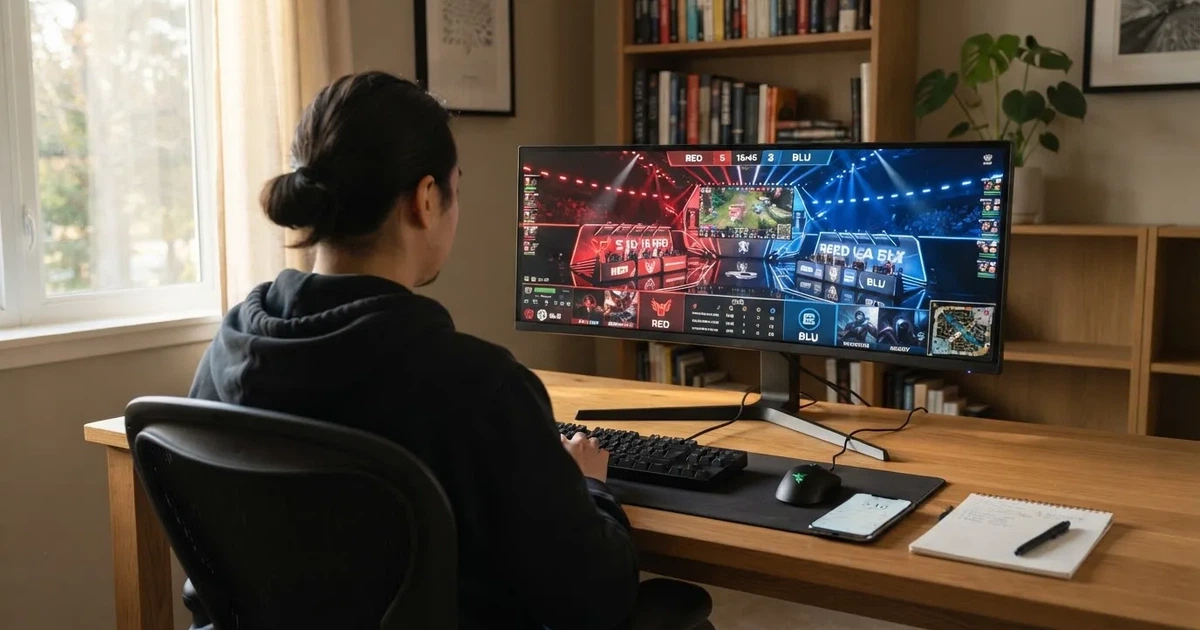
Esports is now a routine line on British bookmakers. League of Legends, Dota 2, Counter-Strike, Valorant, Overwatch, Call of Duty, Fortnite, Rocket League and StarCraft all sit in the fixtures list, and the biggest events — the League of Legends World Championship, Dota 2’s The International, the Evolution Championship Series (EVO) for fighting games and Intel Extreme Masters — draw outright markets, handicaps, totals and match-specific props from most licensed operators. The Esports World Cup 2026 runs from 6 July to 23 August 2026 in Paris with a US$75 million prize pool across 24 games, on the back of a US$71.5 million edition in 2025 won by Team Falcons. Dota 2’s The International topped US$40 million in 2021, the largest single prize pool in esports history at the time.
What follows is a comparison of ten Gambling Commission-licensed brands that take esports bets from customers in Great Britain. The comparison is built around the choices a reader weighing those brands faces: which licence framework covers which brand, how the odds are built, what the welcome offers actually demand, how money moves in and out, and where the rules on in-play, bonuses and identity checks sit between a punt and a payout.
Esports tournaments and the calendars that drive the markets
The fixtures that move an esports book are clustered, not spread. A League of Legends split runs through spring and summer; Dota 2’s pro circuit and The International sit in late summer and autumn; the CS and Valorant circuits run year-round with majors spread across the calendar. The Esports World Cup is the heaviest single concentration, a six-week window in summer where almost every licensed book opens outright, group-stage and map-level markets across multiple titles.
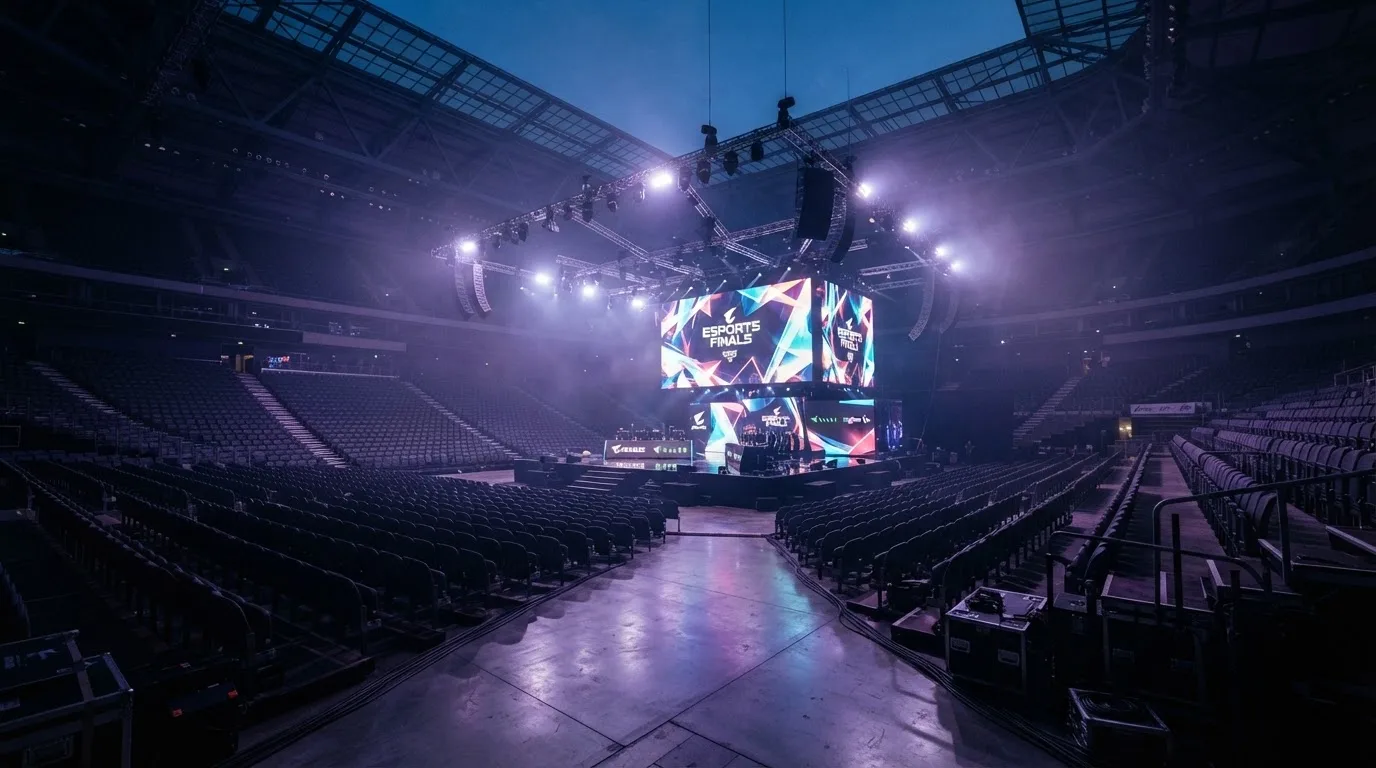
Those calendars dictate when prices are tightest and loosest. A match in a major final gets the full coverage: outright winner, map handicap, total maps, first-blood, first-to-X-rounds, player props. An online league qualifier two months out gets less — match winner, occasionally a handicap, and that is it. The reader who wants depth shops where the match sits in the tournament calendar, not by which book carries esports as a category.
Counter-Strike’s professional circuit, especially the S-tier events, is the deepest single market for in-play play-by-play. League of Legends and Dota 2 sit one step back. Fighting games — Street Fighter, Tekken — and the sports simulators (FIFA, NBA 2K) have thinner outright coverage but pick up volume around the EVO circuit and the FIFAe World Cup. Fortnite, Rocket League and StarCraft sit further down the list, with outright winner the most common line on most British books.
For readers comparing books by market depth, the practical test is the league they actually follow. A bookmaker that does Counter-Strike in depth may have only winner markets for Rocket League; a bookmaker focused on football may carry FIFA but skip the rest. The license is the floor. The depth above it is each operator’s call.
The ten GB-licensed bookmakers reviewed here
The comparison below covers brands drawn from the Gambling Commission’s public register. All ten hold a remote licence covering fixed-odds betting on real events; one also holds a betting intermediary licence. None is rated above the others on licence standing alone — the comparison turns on what each operator actually offers, and what its own terms require in return.

| Brand | Licence | Holder on the Commission register | What the operator’s own terms state |
|---|---|---|---|
| Tote | Commission account 54779 | TDCO Limited | Operator-pool betting on UK and Irish horse racing alongside sportsbook markets; identification and age checks before play |
| Spreadex | Commission account 8835 | Spreadex Limited | Fixed-odds and spread betting combined in one app; FCA-regulated for financial spread betting, with losses able to exceed deposits on spread positions |
| Coral | Commission account 54743 | LC International Limited | Sports welcome offer of “Bet £20, Get £40 in Free Bets” at minimum odds of 2.0 (1/1), with free bets valid 7 days from issue; share licensee with Ladbrokes |
| Fafabet | Commission account 57385 | Taichi Tech Limited | Best Odds Guaranteed on UK and Irish horse racing win and each-way bets from 9am on race days |
| Sporting Index | Commission account 27343 | Sporting Index Limited | Customers can switch between fixed-odds and spread betting; financial-spread betting supervised by the FCA |
| BetUK | Commission account 39198 | LeoVegas Gaming PLC | Welcome offer of four £10 free bets (two football accas of 4+ selections, two multiples of 2+), expiring 7 days from issue |
| BetTom | Commission account 64959 | Bet Tom Limited | Welcome offer of 50% back as a free bet of up to £50, with a matching 50% back in slot funds for casino play |
| Sky Bet | Commission account 67370 | SBG Sports Limited | Free bets expire 30 days after crediting, single and each-way markets only (not multiples), stake not returned with winnings |
| Smarkets | Commission account 39173 | Smarkets (Malta) Limited | Betting exchange licence; open-bank deposits instant from £10 to £10,000, withdrawals processed within 6 hours from £10 to £100,000 |
| Dabble | Commission account 65677 | Dabble Sports UK Ltd | Welcome offer of “Bet £10, Get £10 in Free Bets”, 7-day expiry, stake not returned |
Set beside each other, the ten are not one tier or another. They differ in product shape: Spreadex and Sporting Index straddle fixed odds and spread betting; Smarkets runs as a betting exchange where readers back and lay; the rest are conventional sportsbooks. They share the Commission licence and the GAMSTOP obligation, and they each set their own payment ceiling, welcome structure and esports coverage above that floor.
What “licensed” means under the Gambling Act 2005
Great Britain has no state list of permitted sports or markets. A bookmaker serving customers in Great Britain needs a Gambling Commission licence wherever the company is based, under sections 33 and 36 of the Gambling Act 2005 as amended by the Gambling (Licensing and Advertising) Act 2014. A Curaçao, Maltese or Gibraltar licence on its own is not enough; the point-of-consumption rule is the test, not the corporate address. Northern Ireland sits outside the 2005 Act and runs under older legislation, so a “GB-licensed” bookmaker is licensed for England, Scotland and Wales only.
The Commission’s public register is searchable by business name, trading name, domain or account number, and it carries the licence number, the holder, the categories on the licence and any operating conditions. Every operator detail on this page — the sportsbook product, the welcome offer wording, the payment limits — sits on top of that register entry. The licence is the floor; everything else is the operator’s own choice.
Five remote licence categories are issued: remote general betting standard (real events), remote general betting standard (virtual events), remote general betting limited, remote pool betting and remote betting intermediary. The first is the standard sportsbook licence and is the one nine of the ten brands on this page hold. Smarkets holds a betting intermediary licence instead, which is the category for exchanges. Spread betting on financial markets sits outside the Commission’s remit — the FCA regulates it — though spread betting on sports is covered by the Commission under the general betting standard and is subject to General Betting Duty.
Minimum age is 18 across the board, and identity, address and date of birth are verified before a customer can deposit or gamble at any GB-licensed site, since 7 May 2019. That verification covers free bets and bonuses as well as cash stakes. Anonymity is not on offer at a licensed bookmaker; readers comparing speed at the cashier should know the speed-up cost: more documents up front, more friction on first withdrawal.
The three protections every GB-licensed bookmaker provides
GAMSTOP is the national multi-operator online self-exclusion scheme, mandatory for online operators since 31 March 2020. Self-exclusion runs for six months, one year or five years; after the minimum period the exclusion stays in force for a further seven years unless the customer asks GAMSTOP to lift it. GAMSTOP covers online sites and apps; the separate multi-operator self-exclusion for betting shops is a different scheme.
A financial vulnerability check, under Licence Conditions and Codes of Practice (LCCP) condition 3.4.4, has applied since 30 August 2024 when a customer’s deposits minus withdrawals exceed £150 in any rolling 30 days, with checks starting from 28 February 2025. The check is a public-record check — bankruptcy, county court judgments and the like — not an income check and not a credit reference check. It looks at the customer’s financial picture, not their pay packet. A second phase, the “affordability checks” reported in the press, has been announced in staged form with no firm start date; readers should not assume any specific threshold until the Commission publishes one.
Deposit limits are set by the operator, not the state. The Remote Technical Standards (RTS 12) require operators to offer gross deposit limits over a fixed time frame; the first changes applied from 31 October 2025 and a second phase was postponed to 30 September 2026, but no state-set ceiling on deposit or loss exists. Limits reflect each operator’s policy on what a customer has set themselves, not a regulated maximum.
These three run together: GAMSTOP at registration, a financial vulnerability check above £150 net in 30 days, and a deposit-limit option on the cashier page. They cost the customer a little speed on day one. The other side of the ledger is that licensed operators are bound by them and unlicensed ones are not.
Crypto, anonymity and the offshore channel
The reader asking whether to bet on esports with bitcoin, ethereum or another cryptocurrency hits a wall of plain fact: no GB-licensed bookmaker accepts crypto as a deposit method on the Commission’s public register. Identity verification before the first deposit rules out anonymous play on the licensed side, since the customer must be identified by name, address and date of birth before any money can be staked, on a free bet as well as a real-money bet.
Curacao-, Malta- or Gibraltar-licensed operators sit outside the GB point-of-consumption rule. A reader who goes off-licence trades three protections for the chance to use bitcoin or tether: no GAMSTOP coverage (so self-exclusion does not extend across operators the way it does at home), no Commission complaints route, no approved alternative dispute resolution body, no British consumer redress if funds are withheld. The 10x bonus cap and the £150 vulnerability check do not apply offshore; neither does the rule against credit-card deposits for gambling. The Commission enforces against operators rather than customers — provide gambling facilities in Great Britain without the licence the Act requires is an offence aimed at the operator, not the player — but the player’s protections evaporate when they leave the licensed channel.
The honest framing is that licensed = checks, limits, GAMSTOP and the bonus cap, with verification before the first bet; unlicensed = none of those protections and a real risk of funds being held. Neither is “the safe choice” by default. What the licensed side does is make the rules legible; what the unlicensed side offers is flexibility the licensed side does not.
What the welcome offers actually cost
The marketing lead of a sportsbook is usually a free-bet headline. The actual price sits in the small print, and it can be heavier than it looks. Every welcome offer on the ten licensed books reviewed here has at least one of three conditions: a minimum odds floor on the qualifying bet, a time limit on using the free bet, and a stake-not-returned rule that means the stake is taken out of the payout.
Coral’s headline “Bet £20, Get £40 in Free Bets” carries a minimum odds floor of 2.0 (1/1) on the qualifying bet and a 7-day expiry on the free bets issued. Sky Bet’s free bets expire in 30 days and are usable only on single or each-way markets — not multiples, not virtuals — with the stake not returned. BetUK issues four £10 free bets (two football accas of 4+ selections and two multiples of 2+) that expire 7 days from issue and carry minimum odds on the qualifying bet. BetTom’s 50% back as a free bet carries a matching 50% in slot funds on the casino side, so a customer signing up for the sportsbook offer is opted into the casino product as well. Dabble’s “Bet £10, Get £10 in Free Bets” expires in 7 days and does not return the stake.
The promotional rules in force since 19 January 2026 cap wagering requirements on bonuses at 10x, so a £10 bonus at 50x — £500 of qualifying bets — is no longer lawful at a GB-licensed operator; the maximum qualifying turnover is £100. Mixed-product promotions — an offer that requires gambling on two or more product types, such as “bet on football to get free spins” — are banned for GB customers. The cap covers the wagering multiplier, not the size of a bonus itself, and whether it applies to a free bet with no wagering condition is not established.
The general principle holds across the ten brands: free bets are not cash, the stake is usually not returned, and the qualifying bet carries its own minimum price. The “free” is a marketing word, not a definition. Free-bet value in real terms is covered later in this page, in the section on odds and pricing.
Payments: what goes in, what comes out, how long it takes
Identity checks happen before any deposit. Once verified, the deposit channels most of the licensed books offer are debit card, bank transfer and the major e-wallets; credit cards have been banned for gambling in Great Britain since 14 April 2020 (LCCP condition 6.1.2), and that ban covers credit-card-funded payments through an e-wallet as well.
Smarkets is the clearest payment picture among the ten: open-bank deposits are instant from £10 to £10,000, withdrawals are processed within 6 hours from £10 to £100,000, and UK debit card deposits are instant from £10 to £15,000. Most conventional sportsbooks settle withdrawals faster than the deposit ceiling suggests, but “instant” and “within 6 hours” are the speeds Smarkets’ own terms state, and they are unusually specific. Other books operate against the same identity-verification regime but publish limits by payment channel rather than by speed band.
Source-of-funds questions at higher spend are normal under anti-money-laundering rules and not a sign of trouble. A reader who moves from £50-a-week bets to £500-a-week deposits should expect to be asked where the money is coming from, and to provide a payslip or a bank statement if the operator cannot resolve the question from public records.
No GB-licensed bookmaker publishes a state list of permitted payment methods, and no rule for or against cryptocurrency deposits has been issued by the Commission. A “British named-account rule” is not established. The honest description of the licensed side is debit, bank and selected e-wallets; readers looking for bitcoin or tether exit the licensed market and enter the offshore one described earlier.
Mobile and app: what the in-pocket product looks like
The GB sportsbook app market has roughly consolidated around iOS and Android builds for almost every operator, with a small browser experience for users who do not install one. bet365 is the most-downloaded sports betting app in the UK, the company’s own App Store listing states, and the app carries Bet Builder+ (combining markets from one event into a single selection, available pre-match and in-play), Super Boosts, Winnings Boosts on Bet Builders and selected singles, and daily Bet Boosts. The breadth of those features is the depth of the bettor’s pocket product, not just a marketing line.
Smaller books lean on a similar shape. Spreadex’s app combines fixed-odds and spread betting in one build, with one-click, auto and partial cash out, Bet Builder across fixed odds or spreads, and live streaming of UK and Irish horse racing, greyhounds, tennis, NFL and selected football. Lottoland UK’s app sits outside the ten reviewed here but illustrates the wider licensed market: casino, lottery betting, sports betting and scratchcards under one licence. Where the ten reviewed books differentiate is in product breadth — Bet Builder, cash-out, live streaming — rather than in app availability, since every one of them runs an app.
Live streaming of esports is not a standard feature at the licensed books and is not covered by the streaming licences operators hold for sport. A reader wanting to watch a match in their betting app opens a stream elsewhere.
Live betting, cash out and in-play esports
In-play esports betting is offered by GB bookmakers and the controls are the operator’s licence conditions, not a separate statute. The Commission’s view is that esports is treated like any other event for in-play purposes; bets are settled under the operator’s own rules and the LCCP social responsibility code. No GB-licensed bookmaker advertises in-play as “unrestricted” — any such claim is the operator’s marketing line, not a legal conclusion.
Cash out is widely available in some form. Spreadex’s app offers one-click, auto and partial cash out. Sporting Index offers auto cash-out on its spread product. Bet Builder+ is the bet365 feature for combining markets from one event into a single bet, with the in-play leg of that feature built for live markets. Where cash out is offered, the price is the operator’s live quote at the moment of the cash-out, not the pre-match price.
Live odds tighten at major events and loosen at qualifiers. The reader weighing in-play depth looks for a book that prices maps, rounds and objectives, not just the match winner, and that publishes those prices with enough latency to be tradeable. The Commission does not publish per-market latency, so the practical test is a small stake on a map handicap at a S-tier tournament.
Predictions, tips and what they actually tell a reader
Esports betting tips and esports betting predictions are everywhere, and almost none of them clear the bar that matters. The arc from “model predicts the win” to “I bet on the model” runs through three gates that most tipsters do not publish: the model’s win rate at the prices offered, the book’s margin on the market the tip covers, and the staking plan the tipster used to size the bet. A tip that names only the winner is not an analysis — it is a name.
The honest position for a reader is closer to cost. The bookmaker’s margin sits inside every price, and that margin is the only edge the house carries against any tipster. A tipster with a real edge names their model’s performance against the closing line, the sample size, and the market they picked; a tipster without one names a headline. A reader with a betting bank asks the tipster for the yield, the sample and the staking method. A reader without one books the match and watches.
Strategies that show up in this space — bankroll management, sticking to one game, fading the public on heavily-backed favourites — are true in flavour and weak in detail. The bankroll rule is real: never stake more than a fixed share of the bank on one outcome, and a 2–5% ceiling is the standard band. The “stick to one game” rule is an argument about information: a specialist knows more about a market than a generalist does. The “fade the public” rule is a market microstructure argument, and it is the only one of the three that runs against the sportsbook because the book makes money on volume, not on favourites.
Bet types, odds and the cost of the margin
The mechanics the bookmaker runs on are the same across sports and esports: take bets on every outcome of a market, hold a margin, pay the winners and keep the difference. The retail layer on top — how the bettor places the bet, what the bet looks like on a betting slip, what the cash-out button does — is where the customer experience lives.
Odds come in two formats in Great Britain: fractional (5/1, 11/4, evens at 1/1) and decimal (6.00, 3.75). The conversion is simple — fractional a/b gives decimal a÷b + 1 — and a bettor who can hold both in their head prices faster. Decimal shows the return, fractional shows the profit, and most punters read the one they grew up with.
The bet types the ten licensed books share are the canonical set: single, double, treble and accumulator (“acca”), each-way on horse racing with place terms set by race and operator, bet builder / same-game multi for football and increasingly for Counter-Strike and League of Legends, and a long tail of system bets (Trixie 4 bets, Patent 7, Yankee 11, Lucky 15 15, Canadian 26, Heinz 57, Goliath 247) where the unit stake multiplies by the number of bets in the system. A Lucky 15 at a £1 unit stake costs £15, not £1.
A “free bet” whose stake is not returned can be valued in plain arithmetic. For a free bet of amount F at decimal odds o on a market with payout share P, the value is F × (o − 1) ÷ o × P. A £10 free bet at 4.00 with payout share 0.95 gives a £10 × (4.00 − 1) ÷ 4.00 × 0.95 = £10 × 0.75 × 0.95 ≈ £7.13 of expected value. The “free” in free bet is the marketing word; the £7.13 is the average amount it pays out across a long run of similar bets, and it is also the ceiling on what the offer is worth.
The margin sits inside every price. Take a two-way esports market priced 1.90 / 1.90 (9/10 each side). The implied probabilities are 1 ÷ 1.90 = 52.63% and 1 ÷ 1.90 = 52.63%; summed across both outcomes they total 105.26%, an overround of 5.26% that implies a bookmaker’s margin of 5.0%. For comparison, a perfect market at 2.00 / 2.00 would sum to exactly 100% and give no margin to the operator. The 5.26% is what the bookmaker keeps of every unit bet on this market, on average, and it is the floor on what the bettor pays to take the bet.
The wider the band, the wider the margin. A two-way esports match at 1.80 / 1.80 has implied probabilities of 55.56% each side, summing to 111.11%, an overround of 11.11% that implies a bookmaker’s margin of 10.0%. A bookmaker’s margin on a market can reach 15%–20% on minor esports outrights where the pricing is thin, and that is the moment the price stops mattering — the reader is paying 20p in the pound to take the bet, and no tipster recovers that edge in a single market. Where prices matter is at major events, where the bookmaker’s margin can compress to the 4%–6% range, and a tip that beats the price recovers something real.
The conclusion the margin points to is straightforward: tighter prices reduce the cost of every bet. A reader who prices the same line across three books and takes the best price is recovering a fraction of a per-cent — small, but it compounds across a season. The reader who bets on thin markets at 11%+ margin is paying a fee every time, and the fee eats into any edge a tipster claims.
The operator reviews
The reviews below take each of the ten brands one at a time and state what the operator does, what it requires and where it sits in the comparison above. Each block is built from the licence on the Commission register, the operator’s own published terms and a verdict on who the brand suits and where it falls short.
Tote
Tote sits on the GB register under TDCO Limited (Commission account 54779) and runs as both pool betting on UK and Irish racing and a conventional sportsbook. The pool-betting arm is the historical centre of the brand; the sportsbook is a more recent build. Identity and age checks apply before play, as on every GB-licensed book.
The esports product sits inside the sportsbook arm. The depth is moderate, with outright winner and match markets around major events and a thinner line further down the calendar. The pool-betting product does not apply to esports; pool betting applies to horse racing on the Tote licence.
For a reader who wants pool betting on racing and a sportsbook in one book, this is a natural fit. For a reader whose interest runs almost entirely to esports, the brand is one of many on the licensed list rather than the destination.
Spreadex
Spreadex (Commission account 8835, Spreadex Limited) is the only UK-licensed bookmaker in the reviewed set that combines fixed-odds and financial-spread betting in one product, with the FCA regulating the financial-spread book. The spread product carries the risk that losses can exceed deposits, the operator’s own homepage warns, and the warning is material to anyone reading the offer.
The sportsbook product is broad: one-click, auto and partial cash out; Bet Builder across fixed odds or spreads; live streaming of UK and Irish horse racing, greyhounds, tennis, NFL and selected football. Esports coverage sits beside horse racing, football and the other majors.
The verdict is that Spreadex is for the reader who actively wants spread betting and is comfortable with the loss profile. For a reader who only wants a sportsbook and is not going to use the spread product, the offer does not separate itself from the other fixed-odds books on the register.
Coral
Coral runs under LC International Limited (Commission account 54743), a licensee shared with Ladbrokes; the two brands are not separate operators, and a customer opening an account with one opens an account against the same licence. The sports welcome offer is “Bet £20, Get £40 in Free Bets” at minimum odds of 2.0 (1/1), with £40 in free bets issued within 7 days and expiring 7 days later, for new GB customers who opt in.
Coral’s product is broad: a long-established sportsbook with a familiar app, price boosts, Bet Builder and an in-play product. The welcome offer structure is one of the larger ones in the reviewed set, and the minimum odds floor on the qualifying bet is the standard 2.0 (1/1) for this market.
The brand suits a reader who likes a familiar name and wants a sizeable free-bet credit. The shareholder with Ladbrokes is a structural fact a reader weighing dispute resolution or group policy should know, because the licence holder is the same on both brands.
Fafabet
Fafabet runs under Taichi Tech Limited (Commission account 57385). The main brand-specific feature in the operator’s own terms is Best Odds Guaranteed on UK and Irish horse racing win and each-way bets from 9am on race days, paying the bigger of the original price and the starting price.
The sportsbook product is broad; esports coverage runs alongside football, racing and the other major markets. The free-bet mechanics and the qualifying-bet structure are standard for the segment.
Fafabet suits the reader who bets on UK and Irish racing and wants the early-morning BOG guard rail. For readers whose interest sits almost entirely in esports or football, the racing product is not the deciding line.
Sporting Index
Sporting Index (Commission account 27343, Sporting Index Limited) covers the same dual product as Spreadex: fixed-odds and spread betting, with the FCA’s financial-spread remit alongside the Commission’s general-betting remit. Customers can switch between fixed odds and spread on the same event; in-play betting is offered; Bet Builder covers football; auto cash-out and Multi-Markets round out the product.
The esports product is moderate. The brand-specific feature is the spread-betting book — for the reader who wants to take a spread position on an esports match as well as a fixed-odds line, this is one of two licensed UK destinations for that product.
The verdict is that Sporting Index is a fit-for-purpose sportsbook for the reader who is interested in spread betting on esports and wants a Commission-licensed venue. For the reader who only wants the fixed-odds side of the book, Spreadex and the conventional sportsbooks are equivalent on the licence.
BetUK
BetUK runs under LeoVegas Gaming PLC (Commission account 39198). The welcome offer is four £10 free bets (two football accumulators of 4+ selections and two multiples of 2+), issued to new customers who deposit £10 or more and place a sports bet within 7 days of registering; the free bets expire 7 days after issue and require opt-in.
The product covers sports betting and casino in one app. The free-bet mechanics break the welcome offer into four separate credits rather than one, and the acca/multi structure directs the credits at the higher-margin markets on the book. Minimum odds apply on the qualifying bet, as on Coral and the rest.
BetUK suits the reader who wants multiple free bets to deploy rather than a single credit. The 7-day expiry on each credit is the friction point: a reader with a busy week can lose the credits before they are used.
BetTom
BetTom (Commission account 64959, Bet Tom Limited) is the lighter licence holder on the register among the reviewed set. The welcome offer is 50% back as a free bet of up to £50, with a matching 50% back up to £50 as free slot funds on the casino side; full terms apply and should be read before opting in.
The mixed-product structure takes the operator into the territory the 19 January 2026 rules now touch: a promotion that asks a customer to engage with two product types has been banned. The matched slot-funds portion of the BetTom welcome offer is the form of promotion the new rule addresses, and a reader should check the operator’s own current terms at opt-in to see whether the offer has been restructured since this page was written.
Where BetTom suits a reader is as a sportsbook-only product for someone who is not interested in the casino side and will decline the slot-funds portion. The brand is not a destination for the reader who only wants sports, because the welcome offer bundles the casino side.
Sky Bet
Sky Bet (Commission account 67370, SBG Sports Limited) is one of the larger GB sportsbooks by customer base. The terms state that free bets expire 30 days after crediting, are usable only on single or each-way markets (not multiples) and exclude virtuals; the stake is not returned with winnings; free bets are non-withdrawable.
The 30-day expiry is the longest among the reviewed books, beating the 7-day windows at Coral, BetUK and Dabble. The single/each-way restriction on use is a tighter restriction than a credit usable on multiples, and that is the trade the longer expiry buys.
Sky Bet suits the reader who plans ahead and wants a longer window to deploy a free bet. The restriction to singles and each-way markets takes multiples off the menu for that credit, and a reader whose normal bet is an acca finds the credit narrower than it looks.
Smarkets
Smarkets sits on the register as a betting intermediary (Commission account 39173, Smarkets (Malta) Limited), which makes it the only exchange in the reviewed set. The exchange product is back and lay, with customers pricing each other and Smarkets taking a commission on net winnings.
Payment is the clearest published picture among the reviewed books: open-bank deposits are instant from £10 to £10,000; withdrawals are processed within 6 hours from £10 to £100,000; UK debit card deposits are instant from £10 to £15,000. The 6-hour withdrawal is faster than what most conventional sportsbooks offer, and the 6 hours is on top of the standard identity-check time.
The esports product runs alongside horse racing, football and the other markets. Lay betting on esports is the brand-specific feature for a reader who wants to back an outcome or lay it, and the rates are stated on each market rather than on the operator’s terms page.
Smarkets is the fit for a reader who wants an exchange rather than a sportsbook. The friction is the product itself — back/lay is a different mechanic, and a reader who has never placed a lay bet starts at the bottom of a learning curve rather than at the top of a sportsbook list.
Dabble
Dabble (Commission account 65677, Dabble Sports UK Ltd) runs the standard “Bet £10, Get £10 in Free Bets” welcome offer on a first deposit, with a 7-day free-bet expiry, minimum odds on the qualifying bet and the stake not returned. The brand is on the Commission’s public register.
The product covers sports betting with a social element: customer-backing, copy-betting, and the kind of features a sportsbook with a community thread tends to carry. Esports coverage is moderate, in line with the segment.
Dabble suits a reader who values the social and copy-betting feature and wants a free-bet credit at the segment standard. The 7-day expiry is the friction point, and the lack of multiple-bet usability on free bets is the trade.
Verdict across the reviewed set
On the licence, the ten are equal: every brand holds a Gambling Commission remote licence covering real-event betting. The Commission’s public register is the source for that floor and it is the first thing to check before any of the rest of the comparison matters. A reader who lands on a bookmaker not on the register is off-licence, and the free-bet credit and in-play quote do not recover the loss of protection that implies.
On product shape, the ten split four ways. Spreadex and Sporting Index straddle fixed odds and spread betting, with the FCA’s regulatory reach on the financial-spread side and a real risk that spread losses can exceed deposits. Smarkets is the betting exchange in the set, with back and lay and a clean payment picture. Sky Bet and Coral are the established sportsbooks at scale. BetUK, BetTom, Fafabet and Dabble are the mid-segment sportsbooks with welcome offers around the £10–£40 free-bet level. Tote adds pool betting on racing alongside the sportsbook product. None of those shapes is above the others; each fits a different customer.
On welcome offers, the free-bet credit is the headline, the minimum odds floor and the 7-day (or 30-day) expiry are the small print, and the stake-not-returned rule is the actual cost. A reader should treat the marketing line as the top of the offer and the qualifying-bet structure as the real price. The 10x bonus wagering cap is the regulatory ceiling that stops a bonus from being priced as a six-month gruelling grind; mixed-product promotions are banned. Welcome offers within those rules are legal and useful; welcome offers that breach them are not, and the Commission’s enforcement is the backstop.
On payments, the licensed books clear debit and bank without friction; credit is banned. Smarkets’ 6-hour withdrawal is the fastest stated window in the reviewed set. Source-of-funds questions at higher spend are normal and not a sign of trouble. Cryptocurrency deposits are not a GB-licensed product, and the path to a bitcoin-stake esports bet leaves the licensed market entirely.
On esports coverage, the ten licensed brands split along market depth: the major events — League of Legends Worlds, The International, CS S-tier events, the Esports World Cup — get outright and match markets at most of them; the mid-tier leagues and the lower-tier titles get only outright winner at most. The reader whose interest runs deep on one game prices by who carries the league they follow, not by which book claims esports as a category.
The position the material supports: a reader’s first comparison is on the register. Inside the licensed set, the second comparison is on product shape — sportsbook, spread, exchange. Inside a product shape, the third comparison is on the welcome offer mechanics and the esports coverage at the events the reader follows. None of these comparisons reads on its own; the three stacked together are where a reader’s choice is made.
Common questions on online esports betting in Great Britain
How does a bet on esports actually work?
A bet on esports is the same mechanics as a bet on any other sport: pick an outcome of a defined event (match winner, map handicap, total maps, outright tournament winner), decide a stake, place it at the price the book is offering. The book takes bets on every outcome of the market and pays the winners out of the losers, keeping a margin on the round. Identity checks happen before the stake is taken; payment is by debit card, bank transfer or selected e-wallets, never credit card. Settled bets show on the betting slip as either a return (= stake + winnings) or a loss, and the difference between the two, plus the bookmaker’s margin, is the trade.
What is esports betting in plain terms?
Esports betting is staking money on the outcome of a competitive video game played by professional players or teams. The games most GB bookmakers price are League of Legends, Dota 2, Counter-Strike, Valorant, Overwatch, Call of Duty, Fortnite, Rocket League and StarCraft. The markets are match winner, map handicap, total maps, round props and outright tournament winner; the tournaments are the League of Legends World Championship, Dota 2’s The International, the Evolution Championship Series (EVO) for fighting games, and Intel Extreme Masters, alongside the Esports World Cup, which runs from 6 July to 23 August 2026 with a US$75 million prize pool across 24 games.
Where can a customer in Great Britain actually bet on esports?
At any GB-licensed bookmaker that carries the markets: ten of them are reviewed above. The list is not exhaustive — the Commission’s public register carries more brands than any single comparison can cover, and other licensed books run their own esports books at similar depth. A reader who wants to verify a brand’s licence checks the Commission’s register by business name or domain. A reader who wants to use bitcoin or tether as a stake leaves the GB-licensed list and takes the trade-off in consumer protection that implies.
How can a reader check that a bookmaker holds a Gambling Commission licence?
The Commission’s public register is searchable by business name, trading name, domain or licence number, and it carries the full list of GB-licensed operators. The register entry shows the licence number, the licence holder, the categories on the licence and any conditions. A reader looks up the brand, confirms the business name matches the operator’s homepage, and confirms the licence categories cover remote general betting on real events (or, for Smarkets, betting intermediary). The licence number on the register is the one the book’s own page quotes; if the number on the book is not on the register, the book is not on the GB licensed list.
What does the return on a winning bet work out to?
Decimal odds show the return: stake × odds. A £10 stake at 3.50 returns £35.00, with net profit of £25.00 (£35.00 minus the £10 stake). Fractional odds show the profit: a £10 stake at 5/1 returns £60.00, with the £50 profit visible at the odds and the £10 stake restored on top. Combination bets multiply the odds of each leg into one price, so a treble at 3.00 / 2.50 / 4.00 runs at a single price of 3.00 × 2.50 × 4.00 = 30.00, and a £10 stake returns £300.
What is the bookmaker’s margin and how does it show up in the odds?
The margin is the share of every unit bet the bookmaker keeps, on average, across all outcomes of a market. It can be read directly from the prices. On a two-way market with decimal odds 1.90 / 1.90, the implied probabilities (1 ÷ 1.90 each side, or 52.63% each) sum to 105.26%. The 5.26% above 100% is the bookmaker’s margin — the cut of every £1 staked on that market, on average, that does not return to a winner. A tighter pair of prices (1.95 / 1.95) gives a smaller margin; a wider pair (1.80 / 1.80) gives a larger one. Major esports markets on licensed GB books run in the 4%–8% range at major events; minor outrights run higher.
US & other team sports – Best Betting Tips
Content created by the «Best Betting Tips» team
