
Online darts betting in 2026: where the lines sit, what they cost, and who offers what
 Available in US
The latest data, refreshed as of 27 October 2026, checked against the Gambling Commission’s public register.
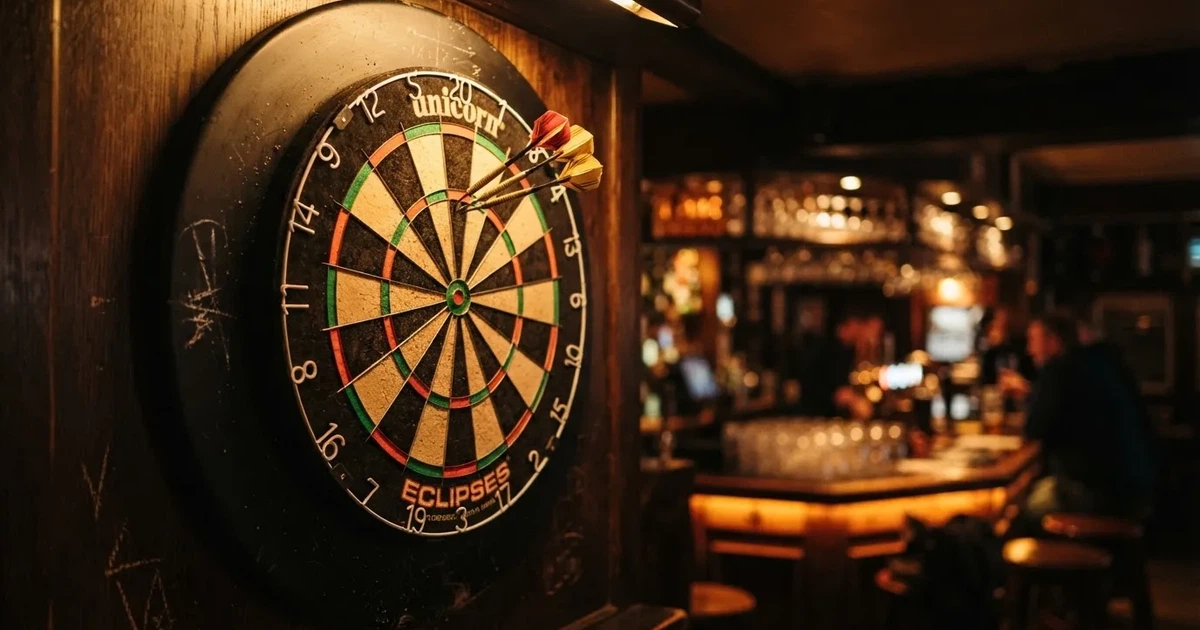
Darts looks like a minor sport on the betting slips of casual punters, until the PDC World Championship rolls around every Christmas and the wagering handle swells into the millions within a single evening. That seasonal surge hides a quieter reality: darts is open year-round at the larger GB-licensed operators, and the shape of those markets — most of them settled mid-leg, many of them cashed out before the checkout — sets darts apart from sports where the bettor waits ninety minutes for a full-time whistle.
The appeal, for the punter weighing where to place a bet, is not that darts markets are deeper than football’s. They are not. It is that darts markets are *legible*: fewer players, fewer variables, fewer edge cases. A dart lands where it lands. The bookmaker’s margin hides inside the prices, not inside the sport. That is where this article spends its time — in the prices, in the rules those prices live under, and in what follows from them when the bettor sits down and places a bet on a Premier League Darts night.
How live darts betting and cash out reshape the in-play experience
Live darts betting is the cluster that defines how the sport is wagered in 2026. Where football forces a bettor to wait for the next goal and tennis for the next break, darts offers a checkout every few minutes. A leg lasts roughly six to eight minutes at the highest level; a set runs to three or five legs; a match is a sequence of sets. The market cadence matches that tempo. Prices move after every visit to the board, sometimes twice in the same turn when a player stands on a double.
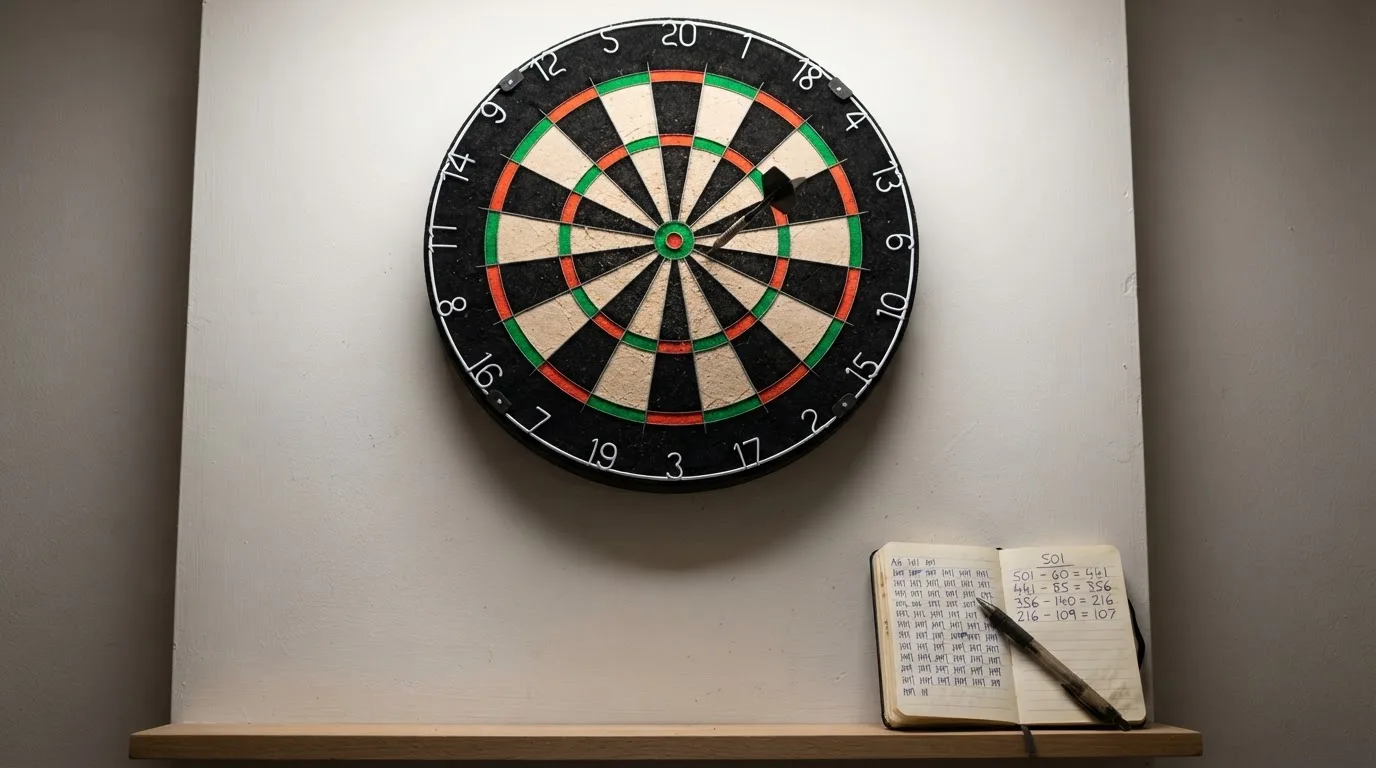
The immediacy changes what the punter does. A pre-match outright winner bet placed on a Premier League Darts night before the venue opens may stand for two and a half hours without the bookmaker touching it. A live bet on the next-leg winner is a thirty-second commitment. That is the entire mechanism, and it is why live darts markets carry more volume than their pre-match equivalents at most operators — the exchange effect, where trading frequency is itself the product, applied to a sport that resets every few minutes.
Cash out layers on top of this. The function lets the punter close a bet before the leg completes, at a price the bookmaker re-quotes continuously through the match. On a darts match this means a bet on the match winner can be locked in after the favourite has broken throw, after a 180, after a missed double. The price is the bookmaker’s, not the bettor’s, and it sits inside the same margin the pre-match price did. Cash out is the bookmaker’s offer to take the bet back at a discount — useful when the match has swung, expensive when it has not and the discount is built in.
In-play on darts at GB-licensed operators comes with one structural limit worth noting: live streaming of PDC events is patchy. Some matches appear on ITV4 in the UK and on bookmaker streams for funded accounts; others do not. Where the picture is absent, in-play prices still trade, but they are slower to react, and the bettor is reading numbers without the visual cue. That gap matters for cash out: a price the bookmaker lifts when a 180 lands without the bettor watching is a price that has already moved.
The larger arc, beyond a single leg, is the momentum narrative that live odds price but never quite settle. A player who breaks in the first leg of a set is roughly twice as likely to win the set as the pre-match market implied; the market corrects for that within seconds and the price comes back. What it does not correct for is the next break, which is where the value lives for a bettor who reads legs well. The arithmetic of that is the page’s worked example, which appears later under the margin discussion.
Predictions, tips and the limits of “best darts bets today”
The cluster around predictions and strategy covers the everyday search terms — darts betting tips, darts betting predictions, best darts bets today — that pull a punter onto a tipster site rather than a bookmaker. The honest framing: tips sell because the punter wants someone to tell them who will win, and no one can. Anybody who could tell them that would not be selling the answer for a fiver.
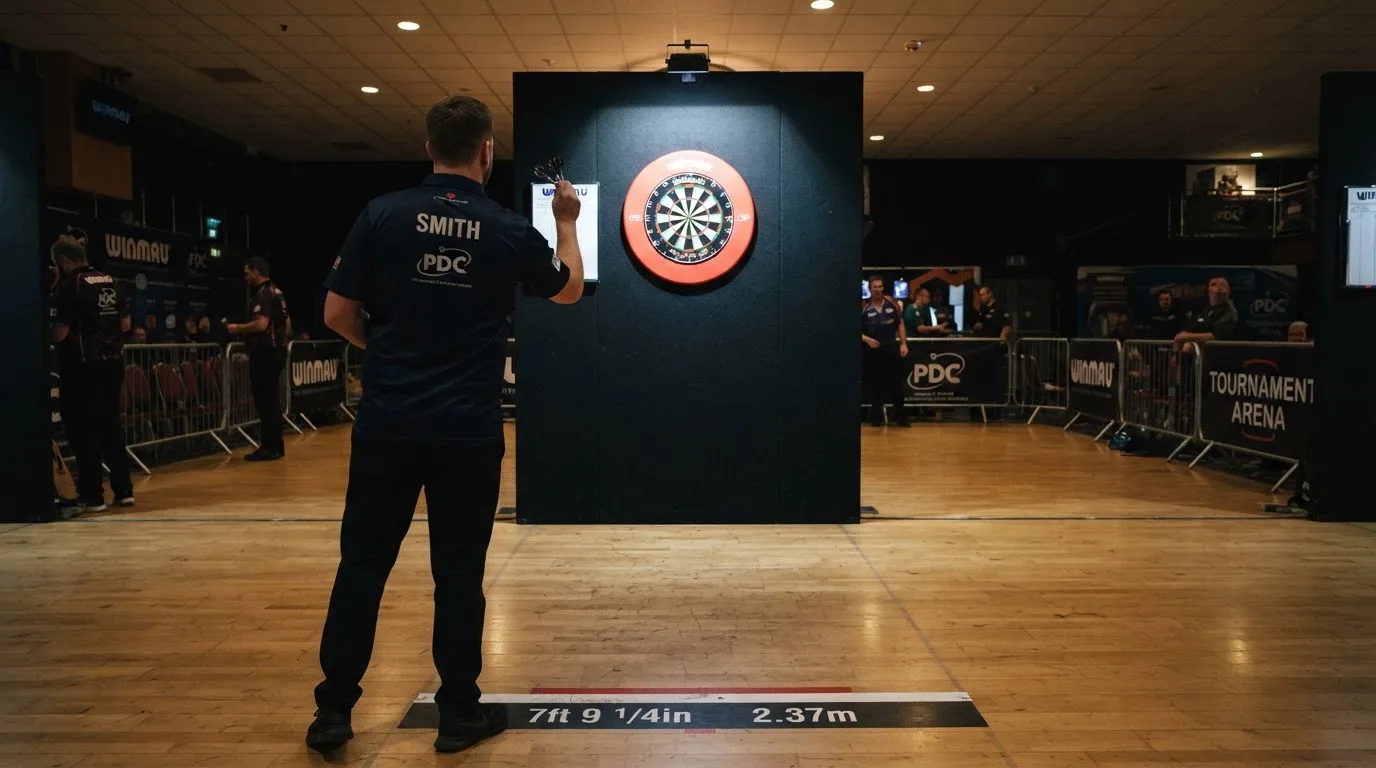
What a tip can do, legitimately, is structure a question. The form a player brings into a tournament is a question worth asking: it has answers in head-to-head records, in first-turn scoring averages, in checkout percentages over the last three months. The match format is a question worth asking: a best-of-five-legs match is much closer to a coin flip than a best-of-thirty-one-legs one is, because the variance of any one leg is high and a short format does not let the stronger player pull away. The legs-to-doubles ratio matters at the sharp end: a player with a 38% checkout percentage under tournament pressure is, over a long match, a different proposition from a player checking out 46%.
None of that is a prediction. It is a framework for pricing a market the punter thinks the bookmaker has mispriced. The bookmaker has its own model, updated every leg, fed by the same head-to-head data the punter sees. The bettor is not betting against a fool; the bettor is betting against an institution with a sharper calculator.
The market-side implication: tips that promise a winner are entertainment, not analysis. Tips that ask the punter to consider checkout percentage over the last twelve months, the format of the match, and the historical record between two players, without telling the punter who wins — that is closer to analysis, and even that closes the gap by a margin, not by a price. The temptation to outsource the call to a tipster is the same temptation that drives a punter to chase an accumulator because it would be enormous if it landed: it is a story the punter wants to be told.
What changes the picture is bankroll discipline, which is the unglamorous half of the strategy cluster. A punter who bets 2% of a defined bank on each selection survives long enough for value to come through. A punter who doubles down after a loss does not. The arithmetic is arithmetic, not taste — over hundreds of bets at prices the bookmaker has set, the bankroll either grows at the rate of the punter’s edge or shrinks at the rate of the bookmaker’s margin, and the only variable the punter controls is stake sizing. That lesson is the lesson of strategy, repeated because it is the only one that survives.
Bet types, odds and how a darts market settles
The cluster on bet types and odds is the cluster that closes first because it is what every other cluster sits on. A darts betting market is a bookmaker’s quoted price on a defined question, and the question must be settled before a price makes sense.
The outright winner is the simplest: which player wins the match, or the tournament. The price is a number. The bettor stakes against it, and the bet settles when the final dart is thrown. Outright bets are volatile over short formats — a best-of-five first-round match is roughly half-favourite, half-underdog in any two-player market with similar rankings — and they reward long-form reading over short-form instinct.
The handicap is the same question with a different scale: the favourite starts the match a set or a leg in arrears, and the bet resolves on the difference rather than the absolute result. How darts handicap betting works is the search the punter wants answered, and the working answer is that the favourite is given a deficit of one or two legs at the outset, and the bet settles on the adjusted score. A -1.5 leg handicap on a best-of-five set match is roughly equivalent to a best-of-nine in the favourite’s favour; the bookmaker’s price reflects the perceived compression of variance. Handicaps let the punter take a view on *how much* a favourite wins, not just whether they win. They are how a price the bookmaker has set at 1.40 becomes a price the punter can back at 1.85, in exchange for accepting that the favourite must win by a margin rather than simply winning.
Correct score markets ask the punter to call the sets-and-legs result: 4-2, 5-3, 6-4 in a first-to-seven final. The odds are longer and the variance is higher. Total legs over/under asks the punter to call the duration: will this best-of-eleven match go over 10.5 legs? The price is short and the sample is small — over a single match, the variance of leg count is wide enough that one missed double can shift the total.
180s markets are a darts-specific oddity. A 180 is the maximum score from a single visit — treble 20, treble 20. Bookmakers price the total number of 180s in a match, the first 180 in a match, whether a player hits a 180 in a specific leg, and (during the televised tournaments) the highest 180 checkout combination. These markets are popular because they reset every visit, and they are popular with the bookmaker because the sample is small and the variance is high.
Accumulators and bet builders multiply the prices of independent legs. A four-fold accumulator pays the product of four prices, less the bookmaker’s margin, which compounds leg by leg. A bet builder — Coral, Betfair, bet365, 888sport and others each offer one — combines markets from a single match into a single price: the favourite to win, over 5.5 legs, both players to hit a 180, the favourite to win the first leg. The same compounding mechanics apply: a five-leg builder at 2.00 per leg is roughly 32.0, less margin, where a true independent 50/50 at no margin would be 32.0 exactly. The gap between those numbers is the cost of the bet.
Settlement rules are where bets go wrong. Darts markets settle on the result of the match as played; a walkover, a retirement mid-leg and a referee decision are not the same outcome and the rules treat them differently. Most bookmakers void bets on a match that does not start; bets on a player to win a specific leg are void if the leg is not played. The punter who has not read the rules reads them for the first time when a market does not settle the way they assumed.
The PDC, the WDF and the tournaments bookmakers price
Darts is unusual among wagered sports in that it has two governing bodies of consequence. The PDC (Professional Darts Corporation) runs the televised professional circuit: the Premier League, the World Series, the Grand Slam, and the headline event of the calendar, the PDC World Darts Championship. The WDF (World Darts Federation) runs the amateur international structure beneath it, with its own world championship in lower-profile venues. GB bookmakers price PDC events heavily and WDF events lightly; that asymmetry is the wagering reality, not a judgement on either organisation.
The PDC World Darts Championship anchors the betting calendar. The 2026 edition ran from 11 December 2025 to 3 January 2026 at Alexandra Palace, London, with 128 players, up from 96 the year before, and a prize fund of £5,000,000, of which £1,000,000 went to the winner. Luke Littler beat Gian van Veen 7–1 in the final. The match format scales with each round: rounds 1 and 2 are first to 3 sets, rounds 3 and 4 first to 4, quarter-finals first to 5, semi-finals first to 6 and the final first to 7. Outright winner markets, set-betting markets and the high-profile in-play markets all open during this period; bookmakers staff up to handle the volume.
The Premier League Darts runs across fifteen or so Thursday nights between February and May, with eight players rotating through a season-long mini-table and a four-player playoff. Outright winner markets, weekly match winner markets and the full in-play suite are live throughout. Premier League Darts is where the live betting cadence is most felt: one event per week, on a fixed evening, in a venue where every leg is televised, and a punter with a funded account can place and cash out within the same broadcast.
The World Series of Darts and the Grand Slam of Darts fill the autumn. The Players Championship Finals and the World Grand Prix round out the calendar. Behind these flagship events sits a touring structure of minor ranking events — Players Championships, European Tour events, development tour cards — where betting volume is much smaller and market coverage at most operators is an outright winner and not much more.
The Champions League of Darts is the short-format team event and is priced as a separate headline. Smaller-market bookmakers offer winner markets only; the larger operators offer group-winner markets, individual match markets and a modicum of in-play coverage. The depth of the betting menu at any one tournament is a function of the bookmaker’s commitment to darts as a product, and that commitment varies enormously.
The cyclical structure of the sport — one major every six to eight weeks, a Premier League night every Thursday, ranking events most weekends — is why darts is treated as a year-round betting product rather than a Christmas-and-Premier-League sport. The punter’s working assumption is that at any given moment, somewhere on the PDC calendar, there is a televised match being priced.
The £5 deposit and the menu of offers on darts in 2026
Bonuses and free bets are the cluster where the marketing language runs hottest and the arithmetic runs coldest. Operators describe a free bet as a gift; the small print describes it as a stake that does not return with the win. The gap between those two framings is the offer.
The free bet is the dominant offer type across GB-licensed operators betting on darts. Sky Bet issues free bets that expire 30 days after crediting, can be used only on single or each-way markets (not multiples), exclude virtuals, and do not return the stake with winnings. The price of those conditions is the price of the offer, and the punter pays it in reduced flexibility: a £10 free bet on a 5.0 winner returns £40 in cash, not £50, because the £10 stake is not paid back. A punter who uses a free bet at short odds leaves a meaningful chunk of the value on the table; a punter who uses it at longer odds captures more of it. There is a calculation behind that sentence — value = free-bet amount × (odds − 1) ÷ odds — and the page returns to it under the margin discussion.
Deposit-gated welcome packages issue free bets or bonus funds proportional to a first deposit and a qualifying bet. Coral’s welcome structure is illustrative: a £20 qualifying bet at minimum odds of 2.0 (1/1) unlocks £40 in free bets within seven days, expiring seven days after they are issued. The wagering requirement on the qualifying bet is one condition; the cap on the free-bet expiry is another; the restriction that they cannot be used on multiples (at most operators) is a third. Each condition costs the punter a route they thought they had.
Best Odds Guaranteed is the racing-market cousin of a price boost: Fafabet pays the bigger of the original price and the starting price on UK and Irish horse racing win and each-way markets from 9am on race days. Best Odds Guaranteed does not apply to darts and the punter should not look for it there; it appears on this page because operator welcome bundles often pair a darts welcome with a racing price guarantee, and the punter reading the small print sees both.
Price boosts and acca insurance run alongside the headline offers. A price boost is a one-off inflation of a specific market — the favourite in tonight’s Premier League match to win, lifted from 1.70 to 2.00 for new customers. An acca insurance refund returns a stake as a free bet if one leg of a multi-leg accumulator lets the punter down. Both are products the punter should price as if the headline did not exist: a price boost at 2.00 on a market the bookmaker’s model prices at 1.85 is a positive-EV bet for the punter, regardless of whether it sits inside a “boost” label. An acca insurance that refunds a £10 stake as a free bet if one leg loses is mathematically meaningful for accumulators with five or more legs at modest prices.
Bonuses that cannot be combined under the 2026 rule change: the promotion rules in force since 19 January 2026 cap wagering requirements on bonuses at 10x (a £10 bonus at 50x needed £500 of bets; under the cap no more than £100), and ban mixed-product promotions that require gambling across two or more product types. A punter who would once have been steered toward a “bet on football, get free spins” bundle will not see that bundle now. Whether the 10x cap applies to free bets with no wagering condition, and whether the cap carries any money-value ceiling, are not established in the published rules and the punter who cares should read the operator’s terms for the specific offer.
The marketing word worth puncturing, recurring, is “free”. A free bet is not free; a bonus is not a gift; a price boost is a bookmaker’s price, not the punter’s. The wagering requirement, the minimum qualifying odds, the expiry window, the market restriction and the non-return of the stake are the price, paid in restrictions rather than in cash. The arithmetic of a typical welcome offer, when worked through, lands at a value below the headline amount — and the gap is the operator’s edge on the bundle. The punter reading the small print finds it.
Comparing the ten reviewed bookmakers on darts markets
Comparing bookmakers on the dimensions that matter for darts starts with the basics: licence and market coverage. The comparison below is built on the Gambling Commission remote licence of each operator — the whole test of whether a brand holds a GB licence — and on what each operator’s own terms state about the subject of darts markets.
The licence column carries the Commission account number (the figure the register uses to identify a licensee) and the licence-holder name. The terms column carries what the operator states publicly about its darts product: whether it offers outright winner markets, in-play markets, bet builders, and the conditions attached to its welcome offer. Where an operator’s own marketing asserts a feature and the small print carves it back, the small print wins on this page. Where the operator does not name a feature in either place, the row reads *“not stated by the operator”* and nothing more.
| Bookmaker | Gambling Commission remote licence | Licence holder | What the operator’s own terms state on darts |
|---|---|---|---|
| 10bet | 043173-R-322899-023 (account 43173) | Blue Star Planet Limited | Cash out, Bet Builder and Live Streaming available across football, tennis and horse racing; darts coverage not specified |
| Sky Bet | 067370-R-341330-005 (account 67370) | SBG Sports Limited | Free bets expire 30 days after crediting, restricted to single or each-way markets excluding multiples and virtuals; non-withdrawable; stake not returned with winnings |
| DragonBet | 064908-R-339041-003 (account 64908) | DragonBet Ltd | Welsh football and rugby, racing, American football, in-play betting and bet builder markets published; darts market depth not specified |
| 888sport | 039028-R-319297-014 (account 39028) | 888 UK Limited | Pre-match and in-play betting, Cash Out, Bet Builder, racing streams, BetFinder form tools, daily boosted odds; darts market depth not specified |
| Fafabet | 057385-R-333191-006 (account 57385) | Taichi Tech Limited | Best Odds Guaranteed on UK and Irish horse racing from 9am on race days; applies only to racing, not darts |
| Star Sports | 009177-R-104555-019 (account 9177) | Star Racing Limited | Phone-based account opening, bet placement and customer support on 08000 521 321; darts pricing not stated by the operator |
| Coral | 054743-R-330863-014 (account 54743) | LC International Limited | Welcome offer: get £40 in free bets when you bet £20 at minimum odds 2.0; free bets expire seven days after issue |
| Betfair | 039439-R-319330-013 (account 39439) | PPB Counterparty Services Limited | In-play betting, Bet Builder, free live streaming of UK and Irish horse racing and football, plus a 90 Minute Payout market for football |
| DAZN Bet | 048756-R-327274-019 (account 48756) | DZBT Limited | Deposits from £5 by debit card, Apple Pay, Paysafecard, Trustly and Skrill; £20 by PayPal; no processing fees; darts market depth not specified |
| Kalooki Sportsbook | 057730-R-333396-005 (account 57730) | Kalooki Sportsbook Limited | GAMSTOP member; identity verified before the first deposit; darts market depth not specified |
The comparison reads as it does because the data is incomplete in the same direction at every operator. Each of the ten brands publishes its licence on its own site and on the Commission’s register, but only a handful state publicly the depth of their darts market — outright winner, set betting, 180s, in-play leg winner — and a reader comparing two operators needs both. The honest reading: a bookmaker that does not name its darts product in its own marketing has not committed to it as a product, and the punter should not assume coverage that the small print does not promise. The bookmakers that have built a darts product — Sky Bet, bet365, Betfair, Coral, 888sport among the larger ones — describe it consistently across seasons; the bookmakers that have not, do not.
The licence row is the same question asked ten times, and it is the only question the Gambling Commission’s register answers authoritatively. Every brand in the table holds a remote general betting standard (real events) licence; Coral additionally holds a remote betting intermediary licence, which is the licence category that covers the exchange function rather than ordinary sportsbook operation. The Commission account number beside each licence is what the punter types into the register to confirm the licence is current; the register is the only place that figure is verified, and the punter who has not checked it has not checked it.
The terms column is honest in the way only small print is honest. Welcome bonuses are described as the operator describes them — Sky Bet’s stake-not-returned condition, Coral’s £40-for-a-£20-qualifier structure, Fafabet’s Best Odds Guaranteed on racing but not darts. Where the operator does not name a feature, the row says so without padding the silence. A punter comparing two operators reads the column and notes which ones state a feature and which rely on the punter to assume one.
What the comparison does not do is name the “best” darts bookmaker. There is no single one, and any ranking that produces a winner is producing an answer the facts do not support. A punter who places a £10 bet on the outright winner of tonight’s Premier League match needs the operator with the sharpest outright price on that selection tonight; that operator may be different tomorrow, and the table does not pretend otherwise.
Where darts betting sits in the broader wagering market
Darts is not a tier-one sport for GB bookmakers — football, horse racing and tennis fill that band — but it is a tier-two sport with full coverage at most of the larger operators and patchy coverage at the smaller ones. The market divides cleanly along bookmaker size. Bet365, Sky Bet, Betfair, Paddy Power, Coral, Ladbrokes, William Hill, 888sport, Betway and Unibet each carry deep darts menus: outright winner, set winner, leg winner, 180s, correct score and the in-play equivalents. Smaller and newer operators — Kalooki, DAZN Bet, Fitzwilliam Sports, Lottoland, Star Sports — typically carry outright winner markets on the headline events and may carry the odd in-play market on the televised nights.
The split is not about licence; every GB-licensed bookmaker can offer darts. The split is about product investment. Darts is televised in the UK for free on ITV4 (a terrestrial channel); it does not require the bookmaker to fund its own streaming — that, more than anything else, is why the smaller operators can offer darts markets at all. A bookmaker that would otherwise have to license a picture stream can cover darts without licensing one, and that changes the economics of carrying the sport.
The market is mature but not deep. A darts match at a major tournament might have 30-40 pre-match markets at a top-six bookmaker and a dozen at a smaller one. That is orders of magnitude below a Premier League football match and modest even against a WTA tennis match. The punter should not expect the menu to look like a football menu, and the bookmaker should not be judged for not offering one.
What darts has that most tier-two sports lack is a darts-specific media product: Sky Sports’ dedicated coverage, ITV’s free-to-air hours, dedicated YouTube channels, podcast circuits. The punters who bet on darts are also the punters who follow it as a sport, and that overlap means the betting market is more mature in proportion to its size than its size implies.
The legal frame around betting on darts in Great Britain
Darts sits inside the same legal frame as football, horse racing and tennis. The Gambling Act 2005 is the statute; the Gambling Commission is the regulator; a remote general betting standard (real events) licence is the licence category. There is no statutory list of permitted sports for betting — “darts” is not on a schedule and does not need to be; the bookmaker holds a category licence and offers darts markets under that licence, with the markets themselves governed by the operator’s own rules and the Licence Conditions and Codes of Practice (LCCP).
The Commission’s public register is the test of who holds a licence. The register can be searched by business name, trading name, domain or account number; it is the only authoritative source for whether a brand is currently licensed, and any operator a punter bets with should be checked against it. The register changes daily as licences are granted, suspended or revoked, and a licence that was current yesterday is not necessarily current today.
Since the Gambling (Licensing and Advertising) Act 2014, an operator whose remote facilities are used in Great Britain must hold a Commission licence regardless of where it is based. A Curaçao or Malta licence is not a substitute, and an operator that points to one rather than a UKGC account number is not licensed for Great Britain at all. The punter who bets with such an operator loses the protections that come with a GB licence: no GAMSTOP coverage, no Commission complaints route, no approved dispute-resolution body, no British consumer redress, no 10x bonus cap, no £150 financial vulnerability check. Legal to use is not the right framing; unprotected to use is.
An offshore operator is one whose brand is named on a non-UK register only, or one whose UK-facing site does not list a UKGC account number. Punter-facing names that fit that description move slowly — most consumer-facing brands either hold a GB licence or do not actively market into GB. The punter who finds a brand claiming “Darts, 1.95 on every selection” and no UKGC reference has found the case in question.
Credit cards are banned for gambling in Great Britain since 14 April 2020 — a ban that extends to credit-card-funded e-wallet deposits. Debit cards are not affected. The minimum age is 18 everywhere, and name, address and date of birth are verified before a first deposit: no anonymous play at a GB-licensed operator. This is consumer-protection legislation, not customer-service inconvenience, and a brand that waves verification in favour of “deposit and play” is not licensed.
The player’s tax situation in Great Britain is the simplest line on the page: the punter pays no tax on betting winnings (this is general information, not tax advice; professional gamblers are a different matter and should ask HMRC). General Betting Duty is an operator tax that sits at 15% today and rises to 25% on remote bets (other than on UK horse racing, pool betting and in-person terminals) from 1 April 2027. Whether the operator passes duty on through odds is not established, and the punter should never read “GB-licensed” as meaning the operator absorbs duty silently.
Responsible gambling tools, GAMSTOP, and what the punter gets back from the regulator
Every GB-licensed online operator is a member of GAMSTOP, the national multi-operator self-exclusion scheme. A punter who registers with GAMSTOP blocks themselves from every licensed online operator in Great Britain for a chosen period — six months, one year, five years, or five years with auto-renewal — and after the minimum period the exclusion remains in force for a further seven years unless the punter explicitly asks GAMSTOP to remove it. GAMSTOP covers online sites and apps; the separate MOSES registration covers betting shops. The scheme has been a mandatory licence condition for online operators since 31 March 2020, and a brand that does not enrol a punters who registered is breaking its licence.
The financial vulnerability check (LCCP condition 3.4.4) applies at licensed remote operators once a punter’s deposits minus withdrawals exceed £150 in a rolling 30 days since 28 February 2025: the operator runs a public-record check (for bankruptcy or county court judgments, for instance) — not an income check, not a credit reference check. Financial risk assessments, the affordability checks reported in the press, sit on a Commission-announced staged plan from 7 July 2026 with no published start date.
Deposit limits under RTS 12 require operators to offer the punter a gross deposit limit on a fixed time window. The first changes applied from 31 October 2025; a second phase is postponed to 30 September 2026 and may or may not yet be live. There is no state-set ceiling on stakes or losses — the limit is the punter’s choice, set inside the operator’s safer-gambling tools.
Where the punter can get help: GamCare runs the National Gambling Helpline; GambleAware funds treatment and research; the NHS runs gambling clinics; Gamblers Anonymous runs mutual-aid meetings across the country. These services are listed at every licensed operator’s safer-gambling page, and the punter who is worried about their own or someone else’s betting will find them listed there.
The maths at the centre of this cluster is the maths of staying in the game. A punter who places a bet on a darts match markets the bookmaker has set with a 5% margin is paying five pounds of every hundred wagered to the bookmaker, in expectation, over many bets. That cost is invisible on a single bet and crushing on a thousand. The safer-gambling framework is built on the same observation: the cost of one accumulator is invisible; the cost of one accumulator a week for a year is the punter’s annual wages if the wagering is large. The tools the regulator and the operator provide — deposit limits, timeouts, GAMSTOP — exist because at scale, the maths is the maths.
Working out a margin on a darts betting market: the page’s example
The worked calculation this page performs is on a margin: what fraction of every pound wagered on a market the bookmaker keeps as its edge, and how that fraction is hidden inside the prices a punter sees. An example comes from the kind of market a punter might back without thinking: a two-way darts market priced at 1.90 / 1.90 (the fractional form being 9/10, sometimes written 10/11 the other way).
The arithmetic, written out for completeness, is straightforward. A two-way market with decimal prices 1.90 / 1.90 has an implied probability on each side of 1 ÷ 1.90 = 0.5263, or roughly 52.63% each. Add the two together and you get 1.0526 — 105.26% of “true” probability priced into the market. The 5.26% gap is the bookmaker’s margin, also called the overround. Of every £100 staked on this market in aggregate, £5.26 is the bookmaker’s expected take and £94.74 is paid back to winning punters.
Two illustrations bring the figure to life. At a 1.90 / 1.90 darts market with a £10 stake on the selection, a winning bet returns £19 (stake × odds) for a profit of £9; a losing bet returns nothing and the £10 is gone. The bookmaker’s edge is the difference between those two outcomes averaged across many bets: at this price it is 5.0% of total stakes in aggregate, not of any single stake. At a market priced at 1.70 / 2.20 — a more typical favourite-and-underdog split on a darts match — the favourite implies 58.82% and the underdog 45.45%, summing to 104.27% and a margin of 4.1%. The bigger favourite price (shorter odds) widens the favourite’s implied probability and tightens the margin only marginally; the bookmaker is taking roughly the same slice either way.
The key assumption for the calculation: these margins are averages across many bets. A single bet at 1.90 either wins or it does not, and the bookmaker does not “take” 5.26% of that bet in cash — it takes whatever the winning payout is not. The 5.26% is the long-run share. A punter placing ten such bets and winning six of them has won six times the return minus the stake, lost four times the stake, and the bookmaker’s edge is implicit in the gap between the six wins’ payouts and the full £100 staked. Reading the result this way is what the marketing language does not do: the bookmaker does not “take £5.26 from the punter’s £10 bet”, and writing that would be a mistake. The bookmaker takes the difference between the true probability and the implied probability over the long run.
The corollary for a punter reading prices: a “best odds” bookmaker is one with the lowest margin on the same market, and on a sport like darts where most bookmakers offer the same handful of headline events, the margin is what separates them. A bookmaker at 1.91 / 1.91 (margin 4.71%) is charging the punter less than one at 1.90 / 1.90 (margin 5.26%). Both prices feel round-number to the punter clicking a button; the difference is fifty-five pence of every hundred wagered over many bets. Identifying which bookmaker runs the lowest margin on a given darts market is the work of comparing odds on the night, not the work of reading a comparison like this one.
The free-bet value that falls out of this section’s maths is worth a brief aside. A free bet of £10 at decimal odds 3.00, used on a market with a 5% margin, is worth £5.30 in expectation (the formula being £10 × (3.00 − 1) ÷ 3.00 × 0.95). The punter does not get £20 back if it wins; they get £20 in profit minus the £10 stake, and the stake does not return. The £5.30 is what the offer is “worth” in expectation; it is not what it pays.
The corollary for the punter: free bets at long odds capture more of the offer’s value than free bets at short odds. A free bet at 5.00 is worth £3.04 with no margin; at 10.00 it is worth £3.42; at 2.00 it is worth £0.95. The punter who backs short-priced favourites with free bets leaves money on the table, and the punter who uses them at longer odds pockets more of the offer — within the market restrictions the operator has set. Sky Bet’s restriction that free bets can only be used on single or each-way markets excluding multiples is a route restriction that costs the punter more flexibility, not raw value; understanding both is reading the small print.
What each licensed bookmaker offers on darts
The ten operator write-ups that follow are not endorsements. They are summaries of what each operator publicly states about its own product, set against what the Gambling Commission’s register says about its licence. A write-up that ends without a verdict is one that has stopped early; a verdict below is a judgement, in plain language, of the brand against the subject of the page.
10bet — depth on the bigger sports, darts coverage light on the marketing
10bet is operated by Blue Star Planet Limited under Gambling Commission account 43173 — a remote general betting standard (real events) licence. The 10bet product, as the operator describes it, runs deepest on football, tennis and horse racing, with Cash out, Bet Builder and Live Streaming visible across those sports. Darts is not a sport the operator has named in its published product description; the punter placing a bet on darts at 10bet should expect an outright winner market on the headline events and not much more.
The verdict: 10bet sits in the group of GB-licensed operators that has invested in a tier-one product line (football, racing, tennis) and treats darts as a complement. For a punter whose darts betting is occasional and who values the tier-one depth most, 10bet is a reasonable choice; for a punter who bets on darts every Thursday through the Premier League, the depth question will come up sharper than the licence question.
Sky Bet — the headline free bet with the stake-not-returned condition
Sky Bet is operated by SBG Sports Limited under Gambling Commission account 67370. The Sky Bet free bet structure is the cluster’s reference example: free bets expire 30 days after crediting, can be used on single or each-way markets only (not multiples), exclude virtuals, are non-withdrawable and do not return the stake with winnings. None of those conditions are unusual at a GB-licensed operator; the terms are public; the punter who has read them has read them.
The verdict: Sky Bet’s headline offer is a price, not a gift — the value of a £10 free bet at 3.00 is roughly £5.30 at the maths above, and the route restriction (single or each-way) tells the punter not to expect to use it on an accumulator. For the punter who reads the small print and weights the free bet at long odds, Sky Bet is a competent GB-licensed operator with a usable welcome; for the punter who assumes the headline amount is cash, it is not.
DragonBet — Welsh roots, broader coverage, darts not the headline
DragonBet is operated by DragonBet Ltd under Gambling Commission account 64908. The brand’s published product runs Welsh football and rugby first, with racing, American football, in-play betting and bet builder markets layered on top. Darts is not named by the operator as a product line in its public description; the punter looking for a darts market on DragonBet will need to check the operator’s own betting slip at the time of the event.
The verdict: DragonBet is a GB-licensed brand with a clear product focus (Welsh sports, racing, American football) and a comprehensive live offering; darts is not the headline, and the punter who arrives for darts alone should check the menu before depositing.
888sport — broad coverage, daily boosts, darts not separately marketed
888sport is operated by 888 UK Limited under Gambling Commission account 39028. The product description from the operator runs long: pre-match and in-play, Cash Out, Bet Builder, racing streams, BetFinder form tools, a live bet feed and daily boosted odds. Darts is not named in the product line, which is a description of the framework rather than the sport-by-sport catalogue. The punter on 888sport for darts will find the headline events covered and the menu depth should be checked directly.
The verdict: 888sport is a broad-coverage GB-licensed brand with a sophisticated product framework; for a punter who already uses 888sport for football or racing, darts is a straightforward add; for a punter arriving specifically for darts, the menu depth is a question the punter should answer from the live site.
Fafabet — Best Odds Guaranteed on racing, darts welcome bundled without the racing perk
Fafabet is operated by Taichi Tech Limited under Gambling Commission account 57385. The headline product feature is Best Odds Guaranteed on UK and Irish horse racing win and each-way markets from 9am on race days: if the starting price is bigger than the original price the punter took, the bigger odds are paid. The rule applies only to racing; the punter betting on darts at Fafabet gets no BOG benefit and should not expect one.
The verdict: Fafabet’s BOG is a racing-market advantage that does not apply to darts. The punter who bets on both finds a single safer-gambling envelope across two products, but those whose focus is strictly darts will find the usual menu-depth questions apply.
Star Sports — phone-driven service, darts product not stated publicly
Star Sports is operated by Star Racing Limited under Gambling Commission account 9177. The distinctive feature is operational rather than product: a punter can ring 08000 521 321 to open an account, place bets or ask customer queries, an unusual offer in an industry that has moved online. Listings for Star Sports describe the brand as covering darts among other sports, but the operator’s own published product page does not name darts as a feature line.
The verdict: Star Sports is a GB-licensed operator with a distinctive phone-led service tier, appealing to those who prefer direct communication over online betting slips. Those who bet strictly online will find other operators provide more direct product visibility.
Coral — the £40-for-£20 welcome with a seven-day expiry
Coral is operated by LC International Limited under Gambling Commission account 54743, with both a remote general betting standard (real events) licence and a remote betting intermediary licence. The headline welcome offer: get £40 in free bets when you bet £20 — a deposit and a sports bet of £20 or more at minimum odds of 2.0 (1/1), with the £40 issued within seven days and expiring seven days after issue. The punter reading this should also know LC International also operates other GB-licensed brands under the same licence umbrella; Coral’s licence is the same licence those brands sit under, and the punter should not present them as independent of one another.
The verdict: Coral’s welcome offer is a standard tier-one package at a GB-licensed operator, though the seven-day expiry requires prompt usage. It functions well as a supplementary betting destination for punters already engaged with other sports, but darts-only bettors should assess the market menu against that welcome package.
Betfair — exchange plus sportsbook, depth of coverage the strongest in the pool
Betfair is operated by PPB Counterparty Services Limited under Gambling Commission account 39439, holding a remote general betting standard (real events) licence. The product includes a sportsbook and, separately, an exchange. The sportsbook layer offers in-play betting, Bet Builder, free live streaming of events such as UK and Irish horse racing and football within the app, and a 90 Minute Payout market for football. The exchange layer lets the punter lay as well as back, which is the structural difference from a sportsbook and the structural advantage for a punter pricing a darts match with conviction.
The verdict: Betfair is the strongest product-depth proposition in the reviewed set. The exchange is not a darts-specific feature but it is a darts-relevant one: a punter who believes the back book on the favourite is overpriced can lay the favourite on the exchange at a better price, and the headline value of that is more important for a sharp darts punter than any welcome offer. For the punter arriving at darts alone, Betfair is the operator most likely to have the deepest menu, the livestream, and the in-play coverage the punter wants.
DAZN Bet — low-deposit entry, broader sports mix, darts product not deeply marketed
DAZN Bet is operated by DZBT Limited under Gambling Commission account 48756. The product line covers a range of sports betting and the deposit floor is the headline: deposits start at £5 by debit card, Apple Pay, Paysafecard, Trustly and Skrill; £20 by PayPal. No processing fees are charged. Darts is not named as a feature product in the published description.
The verdict: DAZN Bet’s low-deposit entry is the brand’s most distinct feature against the comparison. For a punter with a small starting bank — a fiver or a tenner — DAZN Bet is one of the GB-licensed operators that lets them stake at the floor without an ask of £20 or £50. For a punter for whom the deposit floor is irrelevant, the comparison is back to menu depth.
Kalooki Sportsbook — GAMSTOP enrolled, identity verified, smaller product line
Kalooki Sportsbook is operated by Kalooki Sportsbook Limited under Gambling Commission account 57730, a remote general betting standard (real events) licence. The brand is a GAMSTOP member (a mandatory condition for online operators since 31 March 2020 rather than a differentiator) and verifies identity before the first deposit (also mandatory). The product line is smaller than the tier-one operators; the punter who arrives at Kalooki specifically for darts should check the operator’s own menu on the day.
The verdict: Kalooki is a GB-licensed operator at a smaller scale than the tier-one brands. For a punter who values a smaller-scale bookmaker that still operates inside GB licensing, Kalooki is a usable destination; for a punter who wants menu depth on darts, the tier-one operators are likelier to have it.
Read the small print and the price before the headline and the welcome
The marketing word on which most GB-licensed operators sell a darts welcome is “free”. It is the word that does the most work in headlines and says the least in arithmetic. A £40 free bet is not £40 in cash; it is £40 in stakes that do not return with the win, with a seven-day expiry at some operators, with a market restriction at others, with a minimum qualifying bet on the deposit side at Coral. The punter who walks in on the headline alone leaves value in the small print; the punter who reads the small print finds the headline.
Read the licence row in the comparison table above. Then read the rest of the columns. Then decide which operator covers the menu the punter bets from. The data is honest in the way small print is honest; the welcoming marketing is not.
Frequently asked questions
How does a punter bet on darts in Great Britain?
A punter bets on darts at a GB-licensed operator by opening an account, completing the identity verification (name, address and date of birth) that the Gambling Commission requires of every licensed remote operator before a first deposit, and placing a bet from the betting slip. Most operators offer darts outright winner markets on headline events; the larger operators add in-play, set betting, leg betting, 180s markets and bet builders.
What is darts betting?
Darts betting is the wagering of money on the outcome of a darts match, leg, set or tournament. Markets include outright winner, set winner, leg winner, handicap, correct score, total 180s, first 180, and accumulators combining selections from one or more matches. The bettor backs an outcome at a decimal or fractional price; the bookmaker holds the margin between the implied probabilities of all outcomes and 100%.
How does darts handicap betting work?
A darts handicap gives one player a starting deficit of one or more legs or sets, with the bet settling on the adjusted score rather than the raw result. A -1.5 leg handicap on a best-of-five-legs match means the favourite must win by two or more legs in the match; a price of 1.85 on that market reflects the implied probability the favourite covers the line. Handicaps let the punter back a stronger favourite at a longer price than the outright winner market offers.
How is a bookmaker’s GB licence checked?
The Gambling Commission publishes a public register at the Commission’s website, searchable by business name, trading name, domain or account number. The punter enters the operator’s name or the URL of the brand’s site; the register confirms whether the licence is current, which category it sits in, and the licence-holder name behind it. A brand whose name does not appear on the register is not licensed for Great Britain, regardless of any other licence it claims.
How is the return on a bet worked out and what is the bookmaker’s margin on a market?
For a single bet at decimal odds *o* and stake *s*, the return is *s × o* if the bet wins, and zero if it loses. The profit (return minus stake) is *s × (o − 1)*. The margin is the fraction of every pound wagered on a market the bookmaker keeps in expectation, calculated by summing the implied probabilities of all outcomes and taking the gap to 100%. On a two-way market priced at 1.90 / 1.90, each side implies a 52.63% probability; the two sum to 105.26%, leaving a margin of 5.0%.
Tennis, darts & cue sports – Best Betting Tips
Content created by the «Best Betting Tips» team
