
Where to bet on chess in Great Britain and what the odds actually cost
 Available in US
A chess match does not look like the rest of a sportsbook. There is no pitch, no clock of the kind a punter reads at a glance, and no score that climbs. A result is 1–0, 0–1 or ½–½, written in the same notation whatever the stage, the rating gap or the clock on the wall. That small grammar shapes everything that follows: how a market is built, how the odds are priced, what an in-play bet can settle on, and what a bookmaker’s margin looks like on a sport that offers three outcomes and a thick tail of draws.
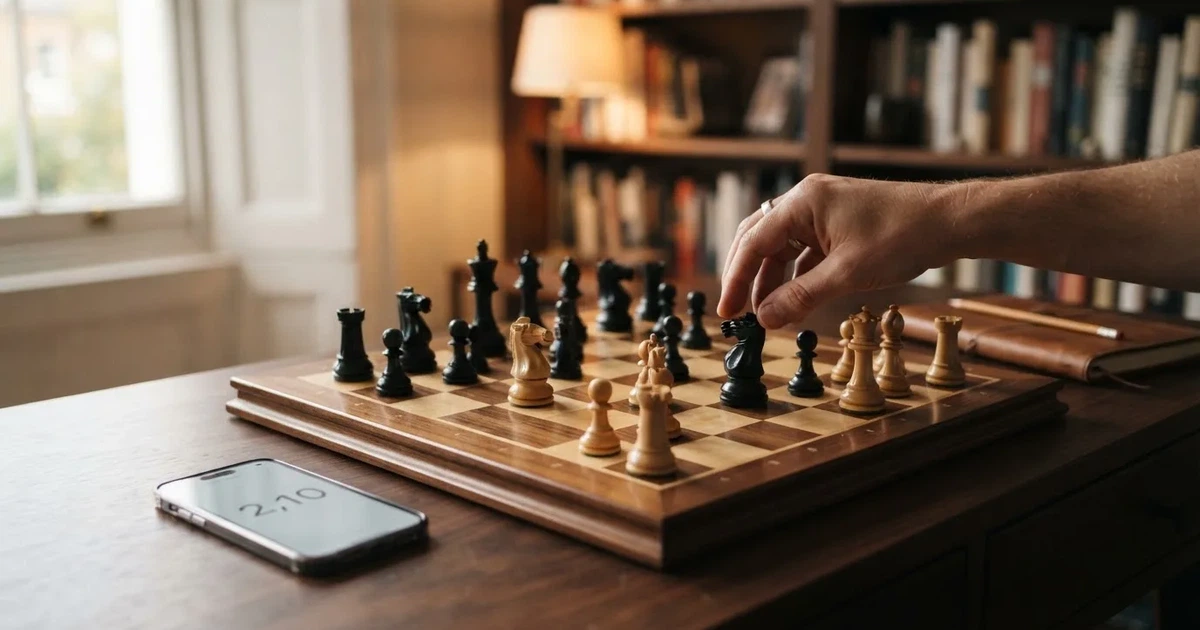
This guide covers online chess betting in Great Britain as it stands now: the bookmakers that take chess bets, the markets they actually list, how the prices are constructed and what they cost the punter, what live play and cash out look like on a sport without a clock in the usual sense, and the legal and safer-gambling frame that any remote bet on a British screen sits inside.
Data current as of 27 October 2026, verified against the Gambling Commission’s public register and the operators’ own terms.
Live chess betting and what cash out is worth on a three-outcome game
Live chess betting is the part of the market most newcomers misjudge. Football, tennis and cricket all have clocks a punter can read with one glance; chess does not. A position can look lost on move 24 and be drawn on move 41, and a game that looks equal at move 30 can be over by move 38. The odds on a live chess market therefore move on engine evaluation as much as on the clock, and a bookmaker that streams the board live is offering a price on information the punter is also reading in real time.

In-play chess sits inside the wider in-play regime for remote operators licensed by the Gambling Commission. The controls on what an operator may offer, when it may suspend a market and how it must handle a customer who tries to bet on a position the engine has long since priced are operator-level licence conditions, not statute. The practical effect is that licensed brands run in-play chess under their own trading desks, and a market can be suspended the moment a significant move is detected. A punter who watches the board on a streaming client and assumes a second or two of latency is enough to arbitrage is usually wrong — the suspension tends to land before the bet is accepted, and where it lands a fraction late, the operator’s right to void a bet taken on a stale price is the rule rather than the exception.
The markets offered live are thinner than the pre-match menu but consistent across the books that take chess seriously. Match result (White, draw, Black), the next game of a match series, total games in a series with over/under lines, and at the bigger events a handicap on the match score are the standard set. Some books add a “to win the tournament” market that stays live through the early rounds; on long events like the Candidates or a World Championship match, that market is the closest thing chess offers to a bet that can sit open for weeks.
Cash out on a live chess market is closer to a trading screen than to a sportsbook button. The offer is the bookmaker’s mid-price on the original selection at the moment of cash out, less its own margin on the cash-out price itself, which is higher than the margin on the pre-match or in-play bet. A punter who routinely takes a cash-out offer on a chess position is paying for the convenience twice — once in the wider market margin and once in the cash-out spread. On positions that swing sharply with a single move, a punter who waits two or three plies can often do better; on positions where the engine evaluation is genuinely flat, the cash-out spread is what it costs to step away from a market the operator has no strong view on. The same logic applies to bet-builder products: a same-event multi on chess is rare, and where one is offered the per-leg margins stack into a compounded book that the punter should expect to be wider than the singletons.
For a punter reading in-play chess, the practical order runs: confirm the operator is streaming the boards or has named its data feed, confirm the cash-out spread rather than assume it equals the live margin, and decide before the move lands whether the position is the kind that will swing the price in one direction or stay flat — because that is what decides whether waiting a few plies is worth more than the spread on the cash-out button.
Predictions, analysis and what “strategy” actually does on a chess market
Chess betting tips and chess betting strategies trade on a confusion. The game itself is solvable in principle — an engine running on a phone will draw against a world champion — but the games a punter bets on are not engine-versus-engine games. They are human games, played under time pressure, with blunders, with form, and with the small irrationalities that any sport carries. A model that prices chess purely on engine evaluation will lose to a bookmaker that does the same thing, because both are pricing the same information; a model that adds human factors (form, time-trouble rates, head-to-head, stamina at long match length) can find edges in specific match-ups, but those edges are narrow and they shrink as the field matures.
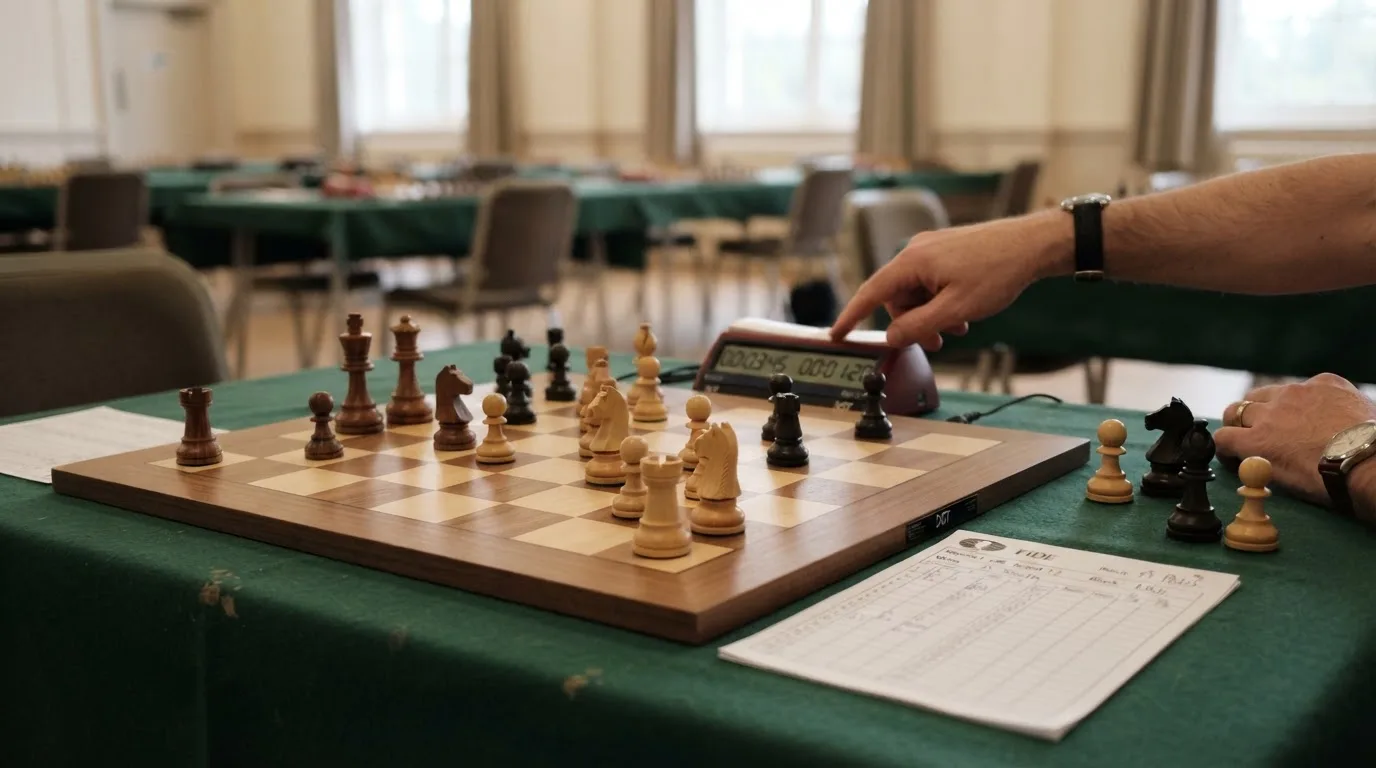
Bankroll discipline is where most losing chess bettors lose. The draw rate at elite level is high — well over half the decisive games in many tournaments end drawn — so a punter who backs a single outcome at single-stake Kelly sizing will spend long stretches giving back. A flat unit, a stop on draw-heavy events, and a hard rule against chasing a tournament that has already gone wrong are the boring parts of any staking plan, and they are the parts that decide whether a tipster edge is money in the pocket or a series of small wins followed by one bad week that wipes them out.
Analytic work that pays off tends to be specific rather than general. The opening repertoire of each player, the time-control they prefer, their record in must-win situations, and the way their results degrade in rapid and armageddon games are all factors a bookmaker’s price may not fully encode. The punter’s edge on a niche event is usually smaller than a tipster headline suggests; it is real, but it is paid for in hours of work that the headline never mentions.
The honest frame: prediction work on chess is closer to sports modelling than to tipping, and the punter who treats it as the latter will bleed slowly until a tournament goes against them. The punter who treats it as the former — narrow edges, flat staking, hard limits, no chase — is the one whose bankroll is still intact by the end of the year.
Chess bet types, how odds are built, and where the margin lives
A chess market is built on a small number of selections. The three-way match result (White, draw, Black) is the standard. At a multi-game match, the series winner, the correct score, total games over/under, and a handicap on the match score extend the menu. At a Swiss or round-robin tournament, tournament winner, top finish, and head-to-head lines between two named players are common. A bookmaker’s price on each market is a decimal odds figure that already contains its margin: the sum of the implied probabilities across all outcomes is greater than 100%, and the gap between that sum and 100% is the overround the bookmaker keeps on the market.
The margin on a chess match-result market is wider than on a typical football 1X2, for two reasons. The first is the draw. A draw in elite chess is the modal outcome, not the upset, and bookmakers price it accordingly; the implied probability of the draw sits between 35% and 55% on most elite games, and that single thick outcome gives the bookmaker room to push the favourites’ prices shorter than they would be on a sport where draws are rarer. The second is liquidity. Football and horse racing carry liquidity that lets a sharp bookmaker run a tight margin on the headline market; chess markets are thinner and the margin is correspondingly wider. A punter who reads a chess price expecting the margin of a Premier League 1X2 will be overpaying by several points.
The worked margin on a simple two-way line tells the story. Take an illustrative two-way market priced at decimal odds of 1.90 / 1.90: the implied probability of each side is 1 ÷ 1.90, or about 52.6%. Across the market, the sum of implied probabilities is about 105.3%, and the bookmaker’s margin is the gap above 100% — in this example around 5.3% of every unit bet on the market, give or take a tenth of a point depending on rounding. That band of roughly 4–6% is the kind of margin a tight bookmaker runs on a liquid chess market; on a niche event or a player-specific market, the margin can climb to 8–10% or higher. The margin is not stated by the bookmaker; it is what is left when the implied probabilities are summed and the gap above 100% is read off.
A combination bet — an accumulator — multiplies the prices of the legs into a single return and stacks the margins leg by leg. Three legs at 1.90 each give a combined price of about 6.86 and a compounded margin that sits well above the per-leg margin of 5.3%; for a four-legger the compounded margin is higher still. The punter pays for the compounding whether the accumulator wins or loses, and the long-shot end of an accumulator is the place where the compounded margin bites hardest, because the bookmaker can afford to shorten the favourite and lengthen the longshot on each leg and still leave a compounded book that looks attractive to a punter who reads only the headline return.
The return on a single winning bet is the stake multiplied by the decimal odds: a £10 stake at decimal odds of 2.50 returns £25, of which £15 is profit and £10 is the original stake returned. A free bet, where the stake is not returned with the win, returns only the profit at those odds — £15 in this example — and that distinction is the one the marketing rarely spells out.
Chess tournaments the betting market follows
Chess is not a single sport in the betting sense; it is a stack of events at different lengths, different formats and different liquidity. The events that draw a real market are the ones the betting public has heard of, and the ones that draw only a few bookmakers are the events where the prices are widest.
The World Chess Championship match sits at the top. The current titleholder is Gukesh Dommaraju, who won the title in 2024; the next cycle of qualifying runs through the Candidates, the Grand Swiss, and a small set of rated events. A title match is a long event — fourteen classical games under FIDE rules, with tiebreak rapids and an armageddon if needed — and the markets that sit on it stretch from the match winner to the correct score, total games, and any individual game result. The Candidates tournament sits below the match and feeds it; the field is eight players in a double round-robin, the format rewards consistency, and the draw rate at the Candidates is high enough that bookmakers price the favourite’s odds shorter than the field’s true chances would suggest.
The major open tournaments sit below the closed events. The Grand Swiss, the Norway Chess, the Sinquees, the Tata Steel and a small set of super-tournaments in the US and Europe carry lines on individual games and on tournament winner; the field is mixed enough that the prices are less correlated, and a punter with a view on form can find edges that do not exist at the top of the cycle. Online events, rapid and blitz series, and the chess streamers’ own tournaments carry markets at some books and not at others, and the prices on those events tend to be the widest in the calendar.
The governing body that runs the rules is FIDE, the International Chess Federation. FIDE publishes the Laws of Chess in its Handbook, and the rules a bookmaker settles on are the FIDE rules at the start of the event unless the operator’s terms say otherwise. A game drawn by stalemate, by agreement between the players, by claim of threefold repetition, or by claim under the fifty-move rule is a draw; since 2014, fivefold repetition and the 75-move rule end the game automatically without a claim. Those rules govern what the bookmaker pays out on, and they are the rules a punter should know before laying a bet on an end-of-game line.
The history matters less than the calendar at the betting window, but it sets the field. Wilhelm Steinitz claimed the title in 1886 and is the first universally recognised World Chess Champion; the modern lineage is short and well-known, and a punter who reads a match line without knowing who has the title is reading it wrong.
The ten licensed bookmakers taking chess bets in Great Britain
The bookmakers below are the brands that take chess bets from customers in Great Britain and that hold a remote general betting standard licence for that activity on the Gambling Commission’s public register. A licence is not a recommendation and it is not a ranking; it is the legal threshold for taking a chess bet from a British screen. Several of these brands also run other sports and other products, and a punter’s choice between them turns on which other markets they bet on, which app they want to live in, and which welcome terms they can stomach.
The chess menus on these books vary. Some run a deep chess line on the headline events and a thin line elsewhere; some run chess only at the World Championship and the Candidates. The punter who wants a real market on a Norwegian event or a US rapid tournament will probably need to look at the books that stream those boards.
Midnite — deep in-play, acca builder, the small chess welcome
Midnite holds Gambling Commission remote licence 101839 and is operated by Midnite Limited. The site shows in-play events, an acca builder, popular accas and price boosts with maximum-stake limits. The welcome terms for new customers are a £5-or-more pre-match bet at minimum odds of EVS (2.0) within 14 days of sign-up, in return for £25 in free bets and 50 free spins, valid for 7 days.
Midnite’s draw for a chess punter is the in-play menu and the acca builder; the welcome is small in cash terms but carries a 14-day window that is comfortable for a punter who does not bet every day. The free bets are valid for 7 days from issue, which is a tight clock on a sport where the headline events are spaced weeks apart.
The verdict: ideal for an in-play punter who wants a thin welcome rather than a heavy one with a long turnover requirement.
Tote — pool betting on the headline racing, with a separate book for the rest
Tote holds Gambling Commission remote licence 54779 and is operated by TDCO Limited. The brand runs pool betting on British and Irish racing alongside a fixed-odds book on other sports. The pool product is the brand’s signature, and the fixed-odds chess menu sits inside that wider book.
Tote’s draw for a chess punter is the pool product if they bet on racing and want a single wallet for racing and chess; the cost is that the fixed-odds chess menu is rarely the deepest in the market. A punter who wants the tightest chess price on a World Championship game will usually find it elsewhere.
The verdict: a strong choice if you already use the Tote pool product and want to keep your bankroll in one place. If you are here purely for the chess odds, the menu depth may be a limiting factor.
BetGoodwin — small welcome, three free bets at different shapes
BetGoodwin holds Gambling Commission remote licence 2927 and is operated by Goodwin Racing Limited. The sports welcome is structured as three separate £5 free bets — a £5 sports bet, a £5 acca and a £5 Sub-Cover bet — on the back of a £10 qualifying bet.
BetGoodwin’s draw for a chess punter is the split welcome, which lets the punter try three different bet shapes with the bonus money rather than one. The Sub-Cover bet is a BetGoodwin-specific product and a punters who does not know what it covers will find the terms in the small print.
The verdict: a good option if you want to experiment with different bet shapes, provided you check the Sub-Cover terms first.
Sky Bet — free bets with a 30-day shelf, singles and each-way only
Sky Bet holds Gambling Commission remote licence 67370 and is operated by SBG Sports Limited. The free-bet terms state that free bets expire 30 days after crediting, can be used only on single or each-way markets (not multiples), are non-withdrawable and do not return the stake with winnings.
Sky Bet’s draw for a chess punter is the 30-day shelf on free bets, which is generous compared with the 7-day shelf on most other books’ welcome offers. The constraint is the singles and each-way restriction, which blocks accumulator use of the bonus on chess combination bets.
The verdict: a convenient shelf life of 30 days is the draw here. Note the singles and each-way restrictions, which rule out bonus-bet accumulators.
Unibet — long-running brand, mid-sized welcome
Unibet holds Gambling Commission remote licence 45322 and is operated by Platinum Gaming Limited, Gibraltar. The brand states it has operated since 1999, and the UK site runs under the Gibraltar-based licensee on the Commission’s public register. The sports welcome is £40 in free bets on the back of a £20 qualifying bet at minimum odds of 2.0 (1/1), with the free bets expiring within 7 days of issue.
Unibet’s draw for a chess punter is the brand’s history and the depth of the menu on the headline events. The cost is the 7-day shelf on the free bets, which is tight on a sport whose calendar is built around weeks-long events rather than daily fixtures.
The verdict: fits the casual bettor who plays the headline events and can turn over the bonus within a week. For more frequent chess betting, the 7-day expiry might feel restrictive.
bet365 — Bet Builder+, live streaming, the headline app
bet365 holds Gambling Commission remote licence 55148 and is operated by Hillside (UK Sports) ENC. The brand is the official global betting partner of the UEFA Champions League and the app is described as the most downloaded sports betting app in the UK. The product set on the app includes Bet Builder+ (combining markets from one event into a single bet, available pre-match and in-play), Super Boosts, Winnings Boosts on Bet Builders and selected singles, daily Bet Boosts, in-play betting and live streaming of events worldwide, plus Bet Track, Match Live and a Live Golf Tracker for following bets in play.
bet365’s draw for a chess punter is the live streaming and the in-play depth. The cost is that Bet Builder+ and the boosts are products with their own margin, and a punter who layers them on a chess event is paying compounded margins on top of the headline price.
The verdict: the live-streaming capability is the main advantage. The boosts and Bet Builder are best treated as occasional extras rather than your primary betting method.
10bet — Cash out, Bet Builder, live streaming on the smaller sportsbook
10bet holds Gambling Commission remote licence 43173 and is operated by Blue Star Planet Limited. The sportsbook covers football, tennis and horse racing as its headline sports, with Cash out, Bet Builder and Live Streaming in the product set.
10bet’s draw for a chess punter is the product set on a smaller book. The chess menu itself is the variable, and a punter who wants to confirm the menu should check the operator’s own terms and the current sportsbook before claiming any welcome offer.
The verdict: a viable alternative book if you want Cash out and Bet Builder features outside the major brands. Verify the specific chess menu depth before committing.
Betfred — 21 sports, a wide UK book
Betfred holds Gambling Commission remote licence 39544 and is operated by Petfre (Gibraltar) Limited. The sports app covers 21 sports plus a casino-style games lobby with over 2,000 games.
Betfred’s draw for a chess punter is the breadth of the sportsbook. The chess menu sits inside that wider book, and a punter who bets on several sports and wants one wallet for all of them may find that depth is fine for chess without being the deepest in the market.
The verdict: sensible for a multi-sport bettor who values a unified wallet. The chess menu is sufficient for most punters but not the most expansive.
BetMGM — four free bets, acca-heavy welcome
BetMGM holds Gambling Commission remote licence 39198 and is operated by LeoVegas Gaming PLC. The sports welcome for new UK customers is four £10 free bets (two football accumulators of 4+ selections and two sports multiples of 2+) on the back of a £10 deposit and qualifying bet within 7 days. The free bets are valid for 7 days and carry a minimum-odds requirement.
BetMGM’s draw for a chess punter is the four-part welcome, which lets the punter run the bonus on four separate bets. The constraint is that two of the four are football accas, which a chess-only punter cannot use; the remaining two are sports multiples, which a chess punter can use if they have a multi in mind.
The verdict: suits a bettor comfortable with mixing football accas and sports multiples. If you are exclusively interested in chess, you may struggle to utilise the full bonus structure.
NetBet — Daily Boosts, Profit Boosts, Bet Builder with dynamic odds
NetBet holds Gambling Commission remote licence 39170 and is operated by Netbet Enterprises Limited. The product set includes Daily Boosts, Profit Boosts and free bet offers, a Bet Builder with instant dynamic odds, and sports stats for major leagues.
NetBet’s draw for a chess punter is the Bet Builder with dynamic odds and the Profit Boost structure, which can lift a single bet’s return when the boost applies. The chess menu is the variable, and a punter should check the current menu before claiming.
The verdict: worth it for a customer who wants Profit Boosts on single bets and who checks the chess menu depth for themselves.
| Bookmaker | Licence holder | Licence number | Key product for chess |
|---|---|---|---|
| Midnite | Midnite Limited | 101839 | In-play, acca builder, price boosts |
| Tote | TDCO Limited | 54779 | Pool betting, fixed-odds book |
| BetGoodwin | Goodwin Racing Limited | 2927 | Three-shape welcome, Sub-Cover |
| Sky Bet | SBG Sports Limited | 67370 | 30-day free-bet shelf, singles/each-way |
| Unibet | Platinum Gaming Limited | 45322 | Deep headline menu, long-running brand |
| bet365 | Hillside (UK Sports) ENC | 55148 | Live streaming, Bet Builder+, in-play |
| 10bet | Blue Star Planet Limited | 43173 | Cash out, Bet Builder, Live Streaming |
| Betfred | Petfre (Gibraltar) Limited | 39544 | 21 sports, wide book |
| BetMGM | LeoVegas Gaming PLC | 39198 | Four-part welcome, acca structure |
| NetBet | Netbet Enterprises Limited | 39170 | Daily Boosts, Profit Boosts, dynamic-odds builder |
The legal frame for online chess betting in Great Britain
Online chess betting in Great Britain sits inside the framework set by the Gambling Act 2005 and run by the Gambling Commission, a non-departmental public body sponsored by the Department for Culture, Media and Sport. The Commission’s public register is the whole test of who holds a licence: it can be searched by business name, trading name, domain or account number, and any brand that takes a remote bet from a customer in Great Britain must appear on it under a remote general betting standard licence for real events, or under a remote pool betting licence where the product is a pool. The Act covers Great Britain — England, Scotland and Wales — and not Northern Ireland, which has its own older law; a “GB-licensed” brand is licensed for those three nations.
Since the Gambling (Licensing and Advertising) Act 2014 an operator whose remote facilities are used in Great Britain needs a Commission licence wherever the operator is based. A Curaçao, Malta or Gibraltar business licence is not a substitute for the Commission’s, and an operator that holds only a foreign business licence and serves British customers is operating outside the Act. Providing gambling facilities in Great Britain without the licence the Act requires is an offence under section 33 of the Gambling Act 2005, and it is aimed at the operator; the customer side of an unlicensed site is not framed in the Act as an offence, but the customer loses the protections a licence confers.
The minimum age to bet is 18. Name, address and date of birth are verified before a customer can deposit or gamble, in force since 7 May 2019, and the verification covers a free bet or a bonus as well as a real-money bet. There is no anonymous play at a licensed site.
There is no statutory list of permitted sports or markets in Great Britain. An operator holds a licence for a category and offers markets under its own rules and the Licence Conditions and Codes of Practice. Chess is treated as any other real event under the remote general betting standard licence for real events, and a bookmaker’s chess menu is its own commercial decision within those licence conditions.
In-play betting is offered by GB bookmakers under their own licence conditions and customer-protection duties; it is not “unrestricted” as a legal conclusion, and a market can be suspended at the operator’s discretion when a significant move is detected. Esports are treated like any other event; virtual events are a separate licence category; bets on politics, TV shows and novelty markets are offered by GB bookmakers with no statutory prohibition found.
Betting exchanges run under a betting intermediary licence; the rates and rules specific to exchanges are stated only from each exchange’s own terms. Financial spread betting is regulated by the Financial Conduct Authority, not the Commission, and a customer who spreads bets on financial products should know that losses can exceed deposits. Off-course pool betting on horse or dog racing is a separate licence and duty.
Advertising is not licensed by the Commission; it runs through the CAP Code (non-broadcast) and BCAP Code (broadcast), enforced by the Advertising Standards Authority, alongside the LCCP marketing conditions. CAP Code section 16 requires marketing to be socially responsible, not of strong appeal to under-18s, and not to feature anyone who is or seems to be under 25 gambling or playing a significant role, with an exception for marketing placed where a bet can be made directly. The rule is about who may appear in the advertisement, not about who may bet.
Promotion rules in force since 19 January 2026 cap wagering requirements on bonuses at 10x — a £10 bonus at 50x would need £500 of qualifying bets; under the cap no more than £100 of qualifying bets is required. Mixed-product promotions, an offer that requires gambling on two or more product types such as betting and casino in one bundle, are banned under the same rules. The cap applies to bonuses with a wagering condition; whether it applies to free bets with no wagering condition is not established.
Whistle-to-whistle is an industry code rather than law: since 1 August 2019 betting advertisements are not shown on television from five minutes before a live sporting event to five minutes after it, before the 9pm watershed, with horse and greyhound racing excluded. The Premier League clubs’ withdrawal of gambling sponsorship from the front of matchday shirts, from the 2026/27 season with sleeves and hoardings remaining, is voluntary rather than statutory. Operators are responsible for marketing by their affiliates.
The player pays no tax on betting winnings in Great Britain — this is general information, not tax advice; a professional gambler should ask HMRC or an adviser. General Betting Duty is the operator’s tax on gross profits, currently 15%; from 1 April 2027 a remote betting rate of 25% applies to remote bets within that duty, while remote bets on UK horse racing, bets on self-service betting terminals in licensed premises, pool betting and in-person betting stay at 15%. Until 1 April 2027 the remote rate stays at 15%, and whether operators pass duty on through odds is not established. The Commission’s statutory levy is a separate charge and is not a tax.
Credit cards are banned for gambling in Great Britain under LCCP condition 6.1.2, in force since 14 April 2020, and the ban extends to credit-card-funded payments through an e-wallet. Debit cards and bank-based payments are not covered by the ban. Identity verification before the first deposit means no anonymous play at a licensed site, and source-of-funds questions at higher spend are normal under the money-laundering rules.
A British named-account rule, a state list of permitted payment methods and any rule for or against cryptocurrency deposits at licensed operators are not established; payments are described from each operator’s own terms.
The enforcement tools available to the Commission are disruption rather than blocking: cease-and-desist notices, search-engine referrals, work with registrars, hosts and payment providers, and court-order DNS blocking powers that have been given or are about to be given — never write that ISP blocking is in operation as a present-tense fact. The honest framing is that a licensed site carries the Commission’s checks, limits, GAMSTOP membership and bonus cap, plus verification before the first bet; an unlicensed site carries none of those, and a customer who uses one has no Commission complaints route, no GAMSTOP membership, no approved dispute-resolution body and no British consumer redress if funds are withheld.
Safer gambling on chess betting sites
The minimum age to bet is 18, and identity verification is completed before a customer can deposit or gamble at any of the licensed brands listed above. A licensed operator must be a member of GAMSTOP, the national multi-operator online self-exclusion scheme; GAMSTOP is a mandatory licence condition for online operators since 31 March 2020, and the self-exclusion periods are six months, one year, five years, or five years with auto-renewal. After the minimum period the exclusion stays in place for a further seven years unless the customer asks GAMSTOP to remove it. GAMSTOP covers online sites and apps; betting shops use a separate service.
A financial vulnerability check applies under LCCP condition 3.4.4, in force since 30 August 2024, and applies to licensed remote betting when a customer’s deposits minus withdrawals exceed £150 in a rolling 30 days (since 28 February 2025). The check is a public-record check — bankruptcy or county court judgments, for example — not an income check and not a credit reference check. Financial risk assessments, the affordability checks of the press coverage, are announced in a staged plan from a Commission article of 7 July 2026, with no start date — and the honest phrasing is “announced, staged, no start date”, not “in force”.
Deposit limits are a regulatory requirement on operators: they must offer a gross deposit limit on a fixed time frame. The first changes have applied since 31 October 2025; a second phase was postponed to 30 September 2026, and whether it is live at the time of reading is not established. There is no state-set deposit or loss ceiling for betting; limits are the customer’s choice within the operator’s tools.
Help services: GamCare runs the National Gambling Helpline; GambleAware publishes information and signposts to treatment; the NHS runs specialist gambling clinics; Gamblers Anonymous runs local groups. The licensed brands link to one or more of these from their safer-gambling pages. A chess punter whose betting stops being fun has the same set of tools as any other punter, and the same set of help lines.
A punter who reads the safer-gambling pages of any licensed bookmaker will see deposit limits, time-outs, self-exclusion, reality checks and the links to the help services above. The pages differ in tone but not in substance, and the punter’s choice between brands should not turn on which one has the friendliest safer-gambling page.
Chess betting apps and what they actually offer
A Russian-built chess betting app is closer to a sportsbook app with a chess tab than to a dedicated chess product. The licensed brands above all run apps on iOS and Android, and the chess product is a tab inside the wider sportsbook. The features that matter for chess are the in-play menu, the live streaming set, the cash-out product, the bet builder, and the speed of the bet placement on a market that can move with a single move on the board.
A live-streaming client on a chess event is the single feature that separates the apps that take it seriously from those that don’t. Live streaming lets the punter read the board as the bet is placed; without it, the punter is betting on a price derived from a feed the punter cannot see. The apps that stream chess at the headline events — the World Championship, the Candidates, the major opens — are the apps a chess punter will live in; the apps that don’t stream chess will still let the punter place a bet, but the bet is placed on a price the punter cannot verify with their own eyes.
The bet builder on a chess event is rare, and where it is offered it stacks the per-leg margins into a compounded book. A punter who wants to bet on a series of named selections within the same match — White to win game one, total games under 13.5, Black to win the match — is paying for the compounding, and the compounded price is rarely the best price available on each leg separately. The honest use of a bet builder on chess is to take a price the punter cannot get as a single market; the dishonest use is to assume the builder is the cheapest way to combine.
In-play betting on a chess app uses the same suspension regime as a desktop client, and the speed of the suspension is what decides whether the app is fit for live chess betting. An app that takes 2-3 seconds to confirm a bet on a market that has already been suspended is an app that will, in practice, refuse most of the bets the punter wants to place at the moment the punter wants to place them. The apps that are fast at suspension are also fast at confirming valid bets; the speed of the bet placement tracks the speed of the suspension.
Cash out on a chess app carries the same spread as on a desktop client — the cash-out price is the bookmaker’s mid-price on the selection at the moment of cash out, less its own margin on the cash-out price, which is higher than the margin on the pre-match or in-play bet. The punter pays for the convenience twice, and the spread is what it costs.
Frequently asked questions
Where can a chess bet be placed from Great Britain?
A chess bet from Great Britain can be placed at any of the ten licensed bookmakers covered above, and at any other brand that appears on the Gambling Commission’s public register under a remote general betting standard licence for real events. The Commission’s register is searchable by business name, trading name, domain or account number, and a brand that does not appear there is not licensed for that activity.
Is it legal to bet on chess online in Great Britain?
Yes. Online chess betting is legal in Great Britain under the Gambling Act 2005, and any operator taking remote bets from customers in Great Britain needs a Gambling Commission licence under the Gambling (Licensing and Advertising) Act 2014. The player pays no tax on betting winnings in Great Britain, and the minimum age is 18 with identity verification before the first deposit.
How is a chess bet placed and settled?
A chess bet is placed on a market offered by a licensed bookmaker — match result, series winner, total games, correct score, handicap on match score — at a decimal odds figure that already contains the bookmaker’s margin. The bet is settled on the official result under FIDE rules at the start of the event unless the operator’s terms say otherwise, and a draw by stalemate, by agreement, by threefold repetition or under the fifty-move rule is a ½–½ result. The return on a winning bet is the stake multiplied by the decimal odds.
How can a bookmaker’s Gambling Commission licence be checked?
A bookmaker’s licence can be checked on the Gambling Commission’s public register, searchable at the Commission’s site by business name, trading name, domain or account number. The register lists the licence holder, the licence categories, the account number and the licence status. A brand that does not appear there is not licensed for that activity; a brand that appears with the right categories is.
How is the return on a bet worked out from the stake and the odds?
The return on a winning bet is the stake multiplied by the decimal odds: a £10 stake at decimal odds of 2.50 returns £25, of which £15 is profit and £10 is the original stake. A free bet, where the stake is not returned with the win, returns only the profit at those odds — £15 in the example — and that distinction is the one the marketing rarely spells out.
What is the bookmaker’s margin and how can it be seen in the odds?
The margin is the gap between the sum of the implied probabilities of all outcomes and 100%. An illustrative two-way market at decimal odds of 1.90 / 1.90 implies about 52.6% per side, sums to about 105.3%, and carries a margin of roughly 5.0% of every unit bet. That band of 4–6% is the kind of margin a tight bookmaker runs on a liquid chess market; on a niche event or a player-specific market the margin can climb to 8–10% or higher.
Tennis, darts & cue sports – Best Betting Tips
Content created by the «Best Betting Tips» team
