
MMA Betting Odds in Great Britain — What the Price Actually Means
 Available in US
A betting price on an MMA fight carries more than the name of a winner. Inside the decimal figure sits the bookmaker’s margin, the live state of the fight, and a market structure that runs from a two-way moneyline all the way to a method-of-victory combination. For a British punter reading a card, the skill is not finding the “right” fighter — no one can know that — but reading what the odds already say about the market they are paying into. This page covers what MMA betting odds are in Great Britain in 2026, how licensed operators publish them, how the margin is read out of a price, and where the sport sits in the wider catalogue of a UK sportsbook.
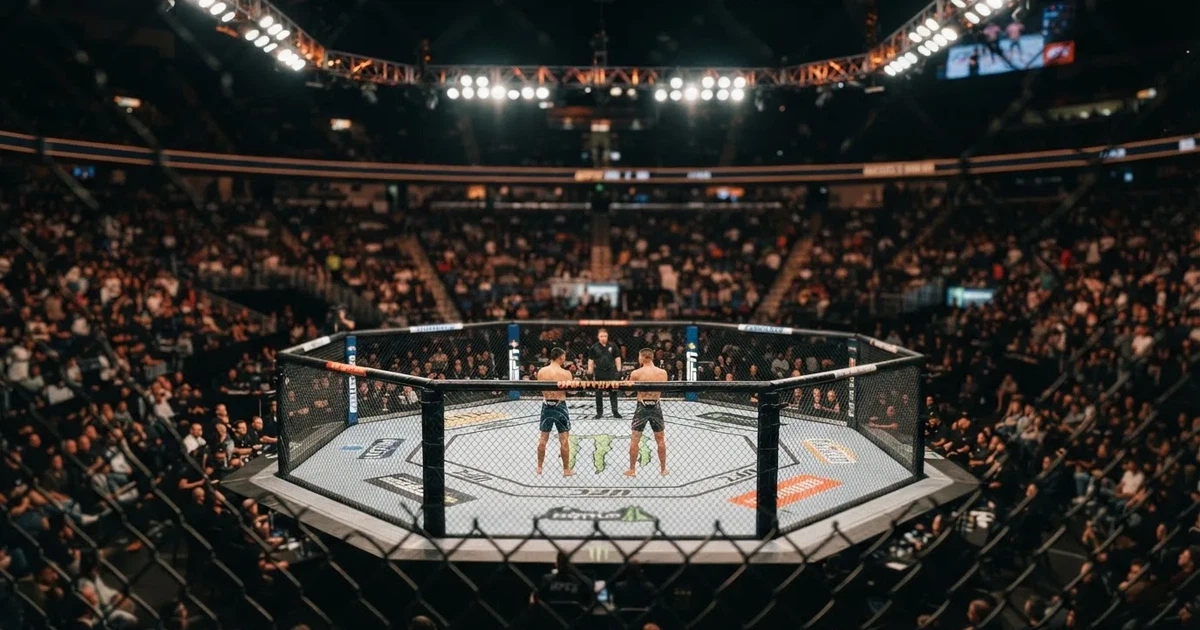
The figures, licences and operator terms on this page were checked against the Gambling Commission’s public register and each operator’s own terms as of 27 October 2026.
The basics of an MMA betting price
An odds figure is a statement of two things at once: how much a winning stake pays back, and how the bookmaker’s margin sits in between the two sides of the market. The first is mechanical, the second is the operator’s edge — and the second is what makes the same fight pay different amounts at different bookmakers.

Decimal odds and what a winning stake returns
UK-facing bookmakers display prices in decimal form by default. A decimal price tells the bettor the total return per unit staked, including the stake itself. A £10 bet at decimal odds of 2.50 returns £25: the £10 stake plus £15 profit. The same arithmetic in fractional form, 3/2 (three-to-two), means a £10 stake returns £25 in the same way. Conversion runs as a ÷ b + 1, so 11/4 becomes 3.75 and 5/1 becomes 6.00. “Evens” is 2.00, and an “odds-on” price (anything shorter than evens, such as 1.50) is the bookmaker’s way of marking a heavy favourite.
A two-way moneyline — fighter A versus fighter B — settles on the named winner. A three-way line adds the draw, which in MMA is the official result of a fight that goes the distance and the judges cannot split. Where a draw is offered as a third selection, the margin on the market is spread across three outcomes, not two, and the payout share on each outcome is correspondingly thinner.
Where the bookmaker’s edge sits
Every market the operator offers carries a margin. The margin is the slice of every pound bet that the bookmaker keeps on average, and it is built into the prices: the implied probabilities of all outcomes add up to more than 100%, and that excess is the margin. For a two-way moneyline priced at decimal odds 1.90 and 1.90, the implied probability of each side is 1 ÷ 1.90, which is roughly 52.6%. Two outcomes of 52.6% give a sum of 105.3%, and the 5.3 points above 100% are the operator’s edge on this market. The higher that excess, the more the bookmaker keeps; the closer the sum of implied probabilities sits to 100%, the better the price for the bettor.
In practice the margin on a two-way UFC moneyline at major operators runs in the region of five to seven per cent, with smaller promotions and exotic markets carrying more. A method-of-victory combination (KO/TKO, submission, decision, plus the draw) is a four- or five-way line and is usually wider in margin than the moneyline. The point is not the exact percentage but the direction: thinner markets carry more margin, and the bettor pays for the privilege of betting on them.
How the margin is read out of any two prices
For a two-way market priced symmetrically at 1.90 and 1.90, the payout share — the slice of every pound that comes back to bettors across the whole market, weighted by stakes — is roughly 95%. The arithmetic runs 1 ÷ (1 ÷ 1.90 + 1 ÷ 1.90). The remaining 5% sits with the operator as margin. That is an illustrative example, not a quoted price: it is the shape of the calculation, and a real moneyline will rarely price both sides to the same number — a heavy favourite carries a short price on one side and a long price on the other, and the implied probabilities of both sides still sum to the same margin.
The same calculation run on an asymmetric line of 1.40 and 3.00 gives a payout share of 1 ÷ (1 ÷ 1.40 + 1 ÷ 3.00), which is roughly 95.2%, and a margin of about 4.8%. A heavy favourite can carry a thinner margin than a pick’em fight — the bookmaker is comfortable offering a short price because the liability sits with the favourite backers, and the long-shot price carries enough of the overround on its own.
The market structure inside a fight card
A standard UFC card offers more than the winner market. The method of victory market splits the result into KO/TKO, submission and decision, with or without a draw side. The “go the distance” market is a yes/no on whether the fight sees the judges. Round groupings (fight ends in round 1, ends in round 2, ends in round 3) and round-and-method combinations are typical in-play and pre-match markets. Over/under on total rounds, sometimes offered as 0.5 rounds, 1.5 rounds and 2.5 rounds for three-round bouts and up to 4.5 for five-round title fights, sits underneath.
The live version of the same fight has its own market set. In-play prices respond to damage taken, takedowns landed, time remaining and the judge’s scorecards visible on the broadcast. The more granular the live market, the wider its margin — a method-of-victory market mid-fight is a thinner proposition than a pre-match moneyline, and the bookmaker’s edge reflects that.
Where MMA betting stands under the Gambling Commission
In Great Britain, a bookmaker taking bets online needs an operating licence from the Gambling Commission (UKGC). The test is the Commission’s public register, searchable by business name, trading name, domain or account number. No bookmaker in this comparison is “the only” licensed one: the register lists far more brands than any review covers, and every GB-licensed online operator takes part in GAMSTOP.
The statutory frame
The Gambling Act 2005 covers Great Britain. Northern Ireland is outside the Act, and operates under older legislation, so a “GB licence” means a licence to take bets from customers in England, Scotland and Wales. The Gambling (Licensing and Advertising) Act 2014 extended the regime so that an operator whose remote facilities are used in Great Britain needs a Commission licence wherever the operator is itself based — a Curaçao, Maltese or Gibraltar licence is not a substitute.
Remote general betting standard (real events) is the licence category under which MMA odds are offered. Betting intermediaries, which run betting exchanges, hold a different licence and follow different operating rules. Virtual events are a further separate category. There is no statutory list of permitted sports or markets: the licence covers a category, and the markets underneath it are the operator’s call, subject to its licence conditions and codes of practice.
What this means for the odds a punter sees
A bookmaker’s licence is the reason an odds page exists in the first place: it is the permission to take bets from British customers. It also sets the consumer-protection floor beneath that page. The Commission’s Licence Conditions and Codes of Practice (LCCP) and the Remote Technical Standards govern how odds are offered, how bonuses are structured, how customers are verified and how complaints are handled. The odds themselves are the operator’s commercial decision; the rules around them are not.
For an MMA punter, the relevant consequences are practical. Identity checks happen before the first deposit — name, address and date of birth, including for a free bet or a bonus. A credit card cannot fund a gambling account. A financial vulnerability check triggers at £150 of net deposits in a rolling 30-day period and runs a public-record search (bankruptcy, county court judgments), not an income or credit check. None of these rules change the price on a fight; they change the account around it.
Player protection on a licensed MMA site
The rules that govern a British MMA bet are not the rules the bettor can see on the betting slip. They sit underneath it. They govern how the account is opened, how a withdrawal is processed, what happens when gambling stops being fun, and how a complaint is escalated.
GAMSTOP, limits and self-exclusion
GAMSTOP is the national multi-operator online self-exclusion scheme, and it has been a mandatory licence condition for online operators since 31 March 2020. A self-exclusion period runs six months, one year, five years, or five years with auto-renewal; once the minimum period has elapsed, the exclusion continues for a further seven years unless the customer asks GAMSTOP to remove it. GAMSTOP covers online sites and apps; betting shops use a separate offline self-exclusion service.
Deposit limits are the customer’s own tool. There is no state-set ceiling on what a British punter can wager. A licensed operator must offer a gross deposit limit on a fixed time frame (the “RTS 12” requirement); the first phase has applied since 31 October 2025, and a second phase was postponed to 30 September 2026. A punter who wants a ceiling sets it themselves; the operator’s job is to make the setting easy and to honour it.
Where help is available
GamCare runs the National Gambling Helpline. GambleAware funds treatment and publishes information. The NHS operates gambling clinics in parts of England. Gamblers Anonymous runs support meetings. A licensed MMA operator links to one or more of these services from its safer-gambling page; a punter who finds a licensed operator’s safer-gambling page hard to find is reading a sign that the operator is not treating the topic as a priority.
The asymmetry of self-exclusion matters. A punter who excludes themselves from one operator’s site has not excluded themselves from another. GAMSTOP is the cross-operator version, and it is the meaningful one. A punter who needs a break should take it at the GAMSTOP level, not the bookmaker level.
What a non-licensed offshore operator does not offer
The legal point is the operator’s offence, not the customer’s. Section 33 of the Gambling Act 2005 makes it an offence to provide gambling facilities in Great Britain without the licence the Act requires, aimed at the operator; no offence aimed at a customer who merely bets on an unlicensed site was found. The reader’s interest is in what is missing: no GAMSTOP coverage, no Commission complaints route, no approved dispute-resolution body, no British consumer redress if funds are withheld, no 10x bonus cap, no £150 vulnerability check. Honest framing: licensed means checks, limits and the bonus cap, with verification before the first bet; unlicensed means none of those protections and a real risk of withheld funds. Neither is “the safe choice” by default — that is the operator’s marketing line, and the regulator’s frame is more demanding.
Crypto, Bitcoin and the question of anonymity
The set of MMA betting sites that accept Bitcoin or other cryptocurrency is a different set from the one the Gambling Commission licences. The two sets do not overlap in any meaningful way: GB-licensed operators take debit cards and bank transfers, not cryptocurrency, and a punters’ desire for pseudonymity is one of the things that pushes them offshore.
What the licensed side does not offer
A bookmaker licensed by the Commission verifies the customer’s name, address and date of birth before the first deposit, and that verification does not pause for a bonus or a free bet. The same identity check extends to source-of-funds questions at higher spend, which the money-laundering rules require. The licensed side is, by design, not anonymous, and a British punter who wants anonymity cannot have it there.
A separate point is whether cryptocurrency deposits are accepted by a GB-licensed operator. The Commission’s rules do not name cryptocurrency as either permitted or prohibited; each operator’s own terms and its payment processor’s position determine what is on the cashier page. The honest description is that cryptocurrency is not a standard payment method at GB-licensed sportsbooks, and a punter who wants to deposit in Bitcoin will find only unlicensed sites offering it.
What an offshore crypto site offers and what it does not
An offshore crypto bookmaker offers fast deposits, near-instant withdrawals, and a sign-up that does not require a passport. The price of that convenience is the absence of every protection listed above. No GAMSTOP. No Commission complaints route. No 10x bonus cap. No British dispute-resolution service. No verified source of customer funds. If the operator withholds a payout, the punter has no British route of redress — the only options are the operator’s own complaints procedure and, in extremis, the courts of the operator’s home jurisdiction.
The phrase “best crypto MMA betting sites” is, in practice, the same phrase as “best unlicensed MMA betting sites”, with an offshore payment method added. The trade-off is real and runs in one direction: convenience at the cashier, exposure to operator default.
Bonuses, free bets and what they actually cost
A bonus is a marketing expense dressed as a gift, and the cost is written into its terms. The relevant numbers are the wagering requirement, the minimum price of qualifying bets, the expiry, the cap on winnings and whether the stake comes back with a win. Each of these is a way the operator converts a headline number into a smaller real number.
What the LCCP’s bonus rules changed
Wagering requirements on bonuses are capped at 10x under rules in force since 19 January 2026: a £10 bonus at 50x required £500 of qualifying bets before the cap; under the cap no more than £100 of qualifying bets is needed. The cap is a meaningful shift for the British market, and a punter comparing a 2024 bonus page to a 2026 one should expect the latter to carry a lower headline multiple — or, more often, no multiple at all on a free-bet structure.
Mixed-product promotions are also banned: an offer that requires gambling on two or more product types — betting plus casino, betting plus bingo, betting plus lottery — is no longer a permitted structure. The bettor looking for a single sportsbook bonus in 2026 is reading a market that has been pruned, by rule, of the worst excesses of cross-product wagering.
The shape of an MMA welcome offer
A typical sportsbook welcome offer is a free bet or a stake-back structure. The headline is the gross figure — “Bet £10, Get £10” or “50% back as a free bet up to £50” — and the real cost is written into the conditions. A free bet’s stake is usually not paid back with a win, so a winning £10 free bet at 3.00 returns £20 (the £10 free bet × (3.00 − 1)) rather than the £30 a cash stake would return. A stake-back offer refunds the losing stake as a free bet or site credit, so a £10 stake at 2.00 that loses returns a £10 free bet, and that free bet then goes through the same stake-not-returned rule.
The minimum price for a qualifying bet is the second number to check. A “Bet £10 at min odds 1/1” or “min odds evens” line means the qualifying bet has to be placed at decimal odds of 2.00 or higher; bets at shorter prices do not qualify. A punter placing a £10 qualifying bet on a heavy MMA favourite at 1.40 may find the bet does not count toward the offer. The expiry is the third: a “7-day free bet expiry” means a free bet unused for seven days is forfeit.
How much clearing a bonus actually costs
A bonus’s required turnover is the bonus base multiplied by the wagering factor. For a £10 free bet with no wagering condition, the turnover is the single qualifying bet the offer requires. For a £50 bonus with a 5x wagering condition on the bonus only, the turnover is £250 of qualifying bets. The expected cost of clearing the offer is that turnover multiplied by the margin of the market the qualifying bets are placed on.
A punter placing qualifying bets on a UFC moneyline at a 5% margin on a £250 turnover is paying, on average, £12.50 to clear a £50 bonus — the bonus is worth £37.50 net, before the minimum-price constraint knocks out the bets that would actually clear it efficiently. A punter placing qualifying bets on a method-of-victory market at 8% margin on the same turnover is paying £20 to clear the same bonus. The market chosen for clearing matters as much as the headline figure of the offer.
Free bet, stake-back and the cost of each
The three common offer shapes cost different amounts to clear. A free bet whose stake is not paid back returns free-bet amount × (odds − 1) ÷ odds × payout share of the market it is used on: a £10 free bet at 3.00 on a market with a 95% payout share is worth, on average, £10 × 2 ÷ 3 × 0.95, which is roughly £6.33. A stake-back offer that refunds losing stakes as free bets is worth a fraction of the headline, and that fraction depends on the strike rate of the bets it covers. A cash bonus with a low wagering multiple is closer to face value, but the qualifying bets to clear it cost the punter their margin.
The honest reading is that no welcome offer is a gift, and the punter who treats it as one is paying the marketing bill. The punter who reads the offer as a discount on the first few bets — and chooses the qualifying bets to clear it cheaply — is closer to the value.
Mobile apps and the betting slip in a pocket
Most British MMA bets are placed on a phone. The app is the product: the odds page, the bet builder, the cash-out button, the live tracker. The question for a punter is which app carries the sport well, and which one carries it as an afterthought.
What a sportsbook app has to do
A British sportsbook app does four things. It shows a market catalogue broad enough to cover the fight card — moneyline, method of victory, round groupings, in-play, same-fight combinations. It prices those markets tightly enough that the implied margin is competitive. It runs a bet slip that handles singles, accumulators and same-fight multiples without ambiguity. It settles bets promptly after the fight ends, including the in-play markets that depend on a final scorecard.
Beyond that floor, the differences are commercial. Some apps add a Bet Builder that combines markets from one event into a single bet, available pre-match and in-play; some add live streaming of the fight card; some add a tracker that updates live stats inside the bet slip; some offer price boosts and acca insurances on top of the standard market set. None of these extras matter to a punter who bets on the moneyline before the fight and walks away. They matter more to a punter who bets in-play and tracks the damage taken from inside the app.
Same-game multiples and Bet Builders
A Bet Builder takes markets from one event — a single UFC fight — and combines them into one bet. A “method of victory: KO/TKO” combined with “fight goes the distance: no” and “under 1.5 rounds” is a three-leg same-fight combination. The odds multiply into one price, and the bet wins only if every leg wins. The constraint is the size of the Bet Builder’s selection set: most UK-facing operators cap the number of selections at between six and ten, and the more legs added, the wider the margin — a three-leg combination is a wider proposition than any of its constituent legs alone.
LiveScore Bet’s Bet Builder, as published on its help pages, allows up to ten selections and covers match result, both teams to score, corners, total goals, player scoring and card markets for football — the MMA set is similar in shape and similar in cap, though the specific markets vary by operator.
Cash out, partial cash out and the live price
Cash out is the bookmaker’s offer to buy a bet back before it settles, at a price the operator sets live. The price reflects the current state of the fight, the operator’s exposure on the book and the punter’s original stake. Auto cash out triggers when the bet reaches a specified value; partial cash out lets the punter bank a fraction and let the rest ride.
The cash-out price is the operator’s offer, not a market-clearing price. The punter’s choice is whether the operator’s take-it-or-leave-it price beats the expected value of letting the bet run. In a UFC fight with a small lead on the scorecards and two minutes left, the operator’s cash-out price may understate the live favourite’s chances; in a fight where the leader has just taken a flush blow, the cash-out price may overstate them. The punter’s edge, if any, comes from reading the fight more accurately than the operator’s pricing model does.
Live MMA betting and the in-play market
In-play MMA betting is a different proposition from pre-match. The market opens before the fight and prices close as the fight begins; the in-play market then reopens, often at thinner margins and often with a wider market set, and prices update as damage is taken, takedowns are landed and the clock runs down.
How in-play pricing works
A live moneyline on a UFC fight updates after every significant strike, takedown and attempt. The favourite’s price shortens when they land cleanly; it lengthens when they get dropped. The underdog’s price moves in the opposite direction. The model behind the prices is the bookmaker’s — and the model’s accuracy is the operator’s edge on every live bet.
In-play margins for betting are not published in a way that allows a side-by-side comparison, and the price the punter sees on the live page is what it is. The practical question is whether the in-play market is offered at all — some operators offer a thin in-play MMA menu, and bettors wanting round-by-round depth might need a specialist platform.
Where the live market is thinnest
A main-event UFC fight carries the deepest live market set: moneyline, method of victory, next round winner, fight to go the distance. A fight three bouts down the card, between regional prospects with limited tape, may carry only the moneyline. The depth of the live market is roughly proportional to the operator’s expectation of betting volume, and that expectation is roughly proportional to the household name of the fighters.
The punter who wants to bet in-play on a deep card has more markets to choose from at the major operators. The punter who wants to bet in-play on a regional card has fewer markets, and the prices are wider in margin. The same logic applies to Bellator, PFL and ONE Championship cards: the headline events carry the deepest market set; the undercard carries the thinnest.
Live streaming, trackers and the in-app product
A live stream inside the betting app is a commercial choice, not a regulatory one. Some operators stream UFC fights; some do not. Some add a live tracker that updates strikes, takedowns and submission attempts in real time; some rely on the broadcast feed alone. The punter’s choice between operators often comes down to which app carries the fight card well enough to support the bets the punter wants to place.
A tracker that updates inside the betting slip is not a substitute for a live stream, but it is a useful complement. A punter betting on “next round winner” needs to see who lands first; a punter betting on “over 1.5 rounds” needs to know how much clock is left. The app that exposes the relevant data without leaving the bet slip is the one that supports live betting best.
Predictions, tips and the question of value
Search traffic around MMA betting tips is heavy, and the offers that meet it range from sober analyst pages to paid-tipster services that publish a strike rate without disclosing the underlying ledger. The honest frame is that no one can know who will win a fight, and the punter who pays for predictions is buying a story about the future, not a forecast of it.
What a tip actually is
A tip is a writer’s argument for one selection over another, expressed in prose. The writer may be a former fighter, a sports journalist, an odds-modeller or a content writer paid by the click. The argument may be sharp; the tip is still a prediction, and predictions about fights have the same uncertainty as predictions about anything else.
The strike rate a paid-tipster service publishes is the share of its tips that have won, and it can be made to look impressive by a careful choice of denominator. A service that tips only favourites will post a high strike rate and a flat return; a service that tips only long shots will post a low strike rate and a higher variance. Neither number is informative without the stake sizes, the prices and the period covered.
Where the value really sits
A punter who reads prices well finds value at the margin, not in the prediction. The value of a bet is the difference between the bettor’s estimate of the probability of each outcome and the implied probability in the price. A fighter priced at 2.50 has an implied probability of 40%; a bettor who assesses the fighter’s chance at 45% is looking at a positive expected value, before the margin is paid. That difference is small, often below five percentage points, and it disappears as soon as the bettor’s assessment is wrong.
The honest position is that the value sits in the price, not in the tipster. A punter who reads prices well and bets on fights with a clear statistical picture — a heavy favourite on a long layoff, a strong grappler against a striker with poor takedown defence — will find value at the margin more reliably than a punter who pays for tips. The punter who bets on every fight the card offers will not.
What “top value MMA bets for this weekend” really means
The phrase “top value” is a marketing frame, and the question it answers is which fights the writer thinks offer a price higher than the writer’s estimate of the probability. The reader’s question — what should I bet on this weekend — is a different question, and the writer’s answer is not a forecast.
The reader looking for a specific answer to “what should I bet on” is looking for a tipster, not a market. The honest frame for the reader is to read the prices, decide which fights the prices are wrong about, and bet those. The reader who treats a “top value” page as a forecast is acting on a story, not on a number.
Bet types, odds formats and the betting slip
A British punter reads a betting slip that supports more than a single winner market. The relevant bet types are singles, accumulators, each-way bets, Bet Builders and the spread-betting-specific structures at the two operators that offer spread betting on MMA.
Singles, doubles, trebles and accumulators
A single is one selection, one bet, one price. A double is two selections whose prices multiply into one combined price; the bet wins only if both legs win. A treble is three; an accumulator (“acca”) is four or more. The combined price of an accumulator is the product of the leg prices, and the margin on the combined bet is wider than the margin on any of its legs — an acca is a higher-margin proposition, which is part of why bookmakers like them and why the punter clearing a bonus is steered toward them.
A Bet Builder on one fight is not a true accumulator in the mathematical sense, but the same logic applies: the legs multiply into one price, and the combined proposition is wider in margin than the constituent legs.
Each-way bets
Each-way betting is two bets of equal stake: one on the selection to win, one on the selection to “place” — usually to finish in the top two or three, depending on the number of runners. In a UFC moneyline with a binary winner, each-way has no place market, so each-way is not a relevant structure. In a tournament-style market — a fighter to reach the final, a fighter to win their weight class — each-way applies.
The stake of an each-way bet doubles, because the punter is placing two bets. A £10 each-way bet at 4.00 places £10 on the win and £10 on the place, total stake £20.
Spread betting on MMA
Spread betting is a different product. The punter’s stake is on a spread, not on a price — “total rounds over/under 1.5”, “significant strikes landed over/under 75.5”, and the stake is multiplied by the number of units the actual result differs from the spread. Losses on a spread bet can exceed the stake; on a fixed-odds bet, the loss is capped at the stake. Spreadex and Sporting Index are the two UK-facing operators that combine fixed-odds and spread betting on the same account, and Spreadex is regulated by the Financial Conduct Authority for spread betting and by the Gambling Commission for fixed-odds.
The relevant feature for an MMA punter is that spread betting offers markets that fixed-odds does not — fight duration in minutes, total strikes landed, fighter-specific performance lines — and the punter choosing between fixed-odds and spread is choosing between a capped-loss and an uncapped-loss product on the same fight.
MMA tournaments, fight cards and the betting calendar
MMA betting is event-led. A UFC numbered event or a PFL playoff carries the deepest market set; a regional show carries the thinnest. The punter’s choice of operator depends partly on which promotions the operator prices, and how deep the market goes on each.
The UFC and the major promotions
The Ultimate Fighting Championship (UFC) is the headline promotion of the sport, founded on 12 November 1993, when UFC 1 was held at McNichols Sports Arena in Denver, Colorado. The promotion organises 11 weight divisions — eight men’s and three women’s — and runs a year-round calendar of numbered events, Fight Nights and Contender Series dates. Every GB-licensed sportsbook prices UFC fights.
Bellator, the Professional Fighters League (PFL) and ONE Championship are the secondary international promotions, with their own champions and their own calendars. Most major sportsbooks price Bellator and PFL; ONE Championship’s coverage is thinner. Regional promotions — Cage Warriors, KSW, Invicta FC — are priced by some operators and ignored by others.
How the fights are scheduled
UFC numbered events run on Saturdays in the US, which means a Sunday morning start in the UK. The card is built around a main event and a co-main, with a full undercard of fights arranged by weight class and matchmaking logic. A British punter looking at a UFC card sees a Saturday-night US broadcast, a Sunday-morning UK start, and a betting window that runs from the moment the card is announced (often two weeks out) to the closing bell of the main event.
In-play markets open as the broadcast begins. The deeper the broadcast, the deeper the market set: the main event carries round-by-round and method-of-victory in-play markets; the undercard carries only the moneyline at some operators.
Judging and how decisions settle
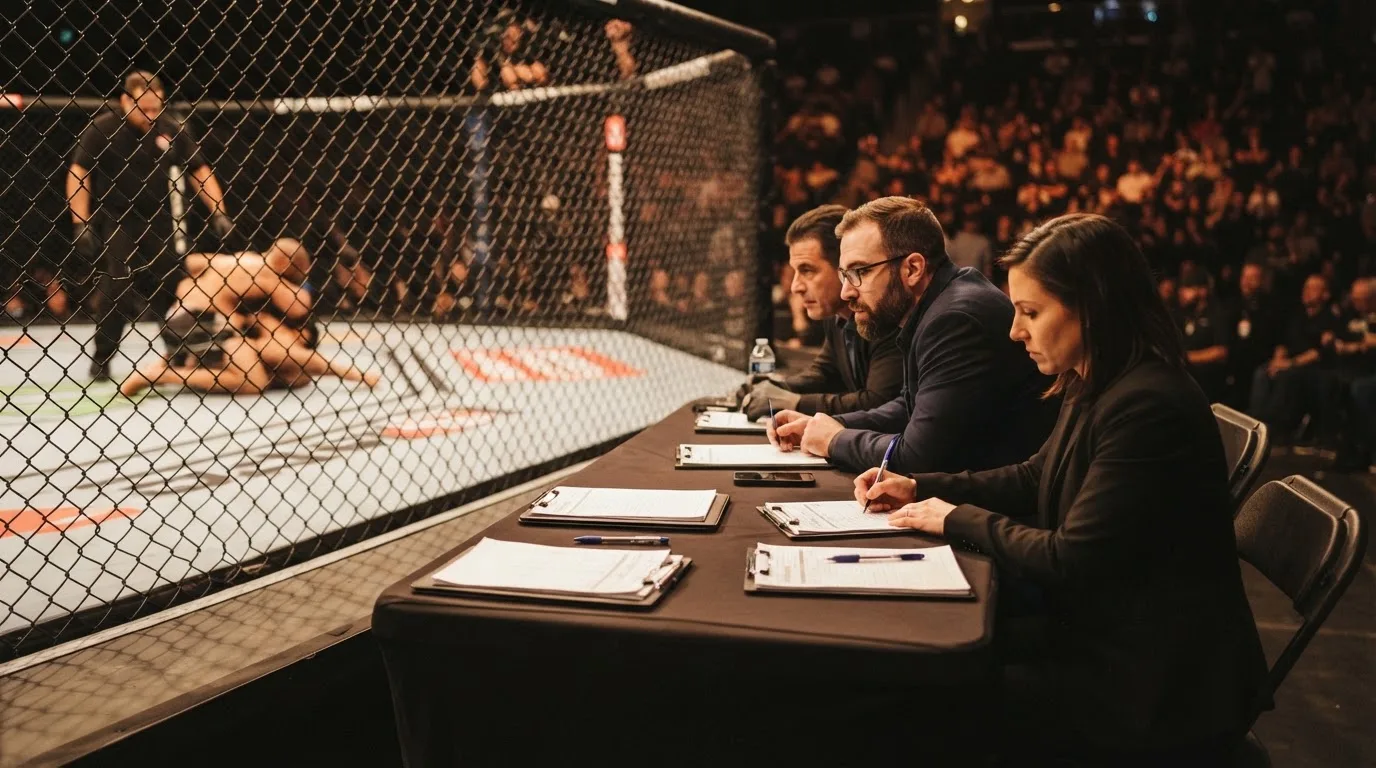
Under the Unified Rules of MMA, each round lasts five minutes with a one-minute rest, and non-title bouts normally go no more than three rounds; title bouts can be sanctioned for five rounds. Three judges score each round using the 10-point must system: the round winner gets 10 points, the loser 9 or fewer, and an even round is scored 10–10.
A decision can be unanimous, majority or split, and a draw can also be unanimous, majority or split. The distinction matters for the method-of-victory market: a unanimous decision is one bucket, a split decision is another, and a draw — rare in MMA but provided for in the rules — is a third. A bout ends in disqualification if an intentional foul incapacitates a fighter, and in a no contest if an unintentional foul incapacitates a fighter. The settlement of any bets on the fight follows the official result, including the no-contest call.
The MMA betting sites reviewed here
| Operator | Licence and Holder | Key Feature |
|---|---|---|
| Octobet | 62545 (Octopus Game Ltd) | 50% back as free bet up to £50 |
| Tote | 54779 (TDCO Ltd) | Pool betting market structure |
| BetUK | 39198 (LeoVegas Gaming PLC) | Four £10 free bets welcome offer |
| LiveScore Bet | 56859 (LiveScore Betting and Gaming (Gibraltar) Ltd) | In-play data and tracker |
| Sporting Index | 27343 (Sporting Index Ltd) | Fixed-odds + spread betting options |
| Spreadex | 8835 (Spreadex Limited) | Combined fixed-odds and spread betting |
| bet365 | 55148 (Hillside (UK Sports) ENC) | Widest market depth and Bet Builder+ |
| Dabble | 65677 (Dabble Sports UK Ltd) | Community-led social betting features |
| Fafabet | 57385 (Taichi Tech Limited) | Competitive mid-market fixed odds |
| Kwiff | 44448 (Eaton Gate Gaming Limited) | Random “supercharged” odds boosts |
The MMA betting sites below are the GB-licensed operators the comparison covers. The set is not the licensed market: there are many more brands on the Gambling Commission’s public register than any review can feature. The licence details are checked against the Commission’s register as of 27 October 2026. No single brand is “the only” licensed one.
Octobet
Octobet’s sportsbook welcome offer is 50% back as a free bet up to £50, plus a £10 casino bonus for new customers. The offer is deposit-gated and new-customer-only, with the qualifying bet subject to minimum odds. The licence is held by Octopus Game Limited, Commission account 62545; the site’s terms state the standard remote general betting standard (real events) terms. Octobet’s MMA coverage is a workmanlike extension of a sportsbook that runs primarily on football; the moneyline, method of victory and round groupings are the standard set, and the in-play market is solid for UFC numbered events and thin for the undercard.
Tote
Tote is a pool-betting operator, and its licence is the remote general betting standard (real events) under TDCO Limited, Commission account 54779. Pool betting is a different product: the punter is betting into a pool with other punters, and the dividend is paid out from the pool after the result, less the operator’s take. Tote’s MMA product runs on the same principle — a win pool, a place pool, and an exacta-style market — and the prices move with the pool rather than with a fixed-odds margin. The important distinction for a punters’ choice is that pool betting operates on a different logic than fixed-odds, and bettors wanting a guaranteed fixed-odds price will prefer a traditional bookmaker.
BetUK
BetUK is run by LeoVegas Gaming PLC, Commission account 39198. The sports welcome offer for new customers is a £10 deposit, a qualifying sports bet within seven days of registering, and four £10 free bets — two football accumulators of four or more selections and two multiples of two or more — valid for seven days, with opt-in required. The free bets are stake-not-returned. BetUK’s MMA product is built on a standard sportsbook template: moneyline, method of victory, round groupings, in-play on the main card. The offer is generous on the football side and modest on the MMA side, and a punters’ choice of BetUK for MMA is a choice of the platform over the offer.
LiveScore Bet
LiveScore Bet is run by LiveScore Betting and Gaming (Gibraltar) Limited, Commission account 56859. The platform’s Bet Builder allows up to ten selections and covers match result, both teams to score, corners, total goals, player scoring and card markets for football; the MMA Bet Builder follows the same shape with the relevant MMA markets swapped in. LiveScore Bet’s strength is its live data: the platform carries in-play markets and a live tracker for events its broadcast partners stream, and the in-play UI is the cleanest of the operators reviewed. LiveScore Bet’s focus on live data makes it a standout option for main-card in-play betting.
Sporting Index
Sporting Index lets customers switch between fixed odds and spread betting, with in-play betting, Bet Builder for football, auto cash-out and Multi-Markets. The licence is held by Sporting Index Limited, Commission account 27343. Sporting Index’s MMA offering combines fixed-odds on the main markets with spread markets on fight duration and striking volume; the punter choosing Sporting Index is choosing the spread side as much as the fixed-odds side. The relevant caveat is that spread-betting losses can exceed the stake, and the punter treating Sporting Index as a fixed-odds platform with extras should read the spread-betting terms before placing the first spread bet.
Spreadex
Spreadex combines fixed-odds and spread betting in one app, with one-click, auto and partial cash out, Bet Builder across fixed odds or spreads, and live streaming of UK and Irish horse racing, greyhounds, tennis, NFL and selected football. The licence is held by Spreadex Limited, Commission account 8835. Spreadex is regulated by the Financial Conduct Authority for spread betting and by the Gambling Commission for fixed-odds; the firm’s own homepage states that spread betting losses can exceed the deposit. For MMA, Spreadex offers the same fixed-odds set as the other operators reviewed, plus a spread-betting layer on fight duration and striking volume. A punter choosing Spreadex is choosing the spread-betting product alongside the fixed-odds.
bet365
bet365 is the official global betting partner of the UEFA Champions League and its app is described as the most downloaded sports betting app in the UK. The licence is held by Hillside (UK Sports) ENC, Commission account 55148. The platform offers Bet Builder+ (combining markets from one event into a single bet, available pre-match and in-play), Super Boosts, Winnings Boosts on Bet Builders and selected singles, and daily Bet Boosts. Live betting and live streaming of events worldwide are available, plus Bet Track, Match Live and a Live Golf Tracker for following bets in play. For an MMA punter, bet365 carries the deepest market set of any operator reviewed, the most consistent in-play offering, and a Bet Builder that supports a wide selection of markets on a single fight. The price is competitive on the main lines and wider on the exotics, as is the case at every major operator.
Dabble
Dabble’s welcome offer is “Bet £10, Get £10 in Free Bets” on a first deposit for new customers, with minimum odds applying, a seven-day free bet expiry and the stake not returned. The licence is held by Dabble Sports UK Ltd, Commission account 65677. Dabble’s product is a community-led sportsbook with social features: a follow feed, copy-bet functionality, and a chat layer around the betting markets. The MMA offering is standard — moneyline, method of victory, round groupings, in-play on the main card — but the social layer is the differentiator for a punters’ who values it. A purist looking for the deepest market set will look elsewhere.
Fafabet
Fafabet pays Best Odds Guaranteed on UK and Irish horse racing win and each-way bets from 9am on race days: if the starting price is bigger than the original price, the bigger odds are paid. The licence is held by Taichi Tech Limited, Commission account 57385. Fafabet’s MMA product is built on a standard sportsbook template and is competitive on the main lines; the Best Odds Guaranteed feature is a horse-racing product, not an MMA product, and an MMA punters’ choosing Fafabet for that feature has chosen the wrong bookmaker. The relevant point is that Fafabet is a competent mid-market operator for MMA and a stronger choice for horse racing.
Kwiff
Kwiff is licensed by the UK Gambling Commission under account 44448, held by Eaton Gate Gaming Limited. The platform describes itself as a trademark operated by Spryme Ltd and the app carries a 17+ App Store age rating. Kwiff’s product feature is a “supercharged odds” mechanic: a price placed on a market can be randomly boosted at the time of bet placement, with the boosted price applied if the punter accepts the boost. The mechanic applies to MMA markets as it does to other sports, and a punters’ who values the surprise of a boost over the discipline of a fixed margin will find Kwiff interesting. The relevant caveat is that the boost is random and is not a margin improvement on every bet.
How to choose the best MMA betting site
The choice between MMA betting sites is not a ranking of “best” in any absolute sense. It is a fit between the punter’s habits and the operator’s product, and the fit has a handful of dimensions worth naming.
Market depth and price
The first question is whether the operator prices the fights the punter wants to bet on. A punter who bets only on UFC numbered events has more operators to choose from than a punter who bets on Bellator, PFL and regional shows. The second question is whether the operator’s prices are tight on the markets the punter uses. A punter who bets on the moneyline will see similar prices across the major operators; a punter who bets on method of victory or round groupings will see wider price spreads and a more meaningful choice between operators.
In-play product
The second dimension is the in-play product. The main-card UFC fight carries in-play markets at every major operator, but the depth of those markets — round-by-round, method of victory, fight to go the distance — varies. While deep in-play markets on the main card are standard, the undercard availability varies widely, making operator selection more significant for undercard bettors.
Welcome offer and ongoing value
The third dimension is the welcome offer and the ongoing value beyond it. A welcome offer is a discount on the first few bets; an ongoing offer — a price boost, an acca insurance, a free bet club — is a discount on a steady habit. The punter who places one bet a month values the welcome offer; the punter who places one a week values the ongoing offer. The right fit is the one that matches the punter’s cadence.
Spread betting on MMA — Choosing between fixed-odds and spreads
The fourth dimension is whether the punter wants spread betting. Spread betting is a different product, and only Spreadex and Sporting Index offer it on the same account as fixed-odds. A punter who wants the spread-betting markets on fight duration or striking volume has a two-operator choice; a punter who wants only fixed-odds can ignore the spread-betting operators entirely.
Verdict across the reviewed set
The MMA punter looking for the deepest market set, the best in-play offering and a competitive price on the main lines will find bet365 the closest fit. The punter looking for spread-betting alongside fixed-odds will find Spreadex or Sporting Index. The punter looking for the cleanest in-play UI will find LiveScore Bet. The punter looking for a community layer around the markets will find Dabble. The punter looking for a welcome offer weighted toward football will find BetUK. The punter looking for a workmanlike MMA extension of a sportsbook will find Octobet, Fafabet, Kwiff or Tote. There is no single “best” — there is a fit, and the fit depends on what the punter bets on and how.
Frequently asked questions
How does MMA betting work?
A MMA bet is a wager on a fight result, and the markets run from a simple two-way moneyline to method-of-victory and round-grouping combinations. A bet wins if the selection matches the official result; a bet on a heavy favourite pays less than a bet on an underdog, because the price reflects the implied probability. In-play markets reopen during the fight and update after every significant strike, takedown and submission attempt, with margins wider than pre-match.
Where to bet on MMA fights with high odds?
The price on a fight is set by the market, not by the operator, and the operator that consistently carries the highest prices across a card will not be the same operator on every fight. A punter looking for a high price on a specific fight checks two or three operators at the betting slip and picks the best; a punter looking for consistently high prices checks the margin on the markets they use and picks the operator with the thinnest.
Is it top value MMA bets for this weekend?
No source can answer that question, because the answer depends on a comparison between the price and the bettor’s assessment of the probability — and the bettor’s assessment is private. The honest frame is that “top value” is a writer’s argument for one selection over another, and the reader’s job is to read the prices, form their own assessment, and decide which fights the market has priced wrong.
How can it be checked that a bookmaker holds a Gambling Commission licence?
The Gambling Commission’s public register is searchable by business name, trading name, domain or account number, and the register’s entry for a brand is the test of whether that brand holds a licence. A licence entry sets out the licence categories (for example remote general betting standard), the licence holder and the trading name. The register’s entry is the source of truth; an operator’s own claim to be licensed is not.
How is the return on a bet worked out from the stake and the odds?
For decimal odds, the return is stake multiplied by the odds: a £10 bet at 2.50 returns £25, and the profit is £15. For an accumulator with multiple legs, the combined odds are the product of the leg odds, and the return is stake multiplied by that combined figure. For an each-way bet, two equal-stake bets are placed, and the total stake is double the unit stake.
What is the bookmaker’s margin and how can it be seen in the odds?
The margin is the slice of every pound bet that the bookmaker keeps on average, and it is built into the prices: the sum of the implied probabilities of all outcomes on a market is more than 100%, and the excess is the margin. For a two-way market priced at 1.90 and 1.90, the implied probability on each side is roughly 52.6%, and the 5.3-point excess is the operator’s edge. A thinner margin means a better price for the bettor.
Combat & motorsport – Best Betting Tips
Content created by the «Best Betting Tips» team
