
£5 deposit betting sites in Great Britain
 Available in US
A £5 minimum deposit sounds like a small commitment, and at a licensed bookmaker it is. The headline tells the reader the entry threshold, not what sits behind it: identity checks before the first deposit, a ban on credit cards, market margins baked into every price, and bonus terms that quietly multiply the stake before a withdrawal is allowed. This page walks through what a £5 deposit costs in Great Britain — at the cashier, on the betting slip, and inside the welcome offer that the marketing tends to lead with. It is a guide to the costs, not a route to one brand.
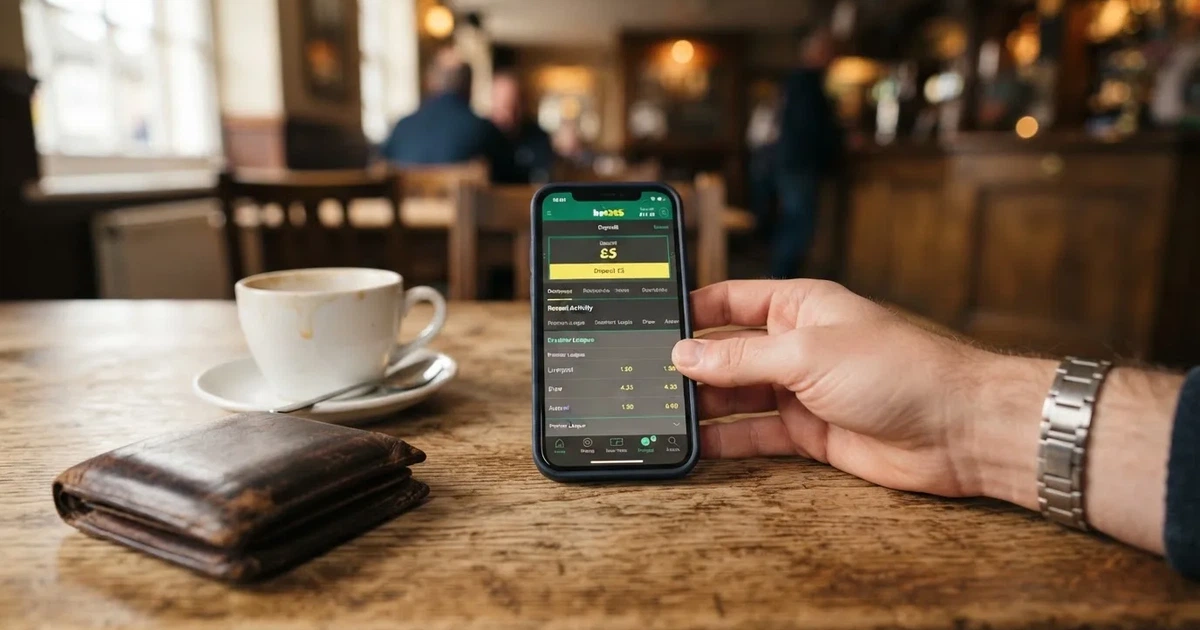
27 October 2026 snapshot, verified against the Gambling Commission’s public register.
Cashiers that take a £5 and the price of moving money
The smallest deposit a bookmaker accepts is set in its own terms, not by statute. The Gambling Commission does not publish a minimum-deposit floor for licensed operators, so a £5 entry is a commercial choice made by a handful of brands — and several of them reserve the right to raise it without notice, acting reasonably. That is worth knowing before a reader plans a £5 bet around a long-running offer: the floor they joined at is not the floor they will bet under next month.

A handful of brand-level examples sharpen the picture. Sky Bet’s terms state that the minimum deposit for all payment methods is £5, and that the operator may change this minimum without prior notice, acting reasonably. The same help page notes that Pay by Bank has no minimum deposit amount on Sky Bet, while other methods throw an error if the amount is below the floor. William Hill lets customers deposit and withdraw by debit card from £5, with a maximum deposit of £99,000 and a maximum withdrawal of £33,000 per transaction; William Hill charges no fee on debit card transactions. Those figures sit at opposite ends of the cashier: one sets the floor, the other sets the ceiling, and a £5 punter never meets the £99,000 cap.
Methods themselves are filtered by rule. Credit cards are banned for gambling in Great Britain, in force since 14 April 2020, and that ban reaches credit-card-funded payments through an e-wallet. A punter who tops up a digital wallet from a credit card, then deposits from that wallet to a betting account, is using a banned route. Debit cards and bank-based payments are not covered by that rule, and they are the routes the £5 deposit is built around. Sky Bet accepts debit cards, Apple Pay, Pay by Bank and Revolut Pay (GBP) for deposits, and states the credit-card ban by name. bet365 accounts can be funded by debit card, PayPal and Apple Pay, with Face ID login on supported devices. Midnite accepts Visa, Mastercard, Apple Pay, Google Pay and Trustly. Each operator’s payment page is the source on which methods it takes, since no British rule on named accounts or crypto deposits at licensed operators was found.
A second filter sits one step before the deposit: identity verification. Since 7 May 2019 name, address and date of birth are verified before a customer can deposit or gamble at a GB-licensed operator, and that includes a free bet or bonus — there is no anonymous play at a licensed site. A £5 deposit is the first transaction on an account that the operator has already vetted. The vetting is not the £5 punter’s cost in money; it is the cost in time, in the documents to hand, and in the loss of the throwaway email and throwaway card that offshore sites sometimes still take.
The cashier is also where the bookmaker’s payment limit is set, not just the deposit floor. Sky Bet allows up to three debit cards to be linked to an account, a limit that does not apply to Apple Pay. That card cap is invisible to a punter who never has more than one card, and a hard ceiling on a punter who juggles two bank accounts and a prepaid. Operators set their own maximum stakes and may restrict customers on individual events, and a low roller who runs into a stake cap on a heavily-tipped horse discovers a ceiling that was never advertised on the welcome page.
There is a structural cost a £5 deposit cannot avoid: the bookmaker’s margin, which sits inside every price the punter sees. A 1X2 football market priced at 6/5 (2.20), 13/5 (3.60) and 13/5 (3.60) carries a margin around five per cent, and a £5 bet at any of those prices returns £11, £18 and £6 if each selection wins. The £5 stake is small; the margin is paid on every bet, and at the same rate as on a £500 stake. The page on costs returns to that margin in every section that touches a price.
Withdrawal is the other half of the cashier, and for a £5 punter the question is whether the bookmaker will even let the winnings out before they have played through a deposit. Most licensed brands require at least one qualifying bet, a deposit to be turned over, or both, before a withdrawal is approved. The withdrawal time depends on the method: debit cards and PayPal clear in hours to a couple of days at mainstream brands, bank transfers can take longer, and a brand-new account on its first withdrawal almost always sits through a source-of-funds check. That last point is a Commission requirement, not a brand’s whim, and a £5 punter is as subject to it as a £5,000 punter. The exception is the welcome offer, which usually has its own wagering requirement before any bonus winnings are withdrawable, and that is the subject of a later section.
The shortlist of bookmakers taking a £5 deposit
The shortlist below covers the ten operators the Gambling Commission’s public register confirms as holders of a remote licence covering Great Britain, ordered by their fit for the £5 deposit question rather than by a star rating. Each card closes on a verdict about who that brand suits, not on what the reader should do next.

888sport — broad market menu on a long-licensed platform
888sport offers pre-match and in-play betting, Cash Out, a Bet Builder, racing streams, BetFinder form tools, a live bet feed and daily boosted odds. The licence sits with 888 UK Limited under Gambling Commission account 39028, and the site 888sport is the address the register lists against that account.
The fit for a £5 deposit depends on the cashier, not on the market menu, and 888sport’s payment page is the place to confirm the current minimum and the methods taken. A punter who wants racing streams, a bet builder and cash out on one account gets all three, and the £5 deposit is the cheapest way to put a real bet through the platform before deciding whether the bigger stakes feel right.
Verdict: the right choice for a punter who wants in-play and a bet builder on a GB-licensed brand and is happy to check the cashier page for the current £5 floor.
Betfred — high street pedigree and a deep sports book
The Betfred Sports, Casino & Games app is published by Done Brothers (Cash Betting) Ltd and covers 21 sports plus over 2,000 casino-style games. The remote licence is held by Petfre (Gibraltar) Limited under Gambling Commission account 39544, with the site listed at Betfred.
For a £5 deposit the value is breadth: 21 sports and the casino catalogue on the same wallet, so the same £5 can sit on a Premier League acca or a casino hand. The product is large enough that a small-stake punter who likes novelty will find markets the high-street bookmakers left behind, and the £5 floor is the cheapest way into that range.
Verdict: a fit for the punter who wants one account covering the sports book and the casino, with the £5 deposit as the entry point to both.
Midnite — modern app, weekly rewards, rapid payouts
The Midnite app is published by Dribble Media Limited and offers weekly rewards clubs and rapid payouts. The remote licence is held by Midnite Limited under Gambling Commission account 101839, and the site at Midnite is the address listed on the register. Midnite’s site cites Gambling Commission licence 101839 and shows in-play events, an acca builder, popular accas and price boosts with maximum-stake limits.
For a £5 deposit the appeal is the modern cashier: rapid payouts mean the winnings leave the account quickly once the verification is done. The acca builder and the price boosts are useful to a small-stake punter because the stake on each leg is fixed, and a £5 acca through the builder is a real bet at the boosted combined price. The maximum-stake limit on a price boost is the figure to read before claiming — boosted prices often carry smaller stake caps than the standard market.
Verdict: ideal for a punter seeking a recent app and rapid payouts, with the acca-builder providing a low-cost, fixed-stake path to testing the platform.
BetVictor — racing-friendly, BOG included
BetVictor offers Best Odds Guaranteed on UK and Irish horse racing, enhanced live race streaming and a BetFinder feature for finding racing bets, alongside Smart Stats. The remote licence is held by BV Gaming Limited under Gambling Commission account 39576, with the site at BetVictor.
A £5 deposit suits a punter whose interest is horse racing, since Best Odds Guaranteed is a market-level price upgrade rather than a stake-linked one: if the starting price is bigger than the price taken, the bigger one is paid. That makes a £5 each-way bet at the morning price genuinely worth £5, and the streaming is what a racing punter uses the £5 to evaluate before sizing up. The sports book covers football and tennis as well, so a £5 stake on a football builder is as cheap to test as a £5 stake on a 2m4f novice hurdle.
Verdict: a suitable option for a racing enthusiast wanting Best Odds Guaranteed on a £5 stake, with the cashier offering flexibility on payment methods.
Matchbook — exchange pricing, commission-free window
Matchbook’s new-customer offer is 110 days of commission-free betting from registration for customers who register with the code shown in the listing and make a deposit; standard commission applies afterwards. The remote licence is held by Triplebet Limited under Gambling Commission account 39504, with the site at Matchbook, and the licence category covers remote betting intermediary.
For a £5 deposit the exchange model changes the math: a back bet at 5/1 (6.00) and a lay bet at 5/1 (6.00) sit at the same headline price, and the punter pays commission on net winnings, not on the stake. The 110-day window removes that commission for new registrants, and a £5 stake is the cheapest way to learn the back-and-lay mechanic before the standard commission rate resumes. The case for choosing Matchbook is mechanical, not promotional: the exchange gives a punter access to prices that bookmakers do not show.
Verdict: a fit for the punter who wants to back and lay at exchange prices with £5 the entry stake, accepting the Commission intermediary licence as the right framework.
Betboro — matched free bet with a clear stake band
Betboro’s sports welcome offer is a 100% matched free bet of up to £25 on the first qualifying wager, requiring a debit card deposit of at least £10 and a first bet of £5 to £25 with at least three selections each at 3/5 (1.60) or higher. The remote licence is held by Webmedia Development N.V. under Gambling Commission account 44181, with the site at Betboro.
For a £5 deposit the offer is shaped around the same small stake: the first bet band starts at £5, the minimum price is 1.60 (3/5), and at least three selections are needed. A £5 stake at 1.60 each leg, on three legs, is the cheapest qualifying bet the terms allow, and the free bet matched against it is worth up to £25. The free bet’s stake is not paid back with a win, which is the usual free-bet mechanic, and the value sits in the winnings side of the slip. A punter planning a £5 entry to clear a £25 free bet should read the three-selection and 1.60 conditions before staking.
Verdict: the right approach for a punter who wants a matched free bet and can build a three-leg qualifying slip at the £5 minimum stake.
VBet — stake-back free bet on the first loser
VBet’s sports welcome offer is a £10 free bet if a new, verified customer stakes £10 or more on a first-ever bet that loses. The remote licence is held by SCGO Limited under Gambling Commission account 44662, with the site at vbet.co.uk.
For a £5 deposit the offer does not fit: the qualifying bet is £10, not £5, and the deposit floor may be higher than the marketing assumes. The cost of being wrong on the first selection is the stake; the £10 free bet is the consolation if the bet loses, and again the stake is not paid back with a win. A £5 punter would have to top the deposit up to £10 to trigger the offer, which is a different decision from a £5 deposit.
Verdict: the offer misses a £5 deposit punter at the entry stake, and a punter who can deposit £10 gets a stake-not-returned free bet on the first loser.
BoyleSports — early payouts on multi-sport leads
BoyleSports offers early payouts on selected sports: football if a team goes 2 goals ahead, basketball at 20 points ahead, rugby and NFL at 16 points ahead, and boxing after a knockdown. The remote licence is held by Boylesports Enterprise under Gambling Commission account 39469, with the site at BoyleSports.
For a £5 deposit the early payout is a market-level rule, not a stake-linked one: a £5 stake on a football team that goes 2-0 up is paid as a winner regardless of the final result, and the same rule applies at 20 points in basketball. A small-stake punter who likes in-play trading finds a real edge in those rules, and the £5 deposit is the cheapest entry to test them.
Verdict: well-suited for a punter targeting multi-sport early payouts on a £5 entry stake, checking the operator’s cashier for the latest payment options.
Betway — token welcome with a 7-day expiry
Betway’s welcome offer for new UK and Ireland customers is £40 in free bet tokens (4 x £10) credited on settlement of a first bet of at least £10 at minimum odds of 2.0, with a 7-day expiry and debit card deposits only. The remote licence is held by Betway Limited under Gambling Commission account 39372, with the site at Betway.
For a £5 deposit the offer is again off the floor: the qualifying bet is £10, the minimum price is 2.0 (evens), and the deposit must be by debit card. Four £10 tokens are credited on settlement, and the 7-day expiry is the figure that bites — a £5 punter who tops up to £10 has a week to place the qualifying bet and use the tokens before they lapse. The token’s stake is not paid back with a win.
Verdict: a solid option for a punter who can deposit £10 by debit card and place a qualifying bet at evens or higher within a week.
Fafabet — best odds guaranteed on UK and Irish racing
Fafabet pays Best Odds Guaranteed on UK and Irish horse racing win and each-way bets from 9am on race days: if the starting price is bigger than the original price, the bigger odds are paid. The remote licence is held by Taichi Tech Limited under Gambling Commission account 57385, with the site at fafabet.co.uk.
For a £5 deposit the racing offer mirrors BetVictor’s, but the licence holder is different and the trading name is newer: Taichi Tech Limited holds account 57385. A £5 each-way stake on a 2m novice hurdle, taken at the morning price, gets paid at the bigger of the taken price and the starting price if the horse shortens, and at the taken price if it drifts. The £5 deposit is the entry stake, and the cashier is the place to confirm the current deposit methods.
Verdict: a fit for the racing punter who wants Best Odds Guaranteed on a £5 stake and a Taichi-Tech-licensed brand.
What “licensed” actually means in Great Britain
The legal frame behind a £5 deposit is a single statute and a single regulator. The Gambling Act 2005 covers Great Britain (England, Scotland and Wales); Northern Ireland is outside the Act and has its own older law, so a GB licence does not regulate Northern Ireland. The Gambling Commission licenses the whole commercial market under the Act, and since the Gambling (Licensing and Advertising) Act 2014 an operator whose remote facilities are used in Great Britain needs a Commission licence wherever it is based — a Curaçao, Maltese or Gibraltar licence is not a substitute.
There is no state monopoly and no cap on the number of licences. Betting licence types are remote general betting standard (real events), remote general betting standard (virtual events), remote general betting limited, remote pool betting and remote betting intermediary (the licence for exchanges). The Commission’s public register can be searched by business name, trading name, domain or account number and is the whole test of whether a brand holds a licence; no count of the register should be quoted without its access date. Licensed operators use .com as well as .co.uk, so the domain proves nothing on its own. Financial spread betting is regulated by the Financial Conduct Authority, not the Commission, and Spreadex is regulated by the FCA for spread betting and by the Gambling Commission for fixed-odds betting, and states that spread betting losses can exceed the deposit.
A bookmaker running without a GB licence is not a customer-facing offence in any rule this page could find, but the loss of protection is real: no GAMSTOP coverage, no Commission complaints route, no approved dispute-resolution body, no British consumer redress if funds are withheld, not bound by the 10x bonus cap or the £150 vulnerability check. Enforcement is disruption, not blocking: cease-and-desist notices, search-engine referrals, work with registrars, hosts and payment providers; the Commission has been given, or is about to receive, court-order DNS blocking powers — never write that ISP blocking is in operation. Honest framing: licensed equals checks, limits, GAMSTOP, bonus cap, but also verification before the first bet; unlicensed equals none of those protections and possible loss of funds.
Minimum age 18, and identity verified before the first deposit (since 7 May 2019). That identity check is the rule behind every £5 deposit the page has walked through: it is the reason the cashier is a slow first transaction and the reason a source-of-funds question at higher spend is normal. The check itself is not the punter’s cost in money; the cost is the time and the documents, and the cost of not having them to hand.
What may be bet on is also defined loosely: no statutory list of permitted bets or markets exists. An operator holds a licence for a category and offers markets under its own rules and the Licence Conditions and Codes of Practice. In-play betting is offered by GB bookmakers and the levers are the operator’s licence conditions and customer-protection duties — never write that in-play is “unrestricted” as a legal conclusion. Esports are treated like any other event; virtual events are a separate licence category; bets on politics, TV shows and novelty markets are offered by GB bookmakers and no statutory prohibition was found. Spread betting that is not a financial product is inside General Betting Duty; off-course pool betting on horse or dog racing is a separate licence and duty. No statutory cap on stakes in sports betting was found: operators set their own maximum stakes and may restrict customers.
On payments, the rules are sharper. Credit cards are banned for gambling in Great Britain (since 14 April 2020), including credit-card-funded payments through an e-wallet. Debit cards and bank-based payments are not covered by that ban. A British named-account rule, a state list of permitted payment methods and any rule for or against cryptocurrency deposits at licensed operators are not established: payments are described qualitatively and only from each operator’s terms.
On advertising, the Commission does not license ads: the CAP Code (non-broadcast) and BCAP Code (broadcast) run alongside the LCCP marketing conditions, enforced by the ASA. CAP Code section 16: marketing must be socially responsible, must not be of strong appeal to under-18s, and no one who is or seems to be under 25 may be featured gambling or play a significant role; that concerns who may appear in the advertisement, not who may bet. Promotion rules in force since 19 January 2026: wagering requirements on bonuses are capped at 10x (a £10 bonus at 50x needs £500 of bets; under the cap no more than £100), and mixed-product promotions — an offer that requires gambling on two or more product types such as betting, casino, bingo and lottery, for example “bet on football to get free spins” — are banned. Whether the cap applies to free bets with no wagering condition, and any cap on the money value of a bonus, are not established. “Whistle-to-whistle” is an industry code, not law: since 1 August 2019 betting advertisements are not shown on TV from five minutes before a live sporting event to five minutes after it, before the 9pm watershed (horse and greyhound racing excluded). The Premier League clubs’ withdrawal of gambling sponsorship from the front of matchday shirts (from 2026/27; sleeves and hoardings remain) is voluntary, not law. Operators are responsible for marketing by their affiliates.
On tax: the player pays no tax on betting winnings in Great Britain, and a professional gambler should ask HMRC or an adviser. General Betting Duty is the operator’s tax on gross profits, currently 15%; from 1 April 2027 a new remote betting rate of 25% applies within it, while remote bets on UK horse racing, bets on self-self-service betting terminals in licensed premises, pool betting and in-person betting stay at 15% (HM Government policy paper of 26 November 2025); spread betting has its own rates (3% financial, 10% other). Until 1 April 2027 the remote rate stays at 15%; whether operators pass duty on through odds is not established, and never write that the player is charged duty. The Commission’s statutory levy is a separate charge, not a tax.
Safer gambling tools a £5 punter actually touches
A £5 deposit is small in money and the safer-gambling controls tied to it are anything but small. GAMSTOP is the national multi-operator online self-exclusion scheme and a mandatory licence condition for online operators since 31 March 2020; periods are six months, one year, five years, or five years with auto-renewal, and after the minimum period the exclusion stays in place for a further seven years unless the customer asks GAMSTOP to remove it. It covers online sites and apps; betting shops use a separate service. Every GB-licensed online operator takes part in GAMSTOP.
A financial vulnerability check (LCCP condition 3.4.4, in force since 30 August 2024) applies to licensed remote betting when a customer’s deposits minus withdrawals exceed £150 in a rolling 30 days (since 28 February 2025): it is a public-record check (for example bankruptcy or county court judgments), not an income check and not a credit reference check. Financial risk assessments (the “affordability checks” of the press) are announced in a staged plan (Commission article of 7 July 2026), with no start date — write “announced, staged, no start date”, never “in force”. Deposit limits (RTS 12): operators must offer a gross deposit limit on a fixed time frame; the first changes have applied since 31 October 2025, a second phase was postponed to 30 September 2026, and whether it is live is not established. There is no state-set deposit or loss ceiling for betting: limits are the customer’s choice.
A £5 punter meets those tools in three places. First, the deposit-limit page, where the operator offers a daily, weekly or monthly cap and the first deposit must sit under it. Second, the GAMSTOP registration, which is the national lever if a punter wants to stop at every licensed brand at once. Third, the help pages, which link to GamCare (National Gambling Helpline), GambleAware, NHS gambling clinics and Gamblers Anonymous.
Each operator’s safer-gambling page is the place to confirm which tools are live. Unibet’s safer gambling tools include deposit limits, a Player Profile test, product restrictions and self-exclusion, with live chat support and links to BeGambleAware, GamCare, GAMSTOP, Gambling Therapy and the BGC. Midnite accepts Visa, Mastercard, Apple Pay, Google Pay and Trustly, and links to GambleAware, GamCare, GamStop and BetBlocker. Betmaster accepts Visa, Mastercard, Maestro and V PAY, and its safer gambling tools include deposit and session limits, time-outs and self-exclusion, with links to GambleAware, GamStop, BetBlocker and GamCare. Fitzwilliam Sports offers instant deposits, fast withdrawals, timeouts and deposit limits, and links to GambleAware, GamStop and Gamblers Anonymous. Kalooki Sportsbook is operated by Kalooki Sports Book Ltd (company number 12938274), licensed by the Gambling Commission under account number 57730, and is a GAMSTOP member. The tools are not the same on every brand, and a punter who likes a particular one — a session timer, a product block on casino — should pick the brand that ships it.
Welcome offers and what they really cost at £5
The welcome offer is the most expensive part of a £5 deposit, because it is the part the punter is invited to overpay for. A “free £5 bet” with no deposit required sounds like free money, and the cost is in the wagering requirement, the minimum price, the expiry, and the stake-not-paid-back mechanic. A “100% bonus” sounds like double the deposit, and the cost is the turnover the bonus must run through before it can be withdrawn. Every offer on this page is examined in those four terms, and the rule under the marketing is the same rule that ran through the cashier section: read the small print, do not trust the headline.
The first rule is stake-not-paid-back. A free bet’s stake is usually not returned with a win: a £5 free bet at 4/1 (5.00) returns £25 in profit, not £30, because the £5 stake is the operator’s money and it does not come back. That is the difference between a free bet and a cash bonus, and it is the difference between a £5 free bet being worth £20 of expected value and being worth £25 — the calculation depends on the price and on the market margin.
The second rule is the wagering requirement. Under the LCCP promotion rules in force since 19 January 2026, wagering requirements on bonuses are capped at 10x, and a £10 bonus at 50x would need £500 of bets; under the cap no more than £100. Whether the cap applies to free bets with no wagering condition, and any cap on the money value of a bonus, are not established. The cap is the rule that protects a punter from an offer that asks them to turn £10 of bonus money into £1,000 of bets before they can withdraw.
The third rule is the minimum price. A £5 free bet at 1/4 (1.25) is worth less than at 4/1 (5.00), because the price is the multiplier on the stake. Operators set a floor — Betway’s qualifying bet requires minimum odds of 2.0 (evens), Betboro’s qualifying selections must be at 3/5 (1.60) or higher — and a punter who ignores the floor sees the bonus or the free bet voided. The minimum price is also where the bookmaker’s margin bites twice: the punter pays the margin on the qualifying bet, and again on the free bet if it wins.
The fourth rule is the expiry. Betway’s tokens expire after 7 days. Matchbook’s 110-day commission-free window runs from registration. Sky Bet’s minimum deposit may change without notice, acting reasonably. Expiry is the figure that punishes a punter who delays, and it is the figure the marketing copy tends to put in the small print.
The welcome offers on this page’s shortlist vary in how well they fit a £5 punter. Betboro’s offer starts at a £5 first bet and matches up to £25, requiring at least three selections at 1.60 or higher. VBet’s offer requires a £10 first bet that loses, with a £10 stake-not-returned free bet. Betway’s offer requires a £10 first bet at minimum odds of 2.0, with four £10 tokens credited on settlement and a 7-day expiry. Matchbook’s offer is 110 days of commission-free exchange betting from registration. The other six brands on the shortlist do not have a sports welcome offer described in the inputs and should be checked on the operator’s own promotions page before staking.
The bonus cap of 10x changes the math on heavy offers. A £25 matched free bet at 10x turnover needs £250 of qualifying bets, none below the operator’s minimum price. If the qualifying market carries a five per cent margin, the expected cost of clearing the offer is £12.50 — half the headline value of the free bet. The free bet’s expected value is therefore lower than the headline by the expected cost of clearing, and the punter’s net position is the difference. The detail is the rule: a “free” offer with a wagering requirement is not free.
The £5 deposit punter’s best position is on an offer without a wagering requirement, on a price well above the minimum, inside the expiry window. The worst position is on a heavy bonus with a long turnover, a tight minimum price, and a short expiry. Both are described in the terms, both cost money, and the punter’s job is to read them before staking.
Comparison table
The table below compares the ten operators on the three matters a £5 deposit punter checks first: the Gambling Commission licence number and holder, and what the operator’s own terms say on the deposit and poker rules. Cells carry only what the inputs supply; gaps stay blank rather than guessed.
| Brand | Gambling Commission remote licence number and licence holder | What the operator’s own terms state on the £5 deposit subject |
|---|---|---|
| 888sport | 039028-R-319297-014, account 39028; 888 UK Limited | Cash Out, Bet Builder, racing streams, BetFinder form tools, a live bet feed and daily boosted odds on pre-match and in-play betting |
| Betfred | 039544-R-319290-010, account 39544; Petfre (Gibraltar) Limited | 21 sports and over 2,000 casino-style games on the Betfred Sports, Casino & Games app |
| Midnite | 101839-R-342850-001, account 101839; Midnite Limited | In-play events, acca builder, popular accas and price boosts with maximum-stake limits; weekly rewards clubs and rapid payouts |
| BetVictor | 039576-R-319370-028, account 39576; BV Gaming Limited | Best Odds Guaranteed on UK and Irish horse racing, enhanced live race streaming, BetFinder and Smart Stats |
| Matchbook | 039504-R-319407-024, account 39504; Triplebet Limited | Remote betting intermediary; 110 days of commission-free betting from registration with a qualifying deposit |
| Betboro | 044181-R-324363-007, account 44181; Webmedia Development N.V. | 100% matched free bet up to £25 on a first qualifying wager of £5 to £25, three selections at 1.60 or higher, debit card deposit of at least £10 |
| VBet | 044662-R-324273-022, account 44662; SCGO Limited | £10 free bet if a new, verified customer stakes £10 or more on a first-ever bet that loses |
| BoyleSports | 039469-R-319383-025, account 39469; Boylesports Enterprise | Early payouts on football at 2 goals ahead, basketball at 20 points, rugby and NFL at 16 points, boxing after a knockdown |
| Betway | 039372-R-319367-029, account 39372; Betway Limited | £40 in free bet tokens (4 x £10) on settlement of a £10 first bet at minimum odds of 2.0, 7-day expiry, debit card deposits only |
| Fafabet | 057385-R-333191-006, account 57385; Taichi Tech Limited | Best Odds Guaranteed on UK and Irish horse racing win and each-way bets from 9am on race days |
Two columns the inputs do not back for most operators have been dropped: the minimum deposit floor in pounds (only Sky Bet at £5 and William Hill at £5 are explicit in the inputs) and the deposit methods (most brands list four or five, and the table would carry a column of dashes). The reader who needs that data checks the cashier page on the brand’s own site, where the current floor and the current methods are kept.
Frequently asked questions
Can I deposit £5 at a betting site in Great Britain?
Yes, at brands whose own terms set the minimum deposit at £5. Sky Bet’s terms state that the minimum deposit for all payment methods is £5, and the operator may change this minimum without prior notice, acting reasonably. William Hill lets customers deposit and withdraw by debit card from £5. Other brands on the shortlist set their own minimums, and the cashier page is the place to confirm the current figure. Identity is verified before the first deposit under the Commission’s 2019 rule, so the £5 is the first transaction on an already-vetted account.
What betting apps can I deposit less than £5 with?
Sky Bet states that Pay by Bank has no minimum deposit amount on its help page, while other methods throw an error below the floor. That makes Pay by Bank the route for a sub-£5 deposit on that brand. No other bookmaker in the shortlist is described in the inputs as accepting less than £5, and any sub-£5 deposit should be checked against the operator’s own cashier before staking. The £5 floor is itself a commercial choice, not a rule, so a brand that does not list a sub-£5 method may still accept one through an unlisted route — the cashier is the source of truth.
Which payment methods do GB-licensed bookmakers accept, and are credit cards allowed?
Credit cards are banned for gambling in Great Britain, in force since 14 April 2020, including credit-card-funded payments through an e-wallet. Debit cards, bank-based payments and several e-wallets are not covered by that ban. Sky Bet accepts debit cards, Apple Pay, Pay by Bank and Revolut Pay (GBP). bet365 takes debit card, PayPal and Apple Pay. Midnite accepts Visa, Mastercard, Apple Pay, Google Pay and Trustly. Betmaster accepts Visa, Mastercard, Maestro and V PAY. Each operator’s payment page is the source on which methods it takes, since no British rule on named accounts or crypto deposits at licensed operators was found.
From what age can bets be placed in Great Britain, and when is identity verified?
Minimum age 18. Since 7 May 2019 name, address and date of birth are verified before a customer can deposit or gamble at a GB-licensed operator, including with a free bet or bonus. There is no anonymous play at a licensed site, and a £5 deposit is the first transaction on an account that has already been vetted. Source-of-funds questions at higher spend are normal under the money-laundering rules and apply equally to small and large deposits.
How can I check that a bookmaker holds a Gambling Commission licence?
The Commission’s public register can be searched by business name, trading name, domain or account number and is the whole test of whether a brand holds a licence. No count of the register should be quoted without its access date. The ten brands on this page’s shortlist are confirmed against the register as holders of a remote licence covering operating in or from Great Britain; each entry names the licence number, the account number and the licence holder. A punter who sees a brand not on the register should not deposit before checking, because an unlicensed brand carries no GAMSTOP coverage, no complaints route and no British consumer redress.
What does a punter lose by betting on a site without a Gambling Commission licence?
No GAMSTOP coverage, no Commission complaints route, no approved dispute-resolution body, no British consumer redress if funds are withheld, not bound by the 10x bonus cap, and not subject to the £150 financial vulnerability check. Enforcement against unlicensed operators is disruption, not blocking: cease-and-desist notices, search-engine referrals, work with registrars, hosts and payment providers, and the Commission has been given, or is about to receive, court-order DNS blocking powers — not ISP blocking in operation. Honest framing: licensed means checks, limits, GAMSTOP, bonus cap, but also verification before the first bet; unlicensed means none of those protections and possible loss of funds.
Payments & apps – Best Betting Tips
Content created by the «Best Betting Tips» team
