
Hurling Betting Odds in Great Britain – A Pillar for the 2026 Championship
 Available in US
Hurling betting odds, as a line on a betting slip, are built the same way any price on any sport is built: a margin folded into every outcome. The championship that gives the season its shape has already been decided — Limerick beat Galway in the 2026 All-Ireland Senior Hurling Championship final on 19 July 2026 at Croke Park — and the next senior inter-county programme is what GB bookmakers will be pricing into the back end of 2026 and into 2027. This page is about how those prices are made, what the licensed operators in Great Britain put around them, and what it costs a punter to take one of them up.

*Current as of 27 October 2026; pricing, licence status and terms verified against the Gambling Commission’s public register and the operators’ own pages.*
The Sport Behind the Slip
Hurling is an Irish field sport run by the Gaelic Athletic Association (GAA). Each team fields fifteen players. Senior inter-county games run for seventy minutes, in two thirty-five-minute halves. A goal — the ball struck into the net under the crossbar and between the uprights — is the headline scoring event and counts for three points. A point — the ball struck over the crossbar between the uprights but caught by a defender above the bar or waved wide — counts for one. A score of 2-14, then, reads as two goals and fourteen points, or twenty points in total. The scoreboard, the betting slip and the half-time chat all use the same notation, and a market that prices “total points” sits on top of that mixed scoring system.
The senior championship is contested between counties rather than clubs at the top of the tree. In the 2026 All-Ireland Senior Hurling Championship, Leinster had six teams and Munster five, each arranged in a round-robin group; the top two in each provincial group met in the provincial final, and the third-placed side went into the All-Ireland quarter-finals. Tipperary took the 2025 title; Limerick took the 2026 title; the next cycle starts again in the spring. For a punter, the practical consequence is that the All-Ireland is a defined competition with a finite group of fixtures, not an open-ended season like the football Premier League — and bookmakers price accordingly, with outright, group-stage, qualifier and final markets layered over one another.
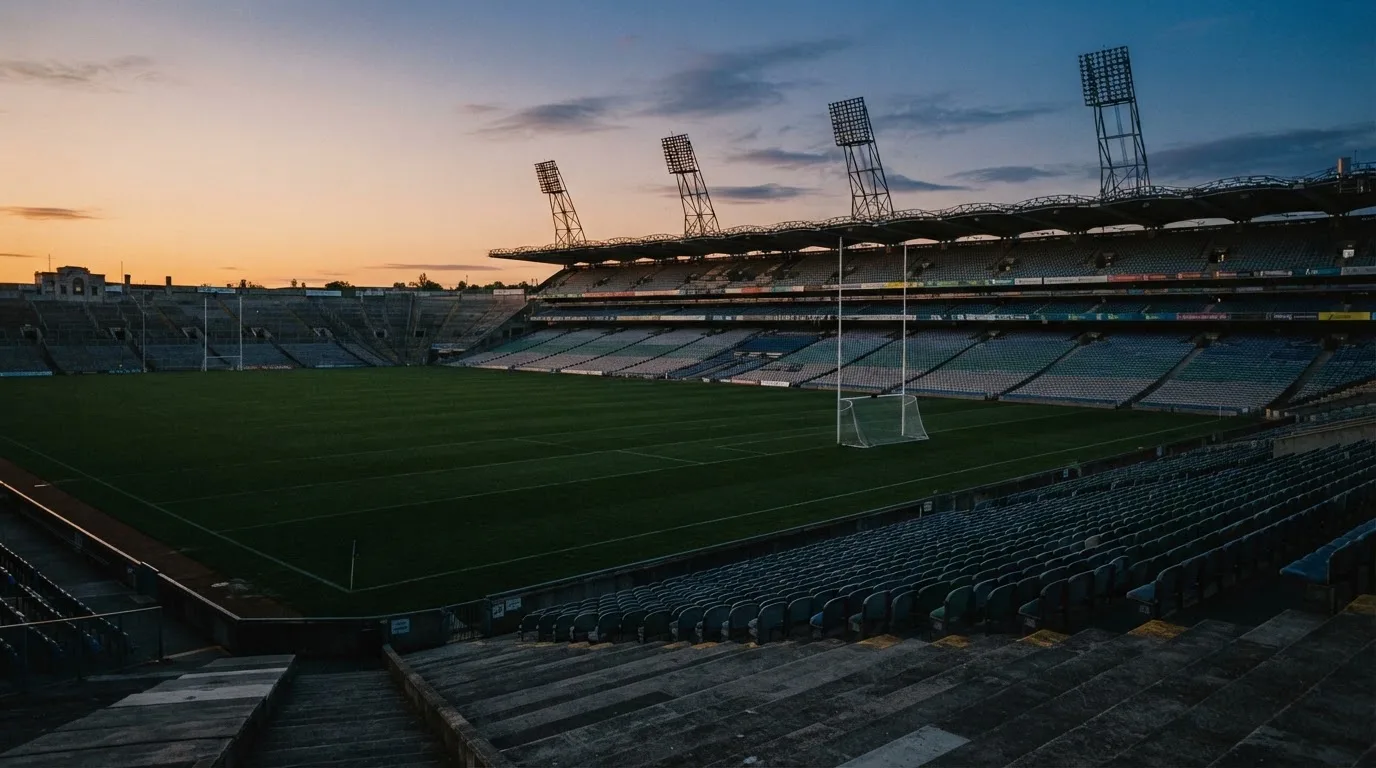
The All-Ireland Senior Hurling Championship is the senior championship. Beneath it sits the All-Ireland Club Hurling Championship, contested by clubs rather than counties and won on a much later calendar slot. Both are bettable at most GB-licensed operators that carry Gaelic games, although the depth of market coverage drops sharply once you move from the senior inter-county championship into the club fixture list.
What “Licensed in Great Britain” Means
Every operator on a GB-facing site that takes a real-money bet from a customer in England, Scotland or Wales needs a Gambling Commission licence, regardless of where the company behind the operator is incorporated. The Gambling Act 2005, amended by the Gambling (Licensing and Advertising) Act 2014, sets the test at the point of consumption: the question is whether the customer is in Great Britain, not where the operator’s head office sits. A Curaçao, Maltese or Gibraltar licence does not substitute for it.

The Commission’s public register is the only place to confirm a brand actually holds one. The register is searchable by business name, trading name, account number and, since 2014, by the web domain used to take GB customers — which matters because a licensed operator can run a .com rather than a .co.uk and the domain alone proves nothing either way. A brand that does not appear on the register is not licensed to take GB customers; a brand that does appear is. There is no cap on the number of licences, no state monopoly, and no statutory list of permitted sports or markets — operators offer what their licence category and the LCCP (Licence Conditions and Codes of Practice) permit, and price them as they choose.
Five licence categories cover the bulk of online sports betting in Great Britain. Remote general betting standard (real events) covers fixed-odds sports books. Remote general betting standard (virtual events) covers computer-generated fixtures such as virtual horses and virtual football. Remote general betting limited is a smaller-scale variant for start-ups and niche operators. Remote pool betting covers tote-style products on horse and greyhound racing. Remote betting intermediary is the licence held by betting exchanges such as Smarkets, which let customers back and lay selections against each other rather than against the house. A brand can hold more than one category; a brand running an exchange-style product without a betting intermediary licence is operating outside its permissions, and the register makes that visible.
Spread betting splits the picture. Financial spread betting on price movements is regulated by the Financial Conduct Authority, not the Commission. Sports spread betting — a Spreadex or Sporting Index product where the stake can rise or fall against a declared spread — is regulated by the Commission but runs on a different mechanic: liability can exceed the deposit, and operators carry that warning on their own pages. A punter should not treat sports spread betting as a side bet on a betting slip. The stake can outrun the bankroll behind it.
Northern Ireland sits outside the Gambling Act 2005. A “Gambling Commission licence” does not cover a customer in Belfast; the local regime runs on older legislation and a different set of permissions. The right framing for a GB-licensed operator is “GB-licensed” or “licensed for Great Britain”, never “UK-licensed”, because the UK is not one jurisdiction for gambling.
The Tools That Have to Be on the Page
GAMSTOP is the national multi-operator self-exclusion scheme for online gambling in Great Britain and has been a mandatory licence condition for every online operator since 31 March 2020. A customer who registers with GAMSTOP is excluded from every GB-licensed online operator — sites and apps — for six months, one year, five years, or five years with auto-renewal; once the minimum period has run, the exclusion stays in place for a further seven years unless the customer asks GAMSTOP to remove it. The scheme covers online channels; betting shops use a separate offline self-exclusion process.
A financial vulnerability check sits on top of GAMSTOP. Under LCCP condition 3.4.4, in force since 30 August 2024, a licensed remote operator must run a public-record check on a customer whose deposits minus withdrawals exceed £150 in any rolling thirty-day period — a check that, in practice, means looking at insolvency registers, county court judgments and similar public records for signs of serious financial distress. It is not an income check and it is not a credit reference check. From 28 February 2025 the £150 threshold has been the trigger rather than a higher number. The Commission’s separately announced “financial risk assessments” — the affordability-style checks that were widely reported in the press — are described as staged and announced without a start date as of the Commission’s article of 7 July 2026, and should not be written up as live.
Deposit limits are an operator-level requirement, not a state-set ceiling. Remote Technical Standard 12 requires operators to offer a gross deposit limit set by the customer on a fixed time frame. The first phase of changes took effect on 31 October 2025; a second phase was postponed to 30 September 2026, and whether that second phase is now live is not established from the Commission’s published material. The honest read is that a punter chooses a limit, and a licensed operator must offer one — there is no state-imposed maximum stake or loss ceiling in GB sports betting.
Identity verification runs before the first deposit. Since 7 May 2019, name, address and date of birth have to be confirmed before a customer can deposit or gamble at a licensed site — including with a free bet or bonus, so the “try the site first” pitch is misleading at the root. Credit cards have been banned for gambling in Great Britain since 14 April 2020, including credit-card-funded e-wallet deposits, and no anonymous play is available at a licensed operator. The effect is that a GB-licensed site is the regulatorily heavier option by design — checks, limits, exclusions, a bonus cap — and the trade for that weight is a route to GAMSTOP, to the Commission’s complaints process and to approved alternative dispute resolution if a payout is withheld.
What an Offer Is Worth in Practice
A “welcome offer” at a GB-licensed sports book is one of three things underneath the headline, and the wording is usually the difference.
A deposit-matched bonus credits a bonus balance equal to a percentage of the first deposit, with a wagering requirement that has to be cleared before the bonus and any winnings from it become withdrawable cash. From 19 January 2026 the Commission’s promotion rules cap wagering requirements on bonuses at 10x: a £10 bonus at 50x wagering would need £500 of qualifying bets; the cap removes anything above £100 of qualifying bets at the £10 bonus tier. Mixed-product promotions — an offer that requires betting on football to unlock free spins on slots, for example — are banned outright from the same date. The cap is on the multiplier, not on the dollar value of the bonus; what is not established is whether the cap applies to free bets with no wagering condition, or whether a separate cap on the cash value of a bonus exists. The condition matters because the offer on the page is not the offer in the small print: a 100% match up to £100 with 10x wagering means £1,000 of qualifying bets before the bonus becomes withdrawable, and a price-taker has to clear that volume against a margin the bookmaker controls.
A free bet credits a fixed-value bet that pays the winnings only — the stake is not returned with a win, the way it would be on a normal bet. The headline reads “£30 free bet”; the cash the punter ends up with if the selection wins is £30 × (odds − 1), not £30 × odds. The stake is the operator’s, and the winnings are the punter’s. Some free bets are one-off, some are split into multiple smaller tokens, and most come with a minimum odds floor (anything below 4/1 in fractional form, or 5.00 in decimal form, would not count on a Hollywoodbets-style offer) and a deadline inside which the free bet has to be used. A free-bet token that expires in seven days is worth less than one with thirty.
A risk-free bet, in the GB market, is almost always a free bet credited only on a loss — the word “free” doing the work, the risk-free framing taking the credit and the credit sitting as a free bet rather than cash. A £10 risk-free first bet at 2.00 that loses returns £10 as a free bet, not £20 as cash. The wagering requirements that apply to a free bet are typically lighter than those on a deposit bonus, but the stake-not-returned mechanic still does the same thing to the headline. “Risk-free” reads like insurance; on the page it is a refund in free-bet form.
The pattern, with all three structures, is that the headline is a price. The price a punter actually pays is the wagering requirement, the minimum odds floor, the deadline, the market margin the qualifying bets run against, and the small print on what counts as a qualifying bet (same-game multiples, each-way bets, and cashed-out bets are routinely excluded from turnover contributions). A punter who reads the small print before the headline is rare; the small print is the offer.
Cash Out and Live Betting
In-play betting on Gaelic games is offered by every operator on this page’s reviewed list, and at varying depth. The product sits on top of the same odds engine as pre-match pricing, with the margin carried through and an additional spread layered on as the game state moves. A bookmaker will shorten the favourite after a goal and lengthen the underdog, just as a betting exchange’s back price on the favourite drifts; the shape of the live book is the shape of the live market, less the latency of the data feed and less the in-play margin that prices the stream.
Cash out is the operator’s mechanism for closing a bet before the final whistle. A single bet at 2.00 placed pre-match is worth more after the favourite scores than before; cash out lets the punter lock in the new price rather than wait for the final whistle. The trade is that the cash-out value carries the operator’s spread on the market and is not the same as the true market price at that moment — it is the price the operator is willing to pay to take the bet off its book. One-click, partial and auto cash out, all three, are now standard at most operators; the difference is the granularity of the take-profit and stop-loss controls, and whether partial cash out lets the punter run a partial position through to the whistle.
Live streaming at GB-licensed operators is generally not available for Gaelic games the way it is for horse racing, tennis or football — the rights sit with GAAGO and RTÉ in Ireland, and the operators that do carry GAA live streams are usually doing so under a sub-licence rather than a primary rights deal. A punter looking for the in-game video alongside the live odds is more likely to find it on a GAA-specific service than on a mainstream GB sports book’s live tab, even though the live betting markets themselves are usually well covered.
Markets on a Hurling Slip
The match-result market is the headline: home win, draw, away win, in fractional or decimal form. Senior inter-county hurling draws are not the rarity they are in football — most championships have produced a draw at some stage of the knockout rounds — so the three-way price matters. A fixture priced at 5/4 the favourite, 9/4 the draw and 6/4 the underdog sits on a margin built into all three prices, not on the headline alone.
Total points is the natural fit for a sport whose scoreboard mixes goals and points. The line is usually set in the high twenties for a competitive senior fixture — a 2-21 to 0-24 game settles around thirty-one points; a low-scoring wet-weather game settles around twenty. Some operators split the line into “over X.5 points” and “under X.5 points”, and the price on each side is the price of the market’s payout share, not a prediction about the weather. The handicap market takes the same shape: a favourite starts the market on a points handicap of minus two or minus three, and the line adjusts in line with the bookmaker’s read of the fixture.
Player markets are thinner. Hurling is a small squad sport in betting terms — most senior inter-county fixtures do not attract the deep player-prop coverage that English Premier League football does. First goalscorer, anytime goalscorer and man-of-the-match markets are offered on the bigger games; on a Munster championship round-robin fixture, the menu is usually match result, total points, handicap and a couple of team-based markets such as “race to X points” or “winning margin”. A punter who wants a deeper player market than the operator publishes needs to check the operator’s own Gaelic games tab on the morning of the fixture, because the menu shifts game by game.
Outright markets are the long-running side of the championship. All-Ireland Senior Hurling Championship winner, provincial winner, top scorer, player of the year — all are usually priced from the spring onwards, with the price shortening as the championship progresses and lengthening again after a shock result. Ante-post betting on the outright winner is a different product from match betting, with non-runner rules and Rule 4 deductions applying when a county withdraws; a punter should read the ante-post terms before placing an early book on the All-Ireland.
How Prices Are Built
A bookmaker’s margin is the share of every pound staked that the bookmaker keeps, on average, across a market. The mechanical way to see it is to take a market — say a two-way match result with no draw, or a totals line — and invert every price into an implied probability (1 ÷ decimal odds, or the stake ÷ return for fractional odds), then add the probabilities together. If the probabilities add to 1.0526, the margin is 5.0%; if they add to 1.08, the margin is 7.4%. A market at 1.90 / 1.90 on a two-way line — a typical line on a tight hurling handicap — implies 0.5263 on each side, which adds to 1.0526: a margin of 5.0%, and a payout share of 95.0%. The same market at 1.85 / 1.85 adds to 1.0811, a margin of 7.5%, and the same market at 1.95 / 1.95 adds to 1.0256, a margin of 2.5%.
The band is the point. A margin of 2% to 5% is a sharp book on a mainstream market; a margin of 5% to 8% is a normal GB sports book margin; a margin above 8% on a mainstream line is the sign of a thinner market with less liquidity, which is what Gaelic games lines often look like at operators that do not specialise in the sport. The smaller the market and the fewer the operators pricing it, the wider the margin tends to run. A punter comparing two operators on the same fixture can convert both sets of odds into implied probabilities, sum them, and compare — and the operator with the smaller sum is the cheaper one to bet with, all else being equal. The punter’s edge, such as it is, comes from picking the operator with the lower margin on the market they actually want to bet on, not from picking the operator with the highest headline price on the favourite, because the headline price rides on the underdog price and the underdog price is where the margin often hides.
A working example: a hurling match-result market priced at 4/5 (1.80 decimal) the favourite, 13/5 (3.60 decimal) the draw and 11/4 (3.75 decimal) the underdog. Inverting: 1 ÷ 1.80 = 0.5556, 1 ÷ 3.60 = 0.2778, 1 ÷ 3.75 = 0.2667; sum = 1.1001. The margin is 9.1%, and a payout share of 90.9%. The same fixture priced at 4/6 (1.67), 3/1 (4.00) and 10/3 (4.33) gives 0.5988 + 0.25 + 0.2309 = 1.0797, a margin of 7.4%, and a payout share of 92.6%. The two sets of odds describe the same fixture but cost the punter a different amount to take — and the second set, on this reading, is the cheaper one to bet on. The fixture’s actual probabilities are unchanged either way.
The margin is not the vig, the juice, the overround or the commission — those words are used loosely in the press and precisely nowhere — and it is not the same thing as a betting exchange’s commission rate (Smarkets, for instance, charges commission on net winnings rather than carrying a margin into the price). An exchange’s “price” is closer to the true market price than a bookmaker’s, because the exchange takes a cut of winnings rather than building one into every line; the bookmaker’s price is a product of the operator’s read of the market and the margin the operator has decided to carry. The punter who knows the difference sees prices differently on the two products.
What Returns Look Like on a Betting Slip
A winning single bet returns stake × decimal odds. A £10 single at 2.50 returns £25, of which £15 is profit; the same bet at 4/5 fractional returns £18 of which £8 is profit. The relationship is the same one: return = stake × odds, profit = stake × (odds − 1). On a combination bet — a double, a treble or an accumulator (an “acca”) — the odds of the legs multiply into one price. A double at 2.00 and 3.00 is a 6.00 double; a treble at 2.00, 3.00 and 4.00 is a 24.00 treble; an accumulator at those three legs is the same as the treble. The price on the slip is the price of all the legs multiplying to the same outcome, and the margin on the combination is the product of the margins on each leg, plus the operator’s combination margin.
Each-way betting splits a stake into two equal bets: one on the win, one on the place. The total stake is twice the headline stake. Each-way terms vary by sport and by operator — most hurling outright markets price to a quarter of the odds for the first three places, and a fifth of the odds for the next two — and the place terms should be checked on the betting slip before the bet is placed. A £10 each-way at 6/1 the field, at a quarter of the odds for three places, becomes a £20 total stake, £10 of which is on the win at 6/1 and £10 of which is on the place at 6/4.
Bet builders and same-game multiples combine markets from one fixture into one bet, and the price is the product of the legs. Bet365’s Bet Builder+ is the marquee version of the product, combining markets from one event into a single bet that is available pre-match and in-play. Super Boosts, Winnings Boosts and Bet Boosts sit on top of the main price as enhanced-odds tokens; the enhanced price is the price the operator is willing to offer to settle, and the punter has to read whether the boost is a real boost (a price higher than the operator’s own regular price on the same selection) or a marker on a price the operator was already happy to lay at.
Ten Licensed Bookmakers, Side by Side
| Brand | Gambling Commission licence | Licence holder | Position on the book’s terms |
|---|---|---|---|
| Hollywoodbets | 053028-R-330019-013 (account 53028) | Hollywoodbets International UK Limited | Sports welcome: stake returned as a free bet up to £30 on the first qualifying losing accumulator (stake £10+, 3+ legs, odds of 4/1 or greater, settled within 7 days); one free bet per customer. |
| Smarkets | 039173-R-319366-011 (account 39173) | Smarkets (Malta) Limited | Open-bank-transfer deposits instant from £10 to £10,000; withdrawals processed within 6 hours from £10 to £100,000; UK debit-card deposits instant from £10 to £15,000. |
| Bar One Racing | 056516-R-332750-007 (account 56516) | Bar-One Racing Limited | Irish independent bookmaker with shops across Ireland; sponsorships at Dundalk, Fairyhouse, Navan, The Curragh, Curraheen Park and Cork; Gaelic games coverage as the listings report. |
| London Bet | 066162-R-340278-004 (account 66162) | Thistle Bet Limited | App combines sports betting (football, tennis, horse racing, greyhounds, darts, golf, cricket, NFL, NBA, MLB, snooker) with Pragmatic Play casino slots and live in-play betting. |
| Swifty Sports | 058957-R-334734-006 (account 58957) | Swifty Global (UK) Ltd | Best Odds Guaranteed, Cash Out on markets including horse racing and football, daily price boosts, live streaming and in-play betting; Bet Builder listed as coming soon. |
| Spreadex | 008835-R-104580-022 (account 8835) | Spreadex Limited | Combines fixed-odds and spread betting in one app, with one-click, auto and partial cash out, Bet Builder across fixed odds or spreads, and live streaming of UK and Irish horse racing, greyhounds, tennis, NFL and selected football. Sports spread betting can see losses exceed the deposit. |
| Sporting Index | 027343-R-308898-011 (account 27343) | Sporting Index Limited | Lets customers switch between fixed odds and spread betting, with in-play betting, Bet Builder for football, auto cash-out and Multi-Markets. |
| BetMGM | 039198-R-319450-029 (account 39198) | LeoVegas Gaming PLC | Sports welcome for new UK customers who deposit £10+ and place a sports bet within 7 days: four £10 free bets (two football accumulators of 4+ selections, two sports multiples of 2+), valid for 7 days with minimum odds and opt-in required. |
| DragonBet | 064908-R-339041-003 (account 64908) | DragonBet Ltd | App published by DragonBet Ltd; markets in Welsh football and rugby, racing, American football, in-play betting and bet builder markets. |
| Fitzwilliam Sports | 048760-R-335434-009 (account 48760) | SBKI Limited | Dublin-based bookmaker with capped membership; welcome described as a “High Stakes Welcome” subject to compliance criteria; instant deposits, fast withdrawals, timeouts and deposit limits; links to GambleAware, GamStop and Gamblers Anonymous. |
Hollywoodbets
Hollywoodbets sits in the GB market operating under a remote general betting standard (real events) permission issued by the Gambling Commission. The headline offer is a stake-returned-as-free-bet welcome — a refund-in-free-bet structure, where the stake on the first qualifying losing accumulator (stake £10+, three legs or more, odds of 4/1 or greater, settled within seven days) comes back as a free bet of up to £30. One free bet per customer. The terms describe a free-bet product whose stake is not returned with a win, so a £30 free-bet token on a winning selection at 5.00 returns £120 of winnings, not £150. The depth of Gaelic games coverage at Hollywoodbets is not established from the operator’s own pages and should be checked on the day; the licence is real and the offer’s small print is the cleanest part of the brand’s GB profile. A punter who likes an accumulator-shaped welcome and reads the seven-day deadline before claiming is the kind of customer the offer is built for.
Smarkets
Smarkets runs as a betting exchange under a remote betting intermediary licence held by Smarkets (Malta) Limited — a different licence category from a fixed-odds sports book. The product is back-and-lay against other customers, and the price the platform displays is the price the market has cleared at, with Smarkets charging commission on net winnings rather than carrying a margin into every line. The payment-methods hub describes open-bank-transfer deposits from £10 to £10,000 as instant, with withdrawals processed within six hours from £10 to £100,000; UK debit-card deposits are instant from £10 to £15,000. For a punter pricing a hurling match result, an exchange model gives a sharper line than a bookmaker model — the implied margin on a typical two-way market is closer to 2% than to 5%, because the customers set the price. The catch is that liquidity on niche Gaelic games markets is thinner than on English Premier League football, and the price the exchange shows is the price at which the trade has to be matched; a large bet on a small market can move the price.
Bar One Racing
Bar One Racing rebranded as BAR 1 Betting, an Irish independent bookmaker with shops across Ireland and racing sponsorships at Dundalk, Fairyhouse, Navan, The Curragh, Curraheen Park and Cork. The GB licence is held by Bar-One Racing Limited as a remote general betting standard (real events) licence. The brand is an Irish high-street name trading into the GB online market; its strength is racing, and its Gaelic games coverage is what the listings describe rather than what the operator’s own pages commit to in detail. A punter who wants a brand rooted in Irish racing with a GB licence and who is happy to check the operator’s own GAA tab before betting is the customer the licence fits.
London Bet
London Bet holds a remote general betting standard (real events) licence from the Gambling Commission, combining sports betting (football, tennis, horse racing, greyhounds, darts, golf, cricket, NFL, NBA, MLB, snooker) with Pragmatic Play casino slots and live in-play betting. The menu is broad, the GAA tab is not the headline, and the brand’s strength sits with mainstream sports rather than niche Gaelic games. A punter who wants a one-app product covering several sports and an in-play tab, and is happy to look at the GAA menu on the day of a fixture, is the customer London Bet is built for; a punter looking for depth on All-Ireland outright markets is probably better served elsewhere.
Swifty Sports
Swifty Sports holds a remote general betting standard (real events) licence from the Gambling Commission, and the brand’s own app description lists Best Odds Guaranteed, Cash Out on markets including horse racing and football, daily price boosts, live streaming and in-play betting; Bet Builder is listed as coming soon. The product is mainstream-British — racing and football are the load-bearing sports, with live streaming as the headline feature. A punter who values BOG on the racing side and cash out on the football side, and is willing to wait for the Gaelic games tab to grow, is the kind of customer the operator’s product set is built around.
Spreadex
Spreadex is the operator on this list that combines fixed-odds and spread betting in one app, and the licence book is wide enough to cover both. The fixed-odds licence is a remote general betting standard (real events) licence held by Spreadex Limited; the financial spread betting product sits on the FCA side and is a separate permission. The product offers one-click, auto and partial cash out, Bet Builder across fixed odds or spreads, and live streaming of UK and Irish horse racing, greyhounds, tennis, NFL and selected football. The brand carries the FCA-regulated spread betting warning that losses can exceed the deposit — the warning is a regulatory disclosure and the operating reality behind it. A punter looking to toggle between fixed-odds and spread markets on the same fixture should first study the structural differences between those two product types.
Sporting Index
Sporting Index is the second of the two spread-betting-led operators on this list, running a remote general betting standard (real events) licence held by Sporting Index Limited and offering customers the option of switching between fixed odds and spread betting on the same fixture. The product carries in-play betting, Bet Builder for football, auto cash-out and Multi-Markets. The difference from a Spreadex-shaped product is the menu and the sports weighting; Sporting Index is a sports spread betting brand that has added a fixed-odds arm, and the sports spread is the older part of the book. The service fits the punter who wants a spread-betting-first experience with the convenience of a fixed-odds slip; those seeking a standard sportsbook experience should look elsewhere.
BetMGM
BetMGM operates in GB under a remote general betting standard (real events) licence held by LeoVegas Gaming PLC — the same parent group that runs LeoVegas’s other brands. The sports welcome offer credits four £10 free bets (two football accumulators of four selections or more, two sports multiples of two selections or more) to new UK customers who deposit £10 or more and place a sports bet within seven days, with minimum odds and opt-in required; the free bets are valid for seven days. The shape of the welcome is a token spread rather than a single credit — four tokens, each priced into a different market, and each with its own qualifying terms. This offer targets those who appreciate the flexibility of smaller tokenised stakes over a single lump-sum bonus.
DragonBet
DragonBet holds a remote general betting standard (real events) licence from the Gambling Commission — a smaller brand with a Welsh focus, with markets on Welsh football and rugby, racing, American football, in-play betting and bet builder markets. The brand’s strength is its regional menu and its racing-side product, and the Gaelic games coverage is not the brand’s headline. A punter who values a regional menu and a Welsh focus is the customer DragonBet is built for; a punter looking for depth on All-Ireland hurling should check the operator’s own GAA tab before relying on it for the championship.
Fitzwilliam Sports
Fitzwilliam Sports describes itself as a Dublin bookmaker with capped membership; its operating licence is a remote general betting standard (real events) permission issued by the Gambling Commission. The welcome is described as a “High Stakes Welcome” subject to compliance criteria — the compliance criteria being the operator’s own customer checks rather than a public threshold. The brand offers instant deposits, fast withdrawals, timeouts and deposit limits, and links to GambleAware, GamStop and Gamblers Anonymous. A Dublin bookmaker with a GB licence and a capped-membership shape is the customer profile the operator’s product set is built around; a punter looking for a high-stakes product with a small, capped customer base is the kind of customer the brand is built for.
How a Margin Works, Worked Through
The band, for a two-way market priced at 1.90 / 1.90, is a margin of 5.0% and a payout share of 95.0%. The arithmetic: invert each price to an implied probability (1 ÷ 1.90 = 0.52632), sum the two probabilities (0.52632 + 0.52632 = 1.05263), and read the sum as 1.05263, so margin = 0.05. The same market at 1.85 / 1.85 sums to 1.0811, a margin of 7.5%; the same market at 1.95 / 1.95 sums to 1.0256, a margin of 2.5%. The condition is the two-way shape: a three-way match result market with a draw sums to a different number for the same set of headline prices, because there are three probabilities to invert rather than two, and the draw’s implied share sits inside the total.
For a typical senior hurling match result market — 4/5 the favourite, 13/5 the draw, 11/4 the underdog — the implied probabilities are 0.5556, 0.2778 and 0.2667, summing to 1.1001, a margin of 10.01% and a payout share of 89.99%. The condition is the three-way shape: a 4/5 / 13/5 / 11/4 line at 10% margin is not the same as a 4/5 / 13/5 / 11/4 line at 5% margin, and a punter who treats the favourite’s headline price as the only price worth reading misses where the margin sits.
The reason a GB sports book’s hurling margin often runs higher than its football margin is the depth of the liquidity behind it. Premier League football has hundreds of liquidity providers feeding the price; an All-Ireland Senior Hurling Championship round-robin fixture has a handful. The thinner the market, the wider the bookmaker’s margin tends to run, and the wider the gap between the price the operator shows and the price an exchange on the same fixture would show. A punter who cares about the price has two ways to compress the margin: pick the operator with the sharpest line on the fixture they actually want to bet on, or use an exchange where the price is set by other punters rather than by the bookmaker’s spread.
Tax and What the Punter Actually Pays
Betting winnings are not taxed on the punter in Great Britain. The tax is General Betting Duty, an operator-side tax on gross profits, currently 15% across the board; from 1 April 2027 a new remote betting rate of 25% applies within General Betting Duty, while remote bets on UK horse racing, bets on self-service betting terminals in licensed premises, pool betting and in-person betting stay at 15%. Until 1 April 2027 the remote rate stays at 15%; whether operators pass the duty through into the odds they offer is not established, and the punter should not be told the duty is being charged to them. Spread betting has its own rates — 3% on financial spread betting, 10% on other spread betting — and is the operator’s tax on its gross profits, not a charge the punter sees.
The general information is that a GB punter keeps their winnings. A professional gambler should ask HMRC or an adviser, because the line between a recreational punter and a professional one is a tax question rather than a betting question, and the answer depends on the punter’s broader circumstances.
The Offshore Side
A bookmaker that takes GB customers without a Gambling Commission licence is breaking section 33 of the Gambling Act 2005; the offence sits with the operator, not the customer, and a customer who has used an unlicensed site is not on that side of the law. What the customer does lose is the regulatory architecture: no GAMSTOP coverage at the unlicensed site (and the GAMSTOP exclusion at a licensed site does not extend to the unlicensed brand), no Commission complaints route, no approved alternative dispute resolution body, no British consumer redress if funds are withheld, and no protection from the 19 January 2026 bonus cap or the £150 financial vulnerability check.
Enforcement against unlicensed operators runs through cease-and-desist notices, search-engine referrals, registrar and host work and payment-provider pressure, with court-order DNS blocking powers given or about to be given to the Commission — not, as of the Commission’s own material, an ISP-level filter that is currently in operation. The honest framing is that “GB-licensed” means a punter pays in heavier verification and bonus terms and gets back a route to dispute resolution and self-exclusion; “unlicensed” means a punter pays in lighter onboarding and gets back nothing if the operator does not pay out. Neither is the safe choice by default; the licensed side is the safer side by design, and the unlicensed side is the cheaper-to-enter side by accident.
Frequently Asked Questions
How can it be checked that a bookmaker holds a Gambling Commission licence?
The Commission’s public register is searchable by business name, trading name, account number and web domain, and the presence of a brand against an active remote betting licence is the only confirmation that matters. The register is the test; the operator’s own “we are licensed” footer is not.
How is the return on a bet worked out from the stake and the odds?
Return is stake × decimal odds, and profit is stake × (odds − 1). A £10 single at 2.50 returns £25 and pays £15 of profit; a £10 single at 4/5 returns £18 and pays £8 of profit.
What is the bookmaker’s margin and how can it be seen in the odds?
The margin is the share of every pound staked that the bookmaker keeps, on average, across a market. Invert each decimal price into an implied probability (1 ÷ odds), sum the probabilities and subtract from 1 — a sum of 1.05 means a 5% margin; a sum of 1.08 means an 8% margin.
How do fractional odds such as 5/1 convert to decimal odds such as 6.00?
A fractional price a/b converts to a decimal price of a ÷ b + 1. So 5/1 is 5 ÷ 1 + 1 = 6.00, 11/4 is 11 ÷ 4 + 1 = 3.75, and evens (1/1) is 2.00.
Which tools for controlling play does a licensed bookmaker have to offer?
A licensed remote operator must offer GAMSTOP self-exclusion, deposit limits, timeouts, identity verification before the first deposit, links to GamCare and GambleAware, and from late August 2024 a financial vulnerability check on customers whose deposits minus withdrawals exceed £150 in a rolling 30-day period.
Rugby, cricket & Gaelic – Best Betting Tips
Content created by the «Best Betting Tips» team
