
High-limit betting sites in Great Britain — what really limits a bettor, and what it costs
 Available in US
Current as of 27 October 2026 · licence data verified against the Gambling Commission’s public register
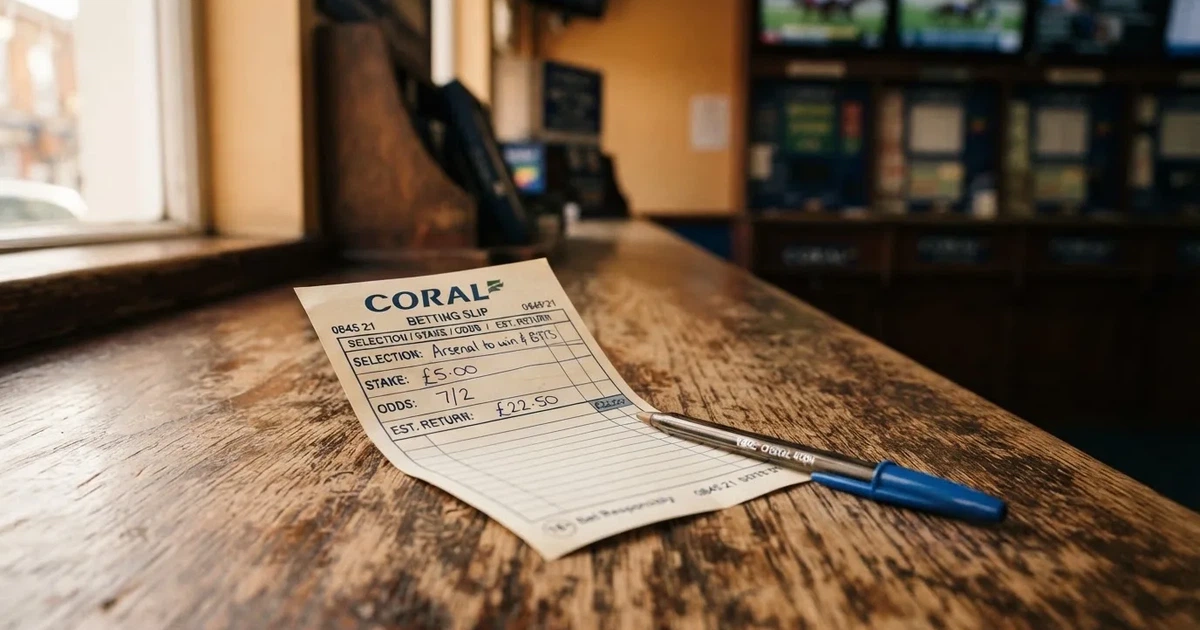
A “high limit” bookmaker is not the same thing in the British market as it is offshore. In Great Britain the betting licence sits with the operator, the operator sets its own maximum stake on each market, and the Gambling Commission asks only that the operator behaves responsibly around those limits — there is no statute that names a number for either a ceiling or a floor. The ceiling that matters is the one on the betting slip. The cost that matters is what the price on that slip costs a punter who has to clear a bonus, accept a Rule 4 deduction, or take a price boost the operator has widened with a margin baked in. That is the page: who serves British customers at the upper end of the stake range, what the terms actually say about a max bet, and what those terms charge a bettor who uses them.
Statute, jurisdiction and the licence on the wall
The Gambling Commission licenses the whole commercial market under the Gambling Act 2005. The Commission’s public register is the test of whether a brand holds a licence, and the licence is required wherever the operator is based if its remote facilities are used in Great Britain — a Curaçao, Maltese or Gibraltar licence does not cover British punters, who no longer meet a single brand on the register. Northern Ireland is outside the 2005 Act and is governed by its own older law; this page covers Great Britain and says so. Since 7 May 2019 the licensed operator has to verify name, address and date of birth before the customer can deposit or place a bet, including with a free bet or a bonus — there is no anonymous play at a licensed site. Minimum age: 18.

A bookmaker’s licence covers one of five categories: remote general betting standard (real events), remote general betting standard (virtual events), remote general betting limited, remote pool betting and remote betting intermediary (the betting-exchange licence). The brands reviewed below hold a remote general betting standard (real events) licence. There is no statutory list of permitted bets or markets: an operator holds a licence for a category and offers markets under its own rules and the Licence Conditions and Codes of Practice. In-play betting falls inside those conditions — never write that it is “unrestricted” as a legal conclusion. Spread betting on financial markets is regulated by the Financial Conduct Authority, not the Commission, and losses can exceed the deposit; spread betting on sports sits inside General Betting Duty.
The Commission does not cap the number of licences. There is no state-set deposit or loss ceiling for betting either; deposit limits are the customer’s choice, and operators must offer one. Credit cards have been banned for gambling in Great Britain since 14 April 2020 — debit cards and bank-based payments are not covered. No British named-account rule, no state list of permitted payment methods and no rule for or against cryptocurrency deposits at licensed operators is established: describe payments from the operator’s terms only. Wagering requirements on bonuses are capped at 10× since 19 January 2026, and mixed-product promotions — an offer that requires gambling on two or more product types such as betting and casino — are banned. The player pays no tax on betting winnings in Great Britain; General Betting Duty is the operator’s tax on gross profits, currently 15%, rising to 25% on the remote rate from 1 April 2027 on bets that do not fall inside the 15% carve-out (UK horse racing, self-service betting terminals, pool betting, in-person). Whether operators pass the duty on through odds is not established, and the page never writes that the player is charged duty.
Responsible gambling: what the licence actually obliges
GAMSTOP is the national multi-operator online self-exclusion scheme and a mandatory licence condition for online operators since 31 March 2020. Every GB-licensed online operator takes part, including every brand reviewed below. A self-exclusion period is six months, one year, five years or five years with auto-renewal, and after the minimum period it stays in place for a further seven years unless the customer asks GAMSTOP to remove it. It covers online sites and apps; betting shops run a separate scheme. A financial vulnerability check, in force since 30 August 2024, applies to licensed remote betting when a customer’s deposits minus withdrawals exceed £150 in a rolling 30 days, with the threshold checked since 28 February 2025: it is a public-record check (bankruptcy, county court judgments), not an income check and not a credit reference check. A second, more searching financial risk assessment has been announced in a staged plan with no start date — describe it as “announced, staged, no start date”, never “in force”. Deposit limits under the operator’s added technical standards: the first changes applied from 31 October 2025, a second phase was postponed to 30 September 2026, and whether the second phase is live is not established. The customer can always set a lower limit than the operator offers; the page does not describe any operator-set ceiling as a hard cap on a punter.

Help and complaints routes are national, not per-operator, and they exist outside the betting slip: GamCare runs the National Gambling Helpline; GambleAware funds treatment and education; NHS gambling clinics sit in the NHS; Gamblers Anonymous runs peer-support meetings. The Commission’s complaints route is for the operator’s conduct, not a single bet’s outcome — ADR (alternative dispute resolution) is the route for an unresolved payout dispute and every licensed operator names one. Gambling is entertainment; the costs the page measures below are the costs of a price, a bonus and a stake limit on a British betting slip, not a counsel on the activity itself.
How a price is set, settled and what the margin takes
Decimal odds on this page are written 1.90 (fractional 9/10), 2.00 (evens), 3.50 (5/2), 6.00 (5/1). The format used is decimal; the conversion a/b → a ÷ b + 1 holds. A single bet’s return is stake × odds and the net profit is stake × (odds − 1) — a £10 bet at 2.50 returns £25 (£10 × 2.50) and pays £15 profit. A combination bet multiplies the prices of its legs into one — a double at 2.00 and 3.00 is 6.00, so a £10 stake returns £60 (£10 × 6.00) and pays £50 profit if both legs win, and loses the £10 stake if either leg loses. Each-way betting is two bets of equal stake (the stake doubles), one on the win and one on the place at the place terms the operator prints for that race; an each-way punt has to clear the bonus twice if a free bet is used.
The bookmaker’s margin sits inside every price. For a two-way market with decimal odds o₁ and o₂, the payout share is 1 ÷ (1/o₁ + 1/o₂) and the margin is 1 − payout share. Take a market priced 1.90 / 1.90 (9/10 each side, a symmetric even-moneyed line): the payout share is 1 ÷ (1/1.90 + 1/1.90) = 1 ÷ (0.5263 + 0.5263) = 1 ÷ 1.0526 = 0.9500, so the margin is about 5.0% of every unit staked. The same calculation at 1.85 / 1.85 yields a payout share of about 0.926 and a margin of about 7.4%; at 1.95 / 1.95 a payout share of about 0.974 and a margin of about 2.6%. The margin is not the money a bookmaker wins on any one bet — it is the average take across the whole market over many bets, expressed as a share of total stakes. A symmetric even-moneyed line around 1.90 is the typical football 1X2 margin the licensed bookmakers run; a 1.85 line is on the steep side for that market, and a 1.95 line is tight. The table below states the margin band for each operator, not a single number, because a margin is a property of a market, an event, a snapshot and an operator — one bookmaker’s football margin is not another’s, and today’s snapshot is not next week’s.
Best Odds Guaranteed (BOG) is a horse-racing concession, not a margin cut: the operator pays the starting price if it is bigger than the price the punter took. William Hill runs it on UK and Irish racing from 8 AM on the day of the race, on both single and multiple bets, and excludes ante-post, tote and pari-mutuel bets. Coral runs it from 8 AM on UK and Irish racing and on every UK greyhound race. Fafabet runs it from 9 AM on UK and Irish racing win and each-way bets. Bet600 runs it on horse racing at the starting price. BOG is worth nothing when SP is below the price taken — and on short-priced favourites that is most of the time, so a punter comparing two bookmakers’ racing offers needs to look at the racing margin, not the BOG flag.
A Rule 4 deduction is the other thing that quietly clips a winning return on a horse race: when a horse is declared a non-runner after the betting has formed the market, the bookmaker deducts a fixed share of the gross profit from every winning bet on the race, on a sliding scale the operator publishes. The deduction comes out of the winning return, not the stake, and the punter does not see it on the betting slip — only on settlement. Cash Out is the operator’s offer to buy the bet back before settlement; it carries the operator’s margin and is not available on every market. William Hill’s Cash Out is not available on each-way bets and is not always available on accumulators, and the operator does not guarantee availability — a bet that cannot be cashed out stands at settlement. DAZN Bet publishes the same caveat: cash-out availability is not guaranteed and bets stand if it is unavailable. A price boost is a price the operator has raised above the market price, usually with a cap on the stake; it is not a reduction in the bookmaker’s margin on the rest of the market and it expires when the operator says it expires.
Why sportsbooks cap the punter they can see
There is no statutory stake ceiling in British sports betting. The cap is the operator’s, set per market and per customer, and the operator may lower it for a customer whose betting pattern the operator reads as sharp. A bookmaker has two ways to control exposure — the maximum stake on a price, and the maximum winning payout on a market or a customer. The first is what the betting slip calls the max bet; the second is what the operator calls the payout cap or the maximum winning, and it sits behind the slip rather than on it.
The reason a bookmaker caps a winning customer is not that the customer has won. It is that the price the customer has been taking is systematically better than the operator’s margin would expect a random customer to find, and that gap compounds over hundreds of bets. A sharp bettor builds models, follows team news faster than the market reprices, and uses the bookmaker’s own in-play delay to lock in a price the operator should have moved away from. The operator cannot stop the bet without losing the customer; what it can do is shrink the maximum stake to the size that makes the bet worth almost nothing. From the punter’s side, the operator looks like it has “limited” them — the operator calls the same act “stake management” or “risk management”, and the Commission’s published social responsibility code requires only that the operator does it openly and consistently. An outright ban is rarer than a stake cut, and a stake cut is rarer than a market cut — closing a specific market to that account only, while leaving the rest of the account intact. Punters whose betting profile has been limited describe it in the same terms research gives: smaller and smaller max bets on the markets they actually bet on, with no formal letter.
The limits a punter does not see on the slip also matter. The operator’s liability cap is the maximum the operator will pay out on a market in a day or on a single event — a winning bet that would push the operator past the cap is settled at a reduced price or voided, depending on the terms. The cap on a free bet is a different cap again: a free bet whose stake is not returned has a different value from a stake-returned free bet at the same face value, and the value of the free bet depends on the price the punter takes — a free bet at 5.00 is worth roughly five times as much as the same free bet at 1.50, before any market margin. No free-bet value is computed for a brand whose offer is not named on this page.
A punter who has been limited has, in practice, three routes: switch bookmaker, switch product (a betting exchange has no operator-side stake cap; it caps the punter’s liability to whatever the backer will accept on the other side of the bet), or stop betting on the markets the operator has closed. The route the punter picks depends on what the operator has left them — a punters who keeps finding limits at five bookmakers in a row has been seen by the market, and the sixth will not need long.
What a bet actually pays: the worked example
A £100 bet at decimal odds 2.50 returns £250 (£100 × 2.50) and pays £150 profit. The same bet at 1.50 returns £150 and pays £50 profit. A combination bet with two legs at 2.00 and 3.00 has combined odds 6.00, so a £100 stake returns £600 and pays £500 profit if both legs win, and loses the £100 stake if either leg loses. A Rule 4 deduction of 25% on a winning £100 win bet at 5.00 takes £125 out of the £400 return (a £100 stake and £300 profit becomes £100 stake + £300 × 0.75 = £100 + £225 = £325), and the deduction is taken from the profit, not the stake. A non-runner in a multiple makes the bet a single on the remaining legs at the original stake (the operator does not refund the stake on the void leg); an each-way non-runner takes the win stake out and leaves the place stake in.
Reading the licence data
The brands below are listed on the Gambling Commission’s public register against a remote general betting standard (real events) licence held by a named operator. Several brands can run under one licensee; the page names the brand the punter sees, and the licence holder behind it is the legal entity the Commission licenses. The Commission’s register can be searched by business name, trading name, domain or account number. The brand names on this page are the trading names the register publishes, and the licence numbers are the Commission account numbers research cites. A bot that asks “is X licensed in Great Britain” can be answered by typing the brand or the domain into the register; a punter who wants to check should treat the register entry as the whole test, and the table below as a starting list.
The licensed brands and what they say about stake size
| Brand | Gambling Commission account number and licence holder | Typical margin band | What the operator’s terms say about the stake limit |
|---|---|---|---|
| Bet600 | 44731 — Tyche Tech Limited | 2.6%–7.4% | Pays Best Odds Guaranteed on horse racing at the starting price; maximum stake and winning are set per market and per customer |
| VBet | 44662 — SCGO Limited | 2.6%–7.4% | Bet Builder on the app, pre-match and in-play, live streaming and a live calendar; stake limits set per market |
| Swifty Sports | 58957 — Swifty Global (UK) Ltd | 2.6%–7.4% | Best Odds Guaranteed, Cash Out on racing and football, daily price boosts, live streaming, in-play; Bet Builder listed as coming soon; max stake varies by market |
| Betmaster | 65699 — BM Solutions GB Ltd | 2.6%–7.4% | Standard fixed-odds bookmaker; maximum stake set per market; welcome promotion described in the operator’s own terms |
| Fafabet | 57385 — Taichi Tech Limited | 2.6%–7.4% | Best Odds Guaranteed on UK and Irish horse racing win and each-way bets from 9 AM on race days; stake ceiling set per market |
| DragonBet | 64908 — DragonBet Ltd | 2.6%–7.4% | Welsh football and rugby markets, racing, American football, in-play and bet builder markets; max stake varies by market |
| Dabble | 65677 — Dabble Sports UK Ltd | 2.6%–7.4% | New-customer offer of a matched free bet on first deposit with minimum odds, 7-day free-bet expiry and stake not returned; stake limit per market applies |
| Betboro | 44181 — Webmedia Development N.V. | 2.6%–7.4% | In-play markets and cash-out on football, racing and tennis, boosted odds on selected singles from £10 stakes; max stake varies per market |
| DAZN Bet | 48756 — DZBT Limited | 2.6%–7.4% | Cash Out, Bet Builder, daily bet boosts and in-play; cash-out availability not guaranteed and unsettled bets stand |
| Betway | 39372 — Betway Limited | 2.6%–7.4% | £40 in free-bet tokens on settlement of a first qualifying bet of £10 at minimum odds 2.0, 7-day expiry, debit-card deposits only; max stake set per market |
The table is a starting list. The column on the operator’s own stake-limit practice is qualitative because no operator publishes a single ceiling across all markets — the ceiling is per market, per event, per customer, and the punter sees it on the betting slip. The brands above are also a licence list: every one of them holds a Gambling Commission remote general betting standard (real events) licence and takes part in GAMSTOP, and that is what makes the column on the right side of the table readable. The same licence does not, on its own, make a bookmaker “high limit” — the only test of that is the stake ceiling the punter hits on the slip and the margin the punter pays on the price.
The operators, one by one
Bet600 — racing-first pricing, sharp on horse racing
Bet600 runs a Best Odds Guaranteed concession on horse racing at the starting price — the bookmaker pays SP if SP is bigger than the early or show price taken. The mobile app sets the maximum stake and the maximum winning per market, and the cap varies by race and by meeting. For a punter whose racing book is the bulk of the action, BOG is the headline concession; for a punter whose action runs across football and racing, the per-market stake ceiling is the more useful number to check, and that number lives on the betting slip rather than in the marketing.
The verdict: a useful racing book for a punter who takes early prices and trusts BOG to top them up at SP, with the cost of a BOG-only concession baked into the rest of the margin.
VBet — Bet Builder and a live calendar, with a typical mid-tier stake range
VBet’s mobile app carries a Bet Builder, pre-match and in-play markets, free live streaming and a live calendar with results and stats — the kind of feature set a punter who wants to build a same-game multi from one fixture expects. The Gambling Commission licence sits with SCGO Limited. The stake ceiling is set per market and per customer; a punter whose typical stake sits inside the per-market cap will not feel the limit, and a punter who runs heavier than the cap will see the slip cut the bet at the cap without warning.
The verdict: a balanced mid-market book for a punter who likes in-play and bet builders, with a stake ceiling that the operator publishes per market rather than per account.
Swifty Sports — racing concessions with a Bet Builder on the way
Swifty Sports runs Best Odds Guaranteed, Cash Out on racing and football, daily price boosts, live streaming and in-play betting; a Bet Builder is listed as coming soon on the app. The Gambling Commission licence sits with Swifty Global (UK) Ltd. The combination is the kind of racing-first feature set a punter who follows the morning card would recognise, with the price-boost market as the headline marketing and the stake ceiling per market as the more useful number.
The verdict: a racing-led bookmaker whose price-boost market is the loudest single feature, and whose per-market stake ceiling is the quieter number that actually sets the upper limit on a punter’s slip.
Betmaster — standard fixed-odds, with the typical per-market ceiling
Betmaster is a fixed-odds bookmaker licensed through BM Solutions GB Ltd, a Maltese-registered operator. The site’s stake ceiling is set per market in the usual way, and the welcome promotion is described in the operator’s own terms. The brand is a useful addition to a multi-account punter’s book when the main bookmaker has cut a market, because the prices and the markets are run independently and a closed market at one operator is not always closed at another.
The verdict: a per-market stake ceiling in the typical range, useful as a second bookmaker in a multi-account setup, with the cost of a second account being the second account’s own margin.
Fafabet — BOG from 9 AM, racing-led
Fafabet runs Best Odds Guaranteed on UK and Irish horse racing on both win and each-way bets from 9 AM on race days. The licence sits with Taichi Tech Limited, and the operator’s stake ceiling runs per market. The 9 AM start is an hour later than the William Hill and Coral 8 AM start, and a punter whose morning routine takes early prices at 8:30 will find the BOG window narrower than at the 8 AM operators — the price the punter took at 8:30 is paid at SP only if the bet is placed from 9 AM, which 8:30 was not.
The verdict: a racing-led bookmaker whose BOG clock starts an hour later than the racing-first brands, with the rest of the feature set in the typical range.
DragonBet — Welsh-led markets, with the standard ceiling
DragonBet’s mobile app is published by DragonBet Ltd and carries Welsh football and rugby markets, racing, American football, in-play betting and bet builder markets. The Welsh-led market is the brand’s distinguishing feature; the stake ceiling is the per-market figure the operator publishes. A punter whose action runs through the Welsh leagues and on rugby will see a deeper market than at a generic bookmaker, and a punter whose action is the Premier League will see the same menu as everyone else.
The verdict: a useful bookmaker for a punter whose action sits inside the Welsh leagues and rugby, with a per-market stake ceiling in the typical range outside those markets.
Dabble — matched free bet, with a 7-day window
Dabble’s new-customer offer is a matched free bet on a first deposit, with minimum odds applying and a 7-day expiry on the free bet, and the stake is not returned with a winning free bet. The licence sits with Dabble Sports UK Ltd. The offer is described here qualitatively; the value of the free bet to a given punter depends on the price the punter takes and the margin on the market the punter uses — a free bet at 5.00 is worth roughly five times as much as the same free bet at 1.50, before any market margin. The 7-day expiry is the cost a busy punter pays: a free bet that has not been used by day 7 is forfeit.
The verdict: a matched free bet whose value depends on the price the punter takes and whose 7-day expiry is the cost a punter who does not bet every day pays.
Betboro — in-play and cash-out, with boosted odds from £10
Betboro offers in-play markets and cash-out on football, racing and tennis, boosted odds on selected singles from £10 stakes, and the usual responsible-gambling tools. The licence sits with Webmedia Development N.V., and the operator’s stake ceiling runs per market. The boosted-odds market is the loudest single feature and the per-market stake ceiling is the quieter number on the betting slip. A punter whose action runs through the boosted market will see the headline price; a punter whose action runs through the regular market will see the regular margin.
The verdict: a useful bookmaker for a punter who likes boosted odds and in-play, with the typical per-market stake ceiling.
DAZN Bet — Cash Out and Bet Builder, with the cash-out caveat
DAZN Bet offers Cash Out, Bet Builder, daily bet boosts and in-play betting; the operator publishes the standard caveat that cash-out availability is not guaranteed and bets stand if cash out is unavailable. The licence sits with DZBT Limited. The Bet Builder is the headline feature, and the cash-out caveat is the cost of using it — a bet that cannot be cashed out at the moment the punter wants to close it stands at the original settlement, and the punter has to wait. The stake ceiling runs per market.
The verdict: a Bet Builder and cash-out bookmaker whose cash-out caveat is the cost the punter pays for the feature, and whose per-market stake ceiling is the upper limit on a given bet.
Betway — a free-bet token welcome, with a 7-day expiry
Betway’s new-customer offer is £40 in free-bet tokens credited as four £10 tokens on settlement of a first qualifying bet of £10 at minimum odds 2.0, with a 7-day expiry on each token and debit-card deposits only. The licence sits with Betway Limited. The offer is described here qualitatively; the value of each £10 token depends on the price the punter takes, and the 7-day expiry is the cost a punter who does not bet every day pays. The debit-card restriction on the qualifying deposit is a smaller cost: a punter who normally funds the account from a bank transfer has to route the qualifying £10 through a debit card.
The verdict: a four-token free-bet welcome whose value depends on the price the punter takes, with a 7-day expiry and a debit-card-only route on the qualifying deposit.
The wider landscape: what the page has not put on the table
The bookmakers reviewed above are a sample, not the whole register. The Gambling Commission’s public register lists far more brands than any review can carry, and the brands named above are the ones cited directly — every one of them holds a remote general betting standard (real events) licence, and a punter who wants to widen the list starts at the register. The big multi-brand operators (Ladbrokes and Coral under one licensee, Paddy Power and Betfair under another) are not on the table; they are licensed and they appear on the register. Several specialist operators reviewed in the wider press are licensed under a different category — pool betting, betting intermediary (exchange), general betting limited (the licence tier for smaller operators) — and the brands above hold the real-events tier, which is the tier that covers the standard fixed-odds and in-play markets the punter sees on a sportsbook’s home page.
Betting exchanges are licensed under a separate betting intermediary category and run on a different model: customers back and lay against each other rather than against the operator, and the operator’s commission is on net winnings, not on margin baked into the price. Betfair’s exchange is the British example; the stake cap on an exchange is the backer’s own liability and the layer’s own stake, not an operator-set ceiling, and a punter who has been limited at a fixed-odds bookmaker often finds the exchange a useful next stop. Spread betting on financial markets is regulated by the FCA, not the Commission, and the FCA-licensed spread-betting firms run a different liability model (the punter can lose more than the deposit); spread betting on sports sits inside General Betting Duty. Lotteries and casino are separate products and separate licences; Lottoland holds a Gambling Commission licence for customers in Great Britain and runs lottery, casino, scratchcards and sports betting in the same app, but the licence covers the activity, not a single product.
A bookmaker that has been limited is not the same bookmaker as a bookmaker that is unlicensed. A licensed operator is required to publish its own stake limits, run GAMSTOP, honour the bonus cap, run affordability checks above the £150 rolling-30-days threshold and offer ADR — to three named routes — for an unresolved payout dispute. An unlicensed operator offers none of those protections, and the punter’s recourse if the operator withholds funds is whatever the operator’s own terms say, which is typically nothing at all. The Commission disrupts unlicensed sites through cease-and-desist notices, search-engine referrals, registrar and payment-provider work and court-order DNS blocking; blocking is not the whole answer and the punter who lands on an unlicensed site still has to decide whether to deposit.
How the page weighs the brands
The site is a starting list of ten licensed brands and a worked example of what a price on a British betting slip costs a punter. The page does not rank the brands: the only ranking research supports is on the licence register, and the register ranks the operators by date of licence, not by suitability for a given punter. A punter who wants a second bookmaker for racing will pick BELL because BOG fits the morning routine; a punter who wants a Bet Builder will pick BELL for a different reason; a punter who has been limited will pick a betting exchange. The verdict on each brand is the verdict the table and the review above it actually support — the feature the punter will use, the cost the punter will pay, and the limit the punter will hit on the slip.
The licence column is the only column the register publishes; the operator’s own stake-limit column is qualitative because no operator publishes a single ceiling across all markets. The combination of the two is what the punter actually uses — the licence as the test of who is licensed, the per-market ceiling as the test of who will take a given bet at the size the punter wants to lay.
Frequently asked questions
Which bookmakers do not limit winning customers?
None of the licensed operators on this page can promise that. A British bookmaker has the right to set its own maximum stake per market and per customer, and to reduce the maximum stake for an account whose betting pattern the operator reads as sharp. The cap is on the betting slip, not on the marketing, and it is set per market rather than per account.
Why do sportsbooks limit winning customers?
Because the price the customer has been taking is systematically better than the bookmaker’s margin would expect a random customer to find, and the gap compounds over many bets. The bookmaker does not stop the bet outright in most cases — it shrinks the maximum stake to a size that makes the bet worth almost nothing on the markets the customer actually uses. A betting exchange has no operator-set stake cap, because the cap on an exchange is the backer’s and the layer’s own liability.
How can a customer check that a bookmaker holds a Gambling Commission licence?
By searching the Gambling Commission’s public register by the brand name, the trading name, the domain or the account number. The register is the whole test of whether a brand holds a licence, and a licensed operator will name the licence number in its own terms or on its home page. A brand that does not name a licence number is not licensed.
How is the return on a bet worked out from the stake and the odds?
A single bet’s return is stake × odds and the net profit is stake × (odds − 1). A £10 bet at decimal odds 2.50 returns £25 and pays £15 profit. A combination bet multiplies the prices of its legs into one — a double at 2.00 and 3.00 is 6.00, and a £10 stake returns £60 if both legs win, paying £50 profit.
What is the bookmaker’s margin and how can it be seen in the odds?
The margin is the share of every unit staked the bookmaker keeps on average. For a two-way market with decimal odds o₁ and o₂, the payout share is 1 ÷ (1/o₁ + 1/o₂) and the margin is 1 − payout share. A symmetric even-moneyed line at 1.90 / 1.90 yields a margin of about 5.0%; a 1.85 line yields about 7.4%; a 1.95 line yields about 2.6%. The margin is not the money the bookmaker wins on any single bet — it is the average take over many bets.
Betting sites & exchanges – Best Betting Tips
Content created by the «Best Betting Tips» team
