
Gaelic Football Betting Tips 2026: A Punter's Working Guide
 Available in US
Data current as of 27 October 2026, checked against each operator’s own site and the Gambling Commission’s public register.

So someone clicked a search result and landed here looking for tips. There is a small problem with that, and it is the one this guide starts with: a tip only earns its name once the form table, the team news, the scoreboard’s injury clock and the bookmaker’s own price have all been weighed against the price available. A prediction printed the night before is closer to a bet on the predictor’s reputation than on the match. What follows is the work that produces a tip, the arithmetic that decides whether a price is worth taking, and the part of the offer — the bonus, the boost, the accumulator insurance — that decides what the bet actually costs.
Safer Play and the Support That Already Exists
A short section, but the first one — because the rest of the page is built on the assumption that the reader is betting what they can afford to lose, and on a licensed site where that assumption has a regulator attached to it.
Every operator reviewed on this page holds a Gambling Commission remote licence for Great Britain and is signed up to GAMSTOP, the national multi-operator self-exclusion scheme. Customers are verified by name, address and date of birth before the first deposit; from 7 May 2019 that check has applied to free bets and bonuses as well as real-money play. A financial vulnerability check applies once a customer’s net deposits cross £150 in any rolling 30 days — it looks at public records such as county court judgments, not at pay slips, and it is the same check for every licensed site.
The safer-gambling tools a licensed operator has to put in front of a customer are themselves a checklist a reader can work through before opening an account. Deposit limits, on a fixed time frame, are a customer-set amount: a customer is free to set £50 a week or £500, and a licensed operator cannot raise that ceiling on the customer’s behalf. Time-out is a short pause; product restriction narrows what an account can play on; self-exclusion bars the account for six months, one year, five years, or five years with auto-renewal, and after the minimum period the exclusion runs on for a further seven years unless the customer asks GAMSTOP to lift it. Within the betting shops a separate multi-operator scheme applies — the scheme covering online is not the one that covers the high street.
Outside the operator, GAMSTOP is the national self-exclusion list; GamCare runs the National Gambling Helpline; the NHS runs gambling clinics; Gamblers Anonymous runs meetings; the Betting and Gaming Council publishes the industry’s own code. None of these is the last resort: the last resort is not opening the account.
Crypto, Anonymity and the Point Where the Conversation Stops
The plan calls this section “crypto & anonymity”, and it is short on purpose. A bookmaker holding a Gambling Commission licence for Great Britain verifies every customer by name, address and date of birth before the first deposit; that includes a customer funded by Bitcoin, by USDT, by anything routed through an exchange. No current licensed operator publishes a route that bypasses identity checks, and the Commission’s rules do not envisage one.

Crypto-funded play on a licensed site is feasible at the operators that publish it and absent from the ones that do not. The deep question — whether an anonymous bet is the kind of bet the page is built to support — is settled by the section above this one: the work in this guide assumes the operator sees who is placing the bet, can reach them, and can move against the account if it has to. A bet placed where the operator cannot verify the customer is, in plain British terms, a bet whose winnings may never be paid out, and a fraud dispute without a regulator behind it.
The honest framing for a reader is the one the operator’s own licence page makes: identity check before deposit, debit card or verified bank transfer after. Anything else, on a licensed site, is the exception that proves the rule.
Bonuses and Free Bets: What the Marketing Word Is Worth
The first time a bookmaker writes “free bet” in an offer, it means a token the customer uses instead of cash, whose stake is usually not paid back on a win. The word is doing real work in the contract behind it; the marketing copy uses it as decoration. The next paragraphs read those offers the way the math reads them.
A free bet whose stake is not returned earns its keep across odds. Take a £10 free bet at decimal odds of 4.00 — return £40, profit £30; subtract the £10 the bookmaker never returned, and the realised value is the £30 profit that the £10 token produced. At odds of 1.50 the profit is £5 from the same £10, and the token’s worth has dropped to a third. Free bets are valuable when the price is backable; they are mostly useless on odds so short the profit barely covers the charge.
Price boosts and “best odds guaranteed” work the same way in a different key. A boosted price, on a single line, is the bookmaker paying you to take a position you would have taken anyway; the boost is only honest if the un-boosted price was already backable. BOG — best odds guaranteed — pays the bigger of an early price and the starting price, which matters in horse racing, where the SP can run higher than the morning price, and is mostly a tie in gaelic football, where the SP and the early price usually match. Acca insurance returns the stake on a one-leg miss on an accumulator of a stated length, usually as a free bet, usually with its own minimums and its own expiry. Each of these is a free bet in disguise, with the same stake-not-returned geometry behind it.
The Commission’s rule on wagering is the hard limit no offer escapes: since 19 January 2026 a bonus’s wagering requirement is capped at 10x, and mixed-product promotions are out (no “bet on football, get free spins”). A £10 bonus at 10x needs £100 of qualifying bets, full stop; an offer at higher rollover is not licensed for Great Britain. The required turnover at the legal ceiling is the smallest piece of the cost: each qualifying bet also needs to clear its own minimum price (often odds of at least 1.50 or 2.00), and most operators exclude cash-out bets from qualifying. A reader who claims a bonus without reading its terms is opting in to a homework assignment they did not know was set.
Live Betting and Cash Out on GAA Matches
The live market on a GAA match moves with the scoreboard the way it moves with any sport — the favourite shortens after a goal, lengthens on a black card, snaps around as injury time ticks. In-play betting in Great Britain is offered by every reviewed bookmaker and is governed by the operator’s licence conditions and customer-protection duties; it is not legally unrestricted, and the controls sit in the operator’s own house rules.
A live offer worth taking has two parts: a market the operator prices inside a sensible margin, and a clock a customer can read. The clock is the harder of the two. A 70-minute inter-county match moves in scores of three (a goal) and ones (a point); a 1–3 to 0–4 gap can collapse in two plays, and a wides count is often a stronger signal than the score itself. Gaelic football’s scoring geometry — a goal worth three, a point worth one, a 2-point arc added in the 2025 rule changes — gives the live market a texture horse racing and football do not have: a player 30 metres from goal is one of three different prices depending on which side of the new 40-metre arc the shot comes from.
Cash out is the operator’s offer to settle the bet before the end of the event, at a price the operator has just set. That price is built from the same margin the pre-match price was built from, plus a buffer for the operator’s own risk; a cash-out value is rarely the same as fair value, and it is most attractive to the operator on the bets the customer would otherwise have let run. A customer who plans to use cash out as a tool plans their staking around the operator’s terms, not around their own read of the match.
Predictions, Bankroll and the Honest Use of a Stat Sheet
No one in this guide is going to predict an All-Ireland result, name a first-goalscorer, or print a “lock of the week”. The advertising hooks that promise those things sell certainty the sport does not provide: the 2026 senior football final, decided on 26 July 2026 at Croke Park, saw Mayo beat Kerry by three points — a margin a bookmaker’s pre-match prices will have read as closer than that, and an upset a confident Kerry-backer’s bankroll will have been built to absorb.
A punter who treats betting as a long-run exercise treats it as a mathematics problem with three inputs: the price the bookmaker is offering, the probability the punter assigns to the outcome, and the stake the punter is willing to lose if the probability is wrong. A value bet is the case where the punter’s probability is higher than the price implies — the 2.00 that should be 1.80, the 4.00 that should be 3.50. The size of the bet is set by bankroll, not by confidence: a staking plan of 1–2% of the bank per bet keeps a single upset from ending the run, and lets the long-run math reach an answer.
The inputs to a value bet come from work no operator does for the punter. Form is the most-trodden variable — last-five results, head-to-head, league position — and the most oversold: form turns over quickly in a championship, and a team on a four-match winning streak meeting a side coming off a beat-down is a fixture with three plausible outcomes, not one. Statistics do more work at the squad level: shot counts at the new 40-metre arc, kick-out retention rate, the wide count, the black-card count. Line-ups matter, and so does the late team news — a player whose name sits on the team sheet at 7pm can be off it by 7:15pm. The market’s own odds do the heaviest lifting of all: a price that has dropped from 2.50 to 1.80 in the morning is telling the punter something, and what it is telling depends on why it moved.
Bankroll discipline is the part of the craft the marketing copy skips. The punter’s edge — the small percentage by which the punter’s probability exceeds the market’s probability on a value bet — does not survive without a plan for the days the bet loses. A punter who chases losses by raising stakes is no longer running a probability model; a punter who bets more after a win is no longer using a bank. The plan is the boring half, and it is the half a tip sheet never quotes.
A useful aside on where the model breaks: a bookmaker’s margin sits inside every price, and the punter who never accounts for it backs the bookmaker’s overround without noticing. The bet types section below works the math.
Bet Types, Odds and the Geometry of a GAA Score
Gaelic football is a sport with a scoring geometry that does not match football or rugby, and the betting geometry follows. A goal — ball under the crossbar, into the net — is three points; a point — ball over the crossbar — is one; under the 2025 rule changes, a shot from outside the new 40-metre arc is two points, and the change has reset the kind of wagers an operator prices well.
The moneyline at its bluntest is a match winner in regulation, with the draw an option only where the league structure has one. The handicap line at the level of a goal — equivalent to three points — is the line that matters most in championship football, where a two-point margin is the kind of lead teams will defend rather than extend. The total points line sits lower than in soccer: a 70-minute match with no stoppage time produces fewer scores than a 90-minute football match, and the book’s line moves around 25–35 points for a tight senior fixture and up towards 40 for a blowout.
Accumulator markets — the “acca” — compound the price the way the scoring compounds the geometry. A four-fold at decimal odds of 2.00, 2.00, 2.00, 2.00 has a combined price of 16.00; a stake of £1 returns £16 if all four legs land, and the punter loses the £1 if any one leg lets them down. The odds of a combination bet multiply into one price, which is also how the margin multiplies into one bigger overround: a 5% margin on each of four markets becomes a bigger one over the fourfold.
Spread betting, the Spreadex model, works on a different axis altogether. A spread is a range set by the firm — for example 13–15 points in a total-points spread — and the punter’s stake is multiplied by how far the actual outcome lands from the spread. A punt on “higher” that settles one point above the spread returns the stake times one point; a settle four points above returns four times the stake. The reverse also applies: a punt on “lower” that settles four points the wrong side of the spread loses four times the stake, and a spread-bet loss can comfortably exceed the original deposit.
Each-way betting — two bets of equal stake, one on the win and one on the place — is a horse racing concept that has migrated across sports at some operators. In gaelic football the place terms are set by the operator and usually mean a finishing position, which the bookmaker defines; the stake doubles, the returns do not, and an each-way punt is a two-bet commitment rather than a freeroll. Singles, doubles, trebles and accumulators are the basic building blocks; a Lucky 15 covers 15 bets across four selections, a Yankee 11, a Heinz 57, a Goliath 247. Trixie and Patent, with three and seven bets respectively, are the working punter’s mid-range. The total stake on a Goliath at a £1 unit stake is £247.
Gaelic Games as a Betting Subject
The sport’s calendar drives the betting calendar, and the betting calendar is what a reader needs to read first.
The senior inter-county season runs from January through late July, with the league phase running into the spring, the championship proper starting in May, and the All-Ireland Senior Football Championship final traditionally closing the year at Croke Park, Dublin. Provincial championships — Leinster, Munster, Connacht and Ulster — precede the All-Ireland series, and each is contested by a different number of counties. Junior and intermediate competitions run on the same calendar in parallel; club championships run from autumn through to spring and are covered by most licensed bookmakers at a thinner depth.
Kerry, with 39 senior All-Ireland football titles, is the benchmark — a number that puts the county a full ten titles clear of the next door. Dublin’s run in the 2010s reset the spread; Mayo’s fourth title in 2026 closed a long drought for the county. None of this is a tip; it is a sense of which teams are the prices the bookmaker will shorten for a reason, and which teams are the prices the bookmaker keeps generous on the same fixture.
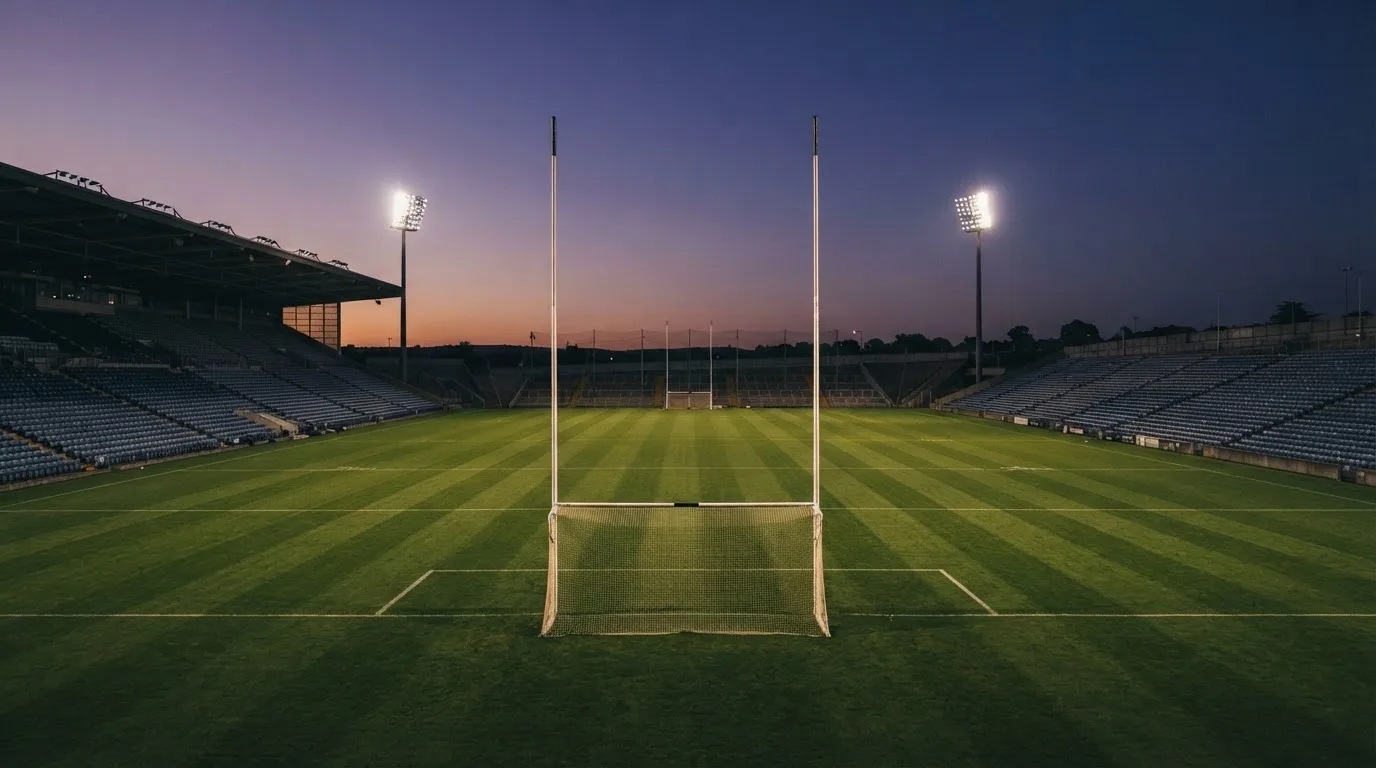
The court of the calendar is, as ever, Croke Park in Dublin. Senior matches run 70 minutes in two 35-minute halves; most adult matches below that level run 60. The pitch is a rectangle 130–145 metres long and 80–90 metres wide — the dimensions of an Australian-rules ground with a touch more grass taken off each side. The 40-metre arc from which a shot scores two has been a meaningful change to the geometry since 2025.
The men’s and women’s inter-county fixtures are covered separately by most licensed operators; some list ladies’ football fixtures on the same sport tab, others on a tab of their own. Hurling sits on a separate calendar, peaking in the summer alongside football; a bookmaker that takes football wagers usually takes hurling ones, but the depth of the markets — particularly on lower-tier fixtures — varies.
Comparing Ten Licensed Bookmakers on GAA Markets
Ten operators, each holding a Gambling Commission remote licence, are set out below. The column headed by the licence number is the one a reader can check against the Commission’s public register; the operating company is who actually holds it; the subject column is what each operator’s own site says about a chosen feature. None of this list is a ranking.
| Brand | Licence number | Licence holder | Operator’s own terms on the headline subject |
|---|---|---|---|
| Tote | 054779-R-331321-008 | TDCO Limited | Pool betting operator; competitive on horse racing prices. |
| Fafabet | 057385-R-333191-006 | Taichi Tech Limited | Pays best odds guaranteed on UK and Irish racing from 9am on race days. |
| Kwiff | 044448-R-323408-017 | Eaton Gate Gaming Limited | Supercharge can boost the odds on a bet, for example from 2/1 to 20/1, on any sport. |
| DAZN Bet | 048756-R-327274-019 | DZBT Limited | Deposits from £5 by debit card, Apple Pay, Paysafecard, Trustly, Skrill; £20 by PayPal. |
| Smarkets | 039173-R-319366-011 | Smarkets (Malta) Limited | Betting exchange model, two-factor authentication, 24/7 live chat. |
| Bet Ahoy | 100094-R-341742-003 | Bet Ahoy Ltd | 10% Acca Bonus up to £1,000, Sub-Cover for substitutions, BOG on horse and greyhound racing to £100. |
| BetTom | 064959-R-339314-003 | Bet Tom Limited | Welcome offer of 50% back as a free bet up to £50, matching 50% casino free slot funds. |
| Dabble | 065677-R-340363-005 | Dabble Sports UK Ltd | Welcome offer of a £10 free bet on a £10 qualifying bet, 7-day expiry, stake not returned. |
| BetUK | 039198-R-319450-029 | LeoVegas Gaming PLC | Free bets exclude virtual sports, esports and non-UK/IE horse racing; minimum odds apply. |
| Spreadex | 008835-R-104580-022 | Spreadex Limited | FCA-regulated for spread betting, UKGC-regulated for fixed-odds; spread losses can exceed the deposit. |
The licence numbers above are the Commission’s account numbers with the suffix that names the remote operating licence; each can be checked on the Commission’s public register by either the account number or the brand’s trading name. Where two brands sit under one licensee — BetUK runs under LeoVegas Gaming PLC — they are independent retail operations, but one licence covers the set.
The column on the operator’s own terms picks a subject per brand: an offer, a payment rule, a market feature, a spread-betting caveat. The table does not run a comparison across these subjects because comparing a £5 deposit floor against an odds-boost mechanism against a £10 free-bet welcome is comparing three different tools against the wrong question.
Tote
Tote runs a different model from the rest of this list: the pool. A pool bettor is not backing a price set by the operator; each punter’s stake goes into a pool, the pool is divided after the deductions, and the dividend is paid by the size of the pot. The dividend is not what the bookmaker’s margin would suggest — it is what the pool decides, which can run higher or lower than an early price on a strong favourite. Tote’s licence sits with TDCO Limited under account 54779. The brand is best known for horse racing coverage but offers a sportsbook alongside the pools.
For a punter on a GAA fixture Tote is a working option where the brand covers the sport’s fixtures at all, and where the punter prefers the pool dividend to a bookmaker’s price. For a punter looking for live in-play markets or enhanced odds, Tote is not the first place to look.
Fafabet
Fafabet, licensed to Taichi Tech Limited under account 57385, is part of the cluster that pays best odds guaranteed on UK and Irish horse racing — from 9am on race days in Fafabet’s case, payable when the starting price runs higher than the early price. The BOG rule applies to win and each-way bets. For a GAA-only punter the racing offer is irrelevant and the rest of the sportsbook needs to carry the load.
The site covers GAA fixtures at average depth: standard match winner, handicap and total points are priced; in-play is available on the bigger matches. For a punter comparing BOG-free sportsbooks on a GAA-heavy weekend, Fafabet is a usable part of a multi-account setup. For a punter not betting on racing the offer does no work.
Kwiff
Kwiff runs under Eaton Gate Gaming Limited, account 44448. The feature the brand builds its marketing around is Supercharge — a randomised boost that can lift the odds on a single bet from anywhere between two-to-one and twenty-to-one on any sport, on a single or a multi. The randomness is the point: a 20/1 boost on a 2/1 shot pays out at twenty times the original stake as if it had landed at the boosted price, and the variance is what the punter is buying into.
For a GAA punter, Kwiff is a useful sidebet at the price boosted: a small-stake punt on a heavy favourite with a Supercharge coupon is a high-variance, low-edge play, which is a useful tool when it is not the only tool. As the day’s main book, Kwiff is too thin a margin to make every bet the same kind of bet.
DAZN Bet
DAZN Bet, by DZBT Limited under account 48756, is the lowest-deposit bookmaker on the table. The brand accepts deposits from £5 across debit card, Apple Pay, Paysafecard, Trustly and Skrill, and from £20 by PayPal — a £5 floor that puts a small-stake punter on the same footing as a £500 punter at sign-up. There is no processing fee. The GAA fixtures are covered at average depth and the sportsbook is a working tool for the bigger championships.
For a punter who wants the deposit floor at its lowest and is willing to give up racing BOG to get it, DAZN Bet is a reasonable starting place. For a heavy-stake punter the £5 floor is irrelevant — and DAZN Bet does not have the racing depth of the bigger books.
Smarkets
Smarkets is a betting exchange, run by Smarkets (Malta) Limited under account 39173, and exchanges work differently from the rest of this list. There is no bookmaker’s margin baked in the same way; the punter backs or lays against other punters, and the platform takes a small commission on net winnings. The site offers two-factor authentication, a chart and an order-book view, a quick trade-out option, and a 24/7 live chat.
For a GAA punter an exchange is the place to lay a position the punter thinks is overpriced, and the place to find bigger prices on a heavily-backed favourite. The depth of an exchange is the catch — a thinly-traded market in a tier-two GAA fixture is exactly the fixture an exchange does not have liquidity for. As part of a multi-account setup Smarkets is a useful tool for backing and laying; on its own, it carries the same fixture coverage question as everyone else.
Bet Ahoy
Bet Ahoy, licensed to Bet Ahoy Ltd under account 100094, runs four features that the brand pushes on the same welcome panel: a 10% acca bonus up to £1,000, Sub-Cover for substitutions, best odds guaranteed on UK and Irish horse and greyhound racing to £100, and Double Result payout on UK and Irish racing. The acca bonus is the headline number — 10% on the winnings of a winning accumulator, paid as cash rather than free bet, on accumulators of a stated length.
For a GAA acca punter the 10% bonus is a small but real edge, particularly at the kind of price a five-fold produces. For a punter whose weekend is built around racing, BOG and Double Result do work the brand does not do on football. The thin end: the £100 BOG ceiling is well below the BOG ceiling some competitors run with; high-stake racing punters may want it elsewhere.
BetTom
BetTom runs under Bet Tom Limited, account 64959. The welcome offer is 50% back as a free bet, up to £50, with a matching 50% back as free slot funds for casino play — a split offer that explicitly crosses sport and casino. The free-bet half is the part a punter reads on the GAA side of the account; the slot-funds half is the casino half, with its own turnover.
For a sport-only punter the matching casino half is not what the offer is doing, and a punter who reads the bonus terms carefully will be sure the free-bet half is what they want before the qualifying bet goes on. The terms vary; on a GAA weekend a punter reads them once on the way in, not twice.
Dabble
Dabble, run by Dabble Sports UK Ltd under account 65677, runs a £10 free bet for a £10 first-day qualifying bet, with the stake not returned and the free bet expiring within seven days. The “social” angle on the brand — chat, follow, copy — is a marketing layer; the offer underneath is a fairly standard welcome.
For a casual GAA punter who wants a clean welcome on the first weekend and is not planning to use the social side, Dabble’s offer is fine. For a punter who would prefer an odds boost or a refunded-bet welcome, Dabble’s offer reads thin against the alternatives on this list.
BetUK
BetUK runs under LeoVegas Gaming PLC, account 39198 — the same licensee that runs other LeoVegas brands. The offer the brand publishes lists the markets its free bets exclude: virtual sports, esports and non-UK/IE horse racing. A minimum price applies to the qualifying bet. The exclusions are the rule; the free bet itself is the standard model.
For a GAA punter the exclusion list is not the binding constraint — none of those categories hits a football fixture — and the minimum price is the kind of condition a punter reads in the terms before placing the qualifying bet. For a racing punter the non-UK/IE exclusion is a real ceiling, and one that varies between operators on this list.
Spreadex
Spreadex is the only operator on this list that runs two licences: the Gambling Commission for fixed-odds betting (account 8835), and the Financial Conduct Authority for financial spread betting. The fixed-odds book covers GAA fixtures at average depth; the spread-bet side is a different product altogether — a punt on the total points, on the winning margin, on the performance of a named player, settled at the multiple of how far the actual outcome lands from the firm’s spread.
The FCA regulation comes with a different warning from the UKGC standard: spread-betting losses can exceed the deposit. A spread punter is leveraged on the size of the bet relative to the spread, and a one-point move on either side of the line is multiplied by the stake. For a punter who wants a fixed-odds GAA book, Spreadex runs a working book under the UKGC licence. For a punter who wants to take the spread side, the offer is a different kind of bet with its own risk; the FCA’s regulatory position is the one the punter is working under.
Overview: What This Page Is and What It Is Not
This is a guide to betting on gaelic football, not a tip sheet. Tips are the predictions of named matches and named scorers; a guide is the work that builds those predictions elsewhere, the math that decides whether they are worth taking, and the licensing frame that decides whether the offer is one a reader should accept. The page covers the betting side of the sport — markets, offer geometry, the licence — and stops at the team news; the team news is the punter’s own work.
The bracket “without a UK licence” gets its own paragraph at the foot of this section, because the reader needs to read it once. A bookmaker that does not hold a Gambling Commission remote licence is not subject to the LCCP, is not part of GAMSTOP, is not signed up to the Commission’s dispute-resolution route, and is not bound by the 10x bonus cap or the £150 vulnerability check. Providing gambling facilities in Great Britain without a Commission licence is an offence under section 33 of the Gambling Act 2005, aimed at the operator. A customer betting on such a site has no British consumer protection to fall back on, no approved dispute-resolution route, and no guarantee the winnings will be paid. A licensed site is not the safe choice by default; it is the choice the regulator has reviewed.
The page does not promise wins, picks, scorers, or any guaranteed outcome. There is no system that wins — a punter who claims a system that wins is selling the next prediction, and the next prediction is the one the bookmaker’s margin makes expensive.
The Legal Frame a Licensed Operator Works Inside
The legal frame is one paragraph, because the frame is short.
The Gambling Commission licenses the market under the Gambling Act 2005, which covers England, Scotland and Wales — Great Britain, not the United Kingdom whole. Northern Ireland has its own older law, and a GB licence is not a Northern Ireland licence. The Gambling (Licensing and Advertising) Act 2014 made a Commission licence compulsory wherever the operator is based, so a Curaçao, Maltese or Gibraltar licence is no longer a substitute for serving GB customers. The Commission’s public register is the test of who holds a licence: searchable by name, by trading name, by domain or by account number. A brand can run on a .com rather than a .co.uk, so the domain proves nothing on its own.
The player pays no tax on betting winnings in Great Britain. General Betting Duty is the operator’s tax on gross profits, currently 15% — a number the punter does not see and does not pay. From 1 April 2027 a remote rate of 25% applies within that duty, while remote bets on UK horse racing stay at 15%; nothing on this page speculates on whether operators pass duty on through odds. The Commission’s levy is a separate charge, not a tax, and not something a customer pays.
The Margin and What It Does to a Price
The single arithmetic the page runs is here, because it is the lever that decides what every other offer on this page is worth.
A bookmaker’s margin is the share of every unit staked the bookmaker keeps, on average, on a given market. The math runs backwards from the prices. Take an illustrative two-way market priced at decimal odds of 1.90 and 1.90 — the canonical “even” price. The implied probability of each side, before any margin, is 1 ÷ 1.90, or about 52.6%. Add the two sides and the implied probability sums to about 105.3% — a number that, sitting above 100%, is the book’s overround on the same scale. The payout share is the reciprocal of that sum: about 95.0%. The margin, on the same scale, is 1 minus that share, or about 5.0%.
The result, as a band rather than a single number: 4.5% to 5.5%, with the exact figure between those bounds. The condition behind the band is what decides the rounding — a deeper market with more liquidity tends to a tighter margin, a thin market with a single bookmaker can run a margin that doubles the headline.
That margin sits inside every quoted price on the page above. A bet of £10 at 1.90 returns £19 if it lands, with £9 of profit; £1 of every £10 staked, on average across all bets, is the book’s take. The bettor who never accounts for the margin backs the bookmaker’s overround without noticing; the bettor who reads it as a tax on staking builds the staking plan around it. The plan above this section — the 1–2% bankroll stake, the value-bet discipline, the moneyline and handicap markets — has the margin baked in. The plan acknowledges the cost; an offer that masks the cost is the offer the next section is built against.
Frequently Asked Questions
The questions are the ones the punter most often arrives with, and the answers are the ones the page above already provided.
How does a punter bet on gaelic football?
A punter opens an account with a Gambling Commission-licensed bookmaker, passes the identity check, deposits a stake by debit card, e-wallet or bank transfer (credit cards are banned for gambling in Great Britain), and chooses a market — match winner, handicap, total points — on a listed fixture. The bet lands at the quoted price; the stake and the bet are recorded in the betting history; the settlement runs at the close of the event under the operator’s settlement rules.
What is a value bet and why is no tip ever certain?
A value bet is a price the punter considers bigger than the true probability the punter assigns to the outcome — the bookmaker’s 2.00 whose implied probability is 45% and the punter’s read is 50%. No tip is certain because both the bookmaker’s price and the punter’s probability are estimates built on incomplete information: a late injury, a sending-off, a weather change can move the true probability by several points. A value bet’s edge is the gap between the two estimates; the run of bets closes on average, not on any single outcome.
What is the bookmaker’s margin and how can it be seen in the odds?
The margin is the share of every unit staked the bookmaker keeps on a market, on average. It can be seen by inverting each price to an implied probability and adding the implied probabilities together — for example, the 1.90 and 1.90 pair sums to 105%, the 5-point gap above 100% is the margin. The bigger the gap, the bigger the margin, and the more the punter pays in overround on every bet on that market.
How is the return on a bet worked out from the stake and the odds?
The return is the stake multiplied by the decimal odds — a £10 stake at 2.00 returns £20 if it lands, with £10 of profit and the £10 stake returned. The decimal odds quote the return including the stake; the fractional form (5/1, evens) quotes the profit. The odds of a combination bet multiply into one combined price — a 2.00 and a 3.00 leg produces a combined 6.00. A free bet whose stake is not returned earns profit alone.
How is it checked that a bookmaker holds a Gambling Commission licence?
By looking up the operator’s trading name or account number on the Commission’s public register. The account number is the unique identifier that the licence record is filed under; the brand name and the operating domain are searchable too. The register entry names the licence holder, the licence type (remote general betting standard, remote betting intermediary, etc.), and the date of issue. A licence that does not appear on the public register does not exist for this purpose.
Which tools for controlling play does a licensed bookmaker have to offer?
Deposit limits (a customer-set gross ceiling on a fixed time frame), time-out (a short pause), product restrictions (a narrowing of what the account can play on), and self-exclusion (six months, one year, five years, or five years with auto-renewal, with a further seven-year run-on after the minimum period). GAMSTOP applies across licensed online operators; safer-gambling tools run alongside it, not instead. The bookmaker also runs a financial vulnerability check at the £150 net-deposit threshold.
Rugby, cricket & Gaelic – Best Betting Tips
Content created by the «Best Betting Tips» team
