
Futsal betting tips 2026: how a prediction is actually built
 Available in US
A “tip” is not a result. It is a reasoned expectation, priced against a bookmaker’s own line, and the distance between the two numbers is the only thing that decides whether betting on it makes sense. This guide walks through how a futsal tip is built — form, statistics, line-ups, the market’s own odds — and through the arithmetic that turns a price into a return, a free bet into value and a bonus into turnover. No selection in any of them is called a winner, because no one running a guide can know the outcome of a match, and a reader who acts on a predicted one loses real money on this page’s word.

The licensed-bookmaker landscape is set out below in the context of the current market: ten UK-facing brands, what each operator’s own terms state on futsal-relevant subjects, and where the Gambling Commission’s public register is the only test of who actually holds a remote licence. The aim throughout is consequence — what follows from a margin, a wagering requirement, a deadline, a cap on free-bet winnings — and when it shows up in a betting account.
Data current as of 27 October 2026 and checked against the Commission’s public register of remote operating licences.
Live futsal betting and the cash-out window
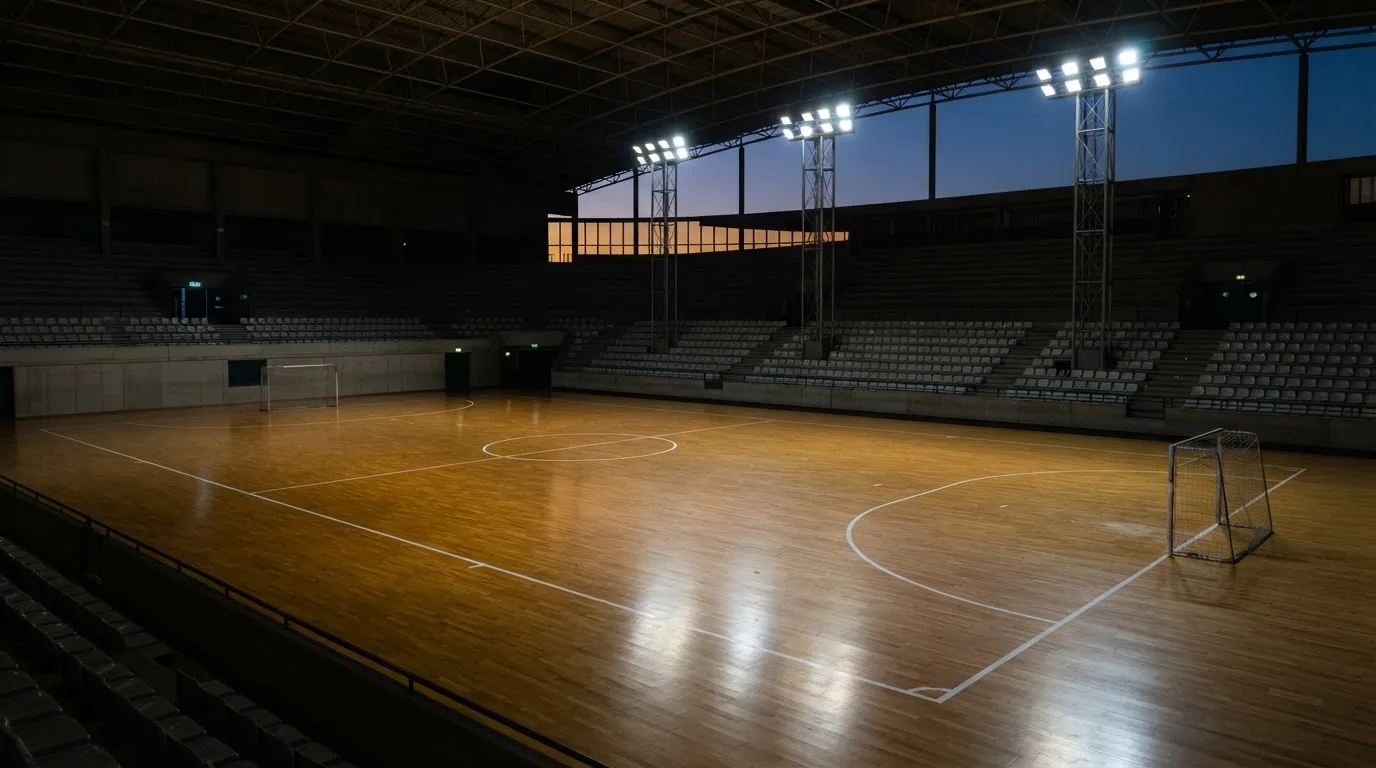
A futsal match is two twenty-minute periods, the clock stops at dead-ball situations, and each team has one timeout per period. That compression changes the rhythm of in-play betting: there are fewer minutes but more stoppages, and the value of a live position is decided by how a punter reads the breaks, not just the running clock. Live futsal betting odds move with each goal, each accumulated foul and each attacking spell, and they move fastest in the last two minutes of each period when the trailing team pulls the goalkeeper.
Cash out, where a bookmaker offers it, lets a punter settle a position before the final whistle — at a price the bookmaker itself sets, derived from the live odds and the stake. The price offered is almost never as good as holding the bet to settlement, and the gap is the bookmaker’s slice on the cash-out itself. A punter who cashes out locks in a smaller profit (or a smaller loss) than the bet would have produced at full time, in exchange for removing the match’s remaining minutes from the equation. Used as a discipline tool — to cut a loss that has grown past a pre-set ceiling — cash out has a job. Used as a habit on every position, it bleeds the margin.
Live odds on futsal are also where the margin is at its most visible. A pre-match 1X2 line on a balanced match might run at 1.85 / 1.85 with a margin in the high single digits; the in-play equivalent can carry a margin closer to ten per cent because the bookmaker has less time to balance the book. The bettor’s response is the same as for any other live market — stake smaller, look for the price that has lagged, accept that the in-play product is built for engagement, not for accuracy.
Predictions, strategy and what a value bet actually is
A tip in futsal is built from the same ingredients as in any other sport: recent form, head-to-head history, suspensions, the goalkeeper rotation that futsal teams use heavily, and the fixture congestion that comes from clubs playing multiple competitions in a month. Statistics software packages used for football — expected goals, shot locations, pressing intensity — have thinner coverage in futsal, and a punter using them should expect more gaps and more imputation than the same package would produce for the Premier League. The honest move is to say so: a futsal tip built on three data points and a hunch is not weaker than one built on a model with thirty variables, because both are still opinions priced against a bookmaker’s line.

The bookmaker’s line is the second ingredient, and it carries the margin. The “true” probability of an outcome — the chance the favourite actually wins — is unknown to anyone outside the dressing room. What the punter can do is compare the bookmaker’s price to their own estimate: if the bettor’s model says the favourite is a 60 % chance and the bookmaker’s price implies 55 %, the difference is a value bet, a price above the punter’s own probability once the margin has been taken out. The bet is still not a certainty; the favourite still loses four matches in ten on average. The value comes from doing this over many bets so the law of large numbers carries the result, not from any one of them landing.
Bankroll discipline is the third ingredient, and it is the one that decides whether a value-betting strategy survives contact with the betting account. A common stake is one to three per cent of the bank on any single selection, scaled down on lower-confidence picks and scaled up on higher-confidence ones. Staking more than that on a supposed certainty is the most expensive mistake in this market, because the next perceived certainty is the one that loses, and the stake wipes out the gains from the previous five.
Staking does not turn a bad tip into a good one, and a tipster who sells selections at a flat fee is selling access to opinion, not to certainty. The measure of a tipster over time is yield — profit as a share of total stakes — and a yield above zero is rare; a yield above five per cent is exceptional; a yield that has been positive for several hundred bets in a row is, in practical terms, not real. The page carries no prediction and names no winner for the same reason: a guide cannot know one, and a reader who bets on the page’s word is betting on a guess.
Bet types and odds on futsal markets
The core futsal markets at a UK bookmaker are 1X2 (home win, draw, away win — draw is a real outcome in futsal, unlike some forms of American indoor football), match totals (over/under a stated number of goals), Asian handicap on the same three-way match result, both teams to score, and team totals. Outright markets — tournament winner, top scorer, group winners — run on the bigger competitions, principally the FIFA Futsal World Cup and the continental equivalents under UEFA and CONMEBOL. Some bookmakers also offer player-specific markets (first goalscorer, shots on target) on the highest-profile matches, with thinner coverage elsewhere.
Each market settles on its own rule. A 1X2 bet on a match abandoned before completion is void at most operators, with the stake returned; a totals bet on the same match is settled at the score at the moment of abandonment if the line has already been passed, and void if it has not. An outright bet on a tournament winner has the team withdrawn before the tournament treated as a non-runner in some houses and as a loser in others — a Rule 4 deduction may also apply on outright markets when a key selection is withdrawn. The punter reads the bookmaker’s settlement rules before staking, because “void” and “loser” are different answers to the same question.
Odds come in two forms on a UK site: fractional (5/1, 11/4, evens) and decimal (6.00, 3.75, 2.00). The conversion is a ÷ b + 1 — 5/1 becomes 6.00, 11/4 becomes 3.75, evens (1/1) becomes 2.00. The return on a winning bet at decimal odds is stake × odds; the net profit is stake × (odds − 1). A £10 stake at 3.75 returns £37.50, of which £27.50 is profit. For an accumulator — a single bet whose price is the product of the legs’ prices — the calculation is the same, run on the combined price: four legs at 1.50, 1.80, 2.00 and 2.50 produce a combined price of 13.50, and a £5 stake returns £67.50 if all four land.
Each-way betting, the two-bet structure that pays a win and a place at reduced odds, is more common on horse racing than on futsal, and most operators do not offer it on the sport. Where it appears, the stake doubles and the place terms are operator-set. Bet builder — a same-game multi on one futsal match, typically combining 1X2, totals, BTTS and a player market — is offered by some operators at the top of their sportsbook, and the price is the product of the legs as for any accumulator.
The calculate-arithmetic on this page: take an illustrative two-way market at decimal odds 1.90 on each side. The payout share — what the bookmaker returns to bettors in aggregate per unit staked — is 1 ÷ (1/1.90 + 1/1.90), which equals about 0.95, and the margin — what the bookmaker keeps — is one minus that, around five per cent. The band runs from roughly four per cent on a heavily-contested, well-balanced match to around eight per cent on a one-sided fixture where the favourite is short. A margin above ten per cent on a 1X2 line is heavy by futsal standards; a margin below three per cent is unusually tight and worth taking if the selection is also a value bet by the punter’s own read.
Futsal tournaments and the fixture calendar
Futsal originated in Montevideo in 1930, the work of Juan Carlos Ceriani for the YMCAs in South America. FIFA is the highest governing body. The first FIFA-organised futsal World Cup was held in 1989; the inaugural FIFA Futsal Women’s World Cup took place in the Philippines in 2025. The standard international court is forty metres by twenty, and the ball is size four — smaller and heavier than a football, with a lower bounce, which is why the game is built on close control and short passes rather than the long balls that open football.
The fixture list a UK punter actually bets on is thin compared to football. The FIFA Futsal World Cup runs every four years, with the UEFA Futsal Championship and the CONMEBOL Copa América de Futsal on similar cycles, and continental club competitions beneath them. Domestic leagues — the Spanish LNFS, the Brazilian Liga Futsal, the Portuguese and Russian top flights — run most of the calendar but are unevenly covered by UK bookmakers: most offer 1X2 and match totals on the bigger Spanish and Brazilian matches, and far fewer carry the Portuguese or Russian leagues.
The standard international court matters for handicaps and totals: a court that is forty metres long produces more shots than one fifty metres wide, and a totals line set at 5.5 goals across a league’s matches is calibrated to the league, not to a generic indoor pitch. The size-4 ball, with its lower bounce, is the reason corners and long throws are less productive in futsal than in football — there are no long throws, and corners are short, played into the area. A punter betting corners or throw counts, where the market is offered, should expect lower lines than the equivalent football market.
From the sixth accumulated foul in a period, the opposing team is awarded a direct free kick from the second penalty mark (ten metres) with no wall, an analogue of the football penalty but awarded more often and from closer range. Late-period foul accumulation is therefore a stronger predictor of goals than in football, and a totals line set before the sixth foul of a period is set on different statistics than one set on the second half of a football match.
The UK-licensed bookmakers covering futsal
Ten operators sit in this ranking. Each holds a remote operating licence from the Gambling Commission under section 33 of the Gambling Act 2005 as amended by the Gambling (Licensing and Advertising) Act 2014, which means each is licensed to take bets from customers in Great Britain. The Commission’s public register is the test of who holds a licence; the licence number and account number below are taken from that register. The brands are not a ranking and not a recommendation — a place in the list is not a licence, and an offer is described only as each operator’s own terms state it. Every GB-licensed online operator is a member of GAMSTOP.
BetTom — a 50%-back welcome offer
BetTom’s sports welcome offer is 50 % back as a free bet of up to £50, with a matching 50 % back up to £50 as free slot funds for casino play. Bet Tom Limited holds the remote licence 064959-R-339314-003 (Commission account 64959). Futsal coverage is not in the operator’s main sportsbook list at the time of writing, so the punter checking the live programme before staking is the right move. The free bet is a free bet, not a cash bonus: the stake is usually not returned with a win, and the offer type stays a free bet rather than being restyled into the kind of promotion the headline asks for. The 50 %-back framing in the operator’s own terms is honest; the arithmetic is in the wagering requirement and the minimum price that counts.
VBet — bet builder, in-play and live streaming
VBet’s app is published by SCGO Limited and offers Bet Builder, pre-match and in-play betting, live streaming and a live calendar with results and stats. SCGO Limited holds the remote licence 044662-R-324273-022 (Commission account 44662). VBet is one of the stronger futsal products on the UK market — the in-play depth and the live calendar suit a sport whose calendar runs most of the year. A punter looking for live streaming alongside in-play betting has fewer alternatives on this list, and VBet is the place to start.
DAZN Bet — a £5 deposit floor
DAZN Bet’s deposit floor is £5 by debit card, Apple Pay, Paysafecard, Trustly and Skrill, and £20 by PayPal, with no processing fees on any of them. DZBT Limited holds the remote licence 048756-R-327274-019 (Commission account 48756). The low floor matters for bettors with a small budget — a £5 deposit is the difference between a casual weekend flutter and skipping the weekend. The payment set is broad but not unlimited: a punter using a credit card, including one funded through an e-wallet, will be blocked, because credit cards are banned for gambling in Great Britain under LCCP condition 6.1.2.
Betfred — bet builder and Extra Places
Betfred’s app features Bet Builder, Sub Switch, Racing Post data, Extra Places, live casino and bingo. Petfre (Gibraltar) Limited holds the remote licence 039544-R-319290-010 (Commission account 39544). Betfred is a long-established British brand, and the suite of tools — the Racing Post data on racing, Extra Places on the same — is built around horse racing more than around futsal. A futsal punter at Betfred should expect a thinner in-play product than at VBet and a stronger racing product; the brand is the one for a punter whose betting is mixed across sports.
DragonBet — cash out and live racing streaming
DragonBet offers cash out both in-play and pre-match, and live streaming of racing. DragonBet Ltd holds the remote licence 064908-R-339041-003 (Commission account 64908). The cash-out tool, available in-play and pre-match, is the headline futsal-relevant feature for a sport whose compressed twenty-minute periods suit a mid-match exit. A punter whose discipline relies on cashing out at a pre-set loss ceiling has fewer brands to do it with; DragonBet is one of them.
Fafabet — Best Odds Guaranteed on UK and Irish racing
Fafabet pays Best Odds Guaranteed on UK and Irish horse racing win and each-way bets from 9am on race days: if the starting price is bigger than the original price taken, the bigger odds are paid. Taichi Tech Limited holds the remote licence 057385-R-333191-006 (Commission account 57385). The Best Odds Guaranteed product is a racing product; it does not apply to futsal. A punter whose betting splits between racing and futsal is well served; a punter betting only on futsal is paying for a feature they will not use.
London Bet — sportsbook and Pragmatic Play casino
London.bet’s app combines sports betting (football, tennis, horse racing, greyhounds, darts, golf, cricket, NFL, NBA, MLB, snooker) with Pragmatic Play casino slots and live in-play betting. Thistle Bet Limited holds the remote licence 066162-R-340278-004 (Commission account 66162). London Bet’s published sportsbook list does not name futsal among its core sports, and a punter should check the live programme before staking on the brand. The casino suite is built around Pragmatic Play slots, not around table games.
Octobet — Best Odds Guaranteed with a £150 cap
Octobet offers Best Odds Guaranteed on UK and Irish horse racing, up to £150 per customer per race. The remote licence on the Commission’s public register is account 62545 (licence number 062545-R-337248-006), held by Octopus Game Limited. The £150-per-race cap is the operational constraint on the offer: a punter staking more than £150 on a single race has the excess unprotected against a starting price drift up. Like Fafabet, the offer is racing-specific and does not transfer to futsal markets.
Geoff Banks — in-play and ante-post on futures
Geoff Banks’ app is published by GB Sports Advisors Ltd and offers live in-play prices and ante-post prices on future events. The remote licence on the Commission’s public register is account 54095 (licence number 054095-R-330366-010), held by GB Sports Advisors Limited. The ante-post product — prices on tournaments and outrights weeks or months ahead — suits a sport whose major tournaments sit on a four-year cycle. A punter wanting a price on the next FIFA Futsal World Cup months ahead is in the right place; the in-play depth is thinner than at VBet.
LiveScore Bet — broad payment set
LiveScore Bet accepts debit cards (Visa and Mastercard), Apple Pay, PayPal, Pay by Bank (Open Banking) and Revolut Pay. The remote licence on the Commission’s public register is account 56859 (licence number 056859-R-332720-005), held by LiveScore Betting and Gaming (Gibraltar) Limited. The payment set is the broadest on this list, and Open Banking through Pay by Bank is the cheapest way to move money in and out for a punter whose bank supports it. Futsal coverage is not the headline; a punter should check the in-play programme before staking.
What futsal betting actually looks like in practice
A punter placing a bet on a futsal match follows the same path as on any other sport at a UK-licensed site: pick the market, check the price, set the stake, confirm. The difference is in the markets and the timing. A typical Saturday afternoon for a futsal punter is built around one or two fixtures in a European league or a continental cup — there is rarely a full day’s programme to follow. The punter’s working week is the bookmaker’s programme for the next ten days, set out on the operator’s site under its own category.
The value of an account with a UK bookmaker is the operator’s own protection regime. Identity verification before the first deposit, the GAMSTOP self-exclusion register, deposit limits offered as a default, the financial vulnerability check above £150 of net deposits in a rolling 30 days — these are not features the punter opts into, they are licence conditions. The bettor who uses them as tools is paying the cost of gambling (the margin in the odds) on a regulated product; the bettor who ignores them is paying the same cost without the safety net.
The punter’s edge, where one exists, comes from doing more work on the fixture than the bookmaker’s line has priced in. That is a thin edge, on a thin sport, and it is wiped out by overstaking and by offers that look like they give something for nothing. The discipline that survives in this market is the discipline of staking small, recording every bet, and treating the offer terms as a cost rather than a gain.
Legality, the Gambling Commission and what a licence actually means
Betting in Great Britain is regulated by the Gambling Commission, a non-departmental public body sponsored by the Department for Culture, Media and Sport, under the Gambling Act 2005. The Act covers England, Scotland and Wales; Northern Ireland is outside the Act and runs under its own older law, so a Great Britain licence does not regulate Northern Ireland. Since the Gambling (Licensing and Advertising) Act 2014 an operator whose remote facilities are used in Great Britain needs a Commission licence wherever it is based, under sections 33 and 36 of the 2005 Act as amended. A Curaçao, Maltese or Gibraltar licence is not a substitute.
The licence categories for online sports betting are remote general betting standard (real events), remote general betting standard (virtual events), remote general betting limited, remote pool betting and remote betting intermediary (the licence for betting exchanges). Each licence comes with a Commission account number, and the Commission’s public register can be searched by business name, trading name, domain or account number. The register is the whole test of who holds a licence; the licence number and account number printed on the bookmaker’s own site can be checked against the register in two minutes. The ten operators above carry their account numbers in the comparison table, and each appears on the public register against the named licence holder. No count of licensed operators is given without the access date, because the register changes.
The minimum age for any gambling product in Great Britain is eighteen. Identity verification — name, address and date of birth — has been required before a customer can deposit or gamble since 7 May 2019, including when a free bet or bonus is the only thing being claimed. A licensed site does not run anonymous play, and the verification step is the cost of the protections that come with the licence. Financial spread betting is regulated by the Financial Conduct Authority, not by the Commission, and at least one spread-betting brand states that losses on spread bets can exceed the deposit.
There is no state monopoly and no statutory cap on the number of licences; there is also no statutory cap on stakes in sports betting, so operators set their own maximum stakes and may restrict individual customers. The Commission’s published controls are around customer protection (the age of eighteen, the identity check, the safer-gambling tools) rather than around market structure. What may be bet on is not statutorily listed; an operator holds a licence for a category and offers markets under its own rules and the LCCP. Esports are treated like any other event, virtual events are a separate licence category, and bets on politics, TV shows and novelty markets are offered by GB bookmakers with no statutory prohibition found.
Responsible gambling and the tools a licensed bookmaker must offer
Every GB-licensed online operator is a member of GAMSTOP, the national multi-operator self-exclusion scheme, mandatory for online operators since 31 March 2020. The available exclusion periods are six months, one year, five years, or five years with auto-renewal; after the minimum period, the exclusion stays in place for a further seven years unless the customer asks GAMSTOP to remove it. GAMSTOP covers online sites and apps; betting shops use a separate over-the-counter service.
The safer-gambling tools offered by operators under their LCCP duties include deposit limits, product restrictions, time-outs, reality checks and self-exclusion. The specific suite varies by operator — one operator’s homepage lists deposit limits, a Player Profile test, product restrictions and self-exclusion, with live chat support and links to BeGambleAware, GamCare, GAMSTOP, Gambling Therapy and the Betting and Gaming Council. A punter should expect at least deposit limits, time-outs, reality checks and a self-exclusion route from any GB-licensed site; an operator that does not offer those is not meeting its LCCP duties.
A financial vulnerability check (LCCP condition 3.4.4, in force since 30 August 2024) applies to licensed remote betting when a customer’s deposits minus withdrawals exceed £150 in a rolling 30 days (since 28 February 2025). The check is a public-record check — bankruptcy, county court judgments — and is not an income check or a credit reference check. Financial risk assessments — the “affordability checks” of the press — have been announced in a staged plan by the Commission in an article of 7 July 2026, with no start date set; the right phrasing is “announced, staged, no start date”. Deposit limits under RTS 12: the first changes have applied since 31 October 2025, a second phase was postponed to 30 September 2026, and whether it is live is not established; a punter who wants a gross deposit limit on a fixed time frame should ask the operator for one rather than assume the system has set it.
The help lines for a punter whose gambling has stopped being fun are GamCare (which runs the National Gambling Helpline), GambleAware (the funding and information body), the NHS gambling clinics, and Gamblers Anonymous. The GamCare number and the webchat are 24-hour; the NHS clinics are regional and run waiting lists. None of the bodies charge for gambling.
Bonuses, free bets and what an offer really costs
A “free bet” is the most common offer in futsal betting and the most mislabelled. The bookmaker credits the punter’s account with a free-bet stake — £5, £10, £50 — to be used on a selection at minimum price, often 1.50 or 2.00. The free bet wins at the bookmaker’s price; the stake is usually not returned with the win, so a £10 free bet at 3.00 wins £20 of profit, not £30 of return. The value of the free bet is the stake multiplied by (odds − 1) divided by odds, multiplied by the payout share of the market — for a £10 free bet at 3.00 on a market with a 95 % payout share, the expected value is £10 × 2 ÷ 3 × 0.95, around £6.30. The offer is worth about £6.30 of expected value, not £10.
The promotional rules in force since 19 January 2026 cap wagering requirements on bonuses at 10x — a £10 bonus with a 50x wagering requirement asks for £500 of qualifying bets, and the cap means no more than £100 in turnover need be generated. Mixed-product promotions — an offer that requires gambling on two or more product types such as betting, casino, bingo and lottery, for example “bet on football to get free spins” — are banned. Whether the cap applies to free bets with no wagering condition is not established; a punter should read the offer terms rather than assume the cap covers a free bet by default.
A “risk-free” bet is a marketing term, not a settlement rule. The most common structure is a refund as a free bet if the first bet loses — the punter is not made whole in cash, and the refund inherits the free-bet terms described above. A £25 risk-free bet that loses and refunds £25 as a free bet is worth the expected value of the free bet at the price the punter chose the original selection at, not £25. Read the offer as it is written: a refund as a free bet is a free bet, not a refund.
A deposit-gated package — a 50 %-back offer that requires a deposit to unlock — is described exactly as the offer is set out. The headline figure is the headline, not the actual receipt. A 50 %-back-up-to-£50 offer on a £30 first deposit returns £15 as a free bet on the terms described above; the “up to” sets the ceiling, not the default. A punter who reads the offer as “£50 free” reads past the percentage.
The expected cost of clearing a bonus is the required turnover multiplied by the margin of the market the bonus is cleared on. A £50 bonus with a 10x wagering requirement asks for £500 of qualifying bets; on a market with a five per cent margin, the expected cost of clearing is £500 × 0.05, around £25. The offer is worth less than the headline, sometimes dramatically so. The punter who accepts the offer accepts both the headline figure and the cost of clearing it.
The legal frame for offers and advertising
Advertising is not licensed by the Commission; it runs through the CAP Code (non-broadcast) and the BCAP Code (broadcast), enforced by the Advertising Standards Authority, alongside the LCCP marketing conditions. CAP Code section 16: marketing must be socially responsible, must not be of strong appeal to under-18s, and no one who is or seems to be under 25 may be featured gambling or play a significant role, with an exception for marketing placed where a bet can be made directly. The rule concerns who may appear in the advertisement, not who may bet.
“Whistle-to-whistle” is an industry code, not a statute. Since 1 August 2019, betting advertisements have not been shown on television from five minutes before a live sporting event to five minutes after it, before the 9pm watershed. Horse and greyhound racing are excluded from the watershed rule, and racing advertising continues around the live race. The Premier League clubs’ withdrawal of gambling sponsorship from the front of matchday shirts, from the 2026/27 season, with sleeves and hoardings remaining, is voluntary rather than legal. Operators carry responsibility for marketing run by their affiliates.
Tax, payments and what a GB licence does not give the player
Betting winnings in Great Britain are not taxed on the player side. General Betting Duty is the operator’s tax on gross profits, currently 15 per cent; from 1 April 2027 a new remote betting rate of 25 per cent applies within it, while remote bets on UK horse racing, bets on self-service betting terminals in licensed premises, pool betting and in-person betting stay at 15 per cent (HM Government policy paper of 26 November 2025). Until 1 April 2027 the remote rate stays at 15 per cent. Whether operators pass duty on through the odds is not established; never write that the player is charged duty. A professional gambler should ask HMRC or an adviser, because the personal-position rules are different from the general rule.
Credit cards are banned for gambling in Great Britain since 14 April 2020 (LCCP condition 6.1.2), and the ban extends to credit-card-funded payments through an e-wallet. Debit cards and bank-based payments are not covered by the ban. There is no state list of permitted payment methods; describe payments only from each operator’s terms. Identity verification before the first deposit means no anonymous play at a licensed site, and source-of-funds questions at higher spend are normal under the money-laundering rules. No British named-account rule, no state list of permitted payment methods, and no specific rule for or against cryptocurrency deposits at licensed operators has been published.
What an offshore site gives up
A GB licence is compulsory at the point of consumption. Providing gambling facilities in Great Britain without the licence the Act requires is an offence under section 33 of the Gambling Act 2005 — on summary conviction up to 51 weeks’ imprisonment, a fine up to level 5, or both, and six months in Scotland. The offence is aimed at the operator, not the customer. No offence aimed at a customer who merely bets on an unlicensed site was found; the right framing is the loss of protection, not legality.
The losses are concrete. An unlicensed site does not cover the punter through GAMSTOP, does not provide a Commission complaints route, does not bind itself to an approved dispute-resolution body, and offers no British consumer redress if funds are withheld. An unlicensed site is not bound by the 10x bonus cap, by the £150 financial vulnerability check, or by the safer-gambling tools the LCCP requires. Identity verification is weaker at unlicensed sites, which is a feature for some customers and a red flag for others.
Enforcement is disruption rather than blocking. The Commission issues cease-and-desist notices, refers sites to search engines, and works with registrars, hosts and payment providers to take sites offline. The Commission has been given, or is about to receive, court-order DNS blocking powers — never write that ISP blocking is in operation. A licensed site is not “the safe choice” by default; an unlicensed site is the unsafe one.
How the ten operators stack up on the futsal-relevant subjects
The table below sets out the licence status of each operator and what the operator’s own terms state on the subject of futsal-relevant features — in-play, bet builder, cash out, payment set, and the welcome offer where one is published. The columns are the matters this page covers; the cells carry what the operator states in its own terms or on the Commission’s public register. Where a cell is not established by either, it carries the no-data marker.
| Brand | Gambling Commission remote licence | Operator’s own terms on futsal-relevant subjects |
|---|---|---|
| BetTom | 064959-R-339314-003 — Bet Tom Limited — remote general betting standard (real events) | Sports welcome offer of 50 % back as a free bet up to £50, matched by 50 % back up to £50 as free slot funds |
| VBet | 044662-R-324273-022 — SCGO Limited — remote general betting standard (real events) | Bet Builder, pre-match and in-play betting, live streaming, live calendar with results and stats |
| DAZN Bet | 048756-R-327274-019 — DZBT Limited — remote general betting standard (real events) | Deposits from £5 by debit card, Apple Pay, Paysafecard, Trustly and Skrill; £20 floor on PayPal; no processing fees |
| Betfred | 039544-R-319290-010 — Petfre (Gibraltar) Limited — remote general betting standard (real events) | Bet Builder, Sub Switch, Racing Post data, Extra Places, live casino and bingo |
| DragonBet | 064908-R-339041-003 — DragonBet Ltd — remote general betting standard (real events) | Cash out in-play and pre-match, live streaming of racing |
| Fafabet | 057385-R-333191-006 — Taichi Tech Limited — remote general betting standard (real events) | Best Odds Guaranteed on UK and Irish horse racing from 9am on race days |
| London Bet | 066162-R-340278-004 — Thistle Bet Limited — remote general betting standard (real events) | Sportsbook across football, tennis, horse racing, greyhounds, darts, golf, cricket, NFL, NBA, MLB, snooker; Pragmatic Play casino slots; live in-play betting |
| Octobet | 062545-R-337248-006 — Octopus Game Limited — remote general betting standard (real events) | Best Odds Guaranteed on UK and Irish horse racing, capped at £150 per customer per race |
| Geoff Banks | 054095-R-330366-010 — GB Sports Advisors Limited — remote general betting standard (real events) | Live in-play prices and ante-post prices on future events |
| LiveScore Bet | 056859-R-332720-005 — LiveScore Betting and Gaming (Gibraltar) Limited — remote general betting standard (real events) | Debit cards (Visa, Mastercard), Apple Pay, PayPal, Pay by Bank (Open Banking), Revolut Pay |
Every operator above holds a remote general betting standard (real events) licence on the Commission’s public register, and every brand is a GAMSTOP member. Several brands can run under one licensee, and this list does not present any pair as independent operators. The licence numbers and account numbers above are the entries on the register; the Commission’s own search is the test of who holds a licence and on what date.
Frequently asked questions
How is a futsal league bet placed from start to finish?
Pick the match on the bookmaker’s sportsbook under the futsal or indoor football category, choose the market (1X2 is the most common), enter the stake, confirm. The bet settles at full time or at the moment of abandonment, depending on the bookmaker’s settlement rule on abandoned matches. A bet on a match abandoned before completion is void at most operators, with the stake returned.
What is a value bet, and why is no tip ever certain?
A value bet is a price above the punter’s own probability for the outcome, once the bookmaker’s margin has been taken out. The favourite still loses four matches in ten on average. The value comes from running this comparison across many bets, not from any one of them landing. A “sure thing” is a marketing word, not a market fact.
What is the bookmaker’s margin and how is it visible in the odds?
The margin is what the bookmaker keeps of every unit bet on a market. The payout share — what is returned to bettors in aggregate — is the inverse of the sum of the reciprocal odds. A two-way market at 1.90 / 1.90 has a payout share of about 0.95 and a margin of about 0.05, or five per cent. The margin is why no price is ever a fair reflection of the true probability.
How is the return on a bet worked out from the stake and the odds?
The return is the stake multiplied by the decimal odds. A £10 stake at 3.75 returns £37.50, of which £27.50 is profit. For a combination bet, the odds of the legs multiply into one price. The conversion from fractional to decimal is the fraction plus one: 5/1 becomes 6.00, evens (1/1) becomes 2.00.
How can it be checked that a bookmaker holds a Gambling Commission licence?
The Commission’s public register can be searched by business name, trading name, domain or account number. The licence number and account number printed on the bookmaker’s own site should match the entry on the register, against the named licence holder. No count of licensed operators is given without the access date, because the register changes.
Which tools for controlling play does a licensed bookmaker have to offer?
Deposit limits, time-outs, reality checks and self-exclusion are the LCCP-expected baseline. GAMSTOP is mandatory for online operators. A financial vulnerability check applies above £150 of net deposits in a rolling 30 days. The GamCare National Gambling Helpline is the 24-hour route for a punter whose gambling has stopped being fun.
Football – Best Betting Tips
Content created by the «Best Betting Tips» team
