
Chess betting tips 2026 — how to read predictions and value bets
 Available in US
Searchers who type “chess betting tips” usually want a tip sheet: a list of picks, a predicted result, an accumulator they can copy. This page is the other thing a tip depends on. It explains how a prediction is built from form, statistics, the players’ recent run and the bookmaker’s own odds; what a value bet really is — a price that sits above the true probability once the bookmaker’s margin is taken out; why staking discipline matters more than any system; and why no tip is ever certain, in chess or anywhere else. The guide finishes with ten UK-licensed bookmakers that take chess markets, set against the same set of checks, and a short worked example of the bookmaker’s margin so the reader can see the cost in the odds.
Data current as of 27 October 2026; licensing and operator claims checked against the Gambling Commission’s public register and each operator’s own terms.
Live chess betting and what “in-play” actually means in a 64-square game
Live betting on chess is a quieter affair than in-play on football or tennis. A chess move takes seconds; an entire game can run for two hours and end in three repetitions. Bookmakers that take in-play chess markets generally settle only on the official result once the game is over, because no operator runs a market on the move-by-move swing that punters on football and basketball take for granted. What “live chess betting” means in practice is a market that is open during the game, that accepts bets until the result is recorded, and that settles against the FIDE-recorded outcome. The in-play tag tells a reader the market exists, not that prices move every minute.
In a sport built on discrete outcomes — win, lose, draw — the obvious in-play play is to wait for a piece to fall and back the other side at a shorter price. Two things blunt it. First, a chess game is not a football match: White cannot suddenly turn a lost endgame into a draw once a piece comes off, the way a team down to ten men can nick a point in injury time. Second, the result a bookmaker pays on is the result the arbiter records, and bookmakers take their time recording it. Bets are held until the official result lands, and “official” can lag a finished game by several minutes during a tournament with multiple boards.
Cash out sits on top of that market. Some operators listed further down — Betboro, 888sport, Ladbrokes and Betfair among them — offer cash out on selected sports, and chess can sit inside the eligible set when the bookmaker chooses to include it. The cash-out price is the bookmaker’s own offer at that moment, not a market-cleared price; on a chess market with thin liquidity it can move sharply between updates, and an in-play punter using cash out should know the price shown is the price they get, not the price a different bookmaker would quote. A reader who treats cash out as a certainty can pay for the comfort in the spread.
The practical upshot. Live chess markets are useful for staking through a long tournament session rather than for trading the move-by-move swings. A bettor who wants the unfolding game should use the live market as an entry point before the round starts, not as a trading floor mid-game.
Predictions, strategy and why no tip is ever certain
A prediction in chess rests on visible inputs: each player’s classical rating and rating trend over the last twelve months, their head-to-head record, the colour they hold in the upcoming game (White opens and statistically scores higher across the population of games), the tournament context (a knockout game is played harder than a last-round dead rubber), recent form in long time controls versus rapid, and the players’ opening repertoire against each other. None of those inputs is a tip; each is one fact a tip rests on, and a serious prediction weighs several together. A prediction that names only one — “Player A is higher rated, so back them” — is a soundbite, not analysis.

Form is not destiny. The wider player lost to the lower-rated one in Dortmund in 2024; the freshly-crowned champion has been caught off-ice on board one before, and will be again. Upsets are part of the sport, and a betting model that ignores them is overstating its certainty. The model that names its inputs and weights them openly is the one whose error rate a reader can actually audit.
A value bet is a price above the true probability once the bookmaker’s margin is removed. If a player has a 60 % chance of winning on the form, a fair decimal price is 1 ÷ 0.60 = 1.67. Any bookmaker price longer than 1.67 — 1.80, 2.10, 2.50 — is value, in the sense that over a long series of such bets the punter profits. The arithmetic is unsentimental: value is the gap between the price the market offers and the price the form says is fair. The qualifier “long series” is doing real work. A single bet at 2.10 when the true chance is 60 % can still lose, and the bettor who treats a value bet as a winning bet will be right on average and flat broke in practice.
Bankroll discipline is the other half of strategy. A punter who stakes a fixed percentage of bank on every value bet — one percent, two percent — survives the runs of losses that any system produces. A punter who raises stakes after losses to “chase back” is no longer using a system; they are gambling on the next event, and the long-run edge is gone. The hard rule is mechanical: decide the stake before the bet is on, never after.
The honest bottom line. Nobody can predict a chess game win with certainty, and no tip — this page’s or anyone else’s — changes that. A tip is one model’s read on form; the bookmaker’s margin is the cost of acting on it; the stake is the cost of being wrong. A punter who treats the three as separate inputs and the tip as the smallest of the three has the right frame. A punter who treats a tip as a forecast of an outcome is gambling on a forecast, and forecasts are wrong sometimes by definition.
Bet types, odds and what a chess market looks like on the slip
The three-outcome core. A chess game ends in a win for White (recorded 1–0), a win for Black (0–1) or a draw (½–½). Three-outcome markets — match odds, sometimes labelled “1 X 2” — are how every operator prices chess. The “1 X 2” label is borrowed from football, where 1 is the home win, X the draw and 2 the away win; on chess slips 1 is White, X is the draw and 2 is Black, because the colour names are stable even when the venue changes.
Two-outcome derivative markets. Bookmakers that price chess seriously sometimes offer a match-result market without the draw — White to win or not win, for instance — at a shorter margin than the three-outcome version, because the bookmaker only has to price two outcomes instead of three. The price is shorter and the punter gives up the draw as a separate stake. These are popular in tournaments where the two players are mismatched, where a draw is genuinely unlikely, and where the punter wants the higher implied probability priced tightly.
Outright and tournament markets. Before a Candidates or World Championship event begins, bookmakers run outright winner markets with the field listed and an each-way fraction. Outrights settle on the tournament result, not on a single game; the bettor is taking a position on a player’s run through a series of games, sometimes through a knockout. Each-way outrights settle on the place terms the operator publishes, usually quarter or fifth of the field, and the punter pays two stakes: one on the win, one on the place.
Combination bets. A double, a treble, an accumulator — a “four-fold” or higher — multiplies the prices of the legs into one. The return on a winning £10 accumulator at decimal prices 1.80, 2.10, 1.95 and 2.50 is £10 × 1.80 × 2.10 × 1.95 × 2.50 = £147.20, of which £137.20 is profit. The price multiplies up because each leg is its own priced market; the cost multiplies up too, because each leg’s own margin rides in. Four legs at a 5 % margin each leave the accumulator paying about 81.5 % of stake on a true-probability event — the difference is the book’s compounded edge.
Each-way betting on a single game is rarer than on horse racing and is usually restricted to outright markets. Each-way means two bets of equal stake: one on the win, one on the place. The place terms — quarter the odds at one-fourth the field, fifth the odds at one-fifth the field — are set by the operator and printed on the slip.
How odds are read. British operators quote fractional odds on the slip and decimal odds inside the bet; the slip displays both. Fractional 5/1 means a £1 stake returns £5 profit plus the £1 stake back, so the total return is £6; decimal 6.00 is the same price written differently. Conversion is a/b → a ÷ b + 1, so 5/1 becomes 1 ÷ 5 + 1 = 6.00, and 9/10 (a typical short price on a chess favourite) becomes 1 ÷ 0.9 + 1 = 2.11. The decimal form is what the payout formula uses: return = stake × decimal odds, profit = stake × (decimal odds − 1).
Bet builder and same-game multi. A bet builder combines several markets on the same event into one accumulator. Most operators that show chess seriously — 888sport and Betfair are the ones who market the feature on their apps — do not yet run a chess bet builder, because the underlying market is too thin to support a meaningful number of legs. The bet builder label on a slip usually belongs to football and tennis. A punter looking for bet builder on chess should expect a sparse offering or none.
Sports and tournaments: where chess actually gets priced
Chess is not priced like a season-long league sport. The chess betting calendar runs on a handful of marquee events — the World Chess Championship, the Candidates Tournament that decides its challenger, the Grand Prix series, the national opens — and on a long tail of club events, weekend opens and online rapid tournaments that bookmakers touch lightly or not at all. A punter looking for a daily fixture list in chess will be disappointed; a punter preparing for a World Championship cycle will find the market deep and well-priced.
The World Chess Championship cycle. The World Chess Championship is the centre of the chess betting calendar. The 2024 match in Singapore crowned a new champion, and the next cycle’s Candidates Tournament will decide the challenger. Outrights on the next World Championship open several months in advance, and bookmakers price the field — eight players, sometimes twelve — at the top of the market. Wilhelm Steinitz, the first universally recognised champion, claimed the title in 1886; Gukesh Dommaraju won the title in 2024. The Champion’s run-up to each match is its own narrative, and the form through the Candidates is the tip most analysts lean on.
The Candidates Tournament. Eight players play a double round-robin to decide the challenger. The Candidates is one of the few chess events with a deep outright market, because every game in the round-robin is also priced as a three-outcome match. A punter who takes a position on the Candidates winner is staking on fourteen games of form, and the markets price that uncertainty in.
Tournament opens and closed events. The national opens (the British Open, the US Open, the German Open) and the closed super-tournaments (Wijk aan Zee, Norway Chess, the Sinquefield Cup) run throughout the year and produce three-outcome match odds on individual games. Outrights on a super-tournament win are offered by some operators; outrights on a national open are rarer because the field is wide and the form is noisy.
Online rapid and blitz. Online chess has its own competitive calendar. Bookmakers touch online chess lightly: the matches are short, the moves are fast, and the form is harder to model from classical ratings. A punter who stakes seriously on online rapid is paying for the entertainment of being wrong more often than not.
What is not on the slip. A bookmaker that prices chess seriously prices games between titled players at the top of the sport. Amateur events, school tournaments and unrated open games are generally not priced at all, because the market has no form to lean on. A reader looking for a slip full of chess will find a sparse offering on most operators and a deep one on a few.
Ten bookmakers reviewed: how the licensed shortlist sorts out
The table below sorts the ten UK-licensed bookmakers this guide reviews against one another on a single subject — the licence the operator’s own terms state and what those terms say on chess. The order is the order research gives it, not a ranking: licence holders on the Gambling Commission’s public register are listed in the order the source gives them, and a place in the table is not a licence to recommend. The right-hand column is what the operator’s own terms page or App Store listing states about chess, where the source carries a statement; an empty cell means the source carries nothing on the point, not that the operator does not cover it.
| Brand | Gambling Commission remote licence | What the operator’s own terms state on chess |
|---|---|---|
| Betboro | Account 44181 (licence 044181-R-324363-007), held by Webmedia Development N.V. | In-play and cash-out available on football, racing and tennis; boosted odds on singles from £10 stakes; the listed coverage does not name chess. |
| Hollywoodbets | Account 53028 (licence 053028-R-330019-013), held by Hollywoodbets International UK Limited | Sports welcome offer on a first qualifying losing accumulator (stake £10+, three legs or more, odds of 4/1 or greater, settled within seven days), stake returned as a free bet up to £30. |
| 888sport | Account 39028 (licence 039028-R-319297-014), held by 888 UK Limited | Pre-match and in-play, Cash Out, Bet Builder, racing streams, BetFinder form tools, live bet feed, daily boosted odds; the listing does not name chess specifically. |
| Sky Bet | Account 67370 (licence 067370-R-341330-005), held by SBG Sports Limited | Welcome offer: £30 in free bets as three £10 tokens after a £5 deposit and a first single or each-way bet of 5p at odds of 1/1 or greater. |
| Swifty Sports | Account 58957 (licence 058957-R-334734-006), held by Swifty Global (UK) Ltd | Best Odds Guaranteed, Cash Out on selected markets including horse racing and football, daily price boosts, live streaming and in-play; Bet Builder listed as coming soon. |
| Ladbrokes | Account 54743 (licence 054743-R-330863-014), held by LC International Limited | Odds boosts on horse and greyhound bets, Best Odds Guaranteed on UK and Irish racing, in-play and Acca Boosts; the listing does not name chess. |
| DAZN Bet | Account 48756 (licence 048756-R-327274-019), held by DZBT Limited | Deposits from £5 by debit card, Apple Pay, Paysafecard, Trustly and Skrill; £20 minimum by PayPal; no processing fees; the listing does not name chess. |
| Betfair | Account 39439 (licence 039439-R-319330-013), held by PPB Counterparty Services Limited | In-play, Bet Builder, free in-app live streaming on UK and Irish racing and football, 90 Minute Payout market; the listing does not name chess. |
| QuinnBet | Account 61011 (licence 061011-R-335683-004), held by QuinnBet (Gibraltar) Limited | Free bets valid for seven days, usable on any market at odds of 1/2 (1.5) or greater, maximum odds 50/1; accumulators allowed but Trixies, Patents and Yankees are not. |
| William Hill | Account 39225 (licence 039225-R-319373-015), held by WHG (International) Limited | Best Odds Guaranteed on UK and Irish racing from 8 AM on race day, on single and multiple bets; excludes ante-post, tote and pari-mutuel. |
The chess signal in the column is thin, and that is the point. Most UK-licensed bookmakers do not write about chess in their headline terms; what they do is list it somewhere on the slip under the “Other Sports” or “Specials” tab, priced on the day by a third-party feed. A punter looking for serious chess markets needs the operator whose pricing is deepest on the day they want to bet, and the way to find that is to open two or three the operators before the round and check the board.
Three operators sit slightly apart from the rest. 888sport and Betfair are the two names that market a full feature set on their apps — bet builder, cash out, in-play, live streaming — and are the strongest candidates for the punter who wants the full betting slip rather than a single chess market. Swifty Sports is the newest name on the list, and its feature set is the same template with bet builder marked as coming soon; a punter who wants the established feature set should look at 888sport or Betfair first.
The horse racing signal on the table is loud. Best Odds Guaranteed, acca boosts, acca insurance, odds boosts on horse and greyhound bets — almost every operator’s stated terms lean on racing. A punter who bets mostly on chess should not be choosing on which operator has the loudest racing offer; they should be choosing on which operator’s pricing on chess matches the rest of the market on the day, and that is a check the punter does in the slip rather than on a comparison page.
What the bookmaker’s margin actually costs: a worked example
The bookmaker’s margin is the cut the operator takes out of every market before it prices up. On a football match the overround is built from the implied probabilities of all three outcomes; the sum of those probabilities exceeds 100 %, and the excess is the margin. The arithmetic is the same on a chess market.
Consider an illustrative two-way market priced at decimal odds 1.90 / 1.90 — the same price either side, which is the cheapest the bookmaker can offer on a true 50/50 market. The implied probability on each side is 1 ÷ 1.90 = 0.5263, or 52.63 %. Add the two together and the sum is 105.26 %. The bookmaker’s payout share is 1 ÷ 1.0526 = 0.9501, or about 95.0 %. The margin is 1 − 0.9501 = 0.0499, or roughly 5 %. For every £100 staked on this market across the round, the bookmaker keeps about £5 on average and pays out about £95 to winning punters.
The same calculation with prices at 1.80 / 1.80 gives implied probabilities of 0.5556 each, a sum of 1.1111, a payout share of about 90 % and a margin of about 10 %. Prices at 2.00 / 2.00 give implied probabilities of 0.50 each, a sum of 1.00, a payout share of 100 % and a margin of 0 %. The latter is a price the bookmaker will not offer on a real market because the operator would not be paid for taking the bets; the example is illustrative, not a quoted price.
A two-way chess game with a draw as a third outcome is a three-way market, and the same arithmetic applies. A bookmaker’s three-outcome chess market at 2.20 / 3.40 / 3.60 (typical pricing on a slightly-favoured White player) implies probabilities 0.4545, 0.2941 and 0.2778, a sum of 1.0264, a payout share of about 97.4 % and a margin of about 2.6 %. The margin is the cost of taking the bet on this market and is what the punter pays for the convenience of betting against the operator.
The bettor’s takeaway. A bookmaker’s margin is the cost of a market, full stop. A punter who compares markets between bookmakers is comparing margins, and a margin of 2.6 % is meaningfully cheaper than a margin of 5 % on the same event over the long run. The way to see the margin on a real market is to convert every price to implied probability and add them up; the excess over 100 % is the margin. A reader who learns to spot a 2.6 % margin from a 5 % margin before placing the bet is doing the arithmetic the bookmaker would rather they didn’t.
How chess actually shows up on a UK-licensed slip
UK-licensed bookmakers carry chess in different places on the slip, and a punter who knows where to look finds it faster. The pattern is roughly the same on every operator reviewed above: chess sits under “Other Sports”, “Specials”, “Minors” or a similar third-tier tab, priced on the day by a feed that the bookmaker subscribes to. The major events — the World Chess Championship, the Candidates, the Super-tournaments at Wijk aan Zee and Norway — get more lines than the regional opens, and a match between two titled players at the top of the world ranking list will get a full three-outcome market. An amateur open or an online rapid event will get nothing.
Three practical consequences. First, the punter should look for chess under the third-tier tab rather than on the home page; the home page is football, horse racing and the major US sports, and chess is none of those. Second, the punter should compare prices across two or three operators before staking, because the feed is the same but the margin is the bookmaker’s own choice, and one bookmaker will price a game at 5 % margin and another at 8 % on the same event. Third, the punter should expect outright markets on the marquee events and little on the long tail, because the operator’s pricing team is small and the long tail is priced lightly.
Where to bet on chess: a UK-licensed shortlist
The ten operators in the table are not a ranking. They are the ten UK-licensed bookmakers that research lists, each holding a Gambling Commission remote licence on the public register, each offering a sportsbook that includes chess somewhere on the slip. The order is the order the source gives it; a place in the table is a place on a comparison page, not a recommendation.
Betboro. Account 44181, held by Webmedia Development N.V. The operator’s listed terms feature in-play and cash-out on football, racing and tennis, with boosted odds on singles from £10 stakes; chess is not named in the listing. A reader choosing Betboro for chess is choosing on the operator’s general sportsbook rather than on a specific chess feature, and the right check before betting is to open the slip and see whether the round they want is on the page.
Hollywoodbets. Account 53028, held by Hollywoodbets International UK Limited. The sports welcome offer returns a stake as a free bet on a first qualifying losing accumulator (three legs or more, odds of 4/1 or greater, settled within seven days), with the free bet capped at £30. A reader who wants a sports welcome offer should read the seven-day deadline and the three-legs requirement before staking; a free bet is paid back without the stake on a win.
888sport. Account 39028, held by 888 UK Limited. The full feature set is here: pre-match, in-play, Cash Out, Bet Builder, racing streams, BetFinder form tools, a live bet feed and daily boosted odds. The listed coverage does not name chess, but the betting slip is the deepest of the ten and the operator’s pricing team is the most active on the long tail.
Sky Bet. Account 67370, held by SBG Sports Limited. The welcome offer is £30 in free bets as three £10 tokens after a £5 deposit and a first single or each-way bet of 5p at 1/1 or greater. The free bet has a deadline and a minimum price; a reader should read both before placing the qualifying bet.
Swifty Sports. Account 58957, held by Swifty Global (UK) Ltd. Best Odds Guaranteed, Cash Out on selected markets including horse racing and football, daily price boosts, live streaming, in-play; Bet Builder is listed as coming soon. The newness of the brand is the value in the feature set, and a reader who wants a fresh app should expect the established names to ship features sooner.
Ladbrokes. Account 54743, held by LC International Limited. Odds boosts on horse and greyhound bets, Best Odds Guaranteed on UK and Irish racing, in-play and Acca Boosts. Chess is not named in the listing; the operator is a long-established name with a deep racing product, and the chess slip is the third-tier offering.
DAZN Bet. Account 48756, held by DZBT Limited. Deposits from £5 by debit card, Apple Pay, Paysafecard, Trustly and Skrill; £20 minimum by PayPal; no processing fees. The payments structure is the cleanest of the ten, and a reader who wants a low minimum deposit should look at the platform before the betting slip.
Betfair. Account 39439, held by PPB Counterparty Services Limited. In-play, Bet Builder, free in-app live streaming on UK and Irish racing and football, 90 Minute Payout market. Betfair also runs a betting exchange under a separate betting intermediary licence; the exchange is a different product with its own pricing and its own margin, and a reader considering Betfair for chess should look at the Sportsbook product rather than the exchange.
QuinnBet. Account 61011, held by QuinnBet (Gibraltar) Limited. Free bets valid for seven days, usable on any market at odds of 1/2 (1.5) or greater, maximum odds 50/1; accumulators allowed but Trixies, Patents and Yankees are not. The minimum price on a free bet is the same as several competitors (1.50), and the seven-day window is the average for the segment.
William Hill. Account 39225, held by WHG (International) Limited. Best Odds Guaranteed on UK and Irish racing from 8 AM on race day, on single and multiple bets; excludes ante-post, tote and pari-mutuel. Another long-established name, with a deep racing product and a third-tier chess offering.
The honest summary. A reader who wants the deepest chess slip should compare prices on the round they want across two or three of these operators, and the operator with the lowest margin on the day is the one to back. A reader who wants a feature-rich app should look at 888sport or Betfair first. A reader who wants the cleanest payment structure should look at DAZN Bet first. A reader who wants a sports welcome offer should read the qualifying bet and the deadline before staking, and remember that a free bet is paid back without the stake on a win.
Legality and the Gambling Commission’s public register
A bookmaker serving customers in Great Britain needs a Gambling Commission licence wherever it is based. The Gambling Act 2005, as amended by the Gambling (Licensing and Advertising) Act 2014, requires a Commission licence for any operator whose remote facilities are used in Great Britain; a Curaçao, Maltese or Gibraltar licence is not a substitute. There is no state monopoly on licences and no cap on the number of operators the Commission will licence; what the Commission does is enforce the Licence Conditions and Codes of Practice (LCCP) on every operator it licences. Northern Ireland is outside the Gambling Act 2005 and has its own older law, so “Great Britain licence” is the correct term and never “UK licence” in the sense of covering Northern Ireland.
Licence categories. A remote general betting standard (real events) licence covers the kind of sports betting this page is about. Remote betting intermediary is the licence for a betting exchange. Remote general betting standard (virtual events) covers computer-generated events. Spread betting on financial instruments is regulated by the Financial Conduct Authority, not the Commission, and is a separate framework. Spreadex is the case in point — regulated by the FCA for spread betting and by the Gambling Commission for fixed-odds betting, and the operator’s own terms state that spread betting losses can exceed the deposit.
The public register. The Commission’s public register can be searched by business name, trading name, domain or account number, and it is the test of whether a brand holds a licence. A brand that is not on the register is not licensed to take bets from customers in Great Britain, and a brand that is licensed with a domain that ends in .com is no less licensed than one with .co.uk — the domain is not the test, the licence is. No count of licensed operators is quoted without the date the register was accessed.
Identity verification. Since 7 May 2019, name, address and date of birth are verified before a customer can deposit or gamble, including with a free bet or bonus. The verification is run by the operator and the rules are set by the Commission, and no anonymous play is possible at a licensed site.
In-play and esports. In-play betting is offered by GB bookmakers under the operator’s own licence conditions and customer-protection duties; no statutory rule prohibits in-play betting, and the controls are operator-set. Esports are treated like any other event; virtual events are a separate licence category. Politics, TV shows and novelty markets are offered by GB bookmakers and no statutory prohibition was found. The bottom line is that what is on the slip is what the operator’s licence allows and the operator’s pricing team has decided to run.
Player protection: GAMSTOP, deposit limits and the help that is there
GAMSTOP is the national multi-operator online self-exclusion scheme and a mandatory licence condition for online operators since 31 March 2020. Exclusion periods are six months, one year, five years, or five years with auto-renewal; after the minimum period the exclusion stays in place for a further seven years unless the customer asks GAMSTOP to remove it. GAMSTOP covers online sites and apps; betting shops use a separate service. Every operator reviewed above is a GAMSTOP member, and an unlicensed brand is not.
Financial vulnerability checks. The Commission’s financial vulnerability check (LCCP condition 3.4.4, in force since 30 August 2024) applies to licensed remote betting when a customer’s deposits minus withdrawals exceed £150 in a rolling 30 days (since 28 February 2025). It is a public-record check (for example bankruptcy or county court judgments), not an income check and not a credit reference check. Financial risk assessments — the affordability checks of the press — were announced in a staged plan (a Commission article of 7 July 2026), with no start date; the rule is “announced, staged, no start date”, not “in force”.
Deposit limits. Operators must offer a gross deposit limit on a fixed time frame under Remote Technical Standard 12. The first changes have applied since 31 October 2025; a second phase was postponed to 30 September 2026, and whether it is live is not established. There is no state-set deposit or loss ceiling: limits are the customer’s choice, and the operator’s tool is the way the limit is set.
Advertising and the 10x bonus cap. Marketing runs through the CAP Code (non-broadcast) and BCAP Code (broadcast), enforced by the ASA, alongside the LCCP. CAP Code section 16 requires marketing to be socially responsible, not of strong appeal to under-18s, and prohibits featuring anyone who is or seems to be under 25; that rule concerns who may appear in the advertisement, not who may bet. Since 19 January 2026, wagering requirements on bonuses are capped at 10x (a £10 bonus at 50x would need £500 of bets; under the cap no more than £100); mixed-product promotions — an offer that requires gambling on two or more product types — are banned. Whether the cap applies to free bets with no wagering condition, and any cap on the money value of a bonus, are not established. The rule is the 10x cap on the wagering factor, not a cap on the size of the bonus.
Help. GamCare runs the National Gambling Helpline; GambleAware funds treatment and research; NHS gambling clinics run in several regions; Gamblers Anonymous runs peer-support meetings. Unibet’s safer-gambling tools include deposit limits, a Player Profile test, product restrictions and self-exclusion, with live chat support and links to BeGambleAware, GamCare, GAMSTOP, Gambling Therapy and the BGC. The links matter because the tools and the help are separate: a deposit limit is a number the customer sets; the helpline is a human being the customer calls when the number is the wrong number.
Mobile and app: how a chess bet looks on the handset
A chess bet on a UK-licensed app is built the same way as any other bet on the same app: open the slip, find the event, pick the outcome, enter the stake, confirm. The differences are in the navigation. Chess sits under a third-tier tab on most apps — “Other Sports”, “Specials”, “Minors” — and the punter who knows where to look finds the market faster than the punter who does not. The home screen is football, horse racing, the major US sports and the in-play highlights, and chess is none of those.
The bet slip on a serious chess game looks the same as the slip on a Premier League fixture: three-outcome match odds, an outright if the operator runs one, and a derivatives tab if the operator runs it. The bet builder tab is usually empty on chess, because the market is too thin to support a multi-leg builder on the same event. A punter who wants a bet builder on chess should expect a sparse offering or none.
In-play on the handset is the same as in-play on desktop: the market is open, prices update, bets settle on the FIDE-recorded result. Live streaming on chess is rare; the market is priced on the day by a feed, and the feed does not include a video stream. The punter who wants to watch the game while betting on it uses a separate broadcast or live-board feed alongside the betting app, and the two are not integrated on most UK-licensed apps.
Payments on the app. Debit cards and bank-based payments are the common ground at every operator reviewed above; DAZN Bet is the operator with the lowest published minimums (£5 by debit card, Apple Pay, Paysafecard, Trustly and Skrill; £20 by PayPal; no processing fees). Credit cards are banned for gambling in Great Britain since 14 April 2020, including credit-card-funded e-wallet payments; the rule is the operator’s licence condition, not the card issuer’s choice, and the ban covers a free bet stake as well as a cash stake.
Identity verification on the app. Name, address and date of birth are verified before the first deposit or bet, including on a free bet; the verification is run by the operator and is part of the licensing conditions in force since 7 May 2019. A punter who fails verification cannot deposit or bet at a licensed site, and the operator that lets a customer bypass verification is breaking its own licence condition.
Frequently asked questions
Where to bet on chess?
The ten UK-licensed bookmakers reviewed above — Betboro, Hollywoodbets, 888sport, Sky Bet, Swifty Sports, Ladbrokes, DAZN Bet, Betfair, QuinnBet and William Hill — each carry chess somewhere on the slip. The right check is the operator’s own “Other Sports” tab on the day, and the right way to pick between them is to compare the price on the round you want across two or three.
Can you bet on chess?
Yes, at any UK-licensed bookmaker that takes the market on the day, and at no other. A bookmaker serving customers in Great Britain needs a Gambling Commission licence wherever it is based, and the register at the Commission’s public website is the test of whether a brand holds one. An unlicensed brand is not licensed to take bets from customers in Great Britain; using one leaves the customer without GAMSTOP coverage, without the Commission’s complaints route and without approved dispute resolution if funds are withheld.
How to bet on chess?
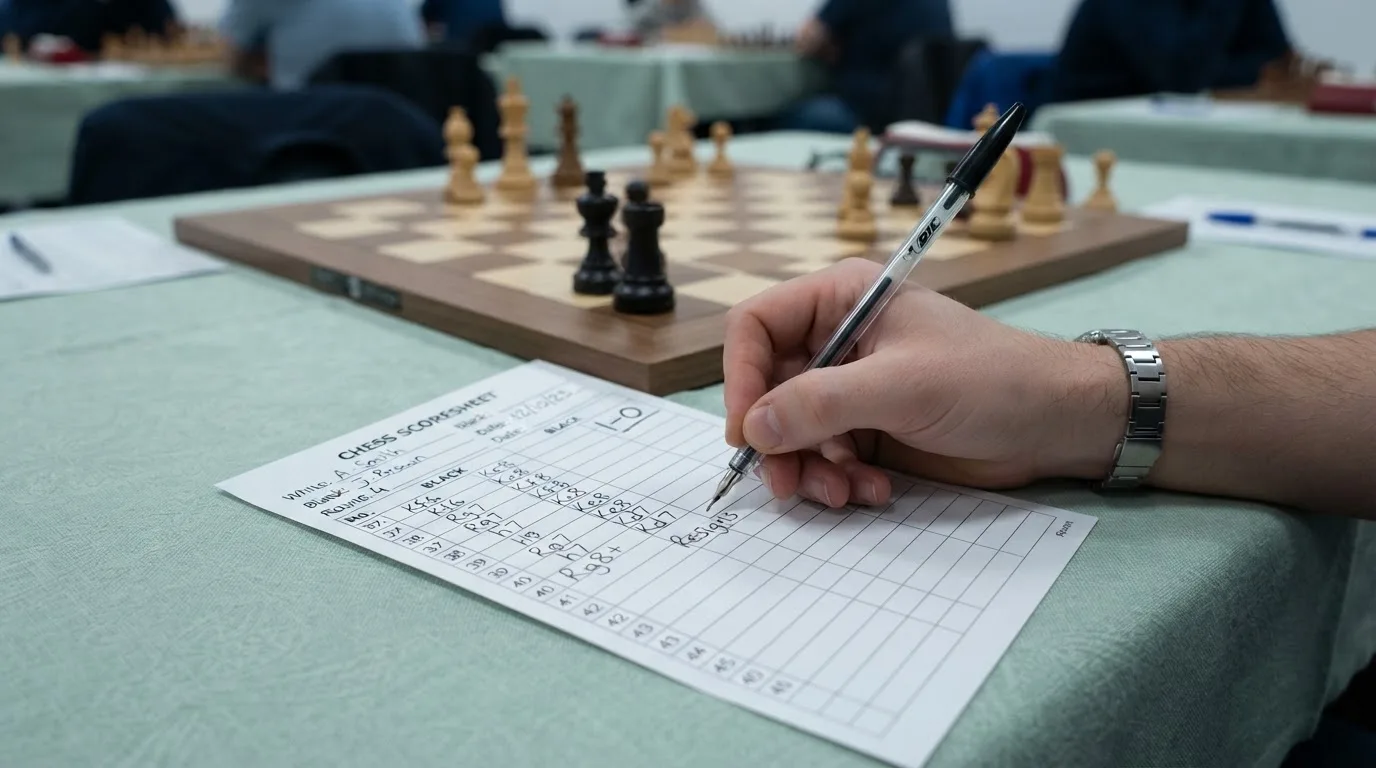
Open a UK-licensed operator, complete identity verification, deposit by debit card or bank transfer, find the chess match under the third-tier sports tab, pick an outcome, enter the stake, confirm. The bet settles on the FIDE-recorded result: 1–0 for a White win, 0–1 for a Black win and ½–½ for a draw.
What is a value bet and why is no tip ever certain?
A value bet is a price above the fair price for the event — the price implied by the true probability once the bookmaker’s margin is removed. Value is a long-run average: over a long series of value bets the punter profits, but a single value bet can still lose, and a punter who treats value as a forecast of any one outcome is reading the arithmetic wrong. No tip is certain because no model can predict a chess game win with certainty; the model that names its inputs and weights them openly is the one whose error rate a reader can audit.
What is the bookmaker’s margin and how can it be seen in the odds?
The bookmaker’s margin is the cut the operator takes out of every market before it prices up. To see it, convert every price to implied probability (1 ÷ decimal odds), add the implied probabilities together and subtract 100 %. The excess is the margin. On a two-way market at decimal odds 1.90 / 1.90, the implied probabilities are 52.63 % each, the sum is 105.26 %, and the margin is about 5 %.
How is the return on a bet worked out from the stake and the odds?
For a single bet, return = stake × decimal odds and profit = stake × (decimal odds − 1). A £10 bet at decimal odds 2.50 returns £25 (£15 profit plus the £10 stake). For a combination bet, the decimal odds of each leg multiply into one price, and the return is stake × that combined price.
Tennis, darts & cue sports – Best Betting Tips
Content created by the «Best Betting Tips» team
