
Chess Betting Odds in 2026: What the Prices Say, and What They Cost
 Available in US
Chess sits awkwardly inside a sportsbook. Football has ninety minutes, a scoreline, and a half-time break that segments everything; tennis has its tie-breaks; horse racing has the SP. A chess game has a clock, an arbiter, and a result that can be 1–0, 0–1 or ½–½ — written that way because a draw is a real, frequent, structural outcome of the position, not a margin call from the bookmaker. That is what makes the odds on chess interesting. Two players do not have to be unequal for the prices to be there, and three results are normal rather than rare. Everything that follows on this page — how a price is built, why the favourites still let you down, what a margin actually does to a winning ticket — turns on that fact.

Below: how GB-licensed bookmakers handle a sport without goals, which markets the bookies actually run, what the margin looks like once you see it, and which of the reviewed brands earns its place at the top of the shortlist. The comparison table at the foot of the review names the licence holder and the account number on the Gambling Commission’s public register for every brand featured, so the test of “is this licensed?” is a check the reader can do themselves.
Current as of 27 October 2026 · Gambling Commission public register and each operator’s own published terms.
Live chess betting and cash out: how a slow game becomes an in-running market
A chess game is a long event with a quietly shifting balance. Time control decides the cadence — classical games run for hours, rapid for roughly fifteen to sixty minutes per player, blitz for three to ten — and the result is recorded as 1–0, 0–1 or ½–½. The match bet on a single game is therefore a three-way market, and on a match of multiple games the scoreboard becomes its own betting object. Two practical consequences follow.
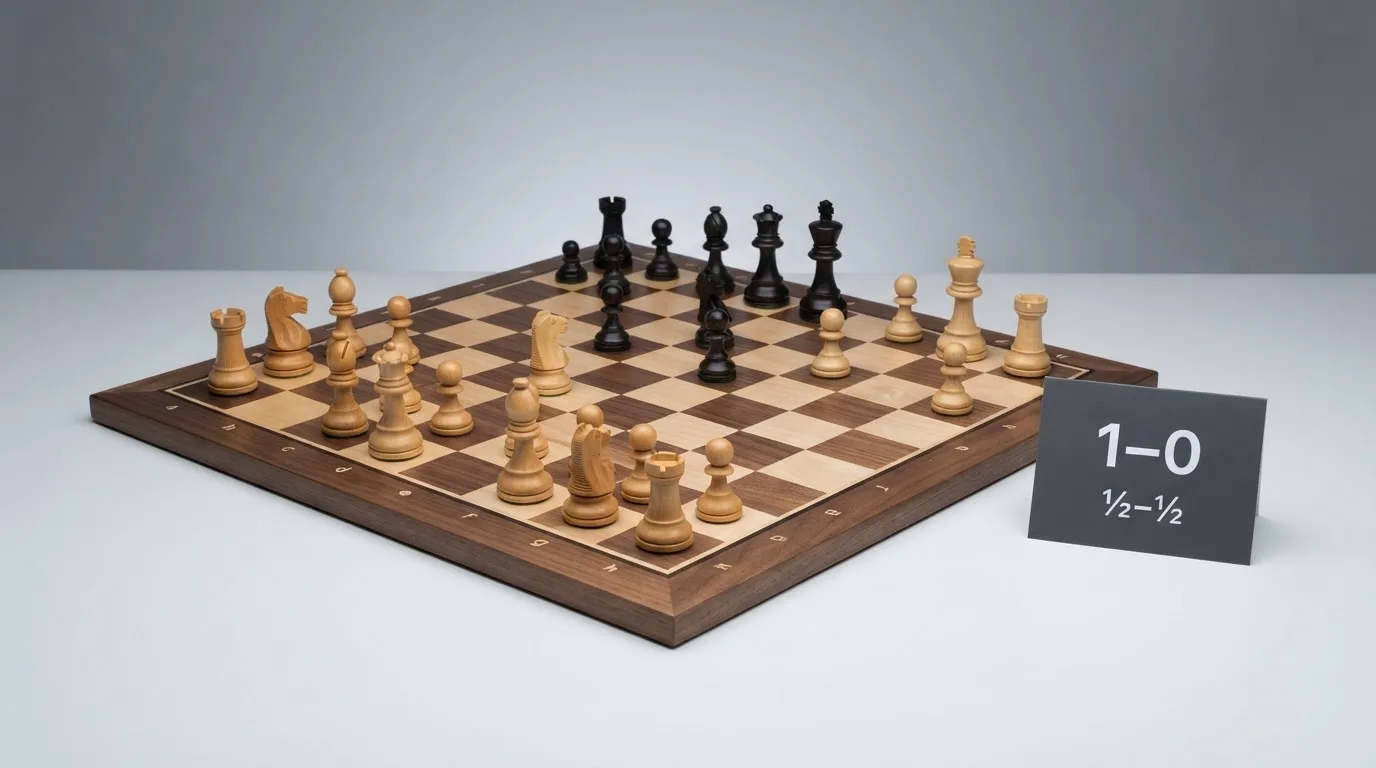
First, “in-play” on chess is not the in-play of football. There is no 1–0 goal flash to re-price the market in a second. A position can be evaluated as roughly equal for ten moves and then decisive for ten more; the bookmaker updates the in-running price when an event triggers a repricing engine — a capture, a passed pawn, a piece trade — not on every move. Liquidity at the deepest in-play prices is therefore thinner than at the equivalent football price, and the price the bettor sees on a phone often moves in steps rather than continuously.
Second, cash out has a job to do here that it does not have elsewhere. A player can be winning by material but heading into a time scramble where the advantage evaporates; the bettor who took White at 1.85 may want to lock in part of that 1.85 before the flag falls. GB bookmakers carry cash out on the running match market and on outright tournament markets, with the usual condition: the offer at the cash-out button is the bookmaker’s price, not a guaranteed one, and it disappears if a piece falls. The audited bettor uses cash out when it is bigger than the implied probability of the current position, and ignores it the rest of the time. The bookmaker’s margin lives inside the cash-out button as much as it lives inside the original price, and the longer the bettor watches the cash-out number, the more of the edge it eats.
Live streaming is offered by the larger GB bookmakers on major chess events — the Grand Chess Tour, the top round of the Candidates, occasional club events — though the chess streaming catalogue is thinner than the football or tennis one. Where live streaming is missing the second-hand book boards and engines on their own data feed cover most of the top events; where it is present, the publisher publishes the schedule in the in-play tab.
Predictions, analysis and bankroll: what a chess tip actually rests on
Chess is one of the few sports a bookmaker takes seriously that the bettor can also analyse to a reasonable depth without institutional data. Engine evaluations are public a few moves after the game; opening theory is encyclopaedic; the head-to-head record of any two titled players is a click away. That is the appeal, and it is also the trap. An engine line does not tell the bettor who is going to win a sixty-game blitz match, and an opening repertoire does not tell the bettor who handles the time scramble better. The cleanest framing: a prediction is a probability and a probability has a price. The bet is the bettor’s probability against the bookmaker’s.
Three working rules follow.
A prediction is only as good as the data behind it. White scores a little over half of classical games at the top level, less in rapid and less again in blitz, and the gap shrinks with time control. A model that does not include time control as a variable is not a model, it is a guess with arithmetic.
The betting bankroll is sized to the variance of the sport, not the size of a single bet. A chess tournament produces runs of one-sided results — a player on form, an opponent out of form — and then a quiet stretch where the favourites win less often than the prices imply. The bankroll has to live through the quiet stretches. The rule of thumb on staking is between one and two per cent of the bankroll per bet for a tipster working with a thin edge; the rule of thumb for a recreational bettor with no model is none.
Form and strategy are not the same. Form is recent results; strategy is the discipline of only betting when the price is bigger than the bettor’s probability. The recreational chess punter who bets every tournament favourite because the favourite “looks strong” is buying every margin the bookmaker draws. The recreational chess punter who waits for a price that is larger than their own read of the position is doing the same thing the professional does, only at a lower volume.
There is also a piece of arithmetic that lives behind any prediction worth keeping, and it sits at the centre of this page in the worked example below. The arithmetic of an odds market is not a tip — it is a reading of what the bookmaker thinks the chances are.
Bet types and how chess odds are priced
A bookmaker working the chess book writes three results into the match market — 1, X, 2 — and the price on each. Take the worked example the page uses throughout: an illustrative three-way 1.90 / 3.40 / 4.20 on the classic broadboard of a top-level classical game. To check the margin, the formula reads each side as an implied probability (one in, one divided by the price), sums them, and takes one away from that sum. The illustrative line gives 0.526 + 0.294 + 0.238 = 1.058, so the margin sits at roughly 5.8 per cent on this example. To see what a winning bet pays back on the same illustrative two-way line at 1.90 / 1.90, the bettor takes a £10 stake on either side at 1.90; the return is £19 if the bet wins, the net profit is £9, and the implied probabilities sum to 1.053, so the margin is roughly 5.3 per cent. The bettor wins the same £9 on either side and pays the same margin to the bookmaker — the bookmaker’s edge does not depend on which side the bettor picks.
The matter of rounding is its own quirk. A two-way market at decimal 1.90 / 1.90 is the cleanest illustration of the margin because the symmetry is honest. Asymmetry (1.85 / 2.05) gives the same margin on average but punishes whichever side the bettor backs at a heavier rate, because the sum of implied probabilities is still above 1 and the slack is shared across both sides. The illustrative 1.90 / 1.90 is therefore the right shape for a teaching example, and the right number to point to when the page shows what a margin actually does to a winning bet.
What that example teaches, and what no other worked figure on this page does, is that the bookmaker’s edge is in the spread of implied probabilities, not in any single price. A £10 bet at 1.90 returns £19 if it wins — the bettor sees £19, not the £0.53 the bookmaker kept on average — and the cost is invisible on the ticket. The margin is the difference between what the bettor thinks the chances are and what the price says the bookmaker thinks the chances are, baked into the price before the bettor has stood in line.
Other bet types settle on the same mechanics.
Outright tournament winner is a single-name market with no draw and a long tail. Each player is a runner, the favourite is the shortest price, and the prices are heavier than a match market because the bookmaker is taking a position on every player who enters. The margin is built into the spread and the spread widens as the field widens.
Match score markets — “Fide master to win the match 6½–5½” — are markets on the running score of a multi-game match. They pay more because they are harder to call, and they cost more in margin because the bookmaker is taking a position on more cells of the result grid.
Handicap markets exist on chess as on any other sport, but they read differently. A “−1 game” handicap on a match of grand series pays a stake in full if the favourite wins by more than the line and pushes the stake back if the match lands exactly on the line; a draw at the line is a push. Handicap prices are usually closer to evens than match prices because the bookmaker is laying two clusters of outcomes rather than three.
Draw no bet is a safety market on the classic two-horse match. The bet wins if the player the bettor backs wins, pushes if the game is drawn, and loses if the opponent wins. The draw no bet price is heavier than the match price because the bookmaker is taking on the draw risk and pricing it in.
Each-way betting on chess is rare on the bookmaker side and almost unheard of on the chess side. The shape of the bet — equal stakes on the win and the place, with the place terms varying — fits horse racing, where place terms are a market convention. On chess, market lot and place are usually folded into outright or match markets instead.
Bet builders are increasingly common on the GB side and let the bettor combine markets from one event into a single bet. A bet builder on the Candidates final might combine “Gukesh to win game one” with “more than 30 moves in game one” into a single price. The combined price multiplies the leg prices together, and the implied margin compounds across the legs. The bet builder is a convenient way to express a view of how a match will unfold, and the compound margin is the price of that convenience.
Odds in GB are written in fractional form by convention and given in decimal form in the app. The conversion reads a/b → a ÷ b + 1, so 5/1 is 6.00, 11/4 is 3.75, and evens is 2.00. The two notations describe the same number; the decimal form makes the implied probability arithmetic clean, and the fractional form reads more naturally in a queue at the betting shop.
Sports and tournaments: what a chess bookmaker takes bets on
Chess at the GB-licensed bookmaker is tournament chess more than match chess, and the major tournaments carry the depth of the market. The Candidates cycle is the centre of gravity, the Grand Chess Tour runs the highest-paid rapid and blitz circuit, and the World Chess Championship is the single event around which the calendar turns. Club events in the Pro Chess League and national leagues add to the running schedule.
A useful way to read the catalogue is by time control. Classical events play are the slowest and the deepest in market, with outright and match markets running from the start of the tournament. Rapid and blitz events play are quicker, with a heavier in-play market because a game resolves in minutes and the price moves quickly. Online events play in a different format — shorter time controls, faster engines, faster prices — and the in-play tab is the right place to follow them.
A second useful frame is the surface of the event. Over-the-board chess is the dominant format and the one the rule book is written for; online chess is a parallel format with its own ranking list and a faster tempo; rapid and blitz sit between the two. The bookmaker treats them as the same sport for market purposes and the gambler treats them as different bets because the underlying tempo is different.
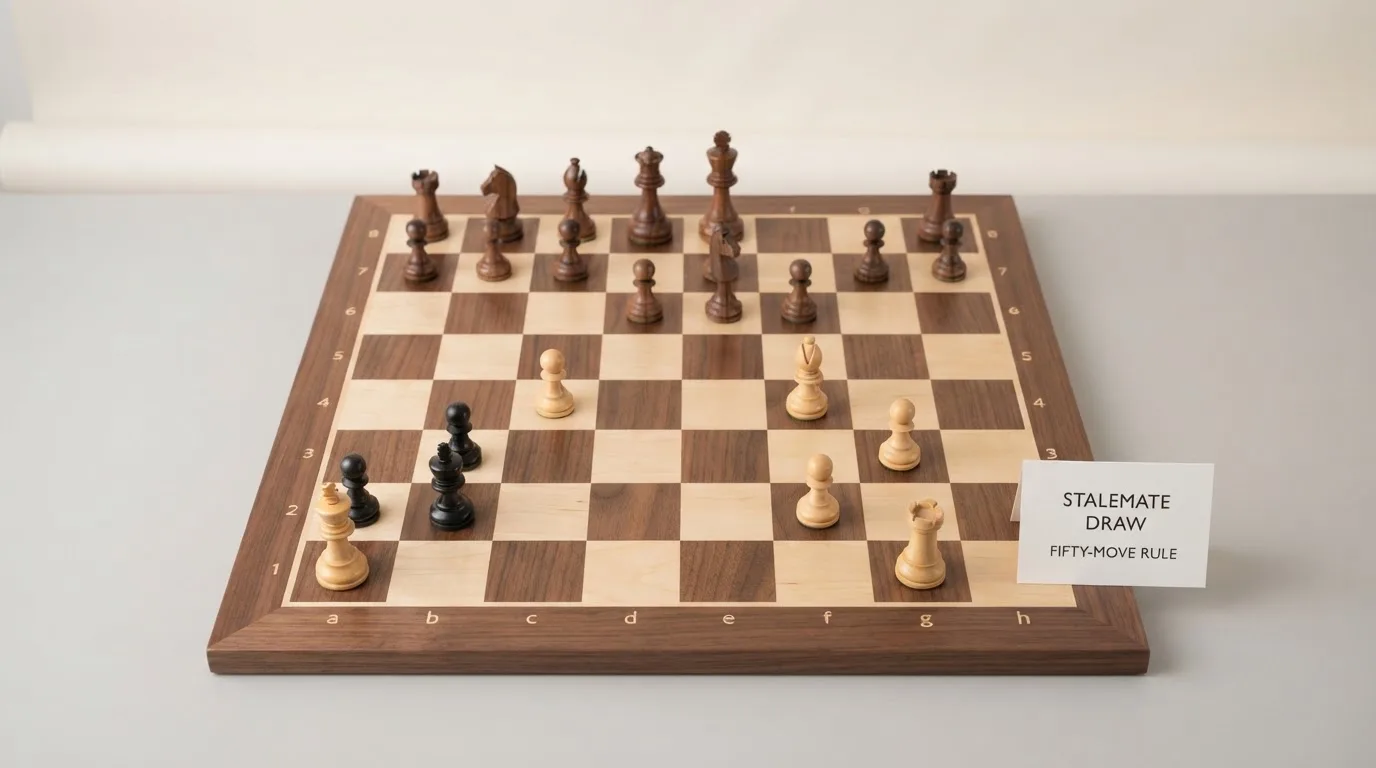
A third frame is the rule book. A chess game is drawn by stalemate, by agreement between the players, or by claim of threefold repetition or the fifty-move rule; since 2014 a game ends automatically on fivefold repetition or on the seventy-fifth move with no capture or pawn move. Wilhelm Steinitz claimed the first universally recognised World Chess Championship title in 1886, and Gukesh Dommaraju won the title in 2024. The result is recorded as 1–0, 0–1 or ½–½. The rule book sits behind every market the bookmaker runs, and the bettor who reads it has a read on what the bettor is buying.
Tournament chess and chess betting sites tend to converge on the same shortlist of events. The same handful of bookmakers do bookmaker chess at depth, the same handful carry the in-play markets, and the same handful carry the outright markets on the next World Championship cycle. The reviewed brands further down this page are drawn from the Gambling Commission’s public register, not from a depth-of-market ranking; depth of market varies event by event and the bettor checks the operator’s Wettprogramm in the language the operator uses before staking.
Ten GB-licensed bookmakers reviewed for chess
Every brand on this list holds a Gambling Commission remote licence and operates under UK regulation. The Commission public register is the test of licence, and the table further down carries the account number for each brand so the bettor can check it themselves. The list is not a ranking by depth of chess market — no single source supports a depth-of-market ranking across all ten brands at all events — and a brand’s place here is not a licence. Several brands run under one licensee; they are reviewed separately and named separately.
The order here is the order of the comparison table, not a personal ranking.
Betfred is the heritage high-street name that became a digital heavyweight. The Betfred Sports, Casino & Games app is published by Done Brothers (Cash Betting) Ltd and covers twenty-one sports plus over two thousand casino-style games; chess is among the betting sports offered, with the depth of market that follows from running a sportsbook of that size. The licensed entity is Petfre (Gibraltar) Limited under Commission account 39544.
BetMGM’s UK app runs a four-leg free-bet welcome: a £10 deposit unlocks four £10 free bets (two football accumulators of four-plus selections and two sports multiples of two-plus), valid for seven days from the qualifying bet with minimum odds and an opt-in. The licence sits with LeoVegas Gaming PLC under Commission account 39198.
Bet600 is a smaller bookmaker with a sharp focus on horse racing — the brand pays Best Odds Guaranteed on racing, which means a bet taken at the early price is paid at the bigger starting price if the SP is larger. Chess is a smaller line at Bet600 than at the larger bookmakers, and the bettor who bets racing and a touch of football there may want to keep chess at a bookmaker that runs a deeper chess book.
10bet is a multi-product sportsbook with Cash Out, Bet Builder and Live Streaming on its app, with a stated coverage that includes football, tennis and horse racing. The licence sits with Blue Star Planet Limited under Commission account 43173.
DragonBet’s app is published by DragonBet Ltd and the brand leans into Welsh football and rugby markets, with racing, American football, in-play and bet-builder markets alongside. The licence sits with DragonBet Ltd under Commission account 64908.
Fitzwilliam Sports is a Dublin bookmaker with capped membership, and its welcome is a “High Stakes Welcome” subject to compliance criteria that the bettor checks before claiming. The home page also sets out instant deposits, fast withdrawals, timeouts and deposit limits, and links to GambleAware, GamStop and Gamblers Anonymous. The licence sits with SBKI Limited under Commission account 48760.
Bar One Racing has rebranded as BAR 1 Betting — an Irish independent bookmaker with shops across Ireland and a heavy horse racing presence, with sponsorships at Dundalk, Fairyhouse, Navan, The Curragh, Curraheen Park and Cork. Chess is a smaller line at BAR 1 than at the racing-focused brands, and the brand sits on this list because its licence makes it a valid option rather than because of its chess depth. The licence sits with Bar-One Racing Limited under Commission account 56516.
Midnite carries an in-play tab, an acca builder, popular accas and price boosts with maximum-stake limits; the site cites Gambling Commission account 101839. The welcome: new customers who bet £5 or more on pre-match odds of EVS (2.0) or greater within fourteen days of sign-up receive £25 in free bets and fifty free spins, valid for seven days. The licence sits with Midnite Limited under account 101839.
Paddy Power is the Irish heritage brand with a broad sports catalogue. The Paddy Power Sports Betting app covers football, horse racing, boxing, rugby, tennis, golf, darts, snooker and F1, with chess sitting in the “other sports” tab. The licence sits with PPB Counterparty Services Limited under Commission account 39439.
NetBet offers Daily Boosts, Profit Boosts and free bet offers alongside a Bet Builder with instant dynamic odds, plus sports stats for the major leagues. The licence sits with Netbet Enterprises Limited under Commission account 39170.
The table below carries each brand with its Commission account, the licence holder named on the register, and what the operator’s own terms say on the subjects that matter for a chess punter. The numbers are exactly as published, and a single em-dash marks the rare gap not covered. Empty cells are not the same as gaps in coverage — the table stops where the source stops.
Reviewed bookmakers, their licence holder, and what their own terms state on the headline points
The header row carries the matter as the comparison uses it, not as a glossary. The bettor reads the brand column for the licensed name, the licence column for the Commission’s register entry, and the last column for what each operator’s own published terms state on the headline points — payment methods, app coverage, welcome offer, safer-gambling tools and any operator-specific caveat.
| Brand | Licence (Gambling Commission) | Licence holder | What the operator’s terms state on the headline points |
|---|---|---|---|
| Betfred | Account 39544, remote general betting standard (real events) | Petfre (Gibraltar) Limited | Sports, Casino & Games app; 21 sports and over 2,000 casino-style games; heritage high-street and digital product |
| BetMGM | Account 39198, remote general betting standard (real events) | LeoVegas Gaming PLC | UK welcome of four £10 free bets (two football accas of 4+ selections and two sports multiples of 2+), valid 7 days, minimum odds, opt-in required |
| Bet600 | Account 44731, remote general betting standard (real events) | Tyche Tech Limited | Best Odds Guaranteed on horse racing — early or show price is topped up to the bigger SP |
| 10bet | Account 43173, remote general betting standard (real events) | Blue Star Planet Limited | Cash Out, Bet Builder and Live Streaming; coverage of football, tennis and horse racing |
| DragonBet | Account 64908, remote general betting standard (real events) | DragonBet Ltd | Welsh football and rugby focus; racing, American football, in-play and bet-builder markets |
| Fitzwilliam Sports | Account 48760, remote general betting standard (real events) | SBKI Limited | Dublin bookmaker with capped membership; High Stakes Welcome subject to compliance criteria; instant deposits, fast withdrawals, timeouts, deposit limits; GambleAware, GamStop and Gamblers Anonymous linked |
| Bar One Racing | Account 56516, remote general betting standard (real events) | Bar-One Racing Limited | Irish independent with shops and racing sponsorships at Dundalk, Fairyhouse, Navan, The Curragh, Curraheen Park and Cork; rebranded as BAR 1 Betting |
| Midnite | Account 101839, remote general betting standard (real events) | Midnite Limited | In-play, acca builder, popular accas, price boosts with maximum-stake limits; UK welcome of £25 in free bets and 50 free spins for a £5+ qualifying bet at EVS+ within 14 days, valid 7 days |
| Paddy Power | Account 39439, remote general betting standard (real events) | PPB Counterparty Services Limited | Paddy Power Sports Betting app covers football, horse racing, boxing, rugby, tennis, golf, darts, snooker and F1 |
| NetBet | Account 39170, remote general betting standard (real events) | Netbet Enterprises Limited | Daily Boosts, Profit Boosts and free bet offers; Bet Builder with instant dynamic odds; sports stats for major leagues |
Several columns the comparison might carry — payment methods, in-play depth on chess, withdrawal times — are deliberately absent. Each column would have repeated the same operator-level statement across most rows, and the comparison should add nothing visible. The bettor checks those points on the operator’s own terms page before staking, and the link between bookmaker and check is the licence number above.
Chess betting in the UK: how the regulation frames the bet
There is no statutory list of permitted sports or markets in Great Britain. The Gambling Commission licenses the whole commercial market under the Gambling Act 2005, which covers England, Scotland and Wales; Northern Ireland has its own older law and sits outside the 2005 Act, so a Great Britain licence does not regulate Northern Ireland. Since the Gambling (Licensing and Advertising) Act 2014 an operator whose remote facilities are used in Great Britain needs a Commission licence wherever it is based — a Curaçao, Maltese or Gibraltar licence is not a substitute, and the operator’s base of operations is irrelevant to the licence test.
The Commission’s public register is the whole test of who holds a licence, and it can be searched by business name, trading name, domain or account number. The bettor who wants to confirm a licence reads the operator name, the licence category and the status on the register. There is no state monopoly and no cap on the number of licences. The categories the relevant licence falls under are remote general betting standard (real events), remote general betting standard (virtual events), remote general betting limited, remote pool betting and remote betting intermediary (the licence for betting exchanges). Betting exchanges run under a betting intermediary licence; rates and rules specific to exchanges are stated only from each exchange’s terms.
A note on the British exceptions: financial spread betting is regulated by the Financial Conduct Authority, not the Commission. A British named-account rule, a state list of permitted payment methods and any rule for or against cryptocurrency deposits at licensed operators are not established — payments are described qualitatively and only from each operator’s terms. The minimum age to bet is eighteen and the operator verifies name, address and date of birth before the first deposit and before the first bet, including with a free bet or bonus.
On the betting side: no statutory cap on stakes in sports betting exists, and operators set their own maximum stakes and may restrict customers. In-play betting is offered under the operator’s licence conditions and customer-protection duties; the legal conclusion is not that in-play is “unrestricted”. Esports are treated like any other event and virtual events are a separate licence category. Bets on politics, TV shows and novelty markets are offered by GB bookmakers and no statutory prohibition was found.
On payments: credit cards are banned for gambling in Great Britain, including credit-card-funded payments through an e-wallet; debit cards and bank-based payments are not covered by the ban. Identity verification before the first deposit means no anonymous play at a licensed site, and source-of-funds questions at higher spend are normal under the money-laundering rules.
On advertising: advertising is not licensed by the Commission; it runs through the CAP Code (non-broadcast) and BCAP Code (broadcast), enforced by the ASA, alongside the LCCP marketing conditions. CAP Code section 16: marketing must be socially responsible, must not be of strong appeal to under-18s, and no one who is or seems to be under twenty-five may feature gambling or play a significant role, with an exception for marketing placed where a bet can be made directly. The rule concerns who appears in the advertisement, not who may bet. Promotion rules in force since 19 January 2026: wagering requirements on bonuses are capped at 10x — a £10 bonus at 50x needs £500 of bets and is now illegal — and mixed-product promotions that require gambling on two or more product types are banned. Whether the cap applies to free bets with no wagering condition, and any cap on the money value of a bonus, are not established.
On tax: the player pays no tax on betting winnings in Great Britain (general information, not tax advice; a professional gambler should ask HMRC or an adviser). General Betting Duty is the operator’s tax on gross profits, currently fifteen per cent; from 1 April 2027 a new remote betting rate of twenty-five per cent applies within it, while remote bets on UK horse racing, bets on self-service betting terminals in licensed premises, pool betting and in-person betting stay at fifteen per cent. Until that date the remote rate stays at fifteen per cent. Whether operators pass duty on through odds is not established.
On offshore: providing gambling facilities in Great Britain without the licence the Act requires is an offence, aimed at the operator. No offence aimed at a customer who merely bets on an unlicensed site was found; the framing is the loss of protection — no GAMSTOP coverage, no Commission complaints route, no approved dispute-resolution body, no British consumer redress if funds are withheld, not bound by the 10x bonus cap or the £150 vulnerability check. Enforcement is disruption rather than blocking: cease-and-desist notices, search-engine referrals, work with registrars, hosts and payment providers. The honest framing is that a licensed site is one with checks, limits, GAMSTOP coverage, the bonus cap and the £150 vulnerability check, but also the verification before the first bet; an unlicensed site is one with none of those protections and a possible loss of funds. Neither is “the safe choice” by default, and the bettor’s choice is between which set of trade-offs the bettor wants on the page.
Responsible gambling: the rules that sit on the bettor’s side of the screen
GAMSTOP is the national multi-operator online self-exclusion scheme and a mandatory licence condition for online operators since 31 March 2020. The exclusion periods are six months, one year, five years, or five years with auto-renewal, and after the minimum period the exclusion stays in place for a further seven years unless the customer asks GAMSTOP to remove it. GAMSTOP covers online sites and apps; betting shops use a separate service. The bettor registers once and the registration blocks new accounts across every GB-licensed online operator.
A financial vulnerability check applies to licensed remote betting when a customer’s deposits minus withdrawals exceed £150 in a rolling thirty days. The check is a public-record check (bankruptcy, county court judgments), not an income check and not a credit reference check. Financial risk assessments (the “affordability checks” of the press) are announced in a staged plan with no start date; the framing is “announced, staged, no start date” and not “in force”.
Deposit limits (RTS 12): operators must offer a gross deposit limit on a fixed time frame; the first changes have applied since 31 October 2025, a second phase was postponed to 30 September 2026, and whether it is live is not established. There is no state-set deposit or loss ceiling for betting: limits are the customer’s choice. The bettor who wants a limit sets it themselves and the operator is obliged to apply it.
Help is available outside the operator. GamCare runs the National Gambling Helpline. GambleAware funds research, treatment and education. NHS gambling clinics run regionally. Gamblers Anonymous runs peer-support meetings across the country. The licensed operators link to these services from their safer-gambling pages; an unlicensed operator is not obliged to, and the link is part of what the licence buys.
On bonuses and wagering: promotion rules in force since 19 January 2026 cap wagering requirements at 10x. A £10 bonus at 50x needs £500 of bets and is now illegal; the bettor reads the small print because a bonus at 10x is still a bonus and a bonus at 10x on the bonus plus deposit is a bigger bonus than it sounds. The bettor who bets a bonus at the bonus plus deposit has to multiply the rollover base by the wagering factor and divide by an average stake to see how many bets the bonus takes to clear.
The point of all of it is that the safer-gambling infrastructure sits on the bettor’s side of the screen. A licence buys the infrastructure; the bettor uses it. The bettor who never opens the safer-gambling tab of an account is paying for a service they do not use, and the bettor who opens it once and sets a deposit limit is paying for it sensibly.
Mobile and the chess betting app: how the screen changes the bet
A sportsbook app on a phone is the same product as the desktop site, with a smaller screen and a faster input. Three practical differences follow.
The bettor’s input is faster on a phone. A bet is a swipe and a tap; a cash-out is a tap on a single number. The bettor who bets on a phone between moves of a chess game can place a bet during the position rather than between moves on a desktop, which is the difference between in-play and “after-play”.
The phone’s notifications re-frame live betting. A push notification on a price move is a feature of the app, not of the website, and the bettor who opts in sees the price move before it disappears from the in-play tab. The bettor who opts out sees the price move when the bettor next opens the app. The decision on whether to opt in is a decision on whether the bettor wants to be interrupted during a chess game.
The app catalogue is not the desktop catalogue. Some markets live only on the desktop site and some live only on the app, and the bettor checks the app’s sports tab before assuming a market is missing. The bet builder lives on the app at most brands; the cash-out button lives on the app at every brand that runs cash out.
A practical test: the bettor opens the app, finds the chess tab, and checks how many events are listed in the next seven days. A bookmaker that lists ten events in the next week is a bookmaker the bettor can use; a bookmaker that lists two is a bookmaker the bettor opens for racing and football. The test is the bettor’s personal experience, and the comparison table further down does not pretend to know the answer in advance.
The worked arithmetic: what a margin really costs the bettor
Two worked figures sit at the centre of this page, and both are illustrative rather than quoted prices. The first is the cost of a winning bet; the second is the cost of a market.
A £10 stake on the illustrative two-way line at 1.90 / 1.90 returns £19 if the bet wins, with a net profit of £9. The implied probabilities of the two sides are both 1 ÷ 1.90 = 0.526, and they sum to 1.053; the margin is 1 − 1.053⁻¹ = 1 − 0.949 = 0.051, or roughly 5.1 per cent of the total stake. To say the same thing in payout terms: a fair two-way market would return £20 for £10 (a 100 per cent payout share), and this market returns £19 for £10 — the 95 per cent payout share is the bettor’s reward and the 5 per cent is the bookmaker’s cut.
The second figure carries the same arithmetic into a three-way market. An illustrative 1.90 / 3.40 / 4.20 has implied probabilities of 0.526 + 0.294 + 0.238 = 1.058, so the margin is roughly 5.8 per cent on this example. The bettor who backs the favourite at 1.90 returns £19 if the favourite wins; the bettor who backs the outsider at 4.20 returns £42 for a £10 stake if the outsider wins. The margin is the same on every side, and the bettor’s edge against the margin is whatever the bettor’s probability reads against the bookmaker’s.
Both figures are illustrative. The page quotes no live prices because odds and margins age faster than anything else on it, and a snapshot of a real price would be wrong within minutes of publication. The arithmetic is what survives the snapshot.
The condition for using the arithmetic: the bettor reads the price on the betting slip at the moment of the bet. The price the bettor sees on the slip is the price that matters; the price the bettor saw yesterday on a tipster site is the price the bettor would have got yesterday. The margin is the price of admission to the bet, and the bettor pays it on every bet, win or lose.
What the licence buys — and what it does not
A licence buys three things on the bettor’s side of the screen. The bettor’s deposit is held in a segregated account at a licensed bank; the bettor’s complaint can be escalated to an approved alternative dispute resolution body; the bettor’s safer-gambling tools have the force of a licence condition behind them. The bettor’s data is protected under UK data-protection law; the bettor’s identity is verified before the first bet; the bettor’s credit-card funding is blocked at source.
A licence does not buy a tip. The bookmaker’s prices are built to the bookmaker’s margin, and a margin is the bookmaker’s edge. A licence does not buy an edge over the bookmaker; a bettor with no edge pays the margin on every bet and gives back the winnings over time. A licence does not buy a win; it buys a market in which the bettor can lose money under a regulated framework, and the regulated framework is what the bettor is paying for when the bettor opens an account.
The bettor who wants a regulated framework and a margin’s worth of bets reads the licence on the Commission’s public register, sets a deposit limit, and bets with the bankroll sized to the variance of the sport. The bettor who wants none of those things is the unlicenced one, and the page is not for the bettor who wants none of those things.
The bettor who wants a regulated framework, an edge over the bookmaker, and a tip for the next game does not exist as a customer of any bookmaker. The bet is a price against a probability, and the bettor who beats the price over time is the bettor who reads the price well. The licence buys the framework; the edge is the bettor’s.
Chess, the British punter, and the right bookmaker for the bet
The right bookmaker for the British chess punter is the one that runs a deep chess book on the events the punter wants to bet on, with a margin that fits the punter’s edge and a safer-gambling framework the punter will actually use. The comparison table further down lists ten licensed bookmakers with the Commission’s register entry for each; the bettor reads the table and looks at the Wettprogramm on the operator’s site before staking, because the depth of the chess book is the depth of the events the bookmaker runs and the bookmaker’s own site is where the Wettprogramm is.
The punter who bets football, racing and a touch of chess lands at a multi-product bookmaker with a deep football book and a thinner chess book. The punter who bets chess and chess alone lands at a bookmaker with a deep chess book and a thinner everything else. Both are licensed; both run under the same safer-gambling framework; both charge the holder. The punter’s choice is the punter’s, and the licensed set is the licensed set.
The punter who bets chess from a phone lands at a brand with a fast app and a deep in-running market. The punter who bets chess from a desktop lands at a brand with a deeper outright market and a faster research workflow. The punter who bets chess only when the price is bigger than the punter’s probability lands at every brand because the price is the same, and the price is the same because the bookmaker’s margin is the bookmaker’s margin across the licensed set.
Frequently asked questions
Where can a chess match be bet on in Great Britain?
Any GB-licensed bookmaker can offer chess under a remote general betting standard (real events) licence; the comparison table further up carries the Commission’s register entry for every brand on the shortlist. The bettor picks a brand and checks the operator’s own Wettprogramm for the events the operator runs, because depth of chess book varies by operator and the operator’s own page is where the schedule is.
Is betting on chess legal in the United Kingdom?
Betting on chess is legal in Great Britain under the Gambling Act 2005, which licenses the whole commercial market through the Gambling Commission; Northern Ireland has its own older law and sits outside the 2005 Act. The minimum age is eighteen, the bettor’s identity is verified before the first deposit and the first bet, and the bettor cannot fund a bet with a credit card. Credit cards are banned for gambling in Great Britain.
How does a chess bet actually work in practice?
The bettor picks a bookmaker from the licensed set, opens an account, deposits by debit card or bank transfer, and chooses a market from the operator’s Wettprogramm — match, outright tournament winner, match score, draw no bet, handicap, bet builder or in-play. The bettor enters a stake, sees the return the price implies, and confirms the bet. The bet settles when the result is recorded as 1–0, 0–1 or ½–½ on the match, or when the tournament is decided on the outright market.
How does a bettor check a bookmaker holds a Gambling Commission licence?
The bettor opens the Commission’s public register and searches by business name, trading name, domain or account number. The register is the whole test of who holds a licence, and the comparison table on this page carries the account number for every brand on the shortlist so the bettor can do the check themselves. The brand’s domain proves nothing — licensed operators use .com and .co.uk interchangeably.
How is a return calculated from stake and price?
The return is stake × price, and the net profit is stake × (price − 1). A £10 stake at decimal 2.50 returns £25 if the bet wins, with a net profit of £15; a £10 stake at decimal 1.90 returns £19 if the bet wins, with a net profit of £9. The fractional form of 1.90 is 9/10 (an even-money price is 1/1 and is decimal 2.00).
What is the bookmaker’s margin and how does it show in the odds?
The margin is the slice of every pound bet that the bookmaker keeps on average, calculated as 1 − (1 ÷ (sum of implied probabilities)). On the illustrative two-way line at 1.90 / 1.90 the implied probabilities sum to 1.053 and the margin sits at roughly 5.1 per cent; on the illustrative three-way 1.90 / 3.40 / 4.20 the implied probabilities sum to 1.058 and the margin sits at roughly 5.8 per cent. The bettor who backs the favourite at 1.90 and the bettor who backs the outsider at 4.20 pay the same margin in expectation; the margin is in the spread of the prices, not in any single one.
Tennis, darts & cue sports – Best Betting Tips
Content created by the «Best Betting Tips» team
