
Best betting sites with bet builder in 2026
 Available in US
*Verified against the Gambling Commission’s public register on 27 October 2026.*
A bet builder is one of the few wagers a British punter can build to order from a single football match, horse race or tennis match. The major firms have spent the last few years marketing it as a standalone product, complete with its own tab, its own “build” button and, in Sky Bet’s case, a renamed version called BuildABet. The page below covers what a bet builder actually is, how the rules settle a winner, and which UK-licensed bookmakers offer the feature without the rest of the package getting in the way.
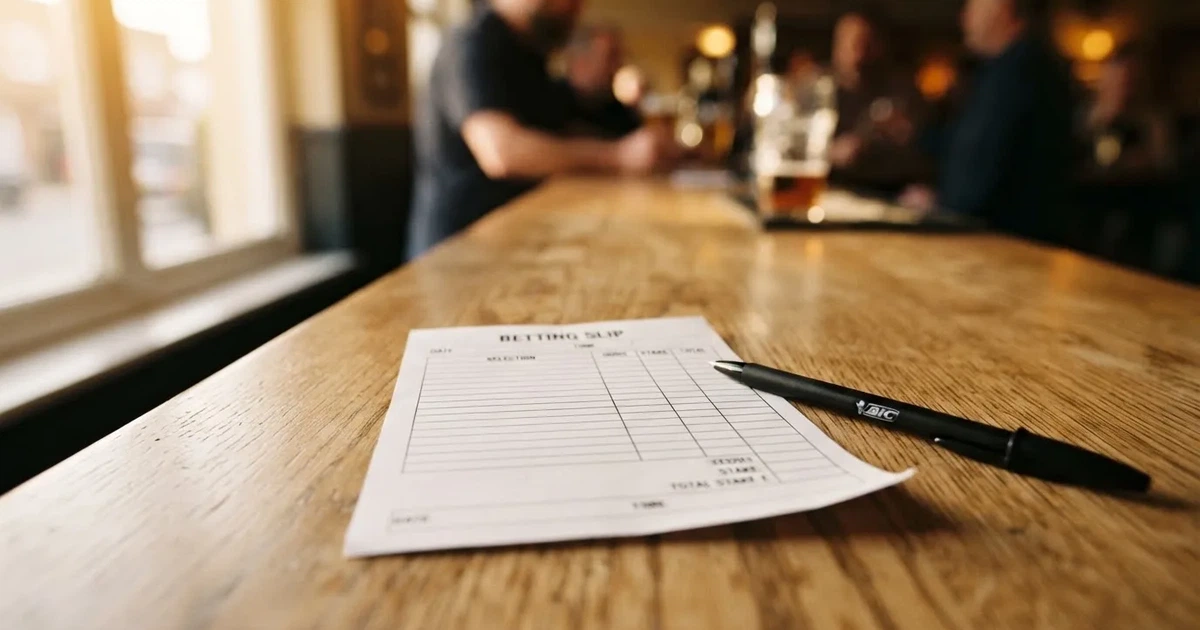
What a bet builder is, and how it settles
A bet builder takes several selections from the same event and prices them as one bet. Sky Bet’s documentation puts the limit at ten selections per builder, with up to twenty in the betslip across several same-event builders. Each selection must come from a market that the bookmaker has chosen to expose to the builder, and contradictory picks are not priceable — the worked example in Sky Bet’s help pages is a team to win 2-0 combined with Over 2.5 goals, which the system rejects because the two cannot both land.
The price is the product of the individual leg prices. A bet builder with three legs at 2.00, 1.80 and 1.60 returns a combined price of 5.76 (decimal). The accumulator mechanic is the same as a standard acca, but every leg is drawn from one event rather than from a slate of fixtures. That difference matters at settlement: a single fixture removes most of the leg-correlation problem a multi-game acca carries, because the legs all depend on the same ninety minutes.

If one leg voids, the rest run. A four-leg builder with one void selection settles on the remaining three at their combined price. The other routes — losing a leg or having the bet go down outright — work the same way as a standard multiple: one loser kills the whole thing, and the stake is lost.
The marketing word for the feature is “same-game multi” at Paddy Power and Betfair, “acca builder” at Midnite, “BuildABet” at Sky Bet. Under the surface they are the same wager. What changes between brands is which markets are exposed to the builder, the leg cap, and whether the in-play tab also accepts a builder once a match is underway.
The betslip mechanics most punters never read
Most bet builder write-ups stop at “pick your markets, get a price.” Three mechanics decide what the bet actually costs the punter, and none of them appear on the marketing page.

The first is the leg cap. Sky Bet’s published ceiling is ten legs per builder. Other firms publish different limits and some do not publish a limit at all, in which case the constraint is the markets the bookmaker has exposed to the builder rather than a hard number. The second is the per-betslip cap. Sky Bet’s betslip can hold up to twenty selections across several same-event builders. The third is the void rule. A void leg does not kill the bet — it drops out and the rest settle at their combined price. That makes a bet builder more forgiving than a standard acca in one specific way: if your player is substituted in the first ten minutes and your “player to score” leg voids, the rest of the bet still has a chance.
Contradictions are the silent killer. Most builders will not even let a punter stack “team to win 2-0” with “Over 2.5 goals” because the second implies three or more goals. A few punters have built six-leg accumulators on a single match only to find the price refusing to populate, because one leg was incompatible with another. The rule to take away: build the bet, watch the price populate, and treat a missing price as a contradiction rather than a bug.
In-play bet builder: where the feature is thinnest
In-play bet builder is the live-betting version of the same product: the match has kicked off, the markets are updated on the run, and the builder tab re-prices as the state of the game changes. bet365’s Bet Builder+ is the explicit example — combining markets from one event into a single bet, available pre-match and in-play.
The in-play version is harder to use well. A 1-0 lead at half time does not look the same as a 1-0 lead at seventy minutes, and the bookmaker knows that; the prices for “next goal” and “match result” move in real time. Two consequences follow. First, the in-play builder is the part of the feature most exposed to suspended markets — at any goal, the builder tab may briefly grey out while the trader reprices. Second, the in-play price is, on average, worse than the pre-match price for the same set of legs, because the margin is recomputed against a more informed state of the match.
Cash out on a bet builder is a separate question. The cash-out button works on a builder the same way it works on a standard acca: at any point the bet has positive expected value to the bookmaker, the cash-out value is offered at a discount. A bet builder with five legs cashes out for less, in percentage terms, than a five-leg acca drawn from different matches, because the legs of a same-event bet move together — a goal that helps one leg hurts another, and that intra-event correlation is part of what the cash-out price is discounting.
Mobile and app: where the feature lives
Bet builder was built for the phone. Every major brand routes the feature through the app or the mobile site, and the marketing screenshots on the App Store listings show a thumb on a “build” tab. The Apple App Store descriptions for the brands in this review list the feature in their opening paragraphs: bet365’s listing leads with Bet Builder+ alongside Super Boosts and Winnings Boosts; 10bet’s listing names Bet Builder alongside Cash out and Live Streaming; Betway’s listing puts bet builder among its core features.
The implication for the punter is that the desktop site is the secondary surface. A bet builder constructed on the phone is saved to the betslip and survives a switch to the desktop, but the feature set is the same; the bigger difference is the speed at which prices update in-running, which is faster on the app because the data feed is the same one the in-play trader uses.
The age gate is the same on every app: seventeen-plus on the App Store, eighteen-plus to deposit and bet at the operator. Kwiff’s app carries the 17+ age rating, and that is the lower bound for the store, not the legal one. The legal minimum to bet at a UK-licensed site is eighteen, and the verification step — name, address and date of birth, against public records — runs before the first deposit is accepted, including when the deposit is funded by a free bet.
Free bet builder: the offer and its cost
A free bet builder is a builder placed with a free-bet stake rather than a cash stake. The wagering mechanic is unchanged — ten legs, void-one-leg-rests, contradictions rejected — but the staking rule is different. A free bet’s stake is usually not returned with a win: a £10 free bet at 6.00 returns £50 in profit, not £60. That is the standard free-bet settlement across the industry, and the offer page states it in the small print.
Two of the ten offers in the comparison below are styled “free bet” rather than “free spins” or “free casino credit.” Spreadex’s new customer offer is £60 in free bets for a £10 fixed-odds bet, usable across fixed odds and spread betting, with the qualifying bet to be placed within 28 days of opening the account. Betway’s welcome offer is £40 in free bet tokens (4 × £10) credited on settlement of a first bet of at least £10 at minimum odds of 2.0, with a 7-day expiry and debit card deposits only. The cost of taking either is the cost of the qualifying bet: a £10 bet at 1.91 to qualify for a £40 free-bet bundle, where the free bet’s stake is not returned, is a roughly £2.50 outlay for a £40 stake at whatever price the free bet is then placed at. The expected value of the free-bet bundle, on average, is the free-bet amount multiplied by the expected return of the market it is placed on, minus the stake, weighted by the probability of winning. A rough rule is that a free bet is worth between 60% and 80% of its face value to an average punter, and a heavy bookmaker margin eats into that further.
The bonus cap introduced in early 2026 — a 10x cap on wagering requirements on bonuses, in force since 19 January 2026 — applies to cash bonuses and similar offers, and not necessarily to free bets with no wagering condition. Whether the cap bites a specific free bet depends on the offer’s small print, and the small print is the only reliable place to look.
Strategies and tips: what works, what does not
A bet builder tip is a prediction of which selections to add to a builder for a given fixture. Two things follow from the structure of the bet. First, because every leg comes from one event, the punter is pricing a single state of the world — win to nil, both teams to score, over a goal line, player to score or be carded — rather than a chain of independent events. That means a builder’s price is, on average, more efficient than a cross-match acca’s price, because the same-event leg correlations are partly already in the leg prices. Second, the leg cap at ten selections matters: more legs multiply the margin, and a ten-leg builder is, on average, a worse price for the punter than a three-leg builder, even before considering that some legs at high prices are correlated against each other.
The football-specific bet builder tips that circulate in tipster circles tend to cluster two or three strong legs and one “longshot” leg — a player to score, a card, a corner count. The honest answer is that there is no edge in adding a leg whose price is below its true probability, and a builder is no exception. What a builder does well is price a state of the match: a 2-1 home win with both teams to score and over 1.5 first-half goals is one bet, and one bet the bookmaker has to price as a single product. Whether the price is fair is a separate question, and the answer sits inside the margin.
Horse racing bet builder is a thinner product. Few firms expose more than a couple of racing markets to a builder — a horse to win combined with the going or the winning distance is a stretch at most brands. Where the feature is offered, the leg count is usually lower and the margin is, on the available evidence, higher than for football. The punt that wins on racing is usually the place-and-each-way punt rather than a builder, and a builder on a race is the niche rather than the rule.
How a bet builder is priced: the margin explained
The price the bookmaker offers on a bet builder is the product of the individual leg prices, with the bookmaker’s margin built into each leg. A bet builder with two legs at 1.90 and 1.90 — both evens (1/1) in fractional form — combines to a price of 3.61. The fair combined price, with no margin, would be the reciprocal of the sum of the reciprocals: 1 ÷ (1/1.90 + 1/1.90) = 0.95, meaning the bookmaker keeps about 5% of every unit staked on this two-way market. The combined 3.61 price, on the same legs, sits below the no-margin combined price of 4.00 — the difference is the margin, charged twice, once on each leg.
That double-charging is the core of how a bet builder makes money for the bookmaker. A three-leg builder at 1.90 on each leg prices at 6.86, against a no-margin combined price of 8.00. A four-leg builder at 1.90 each prices at 13.03, against a no-margin 16.00. Each added leg adds margin on top of margin, and the builder’s effective margin rises with the leg count. The practical rule: the more legs in a builder, the larger the bookmaker’s edge on the bet, even when the individual leg prices look fair.
A worked example: a £10 bet on a four-leg builder at 1.90 each leg returns £130.30 if all four legs win. The fair return at a no-margin combined price of 16.00 would be £160. The £29.70 gap is the bookmaker’s take, baked into the four leg prices. For a punter placing the same four selections as four separate singles — at 1.90, 1.90, 1.90, 1.90 — the margin is paid once per bet rather than compounded. The builder’s convenience is the punter’s cost.
What makes a bet builder site worth using
A short list of criteria, in the order they shape the punter’s experience:
- Markets exposed. A builder is only as useful as the markets the bookmaker has made available to it. Football is universal; racing and tennis are patchy; niche markets depend on the brand.
- Leg cap. Ten legs is the published ceiling at Sky Bet. Other brands have higher or unpublished caps, and a higher cap is not always a better bet.
- In-play builder. The feature running in-play is what separates a marketing page from a working product. bet365’s Bet Builder+ is the explicit case in the comparison below.
- Cash out on the builder. The cash-out button on a builder gives the punter a way out before all legs have settled; the discount is the bookmaker’s take, and the discount on a same-event bet is, on average, deeper than on a cross-event acca.
- Free bet eligibility. A free bet usable on a builder doubles the offer’s utility, because a builder’s leg cap is rarely the constraint.
- Licence and protection. A Gambling Commission remote licence is the floor. Every brand in the comparison below holds one; the licence number is the verifiable fact, and the public register is the place to check it.
A builder that fails on any one of the first four is a builder that costs the punter more than it returns. The licence and the free-bet eligibility are bonuses, not substitutes for a working product.
The UK betting landscape for 2026: what changed and what is coming
The 2026 British betting market is the most regulated it has been. The Gambling Commission’s 10x bonus wagering cap has been in force since 19 January 2026; mixed-product promotions — an offer that requires gambling on two or more product types such as betting, casino, bingo and lottery — are banned. The financial vulnerability check (LCCP condition 3.4.4) has been live since 28 February 2025 for customers whose net deposits exceed £150 in a rolling 30 days. A staged plan for fuller financial risk assessments was published in July 2026 with no start date.
General Betting Duty is the operator’s tax, currently 15% on gross profits. From 1 April 2027 a new remote betting rate of 25% applies to remote bets, while remote bets on UK horse racing, bets on self-service betting terminals in licensed premises, pool betting and in-person betting stay at 15%. The rate change has not yet taken effect, and until 1 April 2027 the remote rate stays at 15%. Whether operators pass duty on through odds is not established, and the player is not charged duty directly on winnings in Great Britain.
The Premier League’s voluntary withdrawal of gambling sponsorship from the front of matchday shirts, from the 2026/27 season, is industry-level and not a change in market availability. Sleeve and perimeter hoardings remain. The bookmakers in the comparison below are not the only licensed firms in Great Britain; the Commission’s register lists many more. The licensed set is the entire test of who may legally serve a British customer, and the ten below are a sample of that set, not a ranking of the whole.
The 10x bonus cap and what it took off the table
The 10x cap on bonus wagering requirements is the most consequential bonus rule of the decade. A £10 bonus at 50x wagering used to mean £500 of qualifying bets; under the cap, no more than £100. The cap is on cash bonuses, and a free bet with no wagering condition is not necessarily caught by it. The cap does not cap the value of a free bet, and the headline £60 in free bets at Spreadex is not in itself capped. What the cap does is force the bookmaker to choose between a high-face-value free bet with no wagering attached, and a lower bonus with a smaller wagering multiplier.
The mixed-product ban is the more awkward change. An offer that requires gambling on football to get free casino spins is no longer allowed, and the welcome pages at most brands have been rebuilt around same-product bundles. BetTom’s welcome offer is a paired two-product bundle — 50% back as a free bet of up to £50, with a matching 50% back up to £50 as free slot funds for casino play — and is structured to keep the two products independent. Whether the specific structure complies with the new rule is a question of how the offer is described, and the operator’s own small print is the place to check.
What a UK licence actually means
A Gambling Commission remote licence is permission to provide remote betting facilities to customers in Great Britain. The 2014 Act extended the requirement to any operator whose remote facilities are used in Great Britain, regardless of where the operator is based. A Curaçao, Maltese or Gibraltar licence is not a substitute; the requirement is the Commission’s own. The licence categories are remote general betting standard (real events), remote general betting standard (virtual events), remote general betting limited, remote pool betting, and remote betting intermediary (the licence for betting exchanges). All ten brands in the comparison below hold a remote general betting standard (real events) licence, which covers a bet builder on a Premier League match.
The Commission’s public register is the place to verify a licence. It is searchable by business name, trading name, domain or account number. The punter checks the brand’s own stated licence number against the register; a match is the test. A licensed operator’s site may end in .com as well as .co.uk, so the domain alone proves nothing.
Customer protection flows from the licence. GAMSTOP is mandatory for online operators since 31 March 2020, so a customer who has self-excluded through GAMSTOP cannot deposit or bet at any of the ten brands below. The 10x bonus cap, the 18+ minimum age, the identity verification before first deposit, the source-of-funds questions at higher spend — all flow from the licence conditions. A bet on an unlicensed site loses those protections: no GAMSTOP coverage, no Commission complaints route, no approved dispute-resolution body, no British consumer redress if funds are withheld, and no obligation on the operator to honour the 10x cap or the £150 vulnerability check.
Player protection: what is on the punter’s side
GAMSTOP is the national multi-operator online self-exclusion scheme. Periods are six months, one year, five years, or five years with auto-renewal. After the minimum period the exclusion stays in place for a further seven years unless the customer asks GAMSTOP to remove it. It covers online sites and apps; betting shops use a separate service. Every GB-licensed online operator, including the ten in the comparison below, takes part in GAMSTOP.
Deposit limits are an operator-level feature, not a state-set ceiling. A licensed remote betting operator must offer a gross deposit limit on a fixed time frame; the first changes have applied since 31 October 2025, a second phase was postponed to 30 September 2026, and whether it is live for a given operator is not established. Limits are the customer’s choice, and the operator’s system is what enforces them.
The financial vulnerability check is in force for customers whose net deposits exceed £150 in a rolling 30 days. It is a public-record check — bankruptcy or county court judgments, for example — not an income check and not a credit reference check. The fuller financial risk assessment, of the kind the press calls “affordability checks”, has been announced in a staged plan with no start date. When that plan takes effect, the threshold and the data sources will be set by the Commission.
Help: GamCare runs the National Gambling Helpline. GambleAware funds treatment and research. The NHS operates gambling clinics in several regions. Gamblers Anonymous runs peer-support meetings. The contact details for each are on the Commission’s website and on every licensed operator’s safer-gambling page.
Bonuses and free bets: what the offer is worth
A free bet at face value is not what it is worth. The stake is usually not returned with a win, the expiry is short, and the minimum qualifying odds filter out the bets a punter would otherwise place. The offer’s expected value to a punter is the face value multiplied by the expected return of the market it is then placed on, minus the stake, weighted by the probability of winning. A rough rule: a free bet is worth between 60% and 80% of its face value to an average punter.
The wagering requirement is the part that hurts. A 5x wagering requirement on a £20 bonus means £100 of qualifying bets; at a 5% bookmaker margin, the expected cost of those bets is £5, so the punter is left with a £15 expected value from a £20 bonus. The 10x cap introduced in 2026 prevents a 50x or 100x requirement, but the cost of clearing a bonus is still positive for the bookmaker and negative for the punter, on average.
A “risk-free” bet refunded as a free bet is not a refund in money. The refunded stake is a free bet, with the usual no-stake-returned rule, and the punter is back to the expected-value calculation above. A price boost is a single price offered above the market average; the boost is the marketing hook, and the punter’s question is whether the boosted price is fair. An accumulator insurance refunds stakes on one losing leg; the cost is the lower expected value of the boosted price elsewhere. A cashback offer returns a percentage of net losses over a period; the cost is the time value of the locked funds and the requirement to keep betting to clear the cashback.
The calculation: what the margin looks like in the odds
The bookmaker’s margin is the slice of every pound staked that the bookmaker expects to keep, on average, over the long run. It is the difference between the “fair” price and the offered price, summed across all outcomes of a market. A worked example using a two-way market at 1.90 / 1.90 (both 9/10 in fractional, both evens minus a tick in decimal): the fair price, with no margin, would be 2.00 / 2.00. The reciprocal of the sum of the reciprocals is 1 ÷ (1/1.90 + 1/1.90) = 0.95, which means the payout share to the punter on a balanced book is 95% and the bookmaker’s margin is 5% of turnover. On a £100 stake split evenly, the punter is paid £95 on a winning outcome and the bookmaker keeps £5.
The same arithmetic on a three-way market (1 / X / 2) at 2.10 / 3.40 / 3.60: 1 ÷ (1/2.10 + 1/3.40 + 1/3.60) = 0.93, so the payout share is 93% and the margin is 7%. A more typical Premier League 1X2 with a balanced book sits between 5% and 7% margin. A narrow market with heavy liquidity, like the match odds on a Champions League final, can drop to 2% to 3% margin; a niche market with light liquidity, like a lower-league goalscorer market, can run 12% to 15%.
The bet builder’s margin is the sum of the leg margins, compounded. A two-leg builder at 1.90 / 1.90 has an effective margin of about 9.75%, not 5% — the per-leg margin is paid twice. A three-leg builder at 1.90 each has an effective margin of about 14.3%, and a four-leg builder at 1.90 each has an effective margin of about 18.5%. The arithmetic is straightforward: 1 − (1/1.90)², 1 − (1/1.90)³, 1 − (1/1.90)⁴. The practical conclusion: each added leg at the same price adds a further slice of margin, and a builder is, on average, a more expensive way to bet than a single or a two-leg acca from the same match.
The margin is not a fee a punter pays on top of the bet; it is baked into the price. The bookmaker does not charge a 5% commission on winning bets. The bookmaker offers a 1.90 price where a fair price would be 2.00, and the difference is the margin, paid for by every punter who takes the 1.90.
The bookmakers, in order
| Brand | Gambling Commission Remote Licence | Operator’s Terms on Focus |
|---|---|---|
| 10bet | 043173-R-322899-023 (Blue Star Planet Limited) | Football, tennis, horse racing; Bet Builder |
| BetTom | 064959-R-339314-003 (Bet Tom Limited) | Paired sports/casino welcome offer |
| bet365 | 055148-R-331498-002 (Hillside (UK Sports) ENC) | Bet Builder+ for pre-match/in-play |
| Spreadex | 008835-R-104580-022 (Spreadex Limited) | Fixed-odds and spread betting |
| Betway | 039372-R-319367-029 (Betway Limited) | £40 free bet tokens welcome offer |
| Betboro | 044181-R-324363-007 (Webmedia Development N.V.) | In-play markets and cash-out |
| Octobet | 062545-R-337248-006 (Octopus Game Limited) | Best Odds Guaranteed (racing) |
| William Hill | 039225-R-319373-015 (WHG (International) Limited) | BOG on racing from 8 AM |
| Fitzwilliam Sports | 048760-R-335434-009 (SBKI Limited) | Prices follow Oddschecker average |
| Lottoland | 038991-R-319408-020 (EU Lotto Limited) | Multi-product (sports, casino, lottery) |
1. 10bet
Licence: Gambling Commission remote licence 043173-R-322899-023 (account 43173), held by Blue Star Planet Limited. The operator is 10bet. The App Store listing describes a sportsbook covering football, tennis and horse racing, with Cash out, Bet Builder and Live Streaming named as core features. 10bet’s licence is a remote general betting standard (real events), which covers a bet builder on a Premier League match.
What it is: a mid-market bookmaker with a full-feature app and a builder that handles football, racing and tennis. The Cash out and Live Streaming combination is what sets it apart in this set, because few mid-market brands ship both alongside the builder.
Verdict: the brand to take if the punter’s fixtures are spread across football and horse racing and the punter wants the builder on a single app with the live picture and the cash-out button on the same screen. The licence is clean and the app is the front door.
2. BetTom
Licence: Gambling Commission remote licence 064959-R-339314-003 (account 64959), held by Bet Tom Limited. The operator is BetTom. The welcome offer, as stated in the App Store listing, is 50% back as a free bet of up to £50, with a matching 50% back up to £50 as free slot funds for casino play; full terms apply.
What it is: a newer bookmaker with a paired welcome offer — a free bet on sports and a free slot credit on casino — structured to comply with the 2026 mixed-product ban. The pairing is the offer’s distinguishing feature, because the bonus itself is modest and the paired casino credit is the marketing hook.
Verdict: take the offer only if the casino credit is something the punter would otherwise use, because the free bet’s face value is ordinary for the market and the casino credit is, on the gambling side, the more expensive of the two. The licence is current.
3. bet365
Licence: Gambling Commission remote licence 055148-R-331498-002 (account 55148), held by Hillside (UK Sports) ENC. The operator is bet365. The App Store listing leads with Bet Builder+ (combining markets from one event into a single bet, available pre-match and in-play), Super Boosts, Winnings Boosts on Bet Builders and selected singles, and daily Bet Boosts.
What it is: the largest UK-facing bookmaker and the explicit case for the in-play builder. Bet Builder+ is the named product, and the App Store description places it alongside Super Boosts and Winnings Boosts on Bet Builders — the third of which is the closest the major brands have come to a daily free-bet-style offer on a builder’s leg.
Verdict: the strongest in-play builder in the comparison, and the brand to take for a punter who builds in-running. The welcome offer and the licence are standard; the in-play product is what separates this bookmaker from the rest of the set.
4. Spreadex
Licence: Gambling Commission remote licence 008835-R-104580-022 (account 8835), held by Spreadex Limited. The operator is Spreadex. The new customer offer, as stated on the operator’s own site, is £60 in free bets for a £10 fixed-odds bet, with the free bets usable across fixed odds and spread betting; the qualifying bet must be placed within 28 days of opening the account. Spreadex is regulated by the FCA for spread betting and by the Gambling Commission for fixed-odds betting, and the operator states that spread betting losses can exceed the deposit.
What it is: a dual-regulated bookmaker that runs both fixed-odds and spread betting under one account. The £60 free bet is among the higher face-value offers in the comparison, and the 28-day qualifying window is generous. The spread-betting side is what separates the brand; a punter who wants both products under one roof gets a different proposition from the rest of the set.
Verdict: take the offer on the fixed-odds side if the punter is going to use the spread-betting side as well, because the free bet is usable on either. The qualifying bet is the cost; the offer is worth more to a punter with a spread-betting habit than to a punter who only bets on football. The FCA regulation on the spread-betting side is the second layer of protection.
5. Betway
Licence: Gambling Commission remote licence 039372-R-319367-029 (account 39372), held by Betway Limited. The operator is Betway. The welcome offer, as stated in the App Store listing, is £40 in free bet tokens (4 × £10) credited on settlement of a first bet of at least £10 at minimum odds of 2.0, with a 7-day expiry and debit card deposits only.
What it is: a major-market bookmaker with a token-based welcome offer. Four £10 free bets is a different structure from a single free bet of £40, because each token is a separate bet and each token expires seven days after the qualifying bet settles. The 2.0 minimum odds is the standard filter. Debit card deposits only is the restriction; an e-wallet-funded deposit does not qualify.
Verdict: take the offer if the punter’s first bet is already going to be at 2.0 or above and the deposit is on a debit card, because the token structure is the marketing angle and the qualifying bet is the cost. The licence is current and the brand is established.
6. Betboro
Licence: Gambling Commission remote licence 044181-R-324363-007 (account 44181), held by Webmedia Development N.V. The operator is Betboro. The operator’s own site describes in-play markets and cash-out on football, racing and tennis, boosted odds on selected singles from £10 stakes, and responsible gambling tools (deposit limits, reality checks, self-exclusion).
What it is: a mid-market bookmaker with a standard in-play and cash-out product and a standard set of safer-gambling tools. The brand is not the largest in the comparison and the offer is not the most generous; the licence is the floor and the product is functional.
Verdict: a competent mid-market bookmaker, with a builder that handles football, racing and tennis. The brand is the right choice for a punter who wants a working product without the marketing hook. The licence and the safer-gambling tools are the floor.
7. Octobet
Licence: Gambling Commission remote licence 062545-R-337248-006 (account 62545), held by Octopus Game Limited. The operator is Octobet. The App Store listing describes Best Odds Guaranteed on UK and Irish horse racing, up to £150 per customer per race.
What it is: a racing-focused bookmaker with a Best Odds Guaranteed product on UK and Irish racing, capped at £150 per customer per race. The cap is the limit; the product is the same BOG product William Hill offers from 8 AM on the day of the race, with a tighter ceiling. The builder is offered alongside the racing product.
Verdict: the right brand for a punter whose betting is concentrated on UK and Irish horse racing and who wants BOG on the wager, with the £150 per-race cap as the visible ceiling. The builder handles football; the racing product is what sets the brand apart.
8. William Hill
Licence: Gambling Commission remote licence 039225-R-319373-015 (account 39225), held by WHG (International) Limited. The site is William Hill. The operator’s help pages state that Best Odds Guaranteed pays on UK and Irish horse racing from 8 AM on the day of the race, on both single and multiple bets, and that the product does not apply to ante-post, tote or pari-mutuel bets.
What it is: a long-established high-street and online bookmaker with BOG on UK and Irish racing from 8 AM on race day, with no per-race cap stated in the public help pages. The builder sits on top of the racing product. The on-course and shop heritage is what shapes the racing side; the online product is the surface the builder lives on.
Verdict: the right brand for a punter whose betting is concentrated on UK and Irish racing and who wants BOG from 8 AM on race day without a per-race cap. The builder handles football and other sports; the racing product is the marquee feature.
9. Fitzwilliam Sports
Licence: Gambling Commission remote licence 048760-R-335434-009 (account 48760), held by SBKI Limited. The site is Fitzwilliam Sports. The operator’s home page states that prices are based on Oddschecker’s average price for each selection, and the brand provides Apple and Google mobile apps.
What it is: a price-following bookmaker whose prices track the Oddschecker average for each selection. The product is the price, and the price is the closest to a market average a bookmaker can offer. The builder sits on top of the price-following product; the leg count and the market exposure are the limit.
Verdict: the right brand for a punter who wants the price closest to the market average and who is willing to trade brand recognition for a tighter margin. The licence is current and the apps are standard.
10. Lottoland
Licence: Gambling Commission remote licence 038991-R-319408-020 (account 38991), held by EU Lotto Limited. The site is lottoland.co.uk. The App Store listing describes an app that combines casino, lottery betting, sports betting and scratchcards, and states that the operator is licensed by the Gambling Commission for customers in Great Britain.
What it is: a multi-product bookmaker whose product set runs from sports betting and a bet builder through casino and scratchcards to lottery betting. The brand is not a pure sportsbook; the builder is one of several products, and the sports product is the secondary surface.
Verdict: the right brand for a punter whose betting is one of several gambling products and who wants a single app to host them. The licence is current and the product is functional; the sportsbook is not the front door.
A note on the comparison
The ten brands above are a sample of the licensed set in Great Britain, not a ranking. A licence is permission to serve a British customer, not a quality mark; a brand’s place in the comparison is decided by the feature mix — in-play builder, racing product, free-bet structure, multi-product hosting — rather than by the licence alone. The Commission’s public register is the verifiable source for the licence facts, and a punt that crosses into a brand not in the comparison is a punt to be checked on the register before the deposit.
Frequently asked questions
What is a bet builder?
A bet builder is a single bet that combines several selections from the same event into one wager, with the price being the product of the individual leg prices. Sky Bet’s documentation calls the same product BuildABet, with a ten-leg ceiling per builder. Most major bookmakers offer one on football, with racing and tennis exposure patchier between brands.
How does a bet builder settle if one leg voids?
A void leg drops out of the bet and the rest settle at their combined price. A four-leg builder with one void leg settles on the remaining three at the price of those three. A losing leg kills the whole bet the same way it would in a standard accumulator.
How can it be checked that a bookmaker holds a Gambling Commission licence?
The Commission’s public register is searchable by business name, trading name, domain or account number. The punter checks the brand’s own stated licence number against the register; a match is the test. The register is the only authoritative source; the brand’s own page is a claim, the register is the verification.
How is the return on a bet worked out from the stake and the odds?
Return equals stake multiplied by the odds. A £10 bet at 6.00 returns £60, of which £10 is the original stake and £50 is profit. For a combination bet, the odds of the legs multiply into one price before the stake is applied. Decimal odds are used throughout this page; the British fractional form (5/1) is converted to decimal as 6.00 by dividing the numerator by the denominator and adding one.
What is the bookmaker’s margin and how can it be seen in the odds?
The bookmaker’s margin is the slice of every pound staked that the bookmaker expects to keep, on average, over the long run. It is the difference between the fair combined price of all outcomes of a market and the offered combined price. A two-way market at 1.90 / 1.90 has a margin of about 5% of turnover; a three-way market at 2.10 / 3.40 / 3.60 has a margin of about 7%. The margin is baked into the price, not charged as a separate fee.
Bet types & in-play – Best Betting Tips
Content created by the «Best Betting Tips» team
