
Best betting apps in the UK for 2026: how the shortlist compares
 Available in US
*Data current as of 27 October 2026 and checked against the Gambling Commission’s public register.*
A phone is not a punt. Most of the apps reviewed below are wrappers around the same kind of website a bettor has been using on a laptop for years: the betting slip, the in-play grid, the cash-out button. What changes when the bet moves to a touchscreen is the speed of the next wager, the surface it lives on, and the small stack of tools that sit underneath — login by Face ID, an Apple Pay deposit, a push notification when the price moves. The ten operators below all hold a remote licence from the Gambling Commission, and a licence is what determines the rest of the page: an app that wants to take a stake in Great Britain at all answers to one regulator or another. Whether the app is worth installing on top of that licence is the question this guide is built to answer.
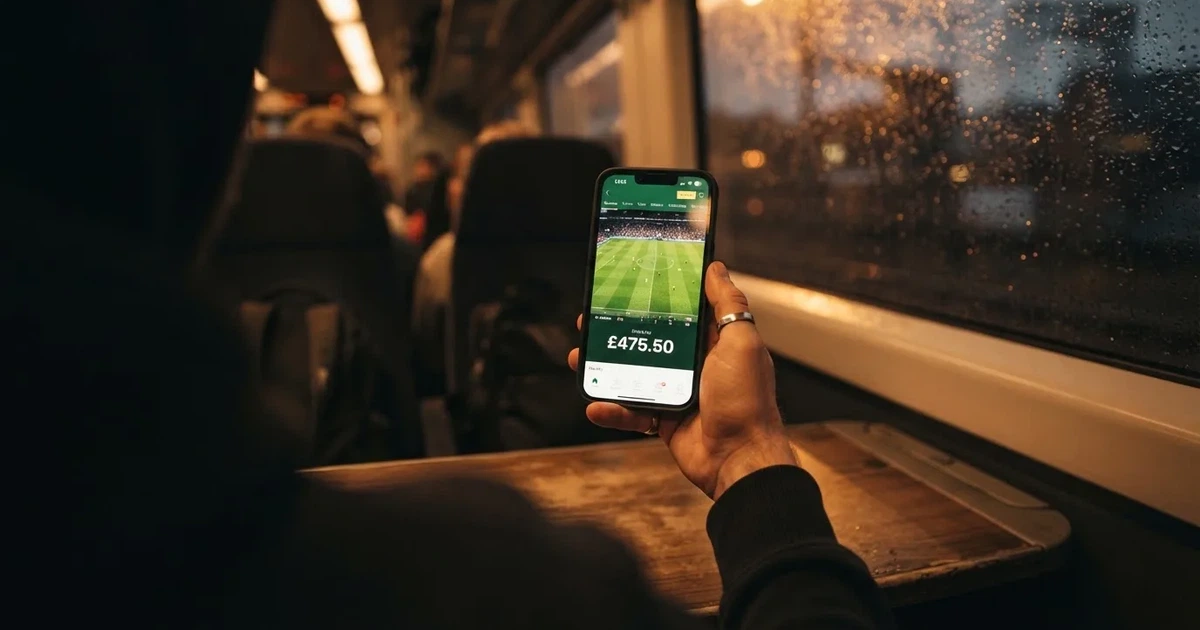
What “best” means for a touchscreen bookmaker
A punt on a phone is a punt on a website, and the same things decide whether either is worth using: the licence, the depth of the sportsbook, the speed of the cashier, and the friction at the withdrawal. The screen is a constraint, not a category. A betting app has to fit a betting slip into a thumb’s reach, keep live prices moving without draining the battery, and let a customer cash out a position in two taps instead of seven. The bookmakers below do that work to different standards, and the difference is mostly the everyday one — how the app feels at half-time on the bus, whether the login takes a fingerprint or a password, how fast the withdrawal lands.
The British regulator treats an app the same as a website. A Gambling Commission licence covers every remote channel an operator runs, which is why a brand can run a .com site and a .co.uk app from the same licence. The Commission’s public register is the source for everything that follows in this guide; each operator review below names the account number and the licence holder so the entry can be checked directly.

A “betting app” in the British market is therefore not a separate product. It is the same betting exchange, the same sportsbook and the same safer-gambling controls wrapped for a phone. What the screen adds is mostly access: a bookmaker’s app loads faster than a mobile browser on the same network, holds the login for longer, and pushes notifications when a price moves or a market settles. What the screen does not change is the price. The margin in a 1X2 market is the margin in a 1X2 market on the desktop, on the app and on the betting exchange’s terminal — and the cheapest price on a Premier League match on a Saturday afternoon is the cheapest price, not a different one because the bettor is on a phone.
How this shortlist was put together
Ten operators sit on the comparison below. Each one holds an active Gambling Commission remote licence for real-event betting, the standard category for a sportsbook, and each one runs a mobile app in the British App Store or on Google Play. Two of the ten — Paddy Power and Betfair — share the same parent group, but they appear as separate apps and serve different customer bases; one is a sportsbook and one is a betting exchange, and the way they handle a stake is different enough that a punt on one is not a punt on the other. The order is editorial; it is not a ranking of safety, of generosity or of who is likely to win.

A shortlist of ten is a working convenience, not a ceiling. The Commission’s public register lists hundreds of remote betting licences, and the British market is large enough that a brand a regular punter knows from a high-street shop may not appear here — Coral and Ladbrokes are under the same parent licence, for instance, and William Hill sits under 888’s UK licence after the 2022 combination. A reader who already uses one of those and is happy with it does not need this page to keep using it.
The criteria the comparison leans on are:
- The licence and the licensee behind it. The Commission’s public register, searchable by account number, lists the holder of the licence and the category it covers.
- The sports and markets the app actually carries. Football, horse racing and the major US leagues are universal; niche sports, eSports and novelty markets are not.
- The payment methods the cashier takes — and whether they include the ones the British market is moving towards, Apple Pay and Faster Payments.
- The safer-gambling tools the account screen exposes, from deposit limits to self-exclusion.
- The app’s own features, where they differ from the desktop site: Touch ID and Face ID login, push notifications, the app’s live-streaming rate, the in-play markets.
The betting app comparison
| Brand | Gambling Commission licence holder and account number | What the operator’s own terms state on the app |
|---|---|---|
| Dabble | Dabble Sports UK Ltd · 65677 | Social betting with a real-time feed, Copy Bets, group chats and Banter Channels; the operator pays 10p when another user copies a bet |
| Paddy Power | PPB Counterparty Services Limited · 39439 | Covers football, horse racing, boxing, rugby, tennis, golf, darts, snooker and Formula 1 |
| Betmaster | BM Solutions GB Ltd · 65699 | Covers football, cricket, horse racing, NFL and eSports markets on League of Legends and Dota 2 |
| Bar One Racing | Bar-One Racing Limited · 56516 | Irish independent bookmaker with shops across Ireland and horse racing sponsorships at Dundalk, Fairyhouse, Navan, The Curragh, Curraheen Park and Cork |
| BetGoodwin | Goodwin Racing Limited · 2927 | Sports welcome offer stated as a £15 free-bet bundle in three £5 parts, each on its own market |
| London Bet | Thistle Bet Limited · 66162 | Sports betting on football, tennis, horse racing, greyhounds, darts, golf, cricket, NFL, NBA, MLB and snooker; live in-play; Pragmatic Play casino slots alongside the sportsbook |
| Unibet | Platinum Gaming Limited, Gibraltar · 45322 | Operating since 1999; safer-gambling tools include deposit limits, a Player Profile test, product restrictions and self-exclusion; live chat and links to BeGambleAware, GamCare, GAMSTOP, Gambling Therapy and the BGC |
| Tote | TDCO Limited · 54779 | Pool betting — Placepot, Jackpot, Scoop6 and Quadpot — plus World Pool commingling with French PMU, US and Hong Kong pools |
| QuinnBet | QuinnBet (Gibraltar) Limited · 61011 | Free bets valid for seven days from credit; usable on any market at 1/2 (1.5) or greater up to 50/1; straight accumulators only, no Trixies, Patents or Yankees |
| Sporting Index | Sporting Index Limited · 27343 | Spread betting with a full account carrying up to £300 cashback on selected sports spread markets |
The table is the licence, the licensee and what the operator’s own App Store listing or help pages say about the app. It is not a feature matrix, because the British market has converged enough that most rows would read “yes” down the page: in-play, cash out, a bet builder, price boosts, the standard nine sports. Where the operators diverge is in the smaller details — which payment methods the cashier takes, whether the app holds a Touch ID login, what happens to the free bet if it loses — and those details belong in the operator reviews below the table.
What a Gambling Commission licence actually covers
A bookmaker that wants to take a stake from a customer in Great Britain — England, Scotland or Wales — needs a licence from the Gambling Commission, a non-departmental public body sponsored by the Department for Culture, Media and Sport. The Gambling Act 2005 sets out the framework; the Gambling (Licensing and Advertising) Act 2014 added the rule that has reshaped the market since 2014, which is that the licence is needed at the point of consumption. A Curaçao licence, a Malta Gaming Authority licence or a Gibraltar licence is not a substitute; an operator anywhere in the world taking a bet from a customer in Great Britain needs the Commission’s permission, and runs the licence categories the Commission lists. Northern Ireland is outside the Gambling Act 2005 and runs its own older framework, so the British mainland licence a brand advertises on a .co.uk site does not extend there.
The Commission’s public register is the place to check that a brand holds what it claims. It can be searched by business name, by trading name, by the account number that appears on the operator’s own page, or by the domain. A brand that holds a licence under one name and trades under another appears under the licence holder’s name on the register — PPB Counterparty Services Limited is the holder for Paddy Power, for example. Several brands can sit under one licence; Ladbrokes and Coral run under the same parent combination, and Paddy Power and Betfair run under the Flutter group. The Commission’s check is the source, not a brand’s own claim on its own website.
Five licence categories cover the bulk of the British remote market. Remote general betting standard (real events) is the category a sportsbook runs under. Remote general betting standard (virtual events) covers simulated events run by a Random Number Generator — virtual horse races, virtual football. Remote general betting limited is a smaller-stakes category. Remote pool betting is the tote’s category. Remote betting intermediary is the exchange’s category, and Betfair, Smarkets and Betdaq sit under it. A single licensee can hold several of these. A licence is not a guarantee of fairness and it is not a refund if a brand goes bust; it is permission to operate, the conditions under which the operator must operate, and the right of the Commission to enforce those conditions.
The Commission’s enforcement record is in its public action notices. Fines and licence reviews for social-responsibility failures, anti-money-laundering shortcomings and marketing breaches are published; the fact that a brand is being reviewed is itself published. The Commission’s regulatory action page lists the current cases and the outcomes. For a bettor, the practical read is that a brand running under one of these licences is bound by the LCCP — the Licence Conditions and Codes of Practice — and is subject to spot-checks, mystery-shopping and audits, and can lose its licence for a sustained breach.
The Act also creates offences. Providing gambling facilities in Great Britain without the licence the Act requires is an offence aimed at the operator, with a sentence on summary conviction of up to 51 weeks’ imprisonment, a fine up to level 5, or both (six months in Scotland). The Commission’s enforcement is mostly disruption rather than prosecution — cease-and-desist notices, search-engine referrals, work with registrars, hosts and payment providers. Court-order DNS blocking powers have been given to the Commission, or are about to be, but the question of whether ISP-level blocking is in operation as a standing rule is not the same as the power to seek one in a particular case, and a reader should not assume that an unlicensed site is blocked from a British connection. There is no offence aimed at a customer who bets on an unlicensed site: what the customer loses is the Commission’s protection, not a criminal record.
What a UK betting app has to do to be legal
The Commission’s safer-gambling conditions apply to every channel an operator runs. The four that touch the app directly:
- Age and identity verification before the first deposit. Since 7 May 2019 a licensed operator has to verify name, address and date of birth before the customer can deposit or gamble, including with a free bet or a bonus. The app cannot let a fresh account stake anything until that check has cleared. The age rating on the British App Store is 17+ because of the gambling content, but the licence condition is 18+ and is enforced by the operator, not the App Store.
- GAMSTOP, the multi-operator self-exclusion scheme. Every GB-licensed remote operator is in GAMSTOP, and the app has to check new sign-ups against the scheme. Self-exclusion periods are six months, one year, five years, or five years with auto-renewal; after the minimum period the exclusion stays in place for a further seven years unless the customer asks GAMSTOP to remove it. The rule covers apps as well as websites.
- The financial vulnerability check. Since 28 February 2025 a customer whose deposits minus withdrawals exceed £150 in a rolling 30 days triggers a public-record vulnerability check — bankruptcy, county court judgments, similar registers. It is not an income check, and it is not a credit-reference check.
- The deposit limit. Operators must offer a gross deposit limit on a fixed time frame. The first phase has applied since 31 October 2025; a second phase was postponed to 30 September 2026 and whether it is live is not established. The customer sets the limit; there is no state-set ceiling.
The Commission’s affordability checks — the press shorthand is “affordability” — are a separate, staged programme announced on 7 July 2026 with no start date. The policy is “announced, staged, no start date” rather than in force. A bettor who hears about a £500 or £1,000 monthly threshold should treat the threshold as not yet applicable.
One rule that does not depend on the safer-gambling code: credit cards are banned for gambling in Great Britain since 14 April 2020 (LCCP condition 6.1.2). The ban covers credit-card-funded e-wallet deposits too, which means a punter cannot route a credit-card stake through PayPal or Apple Pay. Debit cards, bank transfers and most e-wallets are not affected.
A licensed app therefore costs the bettor something that an unlicensed app does not: a verified name, a verified address, a verified date of birth, and a few seconds at sign-up while the operator runs the checks. The bettor gets something back: GAMSTOP, the Commission’s dispute route, the bonus cap, and the deposit-limit and vulnerability-check machinery. An unlicensed app costs none of that at sign-up and gives none of it back if a withdrawal stalls or a price is miscalculated.
Safer gambling on a British betting app
A licensed app carries four safer-gambling controls as standard, and the bettor’s account screen is where they live:
- Deposit limits. Set in the account, on a daily, weekly or monthly basis; the customer sets the limit, the operator enforces it, and an increase has a cooling-off period so a punt cannot raise the limit in the heat of a losing run.
- Time-outs. Short breaks from betting — 24 hours, a week, a month — that freeze the account without the GAMSTOP commitment.
- Reality checks and time reminders. Pop-up alerts while the app is in use, showing how long the session has been running and how much has been staked.
- Self-exclusion. The customer asks the operator to close the account for a chosen period. The exclusion is at this operator only; for the multi-operator version the customer signs up to GAMSTOP, the national scheme.
Beyond the in-app controls, the help lines a British punter can ring without going through the operator are:
- GamCare and the National Gambling Helpline, on 0808 8020 133, free from a British landline.
- GambleAware, the body that funds treatment and education.
- The NHS gambling clinics, free at the point of use.
- Gamblers Anonymous, the peer-support fellowship.
The Commission’s licensed operators link to these organisations from the responsible-gambling section of the app. The presence of the link is a check the Commission itself runs on the LCCP review.
A practical point on safer gambling that the app does not always spell out: the controls cover the betting and the casino sides of the same account together unless the app separates them. A punter who has set a £200-a-week limit on the sportsbook and then opens the casino tab in the same app will see the same total. Where the app separates the products — Unibet exposes product restrictions in the safer-gambling tools — a punter who only bets on sport can exclude casino without losing the sportsbook, and that matters to a customer who has a problem on one product and not the other.
Crypto and anonymity at licensed British bookmakers
A licensed British bookmaker is a verified-name business. The verification happens at sign-up and before the first deposit, which is why the idea of an “anonymous betting” app does not really apply to the GB-licensed market. A bettor on a .co.uk licensed app has been through the name, address and date-of-birth checks before a stake is accepted, which is the condition the LCCP requires.
A British bookmaker cannot legally take a stake without knowing the customer’s identity. The corollary is that a customer who wants to keep the betting off the bank statement — a common reason to want cryptocurrency — finds the option closed at the licensed end. The Commission’s licence conditions treat the operator as the party that has to know the customer, and that obligation runs through every payment route the cashier offers. Cryptocurrency deposits are not named in the licence conditions, but the conditions cover the operator’s duty under the money-laundering rules, and the operator’s practical read is that the verification has to happen at sign-up regardless of the funding source.
Some unlicensed sites accept Bitcoin, Ether and stablecoins, and they advertise on that basis. The trade the British punter is being offered is straightforward: verification off, consumer protection off, GAMSTOP off, the 10x bonus cap off, the Commission’s complaints route off. The funds sit on a Curaçao- or Costa Rica-incorporated balance with no British dispute-resolution body behind them; if the site refuses a withdrawal the bettor’s recourse is the regulator in the operator’s home jurisdiction, and the practical outcome is what it tends to be.
A punt that wants the speed and the pseudo-anonymity of a crypto deposit therefore is not looking for a UK-licensed app. The licensed app’s read of the same question is that the verification is the protection: the bettor is harder to impersonate, harder to chase, harder to defrauded. The unlicensed app’s read is the reverse: the bettor is harder to chase, harder to complain to a British regulator if the site withholds a withdrawal. Neither is a “safe choice” by default. The licensed one is the one a reader can check on the Commission’s public register.
Bonuses, free bets and what they actually cost
A welcome offer is the most-read paragraph on a betting app’s home page and the most-misleading line in the marketing. The headline number is the headline, not the deal. A £30 free bet on a market at 2.0 returns £30 of profit at the end, but only if it wins, and the stake is not paid back unless the operator states otherwise. A £10 cash bonus with a 10x wagering requirement needs £100 of qualifying bets before the bonus funds are withdrawable, and the qualifying bets must be at or above the minimum odds the terms name — typically evens (2.0) and not below.
The Commission’s bonus rules have moved. Since 19 January 2026 wagering requirements on bonuses are capped at 10x: a £10 bonus at 50x needs £500 of qualifying bets; under the cap no more than £100. The same rule bans mixed-product promotions, an offer that requires the punter to gamble on two or more product types such as betting, casino, bingo and lottery. A “bet on football to get free spins” structure is now off the table at a licensed app; the headline is a sportsbook headline or a casino headline, not a join-up. The cap is on the wagering condition. Whether it applies to a free bet with no wagering requirement, and any cap on the money value of a bonus, are not established in the published rules.
Two terms a punter should check before claiming:
- Minimum odds. A free bet that requires the qualifying bet to be at evens or longer cannot be cleared by betting on a heavy favourite at 1.10. The terms name the minimum in fractional form (1/2 = 1.5, evens = 2.0) or in decimal form (1.50, 2.00), and the difference between 1.5 and 2.0 is the difference between clearing the offer and not clearing it.
- Expiry. QuinnBet’s free bets are valid for seven days from credit. A free bet that lands on the Friday of a quiet racing week and expires the following Friday has not had a market to be used on. The expiry is the operator’s chosen window, and it is in the terms.
The offer headline a punter sees on the App Store listing is the marketing version. The terms the operator publishes behind it are the deal. A punter who reads only the headline has read only the marketing; a punter who reads the terms has read the deal. The two are not the same on any of the ten apps reviewed here.
Payments, deposits and withdrawals on a UK betting app
Three payment routes dominate the British cashier:
- Debit cards. Visa Debit and Mastercard Debit. Universal across the licensed apps, and the route a first-time punter is most likely to default to. Credit cards are banned for gambling at the licensed end and cannot be used to fund an e-wallet deposit either.
- Apple Pay. Available on iPhone, and the route a punter who has the card saved to the wallet will end up using most often. Faster than typing a card number; covers the bonus-eligibility rules the operator applies, because the underlying card is still a debit card.
- Bank transfer and Faster Payments. A bank-to-bookmaker transfer via Faster Payments, with the funds usually available in minutes. The route a punter takes when they want to move a larger sum or when the card deposit has been declined by the bank’s gambling block.
- PayPal. Available on most of the licensed apps, including bet365 and NetBet, and the route a punter takes when they want to keep the bookmaker’s transaction off the bank statement. PayPal’s own anti-gambling rules mean a withdrawal back to PayPal is not always available — the operator may pay back to the debit card instead.
A withdrawal on a licensed app is paid back to the same method the deposit came from, where the method supports a withdrawal. A debit-card withdrawal goes through Faster Payments and lands in minutes; a bank-transfer withdrawal is the same; an e-wallet withdrawal is also fast, with the operator running the payment as soon as the withdrawal is approved. The “fast payout” claim an app makes is the operator’s own measure, and what the bettor should look for is the method and the time the operator quotes in the help pages, not the marketing.
Two practical notes:
- A deposit block set up with the bank is not the operator’s decision. The major British banks now offer a gambling-block toggle on their debit cards, and the block is enforced by the bank, not the bookmaker. The block also applies to PayPal and to Apple Pay funded from the blocked card.
- The licensed app runs the KYC and the AML check at the first withdrawal as well as at the first deposit, and a withdrawal that triggers a source-of-funds review will be slower than the standard payout. The review is not optional for the operator.
The ten shortlisted operators
Each of the ten reviews below states the licence and the licensee as the Commission’s public register carries them, plus what the operator’s own App Store listing, help pages or terms state about the app’s subject — the markets, the safer-gambling tools, the payment methods, the welcome offer and the smaller features. The verdict at the foot of each review is the conclusion this guide reaches, and it answers the question the section above it has raised. Where the same point recurs across reviews — a bank statement, a withdrawal route — the sentence is not repeated: the heading words of the section that first carried it are enough.
Dabble — Copy Bets and a social feed
Dabble is run by Dabble Sports UK Ltd under Gambling Commission account 65677, in the remote general betting standard (real events) category. The app is built around a social feed: a real-time stream of bets other users are putting on, with Copy Bets that let a customer mirror another user’s stake in a single tap, group chats and Banter Channels that hang bets and conversation on the same screen. The operator pays 10p when another user copies a bet, which is the business model behind the social layer rather than a customer-facing payout.
The safer-gambling controls Dabble lists are deposit limits and cooling-off periods, with resources in the app and on its helpdesk. The app is built for British users and the licence is the British one. The Copy Bets feature is the difference: a punter who follows a tipster on the app can mirror the bet without typing it in, which is faster than the standard flow but takes the verification off — the bet is the followed user’s bet, with the follower’s stake attached. The commission and the spread between the tipster’s price and the follower’s are in the Coda terms.
Dabble is the social-betting app of the shortlist, and it is a popular choice for a punter who likes the Copy Bets structure. Few other operators run a social feed in the same way, so their customers generally bet in isolation.
Paddy Power — the high-street sportsbook on a phone
Paddy Power’s British app is run by PPB Counterparty Services Limited under Gambling Commission account 39439. The sportsbook carries football, horse racing, boxing, rugby, tennis, golf, darts, snooker and Formula 1, with the in-play grid and the cash-out button the operator has run on its website for years. The licence is the Flutter group’s British licence, which also covers Betfair, and the two apps sit under the same parent. They are separate products.
Paddy Power’s strength on the app is the markets: a Paddy Power app tends to have a price on more events in the British sporting calendar than most of the shortlist, with the specials the operator is known for — the price boosts on Premier League goalscorers, the non-runner markets on Cheltenham, the enhanced each-way places on the major festivals. The safer-gambling controls sit behind the account screen; deposit limits, time-outs and self-exclusion are all there. The licensee’s licence is current and the app is published by Paddy Power PLC.
Paddy Power is the high-street sportsbook of the shortlist, and it is a natural destination for a punter who already has an account on the desktop. The app essentially replicates the desktop experience in a smaller window, carrying the same prices and specials.
Betmaster — football, NFL and eSports
Betmaster is run by BM Solutions GB Ltd under Gambling Commission account 65699. The app’s listing carries football, cricket, horse racing, NFL and eSports markets on League of Legends and Dota 2, and it is the shortlist’s eSports entry. The sportsbook is otherwise a conventional British layout — football is the front sport, the in-play grid runs underneath.
Betmaster’s strength is the niche: a punter who wants League of Legends and Dota 2 markets at a GB-licensed operator, and does not want to open a specialist eSports site, has the markets here. The punter who has no interest in eSports will find the football and the racing a step behind Paddy Power or bet365, and the safer-gambling controls standard rather than exceptional. The licence has it on the Commission’s register in the remote general betting standard (real events) category.
Betmaster is the eSports app of the shortlist, and it is a strong option for a League of Legends or Dota 2 punter. Its market list is particularly distinct in this area.
Bar One Racing — Irish racing on a GB-licensed app
Bar One Racing trades as BAR 1 Betting, an Irish independent bookmaker with shops across Ireland and horse racing sponsorships at Dundalk, Fairyhouse, Navan, The Curragh, Curraheen Park and Cork. The British app is run by Bar-One Racing Limited under Gambling Commission account 56516. The sportsbook leans on horse racing — ante-post, the Irish meetings, the major festivals — and the price on the rest of the British sporting calendar is a smaller part of the offering.
Bar One’s strength is the racing: a punter who bets on Irish racing and wants a GB-licensed bookmaker for the in-play markets and the BOG (best odds guaranteed) finds the depth here. The punter who bets across sports will find the football and the racing a step behind the bigger names. Customers can access safer-gambling tools, such as deposit limits and self-exclusion, directly within their account profile.
Bar One is the Irish-racing app of the shortlist, and it is the home for a punter whose diary is dominated by Dundalk and the Curragh. Its sponsorship commitments underline its focus.
BetGoodwin — a £15 free-bet welcome bundle
BetGoodwin is run by Goodwin Racing Limited under Gambling Commission account 2927, one of the older account numbers on the Commission’s register. The sports welcome offer is stated as “Bet £10 & Get £15 in Free Bets”, made up of a £5 sports bet, a £5 acca and a £5 Sub-Cover bet, with each free bet usable on its own market under the operator’s terms. The licensee’s licence is current.
BetGoodwin’s strength is the small, plain-English offer: a £15 bundle in three £5 parts, with no big wagering multiple behind the headline. A punter who reads the marketing only sees the £15, and the terms that follow are the qualifying bet at the minimum odds and the 7-day window most free bets carry. The sportsbook is conventional — football, horse racing, the standard British calendar — and players manage their safer-gambling settings through the account section.
BetGoodwin offers a plain-English welcome offer and appeals to a punter who prefers a straightforward small offer upon first registration. A punter looking for a large headline offer may prefer to look elsewhere.
London Bet — sports and Pragmatic Play casino in one app
London Bet is run by Thistle Bet Limited under Gambling Commission account 66162. The app’s listing carries sports betting on football, tennis, horse racing, greyhounds, darts, golf, cricket, NFL, NBA, MLB and snooker, with live in-play betting and Pragmatic Play casino slots alongside the sportsbook. The British App Store listing rates it 17+, the licence is the Commission’s, and the app is published by Thistle Bet Limited.
London Bet’s strength is the combination: a punter who wants the sportsbook and the slots in one app, with the cashier holding both, finds it here. The sportsbook is otherwise a step behind the bigger names — fewer markets, fewer specials — and safer-gambling tools like deposit limits are available within the account interface.
London Bet is the sports-and-slots app of the shortlist, and it is a good fit for a punter who wants both in a single wallet. This dual-purpose setup is relatively unique among the featured brands.
Unibet — 25 years on, with the safer-gambling tools in front
Unibet states it has operated since 1999, and its UK site is run by Platinum Gaming Limited, Gibraltar, under Gambling Commission account 45322. The app carries the full sportsbook — football, horse racing, the British and European calendars — and the safer-gambling tools are listed explicitly: deposit limits, a Player Profile test, product restrictions and self-exclusion, with live chat support and links to BeGambleAware, GamCare, GAMSTOP, Gambling Therapy and the BGC.
Unibet’s strength is the depth and the long record: a brand that has been on the British market since 1999 has had a long time to build the safer-gambling controls and the customer-service operation, and the Commission’s public register has the account number for any reader to check. The app supports Face ID and Touch ID login on the supported devices, and the sportsbook is a step beyond the smaller operators on specials and in-play markets. The casino tab is alongside the sportsbook under the same wallet, and the product-restrictions safer-gambling control lets a punter exclude casino without losing the sportsbook.
Unibet is a long-standing brand in the shortlist, and it is a suitable choice for a punter who wants the safer-gambling controls located clearly within the sportsbook account.
Tote — pool betting and World Pool commingling
The Tote is run by TDCO Limited under Gambling Commission account 54779, in the remote pool betting category rather than the fixed-odds category the other nine sit under. The app’s listing carries Placepot, Jackpot, Scoop6 and Quadpot bets, plus World Pool commingling with French PMU, US and Hong Kong pools. The British pool-betting product is the State-owned Tote’s product, and the licence is a separate category from a sportsbook’s.
The Tote’s strength is the pool: a punter who bets on horse racing and wants the dividend on the Placepot or the Jackpot, with the dividend set by the pool rather than the bookmaker’s margin, finds the product here. The fixed-odds sportsbook is not the Tote’s product, and a punter who wants Premier League prices will find the depth smaller than at a sportsbook like Paddy Power. The safer-gambling controls are in the account screen.
The Tote is the pool-betting app of the shortlist, and it serves a racing punter who likes the pool format. Its focus on pool-betting gives it a different character to the fixed-odds specialists.
QuinnBet — free bets with a seven-day window and a 1/2 minimum
QuinnBet is run by QuinnBet (Gibraltar) Limited under Gambling Commission account 61011. The help pages state that QuinnBet free bets are valid for seven days from credit, can be used on any market at odds of 1/2 (1.5) or greater, with maximum odds of 50/1, and that straight accumulators are allowed but Trixies, Patents and Yankees are not. The seven-day window is shorter than the 30 days some operators run, and the minimum-odds line is explicit: the qualifying bet cannot be at odds shorter than 1.5.
QuinnBet’s strength is the plain-English free-bet terms: a punter who reads the help page has read the deal, and the qualifying-bet minimum is in both fractional and decimal form. The sportsbook is conventional — football, horse racing, the British calendar — and the safer-gambling controls are in the account screen. The licensee’s licence is current.
QuinnBet is the explicit-free-bet-terms app of the shortlist, and it is the one a punter who wants the qualifying conditions in front of the welcome offer wants.
Sporting Index — spread betting with up to £300 cashback
Sporting Index is run by Sporting Index Limited under Gambling Commission account 27343. The app is a spread-betting app, with a full account carrying up to £300 cashback on selected sports spread markets. Spread betting is a different product from fixed-odds: a stake is a unit-per-point position rather than a back-the-runner bet, and a losing run can exceed the stake. The Commission’s public register lists Sporting Index in the remote general betting standard (real events) category.
Sporting Index’s strength is the spread product and the cashback offer on a full account. A punter who understands spread betting and wants the GB-licensed spread bookmaker finds the product here; a punter who does not understand spread betting is not the customer. The safer-gambling controls are in the account screen, and the LCCP’s normal controls apply.
Sporting Index is the spread-betting app of the shortlist, and it is the one a punter who wants to bet on the index rather than the runner wants. The other nine do not run the spread-betting product.
Smaller apps worth knowing about
The Commission’s public register lists hundreds of remote licences, and the ten above are the editorial shortlist, not the whole market. A punter who already has an account with one of these may want to keep using it: bet365 is the official global betting partner of the UEFA Champions League, its app is described as the most downloaded sports betting app in the UK, and its accounts can be funded by debit card, PayPal and Apple Pay with Face ID login on the supported devices. William Hill runs 24/7 customer service through in-site messaging, with time reminders, time-outs and deposit limits as safer-gambling tools. Betfair Sportsbook combines in-play betting, Bet Builder, free live streaming of UK and Irish horse racing and football, and a 90 Minute Payout market that refunds the stake on selected markets if the match finishes goalless. BetVictor states about 80 years of experience as a bookmaker, with regular price boosts, acca offers and free bets on selected events. Spreadex combines fixed-odds and spread betting in one app, with one-click, auto and partial cash out, Bet Builder across fixed odds or spreads, and live streaming of UK and Irish horse racing, greyhounds, tennis, NFL and selected football; financial spread betting at Spreadex is regulated by the FCA for spread betting and by the Gambling Commission for fixed-odds betting, and the operator states that spread betting losses can exceed the deposit.
Smaller apps on the Commission’s register also serve a British punter. Kalooki Sportsbook is operated by Kalooki Sports Book Ltd (company number 12938274), licensed by the Gambling Commission under account number 57730, and is a GAMSTOP member. Midnite’s site cites Gambling Commission licence 101839 and shows in-play events, an acca builder, popular accas and price boosts with maximum-stake limits. Kwiff is licensed by the UK Gambling Commission and describes itself as a trademark operated by Spryme Ltd; the app has a 17+ App Store age rating. Smarkets’ app offers two-factor authentication, live charts and an order book view, a quick trade-out option and 24/7 live chat support. BetMGM UK is published by LeoVegas Gaming p.l.c. and lists Gambling Commission account number 39198. The 10bet app is published by 10bet Limited and states that 10bet.co.uk is licensed by the Great Britain Gambling Commission under licence 43173. NetBet supports Instant Payments to bank, Apple Pay, PayPal and debit card, with Face ID or Touch ID login. Lottoland UK’s app combines casino, lottery betting, sports betting and scratchcards, and is licensed by the Gambling Commission for customers in Great Britain; its current app welcome offer is casino-based, with a £20 stake on selected slots earning 100 free spins on Fishin’ Frenzy Even Bigger Fish with no wagering and a 30-day expiry running until 14 February 2027. London Bet’s app combines sports betting with Pragmatic Play casino slots and live in-play betting and is published by Thistle Bet Limited. Bet600’s app welcome offer requires at least five qualifying single bets of £10 or more at Evens (2.0) or greater within the first seven days of registration, after which one £10 free bet is credited. BetWright’s app is published by BW Operations Limited with a 17+ App Store age rating and also offers a casino, live dealer tables and online bingo. Fafabet supports Face ID or Touch ID login. Star Sports provides deposit limits, a Play Break facility and self-exclusion in My Account, with the app available in the UK and Ireland. Dabble provides deposit limits and cooling-off periods as safer gambling tools, with resources in the app and on its helpdesk.
A punter who finds a brand not on this page should check the Commission’s public register before installing the app. The register is the test.
Live betting, in-play and what the app adds
In-play betting on a GB-licensed app is the same product as in-play on the desktop: a grid of events with prices that move with the action, a cash-out button that lets the punter close the position before the market settles, and the bet-builder feature that combines selections from one match into one price. The app adds two things: speed, because the betting slip is two taps away from the home screen, and notifications, because the app can push a price move or a settled bet to the lock screen without the punter opening the app.
The price in an in-play market is the same price the desktop quotes, less the latency between the screen and the server. A punter on a 4G connection sees the price a few hundred milliseconds after the server does, and the in-play market moves fast enough that the difference can be the difference between getting 2.00 and not getting 2.00. The latency is the same on every operator; the speed of the app’s interface is the operator’s responsibility.
Cash out is the operator’s mid-market close of a position. The price is the operator’s mid, not the back-or-lay price on the exchange, and a punter who wants the tighter mid should look at the betting exchanges. The Betfair, Smarkets and Betdaq exchanges sit under the betting intermediary licence category rather than the sportsbook category, and the way they handle a position is different: the punter backs or lays, and the counterpart is another customer rather than the bookmaker. The Commission’s register lists the three exchanges separately from the sportsbooks, and the rules they operate under are the exchange’s own.
Live streaming on a British app is a feature of the bigger books. Betfair Sportsbook streams UK and Irish horse racing and selected football within the app, with a funded account or a bet in the last 24 hours as the eligibility condition. Spreadex streams UK and Irish horse racing, greyhounds, tennis, NFL and selected football. Other apps stream a smaller library. The stream sits behind the price on the same event, and the operator’s right to stream the event is licensed separately from the betting licence.
Frequently asked questions
Which apps are best for esports betting?
Betmaster carries eSports markets on League of Legends and Dota 2 at a GB-licensed operator, and it is the clearest esports entry on the shortlist. Other licensed apps carry eSports too; the Commission’s register treats esports like any other event, and the market depth varies by operator. A punter who bets on esports should check the operator’s specific game list before staking, because the depth on a single title varies more than the depth on football.
Is it best mobile apps for online betting?
A licensed app is the same product as a licensed website, and the differences are the screen, the speed and the login. A punter who wants the betting slip in two taps and the price move as a push notification has a reason to use the app; a punter who wants the bigger screen and the keyboard has a reason to use the website. The licence, the markets and the safer-gambling controls are the same on either channel. None of the ten apps reviewed above is “the best” — the right app is the one whose markets, payments and safer-gambling controls fit the punter’s betting.
What are the best apps for mobile sports betting?
The ten apps reviewed above are the editorial shortlist; the right one is the one that fits the punter. Paddy Power is the high-street sportsbook. Unibet is the longer-record app with the safer-gambling tools in front. Betmaster is the esports book. The Tote is the pool-betting app. Sporting Index is the spread-betting app. Dabble is the social-betting app. Bar One is the Irish-racing book. QuinnBet is the explicit-terms free-bet book. London Bet is the sports-and-slots app. BetGoodwin is the plain-English welcome offer. None is universally best.
How can it be checked that a bookmaker holds a Gambling Commission licence?
The Commission’s public register, on the Commission’s website, is searchable by business name, trading name, domain and account number. The account number is on the operator’s own licence page in the footer of its site or app, and the entry on the register names the licence holder, the licence category and the trading names covered. A brand whose entry cannot be found on the register is not licensed; the customer should not stake with it. The register is the whole test, and it is the source for the licence numbers and the licence holders in the table above.
How is the return on a bet worked out from the stake and the odds?
Return = stake × odds. Net profit = stake × (odds − 1). At decimal odds of 2.50 a £10 stake returns £25 (£10 × 2.50), with a £15 profit. A combination bet multiplies the odds of the legs into one price: three legs at 2.00, 3.00 and 4.00 carry a combined odds of 24.00, and a £10 stake returns £240, with a £230 profit if all three legs win. Fractional odds convert by dividing the numerator by the denominator and adding one — 5/1 is 5 ÷ 1 + 1 = 6.00 in decimal form, and an evens bet (1/1) is 2.00.
What is the bookmaker’s margin and how can it be seen in the odds?
The margin is what the bookmaker keeps of every unit staked on a market. For a two-outcome market the payout share is 1 ÷ (1/odds₁ + 1/odds₂), and the margin is 1 − payout share. A 1X2 market priced at 2.10 / 3.40 / 3.60 has a payout share of 1 ÷ (1/2.10 + 1/3.40 + 1/3.60) = 1 ÷ (0.4762 + 0.2941 + 0.2778) = 1 ÷ 1.0481 = 0.954, a margin of 4.6 %. The margin is in every price on the market, and a punter who compares two operators on the same event is comparing margins: a 4.6 % book is cheaper than a 6 % book, and a 4.6 % book on a £100 stake returns on average £4.60 less than a true 100 % book would. The margin is the book’s silent cut.
Payments & apps – Best Betting Tips
Content created by the «Best Betting Tips» team
