
Trixie bet explained: how the four-bet full cover really pays out
 Available in US
A Trixie is one of the simplest full-cover bets a British punter can place: three selections, four bets, and a return that depends on how many of those selections actually win. It is offered by every mainstream UK bookmaker, settles through the same maths as any other combination bet, and costs the bettor exactly four times the unit stake up front — even if one of the three legs loses. That last point is the one most newcomers miss, and it is the reason this page exists: not to advertise the bet, but to spell out what it really costs and what it really returns when the slip is settled.
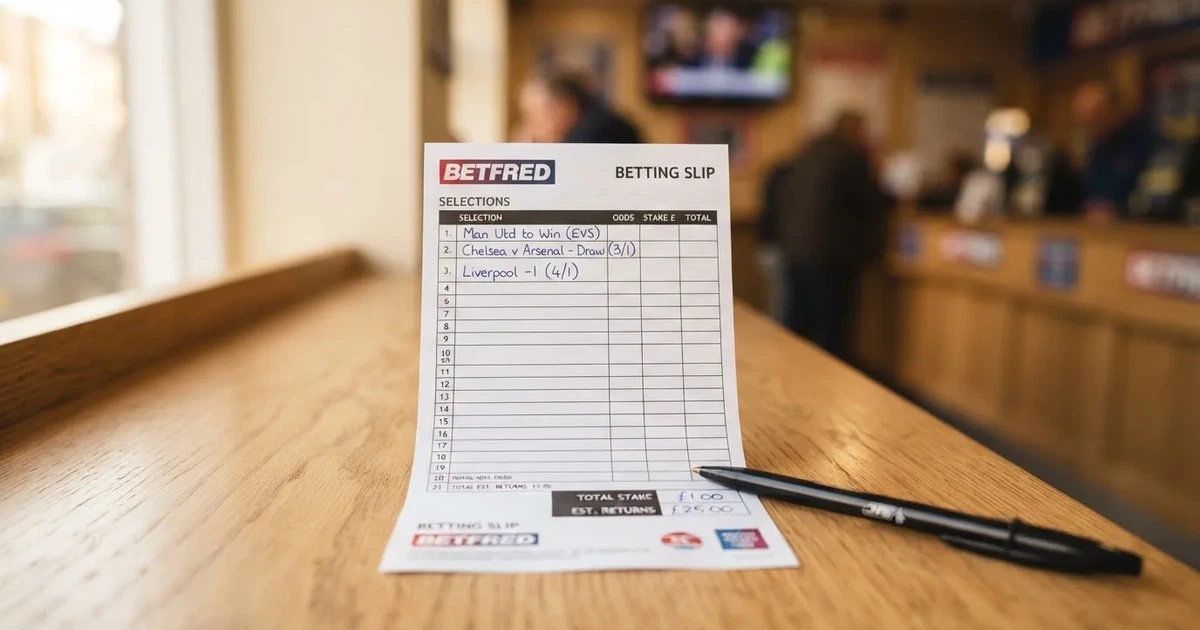
The page works through the legal framework a Trixie sits inside, the safer-gambling tools that apply to every licensed brand, how welcome offers interact with multiple-line bets, and where strategy advice meets the limits of what any system can actually do for a punter. A comparison of ten UK-licensed bookmakers follows, with a worked payout example to put numbers on the structure. The FAQ at the foot gathers the questions that come up most often when a bettor is weighing a Trixie against a straight accumulator.
Registered as of 27 October 2026; licence numbers and offer terms checked against the Gambling Commission’s public register and each operator’s own terms page.
The legal frame a Trixie sits inside in Great Britain
A Trixie is a fixed-odds multiple bet, and every fixed-odds multiple bet a British customer places sits inside the same regulatory regime. The framework is the Gambling Act 2005, and the body that enforces it is the Gambling Commission — a non-departmental public body sponsored by the Department for Culture, Media and Sport. The Act covers Great Britain, meaning England, Scotland and Wales; Northern Ireland runs on its own older law and is outside the scope of any licence the Commission issues.
Since the Gambling (Licensing and Advertising) Act 2014 took effect, an operator whose remote facilities are used in Great Britain needs a Commission licence no matter where the company itself is based. A Curaçao, Maltese or Gibraltar registration does not substitute. Several of the bookmakers reviewed further down — Unibet, Betfred, QuinnBet — are operated by companies seated in Gibraltar but run their UK business under a Commission licence; that is the legal route, not an offshore workaround. Where a brand holds only an offshore licence and serves British customers, it is operating outside the Act and the customer loses the protections the framework guarantees.
The Commission’s public register is searchable by business name, trading name, domain and account number, and a check against it is the only reliable test of whether a brand holds a valid licence. The register does not say which brands are “approved” or “recommended”; it confirms that the operator has passed the Commission’s checks and agreed to its licence conditions. Anyone who quotes a count of licensed operators is guessing unless they also quote the date the register was last accessed. None of the brands covered on this page is presented as the only licensed one, and a position in any comparison below is not a licence.
Three points worth pinning down because they shape every other paragraph on the page:
- A Trixie is a bet, not a financial product. Spread betting on financial markets is regulated by the Financial Conduct Authority under a different regime; Spreadex, which runs both, is the clearest example on the British market of a brand that splits its licences between the FCA (for spread betting) and the Commission (for fixed-odds betting). The spread side can lose more than the deposit; the fixed-odds side cannot.
- Identity is checked before the first deposit or bet. Since 7 May 2019, licensed operators have had to verify name, address and date of birth before a customer could put money in or place a bet, including when the bet is paid for with a free bet or bonus. There is no anonymous play at a licensed site.
- The legal minimum age is 18. CAP Code section 16 sets a separate rule on who may appear in a gambling advertisement, but it does not change the age at which a person may actually bet.
What may be bet on is set by each operator under its licence conditions, not by statute. There is no Commission list of permitted markets. Football, horse racing, tennis, golf, cricket, rugby, basketball, American football, darts, snooker, boxing, MMA, cycling, motor sport, virtual sports, esports, politics, TV outcomes and novelty markets are all available from at least one licensed brand. In-play betting is offered widely and is not unlawful; the controls on it are the operator’s own licence conditions, not a blanket rule. A claim that in-play betting is “unrestricted” as a legal matter is wrong — the framework allows it, the operator’s licence conditions shape it.
Tax is the operator’s problem, not the punter’s. A British customer pays no tax on betting winnings; General Betting Duty is a 15 per cent levy on the operator’s gross profits from general betting, and from 1 April 2027 a 25 per cent rate applies to remote bets inside that regime, with remote bets on UK horse racing, self-service betting terminal bets, pool betting and in-person betting staying at 15 per cent. That duty sits inside the odds; the price the punter sees already reflects it. Nothing on this page is tax advice, and a professional gambler should ask HMRC or an adviser.
Safer gambling tools every Trixie punter meets at a licensed bookmaker
The protections the framework guarantees are not abstract. They land on the betting slip itself, and a Trixie punter meets most of them before the first bet is placed. The Commission treats them as licence conditions rather than as suggestions, and a brand that drops any of them risks its licence.
GAMSTOP is the national multi-operator online self-exclusion scheme. Every online bookmaker licensed in Great Britain has been required to take part since 31 March 2020, so a self-exclusion set with GAMSTOP blocks the customer’s access to every GB-licensed online operator at once, not just to the brand the punter excluded from. Exclusion periods are six months, one year, five years, or five years with auto-renewal; after the minimum period the exclusion stays in force for a further seven years unless the customer asks GAMSTOP to remove it. GAMSTOP covers online sites and apps. The high-street betting shop self-exclusion scheme is separate.
Identity and age checks are the routine, not the exception. The bookmaker has to verify name, address and date of birth before the first deposit and before the first bet, including when the stake is a free bet. A punter who fails verification cannot deposit, cannot bet, and cannot withdraw winnings. The rule exists because the same checks are needed to meet anti-money-laundering duties, not because the Commission assumes every customer is acting in bad faith.
Financial vulnerability checks are a second layer added more recently. Under Licence Conditions and Codes of Practice condition 3.4.4, in force since 30 August 2024, a licensed remote bookmaker runs a public-record check — for example bankruptcy or county court judgments — once a customer’s deposits minus withdrawals exceed £150 in a rolling 30 days (the £150 trigger took effect on 28 February 2025). The check is a public-record search, not an income check and not a credit reference check. The Commission’s “financial risk assessments” — what the press calls affordability checks — were set out in a staged plan published on 7 July 2026; no start date has been announced, and the honest framing is “announced, staged, no start date”, never “in force”.
Deposit limits sit at the customer level. Operators have to offer a gross deposit limit on a fixed time frame under Remote Technical Standards 12, and a phased rollout has applied since 31 October 2025, with a second phase postponed to 30 September 2026. Whether the second phase is live depends on the date a check is run. There is no Commission-set cap on deposits or losses; the figure is the punter’s own choice, and the framework’s job is to make sure that choice is offered, not to make it for the punter.
Where to turn for help. GamCare runs the National Gambling Helpline and a network of treatment services across Great Britain. GambleAware funds research, education and treatment. The NHS runs specialist gambling clinics in several regions. Gamblers Anonymous runs peer-support meetings. None of these replaces a self-exclusion if gambling has stopped being a choice, and none of them is the right first call in a crisis — the Samaritans handle any mental health emergency, gambling-specific or otherwise.
The offshore alternative is the comparison that has to be made explicitly. A brand licensed in Curaçao, Malta or Anjouan and serving British customers is operating outside the Gambling Act 2005. Providing gambling facilities in Great Britain without the licence the Act requires is an offence under section 33, aimed at the operator. A customer who simply bets with such a brand commits no offence under the Act, but the protections are gone with it: no GAMSTOP coverage, no Commission complaints route, no approved dispute-resolution body, no British consumer redress if funds are withheld, no 10x cap on bonus wagering, no £150 vulnerability-check trigger. The phrase “legal to use” is the wrong one; “outside the British framework” is the right one. Enforcement runs through cease-and-desist notices, search-engine referrals, registrar and payment-provider work, and court-order DNS blocking powers the Commission has been given or is about to receive. ISP-level blocking is not in operation. The honest framing for a punter weighing the two routes is that licensed means checks, limits, GAMSTOP, the bonus cap, but also identity verification before the first bet; unlicensed means none of those protections, and the possibility of funds being withheld without recourse.
Welcome offers, free bets and the price of a Trixie on top of one
Multiple-line bets interact with welcome offers in ways the marketing does not flag, and a Trixie is one of the bets where the mismatch shows up most clearly. A Trixie is four bets, not one; the welcome offer’s terms usually cover one bet, and the question of whether a Trixie counts depends on the operator’s wording.
The general rule that applies to every welcome offer in Great Britain is the cap on bonus wagering requirements in force since 19 January 2026: wagering requirements on bonuses are capped at 10x the bonus, so a £10 bonus at 50x wagering (£500 of qualifying bets) is no longer allowed — under the cap no more than £100 of qualifying bets is permitted. Mixed-product promotions, where an offer requires gambling on two or more product types such as betting and casino together, are banned. The cap is on the requirement, not on the value of the bonus, and whether it applies to free bets with no wagering condition is not settled.
Free bets are not bonus cash. A free bet is a token that pays the winnings of a winning bet but does not return the stake: a £10 free bet at decimal odds of 4.00 settles as £30 returned, not £40. The stake is gone whether the bet wins or loses. Where a bookmaker describes an offer as a “risk-free” bet, it usually pays the losing stake as another free bet rather than as cash — that is a free bet on a free bet, and the second stake is also not returned on settlement.
How a Trixie fares inside those offers is set by each operator’s terms. QuinnBet is the clearest example in this comparison: its free bets are valid for 7 days from credit, can be used on any market at odds of 1/2 (1.50) or greater, with a maximum odds cap of 50/1; straight accumulators are allowed, but Trixies, Patents and Yankees are not. A QuinnBet free bet cannot be the stake on a Trixie under those rules; a Trixie punter holding a QuinnBet free bet is forced into single bets or accumulators instead. BetUK’s free bets exclude virtual sports, esports and non-UK/IE horse racing and apply a minimum-odds rule; a Trixie made of football selections meets the rule, a Trixie with an esports leg does not. The point holds across the comparison: a Trixie is four bets, and the operator’s free-bet rules almost always address one bet, so a punter holding a free bet has to check whether the operator’s terms include them.
The advertising rules around these offers are not law the punter enforces, but they shape what the punter sees. Advertising is regulated by the ASA under the CAP Code (non-broadcast) and the BCAP Code (broadcast), alongside the LCCP marketing conditions. CAP Code section 16 sets the tone: marketing must be socially responsible, must not be of strong appeal to under-18s, and no one who is or seems to be under 25 may be featured gambling or play a significant role in an advertisement. Since 1 August 2019, betting advertisements are not shown on TV from five minutes before a live sporting event to five minutes after it, before the 9pm watershed — the “whistle-to-whistle” rule, which is an industry code rather than statute. The Premier League clubs’ voluntary withdrawal of gambling sponsorship from the front of matchday shirts begins in the 2026/27 season; sleeves and hoardings remain.
What this costs in practice. A Trixie punter weighing a welcome offer is paying for the chance to keep the winnings, not the stake, and is locking four bets into the operator’s terms when the marketing material describes one. The maths on a £10 free bet at decimal odds of 4.00 lands as £30 returned if it wins, not £40, and the difference between £30 and £40 is the value of the stake the offer did not return. On a Trixie, four times that calculation runs — four bets at a stake the offer does not return, four chances for the offer to win back the winnings without returning the original outlay. The arithmetic of “free” and the arithmetic of “kept” are not the same arithmetic, and the gap is the offer’s real cost.
Strategy talk and the limits of any system bet
Strategy content sits in an uncomfortable place in this subject. The structure of a Trixie is mechanical: four bets over three selections, settled by the bookmaker’s standard combination math. The question of which three selections to pick, what price each one should be, and how a Trixie fits inside a betting bank is the part a punter controls, and it is also the part where honest writing has to draw a line.
The honest line. No system of selection beats a bookmaker’s margin over the long run. Every price on every selection carries an overround — the bookmaker’s margin is built into the odds — and a Trixie’s combined price multiplies four of those overrounds into one return. A punter choosing three selections at decimal odds of 2.00, 3.00 and 4.00 is not getting a 24.00 treble “for free”; the punter is getting a 24.00 treble minus the margin on each of the three singles, four times over. The arithmetic does not change because the bet is a system rather than an accumulator. No arrangement of selections inside a Trixie recoups that margin.
What the structure does do. A Trixie protects against one losing leg. Three of the four bets inside a Trixie — two doubles and the treble — depend on more than one selection winning, so one loss knocks out three of the four bets. The one bet that survives is the double that does not include the losing selection. A Trixie at £1 per line returns the winning double only, which on selections of 2.00 and 3.00 is £6, less the £4 total stake. A punter backing the same three selections as a single treble at £4 would lose the £4 stake outright. The Trixie’s structural advantage is real on the one selection that loses: a treble bettor loses everything, a Trixie bettor recovers part of the outlay.
What a strategy cannot do. A strategy cannot tell the punter which selections to pick. The market prices every selection according to the same probabilities the punter would have to estimate, and any pattern a punter spots in past results is a pattern the bookmaker’s market has already priced in. Form, head-to-head records, injury news, weather — these are inputs the bookmaker’s market already carries, and the price the punter sees is the market’s collective view after those inputs. The punter’s edge, if there is one, is small and inconsistent. Betting bank sizing — staking the same unit on every bet rather than chasing losses, keeping the unit small relative to the bank — is the part of “strategy” that does not depend on picking winners.
The role of a staking plan. A Trixie punter staking £1 per line costs £4 per Trixie. Staking £5 per line costs £20 per Trixie. The relationship between the stake and the bank is the part of the punter’s plan that decides whether the punter is still betting in a month. A punter who treats a Trixie as four singles plus insurance, rather than as one accumulator with a safety net, sizes the bank accordingly. A punter who treats a Trixie as a high-payout lottery ticket is staking more than the structure of the bet can carry.
What “trixie betting strategy” usually means online is a tipster service promising selections. The selection part is where the service cannot deliver. The structure part — understanding that a Trixie returns on two winners and pays best on three — is the part that any punter can verify on a betting slip. A punter who pays for selections is paying for a part that the service cannot honestly supply; a punter who reads the structure of a Trixie carefully is reading the part the bookmaker’s own help pages cover.
How a Trixie is built and settled
A Trixie is built from three selections. Those selections do not have to be from one event — a Trixie is just as often three selections from three different football matches as it is three horses from three different races. The bookmaker’s betting slip groups the three selections into the four bets automatically once the punter chooses “Trixie” from the multiple-line menu. The punter then sets the unit stake — the amount that goes on each of the four bets — and the bookmaker multiplies that unit stake by four to give the total stake.
The four bets inside a Trixie, written out for selections labelled A, B and C:
| Bet | What it needs to win |
|---|---|
| Double AB | Both A and B win |
| Double AC | Both A and C win |
| Double BC | Both B and C win |
| Treble ABC | All three win |
There are no singles. A Trixie that backs only one winner correctly returns nothing, because none of the four bets pays out on a single selection. A Trixie that backs two winners correctly returns the winning double — one of the three doubles above — with the other two doubles and the treble settled as losers. A Trixie that backs all three winners correctly returns all three doubles plus the treble.
The Patent is the related bet that includes the singles. A Patent covers the same three selections but adds the three singles for seven bets in total: three singles, three doubles and the treble. The single that wins pays the punter’s unit stake back, and a Patent punter with one winner recovers the stake on the single plus the stake on the losing doubles. A Trixie punter with one winner recovers nothing.
The wider family. A Yankee covers four selections across 11 bets (six doubles, four trebles and a fourfold); a Lucky 15 adds the four singles and the four-way single-stake-about for 15 bets in total; a Super Yankee, also called a Canadian, runs 26 bets across five selections (10 doubles, 10 trebles, five fourfolds and a fivefold); a Heinz runs 57 bets across six selections; a Goliath runs 247 bets across seven selections. A punter stepping from a Trixie to a Lucky 15 is moving from four bets on three legs to 15 bets on four legs; the same structure multiplies the cost by roughly 3.75 and the dependence on every leg winning by an order of magnitude.
A worked payout example, taken straight from a standard reference on full-cover bets, puts numbers on the structure. A Trixie on selections at decimal odds of 2.0, 3.0 and 4.0, with £1 staked on each of the four bets for a £4 total outlay, returns £50 if all three selections win: the three doubles pay 6.0, 8.0 and 12.0, and the treble pays 24.0. The punter’s profit on the £4 outlay is £46. The same three selections in a single treble at a £4 stake would return £24 if all three win, for a £20 profit. The Trixie’s edge over a treble on this scenario is real and substantial.
The same three selections with one leg losing — say selection B at odds of 3.0 loses — settle differently. The double AB loses, the treble loses, and the double BC loses because B is in it. The double AC wins at 2.0 × 4.0 = 8.0. The Trixie returns £8 on a £4 outlay for £4 profit. The same selections in a treble return £0 on a £4 outlay. A Trixie’s structural value on one loser is the return on the surviving double.
The same three selections with two legs losing — say A and B both lose — settle with no return. None of the three doubles and none of the treble pays out. The punter loses the £4 stake outright. This is the scenario a Trixie does not protect against, and the scenario the punter is most often forgetting when comparing a Trixie to a single bet.
What the punter sees on the betting slip. The bookmaker’s slip shows the four bets as four lines, each with the unit stake, the combined odds and the potential return. Once the punter confirms the bet, the slip is settled automatically as each leg is settled: a winning leg turns the doubles and trebles that contain it “live”; a losing or void leg turns the bets containing it into losers or voids. A void leg — a non-runner, a match postponed, a selection made void under the bookmaker’s rules — is treated as a winning leg at odds of 1.00 for the purposes of the multiples it appears in, which usually reduces the Trixie to the bets that do not include the voided selection.
Payout example: what a winning Trixie returns under realistic odds
The arithmetic of a Trixie is straightforward once the structure is clear, and putting a concrete example on the page is the cleanest way to show what the bet really pays. The figures here are illustrative, not quoted prices: a real betting slip would show whatever odds the bookmaker is offering at the moment of betting, and those odds carry the bookmaker’s margin.
The example: a punter backs three football selections at decimal odds of 1.50, 2.00 and 2.50, with a £1 unit stake on each of the four bets for a £4 total outlay. The selections are labelled X, Y and Z for ease.
| Bet | Odds if all legs win | Return at £1 stake |
|---|---|---|
| Double XY | 1.50 × 2.00 = 3.00 | £3 |
| Double XZ | 1.50 × 2.50 = 3.75 | £3.75 |
| Double YZ | 2.00 × 2.50 = 5.00 | £5 |
| Treble XYZ | 1.50 × 2.00 × 2.50 = 7.50 | £7.50 |
| Total return | £19.25 | |
| Total outlay | £4 | |
| Net profit | £15.25 |
All three legs win. The Trixie returns £19.25 for a £4 outlay. The same three selections in a single treble at £4 would return £7.50 × 4 = £30 for £26 profit — the treble pays more on this scenario because the stake is concentrated on the all-winners bet. The Trixie pays less on the best-case scenario than a treble, and pays more on the one-leggers-loses scenario.
One leg loses — say Y at odds of 2.00 loses. The double XY loses, the treble loses, and the double YZ loses. The double XZ wins at 1.50 × 2.50 = 3.75. The Trixie returns £3.75 on a £4 outlay for a £0.75 net loss on the round, with £3.25 of stake lost outright. A treble on the same three selections returns nothing on a £4 outlay. The Trixie’s structural advantage is the surviving double; its structural cost is the loss of £3.25 of stake on the bets that did not survive.
Two legs lose — say X and Y both lose. The doubles XY, XZ, YZ all contain at least one loser and settle as losers; the treble settles as a loser. The Trixie returns nothing on the £4 outlay. A treble on the same selections also returns nothing.
Where the margin sits. The combined odds on each multiple inside the Trixie carry the bookmaker’s margin from each of the three underlying singles, multiplied together. On this example, the three singles at 1.50, 2.00 and 2.50 imply a payout share on the 1X2 market of something under 100 per cent once converted to implied probabilities and summed across all outcomes; that payout share, less than 100 per cent, is the bookmaker’s margin. A Trixie punter is paying that margin four times over on every winning round. No arrangement of the bet recoups the margin.
What this costs. A punter placing one £4 Trixie a week at this stake level over a 52-week year stakes £208. If the punter’s selections are priced exactly at the bookmaker’s market view — which is what “no edge” looks like — the punter can expect to lose approximately the margin on every round. A 5 per cent margin across the season costs roughly £10.40 in expected loss over 52 rounds, before any consideration of the variance. A Trixie’s higher variance relative to singles means the punter sees longer losing runs and bigger single-round swings, even when the expected loss is unchanged.
Ten UK-licensed bookmakers that take a Trixie bet
The table below covers ten operators licensed by the Gambling Commission for remote general betting on real events. The columns are: brand, Gambling Commission account number and the licence holder named on the public register, and what the operator’s own terms say about the multi-line bet the Trixie is. Several of these brands run under group structures — BetUK under LeoVegas Gaming, BetMGM under the same — and the table records the licensed entity, not the marketing brand alone. None of these brands is presented as the only licensed one, and the order is not a ranking.
| Brand | Commission account (licence holder) | What the operator’s terms say on multi-line / Trixie bets |
|---|---|---|
| NetBet | 39170 (Netbet Enterprises Limited) | Bet Builder with instant dynamic odds on singles; Trixie is selectable on the betting slip as a multi-line combination of three selections. |
| QuinnBet | 61011 (QuinnBet (Gibraltar) Limited) | Free bets usable on any market at minimum odds of 1/2 (1.50), maximum 50/1; straight accumulators allowed, but Trixies, Patents and Yankees are excluded. |
| BetTom | 64959 (Bet Tom Limited) | Sports welcome offer pays 50 per cent back as a free bet of up to £50, with a parallel 50 per cent back as free slot funds for casino; full terms apply. |
| Dabble | 65677 (Dabble Sports UK Ltd) | Welcome offer pays £10 in free bets on a first £10 deposit for new customers, 7-day expiry, stake not returned, minimum odds apply. |
| BetUK | 39198 (LeoVegas Gaming PLC) | Free bets exclude virtual sports, esports and non-UK/IE horse racing; minimum odds apply; multi-line combinations available on the slip. |
| DAZN Bet | 48756 (DZBT Limited) | Cash Out, Bet Builder, daily bet boosts and in-play betting offered; cash-out availability is not guaranteed and bets stand if cash out is unavailable. |
| 10bet | 43173 (Blue Star Planet Limited) | Cash Out, Bet Builder and Live Streaming offered on football, tennis and horse racing markets; multi-line combinations supported. |
| Tote | 54779 (TDCO Limited) | Pool betting on UK and Irish horse racing sits alongside fixed-odds betting; Trixie-style combinations are available on the fixed-odds slip. |
| Betfred | 39544 (Petfre (Gibraltar) Limited) | Bet Builder, Sub Switch, Racing Post data, Extra Places, live casino and bingo offered; multi-line combinations supported on the slip. |
| Fitzdares | 400 (Fitzdares Limited) | Cash out, accumulators, Lucky 15s, specials and ante-post markets on horse racing, football, tennis, rugby, cricket, golf and American football, with in-play live odds. |
Two operators sit outside the table but on the same register. Spreadex runs fixed-odds betting under a Commission licence and spread betting under an FCA licence — the FCA side can lose more than the deposit; the fixed-odds side cannot. Kalooki Sportsbook runs under Kalooki Sports Book Ltd on Commission account 57730 and is a GAMSTOP member. Midnite operates under Commission account 101839 and shows an acca builder alongside in-play events and price boosts with maximum-stake limits. Unibet has run since 1999 under Platinum Gaming Limited on Commission account 45322. Kwiff is licensed by the Commission and operated by Spryme Limited. Lottoland UK holds a Commission licence for casino, lottery betting, sports betting and scratchcards. Copybet UK Limited runs under Commission account 53774. BetMGM UK runs under BetMGM UK Limited on the same LeoVegas group as BetUK (account 39198).
The QuinnBet line is the one that matters most for a Trixie punter. QuinnBet’s free bets are valid for 7 days from credit and can be used on any market at odds of 1/2 (1.50) or greater, with maximum odds of 50/1, and the terms exclude Trixies, Patents and Yankees explicitly. A punter holding a QuinnBet free bet cannot use it on a Trixie under those terms; the exclusion is a deliberate part of the offer, not an oversight. A punter weighing QuinnBet for a Trixie has to choose between using the free bet on a single, a double or a straight accumulator, or saving the free bet for a market the offer does cover.
The BetUK line is the second one to read carefully. BetUK’s free bets exclude virtual sports, esports and non-UK/IE horse racing. A Trixie punter backing three football selections is fine; a Trixie punter backing an esports leg, a virtual football match or a US horse race is in breach of the offer’s terms. The exclusion list is set in the offer’s small print, and a punter placing the bet without reading the small print has placed a bet the offer does not cover.
The Tote line is worth flagging because the Tote’s main product is pool betting on UK and Irish horse racing. Pool betting settles by pari-mutuel rules — the pool is divided among winning tickets after the operator’s take — and a Trixie is a fixed-odds combination rather than a pool bet. The Tote’s fixed-odds sportsbook does support multi-line combinations on the betting slip; the Trixie the punter places is on the fixed-odds side, not in a Tote pool.
The DAZN Bet line is worth flagging because the cash-out caveat applies to a Trixie punter as much as to any other bettor. Cash Out, Bet Builder, daily bet boosts and in-play betting are offered, but the cash-out availability is not guaranteed and a bet stands if cash out is unavailable. A Trixie punter planning to cash out a winning double during a match has to be ready for the cash-out button to disappear, and the bet to settle at full-time instead.
Verdicts, brand by brand. NetBet is the right fit for a punter who wants a Bet Builder for single-game multiples alongside a Trixie on three independent selections; the licence is solid and the offer terms leave multi-line bets intact. QuinnBet is the right fit for a punter sticking to singles, doubles and accumulators; a Trixie punter is excluded from the free-bet side of the offer and should not plan a Trixie staking plan around a QuinnBet free bet. BetTom is the right fit for a punter who treats sports and casino as one wallet — the parallel free bet and free slot funds structure makes that split explicit, with full terms applying to both halves. Dabble is the right fit for a casual punter placing a £10 first deposit to test the platform, with the 7-day expiry and stake-not-returned terms framing what the £10 in free bets is really worth. BetUK is the right fit for a football-focused punter staying inside the licensed markets the offer covers. DAZN Bet is the right fit for a punter who plans to use Cash Out and Bet Builder alongside the Trixie, with the caveat that cash out is not guaranteed. 10bet is the right fit for a punter who wants Live Streaming alongside the slip on football, tennis and horse racing. Tote is the right fit for a punter whose interest in horse racing pulls them into pool betting alongside a fixed-odds Trixie on the same sport. Betfred is the right fit for a punter who treats Bet Builder and Racing Post data as part of the workflow. Fitzdares is the right fit for a punter who wants Lucky 15s and specials alongside a Trixie, with a premium positioning that the wider market does not always match on price.
Frequently asked questions
What is a Trixie bet?
A Trixie bet is a fixed-odds combination bet on three selections, made up of four separate bets: three doubles and one treble. The punter sets a unit stake, and the total stake is four times that unit. A Trixie pays out on two winners (one double) or on all three winners (three doubles plus the treble). There are no singles, and a Trixie on a single winner returns nothing.
How does a Trixie bet work?
The bookmaker groups them automatically once the punter selects Trixie from the multi-line menu on the betting slip. The punter sets the unit stake, picks three selections, and the slip settles each leg in turn. A void leg is settled at odds of 1.00 inside the multiples it appears in, which usually reduces the Trixie to the bets that exclude the voided selection. A Trixie on one winner returns nothing because none of the four bets pays out on a single selection alone.
What does a Trixie bet cost?
A Trixie costs four times the unit stake. A £1 unit stake means a £4 total outlay; a £5 unit stake means a £20 total outlay. The cost is fixed regardless of how many selections win, and the cost is paid up front, not on settlement. The punter’s exposure on a Trixie that loses two legs is the full £4 (or whatever four-times-the-unit comes to); the exposure on a Trixie that loses one leg is reduced by the surviving double.
What is the return on a Trixie bet?
The return depends on how many legs win. All three win: three doubles plus the treble, total return is the sum of the four combined odds multiplied by the unit stake. Two legs win: the double that excludes the losing leg, total return is that double’s combined odds multiplied by the unit stake. One leg wins: nothing. Two or more legs losing means nothing. The £4 outlay example on selections at 1.50, 2.00 and 2.50 returns £19.25 if all three win and £3.75 if the 2.00 leg loses.
How can I check that a bookmaker holds a Gambling Commission licence?
The Commission’s public register at the official Gambling Commission site is searchable by business name, trading name, domain and account number. The register lists the licence holder, the licence categories (remote general betting standard real events, for a fixed-odds sportsbook) and the licence status. A brand holding only a Curaçao, Maltese or Anjouan licence and serving British customers is operating outside the Gambling Act 2005 and the customer loses the protections the framework guarantees.
Bet types & in-play – Best Betting Tips
Content created by the «Best Betting Tips» team
