
Super Heinz bets explained for 2026 — structure, payout and cost
 Available in US
A Super Heinz is a full-cover bet on seven selections. It is built out of 120 separate bets — every multiple from a double up to a seven-fold — and settles as 120 independent wagers, not as one combined stake. The headline number a reader meets first is the parameter and the payout shape, which is what this page works through before it turns to who offers one, what the rules cost, and where the reader checks a licence in Great Britain.
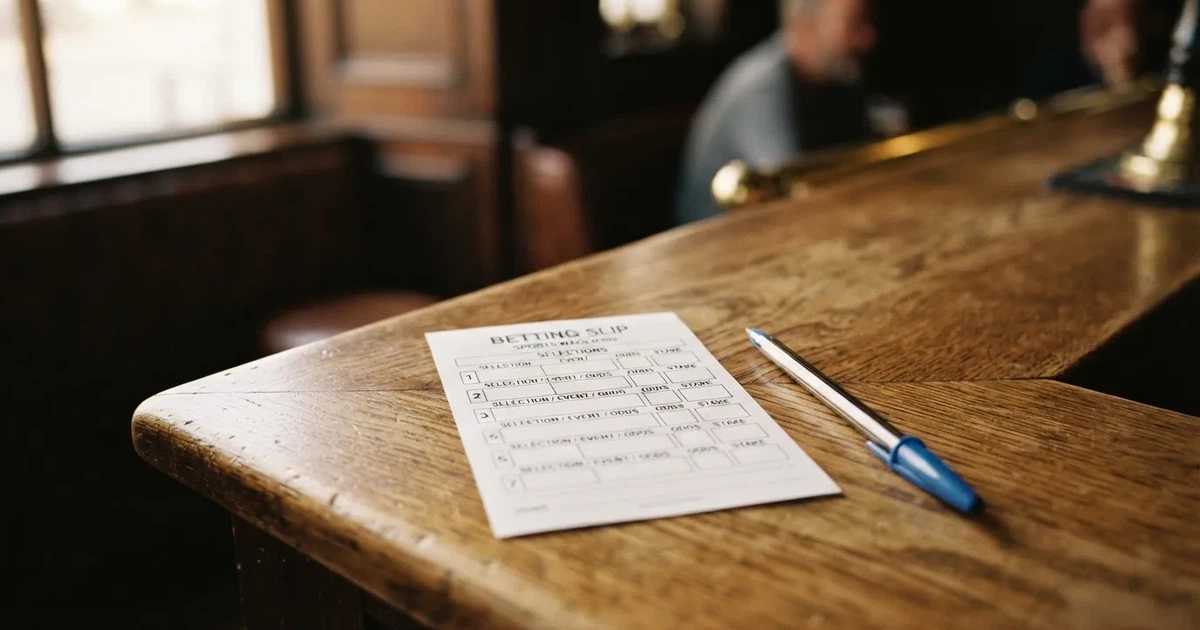
This page was assembled from the Gambling Commission’s public register and the operators’ own terms as those terms stood at 27 October 2026, and was checked against the Commission register. A specific odds price or margin only makes sense at the snapshot when it was taken; this page names that snapshot where one is stated.
How UK rules shape a Super Heinz bet
A Super Heinz is a wager type, not a market. The market a bettor picks sits underneath the structure: horse racing, football, tennis, the operator’s own specials. In Great Britain the bookmaker holds the licence for the category — remote general betting standard for real events is the one most online sportsbooks operate under — and the operator decides which bet types it offers and at what minimum and maximum stake. There is no statutory list of permitted bets; the rules live in each operator’s house terms and in the Gambling Commission’s Licence Conditions and Codes of Practice. That matters for a Super Heinz because the structure is heavy: 120 bets at £1 each is £120 of stake before a single leg has run.

The law that puts the bookmaker under the Commission’s authority is the Gambling Act 2005, amended by the Gambling (Licensing and Advertising) Act 2014 so that an operator using remote facilities in Great Britain needs a Commission licence wherever it is incorporated. A Maltese, Curaçao or Gibraltar registration is not a substitute for a Great Britain licence once customers here are being served. Section 33 of the 2005 Act makes providing unlicensed gambling facilities an offence — aimed at the operator, with a summary conviction that can carry up to 51 weeks’ imprisonment, a level 5 fine, or both (six months in Scotland). For the customer who bets with such an operator there is no equivalent offence on the statute book; the cost is the loss of the protections a licence brings (covered in the section on offshore operators).
Identity verification runs before the first deposit. Since 7 May 2019 the Commission has required name, address and date of birth to be confirmed before a customer can deposit or place a bet — including when the first action is to claim a free bet or a bonus. Minimum age is 18. That check is what makes a Super Heinz slip a record of who placed it, not just a wager. A Super Heinz at £2 a line costs £240 before it settles, and an account at that stake is one a Commission-licensed operator knows the name behind.
What a Great Britain licence buys the bettor — and what it doesn’t
A licence is the entry ticket, not a quality mark. A Commission licence means the operator offers GAMSTOP, runs a financial vulnerability check once a customer’s net deposits pass £150 in a rolling 30 days, applies the social responsibility code, holds customer funds in a segregated account, and answers to an approved dispute-resolution body when a complaint is raised. It also means a £500 cap on bonus wagering (since 19 January 2026, no bonus may carry more than 10x playthrough), and a ban on mixed-product offers that bundle a sportsbook bonus with casino, bingo or lottery play.

What the licence does not do: it does not insure the bet. There is no state compensation scheme that pays a bettor back when a bookmaker withholds winnings on its own terms. It does not set a maximum stake — operators run their own stake limits, and a heavy Super Heinz slip may run into one. And it does not make a bad bet a good one. The licence frames the contract; the contract frames the bet.
Safer gambling on a 120-line slip
The arithmetic of a Super Heinz pushes against the safeguards built around it. Twenty-one doubles, thirty-five trebles, thirty-five four-folds, twenty-one five-folds, seven six-folds and one seven-fold — that is 120 bets, settled one at a time. A £1 stake across every line is a £120 outlay; a £2 stake across every line is £240. The Commission does not cap stakes on sports bets, and an operator’s own limit may sit well below that on certain multiples, so the effective ceiling on a slip is often a house rule rather than a published maximum.
GAMSTOP is the national self-exclusion scheme, mandatory for every online operator licensed in Great Britain since 31 March 2020. A registered exclusion lasts a minimum of six months and can run for one year, five years, or five years with auto-renewal; after the chosen period, the exclusion continues for a further seven years unless the customer asks GAMSTOP to remove it. A Super Heinz bettor who has registered with GAMSTOP cannot place one at any GB-licensed bookmaker — not a single leg, not a free-bet line, not a token stake. The scheme covers online only; betting shops run their own multi-operator exclusion separately.
The financial vulnerability check is a softer intervention. It applies once deposits minus withdrawals exceed £150 in any rolling 30-day window — the threshold the Commission set in LCCP condition 3.4.4, in force since 30 August 2024 and adjusted in February 2025. The check is a public-record search (bankruptcy, county court judgments, similar) — not a payslip check, not a credit reference. A Super Heinz bettor on a hot streak who has been depositing more than they withdraw is the case it is built for.
The financial risk assessments — the affordability checks of the press — are announced, staged and have no start date. The Commission’s article of 7 July 2026 laid out a phased plan; this page treats them as a published policy, not as a rule in force today. Deposit limits, framed under Remote Technical Standard 12, sit on the same edge: the first changes have applied since 31 October 2025, a second phase was postponed to 30 September 2026, and whether that second phase is live is not established from the public record. The principle is the same in either phase — operators must offer a gross deposit limit on a fixed time frame — and a Super Heinz bettor who sets one is the customer that rule is written for.
Where the slip has gone wrong, the routes out are GamCare, the National Gambling Helpline, GambleAware, the NHS gambling clinics, and Gamblers Anonymous. None of them undoes a settled bet. What they do is make the next one the bettor’s to choose.
What a Super Heinz offer is worth under its own terms
A bookmaker’s welcome offer, free bet or price boost is the marketing the slip usually meets first. The headline is what it gives; the cost is the rule that turns the headline into the real number. The 19 January 2026 promotion rules cap wagering on a bonus at 10x, and ban mixed-product offers that bundle a sportsbook free bet with a casino or lottery play. A free bet itself is a separate kind of credit — the stake is rarely returned with a win, so a £10 free bet at 3/1 pays £30 of profit, not £40.
QuinnBet is one operator whose free-bet terms research carries in detail. QuinnBet credits free bets valid for 7 days from issue, usable on any market at odds of 1/2 (1.50) or greater, with a ceiling of 50/1 (51.00); straight accumulators count, but Trixies, Patents and Yankees do not. A Super Heinz is neither a straight accumulator nor a Trixie or Patent — it is a full-cover multiple — and the question of whether a free bet can be staked across the 120 lines of a Super Heinz is one the bettor answers from QuinnBet’s own help pages before staking. The pattern repeats across operators: a free bet is a set of conditions dressed as a gift, and the conditions are what decides whether it can fund a Super Heinz slip in the first place.
A Super Heinz at £2 a line is £240 of stake. That sum is the base against which any offer has to clear before it returns anything. A welcome offer of four £10 free bets — the BetMGM UK format that triggers on a first deposit and a first qualifying sports bet — is £40 of bonus against £240 of stake, which means the offer funds roughly a sixth of a single £2-per-line slip. The remaining £200 is the bettor’s own money, exposed to the bookmaker’s margin on every one of the 120 lines. The headline is the £40; the arithmetic is the £200 alongside it.
A price boost — Kwiff’s “Supercharge” being one example — adds a fixed extra margin on top of the existing price and does not change how the Super Heinz settles. A boost from 2/1 to 20/1 on a single leg does not turn a treble into something else; it moves one leg’s odds. On a 120-line slip with a boosted leg, the 119 lines that do not contain it settle at the original price, and one line — the seven-fold — carries the larger number end to end.
The cleanest reading of any offer is the rule sheet, not the banner. The audit below works through the operators the Commission register confirms as holding a Great Britain remote licence for sports betting; the value column is what each operator’s own terms carry, and the reader checks the latest wording on the operator’s help pages before staking.
Why no system turns a Super Heinz into a winning one
A Super Heinz is a structure that exposes the bettor to 120 independent chances of a return and 120 independent chances of a loss. It does not change the odds of any individual selection. A 6/4 (2.50) shot wins at the same rate whether it sits alone, in a double or in a seven-fold accumulator; what changes is the price of the bet that contains it. The seven-fold that includes it pays the product of all seven legs; the double that includes it pays the product of just two. The probability is the same; the stake is the same; the payout multiplies.
Betting systems and staking plans have been written around full-cover bets since long before online betting. A system that adds selections to chase a return, that lays off losers to lock in profit on a winner, that scales stakes after a loss to recover — none of them changes the underlying probability of each leg. The bookmaker’s margin sits inside every price and applies on every line; the more lines a slip carries, the more lines on which the margin is paid. A Super Heinz carries the margin 120 times. That is the cost of the structure, and it is the same cost whether the slip is chosen by a tipster service, a model, or by hand.
What does shift the expected outcome is the quality of the prices the bettor takes. A 5% margin across 120 lines is 120 × 0.05 = 6 units of expected loss per 120 units staked — an overall 5% drag on the slip as a whole, since the margin compounds multiplicatively across legs but the base stake is the same on every line. A 2% margin halves the drag to 120 × 0.02 = 2.4 units per 120 staked. The model that picks legs matters less than the operator that prices them, because the price is what is paid on every line, every time. The section on the bookmaker’s margin works the arithmetic.
A Super Heinz with three short-priced favourites and four longer-priced outsiders is a different shape from one with three long shots and four favourites — the seven-fold in the second carries a heavier payout, the doubles and trebles in the first run closer to evens. The bettor who picks the shape they want from the seven selections — short across the board, long across the board, or a mix — is making a real choice about the shape of the returns. The system that picks the legs for them is making that choice in their place.
How a Super Heinz is built, settled and paid out
The Super Heinz takes seven selections and pairs them up. With seven names to choose from, the number of two-leg combinations is 21 (one for every pair), the number of three-leg combinations is 35 (one for every trio), and the number of four-leg combinations is 35. The five-fold count is 21, the six-fold count is 7, and the seven-fold count is 1. The grand total of 21 + 35 + 35 + 21 + 7 + 1 = 120 is the size of the slip. There are no singles in a Super Heinz — every bet is at least a double — which is what the term “full cover” captures.
A stake of £2 a line on a Super Heinz is therefore £2 × 120 = £240 total. A stake of £1 a line is £120. A stake of 50p a line is £60. Every line settles independently, and the payout from the lines that win is added to the payout from the lines that lose — except the losing lines pay nothing at all. The net result is the sum of returns from the winning lines, less the stake across all 120 lines.
The arithmetic of a winning leg is straightforward. For a single bet, return = stake × odds; net profit = stake × (odds − 1). For a multiple, the odds of the legs multiply into one combined price, and the return on that line is stake × (odds of leg 1 × odds of leg 2 × … × odds of leg n). A treble at 2.00, 3.00 and 4.00 has a combined price of 24.00; a £10 treble returns £240, of which £230 is profit.
For a Super Heinz, the calculation extends to all 120 lines. A useful worked example is the one research carried: three illustrative selections at odds of 1/2 (1.50), evens (2.00) and 6/4 (2.50), and the pattern extends to seven legs. Take the seven-fold: it pays the product of all seven odds. The 21 doubles, the 35 trebles, the 35 four-folds, the 21 five-folds and the 7 six-folds each pay the product of the legs they contain. The reader who wants to know what a single seven-fold pays multiplies the seven prices together; the reader who wants to know what the whole Super Heinz pays in a given run settles each of the 120 lines in turn.
What a winning seven-fold produces is large, because the product of seven numbers above 1 grows quickly. Seven selections at an average price of 2.50 give a combined price of 2.50^7 ≈ 610. A £2 seven-fold returns roughly £1,220. The 7 six-folds each omit one selection and pay 2.50^6 ≈ 244; the 21 five-folds pay 2.50^5 ≈ 97.6; and so on down to the 21 doubles, each of which pays one pair’s combined price. The weighted average across all 120 lines is the average price of a random subset of the seven legs — heavily influenced by the smaller multiples, which are more likely to land than the seven-fold itself.
The worked example on the page uses the three illustrative prices above and a stake of £10 for the seven-fold, or £2 per line for the full Super Heinz. The result is a band, not a single figure: the seven-fold alone pays the product of all seven prices × £10 (the headline case); the average return across all 120 lines at the same prices is much lower, because most lines lose and the lines that win pay far less than the seven-fold. The reader who wants the upper end pays attention to the seven-fold; the reader who wants the typical outcome pays attention to the average.
A voided selection — a non-runner, a postponed match — drops the affected lines to the next multiple down. A void in a seven-fold turns it into a six-fold of the six remaining legs, and the six six-folds that contained the voided leg become five-folds. A void in a treble turns it into a double. The lines that did not contain the voided selection settle as written. The total stake on the voided lines is returned under most house rules; the rule for what happens to the stake on a winning line that lost a leg varies by operator.
Where the Super Heinz sits in the family of full-cover bets
The full-cover family runs by the number of selections. A Trixie uses three selections and runs four bets (3 doubles and a treble). A Yankee uses four selections and runs 11 bets (6 doubles, 4 trebles, a four-fold). A Canadian — also called a Super Yankee — uses five selections and runs 26 bets. A Heinz uses six selections and runs 57 bets. A Super Heinz uses seven selections and runs 120 bets. A Goliath uses eight selections and runs 247 bets. The pattern doubles roughly with each additional selection, because the number of combinations of n selections taken k at a time grows quickly as both n and k change.
Each step up the ladder adds one selection and roughly doubles the size of the slip. A £1 stake across all lines of a Goliath is £247; a £1 stake across all lines of a Super Heinz is £120; a £1 stake across all lines of a Heinz is £57. The seven-fold at the top of each structure is the headline payout, and the lines below it provide smaller returns that land more often. The Super Heinz sits in the middle of the family — heavy enough that the stake adds up quickly, light enough that it is offered as a named bet type by most major bookmakers.
Some operators do not offer the Super Heinz at all. Others offer it but cap the maximum stake at a level that makes the slip trivial. The check is the operator’s help pages or the betting slip itself; the structure does not exist in the abstract, only at the bookmaker that has chosen to list it.
What the bookmaker’s margin looks like in the odds
Every odds price carries a margin — the share of every unit staked that the bookmaker expects to keep, on average, across the market. For a two-outcome market like a tennis match, a fair price of 2.00 on each side implies a payout share of 1 ÷ (1/2.00 + 1/2.00) = 1 ÷ 1 = 1.00 — the bookmaker pays out exactly what it takes in, and keeps nothing. The moment either price dips below 2.00, the payout share falls below 1.00, and the gap is the margin.
A 1.91 / 1.91 line on a tennis match is a 1 ÷ (1/1.91 + 1/1.91) ≈ 0.955 payout share — a 4.5% margin. A 1.80 / 2.20 line on a tennis match is a 1 ÷ (1/1.80 + 1/2.20) ≈ 0.990 payout share — about a 1% margin. The bigger the favourite, the more the underdog price inflates to compensate; the result is a margin that sits inside both prices.
For a three-outcome market like a 1X2 football match, the calculation is the same with three prices instead of two. A 2.10 / 3.40 / 3.60 line gives a payout share of 1 ÷ (1/2.10 + 1/3.40 + 1/3.60) ≈ 0.946 — a 5.4% margin. A 2.00 / 3.00 / 4.00 line gives a payout share of 0.923 — a 7.7% margin. The bookmaker’s margin on football 1X2 typically sits between 2% and 8%, depending on the operator and the match; it inflates further on minor leagues and on exotic markets.
For a Super Heinz, the margin compounds across each leg of each line. A 5% margin on a single leg costs 5% of stake; a 5% margin on a double costs 5% × 2 = 10% of stake on average across that line; a 5% margin on a seven-fold costs 5% × 7 = 35% of stake on average across that line, before compounding of the prices. The combined effect across all 120 lines is what the operator keeps of every Super Heinz slip, in the long run, before the variable of which legs win. It is the same margin as the single-leg market, paid 120 times.
The place to look is the odds on the betting slip itself. A fair 2.00 on each side of a two-outcome market is the exception, not the rule. The reader who wants a low margin looks at the price of the favourite on a one-sided market (a tennis match, a basketball handicap) and chooses the operator that offers the closest to 2.00. The reader who wants a high payout on a long shot accepts the inflation on the underdog side as part of the cost.
How the ten operators compare on the Super Heinz
The table below sets out the ten operators the Gambling Commission’s public register confirms as holding a remote betting licence for Great Britain. The second column carries the licence number and the licence holder from the Commission’s record; the third column carries what the operator’s own terms state on the bet type, the offer or the feature the rest of the page is built around. The reader checks the latest wording on the operator’s own pages before staking.
| Operator | Licence and holder | Terms on bet types, offers and features |
|---|---|---|
| Ladbrokes | Commission account 54743; LC International Limited | Odds boosts on horse and greyhound bets, Best Odds Guaranteed on UK and Irish racing, in-play betting and Acca Boosts |
| BetMGM | Commission account 39198; LeoVegas Gaming PLC | Sports welcome offer of four £10 free bets on deposit and first qualifying sports bet within 7 days, valid 7 days with minimum odds and opt-in |
| NetBet | Commission account 39170; Netbet Enterprises Limited | Daily Boosts, Profit Boosts and free bet offers; Bet Builder with instant dynamic odds; sports stats for major leagues |
| Fitzwilliam Sports | Commission account 48760; SBKI Limited | Prices based on Oddschecker’s average price for each selection; Apple and Google mobile apps |
| Fitzdares | Commission account 400; Fitzdares Limited | Cash out, Lucky 15s, accumulators, specials and antepost markets on horse racing, football, tennis, rugby, cricket, golf and American football; in-play live odds |
| Kwiff | Commission account 44448; Eaton Gate Gaming Limited | Supercharge feature can instantly boost the odds on a bet, from 2/1 to 20/1 on a single example, applicable to single or multi bets on any sport |
| Octobet | Commission account 62545; Octopus Game Limited | Best Odds Guaranteed on UK and Irish horse racing, up to £150 per customer per race |
| Matchbook | Commission account 39504; Triplebet Limited | Betting exchange where customers bet against other users; Bet Builder, multiples, in-play betting and live streaming of horse racing and greyhounds |
| Betfred | Commission account 39544; Petfre (Gibraltar) Limited | Bet Builder, Sub Switch, Racing Post data, Extra Places, live casino and bingo |
| QuinnBet | Commission account 61011; QuinnBet (Gibraltar) Limited | Free bets valid for 7 days from credit, usable on any market at 1/2 (1.50) or greater, ceiling 50/1 (51.00); straight accumulators count; Trixies, Patents and Yankees do not |
A Super Heinz is a multiple-bet structure, and the operators list it under different names and conditions. Some operators list the Super Heinz as a named bet type on the slip itself; others build it as a multiple across seven selections but do not flag it as a “Super Heinz” button. The reader who wants to place one opens the betting slip, adds seven selections, and looks for a multiple-bet option that includes the seven-fold and every combination below it; the named button is a convenience, not a requirement.
Ladbrokes
Ladbrokes runs on Commission account 54743 under LC International Limited. Its UK offer centres on horse and greyhound betting, with odds boosts on those sports, Best Odds Guaranteed on UK and Irish racing, in-play betting and Acca Boosts across the sportsbook. A Super Heinz across seven racing selections is well within the operator’s coverage, and the BOG promise applies to the singles and multiples on UK and Irish racing that the slip contains. The verdict for a Super Heinz bettor: a strong choice when the seven selections are mostly horse races, because the BOG protection applies on every line that contains a winner.
BetMGM
BetMGM runs on Commission account 39198 under LeoVegas Gaming PLC. The sports welcome offer is four £10 free bets — two on football accumulators of four or more selections, two on sports multiples of two or more — for new UK customers who deposit £10 or more and place a first qualifying sports bet within 7 days. The free bets are valid for 7 days from credit, with minimum odds and an opt-in requirement. A Super Heinz bettor who qualifies for the welcome offer can use the two sports-multiples free bets on lines from the slip, though the four-selection accumulator free bet cannot stretch to cover the seven-fold directly. The verdict: the welcome offer is a thin fit for a 120-line slip — four free bets at £10 each is £40 against £240 of stake at £2 a line — and the bettor who values the offer funds a single small Super Heinz rather than the full structure.
NetBet
NetBet runs on Commission account 39170 under Netbet Enterprises Limited. The operator lists Daily Boosts, Profit Boosts and free bet offers across the sportsbook, alongside a Bet Builder with instant dynamic odds and sports stats for the major leagues. A Super Heinz across seven football selections is well supported, and the Bet Builder gives the bettor a way to construct same-match combinations that feed the multiple. The verdict: a useful pick for a football-heavy Super Heinz where the bettor wants market-specific boosts on individual legs.
Fitzwilliam Sports
Fitzwilliam Sports runs on Commission account 48760 under SBKI Limited. The operator bases prices on Oddschecker’s average price for each selection — a model that gives the bettor a price close to the market consensus but not necessarily the best available. Mobile apps are available on Apple and Google. A Super Heinz bettor who picks an operator for price discipline will find Fitzwilliam Sports competitive on major-market legs and ordinary on minor-market legs. The verdict: a fair-priced book for the centre of a Super Heinz slip, and a less interesting pick for the long-priced outsiders at the edges.
Fitzdares
Fitzdares runs on Commission account 400 under Fitzdares Limited. The app offers cash out, accumulators, Lucky 15s, specials and antepost markets on horse racing, football, tennis, rugby, cricket, golf and American football, with in-play live odds. A Super Heinz bettor who mixes sports across the seven selections finds the depth of coverage useful — every sport listed is a leg that can sit on the slip. The verdict: a credible pick for a mixed-sport Super Heinz, with antepost and specials adding shape to the seven-fold at the top.
Kwiff
Kwiff runs on Commission account 44448 under Eaton Gate Gaming Limited. The Supercharge feature can boost a bet’s price instantly, the operator’s own example being 2/1 to 20/1, and applies to single or multi bets on any sport. For a Super Heinz, a Supercharge on one leg moves that leg’s price across all the lines that contain it — the seven-fold and the six-folds and the five-folds and so on. The verdict: a strong choice when one leg of the Super Heinz is being backed heavily and the bettor wants a larger payout on the lines that include it, and a marginal choice on legs that the boost does not touch.
Octobet
Octobet runs on Commission account 62545 under Octopus Game Limited. The operator offers Best Odds Guaranteed on UK and Irish horse racing, capped at £150 per customer per race. The cap limits the upside on a single race, but a Super Heinz spread across seven different races sees the cap on each line separately. The verdict: a sensible pick for a horse-racing-heavy Super Heinz where the BOG protection matters on the favourites, less useful on exotic selections outside UK and Irish racing.
Matchbook
Matchbook runs on Commission account 39504 under Triplebet Limited. It is a betting exchange — customers bet against other users, with Bet Builder, multiples, in-play betting and live streaming of horse racing and greyhounds. A Super Heinz at an exchange settles the same way as at a traditional bookmaker, but the prices reflect the back-and-lay activity of the exchange’s users rather than a single bookmaker’s margin. Exchange margins are typically tighter than bookmaker margins on major markets, wider on minor ones. The verdict: a solid home for a Super Heinz bettor who wants a transparent margin on the major-market legs.
Betfred
Betfred runs on Commission account 39544 under Petfre (Gibraltar) Limited. The app carries Bet Builder, Sub Switch, Racing Post data, Extra Places, live casino and bingo. Extra Places is a horse-racing promotion that pays on extra finishing places beyond the standard each-way terms; a Super Heinz that contains Extra Place races has those lines settled on the enhanced terms. The verdict: a strong fit for a Super Heinz with several horse-racing legs and a Sub Switch selection, where the operator’s tooling saves time on a 120-line slip.
QuinnBet
QuinnBet runs on Commission account 61011 under QuinnBet (Gibraltar) Limited. Free bets are valid for 7 days from credit, usable on any market at 1/2 (1.50) or greater with a ceiling of 50/1 (51.00); straight accumulators count, Trixies, Patents and Yankees do not. A Super Heinz is a full-cover multiple and falls outside the straight-accumulator definition, so a QuinnBet free bet on a Super Heinz line is one the bettor checks against the operator’s help pages before staking. The verdict: pick QuinnBet if you are ready to read the bonus rules carefully before placing your stake.
What an offer actually pays — a worked example
The three illustrative prices research named are 1/2 (1.50), evens (2.00) and 6/4 (2.50). For a single seven-fold accumulator at those three prices plus four others chosen to give a representative spread, the calculation multiplies the seven odds into one combined price. Taking seven selections at an average price of 2.50 gives a combined seven-fold price of about 610. A £10 stake on the seven-fold alone returns £6,100, of which £6,090 is profit; a £2 stake per line on the full Super Heinz at the same prices has £480 at stake and returns whatever the 120 lines settle at — most of them losing, the winning ones ranging from a double’s £5 return up to a seven-fold’s £1,220 return.
The result is a band, not a single figure. The lower end of the band is the total stake — £120 at £1 a line, £240 at £2 a line, £480 at £2 a line on a higher-priced spread — with nothing returned because every line loses. The upper end is the seven-fold’s payout plus whatever smaller multiples land: in a strong week, every double lands and several trebles land as well, lifting the payout into four figures. The headline number the bettor reads is the seven-fold, because that is the largest single payout on the slip; the typical outcome is somewhere between the stake and the seven-fold, with most weeks closer to the stake end than the seven-fold end.
The figure that does not appear in the result is what the bettor keeps. The bookmaker’s margin takes its share on every line — a 5% margin on a 120-line slip costs roughly £6 per £120 staked, a 2% margin costs about £2.40 — and that cost is paid in full before the variable of which legs win. The reader who runs a Super Heinz every week on the same operator pays the margin 120 times every week.
How the Super Heinz settles in practice
The mechanics of settlement are simple. Each of the 120 lines settles independently once its constituent legs have run. A winning leg in a multiple is one that wins outright; a leg that places in an each-way market pays the place part of the each-way terms, and a leg that loses pays nothing. A voided leg drops the affected lines to the next multiple down, as the section on how a Super Heinz is built covered above.
The order of settlement matters for cash out. A bettor who cashes out a Super Heinz early — after five of seven legs have run, say — receives the current cash-out value of the slip at that moment, which is the bookmaker’s estimate of the remaining unsettled lines’ expected payout. The cash-out value is usually below the expected value of letting the slip run, because the bookmaker’s margin sits inside it. A Super Heinz that has five winning legs and two to run is a different proposition from one with three winning legs and four to run, and the cash-out value reflects that.
The each-way extension is available on some operators for some markets — typically horse racing. Each-way doubles, trebles and larger multiples double the stake on the affected lines (because each-way is two bets of equal stake: a win bet and a place bet), so a Super Heinz with each-way on every leg is 240 bets, not 120, and the stake doubles. The place part of each leg pays at a fraction of the win price (typically 1/4 or 1/5 of the odds for horse racing, depending on the number of runners), so the place portion of a Super Heinz each-way line is much smaller than the win portion.
The seven-fold accumulator at the top of the slip is the bet that pays the most when it lands, and the bet that lands the least often. Seven legs at an average win probability of 50% gives a seven-fold win probability of 0.5^7 ≈ 0.78%, or roughly one in 128. A Super Heinz with seven favourites has a higher seven-fold probability and a lower payout; a Super Heinz with seven long shots has a lower seven-fold probability and a much higher payout. The shape of the slip is the bettor’s to choose.
The shape of a Super Heinz — what to put on it
Seven selections is enough to build a real shape. The most common shape is a mix: three or four strong favourites and three or four outsiders. The seven-fold in this shape pays a moderate combined price and lands occasionally; the smaller multiples land often. A pure-favourites Super Heinz has a high seven-fold probability and a low payout — every double pays close to evens — and a pure-outsiders Super Heinz has a low seven-fold probability and a high payout.
The mix that suits a small-stake bettor is the mixed shape: the favourites’ doubles and trebles pay the smaller lines often enough to keep the slip active, and the outsiders lift the seven-fold into a number worth waiting for. The mix that suits a large-stake bettor who wants the seven-fold headline is the pure-outsiders shape: the smaller lines mostly lose, and the slip pays only on the rare week that everything lands. The right shape is the one the bettor can afford to wait for.
The number of selections is fixed at seven. The variety — same sport, mixed sports, racing across meetings, football across leagues — changes how the slip settles. A racing Super Heinz across seven races at one meeting settles quickly (all races run within hours); a football Super Heinz across seven matches across a weekend settles over two or three days; a long-range Super Heinz with antepost selections may run for weeks. The bookmaker’s margin is the same on every leg regardless of the sport; the variance on each leg is higher on the longer-range, more uncertain markets.
The bookmaker’s own Bet Builder is a way to construct same-event selections that feed a Super Heinz, but it is not a Super Heinz by itself. A Bet Builder on a single football match is a multiple within that match; a Super Heinz needs seven distinct events. The Bet Builder sits as one leg of the seven; it is not the slip.
What the Super Heinz costs the bettor — and the operator
The cost to the bettor is the stake across all 120 lines, multiplied by the bookmaker’s margin per line. A £2-per-line Super Heinz costs £240 of stake, and a 5% margin costs £240 × 0.05 = £12 of expected loss on the slip as a whole. The variable of which legs win sits on top of that fixed expected loss. The bettor who runs a Super Heinz every week for a year pays £240 × 52 = £12,480 of stake and roughly £624 of expected loss — the stake back is what the winning lines return.
The cost to the operator is the inverse: the operator keeps the £624 on average, and pays out the £11,856 to the bettors whose lines win. The operator’s risk is concentrated on the weeks when many lines win — the big-race weekends, the accumulator-friendly football coupons — and a Super Heinz-heavy week can pay out heavily on the seven-folds and the larger multiples that land. The bookmaker’s margin is the cushion that absorbs the variance; the larger the margin, the more variance the operator can absorb, and the larger the expected loss the bettor pays.
The cost of the welcome offer is on top. A £40 welcome package against a £240 stake is 16.7% of stake — a real saving if the bettor clears the offer’s terms, and a real loss if the bettor stakes the £40 on lines that lose. The 10x wagering cap that took effect on 19 January 2026 means a £10 bonus now needs £100 of bets to clear, and a £40 bonus needs £400 of bets. A £2-per-line Super Heinz at £240 of stake does not cover a £400 turnover requirement; the bettor who combines the welcome offer with the Super Heinz clears the turnover on additional bets beyond the slip.
Where to check a Great Britain licence
The Gambling Commission’s public register is the whole test of who holds a Great Britain remote betting licence. The register can be searched by business name, trading name, domain or account number, and the entry lists the licence categories the operator holds and the trading names the licence covers. The check is free, the register is online, and the entry’s “last updated” date is the date to use for any specific claim about a brand’s licence status.
A brand that holds a Commission account is licensed to take bets from customers in Great Britain; a brand that does not is not, regardless of where it is incorporated. A Maltese, Curaçao or Gibraltar registration is not a substitute. The Commission’s enforcement on unlicensed operators is disruption rather than blocking — cease-and-desist notices, search-engine referrals, registrar and host work, payment-provider pressure, and a court-order DNS blocking power that has been granted or is imminent. ISP-level blocking of unlicensed sites is not in operation as this page reads.
The customer who bets with an unlicensed operator does not commit an offence on the published record. The cost is the loss of the protections a licence brings: no GAMSTOP coverage, no Commission complaints route, no approved dispute-resolution body, no British consumer redress if funds are withheld, no application of the 10x bonus cap or the £150 vulnerability check, no identity-verification standard. The bet itself is not illegal; the operator’s setup is. The honest framing is that a licensed operator runs checks, limits, GAMSTOP and the bonus cap, and an unlicensed operator runs none of those — neither is “the safe choice” by default, because the licensed choice costs the bettor the verification step before the first bet.
The Spreadex case is the warning on what a Commission-licensed operator can offer alongside sports betting. Spreadex is regulated by the Financial Conduct Authority for spread betting and by the Gambling Commission for fixed-odds betting, and states that spread betting losses can exceed the deposit. Spread betting is a financial product with its own licence regime; the FCA is the regulator, not the Commission, and the bet is settled on the size of the price movement rather than on a win-lose outcome. The customer who opens a Spreadex account to place a Super Heinz is using the fixed-odds book; the customer who opens it to spread-bet is on the FCA side, and the two are different products with different risks.
Frequently asked questions on Super Heinz bets
How is a Super Heinz different from a Heinz?
A Heinz uses six selections and runs 57 bets (15 doubles, 20 trebles, 15 four-folds, 6 five-folds, and a single six-fold). A Super Heinz uses seven selections and runs 120 bets (21 doubles, 35 trebles, 35 four-folds, 21 five-folds, 7 six-folds and a single seven-fold). The extra selection adds one tier of multiples and roughly doubles the slip.
How many bets are in a Super Heinz?
120 bets. They break down into 21 doubles, 35 trebles, 35 four-folds, 21 five-folds, 7 six-folds and 1 seven-fold. There are no singles, because every line is at least a double.
What does a winning Super Heinz pay back?
Each of the 120 lines settles independently. A line’s return is its stake multiplied by the combined odds of the legs it contains. The seven-fold at the top pays the product of all seven prices; the smaller multiples pay smaller products. The total payout is the sum of returns on the winning lines.
How can a Super Heinz be checked against a bookmaker’s licence?
The Gambling Commission’s public register can be searched by business name, trading name, domain or account number. The entry lists the licence categories and trading names the licence covers. The Commission’s register is the whole test of whether a brand holds a Great Britain remote betting licence.
What does a bookmaker’s margin mean in the odds?
Every odds price carries a margin — the share of every unit staked the bookmaker keeps on average. For a two-outcome market the payout share is 1 ÷ (1/odds₁ + 1/odds₂) and the margin is 1 minus that. A 1.91 / 1.91 line gives a payout share of about 0.955 — a 4.5% margin.
Does the promotion rules cap change the value of a Super Heinz welcome offer?
Since 19 January 2026 the wagering requirement on a bonus is capped at 10x, so a £10 bonus needs £100 of bets to clear and a £40 bonus needs £400. A £2-per-line Super Heinz at £240 of stake does not cover a £400 turnover requirement on its own; the bettor clears the requirement on additional bets beyond the slip.
What is the difference between a Super Heinz and a Goliath?
A Goliath uses eight selections and runs 247 bets (28 doubles, 56 trebles, 70 four-folds, 56 five-folds, 28 six-folds, 8 seven-folds and a single eight-fold). A Super Heinz uses seven selections and runs 120 bets. The Goliath adds one more tier of multiples and roughly doubles the slip again.
Bet types & in-play – Best Betting Tips
Content created by the «Best Betting Tips» team
