
Safe Betting Sites in Great Britain: What a Gambling Commission Licence Actually Buys You
 Available in US
A punter hunting a “safe” betting site does not really mean safety in the abstract. The question behind the question is simpler: if I deposit, place a bet, and the operator decides not to pay me, do I have any way to recover my money? In Great Britain the answer to that question hinges on whether the operator holds a Gambling Commission licence. Everything else advertised as protection — encryption logos, “responsible gambling” badges, customer service hotlines — either sits on top of that licence or it is marketing.

A licence is the floor, not the ceiling. The Gambling Commission’s own public register sets the floor by listing which businesses can take bets from customers in Great Britain at all, what activities each business is licensed for, and whether the Commission has taken regulatory action against any of them. Each licence carries conditions: identity checks before the first deposit, a complaints procedure the customer can escalate to an alternative dispute resolution (ADR) provider, GAMSTOP membership, a 10x cap on bonus wagering since 19 January 2026, and a financial vulnerability check once a customer’s net deposits cross £150 over a rolling 30 days. None of those conditions is a quality mark; they are minimum standards. The licensed side is not automatically the trustworthy one, but the unlicensed side is automatically the unprotected one.
The consequence angle of this guide runs through every section that follows. A licence buys a punter specific things; the sections below set out which things, in what order the punter meets them, and what each one costs the punter in time, stake or choice. The maths at the centre of the guide answers the question every welcome bonus obscures: at a typical bookmaker margin, how much does a £500 month of betting actually cost in expected loss?
*Currency of the data: 27 October 2026 · cross-referenced against the Gambling Commission’s public register and each operator’s published terms.*
How “Safe” Became a Question Worth Asking
The honest starting point is the register, not a ranking. The Gambling Commission has been the regulator of the British commercial market under the Gambling Act 2005 since that statute came into force; since the Gambling (Licensing and Advertising) Act 2014, any operator whose remote facilities are actually used in Great Britain must hold a Commission licence wherever the operator itself is based. A Curaçao, Maltese or Gibraltar authorisation is not a substitute; the law requires the British one at the point of consumption. That single rule is what every comparison on this page comes down to.
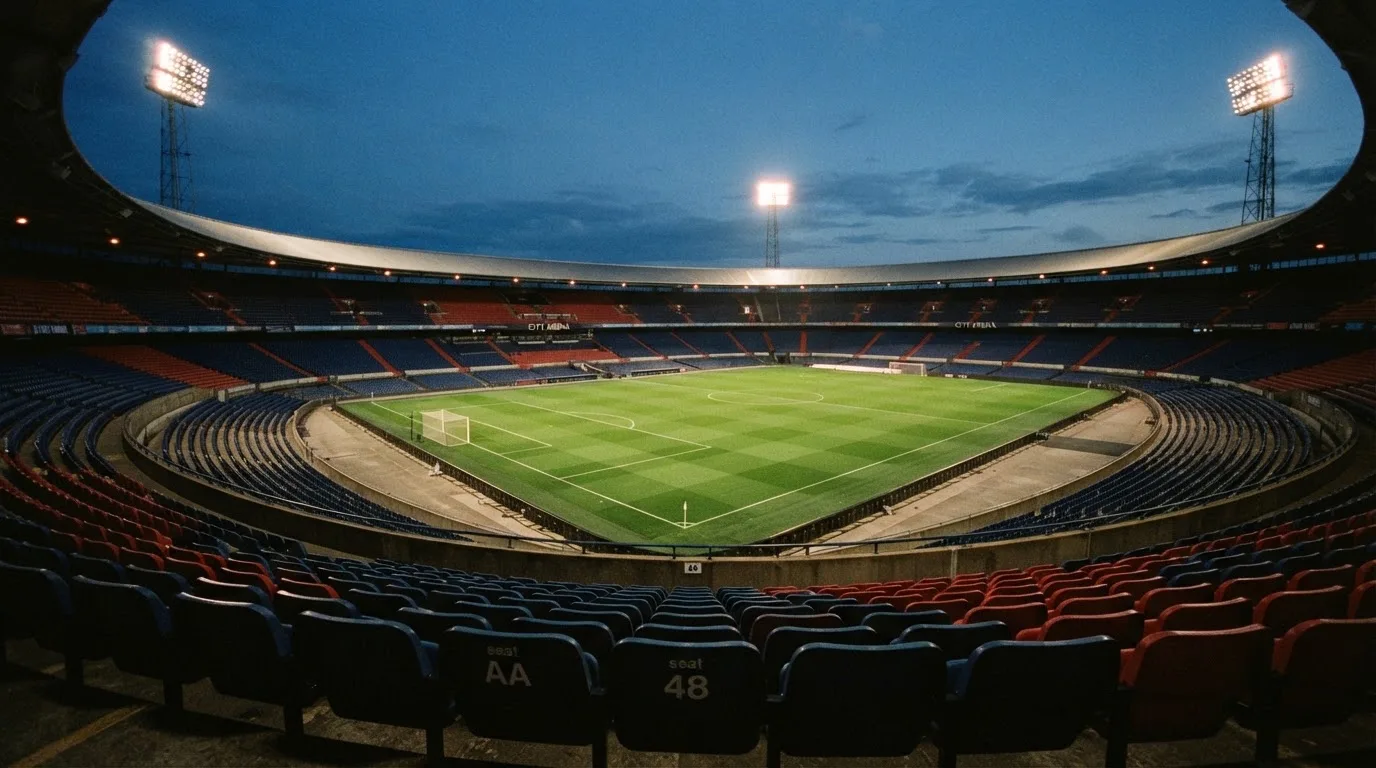
The word “safe” in the search box hides two more specific questions. First, can I confirm the operator is actually licensed, and what is the licence for? Second, if something goes wrong, where does my complaint go? Each one has a specific answer in Great Britain; the rest of the article works through them in the order a punter actually meets them, from the register search to the ADR referral, from the welcome bonus to a settled withdrawal.
The frame matters because the unregulated alternatives are not hard to find. They are offered through search results, social media and links shared between users. Their advantage is usually one thing: looser sign-up, no identity verification, payment methods that a regulated operator will not touch. The cost of that advantage arrives when a withdrawal is questioned, a bonus restricted, or a complaint raised and answered only with silence.
What a Licence Buys the Punter
Holding a Gambling Commission licence triggers a stack of duties on the operator. Each one arrives in the punter’s life at a specific point.

Identity and age checks come first. A licensed remote operator verifies name, address and date of birth before the customer’s first deposit. The rule has been in place since 7 May 2019 and applies to free bets and bonuses, not only to deposits funded from a card. The punter experiences this as a short delay at registration and possibly a request for a photo of an ID document. The consequence the punter would otherwise face is registering on a site that never asks, depositing under a false identity, and discovering at withdrawal that the operator has decided the account was opened in breach of its own terms and is closing it.
A complaints procedure follows. Licence condition 6.1.1 requires the operator to have one, to give the customer a copy on request, and to let the customer refer an unresolved dispute to an ADR entity at no charge. The Commission allows the operator up to 8 weeks from receipt to resolve a complaint internally before the ADR route opens. The punter’s practical consequence is that an answer to a complaint arrives no quicker than that 8-week window, but arrives; on an unlicensed site, the route is absent altogether. The ADR bodies will not hear disputes about customer service or about a business refusing to accept a bet, and their role is limited to disputes the law or the licence conditions cover.
Source-of-funds checks come next under the money-laundering rules. These are not part of the headline identity check; they are a layered set of questions the operator puts to higher-spending customers about where the money being deposited came from. Most punters never meet them in full. The punters who do meet them meet them at higher net-deposit levels — typically after sustained activity rather than on day one.
GAMSTOP comes after the first deposit and the first bet. Every Gambling Commission-licensed remote operator is a GAMSTOP member by licence condition; the only way to register at one is to be a customer, and the only way to be a customer is to clear GAMSTOP if the punter has self-excluded. The periods run six months, one year, five years, or five years with auto-renewal, and once the minimum expires the exclusion stays on file for seven more years unless the punter asks GAMSTOP in writing to lift it. The punter’s consequence is that a self-exclusion, once taken, is hard to undo on purpose; the alternative site that does not check does not enforce the exclusion at all.
The bonus cap arrived on 19 January 2026. Wagering requirements on bonuses are capped at 10x — meaning a £10 bonus carries a £100 maximum turnover obligation, regardless of how the bonus terms would otherwise be set. The same rule removes mixed-product promotions, so a “bet on football to get free spins” bundle can no longer be marketed at a British customer by a licensed operator. Whether the cap reaches free bets with no wagering condition and whether a cap applies to the money value of a bonus are not established in the rules as published. The punter’s consequence is that advertised bonus terms sit inside a tighter ceiling than they did before that date, and that on an unlicensed site the ceiling does not exist.
A financial vulnerability check sits behind all of the above. Since 30 August 2024 licensed remote betting operators have been required to run a public-record check on the customer’s financial position (bankruptcy, county court judgments, similar registers) once net deposits — deposits minus withdrawals — cross £150 in a rolling 30 days, and that threshold has been live since 28 February 2025. It is not an income check and it is not a credit check. Financial risk assessments — the “affordability checks” reported in the press — have been announced in a staged plan, with the Commission’s communication of 7 July 2026 confirming no start date. The punter’s consequence is that casual play below the £150 net-deposit line in a 30-day window meets no such check; play above it does, and casual play that creeps over it does too.
The deposit limit rules sit alongside these. The Remote Technical Standards (RTS 12) require operators to offer a gross deposit limit on a fixed time frame; the first phase of those changes has applied since 31 October 2025, with a second phase postponed to 30 September 2026, and whether it is currently live is not established in the published material. There is no state-set ceiling: a punter who wants to set a £100 weekly limit can; a punter who does not is the only one deciding how high the ceiling is for that account. The punter’s consequence is that limits remain a customer choice, not a regulator’s rule, and the limit only bites if the customer sets it.
The Punishments an Unlicensed Site Carries
The frame on the other side is what an unlicensed site does not have. No GAMSTOP coverage means a self-exclusion signed on Monday is not enforced on Tuesday. No Commission complaints route means a complaint about a settled bet, a withheld withdrawal or a bonus restriction has nowhere British to go. No ADR referral path means an independent body cannot compel the operator to open the books. No British consumer protection applies if the operator closes the account and keeps the balance, because the operator was never within the regime that gives the consumer the right to be in that regime at all. The 10x bonus cap does not bind; the £150 vulnerability check does not run; the source-of-funds interview does not arrive. Those are the protections that disappear, not the protections the regulator promises to give.
The law underneath that frame is section 33 of the Gambling Act 2005, aimed at the operator, not at the customer. On summary conviction the offence carries up to 51 weeks’ imprisonment, a fine up to level 5, or both — 6 months in Scotland. The Commission’s enforcement has been disruption rather than blocking: cease-and-desist notices, search-engine referrals, working with payment providers, hosts and registrars. The Commission has been given, or is about to receive, court-order DNS blocking powers; ISP-level blocking on the British network is not in operation. The punter who bets on such a site is not prosecuted for doing so, but is also not protected by any of the rules above, and the offence the law targets is the operator’s, not the customer’s. Saying a site is “legal to use” because the customer is not the offender misreads which way the criminal law is aimed.
Working Out What an Active Month Really Costs
The arithmetic the rest of this section walks through is the question every welcome bonus obscures. A bonus that returns £20 in free bets looks like a gain; the cost of the betting that releases the bonus, at a typical bookmaker margin, is a number that varies but is never zero. The expected-loss calculation the Commission itself uses to size its interventions sits on the same idea: across many bets, the punter’s average loss equals turnover multiplied by the market margin.
Take an illustrative monthly budget of £500, staked once across a betting month. Take an illustrative two-way market priced at decimal odds 1.90 against 1.90, a roughly symmetric example with no quoted price behind it. For that single market the sum of implied probabilities 1/1.90 + 1/1.90 is 1.0526; the payout share the punter receives across all outcomes if the market is settled at those prices is 1/1.0526 = 0.95 — a market margin of around 5 %, expressed the way bookmakers describe their own overround. Across many bets at the same margin, an expected £500 staked returns £500 × 0.95 = £475, an expected loss of £25 across the month.
Stated as a band with its conditions: at a market margin in the 5 % to 8 % range, which is the band most pre-match football and horse-racing markets sit inside at the major British operators, an illustrative monthly budget of £500 produces an expected loss somewhere between £25 and £40 per month — £25 in expected loss at a 5 % margin, £40 in expected loss at 8 %. The figure is an average across many bets; individual weeks will sit either side of it. It is also conditional on the punter’s discipline: chasing losses, raising stakes after a bad run, or migrating into higher-margin markets (specials, novelty bets, in-play derivatives) pushes the result toward the upper end. Sitting on a single sport at pre-match prices for most of the month pulls it toward the lower end. The line that matters to a punter is that the margin is paid on every bet, on every stake, including stakes a bonus might have added; it never goes negative.
The calculation answers what clearing the offer costs on average. It does not answer whether any particular £10 bet will lose, and any framing of it as a forecast for that bet misreads what the arithmetic is doing. The £500 figure is illustrative: Britain has no state-set ceiling on deposits or losses, and the figure stands in for whatever monthly staking the punter actually does.
What the Comparison Below Actually Tests
The ten brands listed below all hold a Gambling Commission remote licence for “remote general betting standard (real events)” as published in the public register. Two of them — Coral, under LC International Limited, and Matchbook, under Triplebet Limited — also hold a “remote betting intermediary” licence, which is the licence type that covers betting exchange activity. VBet is operated by SCGO Limited; QuinnBet by QuinnBet (Gibraltar) Limited; Unibet by Platinum Gaming Limited; BoyleSports by Boylesports Enterprise; Kwiff by Eaton Gate Gaming Limited; DAZN Bet by DZBT Limited; 10bet by Blue Star Planet Limited; Lottoland by EU Lotto Limited; Betfair by PPB Counterparty Services Limited. Several of those names run more than one consumer brand under the same licence — Coral under LC International alongside Ladbrokes, Betfair under PPB Counterparty Services alongside Paddy Power — so the comparison table lists one brand per licence family and not a separate row for each corporate sibling.
The licence proves only that the operator is permitted to take bets from customers in Great Britain; it does not prove the brand is a good place to bet, that the welcome offer is generous, that withdrawals are fast, or that the in-play product is deep. Those are what each write-up below describes from the operator’s own terms.
A Note on Matched Betting
Matched betting — laying the same selection at a betting exchange that one has backed at a bookmaker, often using a free bet or price boost on the back side to produce an apparently risk-free position — is a technique that sits inside the licensed market. It is not in itself unsafe in the regulatory sense; it is a method of structuring wagers. Its safety collapses, however, in two specific places that no regulator polices.
The first is offer gubbing. A bookmaker that detects matched-betting activity closes the account, withholds the bonus balance and restricts the customer to small-stake, low-margin markets or refuses further custom. The bookmaker is within its terms to do so; matched betting is rarely a breach of any specific rule, but it is repeatedly the trigger for an account review that ends with restricted access. The second is the matched-betting service economy, where subscription sites sell picks and tutorials and the returns depend on free bet liquidity that the bookmakers tighten every quarter. The technique is not broken; it is brittle, and it depends on accounts the punter keeps acceptable to the operator. The punter who treats it as riskless is taking the worst kind of risk on the question — the kind that materialises only at withdrawal.
The Ten Operators Reviewed
Each review below covers the published facts a punter checks before signing up: licence status, the welcome offer as the operator states it, the responsible-gambling tools listed on the operator’s own pages, and one judgement on what the brand actually delivers on the part of the comparison that matters most.
BoyleSports — Long-Standing Irish-British Brand with a Simple Welcome
| Field | Detail |
|---|---|
| Brand | BoyleSports |
| Gambling Commission remote licence | 039469-R-319383-025, account 39469 (Boylesports Enterprise) — remote general betting standard (real events) |
| What BoyleSports’ own terms say on the welcome offer | BoyleSports’ sports welcome offer for UK players is £20 in free bets when a £10 bet is placed (€30 in free bets for a €10 bet for Irish players) |
The offer is plain: stake £10, receive £20 in free bets if the first settled bet loses. The stake is not returned with a free-bet win, so a free bet that wins at decimal odds of 4.00 pays 3 × the free-bet amount, not 4 ×. BoyleSports’ strength is the depth of its high-street bookmaking history, which translates into a deep racing product and a meaningful in-play offering on football and horse racing. The brand is part of a group that trades in both the Republic of Ireland and Great Britain and accepts customers across both jurisdictions under separate offers.
Verdict. For a punter who wants a clean welcome against a deep racing bookmaker and is comfortable that the bonus terms sit inside the standard Commission framework, BoyleSports delivers. For a punter who wants the lowest-margin football or a price-boost-flooded in-play product, the same £10 finds richer offers elsewhere.
Kwiff — Surprising Stake Multipliers on Settled Bets
| Field | Detail |
|---|---|
| Brand | Kwiff |
| Gambling Commission remote licence | 044448-R-323408-017, account 44448 (Eaton Gate Gaming Limited) — remote general betting standard (real events) |
| What Kwiff’s own terms say on the welcome offer | Not stated as a figure in the registered material |
Kwiff holds its licence and lists itself as a Spryme Ltd trademark; the app carries a 17+ age rating, which tracks the Commission’s minimum-age rule. The marketed feature is a “supercharge” or stake-multiplier mechanic applied to settled bets — random or curated multipliers that can raise the price a customer takes is not the figure the comparison rests on. What the comparison rests on is that Kwiff publishes as licensed in Great Britain, that the app is in the British App Store, and that the operator is a GAMSTOP member by virtue of the licence condition.
Verdict. For a punter who wants a smaller, mobile-first bookmaker and is comfortable with stake-multiplier features whose mechanics the operator’s terms set out, Kwiff is a fit. For a punter shopping on margin depth and on a full desktop sportsbook, the same brief travels better to a longer-established brand.
DAZN Bet — Sportsbook Inside a Streaming Subscription
| Field | Detail |
|---|---|
| Brand | DAZN Bet |
| Gambling Commission remote licence | 048756-R-327274-019, account 48756 (DZBT Limited) — remote general betting standard (real events) |
| What DAZN Bet’s own terms say on payment thresholds | Deposits start at £5 by debit card, Apple Pay, Paysafecard, Trustly and Skrill, and at £20 by PayPal, with no processing fees |
DAZN Bet’s bet is integration with the streaming subscription; the cross-sell is the draw for a punter who already pays DAZN for the sport. The £5 minimum across most rails is low enough for casual stakes; the £20 PayPal minimum is the rail that surprises budget punters at the till. The product is mobile-led and is built for in-play interest more than deep pre-match pricing.
Verdict. For a punter already paying for DAZN and looking for an in-play companion, DAZN Bet’s tighter deposit rails save friction. For a punter who does not, the same brief is served by a stand-alone high-street name without the streaming tie.
Lottoland — Lottery and Sports Under One Roof
| Field | Detail |
|---|---|
| Brand | Lottoland |
| Gambling Commission remote licence | 038991-R-319408-020, account 38991 (EU Lotto Limited) — remote general betting standard (real events) |
| What Lottoland’s own terms say on the offer mix | Lottoland’s UK app combines casino, lottery betting, sports betting and scratchcards, and it states it is licensed by the Gambling Commission for customers in Great Britain |
Lottoland’s licence carries a sportsbook among other activities; the registered site lists remote general betting as one of the licensed categories, alongside lottery betting. The offer mix means a single wallet spans lottery bets, casino, scratchcards and sports — useful to a punter who concentrates spend, less attractive to one who would rather keep each product separate on principle. The 10x bonus cap applies to the sports side like any other licensed brand; the mixed-product rule that came in on 19 January 2026 means a single welcome bundle cannot blur lottery, casino and sportsbook anymore.
Verdict. For a punter who actually plays across lottery, casino and sports and wants one wallet, Lottoland centralises that well. For a punter who wants sports only, the multi-product framing distracts from the sportsbook’s depth, and a stand-alone high-street sportsbook is the cleaner choice.
Betfair — Exchange and Sportsbook Side by Side
| Field | Detail |
|---|---|
| Brand | Betfair |
| Gambling Commission remote licence | 039439-R-319330-013, account 39439 (PPB Counterparty Services Limited) — remote general betting standard (real events) |
| What Betfair’s own terms say on the product mix | Betfair’s sportsbook offers in-play betting, Bet Builder, free live streaming of events such as UK and Irish horse racing and football within the app, and a 90 Minute Payout market |
Betfair runs an exchange and a sportsbook under the same customer relationship; the Commission recognises the exchange activity under the betting-intermediary licence held by related entities, which is the licence category that exchange activity requires. The product mix is the most complete in the comparison: in-play, a bet builder, free live streaming of UK and Irish racing, and a 90 Minute Payout market that settles football outright on the result inside the 90 minutes rather than after the full-time whistle. The practical consequence is that a Betfair customer is effectively two customers at once — one on the exchange, one on the sportsbook — and the welcome offer usually attaches to the sportsbook side.
Verdict. For a punter who wants both exchange liquidity and a sportsbook in one app, Betfair is the obvious fit. For a punter who wants only the sportsbook or only the exchange, the same app carries the friction of the side that does not interest them.
Coral — Ladbrokes’ Sister Under LC International
| Field | Detail |
|---|---|
| Brand | Coral |
| Gambling Commission remote licence | 054743-R-330863-014, account 54743 (LC International Limited) — remote general betting standard (real events), remote betting intermediary |
| What Coral’s own terms say on the welcome offer | Coral’s sports welcome offer is “Get £40 in Free Bets when you bet £20”: a deposit and sports bet of £20 or more at minimum odds of 2.0 (1/1), with £40 in free bets issued within 7 days and expiring 7 days after issue, for new GB customers who opt in |
The headline is generous on free bets by the standard of this comparison, and the seven-day window in which the free bets expire is short enough to cost a casual punter. A stake on minimum-odds 2.0 (1/1) requires the punter to pick a price that excludes heavy favourites — a barrier that protects the operator from bonus abuse at the price of narrowing the welcome to active customers. Coral and Ladbrokes share the same licence family at LC International Limited, so a punter who already holds one account in that family is treated as a returning customer at the other.
Verdict. For a punter who wants a heavy free-bet welcome at the cost of a minimum-odds qualifying bet and a seven-day free-bet clock, Coral is one of the strongest in this group. For a punter who would rather take a smaller welcome or a longer window, the offer’s generosity is partly offset by the time pressure.
VBet — Free Bet on a Losing First Stake
| Field | Detail |
|---|---|
| Brand | VBet |
| Gambling Commission remote licence | 044662-R-324273-022, account 44662 (SCGO Limited) — remote general betting standard (real events) |
| What VBet’s own terms say on the welcome offer | VBet’s sports welcome offer is a £10 free bet if a new, verified customer stakes £10 or more on a first-ever bet that loses |
The pattern — stake, get a free bet if the stake loses — is the same shape as several other welcome offers in this comparison, but with a smaller headline amount. The free bet is issued on loss, not on placement, so the welcome rewards a first bet that goes down rather than a first bet that goes up. SCGO Limited’s licence is current on the Commission’s register; the Commission’s verification-before-first-deposit requirement runs as it does for any licensed remote operator.
Verdict. For a punter who bets small and wants a no-thrills welcome that loses cleanly, VBet’s £10 free bet on a losing first stake is a fit. For a punter after a heavier welcome, Coral’s £40 on a £20 qualifying bet compares more generously inside the same licensed framework.
10bet — Standard Sportsbook Under Blue Star Planet
| Field | Detail |
|---|---|
| Brand | 10bet |
| Gambling Commission remote licence | 043173-R-322899-023, account 43173 (Blue Star Planet Limited) — remote general betting standard (real events) |
| What 10bet’s own terms say on licensing | The 10bet app is published by 10bet Limited and states that 10bet.co.uk is licensed by the Great Britain Gambling Commission under licence 43173 |
The 10bet offering sits inside the licensed mainstream: a standard sportsbook with an in-play product and a casino vertical alongside it. The welcome offer is not large by the standards of this comparison, and the brand’s stand-out feature is not a single product but a consistent sportsbook depth across the major European leagues. Blue Star Planet Limited is the licence holder on the register; the published statement on the app tracks that account number.
Verdict. For a punter who wants a mainstream sportsbook without a feature hook to learn, 10bet is competent and well-priced. For a punter shopping on welcome-offer size, the same brief is better served by Coral or by Unibet, both covered later.
QuinnBet — Specific Free-Bet Terms Well Worth Reading
| Field | Detail |
|---|---|
| Brand | QuinnBet |
| Gambling Commission remote licence | 061011-R-335683-004, account 61011 (QuinnBet (Gibraltar) Limited) — remote general betting standard (real events) |
| What QuinnBet’s own terms say on free bet use | QuinnBet free bets are valid for 7 days from credit and can be used on any market at odds of 1/2 (1.5) or greater, with maximum odds of 50/1; straight accumulators are allowed but Trixies, Patents and Yankees are not |
The free-bet terms carry the kind of detail a casual punter never reads: minimum odds on the selection, maximum odds on the selection, seven-day expiry, single-direction multipliers permitted, multi-leg structures not. A straight acca is allowed; a Trixie, Patent or Yankee on top of the free bet is excluded. The cap at 50/1 is the line where the free-bet stake will not earn a return, regardless of the result. These are the conditions that decide whether the welcome pays the punter or the operator; they are also the conditions a Commission-licensed operator is required to publish under its marketing rules.
Verdict. For a punter who actually reads the small print and picks into those restrictions deliberately, QuinnBet’s terms are predictable and fair. For a punter who assumes “free bet” means what it says without checking the seven-day window and the markets-not-permitted list, the same terms cut hard at the wallet.
Matchbook — Betting Exchange from the Triplebet Group
| Field | Detail |
|---|---|
| Brand | Matchbook |
| Gambling Commission remote licence | 039504-R-319407-024, account 39504 (Triplebet Limited) — remote general betting standard (real events), remote betting intermediary |
| What Matchbook’s own terms say on brand history | The Betdaq brand has been acquired by Triplebet Limited, operator of Matchbook, and Betdaq accounts will not transfer to Matchbook |
Matchbook holds two Commission licence categories: general betting standard and betting intermediary. The second is the licence a betting exchange requires; it authorises back-and-lay activity as well as commission charging on winning bets. The corporate note on Betdaq is the practical point for a punter arriving with an old Betdaq account — that account will not move to Matchbook automatically, and the punter must reconcile balances and open positions before withdrawing from either. Triplebet Limited runs the whole group, so the consumer experience, the margin model and the exchange commission sit inside one corporate envelope.
Verdict. For a punter who wants an alternative exchange with a more aggressive commission structure than the better-known rival and is comfortable building liquidity on a smaller platform, Matchbook is the explicit pick. For a punter who values exchange liquidity above all other features, the rival remains the deeper pool.
Reading the Landscape Table
The table below reorganises the material the write-ups carry into one matrix that the rest of the page builds on. Columns are the rows that the comparison actually tests, and the prose around them is what the cells themselves do not say.
| Brand | Gambling Commission remote licence | What the operator’s own terms state on the key subject |
|---|---|---|
| BoyleSports | 039469-R-319383-025, account 39469 (Boylesports Enterprise), remote general betting standard (real events) | Sports welcome offer is £20 in free bets when a £10 bet is placed (€30 in free bets for a €10 bet for Irish players) |
| Kwiff | 044448-R-323408-017, account 44448 (Eaton Gate Gaming Limited), remote general betting standard (real events) | Stake-multiplier feature on settled bets; 17+ App Store age rating |
| DAZN Bet | 048756-R-327274-019, account 48756 (DZBT Limited), remote general betting standard (real events) | Deposits start at £5 by debit card, Apple Pay, Paysafecard, Trustly and Skrill, and at £20 by PayPal, with no processing fees |
| Lottoland | 038991-R-319408-020, account 38991 (EU Lotto Limited), remote general betting standard (real events) | UK app combines casino, lottery betting, sports betting and scratchcards; licensed by the Gambling Commission for customers in Great Britain |
| Betfair | 039439-R-319330-013, account 39439 (PPB Counterparty Services Limited), remote general betting standard (real events) | Sportsbook offers in-play betting, Bet Builder, free live streaming of UK and Irish horse racing and football, and a 90 Minute Payout market |
| Coral | 054743-R-330863-014, account 54743 (LC International Limited), remote general betting standard (real events) and remote betting intermediary | Sports welcome offer is “Get £40 in Free Bets when you bet £20”, with deposit and sports bet of £20 or more at minimum odds of 2.0 (1/1), £40 in free bets issued within 7 days, expiring 7 days after issue, for new GB customers who opt in |
| VBet | 044662-R-324273-022, account 44662 (SCGO Limited), remote general betting standard (real events) | Sports welcome offer is a £10 free bet if a new, verified customer stakes £10 or more on a first-ever bet that loses |
| 10bet | 043173-R-322899-023, account 43173 (Blue Star Planet Limited), remote general betting standard (real events) | 10bet.co.uk licensed by the Great Britain Gambling Commission under licence 43173 |
| QuinnBet | 061011-R-335683-004, account 61011 (QuinnBet (Gibraltar) Limited), remote general betting standard (real events) | Free bets valid for 7 days from credit, usable on any market at odds of 1/2 (1.5) or greater, maximum odds of 50/1; straight accumulators allowed, Trixies, Patents and Yankees not |
| Matchbook | 039504-R-319407-024, account 39504 (Triplebet Limited), remote general betting standard (real events) and remote betting intermediary | Betdaq brand acquired by Triplebet Limited; Betdaq accounts do not transfer to Matchbook |
What the table does not say is also worth saying. It does not show price depth, in-play market coverage, mobile-app quality or customer-service response times; those are operating questions that no licence certifies, and they are questions each punter answers on the brand’s own terms after a small-deposit test. It does not rank the brands — a licence is a floor, not a score — and a position in the table is the order in which the section covers the brands, not a measurement of relative worth.
What the Public Register Actually Tells the Punter
The Gambling Commission’s public register is the test that the Commission itself promotes. It is searchable by business name, trading name, domain or account number, and the result lists the activities a business is licensed for, the personal licences attached to it, the premises licensed under its control, and any regulatory action the Commission has taken against it. The register is downloadable in pieces for the businesses, personal licences and premises sides. It is the only place a punter can independently check what the licence actually permits, and the Commission’s own published guidance is to use it before gambling.
The most useful query is by account number. Every entry above carries the licence numbers and account numbers the Commission assigns; a punter who checks the account number from the operator’s published terms against the register avoids relying on the marketing name on the page. The Commission’s own checks-the-register guidance frames it as the primary test, with everything else built on top. The licence holder for the brand, the activities the licence covers, and any regulatory action the Commission has filed — those three pieces of information decide whether the operator is allowed to take the bet a punter is about to place, and they are the three pieces a punter can copy out for free.
The corollary is that an unlicensed site that borrows the look and language of a licensed one — same logo, similar brand name, identical welcome offer headline — does not become licensed by doing so. The domain proves nothing because licensed operators use .com as well as .co.uk. The right test is the account number and the operator name, not the URL.
The Complaints Route, End to End
The complaint path is short and worth knowing by heart. A punter who has a dispute with a licensed operator starts by raising it through the operator’s own procedure, in writing, attaching the bet reference, the relevant screenshots and any contemporaneous chat logs. The operator has 8 weeks from receipt to resolve it, which is the deadline the Commission sets; if the operator does not respond, or responds by closing the complaint without engaging, that count still runs. Once those 8 weeks have passed without a final answer, the punter can take the dispute to an ADR provider at no charge; the operator must allow this and the ADR body decides the case. Two boundaries the ADR providers do not cross: customer-service complaints about tone, response time or a refusal of custom that the operator is within its rights to make. Those are outside the ADR body’s remit.
What the punter stands to recover is money owed under the bet, bonus or settlement terms, not damages for inconvenience. What the punter pays for the route is eight weeks of patience and the small effort of putting the case in writing. On an unlicensed site there is no equivalent route — the Commission’s complaints form is only for licensed operators, the ADR providers will only accept disputes with the licensed end, and the operator’s own terms are the final word because no third party can compel anything.
Help That Is Not the Bookmaker
The Commission’s own support line runs 24 hours a day, 7 days a week, on 0808 8020 133 in England and Scotland, on 0808 2819 265 in Wales. The two numbers sit on the Commission’s own published safety checklist, alongside the public register and the complaints procedure. The support line is for anyone who has questions about the operator, the licence, the register or the complaint process; the line for gamblers whose betting has become a problem is the National Gambling Helpline run by GamCare. Both are free; both are confidential; both stand independent of the operator whose licence the punter is asking about.
Beyond the support line, the safer-gambling tools each operator publishes vary in depth. Unibet lists deposit limits, a Player Profile test, product restrictions and self-exclusion, alongside live chat support and links to BeGambleAware, GamCare, GAMSTOP, Gambling Therapy and the BGC. The presence of those tools is a useful tell because they are the things the licence conditions push each operator to provide; the variety across brands is partly a function of how recently the operator rebuilt its responsible-gambling page. A punter who wants the strongest set of tools before they are needed is usually best served by a brand that already lists them, not by a brand whose safer-gambling page is a single paragraph and a hotline number.
A Practical Reading of the Whole Landscape
A licence is the entry test; everything else on the page is the use of it. The ten operators above all clear it; they differ in the product mix, the welcome offer and the depth of the in-play book, but the protections the licensed side delivers do not vary because the underlying licence conditions are the same. The punter who treats licence-holding as the binary test, and who reads the welcome-offer fine print as the variable cost, picks operators whose disclosures already match that order: a register entry that names the licence holder, a welcome offer that lists minimum odds and expiry, and a complaints page that names the ADR provider. Where those three pieces of information are visible on first inspection, the operator has already invested in the transparency the licensed side demands; where they are not, the punter’s first move should be a question, not a deposit.
That posture does not turn any brand into “the safe choice” by default. Several of them — Unibet, Betfair, Coral — run under operators whose other brands (Ladbrokes, Paddy Power) are household names by virtue of the high-street legacy; others, like Kwiff and Matchbook, are newer brands whose strength is a specific feature rather than name recognition. The licensed set is large, the comparison is the table above, and the punter’s best protection is registering where the operator’s own disclosures make the comparison easy.
Frequently Asked Questions
How safe is matched betting?
Matched betting is not in itself unsafe. It is a method of structuring wagers across a bookmaker and an exchange, and the regulatory framework that covers each side still applies. What makes it fragile is the bookmaker’s own reaction: an operator that identifies matched-betting activity may close the account, withhold bonuses and restrict further custom. The Commission’s rules do not forbid the technique, but they also do not protect a customer who runs it from the operator’s commercial response.
Is matched betting safe?
See the previous answer. The risk is on the bookmaker’s side of the relationship — restrictions and bonus withdrawals — and the technique depends on keeping accounts the operator is willing to keep open. The safer framing is matched betting as a budgeting exercise whose returns depend on accounts the punter keeps acceptable to each operator, not as a guaranteed yield.
Is online sports betting safe?
It is safe to the extent the operator holds a Gambling Commission licence and the punter understands what that licence delivers: identity checks, GAMSTOP membership, a complaints procedure ending in an ADR referral, a 10x cap on bonus wagering and a financial vulnerability check once net deposits cross £150 in a rolling 30 days. Beyond those protections, the punter is exposed to a margin in every price — the expected loss across many bets at typical market margins sits in the 5 % to 8 % band of stake, which is the cost no licence removes.
How can it be checked that a bookmaker holds a Gambling Commission licence?
The Commission’s public register is the test. Search by business name, trading name, domain or account number, and check that the licence is in force, that the activities on the licence cover what the punter wants to bet on, and that the Commission has not recorded regulatory action against the operator. The Commission’s own published guidance is to use the register before gambling and to treat the licence numbers on the operator’s own page as the entry point, not the conclusion.
Does GAMSTOP cover every betting site licensed in Great Britain?
Yes, every Gambling Commission-licensed remote operator is a GAMSTOP member by licence condition, and GAMSTOP membership has been mandatory for online operators since 31 March 2020. Self-exclusion runs for six months, one year, five years, or five years with auto-renewal, and after the minimum period ends the exclusion continues for a further seven years unless the customer asks GAMSTOP to lift it. The same scheme covers sites and apps; the off-line betting shops run a separate self-exclusion service.
What does a player lose by betting on a site without a Gambling Commission licence?
The player loses the protections the licence delivers: no GAMSTOP coverage; no Commission complaints route; no ADR referral; no British consumer protection if funds are withheld; no 10x bonus cap; no £150 vulnerability check; no enforcement of source-of-funds rules. The operator that runs the unlicensed site is the only body to which a complaint can be raised, and the customer has no British recourse against an adverse outcome. The criminal law under section 33 of the Gambling Act 2005 is aimed at the operator; the customer is not prosecuted for betting, but is also not protected.
Safe & legal – Best Betting Tips
Content created by the «Best Betting Tips» team
