
Over and Under Betting in Great Britain: A Practical Guide for 2026
 Available in US
Over/under sits at the centre of British sports betting for a reason. Every Premier League weekend, every Champions League round and most televised American football games carry at least one total line, and a settled total market pays out only on whether a figure goes above or below the bookmaker’s number — not on who wins. That’s the dealer’s hand the whole market plays: a punt without an outright, settled on a count of goals, points, sets, cards or corners.
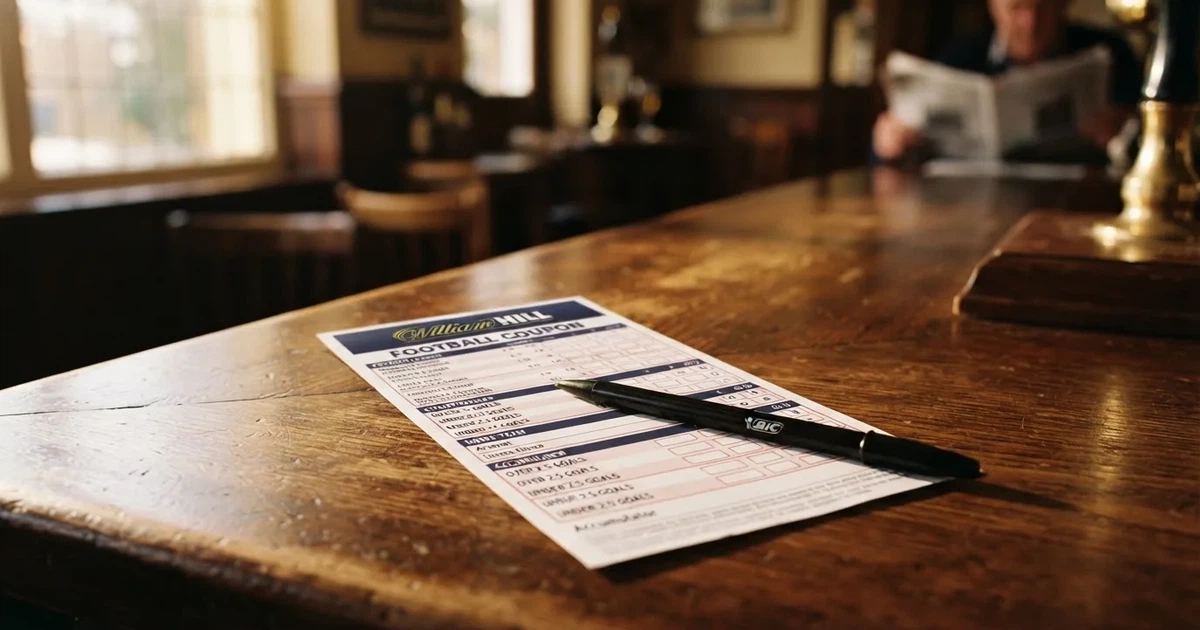
What follows is the practical side of that wager for a British bettor in 2026. How a totals market is built and settled, the spread of markets across football, tennis, basketball, cricket and American football, what the margin does to the price a punter sees, and how the ten reviewed bookmakers line up under a Gambling Commission licence. The angle throughout is consequence: every mechanism has a price, and the point of the page is to make that price visible before the bet is placed.
Current as of 27 October 2026. Operator details, market availability and licence numbers checked against the Gambling Commission’s public register.
Selection and Staking on Totals Markets
The choice on a totals market is binary. The bookmaker sets a line — 2.5 goals, 47.5 points, 21.5 games in a set — and the punter backs either “over” (the count finishes higher than the line) or “under” (lower). The price on each side is a decimal or fractional figure carrying the bookmaker’s margin, and the stake is whatever the customer chooses within the operator’s limit. A winning over returns the stake plus the winnings shown on the bet slip; a losing side pays nothing.
That binary shape is the source of two practical consequences. The first is that a totals market is one of the few places where research, not allegiance, picks a side: no team preference enters into the decision, only the read on the count. The second is that the price on a totals market tends to sit closer to evens than the price on a one-sided outright, because the line is meant to split the field roughly in half. A line that drifts to 1.40 on one side is a line the market has decided is wrong.
How the line moves before kick-off
A published line is the bookmaker’s opening read; it moves as money comes in. A flurry of over bets on a Champions League total forces the line up; sustained under money pushes it down. The published odds move with it, sometimes to a point where the new line and the old odds no longer match, and the bookmaker reprices. A bettor who places a wager after the line has moved but before the odds are refreshed can get a mispriced entry, though in practice the bigger bookmakers reprice within seconds. Smaller operators carry wider gaps, and that’s where the term “line shopping” earns its keep — checking the same total across several books for the best number before placing the bet.

A bet that lands exactly on the line is a push. The stake is returned in full and the bet is void; no winnings, no loss. Pushes are rarer in decimal-quoted totals (where lines commonly sit on a half — 2.5 rather than 2) than they used to be in whole-number markets, but they happen in sports that score in integers. Push rules vary by operator and by market — checking them once per bookmaker is cheap insurance against a settled push being treated as a loss.
From stake to return: the arithmetic
The return on a winning totals bet is the same as on any other fixed-odds bet. Decimal odds make the arithmetic a single step: return = stake × odds. At decimal odds of 1.91 on the under 2.5 goals in a Premier League match, a £10 stake returns £19.10 — the original £10 plus £9.10 of profit. At fractional odds of 10/11, the same £10 returns £19.09 (stake plus profit of £9.09), the small gap being rounding.
Combination bets multiply the prices of each leg into one final odds figure and then apply the same stake multiplication. A two-leg totals acca at 1.91 and 1.86 settles at decimal odds of about 3.55 before the margin on the combined line, and the stake-to-return formula is identical. The catch with combinations is that every leg must win for the bet to pay: a push on one leg typically voids that leg and reduces the acca, while a losing leg sinks the whole stake.
Markets Across the Major Sports
Totals markets are not uniform. The line, the unit being counted and the settlement rule vary by sport, and a bettor who treats them as the same product pays for it.
Football (soccer)
Football carries the deepest catalogue. The headline market is match goals over/under 2.5, with 1.5, 0.5, 3.5 and 4.5 also widely priced; team totals (home or away) split that further, and the same shape covers first-half and second-half lines. Cards and corners have their own totals — over/under 4.5 cards, over/under 9.5 corners — and player shots, player shots on target and player tackles are increasingly common. The settlement rule in football is the 90 minutes including stoppage time result. Extra time and penalty shootouts are excluded unless the market explicitly states otherwise; a punt on over 2.5 match goals in a knockout fixture that finishes 1-1 after 120 minutes is settled on the 90-minute score, which is the basis of the bet.
The 90-minute settlement is the single most-checked rule on the page because it bites fixtures that go to extra time most often: cup ties, continental knockouts and the latter rounds of the FA Cup. The Sky Betting & Gaming football rules hub makes the rule explicit and is typical of how British operators publish it.
Basketball
Basketball runs on totals the way football runs on goals. The NBA and EuroLeague publish a game total — often in the 200s — with half and quarter lines beneath it, and team totals break it down further. Settlement is on the final score including overtime unless the market states “regulation”; British bookmakers follow the US books on this, but a bettor who needs to know which rule applies to a specific market reads the market name carefully. Player points, player rebounds, player assists and player threes have totals markets, and props such as the first basket or the first to 20 points are usually priced as over/under rather than as outrights.
Tennis
Tennis totals cover games, sets, aces, double faults and increasingly player total games won in a match. Match totals on Grand Slam best-of-five matches sit high (over/under 35.5 games is typical for a three-set baseline); best-of-three sets on the WTA tour run through the 20s. The unit being counted is games rather than points because tennis has no meaningful points count to settle against. A push on a tennis total is rare because lines are usually on half-games.
American football
The NFL is the sport where Super Bowl over/under became a fixture of British culture. Lines cluster in the mid-40s for game totals and sit lower for team totals; first-half, second-half and quarter lines are also standard. Settlement includes overtime. The reference example in the literature is Super Bowl XXXIX, where most Las Vegas books set the line at 46.0 — a whole number, by tradition — and the combined score of 45 meant the under won.
Cricket
Cricket totals are settled on the runs scored — match runs, first-innings runs, team runs, player runs. The shape of the market depends on the format: Twenty20 matches run through the 150s and 160s for first-innings totals; one-day internationals through the 250s; Test match first-innings totals much higher. Player runs totals are popular in formats with longer innings.
Other sports at the reviewed bookmakers
The reviewed operators carry totals on rugby (match points, team points, first-half points), golf (round totals, finishing position), darts (match legs, 180s count), snooker (frames), boxing (rounds) and a range of novelty markets on reality television and politics. Some operators expose only the larger markets and leave the niche lines to specialist books; checking the operator’s “totals” or “over/under” tab on the day is the only way to know what is priced.
Strategy in Practice
Totals markets reward a specific kind of homework: pace, defensive shape, weather, schedule and refereeing tendencies. None of that is unique to this market, but the lack of an outright pick makes it easier to apply in isolation.
Reading pace and defence
A Premier League match between a high-press team and a low block skews under; two sides that press high and concede counters skews over. In the NBA, two slow-paced teams whose defences force half-court sets run lower than the line; two fast-paced teams in a pace-up game push it over. The point is that the line already reflects a market consensus on pace, and the edge sits in the read that diverges from it.
Weather and scheduling
Outdoor American football in cold, windy or snowy conditions suppresses scoring. Baseball wind direction moves the over/under by a run or two on its own. Late-season football fixtures between tired teams with nothing to play for often run over; end-of-season dead rubbers in cups run under. None of these is a guaranteed direction, but each one feeds the read.
Bankroll and price discipline
A bettor’s edge only matters if it is larger than the margin in the price. Totals markets carry less margin than outrights at most operators, but the margin is still positive and a sequence of bets at thin edges can lose to it. Staking a fixed percentage of a stated bankroll — rather than a fixed pound figure — keeps the bettor in the match over a downswing without changing the size of the read. The discipline is unglamorous and it is the closest thing to a working strategy in a market where every other lever is shared.
Limits on what a strategy can do
A strategy does not predict outcomes. It sequences decisions in a way that performs over many bets; it does not turn a single match into a winner. A bettor who follows a totals strategy and treats any single bet as evidence about whether the strategy is working is misreading the strategy. The audit that matters is on the bankroll over hundreds of bets, not on any one Premier League Saturday.
The Landscape of Over/Under Betting: How the Ten Stack Up
Across the ten reviewed bookmakers, the totals product is broadly similar. What differs is depth (how many lines per fixture), innovation (same-game multis, player props, half-by-half splits), pricing (the margin baked into each line) and the rules on what counts as a settled bet. A few operators carry out-of-the-way features that change how the market is approached.
What follows is the comparison. The licence and licence-holder columns are drawn from the Gambling Commission’s public register; the operator-terms column states what each bookmaker’s own page or app listing says about its product. The order is the order of appearance on the register’s list of GB-licensed remote operators covering totals markets; it is not a ranking. Several of the brands sit under larger groups — BetUK is LeoVegas Gaming PLC, BetMGM UK is the same company under a different brand, and Hollywoodbets and others are independent licensees.
The comparison at a glance
| Bookmaker | Gambling Commission licence (account holder) | What the operator’s own terms say on totals and adjacent markets |
|---|---|---|
| Fitzdares | Account 400 — Fitzdares Limited | Cash out, accumulators, Lucky 15s and antepost markets on horse racing, football, tennis, rugby, cricket, golf and American football, with in-play live odds |
| Fitzwilliam Sports | Account 48760 — SBKI Limited | Prices based on Oddschecker’s average per selection, with Apple and Google apps |
| London Bet | Account 66162 — Thistle Bet Limited | UK-licensed operator with a 17+ App Store age rating |
| BetUK | Account 39198 — LeoVegas Gaming PLC | Free bets exclude virtual sports, esports and non-UK/IE horse racing; minimum odds apply |
| Lottoland UK | Account 38991 — EU Lotto Limited | Lottery betting, casino and scratchcards alongside sports, Gambling Commission-licensed for Great Britain |
| Betfred | Account 39544 — Petfre (Gibraltar) Limited | Bet Builder, Sub Switch, Racing Post data, Extra Places, live casino and bingo on the app |
| Tote | Account 54779 — TDCO Limited | Best Odds Guaranteed on UK and Irish horse racing from 8 AM on the day, singles and multiples, no ante-post or tote cover |
| bet365 | Account 55148 — Hillside (UK Sports) ENC | Bet Builder+, Super Boosts, Winnings Boosts on Bet Builders and selected singles, daily Bet Boosts |
| Hollywoodbets | Account 53028 — Hollywoodbets International UK Limited | Welcome offer: stake returned as a free bet up to £30 on a first qualifying losing accumulator (3+ legs, 4/1+, 7 days) |
| Copybet | Account 53774 — Copybet UK Limited | Best Odds Guaranteed all day on all UK and Irish racing; first past the post paid on horse racing even if a winner is later disqualified |
Bet Builder and same-game multis
Bet Builders and same-game multis are the visible product of totals markets in 2026. A football Bet Builder combines a totals leg (over 2.5 goals) with a result leg (home win), a player shots leg and a cards leg into a single bet — but with a twist: a same-game multi correlates the legs against each other, and the price the operator offers already accounts for the fact that an over 2.5 line wins more often when the home team is winning. The visible price on a Bet Builder is therefore usually shorter than the price on a multi-match acca with the same legs would be, even though the legs are individually more correlated. bet365’s Bet Builder+ extends the same shape pre-match and in-play, and Betfred’s Bet Builder sits inside its broader app offering.
A Bet Builder is not a structural advantage over a single totals bet; it is a convenience product that combines bets a punter could place separately. Where it falls down is that the legs cannot be chosen from a separate match, which forces correlation. The price reflects this, and a bettor who reads the price before checking the constituent legs is paying for a packaged convenience.
Price boosts and enhanced odds
A price boost is a one-off enhancement of a specific market — usually a marquee fixture or a popular accumulator. Boosted odds carry the same settlement rules as the underlying bet; the boost is the operator’s marketing, not a change to the line. Bet365’s Super Boosts and Winnings Boosts apply to Bet Builders and selected singles; Hollywoodbets’ welcome free bet is contingent on a losing accumulator and is paid back as a free bet, not in cash, so the upside is the boost amount rather than a flat refund. The marketing word is “free”; the arithmetic usually says otherwise when a minimum-price rule or a 7-day deadline is sitting underneath it.
Cash out and live pricing
Cash out on a totals bet settles the wager before the event finishes, at a price the operator posts in-play. The price changes as the line moves and as the in-play state of the game evolves. A punter who backs over 2.5 goals and watches the game go 3-0 by the 60th minute is “in the money” — the operator offers some fraction of the maximum return as a cash-out figure. The offered figure is the operator’s read on what’s likely to happen from that point on; it is not the punter’s. Fitzdares carries cash out alongside its other products, as do most major British books.
Where These Markets Sit Legally
A bookmaker serving customers in Great Britain — England, Scotland and Wales — needs a Gambling Commission licence, and the Commission’s public register is the only test of who holds one. Every brand in the comparison is on that register under a remote general betting standard (real events) licence, and each carries the Commission’s licence account number alongside its operating company. BetUK and BetMGM UK sit under LeoVegas Gaming PLC’s licence; the rest sit under their own licensees.
The framework dates from the Gambling Act 2005 and the Gambling (Licensing and Advertising) Act 2014, which closed the loophole that let operators based overseas serve British customers without a British licence. The Commission’s own Licence Conditions and Codes of Practice (LCCP) sit on top of the Act and govern how operators run their product day-to-day: marketing, social responsibility, vulnerability checks and the ten-times cap on bonus wagering that took effect in January 2026. Northern Ireland is outside the 2005 Act and runs its own older gambling law; a British licence does not extend to Northern Ireland, though several operators continue to serve customers there under their own terms.
What may be bet on is not exhaustively listed anywhere. An operator holds a licence for a category and offers markets under its own rules. The legal interpretation of any given market sits in the operator’s own terms, not in statute; the Commission polices conduct, not content. Esports are treated like any other event; virtual events are a separate licence category; novelty markets on politics, television and awards shows are routinely priced.
Identity verification before the first deposit or wager has been mandatory since 7 May 2019. That cut off anonymous play at British-licensed sites; the trade-off is that the operator knows who the customer is. The bonus cap, the GAMSTOP requirement, the credit card ban and the financial vulnerability checks at modest deposit levels all sit inside the licensed frame and stack up against the offshore alternative.
The offshore frame, briefly
A bookmaker without a Commission licence that takes bets from British customers is operating illegally under section 33 of the 2005 Act. That is the operator’s problem, not the customer’s: there is no established offence for a bettor who places a wager on an unlicensed site. The bettor’s problem is the loss of every protection the licensed frame provides — no GAMSTOP, no Commission complaints route, no approved dispute-resolution service, no British consumer redress if funds are withheld, and no cap on bonus wagering or minimum-deposit checks. “Legal to use” is the wrong framing for an offshore site; “unprotected” is the right one.
Safer Gambling in Practice
GAMSTOP is the national multi-operator self-exclusion scheme and every British-licensed remote bookmaker is a member. Self-exclusion lasts six months, one year, five years, or five years with auto-renewal, and after the minimum period the exclusion stays in place for a further seven years unless the customer contacts GAMSTOP and asks to be removed. It covers online sites and apps; the betting shop scheme is separate.
A bettor who hits a threshold spends a moment on GAMSTOP first, before reading the rest of this section. The British-licensed operators now require it and the schemes work.
The financial vulnerability check
A financial vulnerability check has applied to British-licensed remote betting since 30 August 2024 and is enforced when a customer’s deposits minus withdrawals cross £150 in a rolling 30 days — the threshold came into force on 28 February 2025. It is a public-record check (bankruptcy, county court judgments, the kind of record any lender can see), not a credit reference check and not an income check. The check is meant to catch the customer who is in visible financial difficulty, not the customer whose income is hard to verify.
A more invasive financial risk assessment — the affordability checks in the press — was announced by the Commission on 7 July 2026 with a staged plan and no start date. Treat that as a future development, not a current requirement.
Deposit limits
Operators must offer a gross deposit limit on a fixed time frame, but there is no state-set ceiling. A punter sets the limit; the operator enforces it. The first regulatory deposit-limit changes came into force on 31 October 2025, and a postponed second phase was held over to 30 September 2026, but the practical effect for a customer is the same: pick a limit before depositing, raise it only after a deliberate cool-off. The most common form is a weekly limit enforced automatically.
Where to get help
- GamCare runs the National Gambling Helpline (24/7), webchat and online forum, and is the first call for most British bettors.
- GambleAware funds treatment and research and points customers at the right service through its site.
- The NHS runs specialist gambling clinics in several cities and is the right referral for a customer whose gambling is harming their mental health.
- Gamblers Anonymous runs peer-support groups on the same model as its alcohol counterpart.
A read of the responsible-gambling section of any reviewed operator’s site gives the same list. The list is also a check that the operator is licensed under the 2005 Act — GAMSTOP membership and the safer-gambling tabs are licence conditions, not favours.
Mobile and App: What the Review Set Actually Ships
A British totals bettor in 2026 will place most of their bets on a phone, and the operator’s app is where the experience lives. The reviewed set covers the spectrum.
bet365’s app runs Bet Builder+ on Premier League and Champions League fixtures and supports the price-boost suite, and Apple’s GB App Store listing for the brand is the source of that. Betfred’s app adds Racing Post data and Sub Switch on football to the standard shape; Hollywoodbets and Copybet carry their welcome offers and BOG respectively; Kwiff’s 17+ age-rated app sits alongside as a benchmark for how a smaller operator handles iOS age gating. Apple and Google’s age ratings sit at 17+ on most sports and casino apps because the underlying gambling content clears the higher threshold; that is what readers should expect across the set.
Lottoland’s app is unusual in carrying lottery betting, casino and scratchcards alongside sports — a one-app product for a bettor who also plays the lottery. Fitzwilliam Sports and Fitzdares both ship apps that hold the same features the desktop product carries; the difference is the depth of in-play coverage and the speed of the bet-slip on a small screen. London Bet’s app carries a 17+ rating and the standard licensed operator’s safer-gambling tab.
The browser path
Every reviewed operator also runs a desktop site, and in several the desktop product is the better place for in-play trading on a totals market because of the larger screen and the wider screen of statistics the in-play console exposes. The mobile app is the place for placing a bet on a fixture already decided in the bettor’s mind; the desktop is the place for reading a market while the market moves. Both are checked against the same licence, and both fall under the same responsible-gambling tab.
The Reviewed Bookmakers
Each review below covers the operator’s licence and licence-holder, the product set relevant to a totals bettor, the safer-gambling infrastructure (GAMSTOP, deposit limits) and a verdict. The verdict answers a different question in each block — what the brand is for, what it costs, where it falls short. They are not eleven endorsements and they are not eleven dismissals; they are ten briefings on the choices the register makes available.
Fitzdares
Licence: Gambling Commission account 400, Fitzdares Limited. The Fitzdares app offers cash out, accumulators, Lucky 15s, specials and antepost markets across horse racing, football, tennis, rugby, cricket, golf and American football, with in-play live odds. The breadth of the product is what distinguishes the brand — a premium positioning rather than a deep-discount main-street look — and the antepost catalogue on horse racing is the most complete in the reviewed set. The cost is the margin and the price; premium-positioned books run tighter margins on the popular markets because their differentiator is service rather than price. A Fitzdares customer is paying for the antepost depth and the specials list, and the bettor who treats the brand as a sportsbook for Premier League over/unders has bought the wrong product.
Verdict: for the totals bettor who also bets antepost horse racing and wants one account for both; not the cheapest Premier League over/under book in the set.
Fitzwilliam Sports
Licence: Gambling Commission account 48760, SBKI Limited. Fitzwilliam Sports bases prices on Oddschecker’s average price for each selection and provides Apple and Google apps. The model is unusual in British betting — most operators price their own book; pricing on an aggregator’s average means the operator takes a thinner margin than the rest of the field on most selections and runs a smaller customer-acquisition edge. The product is what Oddschecker exposes: football, horse racing, tennis, the major American sports. The risk of an average-price book is that it has no view of its own and reacts slowly when a line moves faster than the aggregator does.
Verdict: for the customer who prices their own bets across several books and wants an account that rarely shows the worst price; not the place to find a market before the rest of the market finds it.
London Bet
Licence: Gambling Commission account 66162, Thistle Bet Limited. London Bet’s app carries a 17+ App Store rating and the operator states it is licensed and regulated in the UK. The product sits in the smaller-operator tier — a tighter sportsbook than bet365, fewer markets per fixture, but full cover of Premier League, Championship, Scottish Premiership and major European leagues. A smaller book is where a value totals bet is most often found because the line pricing has had less attention from the wider market, though it has also had less attention from the in-house traders, and the two cancel each other out for most bettors.
Verdict: for a London-area customer who wants a UK-licensed book with a narrower product and a smaller marketing budget; not a substitute for a major-operator account for in-play depth.
BetUK
Licence: Gambling Commission account 39198, LeoVegas Gaming PLC. BetUK’s free bets exclude virtual sports, esports and non-UK/IE horse racing, and minimum odds apply. The LeoVegas licence is shared with BetMGM UK — two brand-fronts on one licence — and the BetUK product is the more direct of the two for a sports-first bettor. The exclusions on the free bets are the practical limit: a totals customer who wants to use a free-bet stake on a market outside those three categories needs to check the betting slip before claiming.
Verdict: for a sportsbook customer who also wants casino on one account under LeoVegas’s UK licence; not the right account for a bettor who plans to use free-bet stakes on virtuals or esports.
Lottoland UK
Licence: Gambling Commission account 38991, EU Lotto Limited. Lottoland’s app combines casino, lottery betting, sports betting and scratchcards and is licensed by the Gambling Commission for customers in Great Britain. The product mix is unusual and is the brand’s reason for existing: lottery betting is what makes Lottoland different, and the sportsbook is a complement rather than a flagship. The totals catalogue is narrower than at a sports-first book — Premier League, Championship and the major tennis and basketball events, rather than every line on every fixture.
Verdict: for a customer who plays the lottery online and also wants a sportsbook with a UK licence on the same account; not a sportsbook-first choice.
Betfred
Licence: Gambling Commission account 39544, Petfre (Gibraltar) Limited. Betfred’s app features Bet Builder, Sub Switch, Racing Post data, Extra Places, live casino and bingo. The depth on British and Irish horse racing — Extra Places, racing form data, antepost pricing — is what the brand sits behind. The football product is mainstream and the Bet Builder is competitive with the rest of the major-operator tier. The Gibraltar-licensed holding company is a familiar shape in British betting and the Commission licence is the test that matters.
Verdict: for a British and Irish racing customer who also bets football totals; one of the more complete combinations in the reviewed set.
Tote
Licence: Gambling Commission account 54779, TDCO Limited. Tote pays Best Odds Guaranteed on UK and Irish horse racing from 8 AM on the day of the race, on both single and multiple bets, and the offer excludes ante-post, tote or pari-mutuel bets. The Tote brand is the British pool-betting institution — its core product is pool betting rather than fixed-odds betting, and the BOG is the standard fixed-odds concession applied to it. Pool betting on a totals market is not the same product as a fixed-odds total; the dividend at settlement depends on the pool size and the strike rate, and a bettor who treats it as a fixed-odds wager has read the wrong market.
Verdict: for a British racing customer who also uses the pool-betting product; not a fixed-odds totals book in the conventional sense.
bet365
Licence: Gambling Commission account 55148, Hillside (UK Sports) ENC. bet365 offers Bet Builder+ (combining markets from one event into a single bet, available pre-match and in-play), Super Boosts, Winnings Boosts on Bet Builders and selected singles, and daily Bet Boosts. bet365 is the depth benchmark in the reviewed set — more Premier League lines, more player props, more in-play markets, faster in-play pricing — and the Bet Builder+ product extends the same shape in-play as well as pre-match. The cost is the price: an operator pricing at the sharpest end of the market leaves thinner margins for the customer, and a totals bettor who finds value at bet365 has done so against a tighter benchmark than at a smaller book.
Verdict: the depth and pricing benchmark for the reviewed set; not the place to find a mispriced totals line that the rest of the market has missed.
Hollywoodbets
Licence: Gambling Commission account 53028, Hollywoodbets International UK Limited. Hollywoodbets’ welcome offer for new players in the UK is a stake-back as a free bet of up to £30 on the first qualifying losing accumulator of £10 or more, with 3+ legs at 4/1 or greater, settled within seven days, one free bet per customer. The welcome offer is the marketing hook. The totals product behind it covers Premier League, Championship, the major European leagues, NBA and tennis, and the app’s price on a totals market sits in the middle of the reviewed pack rather than at either end. A free bet paid back as a free bet — not as cash — is the usual rule at British-licensed books, and a bettor who treats the welcome offer as a £30 refund has misread the settlement.
Verdict: for a sportsbook customer who uses a Bet Builder or an accumulator regularly and can use a free bet on the next losing leg; not the account to open for the welcome offer alone.
Copybet
Licence: Gambling Commission account 53774, Copybet UK Limited. Copybet offers Best Odds Guaranteed all day, every day, on all UK and Irish racing, and pays first past the post on horse racing even if a winner is later disqualified. The BOG-all-day offer is the differentiator; most operators run BOG from a fixed time on the day of the race and exclude certain markets. The football product carries Premier League, Championship, La Liga, Serie A and the major cup competitions; the in-play product is less deep than at bet365 or Betfred but the pricing is competitive on the markets it does cover.
Verdict: for the racing-totals customer who also bets football on the same account; the BOG-all-day is the best in the reviewed set on racing.
The Number That Matters Most: Margin
Every odds line carries the bookmaker’s margin — the slice of every pound staked that the book keeps, no matter which side wins. A two-way market at decimal odds of 1.90 and 1.90 prices a payout share of 1 ÷ (1/1.90 + 1/1.90) = 0.95, and a margin of 1 − 0.95 = 0.05, or 5%. The 5% is the bookmaker’s expected take; the 95% is what gets paid back to winning bettors across the two sides of the market.
The arithmetic matters because two things follow from it. First, the same 5% taken across a thousand bets at a flat stake is the bookmaker’s expected profit, and the bettor’s expected loss; the bettor has to beat the margin to come out ahead on average. Second, the margin shows up differently at different price points — 5% is what 1.90/1.90 prices to; 2.00/2.00 prices a tighter margin; 1.70/1.70 prices a wider one.
A worked example, using the figures and the formula. With a stake of £10 at decimal odds of 1.91 on over 2.5 goals in a Premier League match, a winning bet returns £19.10 — stake plus £9.10 of profit. Across the over and under together at 1.91/1.91, payout share is roughly 95% and margin is roughly 5% — the same 5% whether the bettor took the over or the under. Staking £10 on each side for a guaranteed outcome would lose 50p to the margin before either result is read.
The margin is not a single number across an operator: bookmakers price some markets on a tight 3-4% margin to attract volume and others on a wide 8-10% margin where liquidity is thin. Totals markets on Premier League and Champions League football sit at the tight end; novelty markets and minor sports sit at the wide end. The way to read the margin is to compute the implied payout share from the odds — 1 ÷ (1/o1 + 1/o2 + …) — and look at how far it sits from 100%. Anything under 92% is a tight market; anything under 90% is a tight benchmark market.
What the margin says: the odds are not a fair price; the closer the implied payout share sits to 100%, the smaller the book’s edge, and the further, the larger. A totals bettor pricing across several books is implicitly pricing across several margins and picking the tighter one where the line is the same.
How a Totals Bet Is Placed in Practice
The sequence from click to settlement is short on screen and longer in the operator’s plumbing. The customer opens the app or the desktop site, selects a sport and a fixture, opens the totals market (often labelled “Over/Under” or “Totals”), picks over or under on the chosen line, enters a stake and confirms the bet. The bet appears in the open-bets tab; the operator prices it in its system; settlement runs after the event completes within the sport’s rules.
In-play settlement adds a step. Once the bet is placed, the in-play console ticks through goals, points, games and corners; the operator settles the bet against the live count. A bet placed after the result that decides the count is void — for example, a wager on under 2.5 goals placed after the third goal in a football match. Most operators void automatically; a minority settle on the count at the time the bet was matched, and a customer who has any doubt checks the bet history after the event.
Cash out short-circuits the sequence. A bettor who backs over 2.5 goals and watches the count pass 2.5 in-play can press cash out; the operator offers a fraction of the maximum return based on its live read of what’s likely to happen from there. The offered figure is the operator’s price; the bettor takes it or leaves it. A bettor who cashes out at a loss when the bet would have won has paid the operator for the convenience of an early exit; a bettor who cashes out a winner at less than full value has done the same. The cost of cash out is invisible, but it is real.
Settlement disputes
A bettor who believes a totals market has been settled wrongly contacts the operator’s customer service and, if the dispute is not resolved, escalates to an alternative dispute resolution (ADR) body approved by the Commission. Most major operators handle dispute resolution in-house before it reaches ADR; a bettor who escalates has usually exhausted the operator’s process. British-licensed operators do not have a separate Commission-run disputes process; the Commission’s role is to licence the operator and to police conduct, not to settle individual disputes.
What to Read Before Placing a Bet
A totals bettor who reads the small print once per operator catches the rules that matter. Football’s 90-minute settlement is the first; the operator’s rules on extra time, on abandoned matches, on player props and on voided selections are the second. The third is the rule on player withdrawals — a player who does not start a match usually voids a player-specific market, which is something a bettor placing a player shots or player points total wants to know in advance.
The British-licensed protection frame. GAMSTOP, identity checks before the first deposit, the £150 financial vulnerability trigger, the 10x cap on bonus wagering and the credit card ban all sit inside the British licence. An unlicensed site offers none of those, and a bettor who ends up unable to withdraw funds at an unlicensed site has no British consumer redress.
A bet is a price. A 1.91 odds over/under is a 5% margin before settlement. The price is what the bettor pays; the win is whatever comes back. The bet is never a “value” until the price has been read, and reading the price is what separates a bettor from a tipster.
Frequently Asked Questions
How is a tennis over/under bet settled?
A tennis over/under bet is settled on the count stated by the market — usually total games, total sets played, total aces, total double faults or a player’s games in a match. Settlement uses the official ATP, WTA or ITF match statistics; markets on total games in best-of-three-set matches run through the 20s and totals on total sets are usually 2.5 (with the under landing on a straight-sets win). The line, the unit and the data source are written into the market name on the bet slip; the bettor reads them before placing.
What is an over/under bet?
An over/under bet — also called a total — is a wager that the count on a named statistic in a game will come in higher (over) or lower (under) than the line the bookmaker has set. The most common statistic is the combined score of both teams, but the same shape applies to team totals, half-by-half totals, corners, cards, player shots, points, rebounds, assists, aces, double faults, sets played and a wide range of other event-specific counts. A bet that lands exactly on the line is a push and the stake is returned in full.
What does over/under mean in betting?
Over/under is the bookmaker’s framing of a wager as a count rather than as an outcome. It separates the bet from “who wins” and asks instead “what does the count finish at?” The price on each side carries the bookmaker’s margin in the same way as any other fixed-odds bet, and settlement happens against the official match statistic for the unit the market names. The market exists because not every interesting question in a sporting event has a winner, and totals are the way the betting industry prices the questions that don’t.
How is a bookmaker’s Gambling Commission licence checked?
The Commission’s public register is the only test. It can be searched by business name, trading name, domain or licence account number, and it shows the licence status, the categories the licence covers and the trading names the licence holder operates. A brand that holds a GB remote general betting standard (real events) licence is licensed to offer fixed-odds and totals betting to British customers; a brand that does not is operating outside the British frame and is not protected by GAMSTOP, the bonus cap or the Commission’s complaints route.
How is the return on a winning bet worked out?
Return on a winning fixed-odds bet = stake × decimal odds, and profit on top of stake is stake × (decimal odds − 1). A £10 stake at decimal odds of 2.50 returns £25; a £10 stake at fractional odds of 3/2 returns £25 in the same way once the conversion is applied (3/2 = 1.5 in fractional; 1.5 + 1 = 2.50 decimal). On a combination bet the legs multiply into one price before the stake is applied, and the formula is the same. A push returns the stake and a loss returns nothing — the return on the bet as a whole is the sum of the settled legs.
What is the bookmaker’s margin and how is it seen in the odds?
The margin is the slice of every pound staked that the book keeps no matter which side wins. It is calculated from the odds of every outcome on the market: payout share = 1 ÷ (1/odds₁ + 1/odds₂ + …) over all outcomes, and margin = 1 − payout share. A two-way market at 1.90/1.90 carries a 5% margin (95% payout share). The closer the implied payout share is to 100%, the smaller the margin; tighter odds make the book thinner to bet against. The margin is the first number a bettor checks because it is the only number that does not depend on the result.
Bet types & in-play – Best Betting Tips
Content created by the «Best Betting Tips» team
